

Finding the perfect place to spend your post-career years no longer means settling for the standard beach town or golf community. Today, retirees are discovering vibrant new relocation spots that offer surprising benefits far beyond sunshine and low taxes. You might find your ideal lifestyle in a city celebrated for its dark-sky ordinances, a region pioneering climate resilience, or a community anchored by a world-class arts scene. By looking past the traditional senior living hotspots, you uncover towns brimming with lifelong learning, cutting-edge culinary movements, and unique volunteering opportunities. Exploring these shifting retirement trends opens the door to an exciting, fulfilling next chapter tailored to your deepest personal interests.
Tip #1: Fayetteville, Arkansas — A Cycling and High-Art Utopia
When you imagine a world-class arts scene paired with an expansive cycling infrastructure, your mind might jump to European capitals. Yet Fayetteville, Arkansas, quietly transformed into exactly that—and retirees are flocking to the Ozarks to take advantage of it. The region benefits massively from local philanthropic investments that have fundamentally reshaped the landscape for active older adults.
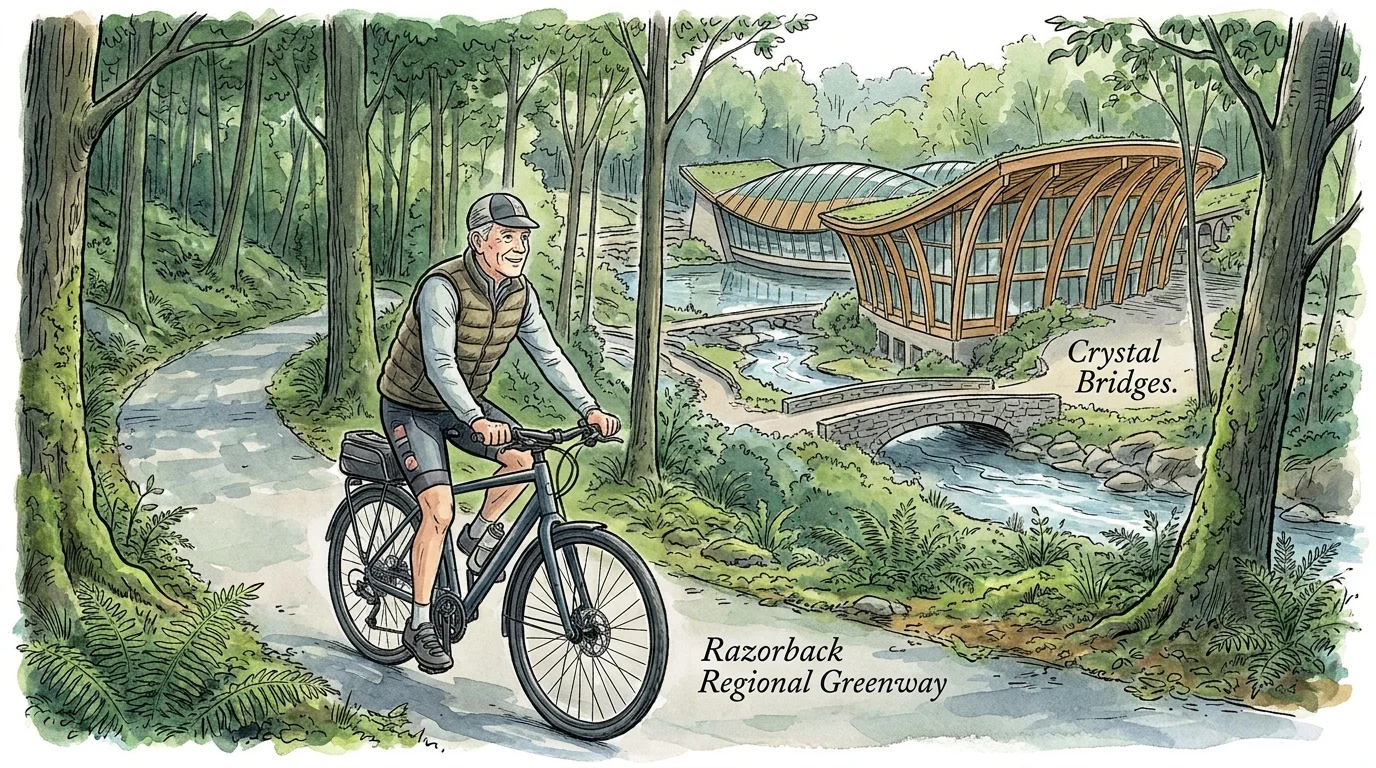
You can spend your mornings riding the Razorback Regional Greenway, an impressive 40-mile paved trail system connecting Fayetteville to neighboring communities. This flat, accessible path provides the perfect venue for joint-friendly cardiovascular exercise, allowing you to maintain your physical health while taking in the stunning natural beauty of the surrounding forests and creeks. Local cycling clubs specifically cater to seniors, ensuring you can easily find riding partners who match your pace and enthusiasm.
Beyond physical activity, this corner of Arkansas offers profound intellectual and cultural stimulation. Just a short drive north in Bentonville sits the Crystal Bridges Museum of American Art, offering free admission to a breathtaking collection of masterpieces nestled directly in a ravine. Fayetteville itself boasts the Walton Arts Center, bringing Broadway tours and international symphonies straight to your backyard. You get the cultural richness of a major metropolitan area without the crushing traffic, astronomical cost of living, or overwhelming crowds. This unique combination of rugged outdoor accessibility and refined high art makes Fayetteville a genuinely surprising haven for your golden years.
Tip #2: Ann Arbor, Michigan — Climate Resilience and Lifelong Learning
For decades, the standard retirement playbook involved moving south to chase endless summer days. However, a significant shift in retirement trends shows older adults actively seeking out “climate havens”—regions naturally protected from extreme heat, rising sea levels, and severe hurricanes. Ann Arbor, Michigan, emerges as a top destination for retirees prioritizing long-term environmental stability and four distinct, beautiful seasons.
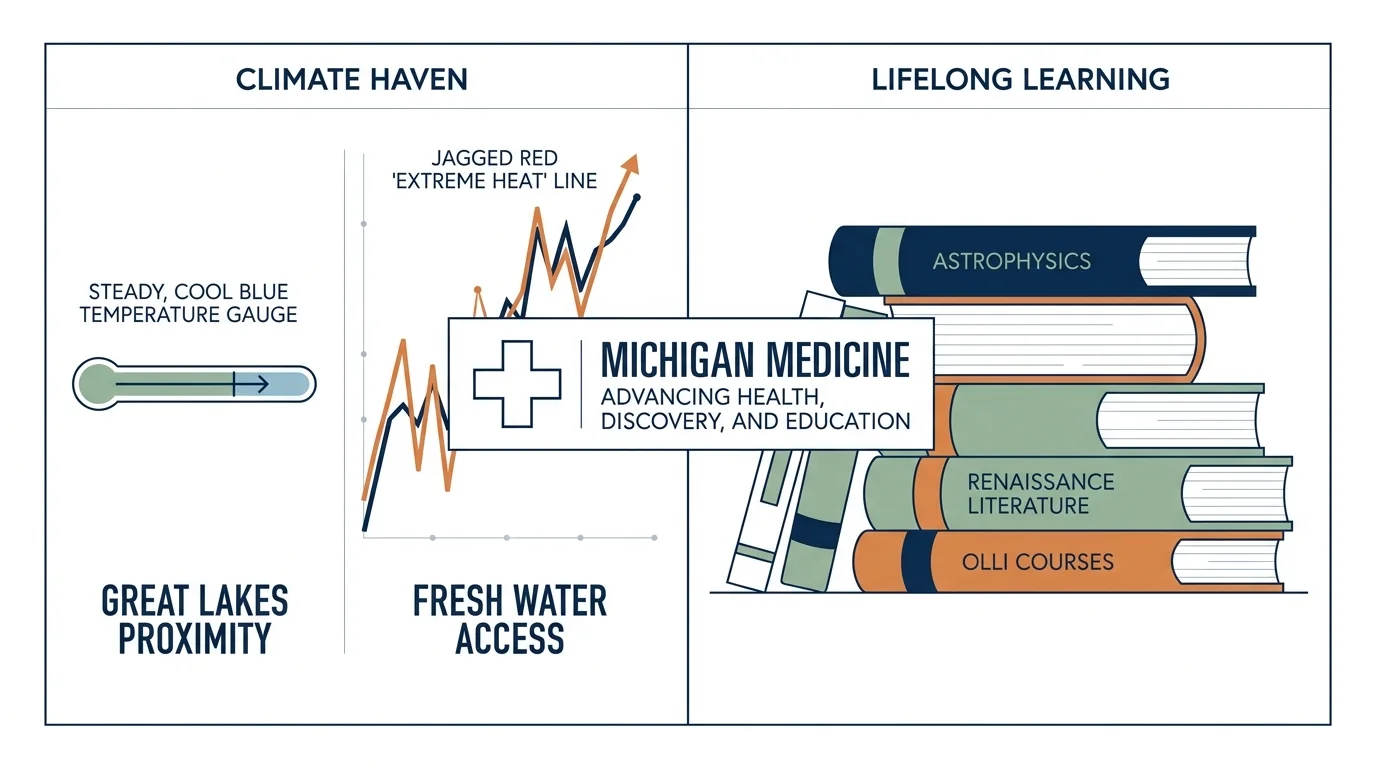
Situated near the Great Lakes, Ann Arbor provides incredible access to fresh water and largely escapes the intense climate volatility impacting traditional southern hotspots. You can enjoy crisp autumns perfect for hiking and vibrant springs that breathe life back into the city’s countless parks. The city government also invests heavily in robust green infrastructure, giving you peace of mind that your chosen community takes future sustainability seriously.
Equally important is the city’s dedication to intellectual vitality. Home to the University of Michigan, Ann Arbor features one of the most vibrant Osher Lifelong Learning Institutes (OLLI) in the country. You can dive into non-credit courses ranging from astrophysics to Renaissance literature, surrounded by equally curious peers. This constant mental stimulation plays a critical role in cognitive longevity. Furthermore, residing in Ann Arbor grants you immediate access to Michigan Medicine, consistently ranked among the nation’s premier hospital systems. By choosing a climate-resilient university town, you secure both your physical environment and your personal well-being.

Tip #3: Huntsville, Alabama — A Haven for STEM Mentorship and Space Enthusiasts
Retirement offers you the perfect opportunity to give back and share the expertise you spent a lifetime acquiring. Huntsville, Alabama, affectionately known as “Rocket City,” attracts a rapidly growing population of retirees for a highly specific reason: its unparalleled concentration of aerospace, engineering, and technology institutions.
If you spent your career in science, technology, engineering, or mathematics (STEM), Huntsville provides an extraordinary landscape for meaningful volunteer work. You can serve as a docent at the U.S. Space & Rocket Center, guiding younger generations through the history of space exploration and sharing your passion for the cosmos. Local schools and robotics clubs actively seek out retired engineers and scientists to mentor students, allowing you to leave a lasting legacy in the community while keeping your technical skills razor-sharp.
Even if you never worked in a STEM field, you benefit immensely from the environment created by this highly educated populace. The city boasts a thriving local economy, incredibly fast fiber-optic internet, and a diverse cultural scene supported by its resident scientists and researchers. Best of all, Huntsville maintains a remarkably low cost of living and affordable housing market compared to coastal tech hubs. You can stretch your retirement savings further while living in a city that constantly looks toward the future.
Tip #4: Tucson, Arizona — Dark Skies and Culinary Excellence
Arizona frequently appears on lists of top retirement destinations, but most people move there expecting nothing more than dry heat and endless golf courses. Tucson completely shatters that stereotype, drawing a new wave of retirees through two highly unexpected avenues: strict light pollution laws and an internationally acclaimed food scene.
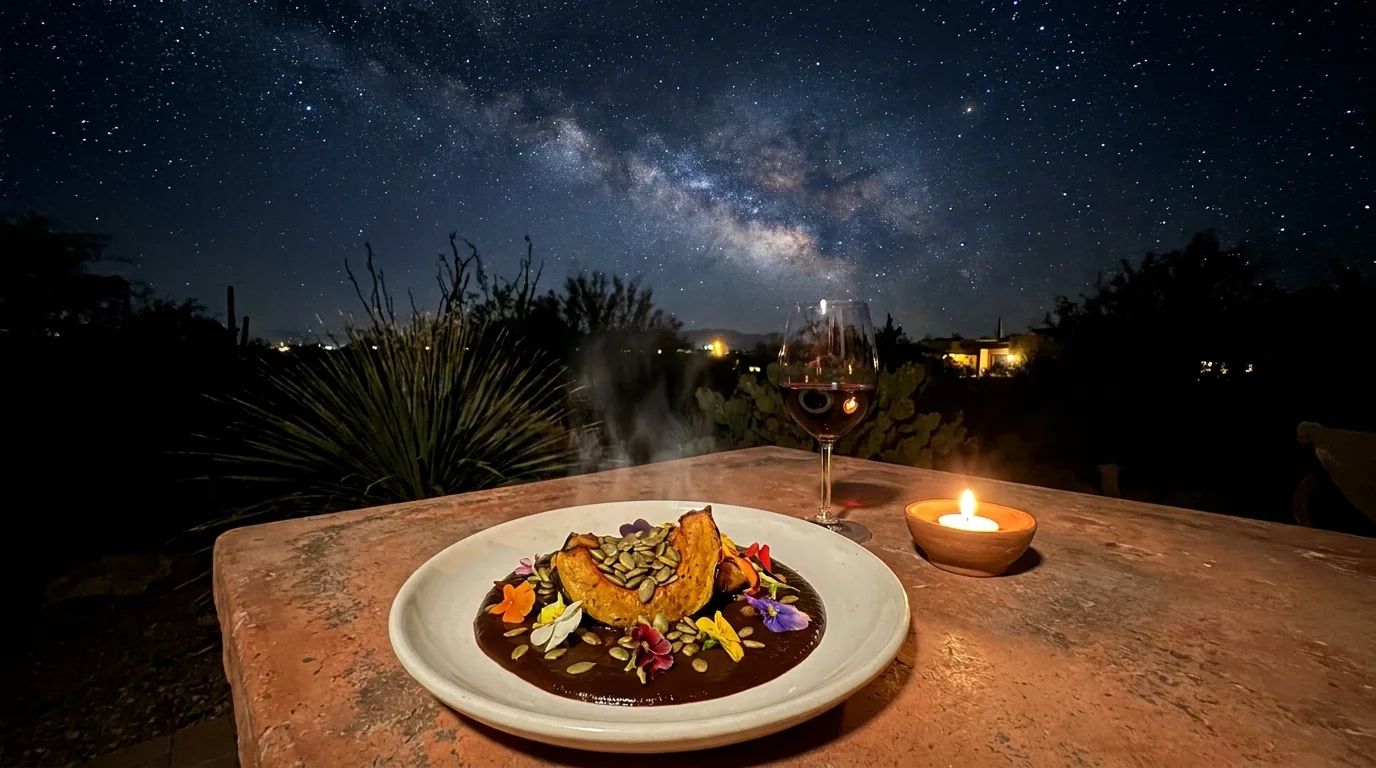
Pima County enforces rigorous “dark-sky” ordinances to protect the observing conditions for the nearby Kitt Peak National Observatory. For you, this means light pollution remains remarkably low despite living in a major metropolitan area. You can sit on your back patio and trace constellations, watch meteor showers, and marvel at the Milky Way with breathtaking clarity. This deep connection to the night sky provides a profound sense of tranquility and awe, making it a paradise for amateur astronomers and nature lovers alike.
During the day, Tucson caters to your palate. UNESCO designated Tucson as the first City of Gastronomy in the United States, recognizing its 4,000-year history of continuous agriculture and its vibrant, multicultural culinary traditions. You can spend your days exploring local farmers markets packed with heritage desert ingredients like tepary beans and cholla buds, or dining at innovative farm-to-table restaurants that blend Mexican, Native American, and Spanish influences. Relocating to Tucson allows you to feast on world-class cuisine while living under some of the most beautiful night skies in the country.

Tip #5: Lancaster, Pennsylvania — The Micro-City Walkability Trend
As you plan your retirement, you might realize that maintaining a car becomes both an expensive burden and a potential source of stress. Enter the “micro-city” trend. Retirees increasingly flock to smaller, densely built urban centers that offer the walkability of a major metropolis alongside the charm and safety of a historic town. Lancaster, Pennsylvania, perfectly captures this unexpected appeal.
Lancaster features a beautifully preserved, highly walkable downtown core. You can easily stroll from your front door to cafes, boutique shops, and the renowned Fulton Theatre without ever needing to turn an ignition key. At the heart of the community stands the Lancaster Central Market—the oldest continuously operated public farmers market in the country. Here, you can establish a delightful weekly routine, purchasing fresh produce, artisanal cheeses, and baked goods directly from local farmers and Amish vendors.
This walkable lifestyle organically integrates physical activity into your daily schedule, significantly boosting your cardiovascular health and mobility. Furthermore, navigating your neighborhood on foot naturally fosters social connections; you will inevitably bump into neighbors, chat with local business owners, and build a strong support network. Should you crave the bustle of a larger city, Lancaster’s Amtrak station provides quick, stress-free rail access directly into Philadelphia and New York City. You enjoy the ultimate balance of a serene, walkable daily life with global cultural hubs just a train ride away.

Tip #6: Boise, Idaho — Geothermal Energy and Eco-Conscious Living
Sustainability represents a growing priority for modern retirees who want to minimize their carbon footprint and live in harmony with the environment. Boise, Idaho, captures this demographic by offering an incredible, hidden infrastructural marvel: the largest direct-use geothermal heating system in the United States.
Naturally occurring hot water beneath the city pumps directly into downtown buildings, providing clean, renewable heating. The city even uses this geothermal energy to heat its sidewalks, magically melting winter snow and keeping walking paths safe and clear for older adults year-round. When you relocate to Boise, you join a forward-thinking community that actively champions environmental stewardship and clean energy.
This deep respect for nature extends to the city’s outdoor amenities. You can cycle or walk the Boise River Greenbelt, a spectacular 25-mile tree-lined pathway that follows the river directly through the heart of the city. Additionally, the nearby Snake River Valley recently exploded into a highly respected wine region. You can spend your weekends touring local, sustainable vineyards and attending tasting events with fellow eco-conscious retirees. Boise proves that you do not need to sacrifice modern comforts to live a deeply green, nature-oriented lifestyle during your golden years.

Tip #7: Merida, Mexico — World-Class Healthcare and Deep Safety
When Americans consider retiring in Mexico, they typically picture coastal party towns or remote beach villages. However, an entirely different kind of destination is capturing the attention of discerning retirees: the inland city of Merida, the vibrant capital of the Yucatan state. Merida attracts a massive influx of senior expats for two highly pragmatic reasons: unparalleled safety and elite healthcare facilities.
Consistently ranked as one of the safest cities in all of North America, Merida offers a peaceful, secure environment where you can comfortably walk the streets at night. The city’s rich cultural tapestry weaves together colonial architecture and deep Mayan heritage, providing a beautiful backdrop for your daily life. You can attend free concerts in the city squares, explore bustling local markets, and immerse yourself in a welcoming, tight-knit community of both locals and expats.
More importantly, Merida serves as a premier hub for medical tourism. The city boasts state-of-the-art, internationally accredited hospitals equipped with the latest technology. Many local physicians and specialists complete parts of their training in the United States or Europe and speak fluent English. You gain access to high-end preventative care, complex surgical procedures, and routine dental work at a fraction of the cost you would pay north of the border. By choosing Merida, you dramatically stretch your retirement budget while actually upgrading the quality and accessibility of your healthcare.

The Takeaway: Living a More Blissful Retirement
Your golden years represent an incredible opportunity to redefine your daily life based entirely on your unique passions and priorities. The shifting landscape of retirement destinations proves that you never have to settle for the expected or the ordinary. By thoroughly evaluating what truly brings you joy—whether that involves stargazing in a dark-sky preserve, mentoring students in a high-tech hub, or embracing a car-free lifestyle in a historic micro-city—you can find a community perfectly tailored to your vision.
Take the time to explore these unexpected havens. Plan extended visits, engage with the locals, and immerse yourself in the daily rhythms of these diverse cities. By stepping outside the traditional boundaries of senior living, you open yourself up to a vibrant, engaging, and profoundly fulfilling next chapter. Your ideal retirement destination is out there waiting for you, and it might just be in a place you never initially considered.
Frequently Asked Questions
How do I research the healthcare quality in a new retirement destination?
Start by investigating the specific hospital systems located within a 30-minute drive of your potential new home. You can use tools like the Medicare Hospital Compare website to review patient outcomes, safety scores, and overall ratings. Additionally, search for cities affiliated with major university medical schools, as these teaching hospitals typically offer access to cutting-edge treatments and highly specialized physicians. Always call local clinics to ask if they are currently accepting new Medicare patients before making a permanent move.
Should I rent first before buying a home in a new city?
Absolutely. Embarking on a “trial retirement” by renting for six to twelve months provides invaluable insights into a community. Renting allows you to experience the local climate during its harshest season—whether that means enduring an icy northern winter or a sweltering southern summer. It also gives you the freedom to explore different neighborhoods, test the local traffic patterns, and ensure the city’s amenities align with your actual daily habits before committing your hard-earned savings to a mortgage.
How do unexpected retirement destinations impact my cost of living?
Emerging relocation spots often feature significantly lower housing costs and property taxes compared to heavily saturated, traditional senior living markets. Because these cities are not artificially inflated by decades of retiree demand, your housing dollar stretches much further. However, you must carefully research the specific state tax policies of your new destination. Verify exactly how the state taxes Social Security benefits, pension payouts, and withdrawals from your 401(k) or IRA, as these regulations drastically impact your overall budget.
What is the best way to build a social network after relocating for retirement?
Proactive engagement remains the key to overcoming isolation in a new city. Seek out structured environments where you share common interests with others. Enroll in classes at a local lifelong learning institute, join a regional cycling or walking club, or establish a regular routine at the local farmers market. Volunteering for causes you care about—like animal shelters, local museums, or mentorship programs—instantly connects you with compassionate, like-minded individuals who can quickly become lifelong friends.
For a wide range of resources for older adults, visit AARP and the National Council on Aging (NCOA). Health information is available from the National Institute on Aging.
Disclaimer: This article is for informational and inspirational purposes only. It is not a substitute for professional medical, financial, or psychological advice. Please consult with a qualified expert for guidance tailored to your individual needs.







Leave a Reply