
Tip #7: Differentiate Between Traditional and Roth IRA Withdrawals
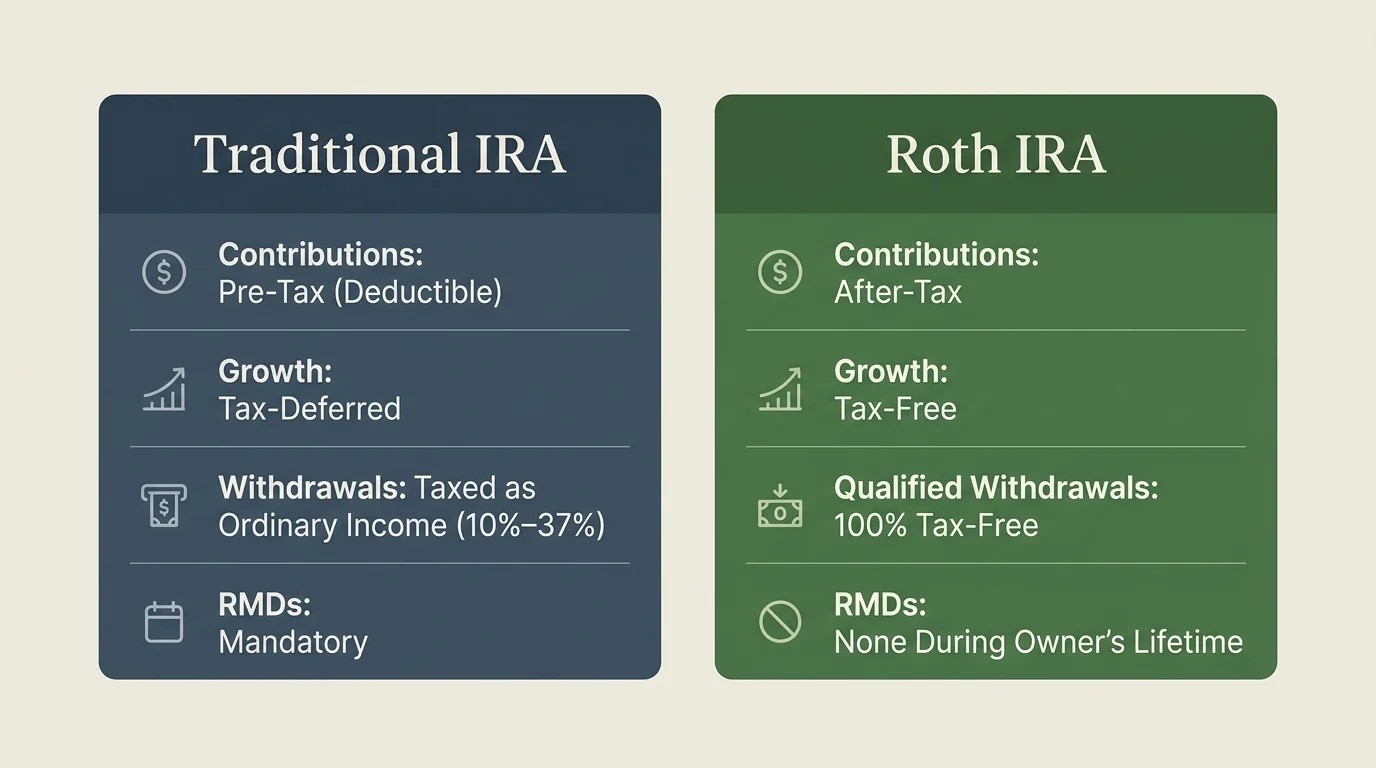
Achieving retirement bliss requires understanding the distinct differences between traditional and Roth IRAs. While traditional IRAs offer upfront tax deductions followed by taxable withdrawals in retirement, Roth IRAs operate in reverse. You fund a Roth IRA with after-tax money, and in exchange, your future qualified withdrawals are 100% tax-free and penalty-free.
With a Roth IRA, you can withdraw your original contributions at any age and for any reason without owing a single cent in taxes or penalties. To withdraw the accumulated earnings tax-free, you must satisfy two conditions: you must be at least age 59½, and at least five tax years must have elapsed since January 1 of the tax year you made your very first contribution to any Roth IRA. Furthermore, Roth IRAs do not require any minimum distributions during your lifetime, allowing your assets to compound uninterrupted.
Many savvy retirees practice strategic Roth conversions during early retirement years when their income drops before RMDs and Social Security begin. By converting a portion of traditional IRA funds to a Roth IRA and paying taxes at a lower marginal rate today, you create a reservoir of tax-free wealth for future years, dramatically reducing your long-term tax exposure.