

Unlock hidden savings on your everyday purchases by mastering the art of asking for unadvertised senior prices. Retailers frequently possess the flexibility to reduce costs at the register for older adults, even when no signs promote a discount. You simply need the right approach to confidently secure these exclusive deals. Negotiating retiree savings keeps more money in your pocket while building positive relationships with local business managers. By learning exactly what to say and when to ask, you transform routine shopping trips into rewarding opportunities for significant discounts. Armed with patience and strategic timing, you can smoothly navigate conversations that yield price drops on everything from daily groceries to essential home repairs.
Tip #1: Master the Art of the Open-Ended Question
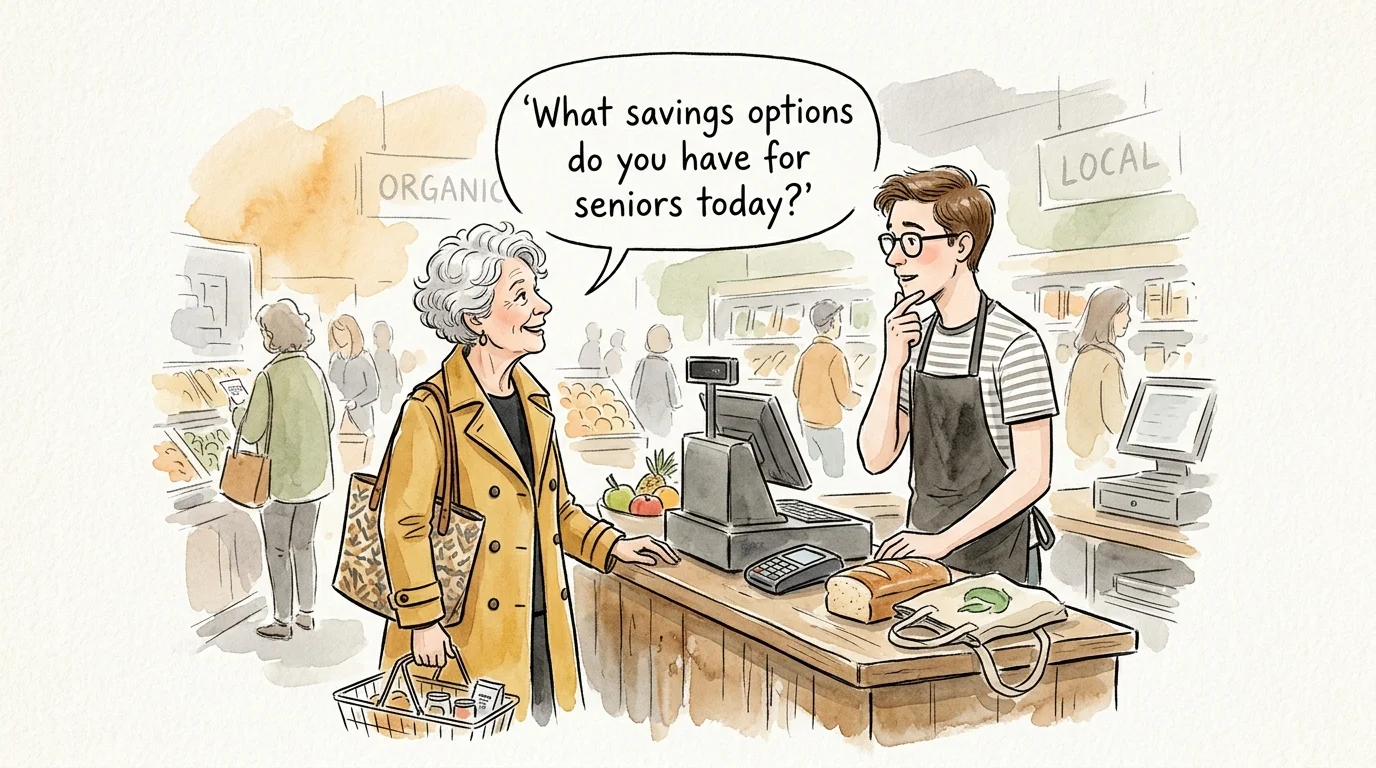
Securing a better price begins with how you phrase your initial inquiry. Many shoppers make the critical mistake of asking a simple yes-or-no question, such as asking if the store provides a specific senior discount. This closed-off approach makes it incredibly easy for an employee to reflexively say no, shutting down the price negotiation before it even begins. You can dramatically improve your odds of success by framing your request as an open-ended question that requires a thoughtful response.
Retail psychology demonstrates that open-ended inquiries force the listener to engage in a collaborative dialogue. When you ask a store associate what kind of savings programs they provide for older customers, you gently prompt them to consider all available options. They might not have an official sticker posted on the front window, but they frequently possess the authority to apply a discretionary markdown to your final bill. This conversational tactic transforms a binary rejection into a mutual search for value.
Practice using specific phrases during your next shopping trip to see this principle in action. You might approach the register and ask, “What options do you have for senior pricing today?” or “How do you typically accommodate older adults looking for a better deal on these items?” These subtle linguistic shifts keep the conversation moving forward; they also signal your polite expectation of some form of accommodation. You take control of the interaction and set a positive tone for the entire transaction.

Tip #2: Time Your Shopping Trips for Off-Peak Hours
The timing of your store visit drastically impacts your ability to secure a favorable deal. Retail environments fluctuate wildly between chaotic rushes and agonizingly slow lulls. If you attempt to negotiate retiree savings while a massive line of frustrated customers stretches behind you, the staff will immediately prioritize speed over customer service. Cashiers and managers need to clear the queue as quickly as possible, meaning they will almost certainly reject your request just to keep the line moving efficiently.
You significantly increase your leverage by visiting local shops and big-box retailers during their quietest operational hours. Store managers feel far more relaxed on a Tuesday morning at ten o’clock than they do on a frantic Saturday afternoon. During these slow periods, employees have the time and mental bandwidth to listen to your requests, check their systems for active promotions, and manually adjust prices. Retail data consistently proves that foot traffic drops significantly mid-morning on weekdays, creating the perfect window for personalized customer service.
Make a habit of scheduling your high-value shopping trips during these tranquil windows. Take a moment to observe the atmosphere before approaching the counter; if the staff seems stressed or overworked, browse a little longer until the rush completely subsides. Approaching a calm manager gives you a tremendous advantage. They are often eager for a pleasant distraction and much more willing to reward a friendly shopper with a generous markdown on their total purchase.
Tip #3: Leverage Competitor Policies to Prompt Price Matching
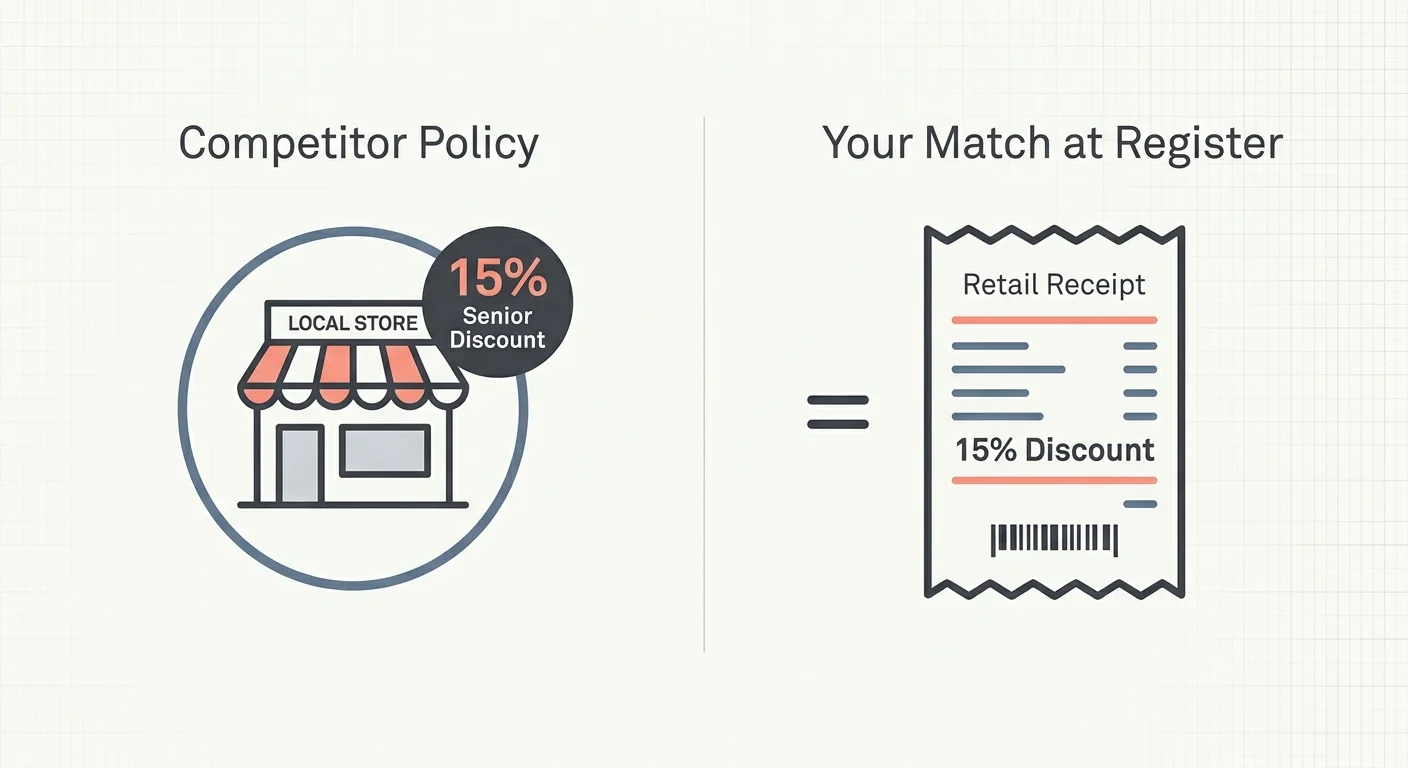
Knowledge remains your most powerful weapon when hunting for unadvertised bargains. Before you leave your home to make a substantial purchase, spend a few minutes researching the discount policies of competing businesses in your area. Many national chains proudly advertise specific days where they shave a percentage off the total bill for older adults. You can use these established policies as potent leverage when shopping at independent retailers or competing franchises that lack a formal senior shopping program.
Store owners despise losing a guaranteed sale to a rival down the street over a minor price discrepancy. When you casually mention that a competitor offers a standard markdown for your age group, you naturally activate the manager’s competitive business instincts. For example, if you need to buy a new lawnmower, inform the local hardware store owner that a nearby big-box retailer offers ten percent off for people over sixty-five. The proprietor instantly recognizes that granting you a similar courtesy costs much less than watching you walk away empty-handed.
Execute this strategy with absolute politeness to avoid sounding like you are issuing a hostile ultimatum. You might say, “I really prefer supporting your business, but I noticed the store across town offers a senior discount; would you be able to match that price so I can buy it here today?” This phrasing strokes the owner’s ego while presenting a logical reason for them to drop the price. You secure your savings while reinforcing your genuine desire to give them your patronage.

Tip #4: Bypass the Cashier and Speak with a Decision Maker
Directing your negotiation efforts at the right person represents a critical component of successful price reduction. Front-line cashiers typically operate under strict technological and managerial constraints. Their point-of-sale systems often require special override codes or supervisor swipe cards to apply manual discounts. If you ask a standard cashier for an unadvertised price break, they usually have to decline simply because they lack the necessary software permissions to fulfill your request.
You must elevate your conversation to an employee who actually possesses the authority to negotiate. Store managers, floor supervisors, and independent owners carry the power to override system prices, apply discretionary coupons, and make on-the-fly decisions about daily profit margins. These decision-makers understand the long-term financial value of keeping a customer happy. They look at the bigger picture of store revenue rather than blindly following the restrictive prompts on a cash register screen.
When you spot an item you want to purchase, locate a senior staff member on the sales floor before you even approach the checkout lanes. You can politely ask an associate if the manager has a brief moment to answer a question about a product. Once you have the decision-maker’s attention, clearly and pleasantly explain your request. Securing verbal approval from the boss guarantees a smooth transaction once you finally reach the cashier, eliminating the awkwardness of holding up the line.

Tip #5: Bundle Your Purchases for Greater Bargaining Leverage
Volume purchases naturally command more respect and pricing flexibility from retail management. Attempting to negotiate the price of a single, inexpensive item like a tube of toothpaste or a basic greeting card rarely yields results. The profit margins on isolated, low-cost goods remain too thin to justify a special markdown. However, when you fill your cart with a variety of complementary items or invest in a high-ticket product, your bargaining power increases exponentially.
Retailers rely heavily on increasing the average transaction value of every customer who walks through their doors. If you need to upgrade your gardening equipment, buying a shovel, multiple bags of soil, pruning shears, and a new hose all at once creates a highly desirable transaction for the store. A manager looking at a cart filled with two hundred dollars worth of merchandise feels highly motivated to protect that large sale. They will gladly shave off ten or fifteen percent if it guarantees you finalize the massive purchase immediately.
Always consolidate your routine shopping trips whenever possible to maximize this effective strategy. Instead of buying your vitamins one week and your mobility aids the next, gather all your necessary supplies into a single, comprehensive transaction. Approach the manager and point out the impressive volume of your intended purchase. Confidently state, “I am buying all my supplies for the season here today; what kind of price break can we work out for this entire bundle?” This business-minded approach makes the discount feel like a logical volume concession.

Tip #6: Harness the Psychological Power of the Polite Pause
Effective price negotiation relies heavily on understanding basic human psychology and mastering the art of comfortable silence. Many shoppers feel intensely nervous when asking for a markdown, prompting them to ramble nervously or immediately backpedal if they do not receive an instant, enthusiastic yes. This nervous chatter entirely destroys your leverage. You end up negotiating against yourself before the store employee even has a chance to fully process your initial request.
Professional negotiators utilize the strategic pause to elicit financial concessions, and you can easily adapt this technique for everyday senior shopping. Human beings possess a natural, deep-seated aversion to awkward silence. When you ask a direct question and then stop talking entirely, the other person instinctively feels the urge to fill the conversational void. If a manager hesitates after you ask for a pricing adjustment, maintaining polite eye contact and remaining completely quiet forces them to formulate a genuine response rather than issuing a quick dismissal.
Deliver your open-ended question in a warm, friendly tone, and then firmly close your mouth. Smile gently while you patiently wait for their answer. If they offer a small discount that seems insufficient, acknowledge it with a nod and remain silent for another brief moment. Frequently, the manager will interpret your silence as hesitation and voluntarily sweeten the deal to secure your total satisfaction. Mastering this simple behavioral trick allows you to project quiet confidence and consistently achieve deeper price cuts.
Tip #7: Request Alternative Perks if Immediate Reductions Fail
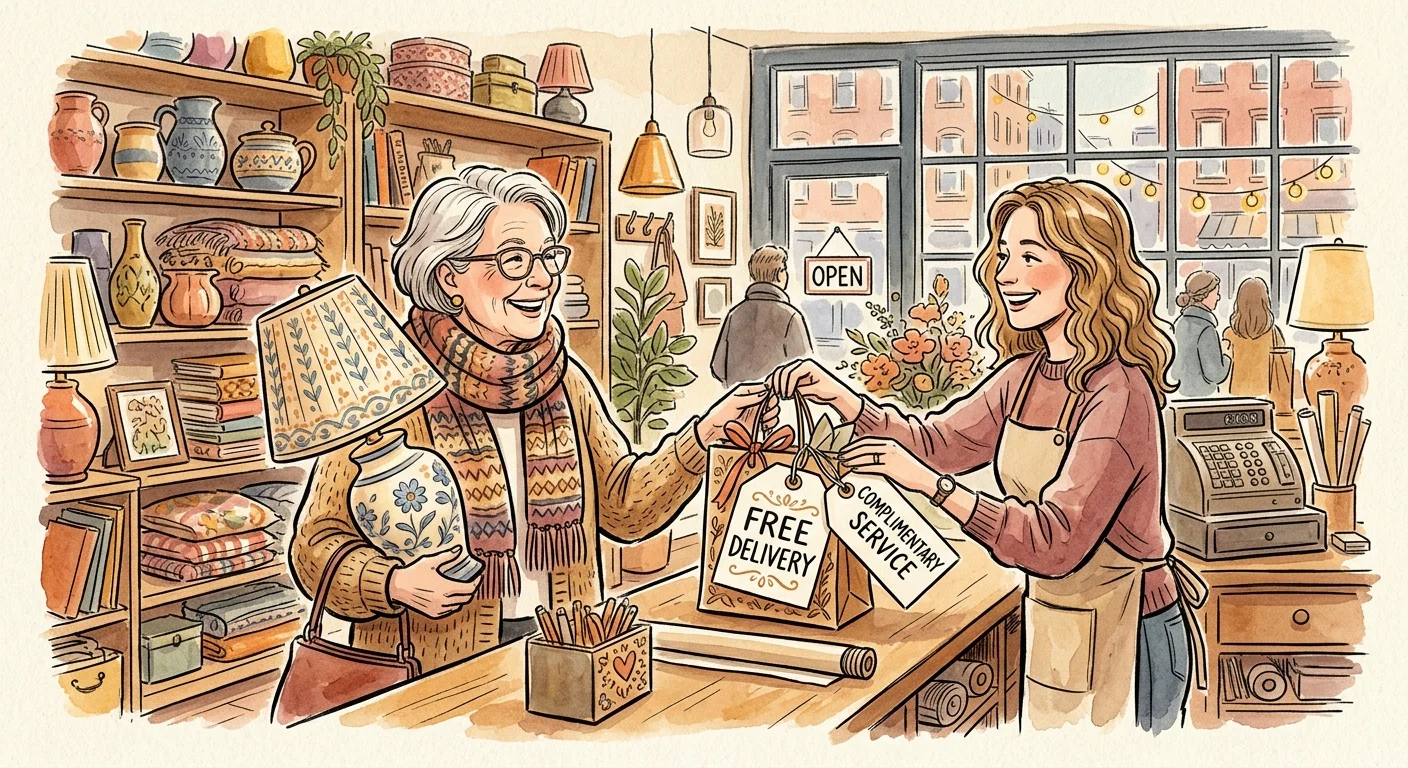
Every negotiation carries the possibility of a polite refusal, but a negative answer on the sticker price never means you have to walk away empty-handed. When a manager absolutely cannot budge on the immediate cost of an item, you can quickly shift your focus to securing secondary perks that add significant value to your purchase. Smart senior shopping involves looking beyond the final register receipt and calculating the total, long-term cost of ownership.
Many businesses maintain rigid corporate pricing structures but offer massive flexibility on associated services. A local furniture store might refuse to drop the price of a recliner by ten percent, but the manager might gladly waive the fifty-dollar delivery and home assembly fee. A neighborhood mechanic might stand firm on the exact cost of replacement tires but happily agree to throw in a free oil change or complementary tire rotations for the next two years. These value-added services save you substantial amounts of money without technically altering the original retail price.
Prepare a mental list of alternative perks before you begin negotiating at the counter. If the manager declines your request for an unadvertised price drop, you can pivot gracefully by asking, “I understand the price is firm; could you waive the shipping fees instead, or perhaps include an extended warranty at no extra charge?” This clever tactic allows the manager to grant you a victory while remaining compliant with their pricing guidelines. You still brilliantly protect your retirement budget by eliminating hidden future costs.

The Takeaway: Living a More Blissful Retirement
Embracing the habit of asking for unadvertised discounts injects a thrilling sense of empowerment into your daily routine. Every time you successfully negotiate a lower price, you actively stretch your retirement budget and keep your hard-earned savings exactly where they belong. You do not need to settle for the sticker price when a simple, polite conversation can unlock substantial financial relief. By researching competitors, timing your visits perfectly, and speaking directly with decision-makers, you transform yourself from a passive consumer into a savvy, strategic shopper.
Remember that the worst possible outcome is a polite refusal, which leaves you exactly where you started. You have absolutely nothing to lose and countless dollars to gain by finding your voice at the register. Keep your tone warm, leverage your purchasing power, and enjoy the profound satisfaction that comes with securing exclusive deals tailored just for you. By applying these shopping tips, your golden years can be spent enjoying life to the fullest. Mastering the art of price negotiation ensures you have the financial freedom to do exactly that.
Frequently Asked Questions
Is it rude to ask for a senior discount if there is no sign?
It is absolutely not rude to ask for a price reduction. Retailers expect savvy consumers to inquire about deals, and many businesses intentionally keep their discount policies hidden to save money on customers who fail to ask. As long as you remain polite, smile, and treat the staff with respect, managers will welcome your inquiry. Framing it as a polite question rather than a demanding entitlement ensures the interaction remains pleasant and professional.
What age typically qualifies for unadvertised senior discounts?
The qualifying age varies drastically depending on the specific store and the manager on duty. Many retail chains define a senior shopper as anyone over the age of fifty-five, while others might set the threshold at sixty or sixty-five. Because unadvertised store discounts rely heavily on managerial discretion, they frequently waive strict age requirements if you simply state you are retired and living on a fixed income. You should always confidently ask regardless of your exact age.
Do big chain stores negotiate prices, or only small local businesses?
Both large corporate chains and small independent businesses maintain the ability to negotiate prices, though their methods differ. Small business owners have total authority to drop prices instantly based on their daily profit margins. Big chain stores often empower their floor managers to match competitor prices, discount damaged packaging, or apply discretionary courtesy percentages to close a major sale. You can succeed in both environments by locating the proper supervisor.
What should I say if the employee flatly refuses my request?
If a store associate or manager denies your request for a discount, you should smile, thank them for their time, and accept the answer gracefully. You might say, “I understand completely; thank you for checking for me.” Maintaining a pleasant demeanor ensures you leave a positive impression, which might make them more inclined to help you during future visits. You can then decide whether the current price fits your budget or if you prefer to shop elsewhere.
For a wide range of resources for older adults, visit AARP and the National Council on Aging (NCOA). Health information is available from the National Institute on Aging.
Disclaimer: This article is for informational and inspirational purposes only. It is not a substitute for professional medical, financial, or psychological advice. Please consult with a qualified expert for guidance tailored to your individual needs.









Leave a Reply