

Stepping into retirement unlocks the freedom to design a life centered entirely around your joy, well-being, and personal growth. You finally have the time to cultivate true retirement happiness by intentionally leaving behind the habits and worries that drain your energy. Studies show that seniors who prioritize stress free living experience better physical health and higher daily satisfaction. Cultivating a vibrant lifestyle after retirement means fiercely protecting your peace and focusing only on what truly matters. Instead of getting bogged down by societal expectations or past regrets, you can redirect your focus toward meaningful connections, exciting hobbies, and restful routines. Mastering this transition requires knowing exactly what to ignore so you can fully embrace your most fulfilling years.
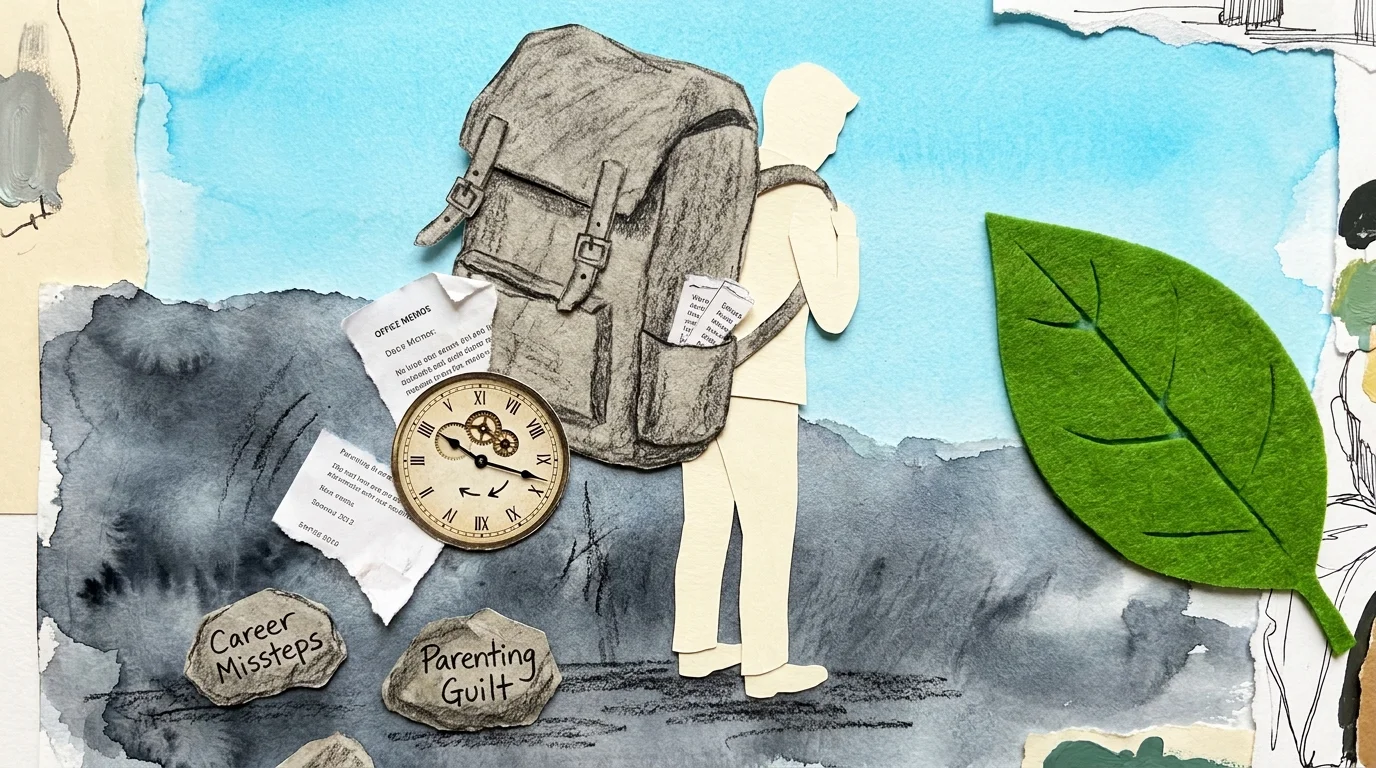
Tip #1: Dwelling on Past Mistakes and Regrets
Every person carries an invisible backpack of regrets from their working years—career missteps, parenting challenges, or financial decisions that did not pan out. Happy retirees deliberately take off that backpack. Ruminating on the past keeps your nervous system in a state of stress, which elevates cortisol levels and negatively impacts your cardiovascular health. You cannot change what happened decades ago, but you have complete control over how you spend your afternoon today. Instead of replaying old arguments or mourning missed opportunities, successful seniors reframe their history as a classroom that taught them valuable lessons.
For example, if you regret working too much while your children were young, you can channel that realization into becoming a highly present, engaged grandparent today. You secure genuine retirement happiness by anchoring your mind firmly in the present moment. Practicing daily mindfulness—whether through a quiet morning walk or spending ten minutes journaling—helps train your brain to release lingering resentments. When you catch your thoughts drifting backward toward something you cannot change, gently redirect your attention to a physical task right in front of you. You will quickly discover that forgiving yourself frees up massive amounts of emotional energy for new hobbies and friendships.

Tip #2: Trying to Meet Other People’s Expectations
For the first half of your life, you likely operated on a schedule dictated by external demands; bosses, children, teachers, and societal norms heavily influenced your daily calendar. Now that you have reached your golden years, conforming to what others think you should do is a spectacular waste of your hard-earned freedom. Many new retirees fall into the trap of overcommitting to volunteer boards, babysitting duties, or neighborhood associations simply because they feel guilty saying no. The happiest older adults understand that “no” is a complete sentence—and they use it liberally to protect their peace.
Constructing a deeply satisfying lifestyle after retirement requires you to set firm boundaries around your time and energy. If your children expect you to provide full-time childcare but you dreamed of spending your sixties traveling in an RV, you must have an honest conversation about your priorities. People who thrive in later life pursue the activities that light them up internally, rather than the ones that look impressive to their neighbors. You have earned the right to be slightly selfish with your schedule. By defining exactly what brings you joy—whether that means tending to a quiet garden, joining a bowling league, or sleeping in until nine o’clock—you design a life that feels authentic and deeply rewarding.

Tip #3: Comparing Their Journey to Others
The human brain naturally looks for benchmarks to measure success, but comparing your retirement to someone else’s is a guaranteed recipe for misery. In our hyper-connected digital age, it is incredibly easy to scroll through social media and see former colleagues embarking on luxury European river cruises or purchasing extravagant vacation homes. If you allow those highlight reels to make you feel inadequate, you strip the joy right out of your own experience. Psychological studies consistently show that older adults who limit their social media consumption and avoid upward social comparisons report significantly lower rates of depression.
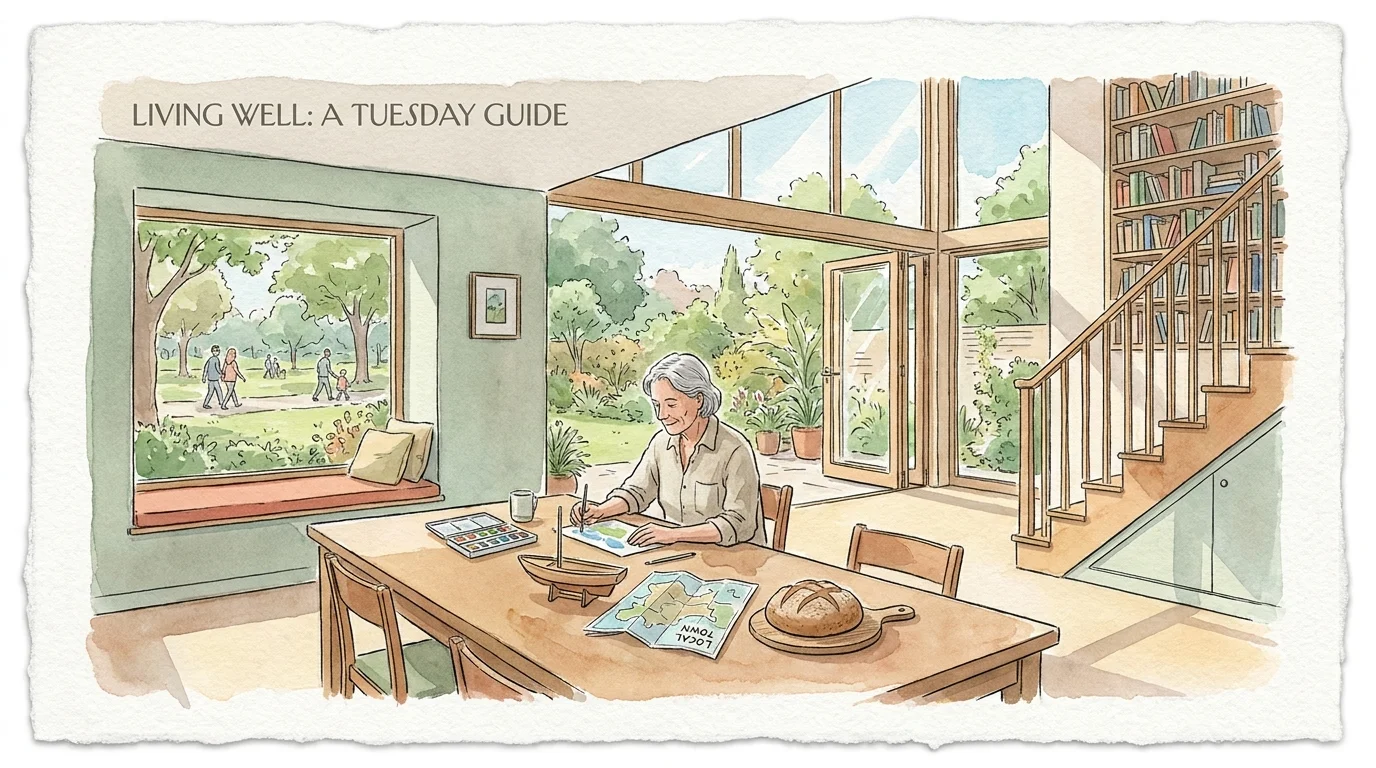
You must remember that financial portfolios, health statuses, and family dynamics vary wildly from person to person; there is no single “correct” way to retire. Your version of a perfect Tuesday might involve brewing a great cup of coffee, finishing a crossword puzzle, and walking your dog through a local park. If that routine brings you peace, it holds just as much value as a peer’s expensive golf membership. To cultivate stress free living, strictly curate the information you consume. Unfollow accounts that trigger feelings of envy, and redirect that mental focus toward expressing gratitude for the unique blessings in your own life. When you stop looking sideways at what everyone else is doing, you can finally look forward to the beautiful path you are walking.

Tip #4: Holding onto Clutter and Unused Possessions
Your physical environment directly mirrors your internal state, and holding onto decades worth of accumulated clutter severely dampens your daily enthusiasm. Joyful retirees do not waste their precious time managing, cleaning, and organizing items they have not used since the late nineties. The psychological weight of a crowded home subtly increases baseline anxiety; research published by the Society for Personality and Social Psychology found that individuals describing their homes as “cluttered” showed depressed moods and higher levels of the stress hormone cortisol.
Embracing the Swedish concept of döstädning—often translated as gentle downsizing or death cleaning—allows you to take inventory of your possessions and release what no longer serves your current lifestyle. You do not need to become an extreme minimalist, but clearing out the attic, donating unused clothing, and passing heirloom items down to your family members now provides an incredible sense of lightness. Imagine the freedom of waking up in a streamlined, organized home where every object you see serves a purpose or brings you distinct joy. Decluttering also removes the physical tripping hazards that complicate aging in place, ensuring your home remains a safe sanctuary for decades to come. By dedicating just twenty minutes a day to clearing a single drawer or closet shelf, you systematically reclaim your living space and your peace of mind.
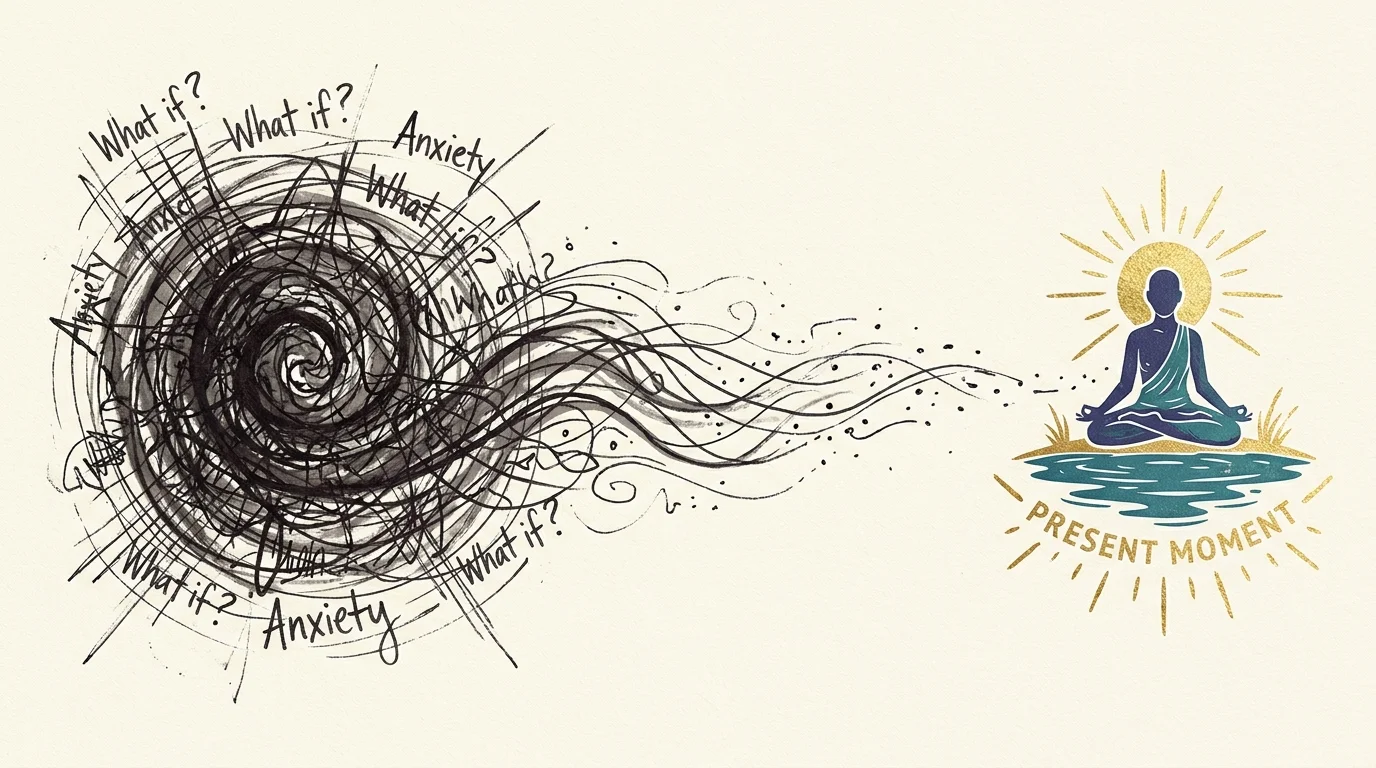
Tip #5: Worrying About the Uncontrollable Future
While thoughtful financial and medical planning is a cornerstone of a secure retirement, obsessing over future uncertainties steals the joy from your current reality. You cannot control the fluctuations of the global stock market, the trajectory of inflation, or the genetic predispositions of your physical body. Happy retirees recognize the stark difference between productive preparation and destructive worry. They consult with their financial advisors, update their estate plans, schedule their annual health screenings—and then they completely release the need to control the outcome.
Applying practical stoic philosophy to your daily life helps you categorize your concerns into things you can manage and things you must accept. If you catch yourself spiraling into hypothetical scenarios regarding your health or savings, you are squandering the very time you worked so hard to attain. A practical strategy to combat this anxiety involves establishing a strict “worry window.” Allocate fifteen minutes in the mid-afternoon to review any pressing concerns, jot them down in a notebook, and identify one actionable step you can take. Once the timer rings, close the notebook and refuse to entertain those thoughts for the rest of the evening. Shifting your focus to the immediate present—the taste of your dinner, the melody of your favorite song, or the warmth of the sun on your porch—anchors you in the only moment where true happiness exists.

Tip #6: Maintaining Toxic or Draining Relationships
The people you surround yourself with have a profound impact on your cognitive health and emotional stability. One of the most liberating retirement tips you can implement is the concept of “social pruning”—the intentional distancing from chronic complainers, drama-seekers, and individuals who leave you feeling depleted. The famous Harvard Study of Adult Development, which tracked participants for over eight decades, concluded that the quality of your relationships is the single most accurate predictor of your longevity and happiness.
Happy retirees refuse to spend their afternoons listening to a neighbor gossip maliciously or engaging in endless arguments with a pessimistic relative. Your time is far too valuable to serve as an emotional dumping ground for others. Cultivating a thriving social circle requires you to actively seek out friendships that feel reciprocal, uplifting, and aligned with your current interests. Join a local hiking club, enroll in a community college course, or participate in a painting workshop to meet individuals who share your enthusiasm for continued growth. If you have long-standing acquaintances who consistently drag your mood down, slowly decrease your availability. You do not necessarily need to orchestrate a dramatic confrontation; you can simply become too busy enjoying your life to participate in their negativity. Surrounding yourself with optimistic, forward-thinking peers naturally elevates your own mindset and keeps you feeling young at heart.
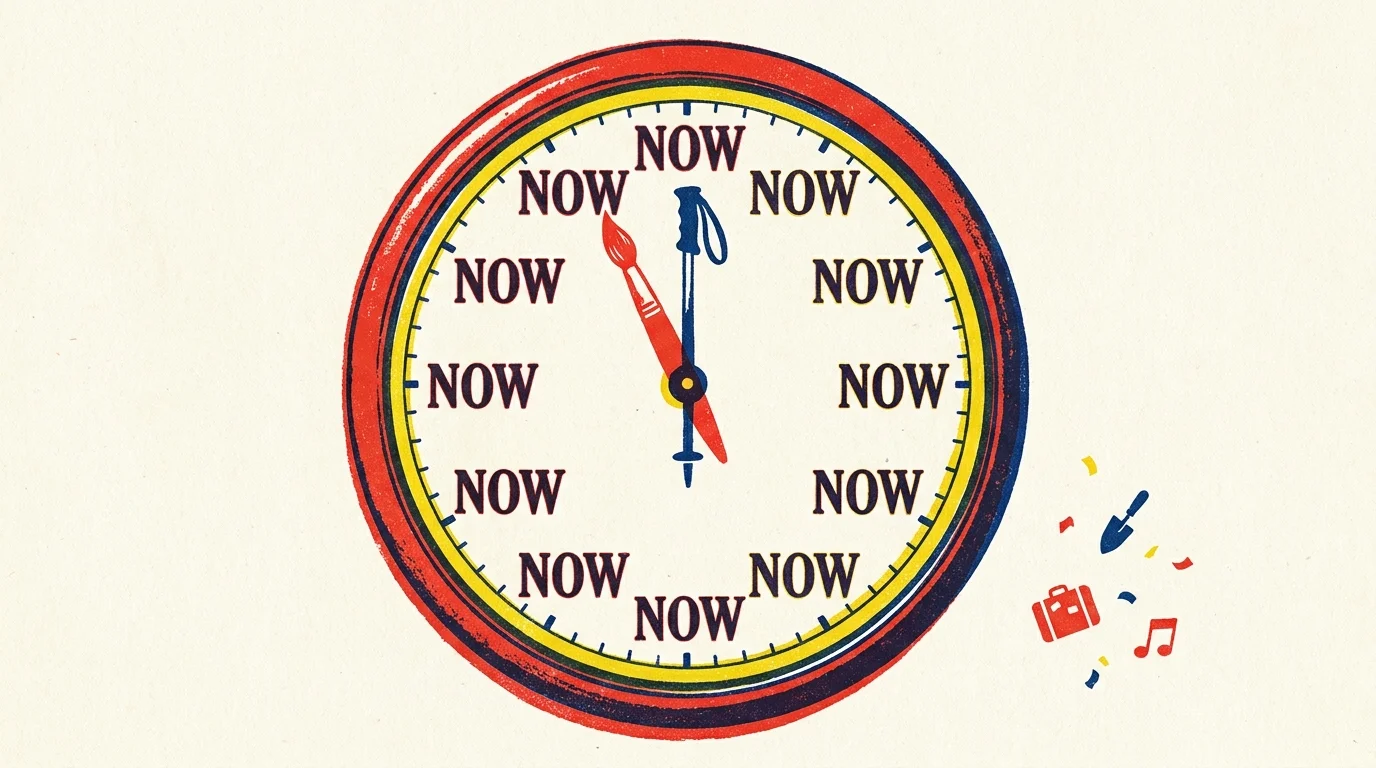
Tip #7: Waiting for the “Perfect” Time to Pursue Dreams
Perhaps the most tragic mistake a senior can make is operating under the illusion of infinite time. You may have spent your career telling yourself that you would write a novel, learn conversational Spanish, or take a cross-country road trip “someday” when the conditions were absolutely perfect. Joyous retirees understand that “someday” is a myth; Tuesday is a perfectly good day to begin. Waiting until you have more money, better weather, or fewer aches and pains often results in dreams being permanently deferred.
Your physical mobility and cognitive sharpness are precious assets that you must utilize aggressively today. If you want to take up woodworking, do not wait until you can afford a professional shop; buy a beginner’s carving kit and watch an instructional video at your kitchen table tonight. If you dream of visiting Italy but a two-week tour feels too physically demanding, book a shorter, more relaxed trip, or explore local Italian cultural festivals and cooking classes right in your own city. Taking messy, imperfect action generates momentum and floods your brain with dopamine. The individuals who report the highest levels of life satisfaction are those who consistently engage in novel experiences and challenge themselves to learn new skills. You have already put in the decades of hard work required to reach this stage of life; now, you must grant yourself the absolute permission to chase your curiosities without delay.
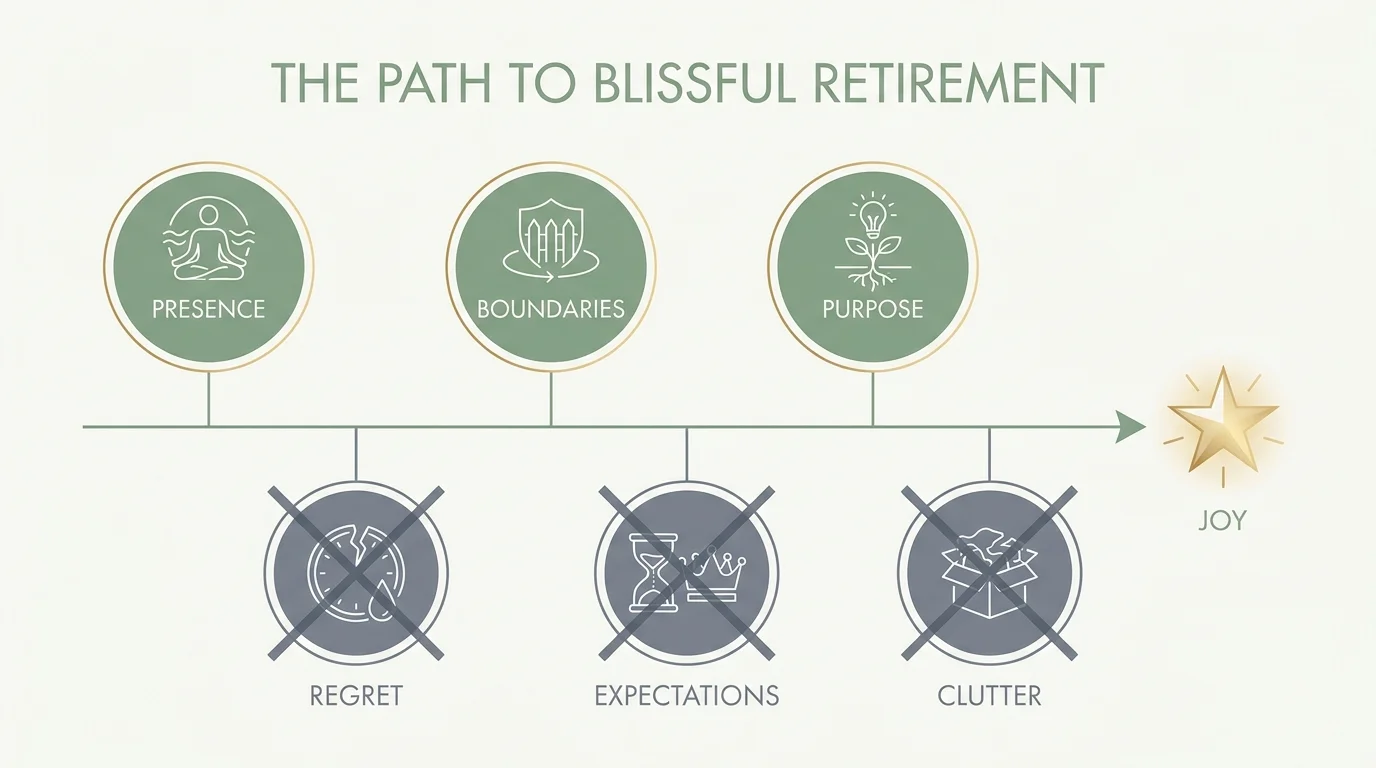
The Takeaway: Living a More Blissful Retirement
Designing an exceptional chapter in your later years relies heavily on the art of subtraction. By deliberately eliminating the habits, mindsets, and obligations that no longer serve you, you clear a beautiful path for the experiences that actually matter. You possess the wisdom to know that true joy does not stem from accumulating more possessions or perfectly meeting the expectations of society; it arises from living authentically and protecting your daily peace.
When you stop wasting time on past regrets, toxic relationships, and uncontrollable future outcomes, you unlock an incredible reservoir of energy. You can redirect that vitality toward nurturing your physical health, deepening your most cherished relationships, and pursuing the passions you set aside during your working years. Your retirement is a blank canvas, and you hold the brush. Paint it with vibrant colors, bold decisions, and an unwavering commitment to your own personal fulfillment.
Frequently Asked Questions
How do I stop worrying about running out of money and actually enjoy my daily life?
Financial anxiety is incredibly common among seniors, even those with well-funded portfolios. The key is separating facts from feelings. Schedule a comprehensive review with a fiduciary financial planner to create a concrete, stress-tested withdrawal strategy. Once you have a mathematical plan in place, limit your exposure to fear-mongering financial news. Trust the system you built, stick to your established budget, and focus your daily attention on free or low-cost activities that bring you immense joy, like spending time in nature or reading a great book.
Is it normal to feel a bit lost or depressed during the first few months after I stop working?
It is entirely normal to experience a grieving process when you leave your career. For decades, your job provided a structured routine, social interaction, and a clear sense of identity. Suddenly losing that framework can trigger feelings of disorientation or a lack of purpose. Give yourself grace during this transition period. You can combat these feelings by building a new, flexible routine that incorporates physical exercise, intellectual stimulation, and regular social outings. Gradually, your new identity as a retiree will begin to feel comfortable and exciting.
How can I politely say no when family members ask for too much of my time?
Clear, compassionate communication is your best tool. You can be supportive without sacrificing your own autonomy. Try using a gentle but firm script, such as: “I love spending time with the grandchildren, but I am reserving my Tuesdays and Thursdays for my own activities. I would be happy to help out on Wednesday mornings.” Establishing these boundaries early on prevents resentment from building and ensures that the time you do spend with your family is joyful and completely present.
What are the absolute best daily habits for maintaining long-term happiness?
The most joyful older adults consistently engage in three core habits: physical movement, social connection, and lifelong learning. A daily thirty-minute walk improves cardiovascular health and boosts your mood. Calling a friend or meeting a neighbor for coffee prevents the isolation that often accompanies aging. Finally, challenging your brain—whether by reading a non-fiction book, playing a strategic game, or practicing a new instrument—promotes neuroplasticity and keeps you mentally sharp. Combining these three elements creates a powerful foundation for a thriving, vibrant lifestyle.
For a wide range of resources for older adults, visit AARP and the National Council on Aging (NCOA). Health information is available from the National Institute on Aging.
Disclaimer: This article is for informational and inspirational purposes only. It is not a substitute for professional medical, financial, or psychological advice. Please consult with a qualified expert for guidance tailored to your individual needs.







Leave a Reply