

Stretching your retirement savings becomes effortless when you choose a state where your monthly budget naturally goes further. Understanding exactly how much retirees spend monthly in the most affordable states allows you to plan your future with confidence; you can maximize your lifestyle without depleting your nest egg. While national average retirement expenses often exceed $4,500 per month, several welcoming regions offer an engaging life for significantly less. By exploring detailed monthly costs—from housing and healthcare to groceries and leisure—you can easily identify the perfect geographic match for your personal financial goals. These affordable destinations provide the perfect backdrop for enjoying your golden years without constant financial worry.
Tip #1: Mississippi — The Magnolia State Budget
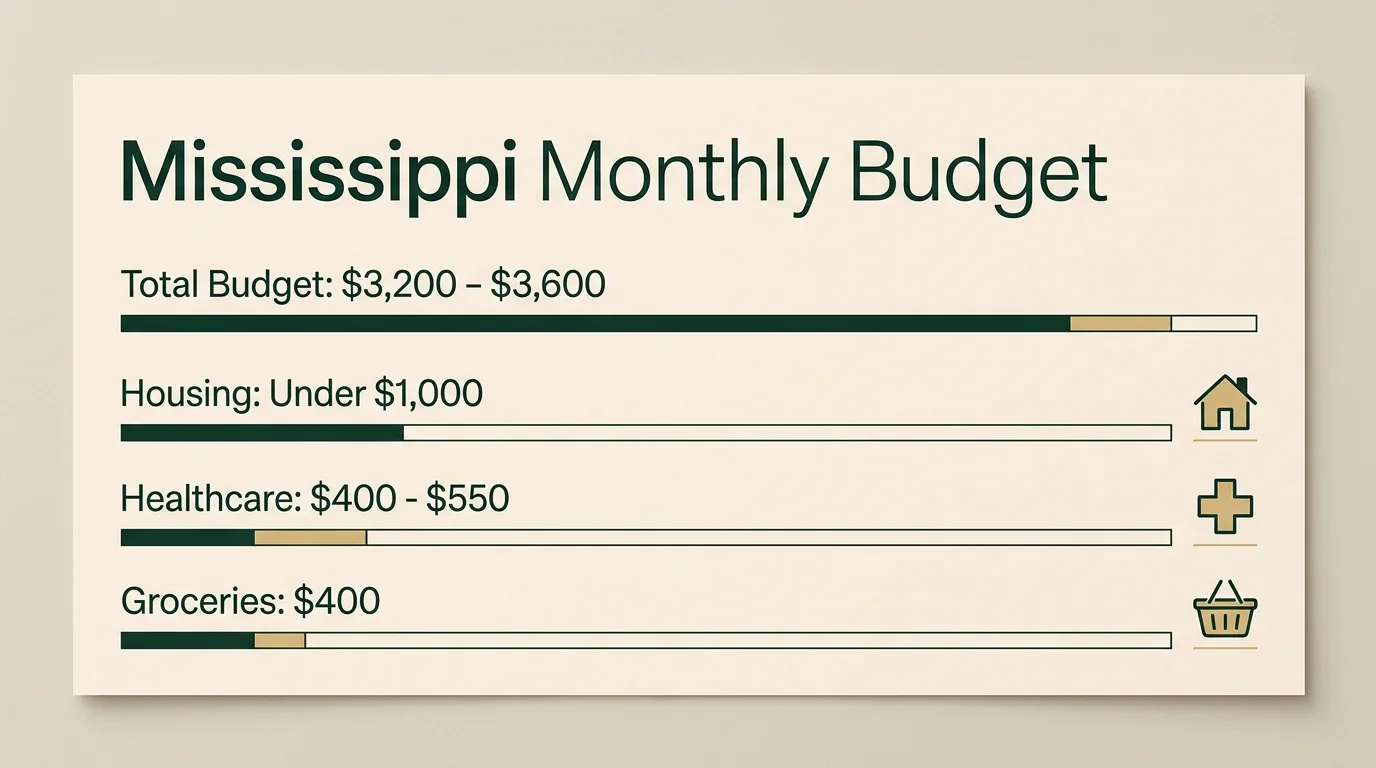
Mississippi consistently ranks as the most cost-effective place to spend your post-career years. Retirees here typically spend between $3,200 and $3,600 per month, allowing for a comfortable lifestyle that does not require a massive portfolio. The biggest driver of these exceptionally low costs is the housing market; whether you decide to rent a modern, cozy apartment or buy a spacious single-family home, your monthly housing expense will rarely exceed $1,000. Furthermore, the state boasts some of the lowest property tax rates in the country. This incredibly friendly tax environment frees up a significant portion of your monthly retiree budget for leisure, travel, and personal hobbies.
Taxes play a crucial role in any comprehensive financial plan, and Mississippi shines brightly in this specific category. The state completely exempts all qualified retirement income from state income taxes. This means your Social Security benefits, pension payouts, and withdrawals from your 401(k) or IRA accounts remain entirely yours. By avoiding these levies, you immediately gain hundreds of dollars in monthly disposable income compared to living in a high-tax coastal state.
When you factor in healthcare, the region remains incredibly competitive. You can expect to allocate roughly $400 to $550 monthly for Medicare Part B premiums, supplemental insurance policies, and routine out-of-pocket medical expenses. Because the overall cost of living is approximately 15 percent below the national average, your grocery bills and utility payments also shrink substantially. A couple can comfortably stock their pantry for about $400 a month, leaving plenty of room for dining out at local restaurants and enjoying regional cuisine.
Transportation and utilities are other essential areas where your dollars stretch significantly further in the Magnolia State. The famously mild southern winters mean you will spend far less on heating fuel, keeping your year-round utility bills highly predictable; you will rarely see the massive seasonal financial spikes common in northern states. Gas prices and car insurance premiums also trend well below the national average, which is absolutely perfect if you love taking weekend road trips to the Gulf Coast or exploring local historic landmarks.
To make the absolute most of this affordability, focus your property search on community-rich towns like Hattiesburg or Oxford. These charming areas provide excellent medical facilities, cultural events, and continuing education opportunities without the premium price tags. By securing a home in one of these lively towns, you ensure that your daily routine is as intellectually enriching as it is economically viable.

Tip #2: Oklahoma — The Sooner State Budget
Oklahoma offers a fantastic blend of wide-open spaces, friendly communities, and a remarkably low cost of living. A typical retiree in the Sooner State spends approximately $3,300 to $3,700 per month, making it an ideal destination for stretching a fixed income over the long term. Housing affordability is the absolute cornerstone of this financial advantage. You can easily find comfortable, modern homes in safe neighborhoods for a fraction of what they would cost in the Northeast or on the West Coast. Average monthly mortgage or rent payments hover around $950, which leaves ample room in your budget for the fun and engaging aspects of retirement.
Your everyday expenses—from fresh groceries to personal care services—are noticeably cheaper here. A standard trip to the supermarket will cost you about 10 to 12 percent less than the national average. When you pair these substantial savings with lower transportation costs, the financial benefits compound quickly over the years. Gas prices in Oklahoma are routinely among the lowest in the nation; this makes driving to visit family across state lines or taking extensive cross-country RV trips much more affordable.
Navigating taxes is straightforward and highly beneficial for older adults in this region. Oklahoma does not tax Social Security benefits, and the state offers a generous flat deduction for other common types of retirement income. This thoughtful, senior-friendly tax structure helps you preserve your hard-earned wealth and prevents your monthly budget from being siphoned away by unexpected state obligations. You can confidently project your annual expenses knowing that the tax burden will remain pleasantly light.
Healthcare is a vital consideration, and Oklahoma provides robust medical options through major hospital networks in cities like Tulsa and Oklahoma City. Your monthly healthcare expenditures will likely range between $450 and $600, depending heavily on your specific Medicare supplement plans and prescription medication needs. While property values are remarkably low, it is wise to budget a little extra for comprehensive homeowners insurance due to the region’s dynamic seasonal weather patterns.
For a vibrant yet deeply economical lifestyle, consider settling in engaging smaller cities like Norman or Stillwater. These lively university towns offer an abundance of cultural activities, collegiate sporting events, and lifelong learning programs that keep your mind sharp and your social calendar full. You can enjoy the energy of a younger community while taking full advantage of senior discounts and specialized local resources.
Tip #3: Arkansas — The Natural State Budget
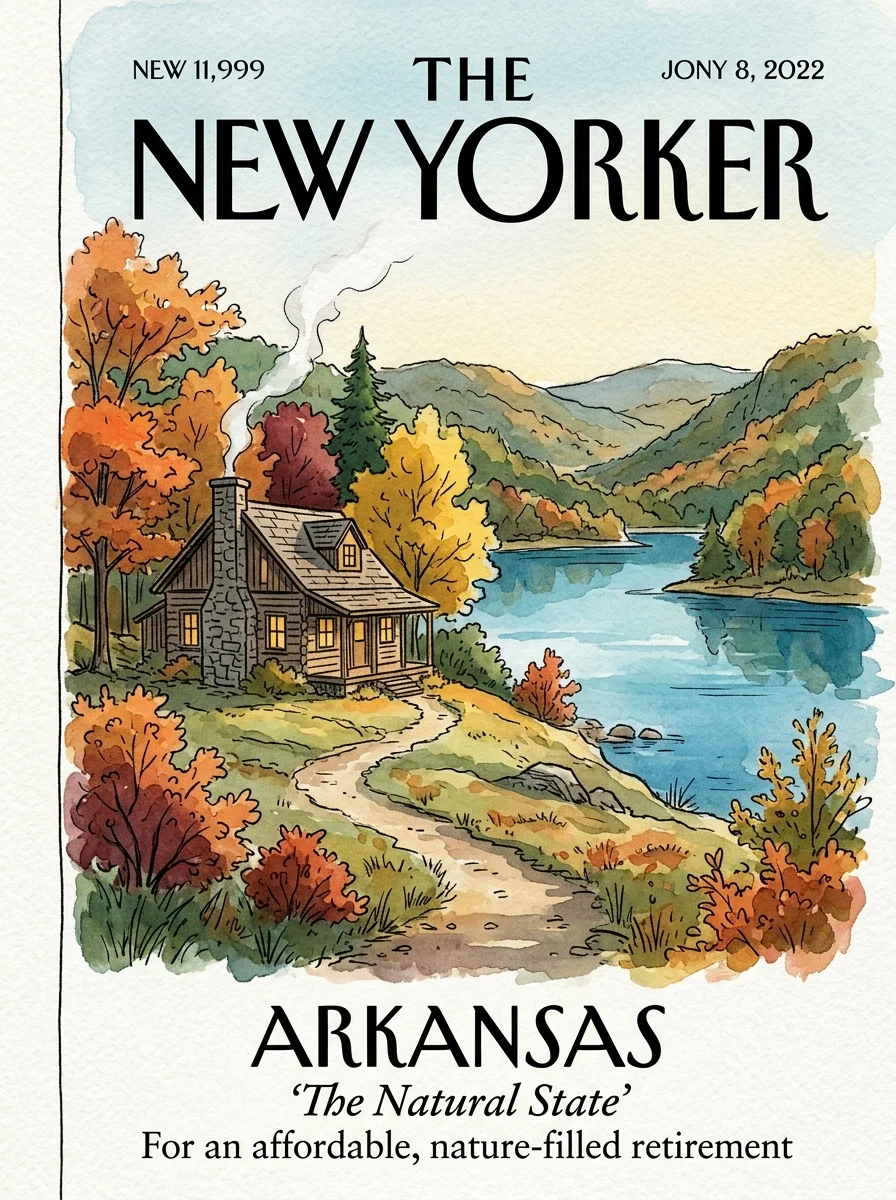
If you envision a retirement surrounded by breathtaking scenery without a hefty price tag attached, Arkansas is a premier choice. Monthly retirement expenses here generally fall between $3,300 and $3,600. The Natural State has long been a hidden gem for budget-conscious seniors, primarily due to its incredibly affordable real estate market. Whether you are looking for a rustic lakeside cabin or a quiet, low-maintenance suburban ranch, monthly housing costs typically range from $800 to $950. Property taxes are exceptionally low, which provides long-term financial stability and fiercely protects you from sudden, unexpected spikes in your cost of living.
Food and utility costs in Arkansas are similarly friendly to your wallet. You will quickly find that local community markets and farm stands offer fresh, affordable produce that makes healthy eating both easy and inexpensive. Expect to spend around $350 to $400 a month on groceries for a two-person household. Utility bills are completely manageable, though you will certainly want to account for increased air conditioning usage during the warm, humid summers; nevertheless, the overall energy costs remain lower than in many densely populated regions.
The state government goes out of its way to welcome retirees through highly favorable tax policies. Arkansas does not tax Social Security benefits, and it offers a significant financial exemption on employer-sponsored pension income and traditional IRA withdrawals. This means substantially more of your money stays right in your bank account each month, allowing you to easily build a comfortable financial cushion for unexpected medical emergencies or spontaneous travel adventures.
Healthcare costs are perfectly aligned with the lower overall cost of living, typically requiring a monthly budget of $400 to $550 for premiums and standard out-of-pocket expenses. To maximize your lifestyle and social engagement, consider moving to purpose-built communities like Hot Springs or the planned retirement haven of Bella Vista. These specific areas cater almost exclusively to active older adults, offering pristine golf courses, extensive walking trails, and highly active social clubs.
By taking full advantage of the abundant, completely free outdoor recreation—such as hiking the scenic trails in the Ozarks or fishing in the state’s crystal-clear rivers—you can enjoy a incredibly rich, fulfilling lifestyle while keeping your entertainment budget close to zero. Arkansas proves that you do not need to spend lavishly to live beautifully.

Tip #4: Alabama — Sweet Home Affordability
Alabama provides a warm, profoundly hospitable environment where your retirement savings can truly thrive. Most retirees find that a monthly budget of $3,400 to $3,800 is more than enough to live a comfortable, worry-free life in the Heart of Dixie. The state is renowned nationwide for its incredibly low property taxes, which consistently rank among the absolute lowest in the entire country. If you choose to buy a home, your annual tax bill will be a mere fraction of what you might pay elsewhere, keeping your total monthly housing costs comfortably below the $1,000 mark.
This state is an absolute paradise for those who desperately want coastal living without paying exorbitant Florida price tags. Towns like Fairhope and Gulf Shores offer beautiful, white-sand beaches, excellent local seafood, and a delightfully relaxed pace of life. Even if you choose to live near the water, the cost of groceries, dining out, and purchasing daily essentials remains remarkably reasonable. You can enjoy regular, delicious meals at local restaurants and participate in community events without ever feeling the pinch on your monthly finances.
Alabama is exceptionally friendly when it comes to long-term taxation. The state entirely exempts Social Security benefits and traditional defined-benefit pensions from the state income tax. This sweeping exemption is a massive advantage for retired public servants, school teachers, and military personnel; it allows you to stretch your fixed income significantly further. Alabama even offers a special property tax exemption for residents over the age of 65, which completely removes the state portion of property taxes from your annual bill.
When budgeting specifically for healthcare in Alabama, expect to set aside approximately $450 to $600 per month. The state is proudly home to world-class medical facilities, particularly clustered around the Birmingham area, ensuring you have immediate access to top-tier specialists and cutting-edge treatments when needed. The mild southern winters also mean you will save a considerable amount of money on seasonal winter clothing and expensive home winterization projects.
While the state does apply standard sales taxes to groceries, the incredibly low cost of living easily and entirely offsets this specific expense. By choosing Alabama as your permanent base, you secure a sun-drenched, culturally rich retirement that deeply respects your hard-earned financial boundaries.

Tip #5: West Virginia — The Mountain State Budget
West Virginia is an truly outstanding destination for retirees who crave a quiet, nature-focused lifestyle alongside unbeatable financial affordability. The average monthly retirement budget here ranges from $3,200 to $3,600, making it one of the most economical and pragmatic choices in the United States. Housing prices are stunningly low; you can easily purchase a beautiful, spacious home with actual acreage for a price that would only secure a tiny, cramped condo in other regions. Monthly housing costs, including taxes and insurance, often fall between $750 and $900, which gives you incredible financial flexibility with the rest of your income.
Daily living expenses are well below the national average, allowing you to easily enjoy a high quality of life on a modest, fixed income. Groceries, healthcare, and transportation are all highly affordable across the board. Because the state is deeply characterized by its small, tight-knit communities, you will invariably find that local businesses offer fair prices and genuinely personalized service. A monthly grocery budget of $350 is entirely realistic, and consistently cheap gas prices make it incredibly easy to navigate the winding, scenic mountain roads.
In recent years, West Virginia has taken significant, deliberate steps to become even more attractive to older adults by actively phasing out the state income tax on Social Security benefits for most taxpayers. This crucial legislative change means your primary source of retirement income is legally protected. Furthermore, the overall tax burden is beautifully light, and property taxes remain highly competitive, ensuring that your long-term financial plan remains deeply secure against the ongoing threat of inflation.
Healthcare is both accessible and affordable, with average monthly costs typically hovering around $400 to $550. Cities like Morgantown—home to West Virginia University—and the state capital, Charleston, offer excellent, modern regional hospitals and highly specialized medical clinics. Morgantown, in particular, provides all the vibrant perks of a bustling college town, including diverse cultural events, thrilling collegiate sports, and inspiring lifelong learning programs.
By fully embracing the simple, scenic life available in the Mountain State, you can effortlessly enjoy a deeply rewarding retirement completely free from the heavy, lingering stress of financial strain.

The Takeaway: Living a More Blissful Retirement
Relocating to one of the country’s most affordable states is a powerful, highly effective strategy for protecting your nest egg while simultaneously upgrading your overall quality of life. As you can clearly see, you absolutely do not need a multi-million-dollar financial portfolio to enjoy a rich, active, and deeply fulfilling retirement. By intentionally choosing a location with highly favorable tax policies, remarkably low housing costs, and affordable healthcare options, you instantly create profound financial breathing room. This extra, highly valuable space in your monthly budget allows you to focus solely on what truly matters to you—whether that means traveling frequently to see your grandchildren, taking up a brand new, exciting hobby, or simply enjoying a peaceful, uninterrupted morning coffee on your porch.
Always remember that the absolute best retirement destination is one that perfectly aligns with both your stark financial realities and your deepest personal passions. Take the time to actively visit these states, thoroughly explore their unique communities, and talk openly to the friendly locals. When you finally find the perfect, harmonious balance of stark affordability and vibrant lifestyle, you will undoubtedly unlock the door to a truly blissful and wonderfully worry-free retirement.
Frequently Asked Questions
Does a lower cost of living mean I will receive lower quality healthcare?
Not at all; many affordable states are proudly home to renowned medical centers and massive regional hospital networks. Cities like Birmingham, Alabama, and Morgantown, West Virginia, host major university research hospitals that consistently provide top-tier, cutting-edge care. When you thoughtfully plan your relocation, simply ensure you choose a vibrant community within a reasonable driving distance of these specialized medical hubs to guarantee seamless access to excellent physicians.
Should I rent or buy a home when relocating for retirement?
Both options offer distinct, powerful advantages depending entirely on your specific long-term goals. Renting provides incredible flexibility and completely frees you from stressful maintenance responsibilities, which is absolutely perfect if you want to test out a new city for a year. Buying a home in these affordable states, however, allows you to legally lock in historically low housing costs and build solid equity; it is very often the more cost-effective choice if you plan to settle down permanently.
How do state taxes impact my overall retirement budget?
State taxes can dramatically and instantly alter your monthly disposable income. States that legally exempt Social Security benefits and traditional pension income from taxation allow you to easily keep hundreds of extra dollars each month. When evaluating a potential move, always look closely at the total tax burden—including income, property, and sales taxes—rather than just looking at the base cost of housing. This comprehensive view ensures you will not be caught off guard by frustrating hidden expenses.
What hidden costs should I consider before moving to a new state?
While housing and taxes are undoubtedly the most visible expenses, you must also carefully account for significant changes in your transportation, utility, and comprehensive insurance costs. Moving to a beautiful, rural area might require you to drive much further for groceries or healthcare, which directly increases your monthly fuel budget. Additionally, regional weather patterns can heavily impact your heating or cooling bills; always factor these subtle lifestyle adjustments directly into your comprehensive retirement planning.
For a wide range of resources for older adults, visit AARP and the National Council on Aging (NCOA). Health information is available from the National Institute on Aging.
Disclaimer: This article is for informational and inspirational purposes only. It is not a substitute for professional medical, financial, or psychological advice. Please consult with a qualified expert for guidance tailored to your individual needs.








Leave a Reply