

Opening an unexpected social security letter can jolt your retirement plans, especially when it claims you owe money back. Acting within the first few days protects your monthly cash flow and keeps your peace of mind intact.
Millions of adults over 50 rely on steady benefits to fund travel, hobbies, and family adventures. Knowing which ssa notice triggers an automatic check reduction gives you immediate control over your budget.
Follow these practical steps to spot urgent social security mail, beat strict deadlines, and protect the retirement lifestyle you earned.
Lifestyle Idea #1: Spot an Overpayment Notice Before the 30-Day Clock Runs Out
A peaceful retirement thrives on predictable income—whether you are booking a coastal getaway or hosting grandchildren for the weekend. Yet one envelope in your mailbox can threaten half of your monthly check if you set it aside too long.
Among all types of social security mail, an overpayment notice demands your fastest attention. This official letter states that the Social Security Administration (SSA) paid you more than you should have received and intends to recover the balance.
Overpayments happen far more often than most retirees realize. SSA sends roughly 2 million overpayment notices each year across its benefit programs, affecting households of every income level.
Between fiscal years 2020 and 2023, the agency issued approximately $32.8 billion in Old-Age, Survivors, and Disability Insurance (OASDI) and Supplemental Security Income (SSI) overpayments, including nearly $8.9 billion in fiscal year 2023 alone. With 76.1 million people—including 59.8 million adults aged 65 or older—receiving Social Security, SSI, or both as of October 2026, millions of families need a clear response plan.
The stakes grew significantly higher under rules for new overpayments established on or after April 25, 2025. Under this policy, SSA automatically withholds 50% of your monthly OASDI benefit—covering retirement, survivor, family, and disability payments—until the debt is paid in full.
That 50% withholding rule replaced a brief March 27, 2025 policy that reinstated 100% withholding after a March 2024 10% cap. If an overpayment stems from fraud or similar fault, SSA still applies 100% withholding, while SSI overpayments remain capped at 10% of the monthly federal payment.
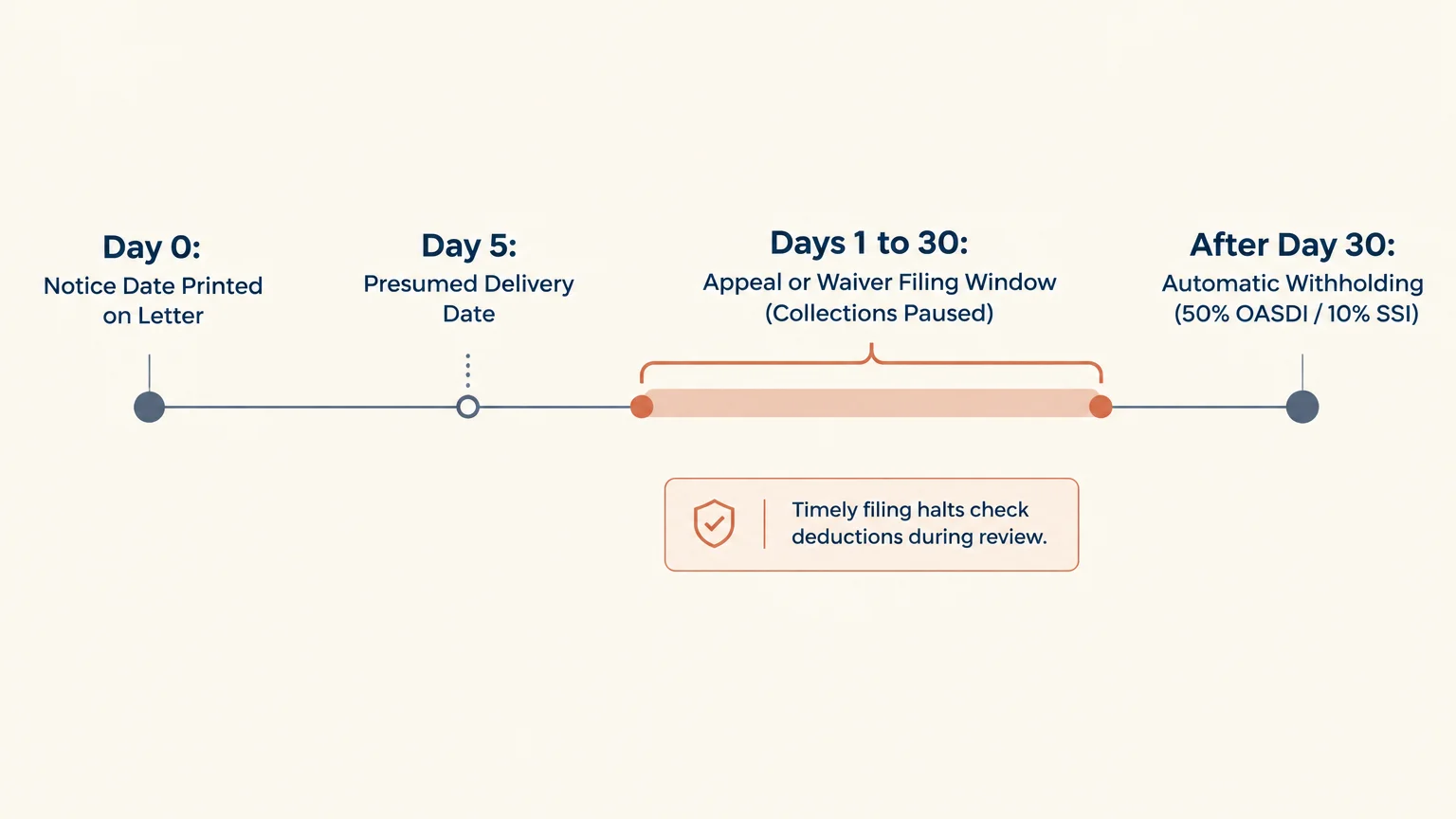
Here is the critical deadline that saves your monthly budget: SSA waits at least 30 days from the date printed on your overpayment notice before cutting your check. The agency assumes you received the letter 5 days after the notice date unless you prove otherwise.
When you file an appeal or a waiver request within that 30-day window, SSA pauses collection until it reaches a decision. Missing that deadline triggers automatic 50% OASDI or 10% SSI withholding, which can instantly disrupt rent, groceries, and social plans.
Treat the notice date on that envelope like a reservation deadline you cannot miss. Opening your mail promptly and circling the 30-day mark on your calendar gives you breathing room to respond calmly.
Lifestyle Idea #2: Audit Every Dollar Because Official Notices Often Contain Errors
Retirees spend decades building good habits around double-checking restaurant bills and bank statements. Bring that exact same sharp eye to any benefit letter claiming you owe money.
Never assume the government’s math is flawless. In a September 4, 2026 audit of OASDI overpayment notices, the SSA Office of the Inspector General (OIG) found that 46% of reviewed notices failed to meet official policy requirements.
Those flawed letters omitted required explanations of how or when the overpayment occurred, left out appeal or waiver rights, or listed inaccurate dollar amounts. Even worse, the same audit revealed that 63% of beneficiary explanation requests were processed incorrectly.
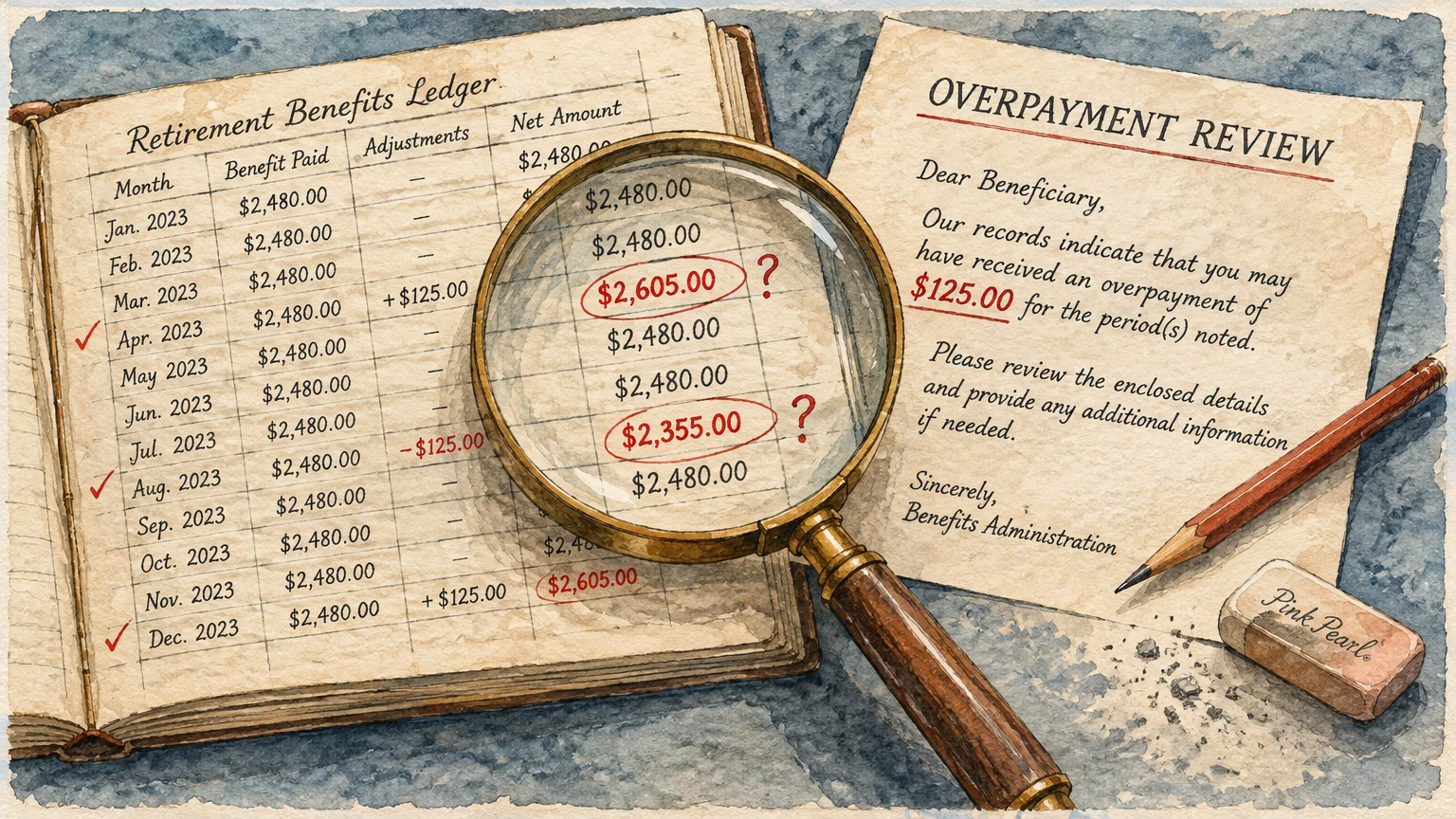
Before you send a single dollar back, verify every detail on your ssa notice against your own financial records. Pull your bank statements, recent tax returns, and past benefit letters so you can trace deposits month by month.
Look closely at the timeframe listed in the letter and compare it to major life transitions, such as when you stopped part-time work or switched benefit types. Errors frequently arise when earnings reports and benefit adjustments cross paths slowly.
If you believe you were never overpaid—or if you spot a mistake in SSA’s dollar total—you have the right to challenge the notice formally. You have 60 days from receiving the letter (5 days after the notice date) to file a Request for Reconsideration, unless you establish good cause for a late filing.
You can submit this formal appeal using Form SSA-561-U2 by mail or file online at secure.ssa.gov/iApplNMD/start. Keep copies of every page you send, along with dated postal receipts or online confirmation screens.
Remember how the two clocks work together: the 60-day deadline preserves your right to appeal, while the 30-day deadline keeps your full monthly check coming during the review. Filing within 30 days accomplishes both goals at once and protects your lifestyle from sudden financial strain.

Lifestyle Idea #3: Request a Waiver or Affordable Payment Plan to Protect Your Daily Lifestyle
Sometimes an audit confirms that an overpayment really did happen, even though you reported your income honestly and followed every rule. In that moment, protecting your everyday quality of life becomes your top priority.
You should never have to give up medication, skip community lunches, or sell cherished belongings to pay back an agency mistake. Social Security offers two strong tools to keep your budget livable: a full waiver or a reduced monthly repayment plan.
If you agree the overpayment occurred—yet it was not your fault and you cannot afford to repay it, or collection would be unfair—you can request a waiver at any time using Form SSA-632-BK. Filing that waiver within 30 days of your notice date stops withholding immediately while SSA reviews your finances.
Smaller balances come with an even faster shortcut. When you are not at fault and the overpayment is $2,000 or less, SSA instructs you to call 1-800-772-1213 or contact a local office instead of mailing the paper form, because a representative may resolve it quickly by phone.
If a waiver does not fit your situation, you still do not have to accept a 50% cut to your monthly income. You can ask for a lower monthly repayment—as small as $10 per month in qualifying cases—spread across up to 60 months, up from the older 36-month limit changed in 2024.
To request a smaller monthly deduction or ask SSA to weigh your living expenses, submit Form SSA-634, Request for Change in Overpayment Recovery Rate. You can upload Form SSA-634 directly through your personal my Social Security account without waiting in line.
Taking action early also prevents harsher collection methods if you no longer receive monthly checks or fall behind on payments. In March 2025, SSA resumed using the Treasury Offset Program (TOP), which allows the government to intercept federal income tax refunds and certain federal or state payments.
The agency can also collect delinquent balances through wage garnishment if you work part-time in retirement. Setting up an approved waiver or realistic monthly plan keeps your tax refund intact for home projects, hobbies, or family vacations.
Lifestyle Idea #4: Watch the 10-Day Window on Disability and SSI Reduction Letters
Adults in their 50s and early 60s often navigate career shifts, health changes, and caregiving duties all at once. If you receive disability benefits or SSI, an urgent social security letter can carry an even shorter fuse than an overpayment notice.
In 2025, the average age of disabled-worker beneficiaries was 56.2, meaning millions of adults over 50 rely on disability payments while bridging the years toward full retirement age. Periodic medical reviews are routine, yet a notice ending those benefits requires immediate focus.
Following a short Form SSA-455 or full Form SSA-454 Continuing Disability Review (CDR), SSA may mail a cessation notice stating your disability benefits will stop. While you have 60 days to file an appeal, waiting more than two weeks can cut off your income while you wait for a hearing.
To keep your monthly checks arriving during the appeal, you must file your appeal and elect Statutory Benefit Continuation (SBC) within 10 days of receiving the notice—calculated as 15 days from the date printed on the letter. Missing that 10-day window means surviving without monthly payments until an appeals decision arrives.
Recipients of SSI face a similar 10-day safeguard whenever SSA proposes cutting or stopping payments. Before reducing or terminating SSI, the agency must send an advance Notice of Planned Action explaining the change.
Appealing that notice within 10 days of receipt using Form SSA-561 preserves payment continuation while your case is pending, with good-cause protections available under SSA rules for documented delays. That rapid response keeps essential bills paid and prevents costly credit card debt.
Because 10 days passes in the blink of an eye, never leave unopened government envelopes sitting on the kitchen counter during a busy week. Scanning the top right corner for the notice date the very day an envelope arrives buys you precious time to call your doctor, gather records, and submit your appeal.
Lifestyle Idea #5: Challenge High Medicare Premiums After Retirement With Form SSA-44
Stepping away from full-time work should bring lighter mornings and fresh freedom, not surprise deductions from your Social Security check. Yet many new retirees open an annual benefit letter and notice higher Medicare Part B or Part D premiums eating into their income.
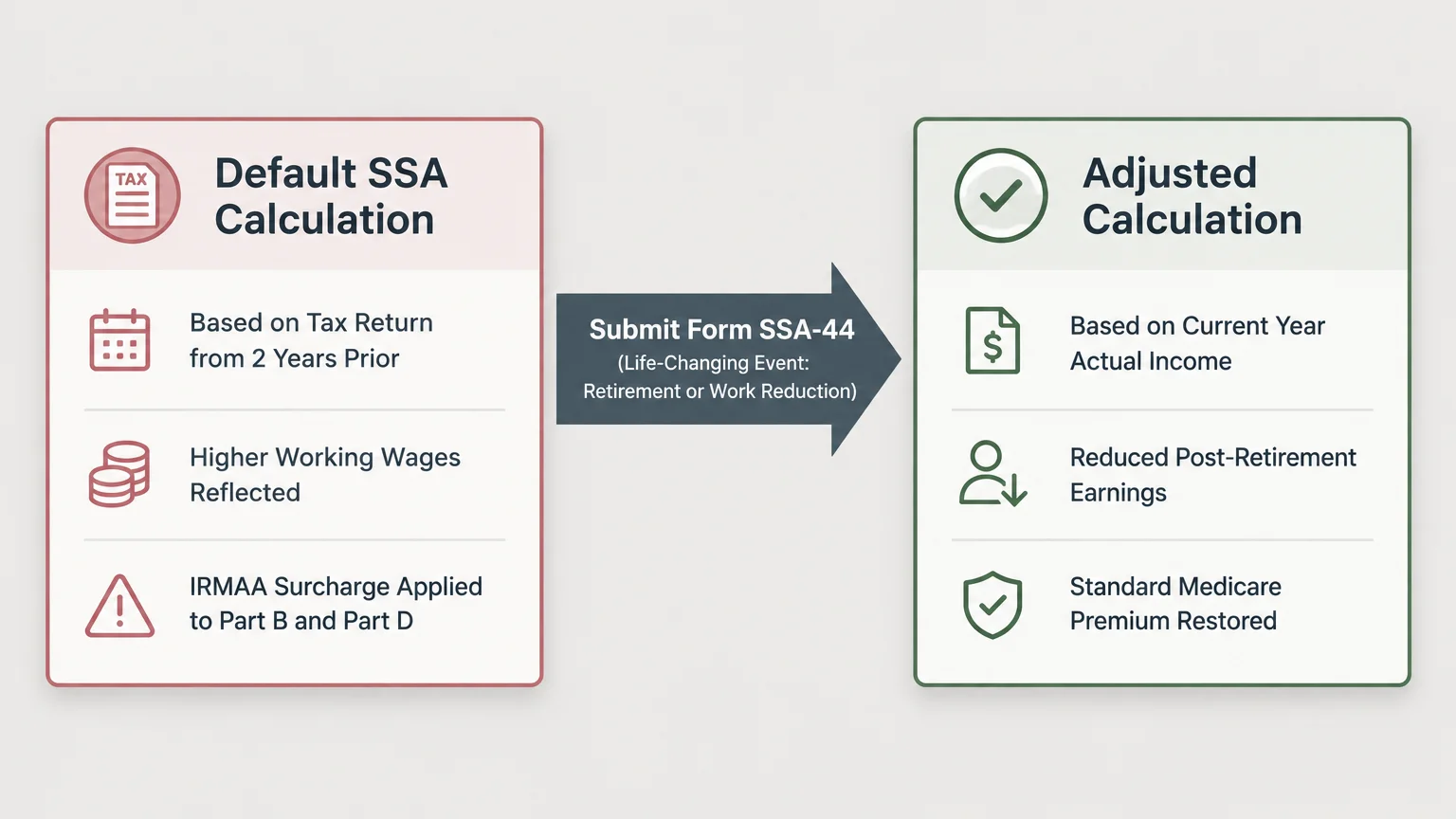
That extra charge is called an Income-Related Monthly Adjustment Amount, or IRMAA, and SSA usually calculates it using your tax return from two years earlier. If you earned a higher salary before retiring, the formula may treat you as if you still bring home that paycheck.
Fortunately, a Medicare IRMAA determination notice comes with a practical fix when your income drops because of retirement or another major milestone. You have 60 days from receiving the notice—deemed 5 days after the notice date—to appeal or file Form SSA-44.
Form SSA-44 applies specifically to qualifying life-changing events that reduce your household income. Qualifying events include retirement, reduced work hours, divorce, or the death of a spouse.
Gathering your paperwork takes very little effort compared to the money you save over a full year. Keep your employer’s confirmation of your retirement date, final pay stubs, or a realistic estimate of your current-year adjusted gross income ready to attach to Form SSA-44.
If your spouse passed away or you recently finalized a divorce, include a certified copy of the certificate or decree so SSA can adjust your premium tier accurately. Filing promptly ensures you stop overpaying for Medicare and frees up cash for fitness classes, weekend trips, or community clubs.
Even if you miss the 60-day window because of a family illness or a move, contact SSA right away to explain the delay and ask about filing with good cause. Protecting your net monthly deposit leaves more room in your budget for the activities that keep you active and connected.
Lifestyle Idea #6: Prepare for the 2027 COLA Notice and the End of Paper Checks
Not every urgent piece of social security mail brings a billing dispute or an appeal deadline. Some letters give you a timely nudge to update how you receive money and plan your annual lifestyle budget.
Announced on October 14, 2026, the 2027 Cost-of-Living Adjustment (COLA) raises benefits by 3.6% for 76 million Americans—averaging an extra $75 per month for retired workers. The higher payment takes effect on December 31, 2026 for SSI recipients and in January 2027 for Social Security beneficiaries.
Your annual COLA notice serves as an official benefit letter confirming your exact new monthly deposit and any Medicare deductions for the year ahead. Beneficiaries who create a my Social Security account and opt into paperless notices by November 18, 2026 can view their notice online up to three weeks early, while paper notices mail throughout December 2026.
Checking that statement as soon as it arrives helps you map out your 2027 travel fund, hobby expenses, and charitable giving with real numbers. It also serves as proof of income if you refinance a home, apply for a senior housing community, or update financial plans.
At the same time, federal payment rules are closing the chapter on traditional mailed benefit checks. Under federal law and Executive Order 14247, effective September 30, 2025, the Treasury and SSA are phasing out paper checks and completing the shift to electronic payments in 2026.
According to a June 2, 2026 SSA blog update, paper checks cost taxpayers an average of $3.07 each to print and are 16 times more likely to be lost, stolen, altered, or returned undeliverable than electronic transfers. Switching to direct deposit into your bank account or enrolling in the Direct Express prepaid debit card keeps your money safe.
Electronic delivery also boosts your lifestyle freedom. Whether you spend winter months in a warmer state or take a three-week river cruise, your benefit arrives reliably on schedule without sitting exposed in an unattended mailbox.
Lifestyle Idea #7: Verify Genuine SSA Mail and Shut Down Sophisticated Scams
Scammers know that seniors respect official paperwork, and they exploit that urgency by mimicking government warnings across email, text messages, and phone calls. Learning how genuine Social Security communication works keeps both your bank balance and your serenity safe.
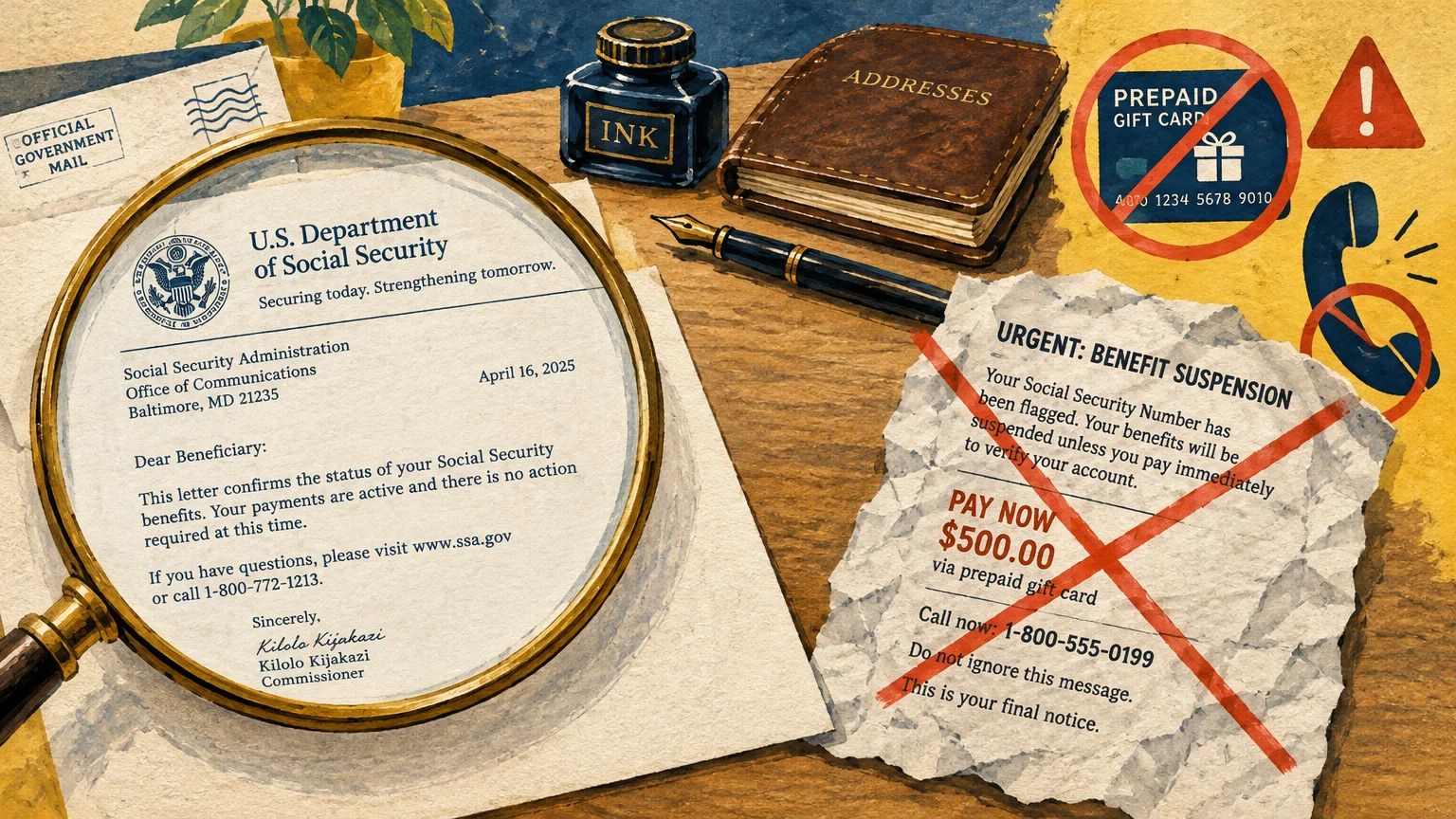
First, trust this ironclad rule: if you actually owe money to Social Security, SSA will always mail an official letter detailing your repayment options and appeal rights. Genuine agency staff and SSA OIG investigators never threaten immediate arrest or claim your Social Security number has been suspended.
Real representatives will never send unsolicited text messages about benefit problems, demand that you keep a call secret from family, or tell you to pay a debt in unusual ways. Any demand for gift cards, prepaid debit cards, wire transfers, cryptocurrency, mailed cash, or gold and silver is 100% a scam.
Recent warnings highlight how creative fraudsters have become between 2025 and 2026. On November 12, 2025, SSA OIG alerted the public to emails carrying fake OIG letterhead attachments threatening to suspend a recipient’s Social Security number within 24 hours over alleged criminal activity.
In February and March 2026, OIG warned of a surge in phishing and malware emails claiming a person’s Social Security statement was ready to download, alongside third-party websites charging unnecessary fees for Social Security card services. Then, on July 29, 2026, SSA warned that scammers were pretending to transfer calls directly to SSA or OIG—a capability that legitimate companies and other agencies simply do not have.
If an email, phone call, or suspicious letter pressures you to act in the next few hours, pause and verify independently. Close the email, hang up the phone, and never click embedded links or call back a number supplied by a caller.
Instead, type ssa.gov directly into your browser or call 1-800-772-1213 to check your account status with a verified representative. If you encounter a scam, report it immediately at oig.ssa.gov or ssa.gov/scam so investigators can track the schemes and protect other retirees.
Lifestyle Idea #8: Lock Down Your Digital Account and Set Up a Retirement Mail System
Staying on top of an unexpected ssa notice should never feel like a full-time job. Building a simple mail and digital routine takes less than an hour once, yet saves you stress for years to come.
Start by bringing your online access up to current security standards. Since June 7, 2025, SSA no longer accepts legacy Social Security usernames and passwords, so every user must sign in to my Social Security using Login.gov or ID.me.
Setting up that secure login today lets you download a fresh benefit letter anytime, track pending appeals, and upload forms such as Form SSA-634 right from home. It also safeguards your banking details under stronger federal verification rules.
As of April 28, 2025, changing your direct deposit by phone at 1-800-772-1213 requires generating a one-time PIN at ssa.gov/PIN inside your my Social Security account. If you prefer offline help, you can still update direct deposit in person at a local SSA office or a participating bank.
Next, organize your physical social security mail with a single brightly colored folder kept in an easy-to-reach spot near your kitchen or desk. Label it clearly and store every award letter, COLA notice, Medicare statement, and appeal confirmation inside by date.
Whenever a new envelope arrives, write the date you opened it right across the top margin, then check whether a 10-day, 30-day, or 60-day clock applies. Adding a quick reminder in your phone or wall calendar turns vague anxiety into a clear, manageable appointment.
Finally, share your system with a trusted partner—such as a spouse, adult child, or close friend—especially before long vacations. Having someone check your mail weekly while you travel ensures no time-sensitive ssa notice sits unseen on your counter.

Putting It into Practice: Small Steps for Big Changes
Taking charge of your retirement paperwork creates space for everything you enjoy most, from morning walks with neighbors to long-awaited family trips. You do not need to master every federal rule today; small, steady actions keep you completely protected.
Begin with a 15-minute checkup this week. Visit ssa.gov to confirm your Login.gov or ID.me credentials, verify that your direct deposit is active, and opt into paperless notices if you want early access to your 2027 COLA statement.
Grab a bright folder for your desk and place your most recent benefit letter and tax return inside so key dates are always at your fingertips. If an overpayment notice or Medicare adjustment letter ever arrives, open it immediately, mark your 10-day, 30-day, or 60-day deadline, and call 1-800-772-1213 with your notes beside you.
When you handle official mail calmly and promptly, you stay in the driver’s seat of your finances. That peace of mind lets you spend less time worrying about envelopes and more time savoring a rich, active, social retirement.
For resources on retirement living, travel, and finance, visit AARP. Official information on Social Security is available at SSA.gov. For travel advisories, consult the U.S. Department of State.
Frequently Asked Questions
What should I do if an overpayment notice arrives while I am traveling away from home?
SSA assumes you received a mailed notice 5 days after its printed date, so extended travel can shrink your 30-day pause window. Log into your my Social Security account via Login.gov or ID.me to check electronic messages while you are away, and save boarding passes or travel receipts showing when you actually returned home.
Call 1-800-772-1213 as soon as you spot the notice to explain your travel dates and file your waiver or appeal right away. Asking a trusted family member to watch your mailbox during long trips prevents surprises altogether.
Can I invite a family member or friend to help me handle an urgent SSA notice?
Yes—having a calm, supportive spouse, adult child, or trusted friend sit beside you makes phone calls and paperwork far less stressful. They can help organize bank statements, take clear notes during calls, and double-check dates before you mail forms.
If you speak with an SSA representative by phone or in person, you can tell the agent you want your companion present to assist you. You stay in control of every decision while sharing the administrative load.
What happens if I miss the 30-day deadline on an overpayment notice?
Missing the 30-day mark allows automatic 50% OASDI or 10% SSI withholding to begin, yet you still have strong options to fix the problem. You can file Form SSA-561-U2 within 60 days of receipt if you believe the overpayment amount is wrong, or explain good cause if a serious delay prevented timely filing.
You can also request a waiver at any time using Form SSA-632-BK if the debt was not your fault and causes financial hardship. If you just need smaller payments, submit Form SSA-634 to ask for an affordable monthly plan up to 60 months.
How can I tell if an email or letter about my Social Security statement is real?
Be extra cautious with emails claiming your Social Security statement is ready to download, because SSA OIG warned of widespread phishing and malware campaigns using that exact lure in early 2026. Never click links inside unexpected emails or texts, and never pay fees to third-party sites offering card services.
Verify every message by typing ssa.gov directly into your browser and signing in through Login.gov or ID.me, or by calling 1-800-772-1213. Report suspicious letters, emails, or phone calls at oig.ssa.gov or ssa.gov/scam.
Disclaimer: This article provides lifestyle suggestions for informational purposes. Financial, legal, or travel decisions should be made in consultation with qualified professionals.