

You can stretch your hard-earned retirement savings significantly by choosing a location with a low overall tax burden. Relocating to a tax-friendly destination keeps more wealth in your pocket for travel, hobbies, and family visits.
Evaluating state taxes requires looking far beyond income tax rates alone. You must also examine local sales levies and real estate assessments to protect your nest egg.
Discovering the best states to retire taxes helps you build a secure, joyful golden chapter. Explore these top ten low-tax havens to maximize your financial freedom today.
Tip #1: Wyoming
Wyoming consistently offers the lowest total taxes retirees can find anywhere in the country today.
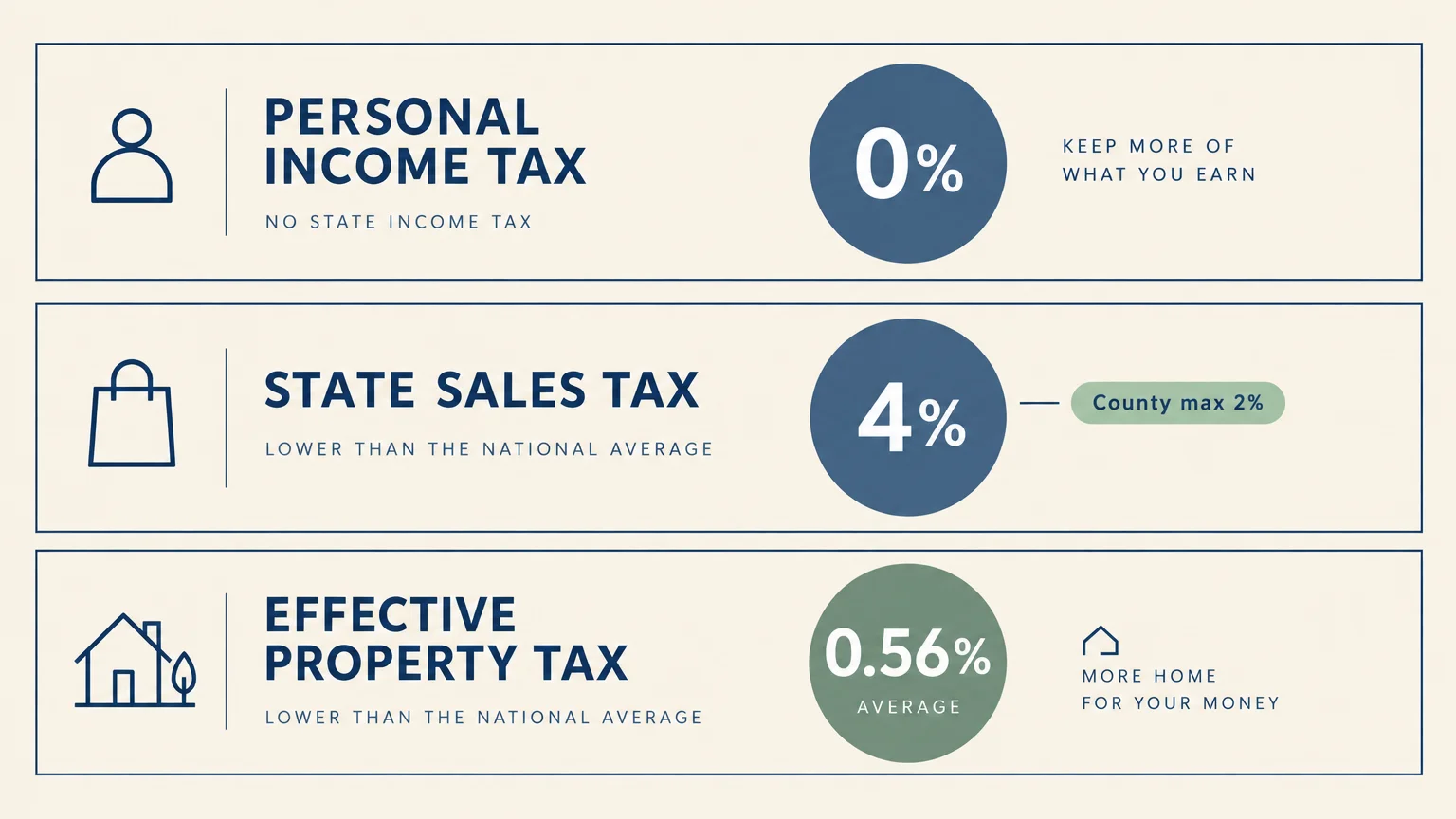
The state levies zero personal income tax on Social Security benefits, private pensions, or 401(k) distributions.
You will never pay state-level taxes on capital gains or dividends earned from your investment portfolio.
Homeowners celebrate an effective property tax retirees appreciate, averaging roughly 0.56 percent across the state.
Statewide sales tax sits at a modest 4 percent, keeping your routine purchases pleasantly affordable.
Local county sales levies cannot exceed 2 percent, preventing excessive checkout totals on retail goods.
Wyoming also imposes no estate or inheritance taxes on the assets you pass to your children.
Furthermore, lower energy and utility expenses help you maintain a comfortable household on a predictable budget.
Majestic mountain landscapes and tax-friendly policies make Wyoming an inspiring location for your golden years.
You can spend your retirement days touring national parks while keeping your tax liabilities near zero.
Low population density ensures public services remain well-funded without burdening your personal finances.
Living in Wyoming allows you to preserve your hard-earned wealth for meaningful lifelong experiences.

Tip #2: Delaware
Delaware provides exceptional tax benefits that make it a premier retirement destination in the mid-Atlantic region.
The First State does not collect any state or municipal sales taxes on consumer goods.
You can buy groceries, furniture, appliances, and vehicle repairs without paying any sales tax at all.
Delaware completely exempts your Social Security income from personal state income taxation.
Residents aged 60 and older can exclude up to $12,500 of qualified pension or retirement account income.
Effective residential property tax rates remain low, averaging approximately 0.59 percent statewide.
Homeowners aged 65 and older can qualify for an additional school property tax credit up to $500.
The state imposes no personal property tax on vehicles, boats, or recreational equipment.
Delaware ranks high among the most tax-friendly states for retirees along the eastern seaboard.
You enjoy convenient access to pristine Atlantic beaches and premier healthcare systems in nearby cities.
Generous tax exemptions allow you to direct more of your monthly income toward leisure and wellness.
Delaware proves you can enjoy coastal living without sacrificing your hard-earned retirement savings.

Tip #3: Alaska
Alaska delivers an extraordinary tax climate for active seniors who love boundless wilderness and fresh mountain air.
It remains one of the notable states with no income tax on wages, pensions, or investments.
Alaska also refuses to levy a statewide sales tax, protecting your wallet whenever you shop.
Seniors aged 65 and older receive a mandatory property tax exemption on their primary residence.
This exemption shields the first $150,000 of your home’s assessed value from municipal taxation.
Many local boroughs expand this senior exemption even further to reduce your housing overhead.
Eligible full-time residents receive an annual dividend payment from the Alaska Permanent Fund.
This payout provides extra cash each autumn to fund your travel plans or family gatherings.
The state collects neither an estate tax nor an inheritance tax from your surviving heirs.
Even utility heating assistance programs exist to help seniors manage seasonal cold weather expenses comfortably.
Alaska pairs immense natural beauty with a tax structure designed to safeguard your independence.
You can fulfill your dream of frontier living while keeping your retirement nest egg intact.

Tip #4: Nevada
Nevada offers plenty of sunshine, world-class entertainment, and an appealing tax structure for retirees.
The state constitution forbids any personal income tax on wages, pensions, or investment distributions.
Your Social Security payments and 401(k) withdrawals remain entirely free from state-level deductions.
Average effective property taxes in Nevada hover at an attractive 0.53 percent.
State law strictly caps annual property tax assessment increases at 3 percent for primary residences.
This statutory limit shields you from sudden housing cost spikes when neighborhood values climb.
Although average combined sales taxes reach 8.23 percent, groceries and prescription medications are completely tax-exempt.
Nevada imposes no inheritance tax or estate tax on your accumulated family wealth.
Active adult communities across Reno and Las Vegas provide diverse social and recreational amenities.
Sunny days and mild winters make staying healthy and active easy throughout the entire year.
Nevada proves that an energetic retirement lifestyle can pair beautifully with low total taxation.
You will enjoy financial peace of mind while exploring stunning desert canyons and mountain trails.

Tip #5: Florida
Florida continues to welcome thousands of retirees each year thanks to its favorable fiscal climate.
The Sunshine State does not assess any personal income tax on retirement income or pensions.
You can withdraw funds from your IRA and 401(k) accounts without state tax withholdings.
Permanent homeowners can claim an initial homestead exemption of up to $50,000 on primary dwellings.
The Save Our Homes assessment cap limits annual property valuation increases to 3 percent maximum.
Many counties grant additional homestead exemptions for seniors aged 65 and older with qualifying incomes.
Florida levies no state estate tax or inheritance tax on transfers of your family wealth.
Statewide sales tax stands at 6 percent, with modest county surtaxes averaging around 1 percent.
Essential groceries and prescription medicines remain fully exempt from state and local sales levies.
Warm weather and ocean breezes encourage an active lifestyle filled with golf, swimming, and boating.
High-quality medical centers and senior resources make transitioning to the state smooth and secure.
Retiring in Florida lets you celebrate your golden years with sunshine and minimal tax worries.
Tip #6: Tennessee
Tennessee combines scenic natural beauty, musical heritage, and a remarkably light overall tax burden for seniors.
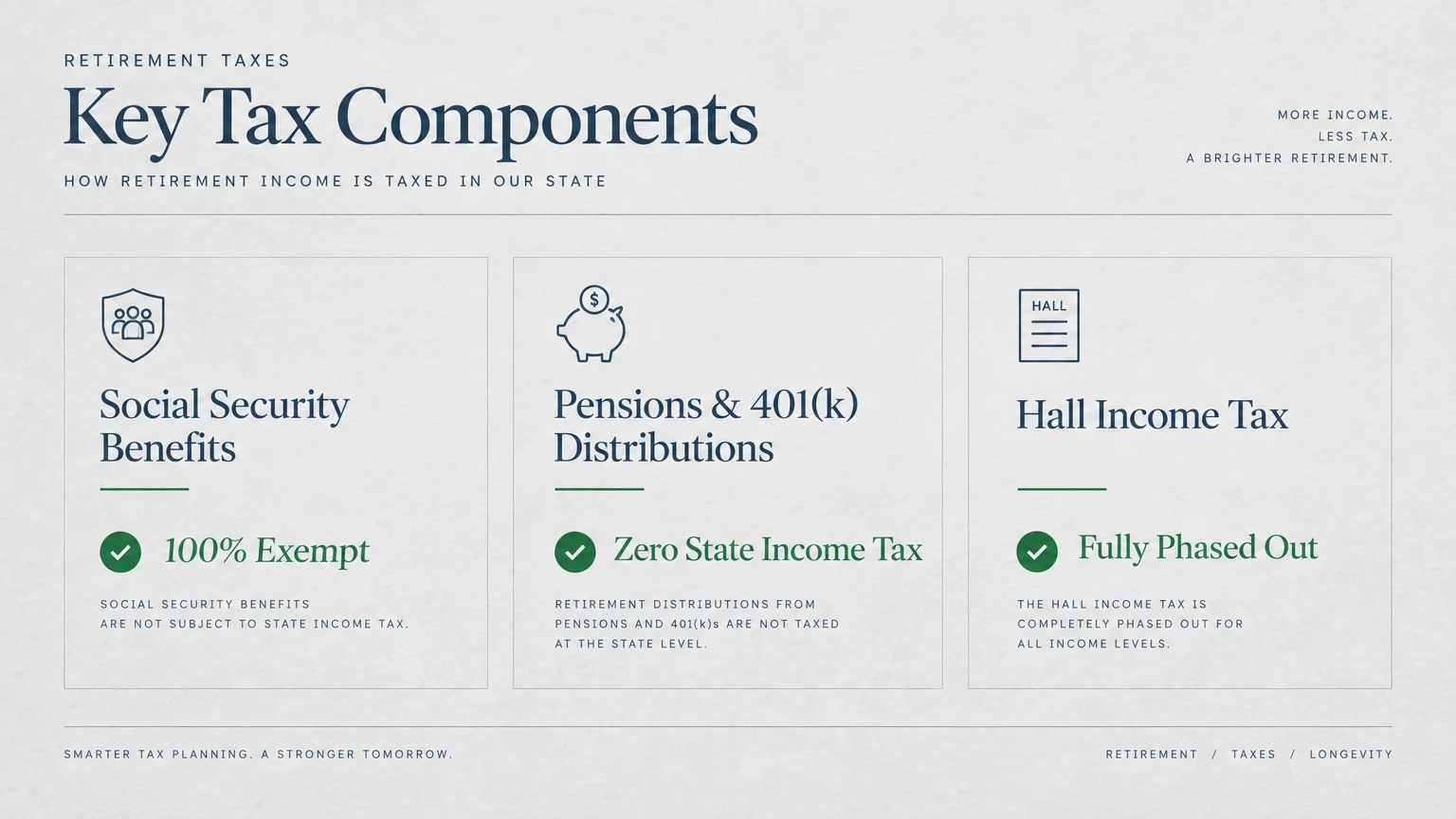
The state has no personal income tax on wages, pensions, or retirement distributions.
The previous Hall Income Tax on dividends and interest has been fully repealed.
Your Social Security benefits remain untouched by state taxes, preserving your full federal entitlement.
Tennessee boasts an enviable effective property tax rate that averages just 0.49 percent statewide.
Qualified homeowners aged 65 and older can participate in the state’s Property Tax Relief Program.
Participating cities and counties also offer tax freezes to keep your property assessments steady.
Although combined sales taxes average 9.55 percent, low housing costs balance your total living expenses.
Tennessee charges no inheritance tax or estate tax when passing your legacy to heirs.
The state ranks among the best states to retire taxes because living costs remain affordable.
Four distinct seasons and welcoming southern communities provide an enriching backdrop for your retirement.
Tennessee gives you the financial breathing room to pursue your favorite creative passions and hobbies.

Tip #7: South Dakota
South Dakota provides a serene, friendly environment with one of the nation’s lowest tax profiles.
Residents pay no state personal income tax on salaries, pensions, or retirement account distributions.
Your investment earnings, capital gains, and Social Security checks remain entirely tax-free at the state level.
South Dakota features a statewide sales tax rate of just 4.2 percent on most retail items.
The state offers an Assessment Freeze for the Elderly and Disabled on qualifying primary residences.
This program prevents municipal assessors from hiking your home’s taxable value as you grow older.
Eligible low-income seniors can also receive property tax reductions through state-sponsored refund programs.
South Dakota does not levy any state inheritance or estate taxes on your family assets.
The cost of living sits well below the national average in both urban and rural towns.
Vibrant cultural communities like Sioux Falls and Rapid City offer excellent hospitals and wellness facilities.
You can experience peaceful midwestern charm while shielding your nest egg from excessive tax burdens.
South Dakota ensures your retirement assets stay dedicated to your personal comfort and happiness.

Tip #8: Mississippi
Mississippi delivers southern hospitality alongside some of the most generous retirement tax exemptions in America.
The state completely exempts all qualified retirement income from state personal income taxation.
This full exemption covers employer pensions, 401(k) distributions, individual retirement accounts, and Social Security benefits.
You can withdraw retirement funds without surrendering a single percentage point to the state treasury.
Seniors aged 65 and older receive an extraordinary homestead exemption on their primary home.
This benefit exempts the first $75,000 of your home’s true value from county ad valorem taxes.
Because median home prices remain modest, many senior residents pay minimal annual property taxes.
Mississippi consistently ranks as one of the most affordable states for everyday living costs.
The state collects no inheritance or estate taxes from your surviving family members.
While sales tax stands at 7 percent, lower housing expenses keep your monthly budget balanced.
Historic towns along the Gulf Coast provide warm weather, fresh seafood, and scenic coastal paths.
Choosing Mississippi allows you to live richly while keeping your total tax exposure very low.
Tip #9: Georgia
Georgia combines temperate weather, thriving towns, and a remarkably senior-friendly tax code for older Americans.
The Peach State does not tax any part of your monthly Social Security retirement benefits.
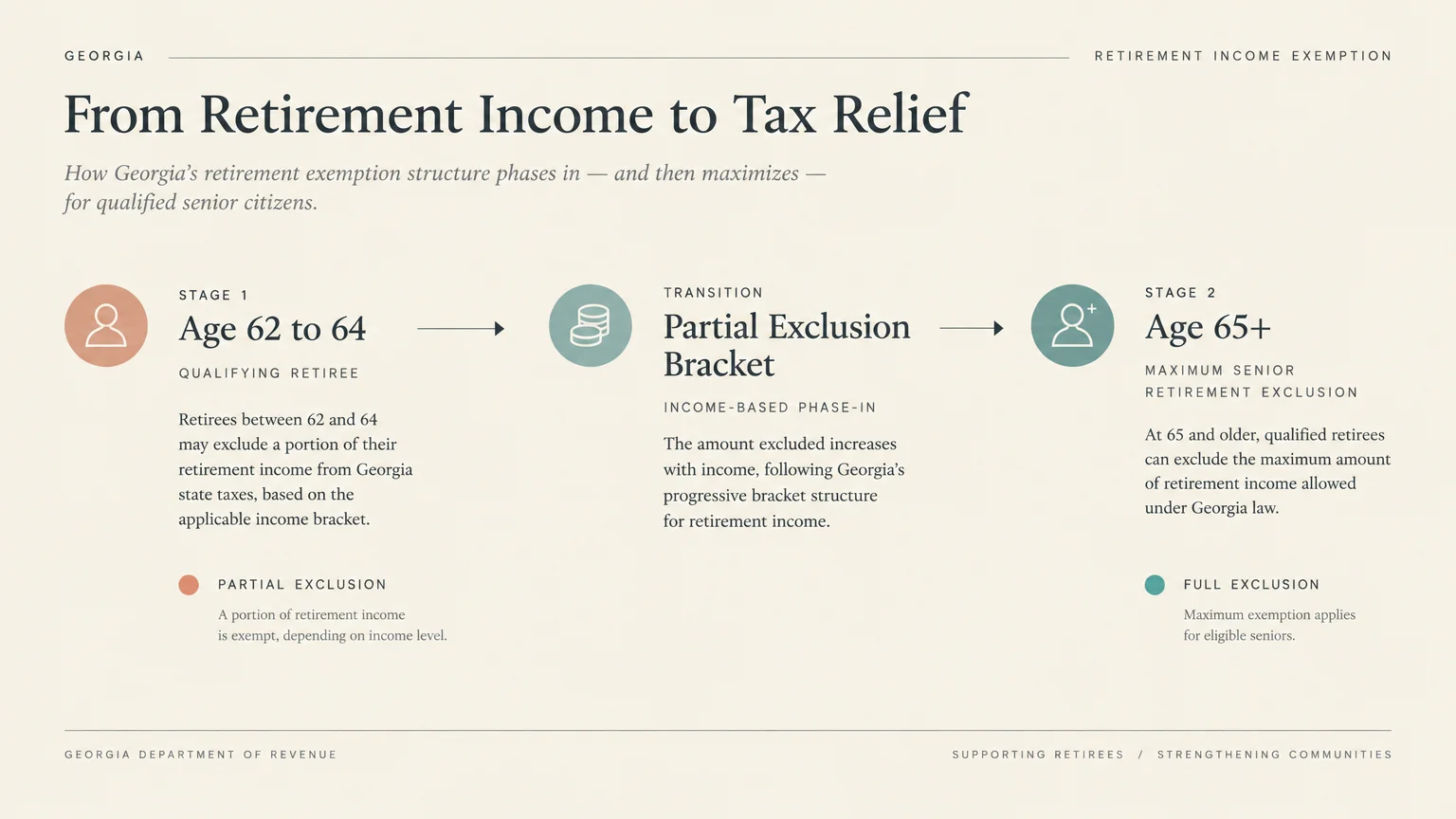
Residents aged 62 to 64 can exclude up to $35,000 of retirement income from state taxation.
When you reach age 65, that state exclusion expands to an impressive $65,000 per person.
A married couple filing jointly can exclude up to $130,000 in qualifying retirement income annually.
Eligible income includes pensions, annuities, interest, capital gains, and qualified retirement distributions.
Homeowners aged 65 and older can qualify for exemptions from state and county school property taxes.
Because school taxes represent the largest share of real estate bills, your payments drop significantly.
Prescription drugs are completely exempt from state sales taxes across all Georgia counties.
Georgia levies no estate tax or inheritance tax on assets transferred to your beneficiaries.
From the Blue Ridge Mountains to coastal Savannah, diverse regions offer fantastic retirement lifestyles.
Georgia allows you to enjoy southern charm while preserving your nest egg through extensive exemptions.

Tip #10: New Hampshire
New Hampshire stands apart in New England as a haven for retirees seeking fiscal independence.
The state levies no personal income tax on earned wages, pensions, or retirement distributions.
Your Social Security benefits remain completely exempt from any state-level income tax assessment.
New Hampshire collects no general sales tax on clothing, dining, home goods, or vehicles.
The state’s tax on interest and dividend income phases out completely by 2027.
While statewide property tax rates run higher, many municipalities offer generous elderly property tax exemptions.
These local exemptions reduce assessed home values for qualifying seniors based on age and income.
Careful home selection in low-tax districts lets you minimize your annual property tax obligations.
New Hampshire imposes no inheritance tax or estate tax on your surviving family members.
The state consistently ranks among the safest and healthiest regions in the entire United States.
Quaint towns, crisp autumn leaves, and stunning mountain lakes offer an extraordinary retirement setting.
Living in New Hampshire allows you to relish northern beauty without paying retail sales taxes.

The Takeaway: Living a More Blissful Retirement
Planning your retirement destination is about creating harmony between financial security and personal fulfillment.
Moving to tax-friendly states for retirees shields your lifelong savings from persistent inflationary pressures.
Remember that headline income tax rates never tell the complete financial story alone.
Always evaluate property tax assessments, municipal sales taxes, and local healthcare costs together.
Compare your anticipated spending habits against the unique tax rules of each prospective destination.
Consult a certified financial planner to calculate how specific tax exemptions apply to your situation.
Taking proactive steps now gives you greater confidence and freedom throughout your golden years.
Your retirement should be an empowering chapter filled with joy, community, and lasting peace.
Frequently Asked Questions
What is the difference between tax rate and total tax burden?
A tax rate is the specific percentage charged on income, purchases, or assessed real estate.
Total tax burden reflects the combined percentage of personal income you surrender to all taxes annually.
States with no income tax often levy higher sales or property levies to fund infrastructure.
How does property tax impact retirees living on fixed incomes?
Rising home values can cause property taxes to climb, increasing your mandatory monthly housing expenses.
Many states protect older adults by offering senior assessment freezes and generous homestead exemptions.
Researching local county assessment rules helps you avoid sudden housing cost increases down the road.
Do states tax federal Social Security benefits?
The vast majority of states completely exempt Social Security payments from state income taxation.
Only a small and shrinking number of states still levy taxes on federal retirement benefits.
Choosing a state with full exemptions ensures you keep every penny of your federal entitlement.
Should taxes be your primary consideration when relocating?
Tax savings are vital, but healthcare quality, proximity to family, and climate matter just as much.
A supportive community and active lifestyle are just as essential for a truly happy retirement.
Weigh all these personal factors alongside tax figures to discover your perfect retirement haven.
For a wide range of resources for older adults, visit AARP and the National Council on Aging (NCOA). Health information is available from the National Institute on Aging.
Disclaimer: This article is for informational and inspirational purposes only; it is not a substitute for professional medical, financial, or psychological advice. Please consult with a qualified expert for guidance tailored to your individual needs.