
Planning a holiday trip with grandkids promises unforgettable memories and meaningful bonding across generations. Taking the time to prepare the right logistics now ensures your journey remains smooth, joyous, and stress-free.
Traveling with grandchildren requires extra foresight, especially when handling modern airport rules, packing routines, and shifting energy levels. You can easily navigate these moving parts with clear planning and sensible strategies.
Reviewing essential requirements before you depart protects your peace of mind and keeps the focus where it belongs: having fun together. Here is everything you need to know for a seamless family holiday travel adventure.
Tip #1: Secure Notarized Consent and Medical Authorization Early
Taking grandchildren on vacation without their parents requires specific legal documentation. You must secure written permission before departing to prevent complications during transit or medical emergencies.
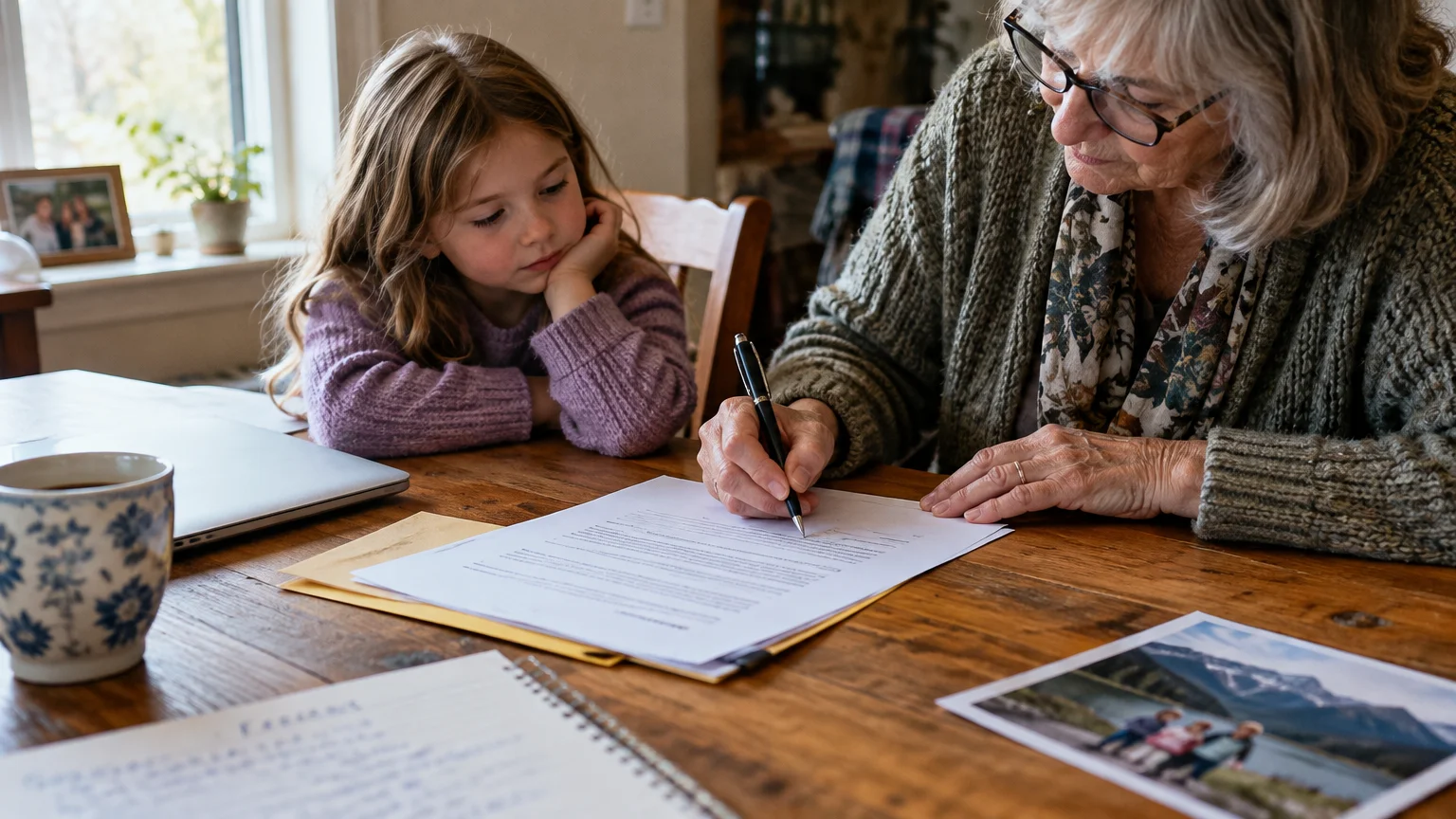
Ask the parents to sign a formal travel consent letter detailing the trip dates, destinations, and your contact information. Having both parents sign the letter in front of a licensed notary public validates its legitimacy.
If one parent has sole legal custody, carry a certified copy of the court custody decree. This paperwork clarifies your legal standing if foreign immigration authorities inquire about missing parental signatures.
A medical release form is equally critical for your peace of mind. Without explicit legal authorization, emergency rooms or urgent care clinics may hesitate to treat your grandchild for non-life-threatening conditions.
Ensure this document grants you full authority to approve medical treatments, diagnostic tests, and surgical procedures. Have the document notarized alongside the general travel permission letter.
Carry copies of the child’s health insurance card and prescription benefit card in your wallet. Having digital photos of these cards on your smartphone provides a reliable backup if physical papers get misplaced.
Request an up-to-date list of the child’s allergies, current medications, and pediatrician contact details. Knowing these facts upfront allows you to act decisively if an unexpected health issue arises.
Store photocopies of all legal forms in your checked luggage separate from the originals. If your primary carry-on is lost, these duplicate records save valuable time.
Foreign border agents often inspect documentation closely to prevent cross-border custody disputes. Presenting clean, notarized paperwork immediately satisfies border control agents and keeps your vacation on schedule.
Organize these vital papers in a dedicated, waterproof travel folder inside your carry-on bag. Keeping documents accessible ensures you breeze through border checkpoints and check-in desks with minimal stress.
Tip #2: Audit Your REAL ID and Air Travel Credentials
Airport security protocols have changed significantly, making identification checks more stringent than in previous years. You must confirm that your personal identification meets all current federal security standards.
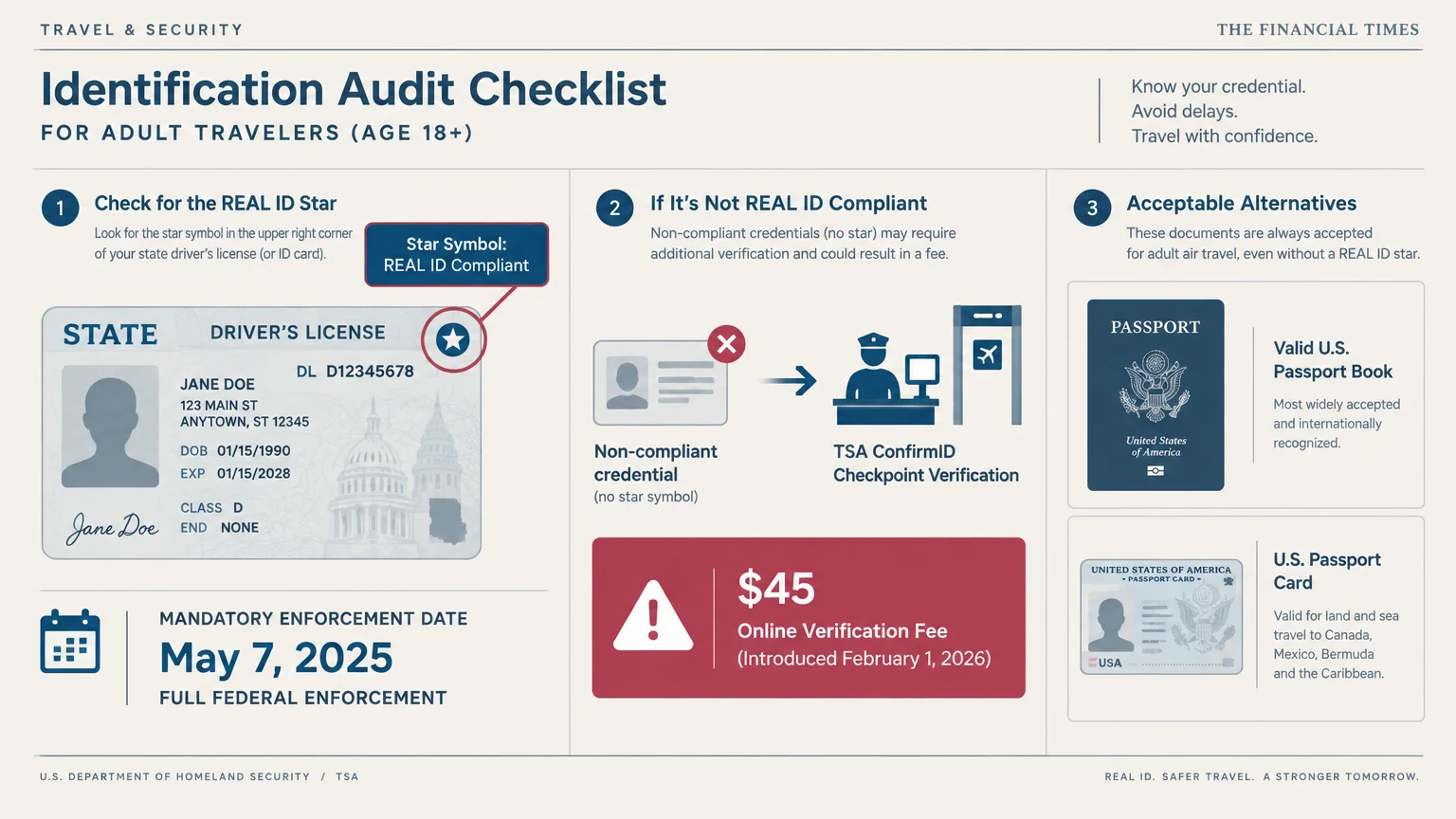
Full enforcement of the REAL ID Act at U.S. airport security checkpoints began on May 7, 2025. Every adult traveler age 18 and older must present a REAL ID-compliant driver’s license or another approved credential.
Look for the star symbol in the upper corner of your state driver’s license. If your license lacks this marker, you can present a valid U.S. passport book or passport card instead.
Arriving at security without an approved ID causes severe delays and unexpected costs. Under a policy introduced on February 1, 2026, non-compliant adult passengers must complete an online verification process.
This verification requires you to pay a $45 fee for TSA ConfirmID at the checkpoint. Paying this fee does not guarantee security clearance, so carrying compliant identification is essential.
Fortunately, rules for your grandchildren are much simpler for domestic air travel. Children under the age of 18 do not need to show identification to TSA officers when flying domestically with you.
Individual airlines, however, establish their own identification policies for minors. Many carriers require proof of age, such as a state-issued birth certificate, to verify discounted fares or lap infant eligibility.
Pack a certified copy of each grandchild’s birth certificate alongside your travel documents. This simple step eliminates disputes at the airline ticket counter and keeps your boarding process moving smoothly.
Arrive at the airport at least two hours early for domestic flights during the holidays. Security lines move slower during peak seasons as travelers adapt to updated identification protocols.
Check the expiration date on your own ID at least one month before your journey. Renewing an expired license early prevents checkpoint surprises and keeps your family schedule intact.
Tip #3: Plan Ahead for International Passports and Processing Times
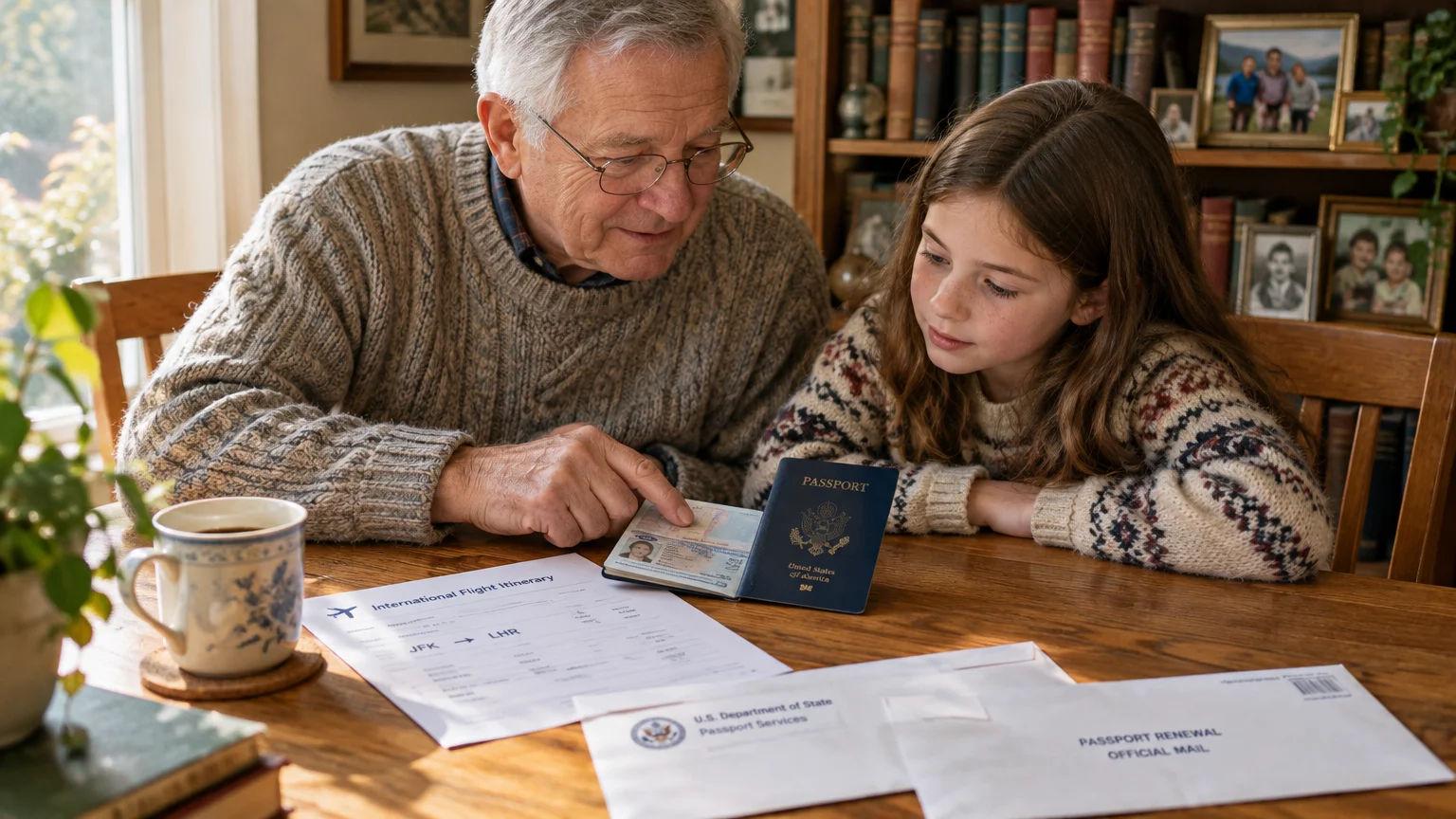
Crossing international borders with grandchildren demands strict passport compliance regardless of the child’s age. Every minor traveler, including infants, must possess an individual passport book for international air travel.
A minor passport for children under age 16 costs $135 total. This total includes a $100 application fee paid to the U.S. Department of State and a $35 execution fee.
Passports issued to children under 16 remain valid for only five years. Because they cannot be renewed by mail, parents must apply in person at an official acceptance facility using Form DS-11.
Both parents must appear in person or provide a notarized Form DS-3053 granting consent. You should remind parents to start this application months before your anticipated holiday departure date.
If your grandchild is 16 or older, adult passport rules and pricing apply. A first-time adult passport book costs $165, while an adult passport renewal costs $130.
Government processing times can vary based on seasonal application surges. Routine passport processing currently takes 4 to 6 weeks, while expedited processing takes 2 to 3 weeks for an additional $60.
Remember that these processing windows exclude shipping transit times in both directions. Mailing delays during busy holiday seasons can add several weeks to the overall timeline.
Track your passport application status online through the official State Department portal. Regular monitoring alerts you quickly if additional documentation or updated photos are requested.
Check the expiration dates on existing passports well before booking international flights. Many foreign countries require at least six months of remaining passport validity beyond your scheduled return date.
Never pack passports inside checked luggage that could go missing in transit. Always keep all family passports secure in an interior pocket of your personal bag.
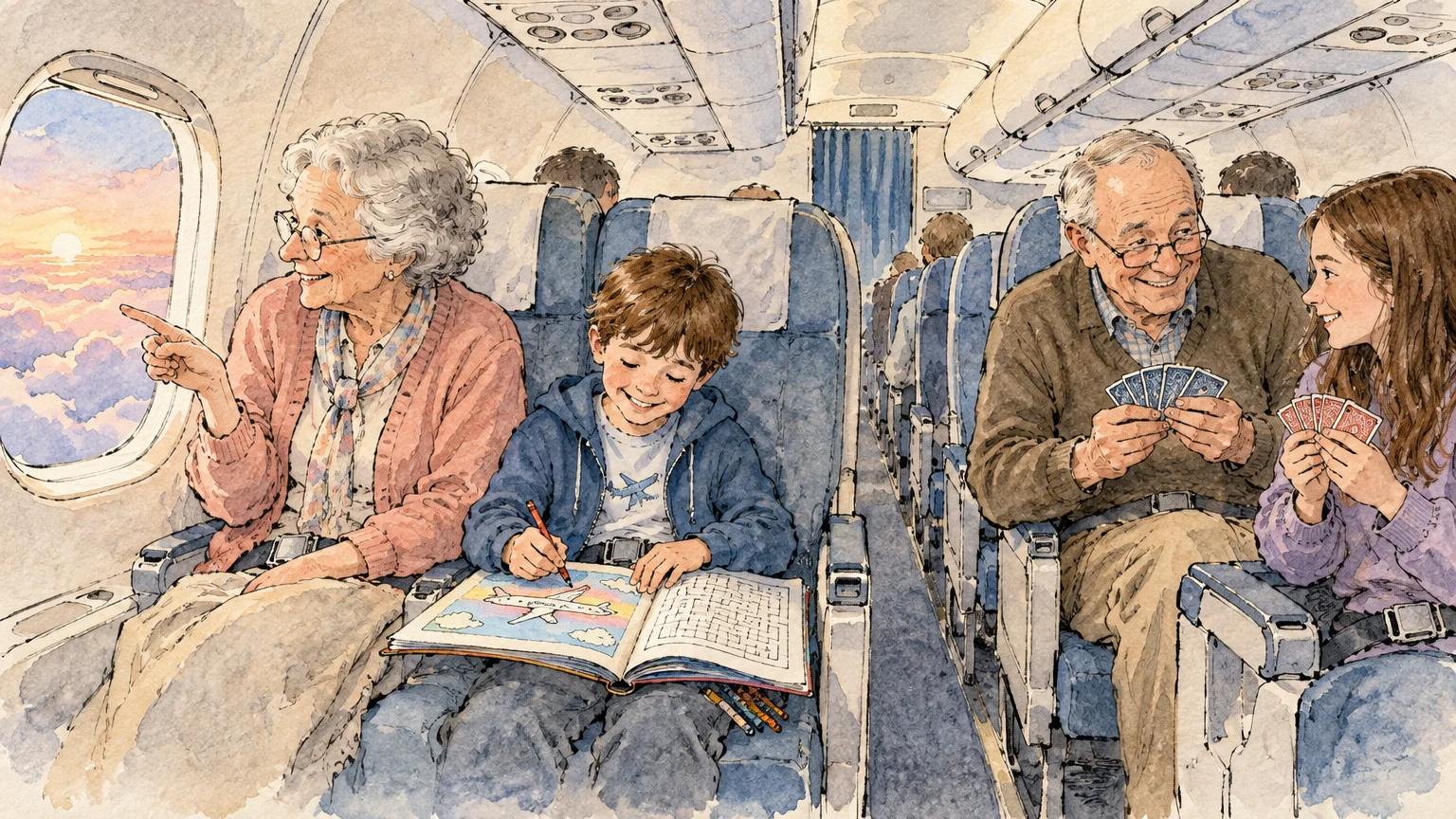
Tip #4: Book Seats on Family-Friendly Airlines That Guarantee Togetherness
Sitting together on an airplane is essential when traveling with grandchildren. Separated seats create unnecessary anxiety for young children and make supervision difficult during the flight.
A proposed U.S. Department of Transportation federal mandate banning family seating fees remains under final regulatory review. Because this nationwide ban is not yet finalized, airline policies vary significantly.
You must rely on individual carrier guarantees to ensure you sit next to your grandchildren. Check the U.S. DOT Airline Family Seating Dashboard before booking your holiday flights.
Currently, only five U.S. airlines officially guarantee fee-free adjacent seating for children age 13 and under with an accompanying adult. These carriers are Alaska Airlines, American Airlines, Frontier Airlines, Hawaiian Airlines, and JetBlue.
Booking with these carriers ensures you avoid paying exorbitant seat selection fees just to sit together. Always verify that your ticket class complies with the airline’s specific family seating guidelines.
If you plan a European holiday adventure, international carrier policies have recently evolved. Following a UK watchdog probe, Ryanair updated its family seating policy in June 2026.
Ryanair now allows adults to sit next to children ages 2 to 11 at the rear of the plane for free. This change removed the carrier’s previous £8 mandatory family seat assignment fee.
Review your airline seat assignments again when online check-in opens 24 hours before flight departure. Equipment swaps by airlines can sometimes inadvertently split reserved family seats.
Speak with gate agents politely upon arriving at your departure gate if seat issues occur. Gate agents possess the tools to rearrange seating before general passenger boarding begins.
Regardless of which airline you choose, book your tickets as early as possible. Early reservations give you the widest selection of contiguous seats across the cabin.
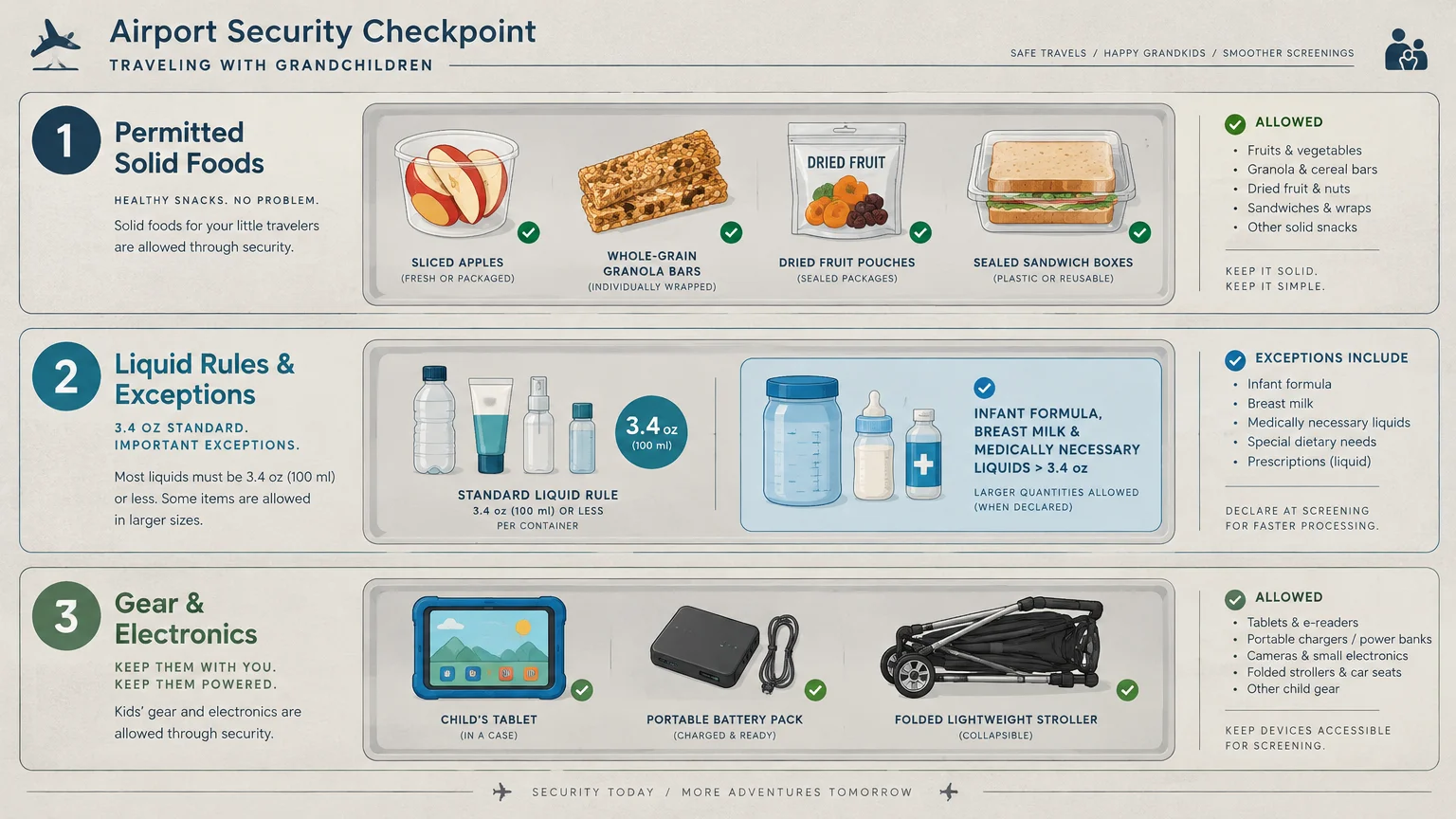
Tip #5: Master Airport Security Rules for Food and Gear
Navigating airport security with young children can feel daunting during peak holiday rushes. Understanding checkpoint exemptions helps you move through security lanes quickly and calmly.
The standard TSA 3-1-1 liquids rule limits liquids in carry-on bags to 3.4 ounces per container. However, important exemptions apply when you travel with infants and young toddlers.
The TSA permits baby formula, breast milk, toddler drinks, and toddler food in quantities greater than 3.4 ounces. Puree pouches and teething gels also qualify under this special exemption.
You must remove these items from your carry-on luggage and declare them to screening officers. Officers screen these liquids separately, often using specialized vapor or bottle scanners.
Pack all exempted liquids and baby foods together in a clear, accessible pouch. Placing this pouch in the top of your tote makes checkpoint removal effortless.
Ice packs, gel freezer packs, and frozen juice boxes are also permitted to keep perishables chilled. Ensure these cooling packs remain completely frozen solid when passing through security checkpoints.
Managing heavy travel gear like strollers and car seats is another common holiday concern. Fortunately, major commercial airlines allow you to gate-check strollers and car seats free of charge.
Gate-checking allows you to push your grandchild through the terminal right up to the airplane door. Airline baggage crews stow the gear below and return it on the jet bridge upon arrival.
Affix durable luggage tags with your phone number and flight details to both strollers and car seats. This safeguard prevents equipment mix-ups during busy holiday gate transfers.
Dress your grandkids in slip-on shoes and comfortable layers without metal buttons or belts. Simplifying clothing speeds up the security screening process for everyone in your party.

Tip #6: Match the Pace of the Trip to Everyone’s Energy Levels
The excitement of holiday travel can quickly overwhelm both grandparents and young children. Designing an itinerary with a realistic daily tempo is the key to preventing exhaustion.
Adopt a strict one-major-activity-per-day rule when organizing your daily vacation schedule. Dedicating mornings to sightseeing leaves afternoons open for rest, pool time, or unstructured play.
Rushing between multiple attractions causes sensory overload and sudden emotional meltdowns. Giving children time to explore at their own pace fosters deeper engagement and happier attitudes.
Adjust sleep schedules gradually if your holiday trip crosses multiple time zones. Exposing children to morning sunlight upon arrival resets circadian rhythms and minimizes fatigue.
Recognize your own physical boundaries and schedule personal breaks throughout the day. Relaxing with a quiet book while the children rest keeps your energy reserves refreshed.
Plan your meals at predictable intervals to avoid blood sugar crashes and mid-afternoon crankiness. Always pack healthy, protein-rich snacks like nuts, cheese sticks, and whole fruit in your daypack.
Hydration is equally essential, especially in dry airplane cabins or cold winter destinations. Carry refillable water bottles for everyone and encourage regular sips throughout the journey.
Establish quiet hours in your hotel room each evening to help children wind down. Dimming lights and reading bedtime stories together signals that it is time to sleep.
Choose accommodations that provide adequate living space for downtime and relaxation. Booking an apartment-style suite or adjoining hotel rooms gives everyone room to recharge without feeling cramped.

Tip #7: Establish Clear Ground Rules and Daily Routines in Advance
Children thrive on consistency, especially when removed from their regular home environment. Clear expectations eliminate behavioral confusion and create a safe emotional container for your journey.
Consult with the parents before the trip to understand current house rules and behavioral incentives. Maintaining familiar boundaries around bedtime schedules, screen time limits, and sweets prevents unnecessary friction.
Clarify screen time boundaries before long travel stretches or restaurant visits. Designating specific device-free family meals keeps conversations active and strengthens personal connections.
Balance festive holiday treats with nutritious meals to avoid sudden energy crashes. Setting clear expectations around sweets prevents arguments in festive markets and theme parks.
Hold a brief family meeting with your grandkids before departing to discuss safety protocols. Teach them what to do if they get separated from you in crowded stations or theme parks.
Have your grandchildren memorize your mobile phone number before the vacation begins. For younger children, slip an identification card with your contact details into their jacket pockets or shoes.
Set upfront expectations regarding souvenir purchases and gift shop visits. Giving each child a modest, fixed spending allowance prevents constant begging while teaching practical budgeting skills.
Praise cooperative behavior frequently throughout the trip to reinforce positive habits. Celebrating small moments of kindness and patience encourages your grandkids to remain on their best behavior.
Stay calm and consistent when boundary testing inevitably occurs during long travel days. A gentle, steady approach resolves conflicts far more effectively than frustration or anger.

Tip #8: Involve the Grandkids in Destination Planning and Decisions
Children show far more enthusiasm for a holiday trip when they help design the experience. Involving your grandkids in the planning process builds tremendous excitement before departure.
Share travel guidebooks, colorful maps, and destination videos with your grandchildren weeks ahead. Point out unique landmarks, wildlife sanctuaries, and historical sites you might explore together.
Give each grandchild the opportunity to choose one specific activity or meal destination. Allowing them to take ownership of an outing builds self-confidence and memorable personal pride.
Rotate daily decision-making privileges if you are traveling with more than one grandchild. Alternating choices teaches patience and guarantees that every child feels valued throughout the vacation.
Encourage older grandchildren to research local traditions or unique holiday celebrations at your destination. They can act as family tour guides, sharing interesting facts as you visit historic locations.
Provide younger children with travel journals, colored pencils, and disposable cameras to document their journey. Capturing their unique perspective through drawings and photographs keeps them thoroughly engaged.
Encourage your grandchildren to curate a mini photo album or scrapbook of their favorite moments. Reviewing their memories together deepens the joy of your shared holiday trip.
Create a countdown calendar on the refrigerator to celebrate the days leading up to your departure. This shared anticipation transforms the planning phase into a bonding experience in itself.
Discussing travel details early also alleviates hidden anxieties your grandkids might harbor about flying or unfamiliar places. Answering their questions openly fosters a comforting sense of safety.
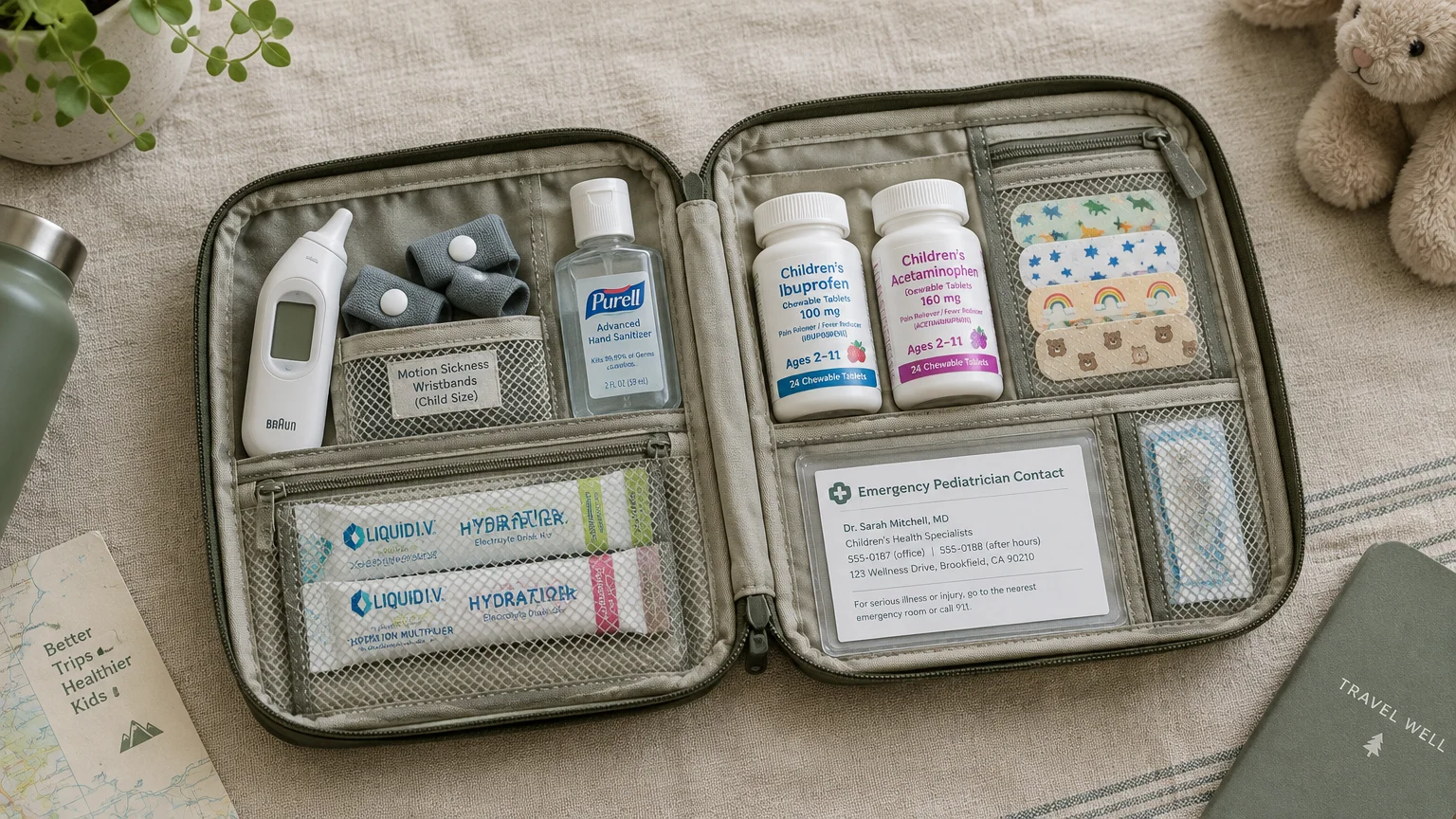
Tip #9: Prepare a Dedicated Travel Health and Comfort Kit
A well-stocked medical and comfort kit is your best defense against unexpected travel disruptions. Packing essential remedies avoids late-night hunts for pharmacies in unfamiliar holiday destinations.
Pack a children’s first-aid pouch with adhesive bandages, antiseptic wipes, antibiotic ointment, and fever reducers. Include pediatric formulations of ibuprofen and acetaminophen alongside appropriate dosing syringes.
Motion sickness can strike unexpectedly during car rides, turbulent flights, or boat excursions. Pack acupressure wristbands, chewable motion sickness tablets, and ginger candies to soothe uneasy stomachs quickly.
Pack any daily prescription medications in their original pharmacy containers with matching prescription labels. Always keep these critical medications inside your personal carry-on bag rather than checked luggage.
Wipe down airplane tray tables, armrests, and hotel remote controls with disinfectant wipes upon arrival. Reducing germ exposure protects everyone from catching common holiday viruses.
Do not overlook emotional comfort items when assembling your travel gear. Bringing a beloved blanket, favorite bedtime story, or small stuffed animal eases nighttime transitions in hotel rooms.
Include a small nightlight in your luggage to illuminate dark hotel hallways and bathrooms. A gentle glow helps children navigate unfamiliar rooms at night without fear.
Download audiobooks, relaxing music playlists, and family podcasts onto a tablet before departing. These soothing audio tracks work wonders to calm overtired children during transit delays.
Pack several extra zip-top plastic bags and a change of clothes for each grandchild in your carry-on. Quick outfit swaps resolve accidental spills or travel sickness without unnecessary panic.

Tip #10: Budget for Unexpected Expenses and Splurge Moments
Holiday travel often incurs incidental expenses that can strain even carefully planned vacation budgets. Establishing a financial buffer prevents financial stress from overshadowing your joyful family memories.
Account for hidden fees such as checked baggage charges, airport meals, and resort parking fees. Factor these incidental costs into your initial travel budget to maintain financial clarity.
Create a dedicated emergency fund for unexpected travel disruptions like delayed flights or medical visits. Having accessible credit or reserve funds gives you instant flexibility when travel plans shift unexpectedly.
Utilize credit card reward points or airline miles to offset lodging and travel expenses. Redeeming points frees up extra funds for memorable excursions and celebratory holiday dinners.
Set aside funds for spontaneous splurge experiences that create enduring childhood magic. Treating your grandkids to an unexpected holiday sleigh ride or ice cream sundae creates cherished memories.
Notify your bank and credit card issuers before traveling, especially on international itineraries. Preventing fraud alerts on your cards avoids embarrassing payment declines while dining or shopping.
Invest in travel insurance that includes comprehensive trip cancellation and emergency medical coverage. Confirm that your policy specifically covers grandchildren traveling under your care.
Keep cash on hand for tips, tour guides, and small cash-only roadside holiday attractions. Having small denominations readily available saves time and hassle throughout your itinerary.
Review your financial goals and spending limits before leaving home. Keeping spending aligned with your comfort level ensures you return home feeling fulfilled rather than financially strained.

The Takeaway: Living a More Blissful Retirement
Multigenerational travel with your grandchildren is one of the most rewarding privileges of your golden years. These shared journeys strengthen family connections and build a lasting legacy of love and exploration.
While holiday logistics require deliberate forethought and careful organization, the emotional dividends are immeasurable. Watching your grandchildren discover new wonders brings unmatched joy and vitality to your retirement.
Proper preparation gives you the confidence to navigate airports, schedules, and daily routines with grace. When you handle the details beforehand, you free yourself to live fully in the moment.
Embrace the unexpected adventures, funny travel stories, and spontaneous giggles that define family travel. Perfection is never the goal; shared presence and joyful connection matter most.
Take plenty of photographs together, but remember to put the camera away and enjoy the quiet moments. Grandchildren value your focused attention and loving presence above everything else.
Your active presence in their lives leaves an enduring impression that your grandkids will cherish forever. Step forward with confidence and embrace the wondrous journey ahead.
Frequently Asked Questions
What identification does a grandchild need for domestic flights?
The TSA does not require minors under 18 to show identification when traveling domestically with an adult. However, individual airlines may require a birth certificate to verify age for discounts or infant ticketing.
Carrying a certified copy of each grandchild’s birth certificate prevents any potential boarding disputes. It is always wise to keep these documents stored safely in your carry-on luggage.
Can I take my grandchild out of the country without their parents?
Yes, you can travel internationally with your grandchild if you possess the proper legal documentation. Every child must have a valid U.S. passport book regardless of their age.
You also need a notarized travel authorization letter signed by both legal parents. Border officials frequently request this letter to ensure the child travels with full parental consent.
How do I handle homesickness during a holiday trip?
Homesickness is natural when children stay away from home in unfamiliar environments. Maintain predictable bedtime routines and bring familiar comfort items like favorite blankets or stuffed animals.
Schedule brief daily video calls with parents at set times to keep connections warm and reassuring. Keeping calls focused on positive daily highlights prevents the child from becoming overly emotional.
What should I do if our flight is delayed or canceled?
Stay calm and approach customer service desks immediately while simultaneously checking the airline’s mobile application. Many carriers allow you to rebook delayed or canceled flights faster through their app.
Keep an emergency entertainment and snack kit accessible in your carry-on bag at all times. Fresh snacks, coloring books, and downloaded games keep children occupied while you resolve travel logistics.
For a wide range of resources for older adults, visit AARP and the National Council on Aging (NCOA). Health information is available from the National Institute on Aging.
Disclaimer: This article is for informational and inspirational purposes only; it is not a substitute for professional medical, financial, or psychological advice. Please consult with a qualified expert for guidance tailored to your individual needs.