

You deserve a retirement filled with comfort, freedom, and total peace of mind. Securing your future begins with knowing whether your guaranteed monthly checks actually cover your true living expenses.
Many retirees discover that fixed checks leave an unexpected gap against rising household costs. Spotting these subtle warning signs early gives you the power to safeguard your lifestyle without panic.
Discover the key indicators of a retirement income gap and learn practical ways to preserve your wealth. Taking proactive action today ensures you enjoy your golden years with confidence and joy.

Tip #1: You Dip Into Emergency Savings for Routine Expenses
Relying on savings to buy weekly groceries signals an unsustainable financial imbalance. Your emergency fund exists to shield you from sudden shocks, not routine household bills.
When your pension and Social Security not enough to meet ordinary expenses, liquid reserves dwindle quickly. Research from the Center for Retirement Research reveals that early reserve depletion raises long-term poverty risk.
Review your bank statements from the previous six months right away. Count exactly how many times you moved money from savings into checking just to balance accounts.
Covering recurring utility bills or gas with reserve funds reveals an ongoing retirement income shortfall. Acknowledging this habit early gives you ample time to adjust your strategy calmly.
Calculate your average monthly transfer amount to determine your actual structural deficit. Knowing your precise shortfall turns an intimidating issue into a manageable math problem with clear solutions.
You can restore balance by trimming nonessential recurring subscriptions or exploring low-stress income avenues. Protecting your core nest egg guarantees long-term independence and lasting financial tranquility.
Taking decisive action today safeguards your reserves so you can handle unexpected life events comfortably. You deserve the deep peace that comes from a sturdy financial foundation.

Tip #2: Credit Card Balances Creep Up Month After Month
Carrying a revolving credit balance between billing cycles serves as an unmistakable warning light. Credit card debt quietly erodes an otherwise comfortable retirement lifestyle when left unmanaged.
Federal Reserve data shows that senior households carry credit card interest rates exceeding twenty percent. Paying steep finance charges drains money that should fund your leisure and comfort.
If you swipe plastic to bridge monthly gaps, you face classic retirement budget warning signs. Using credit cards for daily sustenance signals that your fixed income stream needs reinforcement.
Stop charging everyday purchases immediately to halt the compounding interest cycle. Shift to cash or debit cards while you organize a structured repayment schedule.
Many credit card issuers offer lower interest rates or hardship programs if you request them. Pair that step with a zero-interest balance transfer to clear your debt quickly.
Regaining control over high-interest debt frees up cash flow instantly. You deserve to sleep peacefully every night without dreading monthly credit card statements.
Eliminating debt allows every dollar from your pension to support your personal happiness and well-being. Financial freedom begins with shedding costly interest payments once and for all.
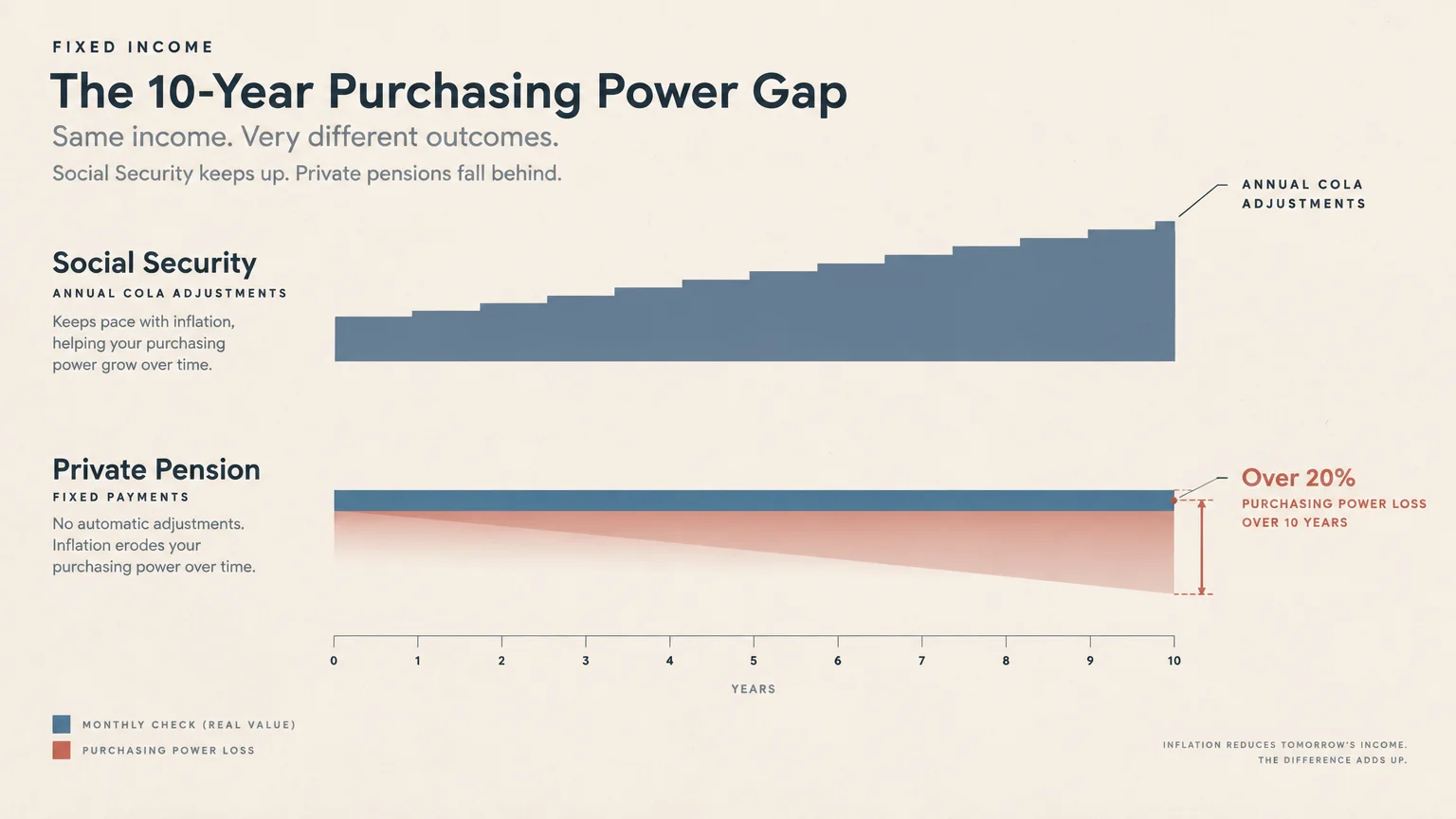
Tip #3: Everyday Inflation Steadily Erases Your Monthly Cushion
Rising prices at the supermarket can silently erode your standard of living over time. Even modest inflation chips away at your purchasing power when your base income remains flat.
Social Security provides annual cost-of-living adjustments, but most private pensions offer zero inflation protection. Over a decade, unadjusted pension payments can lose over twenty percent of real purchasing power.
You may notice that your grocery bill consumes double the share of your budget compared to five years ago. This gradual pinch creates an unexpected retirement income gap that feels frustrating and unfair.
Combat higher prices by shopping seasonal produce and using digital store loyalty coupons regularly. Buying store brands delivers identical quality while instantly shaving ten to fifteen percent off register totals.
You can also shift utility billing to equalized budget plans to prevent winter heating shocks. Taking active charge of inflation protects your purchasing power and restores your financial comfort.
Proactive adjustments keep your lifestyle vibrant without sacrificing the treats you enjoy. You maintain control when you adapt your spending habits with creativity and intentionality.
Small, savvy lifestyle tweaks act as an effective shield against broader macroeconomic pressures. You keep more money in your wallet while enjoying the exact same quality of life.

Tip #4: Out-of-Pocket Healthcare Costs Overwhelm Your Cash Flow
Medical expenses represent one of the fastest-growing financial challenges for modern retirees. Original Medicare does not cover dental checkups, routine vision exams, or hearing aids.
Fidelity estimates that an average retired couple at age sixty-five needs approximately 315,000 dollars for healthcare. When prescription co-pays and specialist deductibles mount, fixed pensions buckle under the pressure.
If healthcare invoices force you to skip medications or delay appointments, your income structure requires immediate support. Never jeopardize your physical health due to short-term budgetary constraints.
Schedule an annual review of your Medicare Part D prescription coverage during open enrollment. Switching drug plans can often save you thousands of dollars each year on identical medications.
Look into community health centers that offer sliding-scale fees for dental care and eye exams. Preserving your physical wellness remains the absolute cornerstone of a radiant and happy retirement.
Taking charge of medical expenses preserves both your physical vitality and your peace of mind. Thoughtful healthcare planning ensures your money works efficiently for your long-term well-being.
Prioritize preventive screenings and wellness visits covered at one hundred percent by Medicare. Staying healthy is not only wonderful for your spirit; it is fantastic for your wallet.

Tip #5: You Postpone Crucial Home Maintenance and Property Repairs
Putting off a leaking roof or aging furnace indicates that your cash flow is under pressure. Ignoring necessary home maintenance rarely saves money; it usually multiplies future repair bills exponentially.
Housing experts recommend budgeting one percent of your home value each year for routine upkeep. When your checks barely cover groceries, home maintenance funds are often the first casualty.
Deferred repairs lower your property value and introduce safety hazards into your daily living space. You deserve a secure, functional, and beautiful living environment throughout your golden years.
Research municipal weatherization grants and local utility rebate programs designed for older homeowners. Many community agencies provide free energy audits and subsidized repairs for qualifying seniors.
You can also partner with reliable neighbors or trade skills to tackle minor weekend home projects. Protecting your home preserves your primary asset and reinforces your sense of security.
Addressing maintenance promptly prevents small issues from ballooning into catastrophic emergency bills. A well-kept home gives you a proud, relaxing sanctuary to cherish every day.
Maintaining your living space provides deep peace of mind and keeps your equity strong. Taking care of your home is an investment in your comfort and happiness.
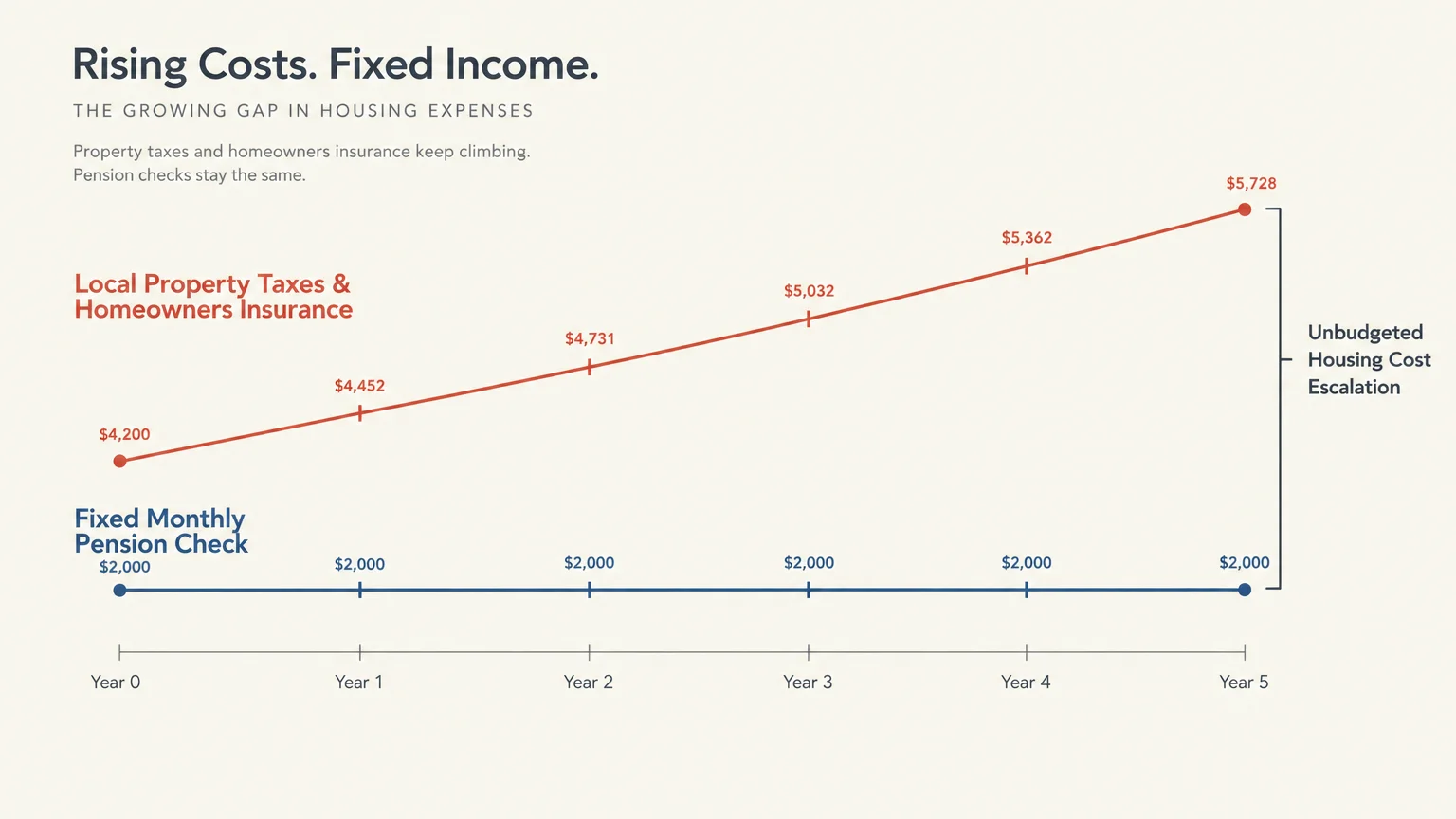
Tip #6: Property Taxes and Insurance Premiums Spike Dramatically
Surging municipal property taxes and insurance premiums catch millions of retirees off guard. Even if you paid off your mortgage decades ago, shelter costs never drop to zero.
Homeowners insurance rates have jumped over twenty percent in several states due to severe weather trends. When local tax assessments rise simultaneously, your monthly housing overhead expands dramatically.
If your annual tax escrow increase causes genuine sleeplessness, your fixed income needs reinforcements. These unavoidable municipal levies squeeze fixed incomes tighter each passing year.
Contact your local county tax assessor to check for senior property tax exemptions or freezes. Most counties offer generous exemptions for residents over age sixty-five that significantly lower annual assessments.
Ask an independent insurance broker to compare multiple home and auto insurance bundles for savings. Raising your deductible slightly can lower your annual premiums by hundreds of dollars immediately.
Lowering fixed overhead protects your baseline cash flow without compromising your coverage. These simple administrative steps keep hard-earned money right where it belongs: in your pocket.
Reclaiming those dollars lets you breathe easier whenever the local tax bill arrives. You deserve to enjoy your home without feeling burdened by mounting administrative overhead.

Tip #7: Financial Support for Adult Family Members Strains Your Reserves
Helping children or grandchildren through tough economic moments is a natural parental instinct. However, consistently funding family members when your own pension is tight threatens your security.
Financial planners often warn that your children can borrow for college or homes, but nobody finances retirement. Sacrificing your golden years creates a severe retirement income gap you cannot easily fix later.
If family handouts force you to skip personal necessities, it is time to set loving financial boundaries. Clear communication protects your emotional relationships as well as your bank accounts.
Offer valuable non-monetary assistance instead, such as childcare, mentoring, or shared family meals. Your wisdom, presence, and life experience provide far more enduring value than financial handouts.
Sit down with loved ones and explain your fixed budget with honesty and warmth. True family members will respect your boundaries and celebrate your commitment to financial independence.
Protecting your own financial stability ensures you never become a burden to your children later. Setting healthy limits is an act of genuine love and mutual respect.
Preserving your resources allows you to remain self-reliant while showering your family with wisdom and care. Your guidance and love are the greatest gifts you can ever offer.

Tip #8: You Eliminate Joyful Discretionary Outings and Social Activities
Retirement should be an invigorating season of recreation, travel, and shared community laughter. Cutting out every dinner with friends or hobby to balance your budget indicates distress.
Social isolation accelerates physical and cognitive decline in seniors, according to leading health organizations. You must never let a constrained budget deprive you of vital social connections.
When entertainment funds disappear entirely, exploring supplementing retirement income becomes an empowering option. Earning even modest flexible income breathes vibrant life back into your personal budget.
Consider turning a lifelong hobby into a small, enjoyable source of supplemental income. Teaching music, consulting part-time, or selling handmade crafts creates social engagement alongside extra revenue.
Take advantage of free community concerts, library book clubs, and local senior recreation centers. A joyful lifestyle depends far more on creativity and connection than on expensive price tags.
You earned this retirement season, and you deserve to experience genuine happiness every day. Prioritize friendships and social activities that bring meaning, vitality, and laughter into your world.
Rediscovering simple, low-cost social pleasures keeps your calendar full and your spirits high. Embracing community engagement creates an enriching retirement filled with lifelong memories.

Tip #9: Market Swings and Low Savings Yields Trigger Constant Anxiety
Watching your retirement balances fluctuate wildly with market swings creates deep emotional stress. If your peace of mind shatters every time markets dip, your income baseline lacks stability.
Relying on variable investment returns to cover grocery bills forces uncomfortable choices during economic downturns. Selling depressed assets during a downturn locks in losses and permanently shrinks your capital base.
Creating a dedicated multi-year cash reserve buffers your spending against unpredictable market cycles. Maintaining two years of living expenses in secure money market accounts gives you tremendous emotional peace.
You can also research fixed-index annuities or Treasury bills to produce guaranteed, predictable returns. Securing dependable yields shields your day-to-day living standards from stock market volatility.
Consult a fee-only fiduciary financial advisor to build an all-weather distribution plan tailored to you. Professional guidance provides structure and turns confusing market dynamics into a confident, orderly strategy.
A well-structured portfolio allows you to sleep soundly regardless of daily economic headlines. True wealth in retirement means having both financial security and total serenity of mind.
Establishing dependable cash buffers eliminates daily financial worry so you can focus on enjoying life. Peace of mind is the ultimate dividend of a carefully constructed retirement plan.

The Takeaway: Living a More Blissful Retirement
Recognizing a shortfall between your guaranteed checks and actual expenses is an act of empowerment. It provides you with the exact roadmap needed to restore stability and independence.
You hold countless tools to bridge this gap, from adjusting expenditures to discovering enjoyable supplemental income. Small, consistent shifts today produce massive relief and security for all your tomorrows.
Approach your finances with optimism, curiosity, and confidence rather than fear or hesitation. Retirement is your time to thrive, celebrate your achievements, and savor life’s wonderful moments.
Take one actionable step this week, whether auditing your subscriptions or reviewing property tax discounts. Each positive action moves you closer to the vibrant, blissful retirement you truly deserve.
Embrace this journey with confidence, knowing that your best and most joyful years lie ahead. You possess the wisdom and strength to create a secure, magnificent future.
Frequently Asked Questions
How much income should Social Security and a pension replace in retirement?
Traditional financial guidelines suggest replacing seventy to eighty percent of your pre-retirement income. This benchmark allows you to maintain your comfortable standard of living without draining reserves.
However, individual medical needs and debt levels can alter this target significantly. Calculating your personal expenses produces a far more reliable target than generic rules of thumb.
What are simple ways to bridge a retirement income shortfall?
You can monetize hobbies, rent unused storage space, or work flexible part-time consulting hours. Downsizing your living space or refinancing debts can also free up substantial monthly cash.
Even earning three hundred dollars a month can completely erase a minor budget deficit. Focus on enjoyable activities that stimulate your mind while replenishing your bank account.
Can downsizing my home help solve a retirement budget warning sign?
Downsizing often reduces property taxes, utility bills, maintenance overhead, and insurance costs simultaneously. Moving into a smaller, accessible home unlocks home equity that you can invest safely.
A smaller residence also saves physical energy, making daily household chores far easier to manage. It represents a practical lifestyle upgrade that brings both financial and physical freedom.
When should I consult a financial planner about my retirement income gap?
You should seek professional advice the moment your monthly withdrawals consistently exceed your incoming revenue. Early intervention prevents minor cash flow crunches from escalating into severe capital depletion.
Look for a fee-only fiduciary advisor who prioritizes your financial interests and provides transparent guidance. A skilled professional will help you design a sustainable plan for long-term tranquility.
For a wide range of resources for older adults, visit AARP and the National Council on Aging (NCOA). Health information is available from the National Institute on Aging.
Disclaimer: This article is for informational and inspirational purposes only. It is not a substitute for professional medical, financial, or psychological advice.
Please consult with a qualified expert for guidance tailored to your individual needs.