

You deserve a retirement filled with freedom, genuine relaxation, and uplifting adventures. Reevaluating your vacation property commitments can instantly liberate your personal finances and protect your hard-earned nest egg.
Thousands of older adults are questioning traditional vacation ownership models. By stepping back to examine recurring fees and changing travel preferences, you can easily discover much more flexible getaways.
Whether you currently hold a deed or are contemplating a purchase, empowering solutions await you. Take control of your leisure years and explore why reassessing your travel assets brings deep peace of mind.
Tip #1: Ballooning Maintenance Fees Outpace Fixed Incomes
Many seniors originally bought vacation intervals decades ago when annual upkeep costs felt modest and predictable. Today, those numbers tell a strikingly different financial story for retirees on fixed budgets.
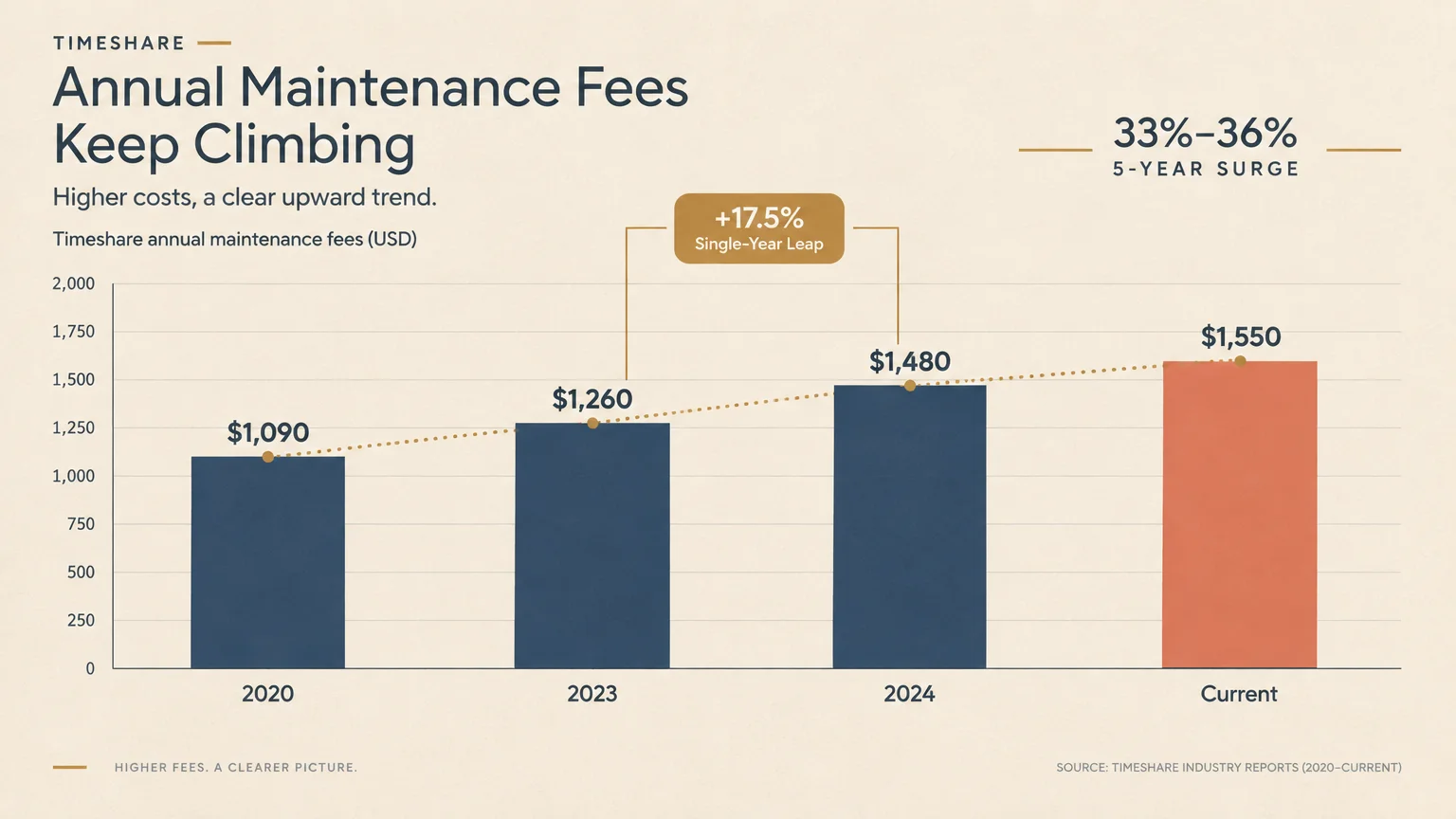
Industry data from the American Resort Development Association reveals a steep climb in annual expenses. Average timeshare maintenance fees surged from $1,090 in 2020 to $1,260 in 2023.
By 2024, costs leaped to an average of $1,480 per interval, representing a 17.5 percent single-year jump. Recent industry figures now place the typical interval fee at approximately $1,550 annually.
Over a five-year window, these mandatory expenses climbed more than 33 to 36 percent. Such aggressive increases significantly outpace regular cost-of-living adjustments for Social Security benefits.
You must pay these charges regardless of whether you pack your bags or stay home. Skipping payments triggers harsh penalties, aggressive collection notices, and severe damage to your credit score.
When annual fees equal the cost of several luxury hotel stays, the initial value proposition vanishes. You can reclaim that capital to fund spontaneous getaways that match your exact schedule.
Redirecting those recurring funds back into your everyday lifestyle provides instant breathing room. You gain the power to spend your retirement dollars on your own terms.
Financial freedom means deciding where your money travels each year. Eliminating runaway maintenance dues keeps your golden years secure and comfortable.
By taking an honest look at these compounding charges, you protect your future budget. Making intentional choices today keeps your savings working entirely for you.

Tip #2: Shifting Travel Styles Demand Complete Freedom
Retirement opens the door to boundless spontaneity and personal reinvention. Locking yourself into a single resort week or a complicated exchange network often restricts your freedom.
Your lifestyle priorities naturally evolve as the years advance. You may prefer visiting grandchildren in another state or taking scenic river cruises through historic European waterways.
Many older travelers ask themselves: are timeshares worth it when better alternatives exist everywhere? Today, modern booking platforms let you explore any corner of the globe with zero long-term commitments.
Traditional timeshares for retirees often demand rigid reservation windows up to a full year in advance. Navigating blackout dates and confusing point exchange systems can cause unnecessary frustration.
You should spend your leisure time enjoying sunny afternoons rather than managing complicated booking rules. Choosing standard rentals gives you effortless control over when and where you travel.
Boutique hotels, quiet seaside cottages, and mountain lodges provide endless variety without ongoing financial ties. If health or family needs change suddenly, you simply cancel without penalty.
Embracing this flexible travel mindset transforms every vacation into a delightful, stress-free adventure. You deserve travel arrangements that bend to your desires rather than bending your schedule.
Unshackling your calendar brings genuine rejuvenation to every trip you plan. You can chase the sunshine whenever the mood strikes.
Independent travel allows you to book trips whenever you feel inspired to explore. You regain the joyful thrill of discovering brand-new horizons whenever you choose.

Tip #3: Depreciated Resale Values Diminish Asset Worth
Timeshare sales presentations frequently frame ownership as an enduring real estate investment. In truth, vacation intervals function like luxury consumer purchases that depreciate rapidly upon signing.
Reports by the American Resort Development Association and Ernst & Young show an eye-opening reality. The average initial purchase price ranges between $24,000 and $24,740 per interval.
Unlike residential property, timeshares rarely appreciate or build meaningful equity over time. The secondary marketplace is overwhelmingly flooded with sellers seeking an immediate release from ongoing commitments.
On resale platforms like Timeshare Users Group, RedWeek, and eBay, thousands of deeds sit listed for just $1. Many owners even offer to pay all closing costs simply to transfer their deed.
This stark reality often surprises retirees selling timeshares who hoped to recoup a portion of their original funds. Acknowledging this resale landscape protects you from setting unrealistic expectations.
Letting go of the illusion that your timeshare is an investment brings emotional relief. You stop viewing the contract as an asset and recognize it as an ongoing discretionary expense.
Making this mental shift empowers you to make practical, clear-eyed financial choices. You can confidently close that chapter and focus your resources on experiences that bring genuine happiness.
Releasing an unwanted contract clears the path for true financial simplicity. Your peace of mind is worth far more than holding on to a depreciating liability.
Letting go of depreciated property is an empowering step toward decluttering your life. You free your mind to focus entirely on experiences that nurture your spirit.

Tip #4: Sudden Special Assessments Create Financial Stress
Beyond predictable annual invoices, timeshare owners face an unpredictable financial wildcard known as special assessments. Homeowners association boards hold the legal authority to levy these mandatory fees at will.
These sudden charges cover major capital repairs, structural maintenance, and disaster recovery. When an aging resort needs new elevators, fresh roofs, or pool refurbishments, owners foot the entire bill.
Recent years have brought unprecedented increases in commercial property insurance premiums. Coastal destinations in Florida and the Caribbean face frequent severe weather and escalating rebuilding costs.
Resort associations pass these surging insurance costs directly to deed holders through surprise assessments. These unexpected invoices can range from several hundred dollars to multiple thousands in a single year.
For anyone living on a fixed pension or retirement savings, an unexpected $3,000 bill creates genuine anxiety. You cannot negotiate these bills, and non-payment can lead directly to foreclosure.
Staying in boutique resorts or private vacation rentals shields you entirely from capital upkeep expenses. The property owner shoulders all insurance spikes, storm damage, and remodeling costs.
Walking away from unpredictable assessment liabilities restores financial clarity to your retirement planning. You can budget with absolute confidence, knowing no surprise maintenance bills will arrive in your mailbox.
Protecting your monthly cash flow allows you to enjoy retirement without lingering stress. Predictability is the cornerstone of a relaxing lifestyle.
A predictable budget is the secret to a relaxed and joyful retirement. You deserve to live without financial surprises disrupting your hard-earned tranquility.

Tip #5: Perpetual Contracts Create Unwanted Burdens for Heirs
Most retirees desire to leave an uplifting legacy of love, wisdom, and financial stability for their families. Unfortunately, many traditional timeshare contracts contain clauses that bind owners in perpetuity.
This legal language means your contract does not simply expire when you pass away. Instead, the continuous financial obligation becomes an enforceable liability against your estate.
Adult children often have very different travel habits, busy careers, and tight family budgets. They rarely want to take over escalating maintenance invoices for a resort they may never visit.
Many heirs mistakenly believe they can simply toss the annual bills into the recycling bin. In reality, ignoring the invoices can trigger credit collection agencies and cloud the probate process.
To reject an inherited timeshare, heirs must execute a formal Written Disclaimer of Interest under state probate laws. They must complete and file this legal renunciation within nine months of the owner’s passing.
Taking proactive steps to handle your timeshare now spares your loved ones from complex legal legwork later. Resolving the contract during your lifetime is a wonderful gift of peace for your family.
Your children will deeply appreciate your foresight and organizational care. You can replace an unwanted perpetual contract with cherished memories that last for generations.
A clean estate plan gives you the comfort of knowing your family remains protected. You leave behind blessings rather than ongoing financial burdens.
Having open, loving conversations with your family about your timeshare provides mutual understanding. You can work together to ensure your estate plan reflects true peace and care.
Tip #6: Developer Exit Programs Provide Safe Surrender Paths
If you are eager to part ways with your unit, encouraging solutions are closer than you think. Many leading resort developers now provide structured timeshare exit options directly to owners.
Hospitality companies recognize that holding dissatisfied owners creates administrative headaches. Brands like Wyndham, Marriott, and Hilton Grand Vacations have launched formal deed-back and surrender initiatives.
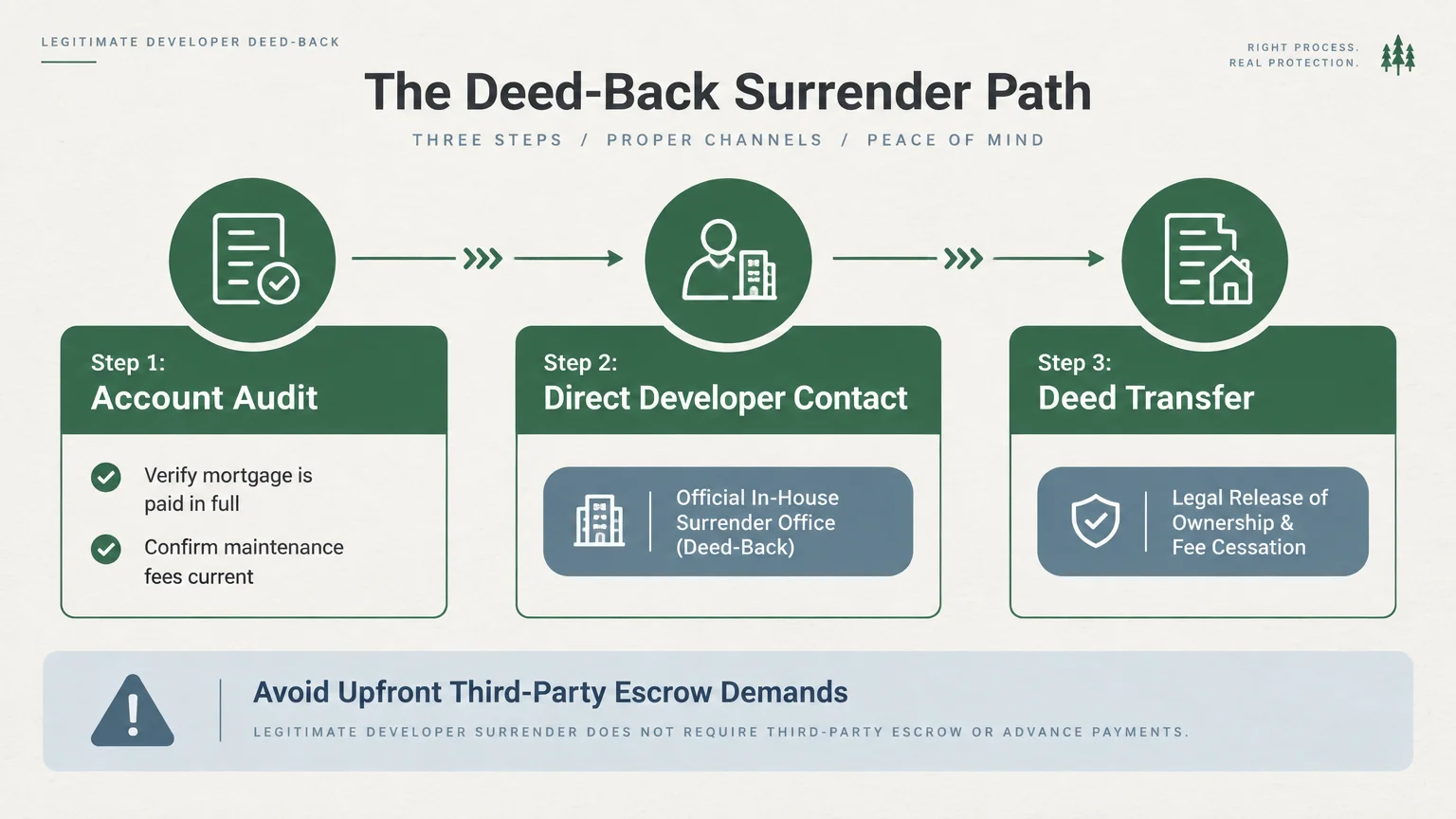
For example, Wyndham created its Certified Exit program to help qualifying owners transition away smoothly. These official channels allow you to return your deed safely without paying exorbitant third-party fees.
Developers generally require your original purchase mortgage to be one hundred percent paid off. Furthermore, all annual maintenance fees and association dues must remain completely up to date.
While resorts reserve the right to decline surrenders for low-demand locations, asking costs you nothing. Reaching out directly to your resort’s owner services department is always the smartest first move.
Honest communication with your resort often produces a straightforward, peaceful resolution. Many seniors successfully relinquish their deeds within a few months through direct cooperation.
Stepping through an official surrender program brings immense relief and closure. You can close your timeshare chapter cleanly and redirect your energy toward joyful new adventures.
Document every conversation and keep copies of all correspondence with your resort developer. Staying organized helps you navigate the surrender process smoothly and efficiently.
Taking charge of your contract gives you immediate closure and renewed confidence. You can celebrate your success and look ahead to carefree vacations.

Tip #7: Rising Cancellation Scams Target Older Adults
As more seniors seek to release their intervals, fraudulent exit companies have aggressively entered the market. Protecting your savings requires knowing the telltale signs of timeshare relief schemes.
Consumer protection registries report that timeshare owners lost over $300 million to resale and cancellation scams between 2019 and 2023. Deceptive operators routinely target older adults through fear-based high-pressure seminars.
Federal and state regulators are fighting back aggressively against these predatory operations. The Federal Trade Commission, Department of Justice, and State of Wisconsin secured a massive $140 million judgment against Consumer Law Protection LLC.
That enforcement action included $95 million in consumer redress and $45 million in penalties after the company defrauded seniors out of more than $90 million. These scammers promised guaranteed exits but delivered nothing.
Never pay large upfront fees to any firm that cold-calls you promising a quick timeshare sale. Reputable real estate professionals and legal advisors work transparently and never guarantee instant results over the phone.
Keep your guard up, demand written contracts, and verify credentials before transferring any funds. Staying informed ensures that your transition away from ownership remains safe and positive.
When you navigate your exit with caution and verified knowledge, you preserve your hard-earned wealth. You maintain total command over your financial destiny and enjoy complete peace of mind.
Equipping yourself with verified information is the best defense against dishonest operators. You remain firmly in the driver seat of your financial future.
Always verify that any professional assisting you possesses valid licenses and positive consumer reviews. Taking your time prevents costly missteps and keeps your hard-earned savings secure.

The Takeaway: Living a More Blissful Retirement
Reassessing your vacation ownership is not about dwelling on past decisions. It is about celebrating your future and aligning your resources with what truly matters today.
Your golden years should brim with flexibility, spontaneity, and laughter with those you love. Shedding mandatory annual fees and rigid vacation schedules opens up wonderful new possibilities.
Take time to review your contracts, contact your developer, and weigh modern travel alternatives. Every practical step you take today secures greater peace of mind for tomorrow.
Countless retirees have successfully navigated this transition and discovered a renewed passion for exploring the world. You have earned the right to travel when, where, and how you please.
Step boldly into this exciting chapter with optimism, knowing that your best adventures still lie ahead. Embrace the boundless freedom of a lighter, simpler, and truly blissful retirement.
Your retirement is your time to shine, thrive, and explore without limits. Enjoy the open road and the wonderful freedom that comes with financial clarity.
Frequently Asked Questions
Can I simply stop paying my timeshare maintenance fees?
Stopping payments without a formal agreement is never advisable. The resort will turn the account over to collections, damaging your credit rating.
Unpaid fees can eventually lead to foreclosure, which creates lasting financial headaches. Always pursue an official surrender program or a licensed deed-back option instead.
How do my children avoid inheriting my timeshare?
Your heirs can refuse to inherit the deed by executing a formal Written Disclaimer of Interest. This document must follow state probate laws where the timeshare is deeded.
Heirs must typically file this legal disclaimer within nine months of the owner’s death. Consulting a probate attorney ensures all paperwork is filed accurately and on time.
Why do so many timeshares sell for one dollar online?
Timeshares do not hold traditional resale equity because ongoing maintenance fees outpace the value of the vacation time. Sellers price them at one dollar simply to transfer the deed.
For many owners, shedding the ongoing annual fee obligation is far more valuable than trying to recoup their initial purchase cost.
What should I do if my developer refuses to take back my deed?
If your resort declines a deed-back, consider listing the interval on trusted owner forums like Timeshare Users Group or RedWeek. Pricing it at zero dollars can attract willing recipients.
Alternatively, consult a qualified, licensed attorney specializing in consumer real estate law. Avoid unsolicited telemarketers who demand large upfront fees with unrealistic exit promises.
For a wide range of resources for older adults, visit AARP and the National Council on Aging (NCOA). Health information is available from the National Institute on Aging.
Disclaimer: This article is for informational and inspirational purposes only. It is not a substitute for professional medical, financial, or psychological advice. Please consult with a qualified expert for guidance tailored to your individual needs.