
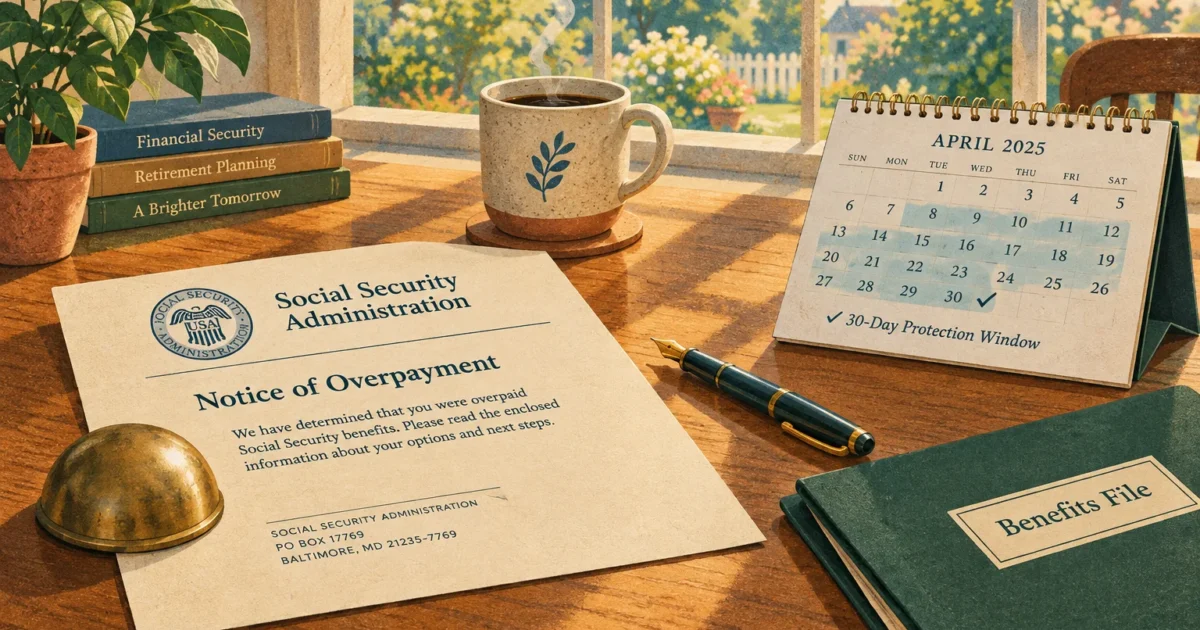
You can protect your monthly retirement benefits and stop sudden government clawbacks before they disrupt your active lifestyle. Learning how to answer an unexpected clawback letter gives you total control over your financial peace of mind.
A sudden notice from the government might feel overwhelming when you are planning trips and enjoying family dinners. Fortunately, clear federal rules allow you to halt automatic withholding and safeguard your lifestyle funds immediately.
Taking swift action keeps your retirement dreams flourishing while you resolve billing disputes on your own terms. Here is how you can handle federal notices with total confidence.
Lifestyle Idea #1: Decode Your Mail and Master the 30-Day Pause Window
Opening an unexpected ssa overpayment letter can easily shock anyone who is enjoying a peaceful retirement routine. However, you should never let panic disrupt your morning coffee or social commitments.
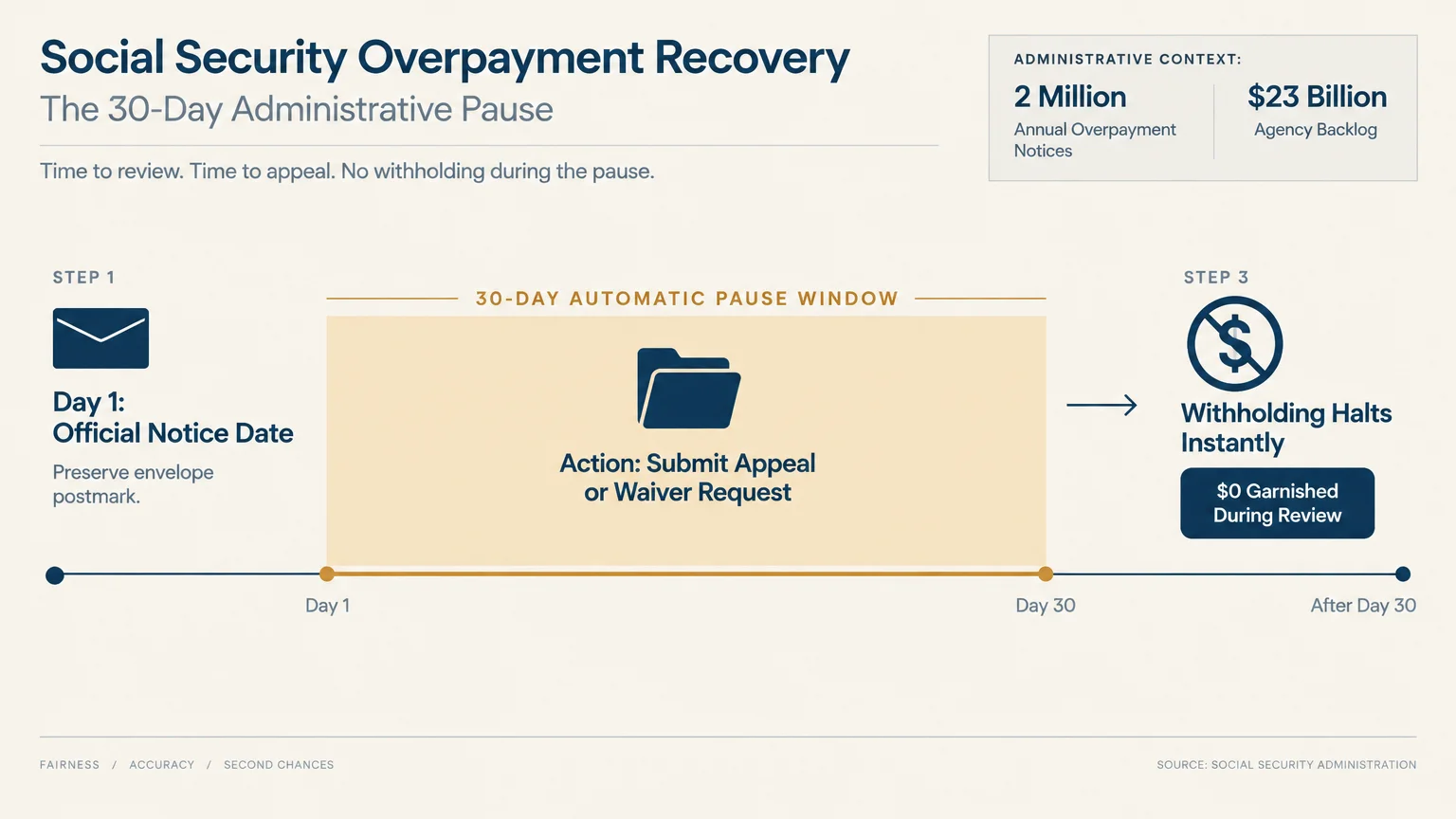
Thousands of retirees across the country experience this exact administrative shock every single week. Approximately 2 million beneficiaries receive overpayment notices each year from federal processors.
These collection letters stem from an immense bureaucratic backlog inside the federal agency. According to official figures, the Social Security Administration carries roughly $23 billion in uncollected overpayments.
Meanwhile, the agency recoups roughly $4.9 billion annually, often targeting seniors on fixed budgets. Understanding these vast numbers reminds you that this letter is purely administrative, not a personal failure.
Many alleged overpayments trace back several years or even decades through complex computer reconciliations. Fortunately, federal law grants you immediate procedural protection the moment that envelope arrives in your mailbox.
The agency must observe a strict 30-day automatic pause window before taking any collection actions. This 30-day countdown begins on the official notice date printed directly on the letter.
If you file an appeal or submit a waiver within those 30 days, all withholding stops instantly. The agency cannot garnish a single penny from your check while reviewing your request.
This crucial pause preserves your monthly cash flow while you build an organized response. You can continue dining with friends and funding your favorite pastimes without sudden financial panic.
To begin, set up a dedicated project folder on your desk or kitchen counter. Filing your documents immediately keeps your mind clear and your living space entirely clutter-free.
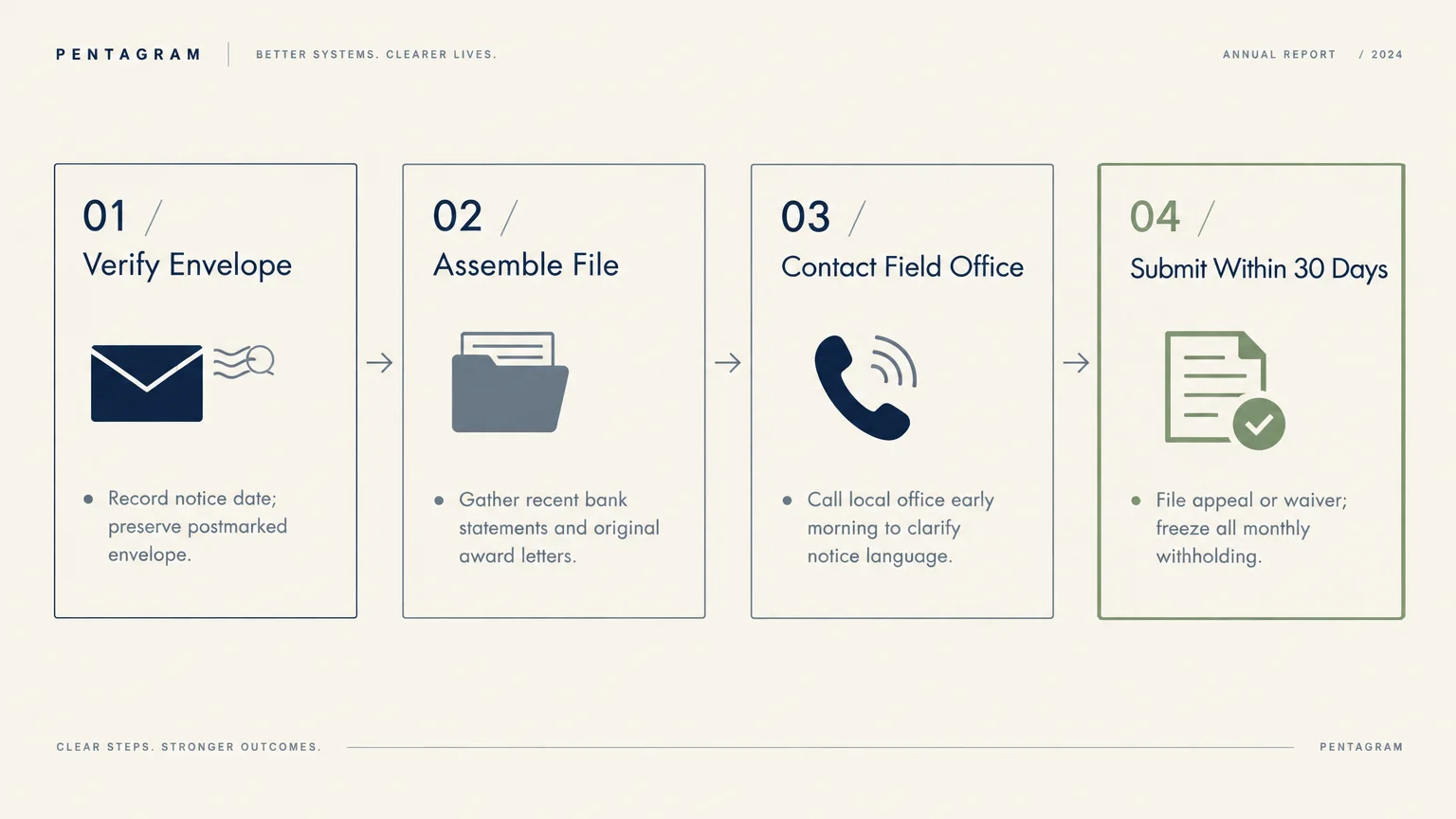
Keep the original notice along with the postmarked mailing envelope inside your new folder. Preserving that postmark provides physical evidence of mailing dates if delivery delays ever become an issue.
Add your recent bank statements and Social Security award letters into the same organized file. Having your financial documents in one place transforms vague dread into an orderly, manageable action plan.
You should also write down the exact calendar deadline for your 30-day response window on the folder cover. Clear visual reminders keep you focused and prevent important dates from slipping past you.
Call your local field office early in the morning if you need immediate clarification on notice wording. Speaking directly with an agency representative often clears up confusing government jargon within minutes.
Taking proactive administrative steps reinforces your confidence and protects your everyday peace of mind. You remain the master of your retirement calendar, regardless of what arrives in the mail.
Maintaining steady control over your personal affairs frees your energy for the hobbies and friendships you love most. A proactive mindset ensures that simple paperwork never overshadows your sunny retirement days.
Lifestyle Idea #2: Challenge Errors with a Confident Sixty-Day Appeal
Federal computer systems make frequent accounting errors when tracking wages, pensions, and living arrangements. You should never assume the government’s figures are accurate without conducting your own thorough review.
When you spot incorrect numbers, you have the legal right to challenge the alleged social security overpayment. Filing an appeal forces agency staff to verify every single calculation and deposit record.
You initiate this formal challenge by submitting Form SSA-561, titled Request for Reconsideration. This standard form notifies the agency that you dispute the existence or amount of the debt.
Federal regulations give you a clear 60-day appeal deadline to submit this formal challenge. The agency legally assumes you received the notice 5 days after the printed date, creating a 65-day total window.
Filing within the first 30 days remains the best strategy because it stops withholding before it starts. However, filing within the full 60 days preserves your formal administrative appeal rights.
Gather your past tax returns, W-2 statements, and direct deposit slips to support your claim. Comparing your bank deposits against the agency’s claimed amounts often exposes simple data entry mistakes.
Turn this verification process into an uplifting morning activity rather than a stressful bureaucratic chore. You might invite a financially savvy friend over for tea to help check the numbers together.
Collaborative record-checking strengthens social friendships while eliminating the isolation that financial stress often brings. Working together makes solving bureaucratic puzzles feel like a shared victory.
You can choose between a formal case review or an informal conference when filing your appeal. An informal conference allows you to speak directly with an agency officer to explain discrepancies clearly.
Clearly document every discrepancy you find on a separate sheet of paper with supporting bank copies. Clear evidence helps field office representatives resolve accounting disputes much faster.
Make complete photocopies of your entire submission packet before sending it to the agency. Storing your own copies guarantees that no critical evidence goes missing in transit.
Send your appeal package via certified mail with a return receipt requested. This receipt provides concrete proof that the agency received your appeal well within the legal deadline.
Defending your hard-earned benefits preserves the discretionary income that powers your social retirement lifestyle. Challenging agency errors ensures you keep the money you rightfully earned throughout your working career.
Many retirees discover that simple computer glitches created their alleged debts out of thin air. Correcting these errors clears your name and restores your full monthly income permanently.
Standing up for your rights delivers a powerful boost to your personal independence and self-assurance. You protect your lifestyle while holding public institutions accountable to accurate accounting standards.

Lifestyle Idea #3: Request an Overpayment Waiver to Protect Your Joy
Sometimes the agency really did send you extra money through no fault of your own. When this happens, you should not have to repay social security funds if repayment creates genuine hardship.
The government provides permanent debt cancellation through a legal process known as an overpayment waiver. Securing a waiver eliminates the debt entirely without requiring you to repay any balance.
To win a waiver, you must demonstrate two essential conditions under official Social Security rules. First, you must show that you were completely without fault in causing the overpayment error.
Second, you must show that repaying the money would prevent you from meeting ordinary living expenses. Recent policy reforms now place the burden of proof on the agency to prove fault.
For debts of $2,000 or less, you can use the convenient administrative waiver rule. Under this rule, you do not even have to fill out extensive financial disclosure paperwork.
Simply call 1-800-772-1213 or visit your local field office to request relief over the phone. If you bear no fault, an agency representative can grant debt forgiveness on that single call.
If your notice exceeds $2,000, you must submit Form SSA-632-BK, Request for Waiver of Overpayment Recovery. This document itemizes your necessary living expenses, such as food, utilities, housing, and prescription medications.
Be sure to list all out-of-pocket healthcare expenses, including dental visits, eyeglasses, and hearing aid batteries. Highlighting these routine health costs paints an accurate picture of your true monthly budget constraints.
You should also include regular vehicle maintenance and insurance costs necessary for daily community travel. Demonstrating that your fixed income already covers necessary expenses justifies immediate waiver approval.
Fortunately, federal rules impose no deadline for requesting an overpayment waiver from the agency. You can file Form SSA-632-BK months or even years after the original notice arrived.
Submitting the waiver within the initial 30-day window halts any automatic monthly check deductions. Freezing collections immediately protects the financial stability needed to enjoy your weekly social outings.
If the agency already deducted funds before you filed, a granted waiver returns that money to you. Every dollar withheld will be refunded back into your direct deposit bank account.
Maintaining your financial equilibrium lets you continue hosting family celebrations and spoiling grandchildren without worry. A successful waiver wipes the slate clean, restoring complete peace to your retirement journey.
Relieving this financial weight allows you to focus your attention on personal wellness, gardening, and creative passions. You deserve to enjoy your retirement years without the shadow of unpayable bureaucratic debts.
Taking decisive action to secure a waiver reaffirms your dignity and safeguards your personal happiness. You protect both your bank balance and the active lifestyle you cherish so deeply.
Lifestyle Idea #4: Negotiate a Flexible Sixty-Month Repayment Plan
If you cannot dispute the balance or qualify for a waiver, you still have options. You do not have to accept aggressive repayment terms that squeeze your monthly lifestyle budget.
Knowing current agency policy gives you the confidence to negotiate affordable monthly terms. Under current policy effective April 25, 2025, through 2026, the default withholding rate is 50% for Title II benefits.
Title II benefits include standard Retirement, Survivors, and Social Security Disability Insurance payments. In contrast, the default withholding rate for Supplemental Security Income overpayments remains capped at 10%.
This 50% rate reflects a turbulent series of recent administrative policy changes. In March 2024, the administration lowered the historic 100% full-check clawback rate down to 10%.
On March 27, 2025, officials briefly reinstated the harsh 100% full-withholding clawback rule. However, an emergency directive on April 25, 2025, reversed that decision, establishing the 50% default rate.
A sudden 50% cut to your monthly check can devastate any carefully planned household budget. With the 2026 Cost-of-Living Adjustment set at 2.8%, absorbing a 50% clawback is virtually impossible for many.
Thankfully, you do not have to accept this severe default social security clawback rate. You can submit Form SSA-634, officially titled Request for Change in Overpayment Recovery Rate.
This form allows you to propose an affordable, customized monthly withholding amount based on your budget. Under regulations updated in 2024, the agency now permits repayment plans lasting up to 60 months.
Spreading an overpayment across 5 full years creates manageable, bite-sized monthly payments. You pay zero interest on this extended schedule, keeping your total repayment cost completely predictable.
In many circumstances, beneficiaries successfully negotiate payments as low as $10 or $20 per month. Proposing a realistic payment rate ensures the agency receives reimbursement without disrupting your essential lifestyle routines.
Be honest and transparent about your ordinary monthly expenses when filling out Form SSA-634. Clearly showing that high withholding harms your daily well-being compels agency representatives to accept lower payment offers.
Once approved, the agency automatically deducts your agreed-upon lower amount directly from your monthly benefit. You never have to worry about writing checks or missing manual payment deadlines.
Negotiating a reasonable payment plan leaves plenty of room in your budget for theater tickets and day trips. You fulfill your civic obligations without sacrificing the vibrant lifestyle you deserve in retirement.
Maintaining predictable monthly cash flow provides the security you need to plan future vacations and family visits. Financial peace of mind allows you to look ahead with enthusiasm and unclouded joy.
Mastering your repayment terms ensures that government correspondence never dictates your day-to-day happiness. You take control of your financial destiny while keeping your social retirement fully energized.

Lifestyle Idea #5: Reclaim Your Calendar with Low-Cost Community Hobbies
Dealing with administrative notices takes time, but paperwork should never consume your vibrant retirement life. Engaging in low-cost social hobbies keeps your mood elevated and your calendar wonderfully full.
Active social connections provide powerful mental protection against bureaucratic frustration and anxiety. Joining local clubs allows you to share laughter and stimulating conversations with like-minded peers.
Consider exploring community pickleball leagues at your municipal recreation center or neighborhood park. Pickleball provides fantastic low-impact exercise, welcomes beginners, and costs almost nothing to play regularly.
If sports are not your preference, visit your local public library for inspiring free programming. Modern libraries offer lively book clubs, genealogy workshops, computer literacy classes, and guest author presentations.
Many municipal library systems also provide free guest passes to local botanical gardens, science centers, and art museums. Taking advantage of these cultural passes provides fantastic weekend outings without spending a dime.
Joining a local community garden allows you to cultivate fresh produce while enjoying open-air socialization. Working alongside neighbors creates shared pride and often yields delicious vegetables for your dinner table.
Walking clubs offer another delightful way to stay fit while building meaningful local connections. Regular morning strolls with neighborhood friends turn routine exercise into an anticipated social highlight.
Look into local senior centers that host weekly craft afternoons, trivia nights, or bridge tournaments. These informal gatherings foster close friendships and keep your mind remarkably sharp and engaged.
Many states offer heavily discounted or completely free park passes for residents aged 60 and older. Taking day trips to scenic state parks provides fresh air, tranquil picnic spots, and breathtaking photography opportunities.
You can also look into volunteering with local animal shelters, food banks, or historical societies. Donating your time provides deep fulfillment and introduces you to passionate, community-minded companions.
Sharing your skills through community tutoring or mentoring gives you a profound sense of purpose. Helping others succeed reminds you of the immense value and wisdom you offer society.
Hosting an informal game night or potluck dinner at home costs very little and guarantees endless laughter. Gathering around board games or cards brings neighbors together for memorable, budget-friendly evenings.
Exploring affordable local hobbies proves that happiness in retirement does not depend on extravagant spending. Keeping your social life thriving reminds you that your days belong entirely to you.
Filling your weekly calendar with rich experiences keeps your spirits buoyant, regardless of administrative tasks. An active, connected lifestyle remains the greatest reward of your retirement journey.
Lifestyle Idea #6: Cultivate Intergenerational Connections and Financial Wellness
Meaningful relationships form the heart of a truly rich and fulfilling retirement experience. Strengthening ties with your children and grandchildren creates enduring emotional wealth that paperwork cannot touch.
Spending quality time with younger generations does not require expensive outings or lavish gifts. Simple activities like baking family cookies or reading stories together create treasured childhood memories.
Plan afternoon adventures to local nature reserves, botanical gardens, or historic downtown walking trails. Exploring the outdoors together fosters curiosity, encourages active movement, and costs very little.
Share your favorite traditional hobbies, like woodworking, knitting, gardening, or painting, with younger relatives. Passing down hands-on craft skills builds strong intergenerational bonds while preserving meaningful family traditions.
Use these shared moments to model calm resilience and practical problem-solving for younger family members. Demonstrating how you navigate life challenges teaches children that setbacks can be managed with composure.
You can also share practical wisdom about budgeting, saving, and managing unexpected financial surprises. Open conversations about money help young adults develop healthy, confident habits for their own financial futures.
Consider hosting regular Sunday family dinners where everyone contributes an affordable potluck dish. Gathering around the table strengthens family unity and creates a warm space for lively storytelling.
Dust off old photo albums and share humorous stories from your own youth with your grandchildren. Preserving oral family history connects younger generations to their roots while filling your home with laughter.
If relatives live far away, schedule regular video calls to celebrate birthdays and school achievements. Sending handwritten postcards or small care packages also keeps the bond strong across the miles.
You can also partner with local schools or youth clubs to read books to elementary students. Connecting with neighborhood children enriches your community while bringing youthful energy into your weekly routine.
Intergenerational friendships offer fresh perspectives that keep your outlook modern, youthful, and optimistic. Embracing new ideas and cultural trends from younger friends keeps your mind remarkably nimble.
Mutual support between generations provides emotional security that shields you against everyday stress and anxiety. Knowing you have loving family and friends standing beside you provides immense comfort.
Investing love and attention into your family generates happiness that enriches every single day. These authentic human connections remind you what truly matters throughout your golden years.
Focusing on love, family, and shared experiences ensures that financial paperwork never diminishes your joy. Your legacy is defined by the connections you nurture and the joy you share.
Putting It into Practice: Small Steps for Big Changes
Taking command of your financial situation requires steady, manageable steps rather than rushed decisions. Breaking the process into simple daily actions ensures you resolve issues without feeling overwhelmed.
Start on day one by opening your letter and noting the exact date printed across the top. Mark the 30-day deadline on your calendar so you submit your response before any withholding begins.
On day two, determine whether you need to file an appeal or an overpayment waiver. If the agency’s numbers are wrong, choose Form SSA-561; if you cannot afford repayment, choose Form SSA-632-BK.
If your balance is under $2,000, call 1-800-772-1213 on day three to request an administrative waiver. You could resolve the entire issue over the telephone in a single afternoon conversation.
For larger amounts, spend day three gathering your household receipts, medical bills, and utility statements. Having clear documentation of your monthly living expenses makes completing financial disclosure forms straightforward.
On day four, fill out your selected forms carefully, writing clearly and keeping descriptions concise and honest. Do not hesitate to ask a trusted friend or family member to review your answers.
On day five, deliver your completed forms to your local Social Security field office. Request a stamped date receipt or send your packet via certified mail to prove timely filing.
Place all postal receipts, date-stamped forms, and tracking slips into your home project folder. Maintaining an orderly paper trail guarantees that you hold physical proof of your timely response.
On day six, check in on your emotional health by taking a deliberate break from all administrative paperwork. Treat yourself to a long walk outdoors, an absorbing book, or an afternoon with friends.
Reclaim your mental space by focusing on the creative projects and social relationships that bring you fulfillment. Remind yourself that you have taken every necessary legal step to protect your finances.
You have the knowledge, tools, and legal rights to defend your benefits and safeguard your retirement bliss. Taking charge today guarantees that your future remains bright, vibrant, and completely under your control.
Embody this proactive mindset throughout your retirement, and no government notice will ever undermine your peace. You worked hard for these years, and you deserve to enjoy them with complete confidence.
Frequently Asked Questions
What happens if I miss the 30-day window to pause withholding?
Missing the 30-day window means the agency may begin withholding money from your monthly check. However, you do not lose your legal right to challenge the debt or seek forgiveness.
You can still submit Form SSA-632-BK for an overpayment waiver at any point in the future. Federal law sets no deadline on when you can ask for relief due to financial hardship.
Once the agency approves your waiver request, they will halt future deductions immediately. Furthermore, the agency will refund any funds that were previously withheld from your checks.
How does an overpayment notice affect my travel plans or relocation?
Receiving an overpayment notice does not restrict your freedom to travel or relocate across state lines. Your monthly benefit deposits continue normally, subject only to applicable withholding rules.
You must simply update your residential and mailing addresses promptly with the agency. Keeping your contact information current ensures you never miss important correspondence while enjoying your travels.
If you travel overseas, you can still manage your Social Security account online through secure government portals. Staying connected digitally allows you to explore new destinations with complete confidence and peace of mind.
How can I overcome the embarrassment of receiving an overpayment demand?
Many retirees feel unnecessary embarrassment when they receive an official government demand for repayment. You must remember that approximately 2 million beneficiaries receive these overpayment letters every year.
These issues usually stem from automated government accounting updates rather than intentional beneficiary mistakes. Talking openly with peers often reveals that several neighbors have navigated the exact same administrative challenge.
Shifting your mindset from self-blame to proactive problem-solving dissolves feelings of shame or anxiety. You are exercising your lawful consumer rights when you challenge errors or request waivers.
What should I do if my budget cannot afford even a small repayment?
Federal law protects beneficiaries from being forced into extreme financial deprivation over government overpayments. The agency cannot collect funds if doing so deprives you of basic food and shelter.
Submit Form SSA-632-BK immediately and provide detailed documentation of your necessary monthly expenses. Showing that you have zero discretionary income qualifies you for full debt forgiveness under hardship rules.
You can also reach out to local Area Agencies on Aging for additional support programs. Community resources often provide valuable assistance with utility bills, prescription medication costs, and supplemental nutrition.
For resources on retirement living, travel, and finance, visit AARP. Official information on Social Security is available at SSA.gov. For travel advisories, consult the U.S. Department of State.
Disclaimer: This article provides lifestyle suggestions for informational purposes. Financial, legal, or travel decisions should be made in consultation with qualified professionals.