

You can build an extraordinary retirement lifestyle by mastering the intentional rich retiree habits of the nation’s happiest seniors. Financial freedom after fifty does not require inherited millions; it demands smart systems and clear daily priorities.
Wealthy retirees navigate taxes, health, and leisure with quiet precision and immense gratitude. They craft their days around purpose while protecting their assets against inflation and unexpected healthcare shocks.
Adopting these proven principles will transform your financial confidence and elevate your daily happiness. Here are the thirteen essential strategies you can start applying right now to secure your golden years.
Tip #1: Delaying Social Security for Maximum Guaranteed Growth
Wealthy retirees rarely claim Social Security benefits the moment they turn sixty-two. Instead, they treat this reliable federal program as an untouchable longevity annuity.
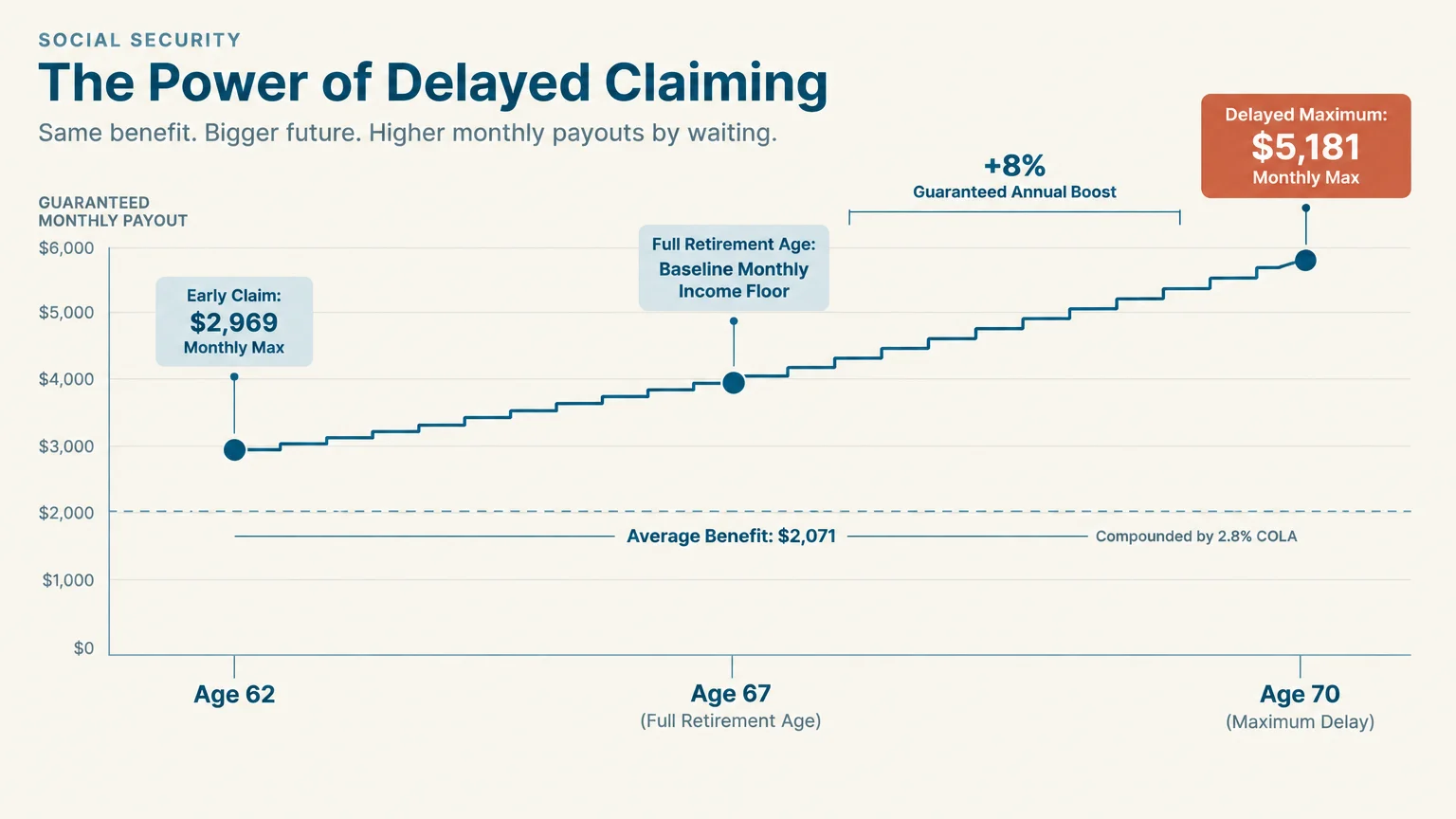
Waiting past your Full Retirement Age yields a guaranteed eight percent boost each year until age seventy. That compounding growth offers an unmatched return that no commercial annuity can safely rival.
For anyone born in 1960 or later, Full Retirement Age is sixty-seven. Every single year you wait past that benchmark permanently raises your guaranteed monthly income floor.
Consider the stark contrast between claiming early and waiting patiently. A top earner claiming at age sixty-two receives a monthly maximum benefit of $2,969.
Holding out until age seventy elevates that maximum monthly payout to $5,181. Even against the average retired worker benefit of $2,071, delaying provides immense monthly breathing room.
The recent 2.8 percent Cost-of-Living Adjustment compounds far more generously on those larger foundational checks. Patience with Social Security serves as a cornerstone of long-term retirement success.
Tip #2: Executing Strategic Roth Conversions Before Required Distributions
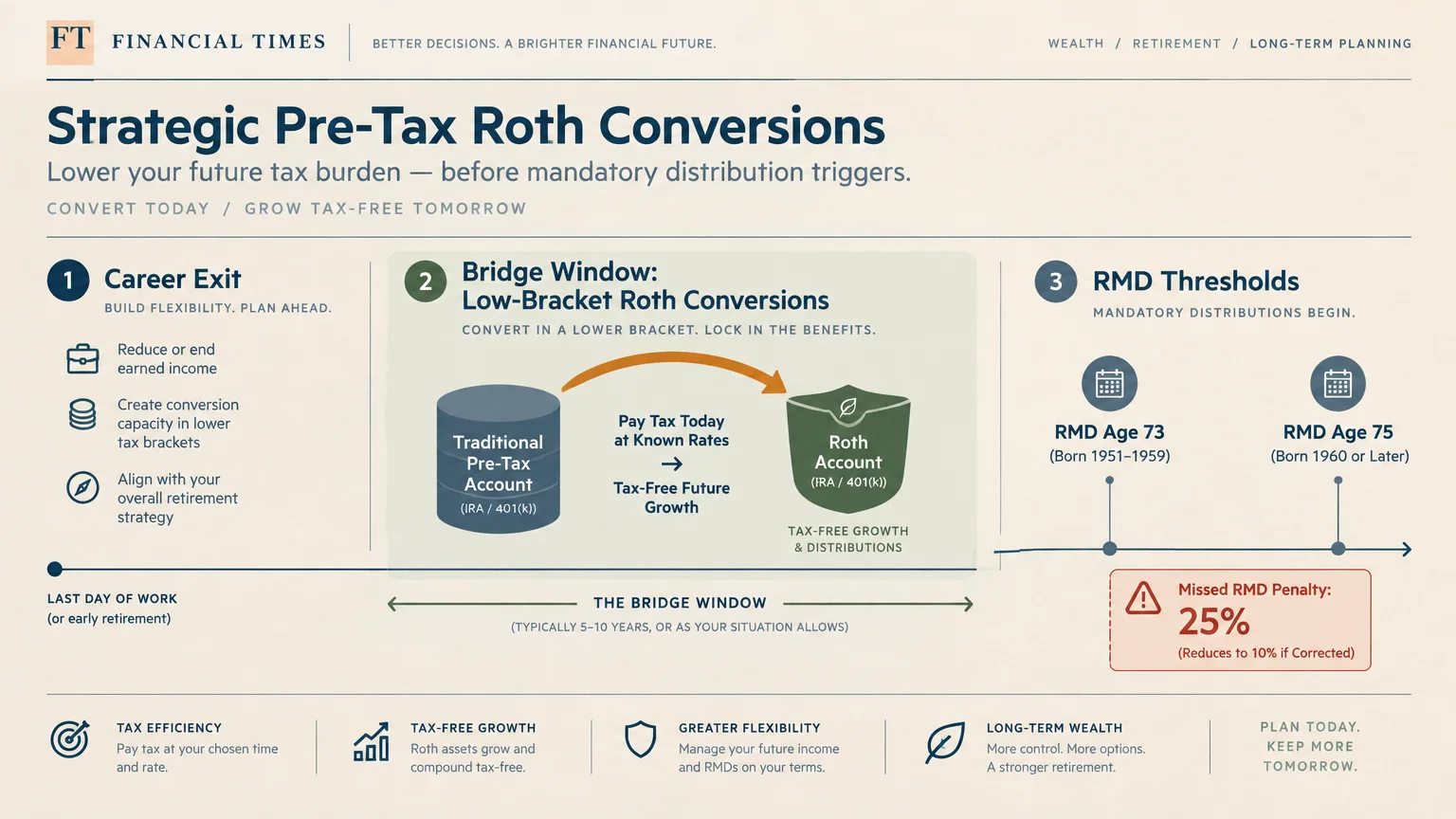
Affluent retirees do not wait for the government to mandate retirement account withdrawals. They proactively execute annual Roth conversions during lower-income bridge years between career exit and mandatory distributions.
The IRS requires you to begin Required Minimum Distributions at age seventy-three if born between 1951 and 1959. If you were born in 1960 or later, your starting age shifts to seventy-five.
Failing to withdraw your exact distribution triggers a severe twenty-five percent penalty on the remaining amount. Even if corrected in a timely manner, the penalty still stands at ten percent.
Wealthy retirees transfer chunks of pre-tax funds into Roth accounts well before those statutory deadlines. You pay taxes on converted balances today, creating tax-free growth and distributions for tomorrow.
This tactical move flattens your future tax curve and shields your heirs from crushing inherited tax liabilities. You effectively eliminate forced taxable income spikes later in life.
Consult with your tax professional to calculate the exact conversion amount that fills your current bracket without pushing you higher. Thoughtful conversions create long-term financial calm.
Tip #3: Leveraging Health Savings Accounts as Stealth Investment Portfolios
Most workers treat a Health Savings Account as a simple revolving medical spending fund. In contrast, wealthy retirees view their HSA as an aggressive, triple-tax-advantaged retirement vehicle.
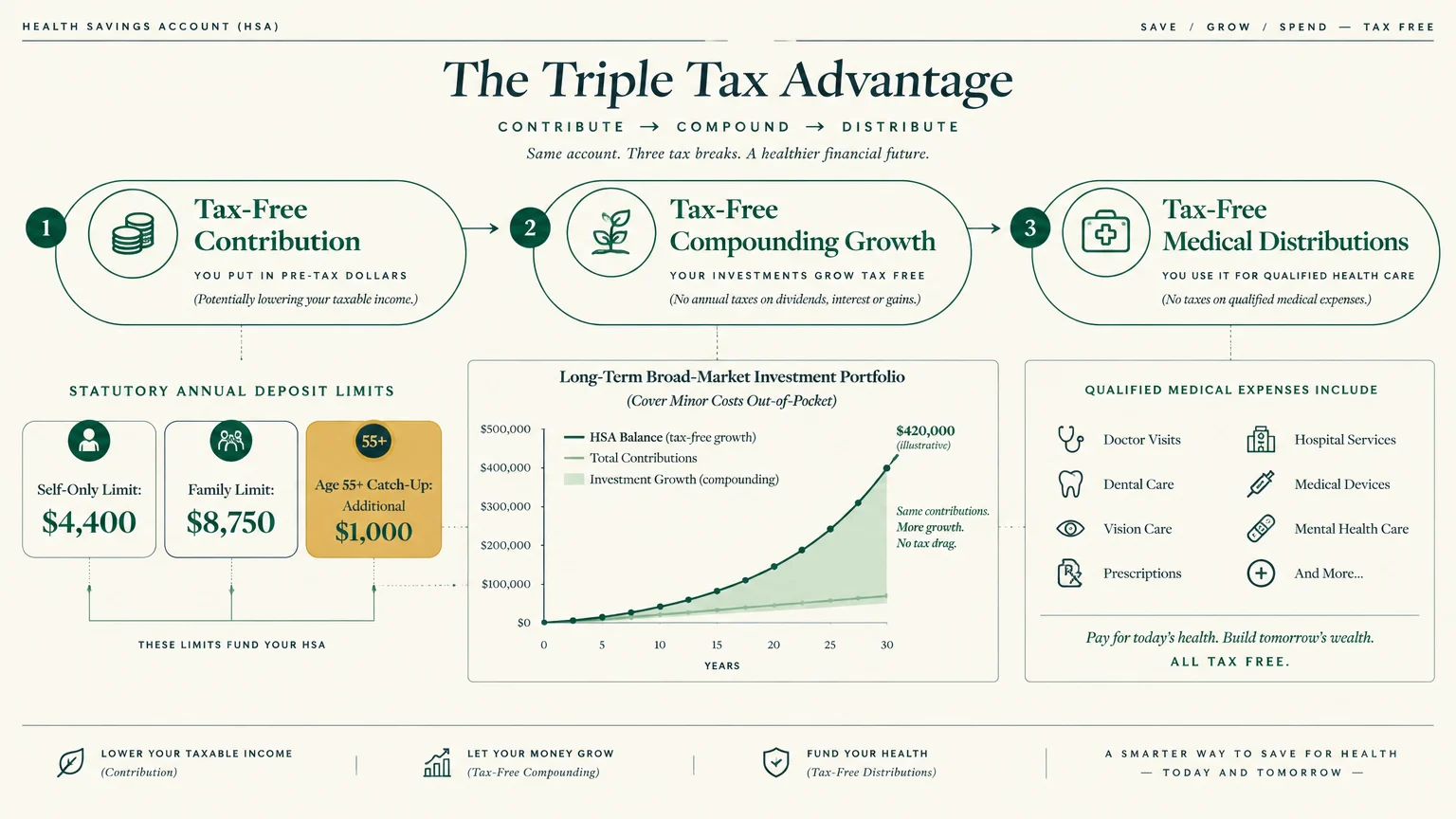
They pay minor healthcare expenses out of pocket and invest their contributions in broad-market funds. Over decades, those untaxed balances compound into substantial healthcare war chests.
You can contribute up to $4,400 for self-only coverage or $8,750 for family coverage under high-deductible healthcare plans. Adults aged fifty-five and older can deposit an additional $1,000 catch-up contribution.
Contributions enter the account completely tax-free, grow without any tax drag, and come out tax-free for qualified medical expenses. No other financial account provides this triple tax shield.
Once you turn sixty-five, you can withdraw funds penalty-free for non-medical expenses, paying standard income tax just like an IRA. Using the funds for medical expenses keeps withdrawals completely tax-free.
This flexible financial shelter absorbs soaring medical costs without disrupting your primary investment portfolios. You protect your lifestyle while optimizing every possible tax shelter.

Tip #4: Utilizing Qualified Charitable Distributions to Lower Taxable Income
Generosity serves a dual purpose for financially savvy seniors. Instead of donating cash from their checking accounts, wealthy retirees make donations through Qualified Charitable Distributions directly from their IRAs.
Once you reach age seventy-and-a-half, you can transfer up to $111,000 per year directly to qualified charities. Married couples filing jointly can give up to $222,000 annually from their separate accounts.
These direct charitable transfers satisfy your Required Minimum Distributions dollar for dollar. More importantly, the transferred funds bypass your adjusted gross income entirely.
Keeping this income off your tax return prevents higher tax brackets and protects your Social Security from taxation. You bless vital community organizations while insulating your portfolio from avoidable tax leakage.
Charitable seniors find immense joy in funding community causes that align with their deepest values. You direct your dollars to organizations you trust rather than handing them over to tax authorities.
Make your charitable giving deliberate and tax-efficient by coordinating distributions directly with your IRA custodian. You create positive community impact while preserving your accumulated nest egg.
Tip #5: Managing Income Thresholds to Sidestep Medicare IRMAA Surcharges
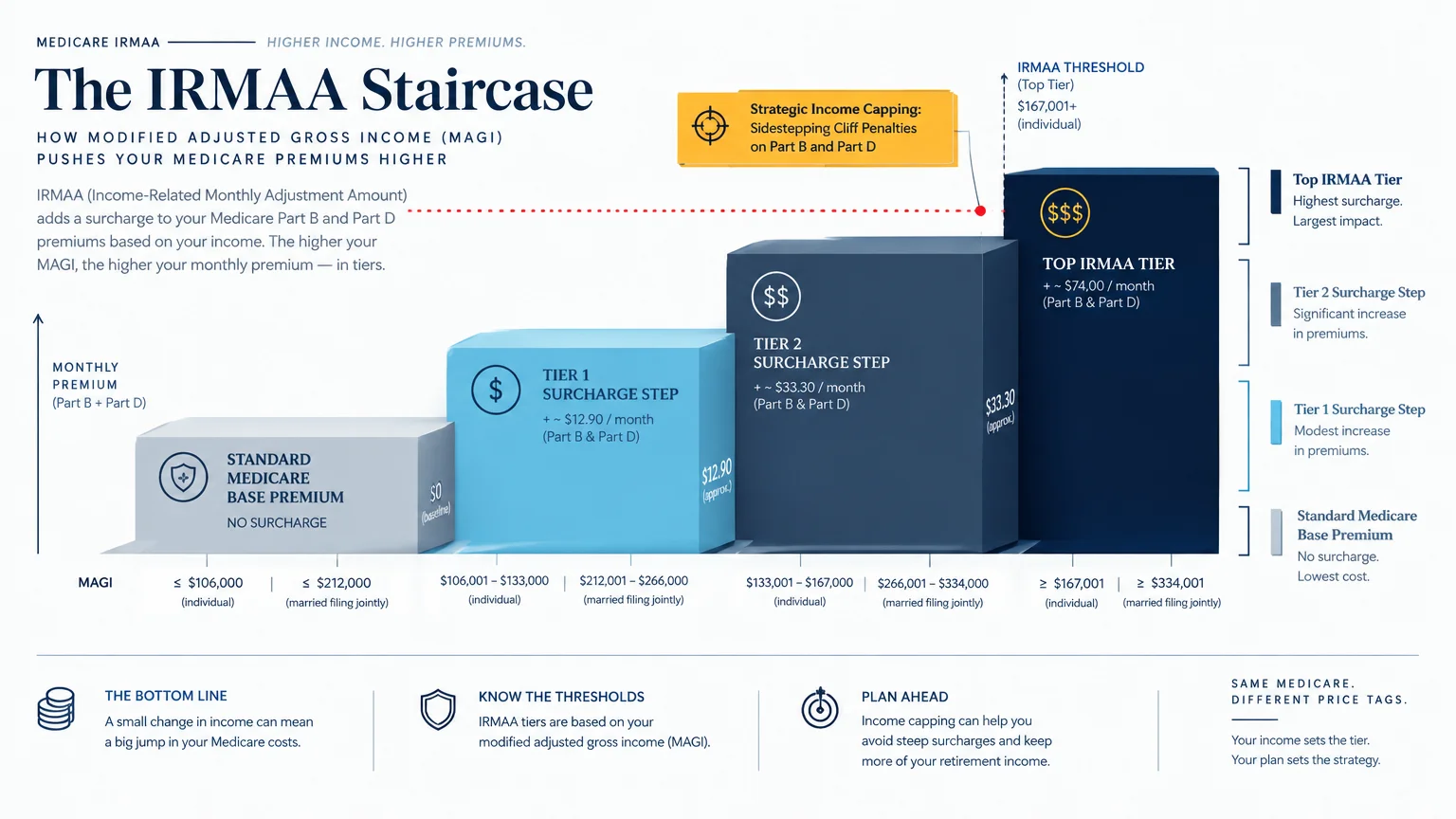
Retirees with substantial wealth watch their Modified Adjusted Gross Income with razor-sharp vigilance. They understand that crossing specific income thresholds triggers painful spikes in Medicare Part B and Part D premiums.
The standard monthly Medicare Part B premium sits at $202.90. However, the Income-Related Monthly Adjustment Amount, or IRMAA, adds substantial surcharges if your income crosses strict statutory tiers.
IRMAA surcharges activate when modified adjusted gross income surpasses $109,000 for single filers or $218,000 for married couples filing jointly. Crossing that line by a single dollar adds between $81.20 and $487.00 per month.
Wealthy seniors coordinate retirement distributions between taxable, tax-deferred, and Roth accounts to keep their declared income below these sharp cliffs. They manage capital gains realization and timing to maintain lean taxable returns.
These tiered surcharges are calculated using your tax return from two years prior. Diligent forward planning prevents unwelcome premium shocks when you enter your Medicare years.
Controlling your gross income protects your monthly healthcare budget from massive unnecessary surcharges. Careful distribution planning keeps your hard-earned dollars right where they belong.

Tip #6: Capitalizing on Workplace Catch-Up Contributions During Peak Earning Years
High-earning pre-retirees aggressively exploit retirement catch-up rules during their final working stretch. They channel maximum allowable earnings into tax-sheltered accounts to supercharge their terminal compounding window.
The baseline employee contribution limit for 401(k), 403(b), and 457 plans stands at $24,500. Workers aged fifty and older can add a standard catch-up contribution of $8,000, totaling $32,500.
Workers aged sixty to sixty-three receive an even greater opportunity through enhanced SECURE 2.0 regulations. This special super catch-up allowance reaches $11,250, pushing your total workplace retirement plan savings to $35,750.
High earners must keep recent tax reforms in mind as they structure these contributions. Workers earning over $150,000 in prior-year FICA wages must direct all catch-up contributions into Roth workplace accounts.
While this eliminates an upfront deduction, it accelerates your accumulation of tax-exempt wealth for the future. You lock in tax-free distributions that will support your lifestyle decades down the road.
Embracing after-tax catch-up deposits builds substantial post-retirement tax freedom. You enter retirement with deep pools of non-taxable assets ready for distribution.
Tip #7: Maximizing Individual Retirement Accounts with Age-Based Allowances
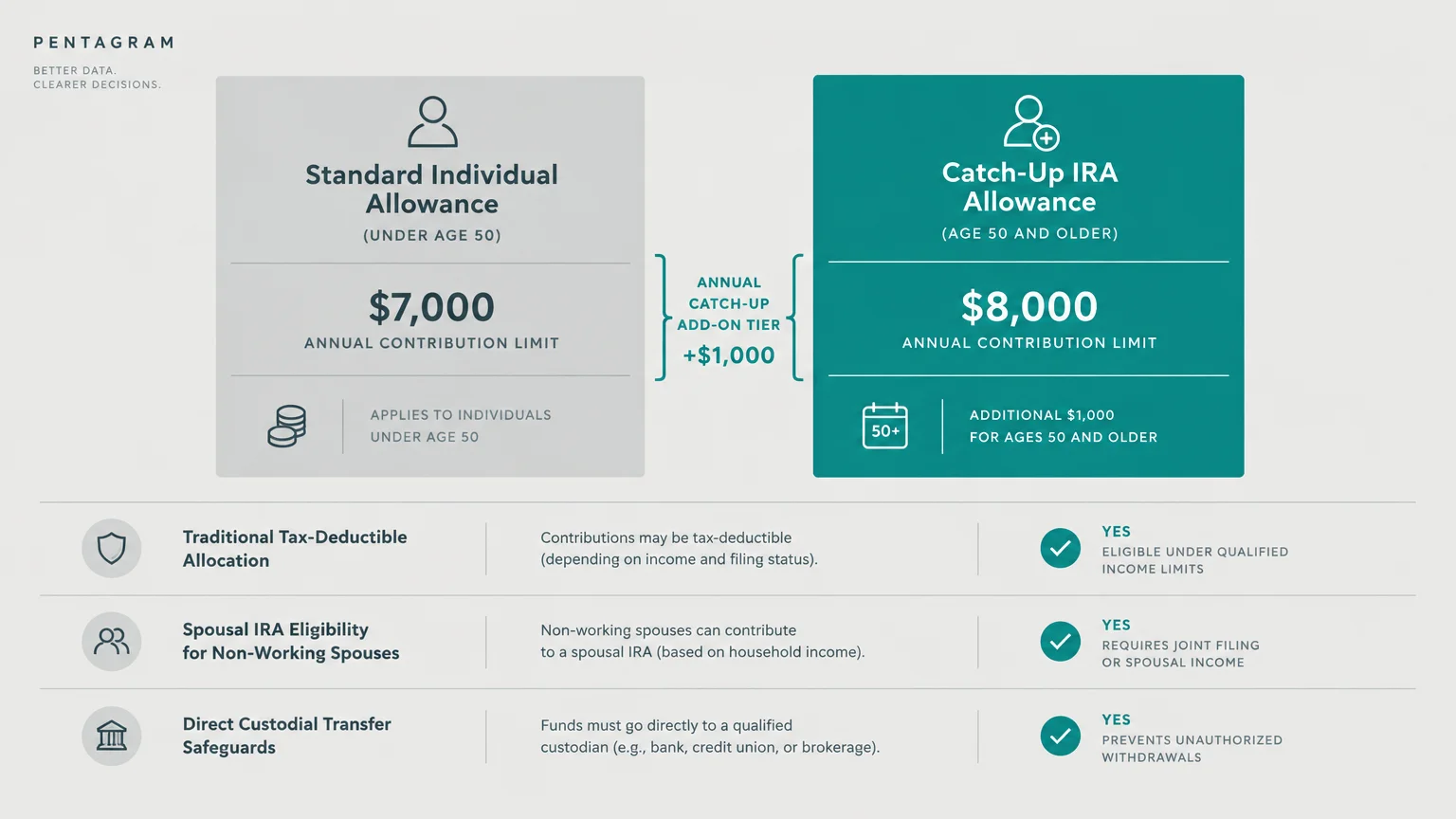
Beyond employer-sponsored plans, successful retirees systematically fund Individual Retirement Accounts each year. They never neglect these personal accounts, utilizing every available dollar to shelter their long-term growth.
The standard IRA contribution limit is $7,500. Savers aged fifty and older can contribute an additional $1,100 catch-up amount, bringing total annual contributions to $8,600.
Even non-working spouses can maintain active IRA contributions through spousal IRA rules if the household maintains sufficient earned income. This strategy doubles your family’s annual sheltered retirement savings.
Wealthy individuals systematically automate these deposits at the beginning of each calendar year. Putting that capital to work early gives their assets twelve extra months of potential compound earnings.
Over a decade of diligent saving, these catch-up contributions generate substantial six-figure cushions. Consistent execution turns modest annual allowances into life-changing financial security.
Consistently capturing these catch-up limits strengthens your broader asset allocation. You cultivate an enduring, multi-layered financial defense for your retirement years.
Tip #8: Structuring Cash Flow Buckets to Avoid Selling in Market Downturns
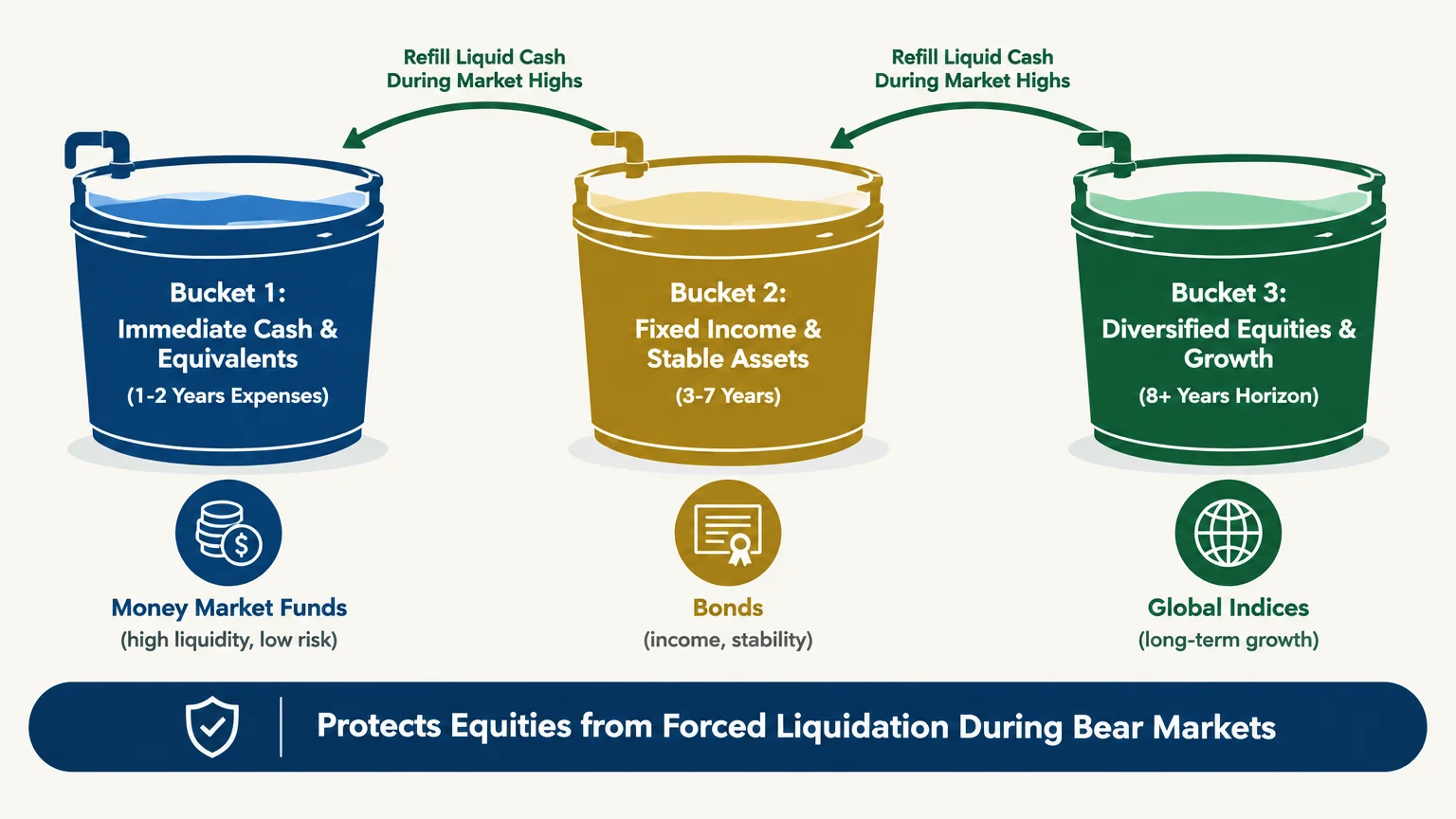
The fear of selling equities during a market downturn keeps many unprepared retirees awake at night. Affluent retirees bypass this anxiety by establishing a disciplined, multi-tier cash flow bucket system.
They keep one to three years of essential living expenses safely anchored in cash, money market funds, or short-term Treasury bills. This liquid reserve insulates their daily household budget from sudden market swings.
A secondary bucket holds high-quality bonds and dividend-yielding assets to refill cash reserves steadily. Meanwhile, their primary equity growth bucket remains untouched during volatile market cycles.
When stock prices dip, rich retirees live comfortably off their defensive liquid reserves. They never sell solid equity positions at depressed prices to cover basic grocery or travel expenses.
As markets recover, profits from the growth bucket replenish the defensive cash and fixed-income reserves. This mechanical rebalancing process removes emotion and panic from personal portfolio management.
This structured peace of mind allows your core equities to recover and thrive over multiple market cycles. You can easily duplicate this technique to eliminate panic and stabilize your cash flow.

Tip #9: Working by Choice Without Triggering Social Security Penalties
Many affluent seniors never fully stop working; they simply redesign work entirely on their own terms. They transition into consulting, board advisory roles, or creative ventures that bring intense personal meaning.
They choose projects for mental engagement and social connection rather than mere financial survival. This intentional work keeps their minds sharp while providing satisfying structure to their retirement weeks.
However, smart retirees who claim benefits early remain acutely aware of strict government earnings limitations. If you collect Social Security before Full Retirement Age while working, the annual earnings test limit is $24,480.
Exceeding that limit prompts the Social Security Administration to withhold one dollar of benefits for every two dollars earned above the threshold. Wealthy retirees time their work arrangements carefully to avoid these unexpected benefit clawbacks.
Once you reach Full Retirement Age, this earnings penalty vanishes completely, freeing you to earn unlimited income. You enjoy total vocational freedom without giving up a single dollar of earned benefits.
Work because you love the challenge, not because you must. Controlling your schedule and tracking statutory limits lets you enjoy career satisfaction on your own terms.

Tip #10: Investing Heavily in Preventative Health and Daily Vitality
Wealthy retirees understand that financial abundance means nothing without vibrant physical health. They treat physical vitality as their most valuable and irreplaceable retirement asset.
Rather than waiting for chronic disease to manifest, they invest generously in preventative care, comprehensive blood panels, and personalized coaching. They view high-quality nutrition, regular strength training, and restorative sleep as non-negotiable daily appointments.
Maintaining lean muscle mass preserves your mobility, balance, and independence as you age. Regular exercise also delivers potent neuroprotective benefits, keeping your cognitive faculties razor-sharp.
Rich retirees build active routines around daily walks, swimming, yoga, and functional resistance training. They listen to their bodies and address minor aches before they turn into debilitating chronic conditions.
Schedule daily movement just as you would schedule an essential business meeting. Walk outdoors, join a community fitness group, or work with a physical therapist to address lingering joint stiffness.
Prioritizing your well-being today ensures you have the stamina to travel and play with your grandchildren tomorrow. Your physical vitality is the true engine of retirement joy.

Tip #11: Curating a Strong Social Circle and Community Purpose
Retirement brings a sudden drop in casual social interactions that traditional workplaces automatically provide. Wealthy and fulfilled retirees deliberately construct new social networks before isolation can creep into their lives.
They join hobby clubs, participate in competitive sports like golf or pickleball, and gather regularly with lifelong friends. They understand that strong social connections guard against cognitive decline and emotional distress.
Civic engagement and structured volunteering also provide powerful sources of daily meaning. Contributing your accumulated expertise to local non-profits or community organizations provides deep personal gratification.
Strong relationships act as an emotional buffer during challenging life transitions. Making time for regular dinners, book clubs, and walking groups keeps your spirit energized and connected.
True wealth lies in being needed, valued, and surrounded by warm companions. Make it your mission to connect with someone you care about every single day.
Shared laughter and collaborative projects keep your retirement vibrant and rewarding. Fill your calendar with meaningful human connections that bring genuine joy.

Tip #12: Outsourcing Time-Consuming Chores to Buy Back Personal Freedom
Affluent retirees prioritize time affluence over minor monetary savings. They realize that their remaining active years represent a scarce and precious resource.
Instead of spending sunny afternoons mowing large lawns or cleaning gutters, they hire trustworthy professional services. They gladly delegate home maintenance, deep cleaning, and complex administrative duties.
Buying back your time allows you to focus your energy on high-value passions and cherished relationships. You trade modest financial capital for hours of creative freedom and restful leisure.
Audit your weekly routine to identify tasks that drain your vitality or feel like heavy burdens. If your budget allows, hire local professionals to shoulder those mundane obligations.
Delegating low-value tasks frees up physical and mental energy for activities that truly enrich your soul. You can invest those liberated hours into creative pursuits, family time, or peaceful relaxation.
Use your recovered time to master a new language, write your memoirs, or hike scenic trails. Time remains your ultimate luxury—spend it on experiences that make your heart sing.

Tip #13: Establishing Clear Estate Directives and Legacy Plans Early
Rich retirees do not leave their legacy to chance, family guesswork, or contentious probate courts. They work closely with skilled estate attorneys to establish clear revocable living trusts, advance medical directives, and financial powers of attorney.
They meticulously review their account beneficiary designations every few years to confirm everything aligns with their current wishes. Beneficiary forms override wills, making regular audits of IRAs and insurance policies essential.
Beyond legal paperwork, successful retirees hold open and loving family conversations about wealth and values. They explain their financial philosophies and philanthropic desires to their children and heirs ahead of time.
Transparent communication prevents bitter disputes and prepares the next generation to manage inherited wealth responsibly. You grant your loved ones clarity and peace during life’s most vulnerable moments.
They also organize vital financial records, account passwords, and key contacts into a secure, accessible estate binder. This simple act of organization relieves grieving family members of immense administrative stress.
Establish your estate directives today so your hard-earned assets fulfill your most cherished family goals. A well-crafted legacy provides the ultimate peace of mind.

The Takeaway: Living a More Blissful Retirement
Building a truly wealthy retirement is a dynamic blend of disciplined financial stewardship and joyful daily living. It does not require extreme sacrifice; it requires thoughtful decisions executed with quiet consistency.
By adopting the strategic financial habits and lifestyle choices of successful retirees, you can elevate your own golden years. Maximize your savings, safeguard your health, cherish your friendships, and protect your precious time.
Retirement offers you the rare opportunity to author your days with complete freedom and deep personal meaning. Take small, actionable steps today to put these proven practices into place.
Step forward into this remarkable life stage with genuine excitement and unshakeable confidence. Your happiest, healthiest, and most prosperous years are waiting right in front of you.
For a wide range of resources for older adults, visit AARP and the National Council on Aging (NCOA). Health information is available from the National Institute on Aging.
Disclaimer: This article is for informational and inspirational purposes only; it is not a substitute for professional medical, financial, or psychological advice. Please consult with a qualified expert for guidance tailored to your individual needs.
Frequently Asked Questions
What is the most effective age to claim Social Security for maximum retirement wealth?
Claiming at age seventy yields the largest possible guaranteed monthly benefit because your payout grows eight percent per year past Full Retirement Age. While you can claim at sixty-two, waiting until seventy increases maximum monthly checks from $2,969 to $5,181.
Delaying provides powerful longevity insurance that protects you against future inflation and outliving your capital. If you enjoy good health and have other assets, waiting produces superior long-term wealth.
How do wealthy retirees avoid large tax bills on their retirement accounts?
Wealthy retirees implement systematic Roth conversions during low-income gap years before mandatory distributions begin. They also direct donations through Qualified Charitable Distributions once they reach age seventy-and-a-half to satisfy distribution rules tax-free.
Balancing income across taxable, tax-deferred, and Roth accounts keeps taxable income below Medicare IRMAA surcharge brackets. Strategic planning ensures they control their tax rates rather than reacting to IRS mandates.
Why are Health Savings Accounts so popular among affluent retirees?
Health Savings Accounts offer an unbeatable triple tax advantage of tax-deductible deposits, tax-free growth, and tax-free withdrawals for healthcare costs. Affluent savers invest these funds aggressively for decades while paying minor medical expenses out of pocket.
This disciplined strategy creates an insulated, tax-free medical fund to pay for healthcare in retirement. After age sixty-five, you can also withdraw funds for general living expenses subject to ordinary income tax.
How can I adopt these wealthy retiree habits if I have an average nest egg?
You can apply wealthy habits immediately by focusing on deliberate tax bracket management, automated savings, and delayed Social Security claims. Maximize your catch-up contributions and build an emergency cash bucket to prevent forced selling during market downturns.
Equally important are lifestyle choices like investing in daily fitness, nurturing social ties, and guarding your time. These high-impact habits build authentic wealth regardless of your initial account balance.