
Choosing the right Social Security claiming age is the single most powerful lever you have to maximize your guaranteed retirement income. By understanding the profound financial differences between claiming Social Security at 62 versus waiting until 70, you empower yourself to build a strategy that perfectly supports your lifestyle goals.
Claiming early offers immediate access to cash for travel or early retirement, while delaying guarantees the absolute highest monthly payout to protect against inflation and outliving your savings. Navigating this decision requires looking closely at your health, your savings, and your long-term vision. The following side-by-side breakdown gives you the clarity you need to confidently step into this exciting new chapter of your life.
Tip #1: Understand the Baseline of Your Full Retirement Age (FRA)
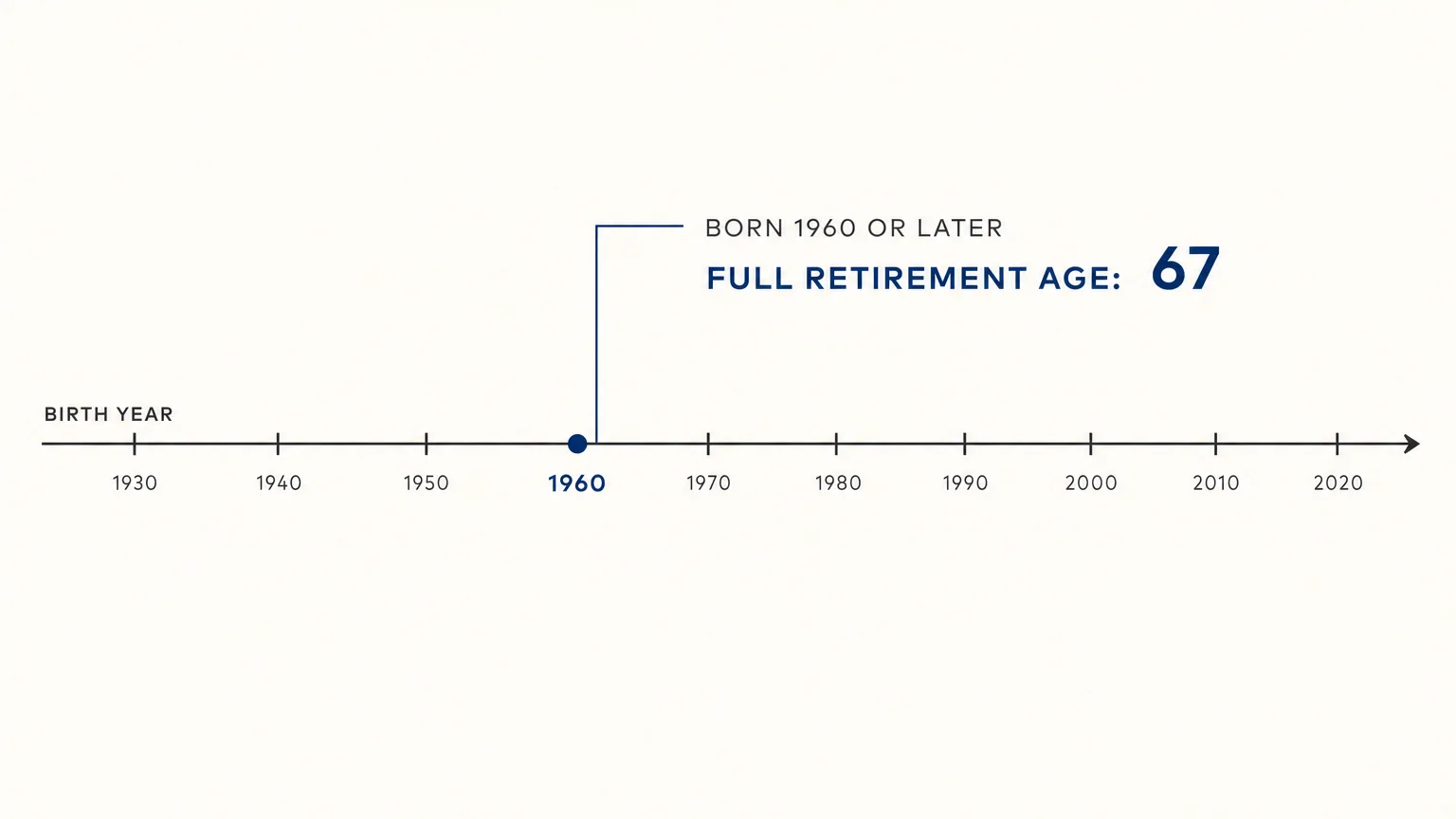
Before you compare the extremes of taking benefits at the earliest or latest possible dates, you must establish your personal baseline. The Social Security Administration uses your Full Retirement Age to determine your primary insurance amount. This specific dollar figure represents the exact monthly benefit you receive if you claim at your designated target age. Depending on your birth year, your Full Retirement Age lands anywhere from 66 to 67. Anyone born in 1960 or later reaches Full Retirement Age at exactly 67.
Knowing this exact age allows you to make an accurate, informed comparison between your various options. Think of your Full Retirement Age as the foundational anchor point of your entire retirement strategy. When you claim earlier than this anchor, you face permanent financial reductions. When you delay past this anchor, you earn permanent financial increases. Without knowing your baseline, calculating your potential future income becomes a guessing game.
You can find your specific Full Retirement Age by creating a free account on the official Social Security website and viewing your personalized statement. Reviewing your statement annually helps you keep track of your earned credits and your projected payouts. Securing this foundational number gives you the confidence to start mapping out your timeline. Taking the time to verify your primary insurance amount completely transforms how you view your future financial landscape.
Many people mistakenly assume they can receive their full benefit at age 65 simply because that is the eligibility age for Medicare. Separating your Medicare timeline from your Social Security claiming age prevents incredibly costly miscalculations. You gain immense peace of mind when you build your plans around accurate, personalized data rather than outdated assumptions.






As a CPA for over 30 years, I have had numerous clients where we had to make this decision. The ONLY situations where the client was better off delaying taking the payment was where they were continuing working.
You read that correctly.
Because of the government’s policy of reducing the Social Security benefit, Under no other scenario did it turn out better to delay taking their Social Security benefits.
Why?
Tax rates rarely went down. Between investments, part time work, and other factors (like inflation and state rate hikes), taxes actually increased during the retirement.
As the article itself says, the breakeven point after investing the excess funds (a total of $84,000+) is between 78-82. The combined number for men and women just hit 79. If all of the benefits begin at the same time as the average person dies, it makes no sense to delay taking your Social Security. You should note that the Chart showing the breakeven point does not accurately reflect those facts.
Do I take social security next year in June when I turn 67. I am retired and not working?
I retired at 64 to take care of my wife that had just had neck fusions front and back. I knew I would make less than at full retirement age, but weighed the difference and decided that 64 was right for me. I was already a retired Marine and had just retired as a County Deputy. I’ve been retired 9 years now and am extremely happy I retired early. What I would have lost by not retiring until 70, would have taken decades to get back, IF I would have lived long enough.
ABSOLUTELY!@@
Good information
My husband retired at 65 due to being ill should we had signed up for ssi disability?
I do turn 67 in June. Thankfully my health has been improving due to some good and forced choices. The plan is to start receiving my money back from social security on my birthday and pay off all my high interest loans through a debt avalanche. That will take a year. Then pay down our house another 4 years plus invest so we have approximately 100,000 in the bank with all debt paid.
I got very sick and was forced to retire at 63 and it was a God sent. With the Military Retiement, the company retirement I was working at the time and the SS and the part my wife received we have managed to keep up fairly well and been able to stay in our home. That Military service the rewards made all possible.
Keep the Faith Brother!!!!!!!!!!
should I retire at 63 or wait until full retirement age, I have money in FRS through my job will it benefit me or not, I am still confused?
I get widows benefits and am about to turn 64 in a few months. Will I continue to get my widow benefits at full retirement age or be forced to take retirement? Which would be best?
As already mentioned, delaying until 70 is advantageous if a person continues to work and/or has a much younger spouse who is in good health. Otherwise, you only know post factum if the decision to postpone was the right one.
I draw the widows pension ss now and work part time I’m 66 I’m waiting till 70 to draw mine which is larger than his is this bad?
I am 70 years old and by December 31st will be 71 years old,its the right time to retired