Tip #7: Alabama — Total Exemption for Defined-Benefit Pensions Only
Alabama presents one of the most intriguing state tax frameworks in the country when comparing pension and Social Security state taxes. Alabama fully exempts Social Security benefits from state personal income tax. What sets the state apart from almost every other jurisdiction is its complete exemption for traditional defined-benefit pensions alongside taxes on defined-contribution plans.
Alabama’s Unique Defined-Benefit Exemption
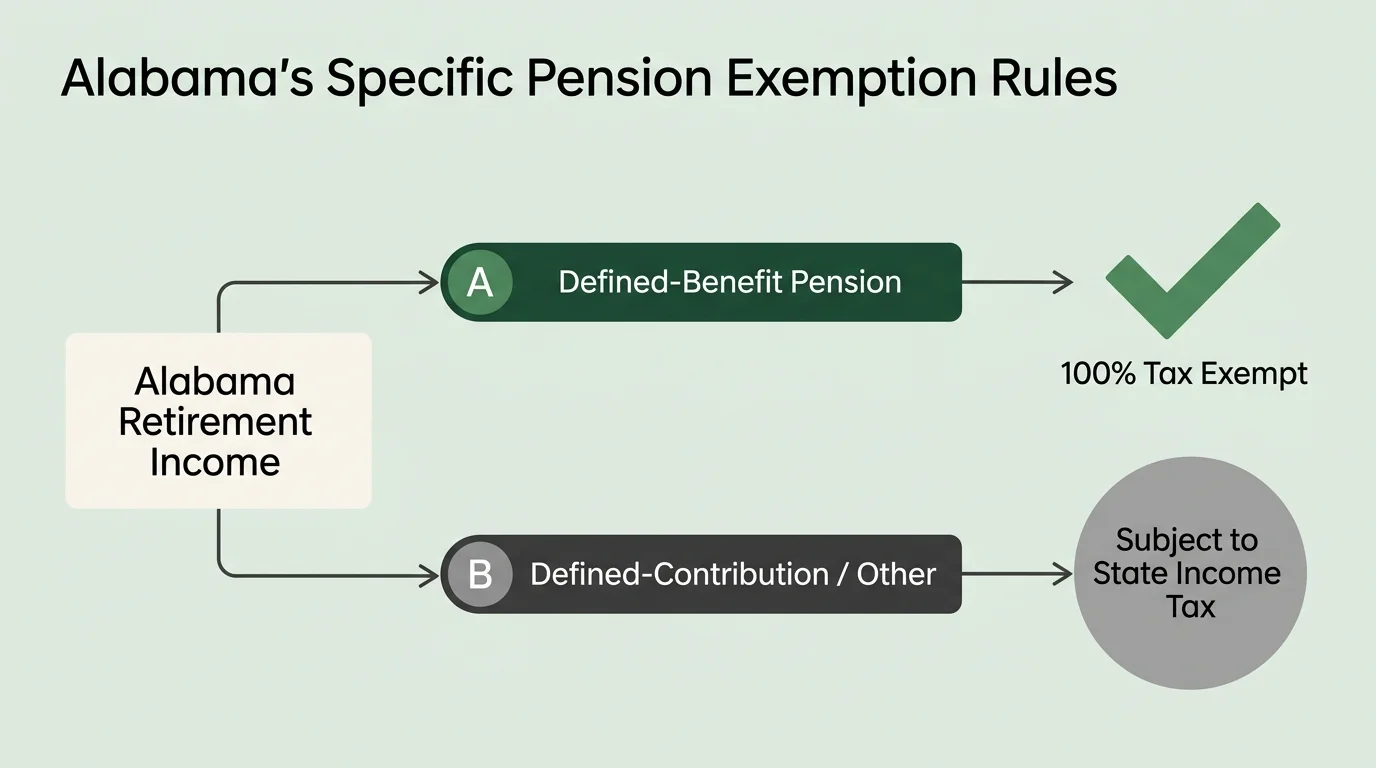
Alabama grants a 100% state income tax exemption to all traditional defined-benefit pensions—including private corporate pension annuities, federal civil service pensions, and state or municipal government pensions. However, distributions from defined-contribution plans—such as 401(k), 403(b), and traditional IRA accounts—do not qualify for this exemption and are taxed at standard Alabama rates ranging from 2% to 5%.
Structuring Your Withdrawals in Alabama
If your retirement income flows from a traditional defined-benefit corporate pension, Alabama taxes exactly zero dollars of that income. On the other hand, if you draw funds from a 401(k) or IRA, those withdrawals incur state tax. Understanding these specialized pension tax rules by state helps you prioritize drawing from tax-exempt pension checks while managing taxable withdrawals from investment accounts.