

Losing a spouse changes everything, yet understanding your survivor benefits puts steady financial ground beneath your feet. Monthly widow and widower payments can range from under $1,000 to over $5,300 depending on timing and work history.
Knowing your exact survivor benefit amount gives you confidence to plan trips, enjoy hobbies, and spoil your grandchildren. With a 3.6% cost-of-living increase arriving in January 2027, your check may stretch farther than you expect.
Use these practical strategies to calculate your payout, avoid claiming traps, and build a joyful next chapter.
Lifestyle Idea #1: Benchmark Your Monthly Payout Against 2026 and 2027 Averages
Before you map out travel plans or home upgrades, you need a realistic picture of what widower benefits and widow payments look like nationwide. More than 3.8 million widows and widowers—including eligible divorced surviving spouses—collected survivor benefits in October 2026, according to AARP.
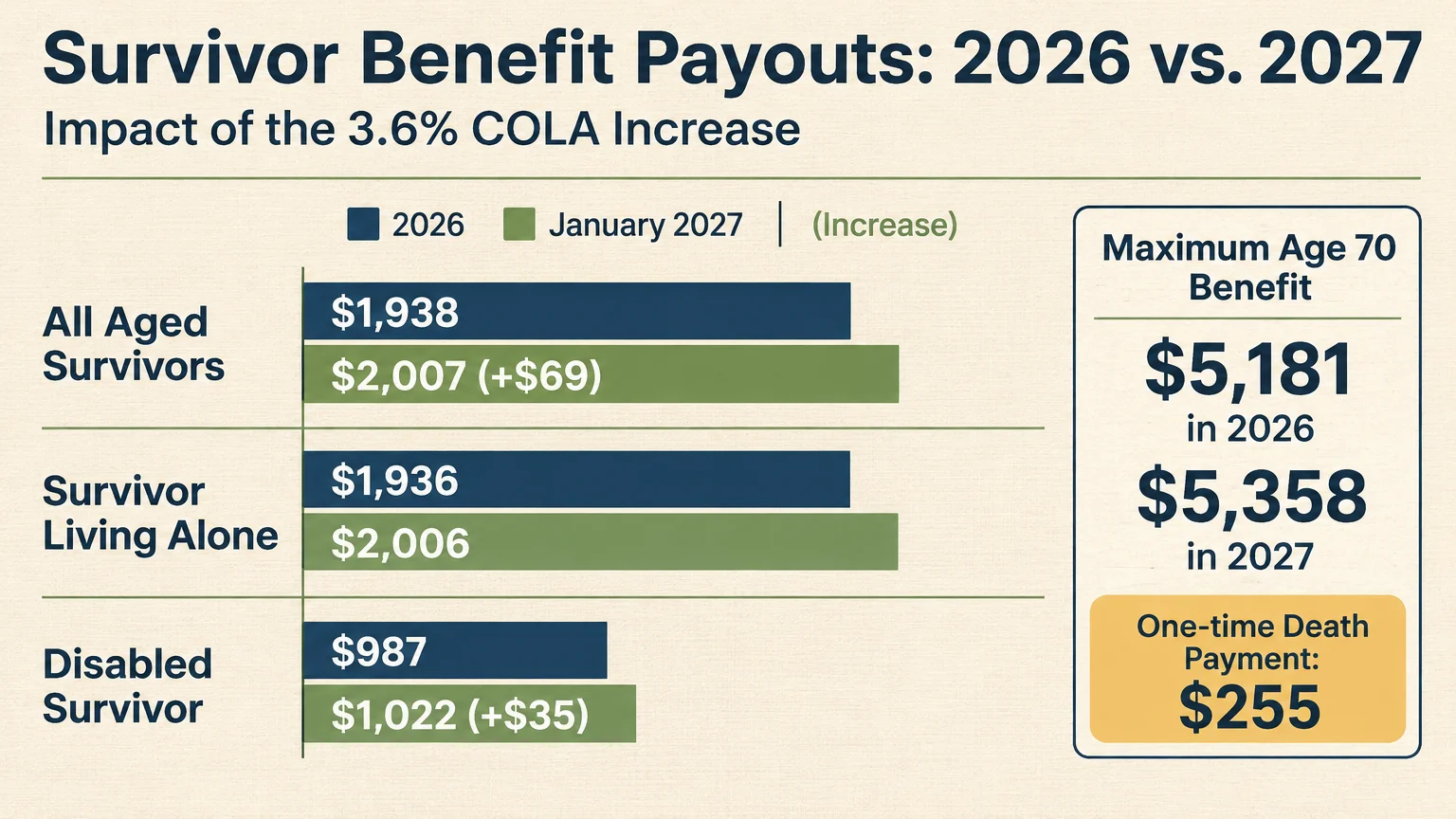
According to the Social Security Administration (SSA), the average monthly check for an aged widow or widower living alone stood at $1,936 in late 2026. On October 14, 2026, SSA announced a 3.6% cost-of-living adjustment (COLA) for 2027, up from 2.8% in 2026.
When that 3.6% boost takes effect in January 2027, the average aged survivor living alone will see roughly $2,005 to $2,006 each month. Across all aged widows and widowers, average monthly payouts rise by $69—jumping from $1,938 in December 2026 to $2,007 in January 2027.
Other household situations follow different benchmarks based on family size and health status. Disabled widows and widowers averaged $987 per month in December 2026, increasing by $35 to $1,022 in January 2027; meanwhile, a widowed mother caring for two children rises from $3,932 to $4,074.
Your own check could sit significantly higher than those national averages if your late spouse earned strong wages. A surviving spouse can never collect more than the deceased worker would receive if alive, yet high earners leave behind substantial protection.
For a worker who earned the taxable maximum for at least 35 years, SSA and Office of the Chief Actuary figures place the maximum full-retirement benefit at $4,152 per month in 2026 and $4,188 in 2027. If your spouse waited until age 70—earning 8% per year in delayed credits past full retirement age—the top payout reaches $5,181 in 2026 and $5,358 in 2027.
Eligible surviving spouses can also claim a one-time $255 lump-sum death payment from SSA. While modest, that extra $255 easily covers a celebratory dinner with family, a new pair of walking shoes, or a weekend craft workshop.
Lifestyle Idea #2: Time Your Claim Around Survivor Full Retirement Age for Maximum Income
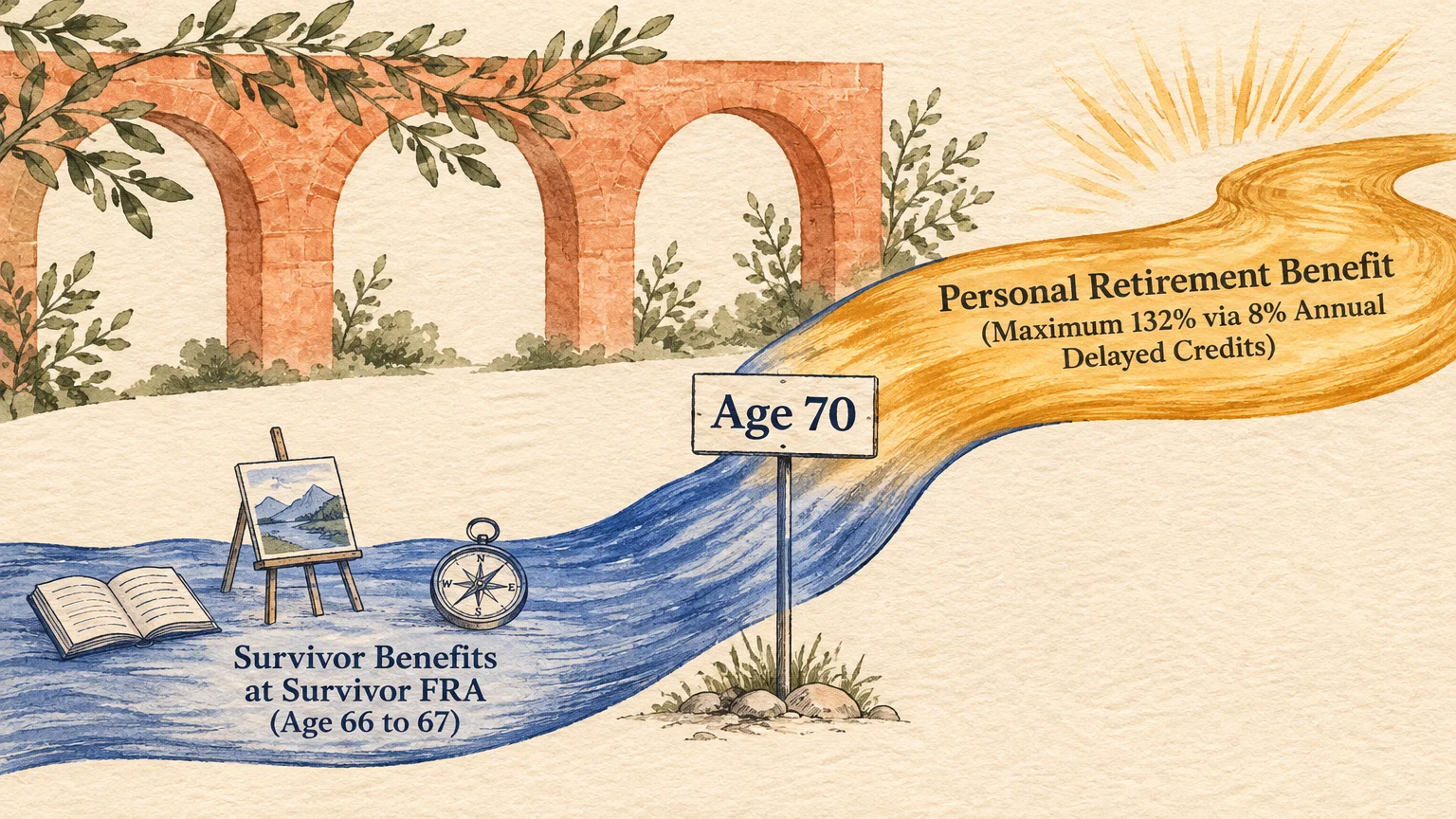
Choosing when to file is the single biggest lever you hold over your monthly widow social security check. Waiting until your Survivor Full Retirement Age (FRA) unlocks up to 100% of your late spouse’s basic benefit, including any delayed retirement credits they earned before passing.
Many retirees get tripped up because Survivor FRA follows a slightly different calendar than standard retirement FRA under federal regulation 20 CFR § 404.409. For anyone born from 1945 through 1956—specifically January 2, 1945 through January 1, 1957—Survivor FRA sits squarely at age 66.
Starting with the 1957 birth year, Survivor FRA increases by two months per year through 1961, moving from 66 and 2 months up to 66 and 10 months. Anyone born in 1962 or later reaches Survivor FRA at age 67, whereas standard retirement FRA hits 67 for people born in 1960 or later.
You do not have to wait until Survivor FRA if you need cash flow sooner to fund daily living or hobbies. Eligible widows and widowers can start collecting as early as age 60, though claiming early brings a permanent percentage reduction.
At age 60, your survivor benefit amount starts at 71.5% of your late spouse’s full benefit—a reduction of up to 28.5%. That payout climbs steadily with each month you wait, topping 75% at age 61, 80% at age 63, and 90% at age 65.
Keep one vital boundary in mind as you run your numbers: survivor benefits stop growing once you hit Survivor FRA. Unlike your own retirement benefit, delaying widower benefits past Survivor FRA earns zero extra delayed credits, so waiting past that milestone simply forfeits monthly checks.
Another important calculation rule—the Widow(er)’s Limit, or RIB-LIM—applies if your late spouse claimed their own retirement benefits early. In that scenario, SSA caps your survivor benefit at the higher of what your spouse actually received or 82.5% of their Primary Insurance Amount.
Checking your exact Survivor FRA birth chart takes five minutes and prevents permanent reductions you did not intend. With clear timing, you can align your monthly income with the lifestyle pace you truly want.
Lifestyle Idea #3: Use the Dual-Claiming Switch Strategy to Fund Your Passions Now and Later
If both you and your spouse worked, you have a powerful planning option that most married couples do not share. You cannot collect two Social Security checks at the same time—SSA always pays only the higher amount—yet you can strategically switch between records over time.
That flexibility exists because standard deemed filing rules do not apply to survivor benefits. You are free to claim one benefit early to cover today’s adventures while letting the other benefit grow untouched for later years.
Consider how this works if you want steady cash at age 60 for travel, art classes, or paying down a mortgage. You can file for reduced survivor benefits at 60 while leaving your own Social Security retirement record alone until age 70.
Because your own retirement check earns 8% per year in delayed retirement credits past your own full retirement age, it grows dramatically by age 70. If your age-70 benefit ends up larger than your survivor check, you simply switch over and enjoy higher lifetime income.
The reverse path works wonders when your late spouse earned much more than you did. You might claim your own reduced retirement benefit at age 62 to subsidize golf outings, gym memberships, or visits with grandkids right away.
Once you reach your Survivor FRA, you switch to an unreduced 100% survivor benefit for the rest of your life. Because the survivor payout waits until Survivor FRA, claiming your own smaller check early does not shrink your eventual widow social security payout.
Sit down with a notebook—or a financial planner—and compare both sequences side by side. Choosing the right order can easily add tens of thousands of dollars to your retirement lifestyle budget without extra work hours.
Lifestyle Idea #4: Verify Special Eligibility Rules for Disability, Young Families, and Divorce
Survivor benefits support far more life stages than many people realize, extending well beyond retirees in their late sixties. Knowing these special rules helps you—or even an adult child or friend—avoid leaving vital monthly money unclaimed.
First, the deceased worker generally needed up to 40 work credits, or roughly 10 years of Social Security-covered employment, though younger workers need fewer credits. Under a special rule for children and spouses caring for children, just 6 credits—about 1.5 years of work—in the three years before death qualifies.
Earnings thresholds for earning those credits nudge up slightly with wages each year. Workers earn one credit for every $1,890 in covered earnings during 2026 and $1,970 during 2027, up to a maximum of four credits per calendar year.
Next, marriage duration matters for standard spousal claims. SSA and AARP note that couples generally must have been married for at least nine months before the spouse’s death, though that nine-month rule is waived for accidental deaths or line-of-duty U.S. military deaths.
If you live with a qualifying health condition, eligibility opens a full decade earlier. Disabled widows and widowers ages 50 to 59 can receive 71.5% of the deceased worker’s Primary Insurance Amount regardless of age claimed, provided the disability began within seven years of the spouse’s death.
Multi-generational households also gain major breathing room under child-in-care rules. A surviving spouse of any age who cares for the deceased worker’s child under age 16—or a child disabled before age 22—can collect up to 75% of the worker’s Primary Insurance Amount.
Each eligible child generally receives 75% as well, subject to SSA’s overall family maximum cap. That support helps younger widows and widowers keep family routines steady, cover school activities, and protect household savings.
Finally, never assume divorce erased your eligibility for social security after death of spouse. Divorced surviving spouses can claim at age 60 or older—or 50 if disabled, or any age while caring for an entitled child—as long as the marriage lasted at least 10 years.
Best of all, paying a divorced survivor does not reduce the current spouse’s payout or count against the family maximum. Every eligible person gets their fair share without creating family tension.
Lifestyle Idea #5: Balance Part-Time Work and Volunteering Without Losing Benefits Forever
Retirement rarely means sitting still on the porch all afternoon. Many vibrant seniors enjoy consulting a few hours a week, working seasonally at a botanical garden, or picking up part-time retail shifts for social energy and extra spending money.
If you earn wages while collecting survivor benefits before reaching Survivor FRA, SSA applies an annual earnings test. Knowing the exact dollar limits lets you work confidently without getting surprised by withheld checks.
During every full calendar year that you remain under Survivor FRA, SSA sets an annual earnings cap of $24,480—or $2,040 per month—in 2026. For 2027, that annual limit rises to $25,560, or $2,130 per month.
If your earned wages exceed that threshold, SSA withholds $1 in survivor benefits for every $2 you earn above the limit. Investment income, pensions, and IRA withdrawals do not count toward this test; only wages or net self-employment earnings count.
During the specific calendar year in which you reach Survivor FRA, the earnings cap jumps much higher. In 2026, you can earn up to $65,160—or $5,430 per month—and in 2027 that threshold climbs to $67,920, or $5,660 per month.
Only earnings from the months before your Survivor FRA birthday month count toward that higher limit, and SSA withholds $1 for every $3 earned above it. Once the calendar hits your Survivor FRA month, the earnings limit disappears completely.
Here is the reassuring part that too many seniors overlook: withheld checks are not lost forever. Once you reach Survivor FRA, SSA recalculates your monthly benefit and permanently adds back credit for any months withheld due to work—except for child-in-care benefits.
That means a fun part-time job can enrich your social calendar today without hurting your long-term widower benefits. Simply notify SSA promptly if your work income changes so your monthly deposits stay accurate.

Lifestyle Idea #6: Reclaim Public Pension Survivor Money Under the Social Security Fairness Act
For decades, thousands of dedicated public servants watched their survivor checks shrink—or vanish altogether—because of a frustrating rule called the Government Pension Offset (GPO). Retired teachers, firefighters, police officers, and pre-1984 federal Civil Service Retirement System workers often received nothing from a late spouse’s Social Security record.
That painful obstacle is officially history. Signed into law on January 5, 2025, the Social Security Fairness Act—Public Law 118-273—completely repealed the GPO retroactive to January 2024.
The financial impact for widows and widowers has been enormous. By July 7, 2025, SSA had already distributed more than 3.1 million retroactive payments totaling $17 billion to eligible Americans whose benefits had been reduced or erased.
Even if your late spouse passed away years ago, you could now qualify for full widow social security alongside your state, municipal, or federal pension. Imagine putting an extra thousand dollars or more each month toward travel, home maintenance, or helping grandkids with college expenses.
There is one crucial catch you must act on if you belong to this group. Surviving spouses who never filed an application in the past because the old GPO rule wiped out their payout will not receive automatic checks; you must file a new survivor claim with SSA.
Reach out to former colleagues from your school district, firehouse, or municipal union to share this update as well. Spreading the word helps friends in your community reclaim money they have rightly earned.
Lifestyle Idea #7: Open Your Heart to New Companionship Without Risking Your Check
Life after 50 holds wonderful opportunities for fresh companionship, shared laughter, and even new romance. Unfortunately, outdated myths about losing social security after death of spouse make some widows and widowers hesitate before saying yes to a second marriage.
Clear SSA guidelines protect your financial independence as you embrace new relationships. Remarrying at or after age 60—or at or after age 50 if you qualify as a disabled survivor—does not reduce or end your survivor benefits at all.
You keep every penny of your late spouse’s survivor check while building a new life with your partner. That financial freedom allows couples to focus on compatibility, shared travel dreams, and blended family celebrations rather than worrying about losing a monthly lifeline.
Timing only creates an issue if you remarry early. Remarrying before age 60—or before age 50 if disabled—generally ends eligibility for survivor benefits from your late spouse’s record unless that later marriage ends through death, divorce, or annulment.
Also note that if you remarry after 60 and your new spouse has a much stronger Social Security earnings record, you retain options down the road. Once eligible for spousal benefits on your new marriage—or if you outlive your new partner—you can switch to whichever benefit pays the higher monthly amount.
Whether you choose long-term dating, living apart together, or walking down the aisle again, keep your joy front and center. Understanding the age-60 milestone ensures love and financial security walk hand in hand.
Lifestyle Idea #8: Protect Your Check from the Widow Tax Penalty with Smart Filing
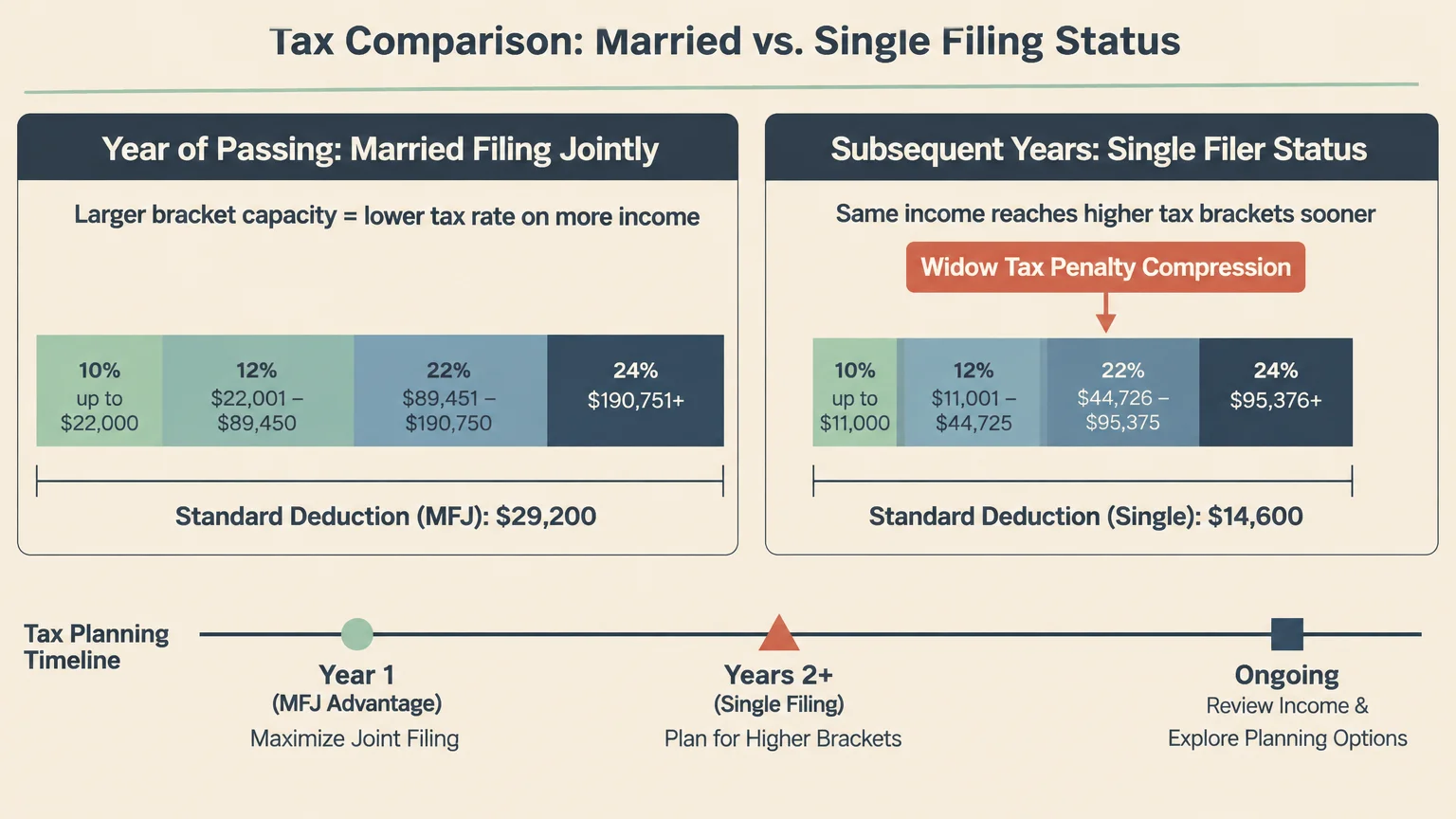
Collecting a generous survivor check feels wonderful until tax season delivers an unexpected surprise. Many surviving spouses discover that switching from married filing jointly to single filing status lowers the income thresholds where Social Security becomes taxable—a shift often called the widow’s tax penalty.
Under IRS rules for single filers, up to 50% of your Social Security benefits may face federal income tax when your combined income lands between $25,001 and $34,000. Once your combined income rises above $34,000 as a single filer, up to 85% of your benefits can become taxable.
Because your household income may stay relatively steady from pensions or retirement accounts while your standard deduction shrinks to the single level, more of your survivor check can suddenly get pulled into higher brackets. Proactive tax planning keeps more of that money dedicated to your hobbies and adventures.
Thankfully, new tax relief offers welcome breathing room for older adults. Under the One Big Beautiful Bill Act, taxpayers age 65 and older can claim an additional $6,000 Senior Deduction for tax years 2025 through 2028, phasing out above $75,000 in modified adjusted gross income for single filers.
Pair that extra deduction with thoughtful withdrawal habits throughout the year. Spacing out traditional IRA distributions, using qualified charitable distributions if you support local causes, or consulting a tax advisor before selling appreciated investments can prevent sudden tax spikes.
When you keep your taxable income neatly organized, you protect your survivor benefit amount from unnecessary erosion. A single afternoon meeting with a tax professional each fall can easily pay for your next spring getaway.
Lifestyle Idea #9: Navigate the Offline Application Process Smoothly
When you feel ready to apply, knowing how SSA handles paperwork saves hours of frustration. Unlike standard retirement applications, SSA states that survivor benefits cannot be applied for online.
You must call SSA directly at 1-800-772-1213—or TTY 1-800-325-0778—to schedule a phone appointment, or apply in person at your local Social Security office. Preparing for that conversation ahead of time turns a daunting chore into a calm, manageable step.
If you were already collecting spousal benefits on your partner’s record before their passing, your transition happens much more smoothly. SSA automatically converts existing spousal benefits into survivor benefits once notified of the death, though you should still contact SSA directly to claim the $255 lump-sum death payment.
Before calling, gather key documents in one folder: your marriage certificate, your spouse’s death certificate, birth certificates, and both Social Security numbers. Having recent W-2 forms or tax returns nearby also helps if your late spouse worked recently.
Consider inviting a trusted friend or adult child to sit beside you during the phone call or ride with you to the Social Security office. Having a supportive companion takes the emotional edge off repeating personal details, and you can celebrate checking off the task with lunch afterward.

Putting It into Practice: Small Steps for Big Changes
Turning complex Social Security rules into real retirement joy happens one calm step at a time. Start this week by creating a simple two-page money folder listing your expected widower benefits alongside your current monthly living expenses.
Next, check your own personal retirement estimate so you can compare claiming early versus switching at Survivor FRA or age 70. Even a rough comparison clarifies whether you have room right now for a new hobby, seasonal travel, or family outings.
If you worked in public service and avoided filing in the past because of the old GPO rule, pick up the phone and schedule an SSA appointment immediately. Reclaiming those retroactive and ongoing dollars could transform your budget overnight.
Finally, treat your survivor benefits as a lasting gift of stability rather than just numbers on a statement. Pair smart claiming choices with active social routines—whether joining a walking club, taking painting lessons, or planning a cruise with friends—so every month feels purposeful and rewarding.
For resources on retirement living, travel, and finance, visit AARP. Official information on Social Security is available at SSA.gov. For travel advisories, consult the U.S. Department of State.
Frequently Asked Questions
What if I feel overwhelmed calling Social Security or managing finances alone?
Handling financial paperwork after losing a partner feels heavy for almost everyone, so give yourself grace and move at your own pace. Break the process into ten-minute tasks—finding one document today and making one phone call tomorrow—rather than trying to finish everything in a single afternoon.
Write down your top three questions before dialing 1-800-772-1213, and ask an adult child or close friend to join you on speakerphone. Taking notes together prevents missed details and turns an intimidating chore into shared teamwork.
Can I really enjoy travel and social hobbies on an average survivor benefit?
Yes, especially when you pair a steady $2,005 to $2,007 monthly average check with smart senior lifestyle perks. Shoulder-season travel packages, national park senior passes, and AARP discounts stretch every leisure dollar surprisingly far.
Many community centers, libraries, and museums also host free book clubs, fitness sessions, and lecture series where friendships blossom without straining your budget. Combine low-cost social routines with a modest part-time passion project if you want extra cash for big trips.
What happens if my late spouse passed away before claiming Social Security?
You still qualify for full survivor protection even if your partner never filed a single claim during their lifetime. SSA bases your survivor benefit amount on what your spouse would have received at full retirement age, or what they had already earned at death if older.
If your spouse worked past full retirement age without claiming, any delayed retirement credits they accumulated up to the date of death pass straight to you. Waiting until your own Survivor FRA lets you capture 100% of that enhanced payout.
Will my survivor benefit amount keep up with rising grocery and healthcare costs?
Your monthly widow social security check receives annual cost-of-living adjustments whenever inflation pushes consumer prices higher. Following the 2.8% bump in 2026, SSA’s 3.6% COLA starting in January 2027 helps preserve your everyday purchasing power.
Pairing those automatic increases with careful tax planning—such as claiming the $6,000 Senior Deduction for ages 65 and older through 2028—helps ensure rising costs do not crowd out the hobbies and people you love.
Disclaimer: This article provides lifestyle suggestions for informational purposes. Financial, legal, or travel decisions should be made in consultation with qualified professionals.