
Securing your financial independence and peace of mind during retirement requires vigilance against increasingly sophisticated cybercriminals. Imposter scams now account for billions of dollars in annual losses, with bad actors frequently targeting older Americans through official-looking communications. You can easily safeguard your hard-earned benefits, preserve your identity, and enjoy your retirement years without fear by recognizing how genuine federal agencies operate. When you learn how to identify fraudulent notices, spot deceptive email addresses, and respond appropriately to high-pressure demands, you take total control over your financial security. Protecting your lifelong savings remains easier than you think when you rely on clear facts and proactive habits.
Tip #1: Recognize the Official Government Web Domain and Email Rules
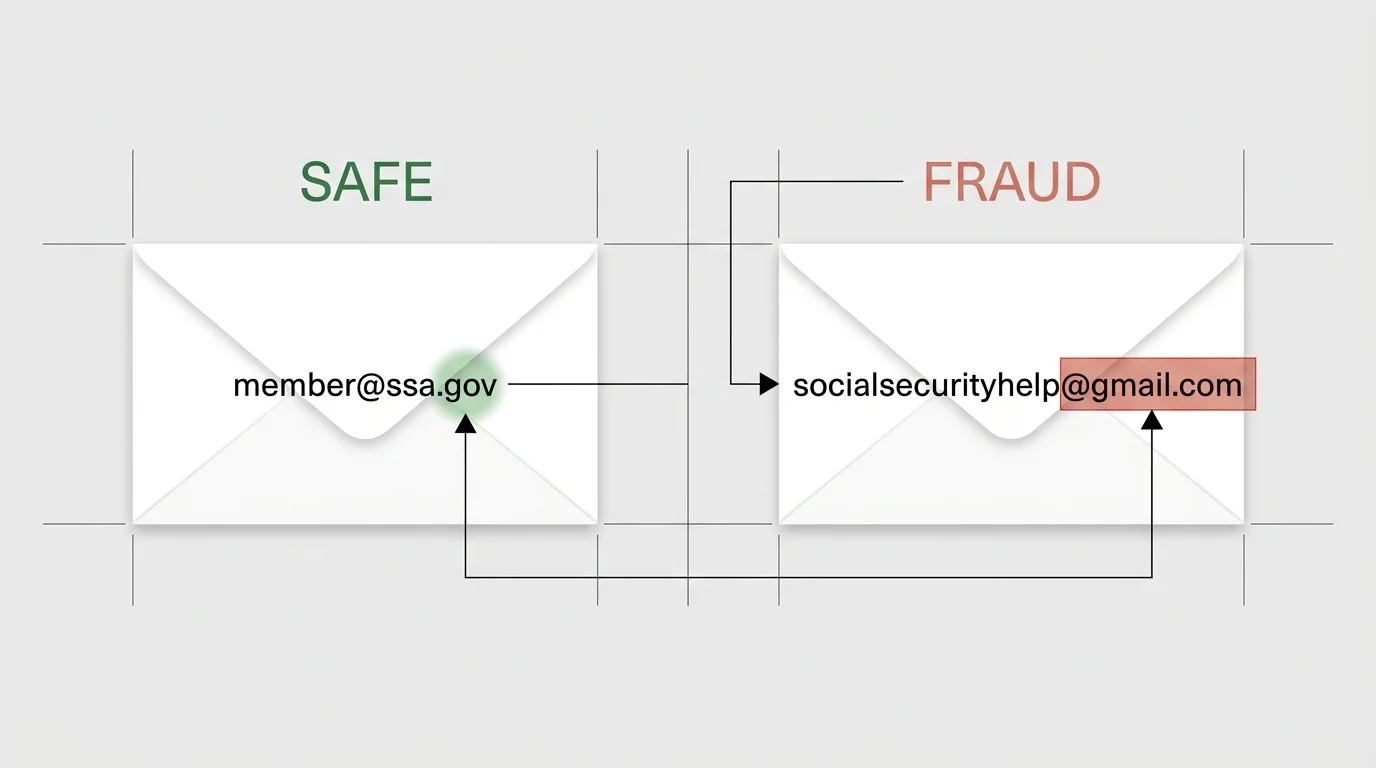
Cybercriminals routinely create deceptive emails and fake websites that look authentic at first glance; however, the federal government maintains strict technical standards that imposter organizations cannot duplicate. Every official email sent by the Social Security Administration, along with every legitimate webpage hosted by the agency, uses the official .gov web domain; for example, the primary public portal is located at ssa.gov. Genuine government departments never send official correspondence from commercial domain extensions such as .com, .net, or .org, nor do they communicate using public email services like Gmail, Yahoo, or Outlook.
When you receive a suspicious digital message claiming to be an official social security fraud notice, inspect the sender’s actual email address rather than relying on the visible display name. Fraudsters routinely alter display names to match official agency titles, but inspecting the detailed email header reveals the actual sending domain. Hover your mouse cursor over embedded hyperlinks without clicking them to display the destination web address. If the web link does not end precisely in .gov, you are looking at a fraudulent attempt to collect your confidential information.
Checking web domains takes only a few seconds, yet it provides an exceptionally strong defense against online scam attempts. Developing this simple verification habit ensures that you interact exclusively with secure, official systems. When you remain mindful of domain endings, you can navigate digital services with absolute confidence—safeguarding your retirement income while enjoying complete peace of mind.
For a wide range of resources for older adults, visit AARP and the National Council on Aging (NCOA). Health information is available from the National Institute on Aging.
Tip #2: Spot the Red Flags of Payment Demands and Immediate Threats
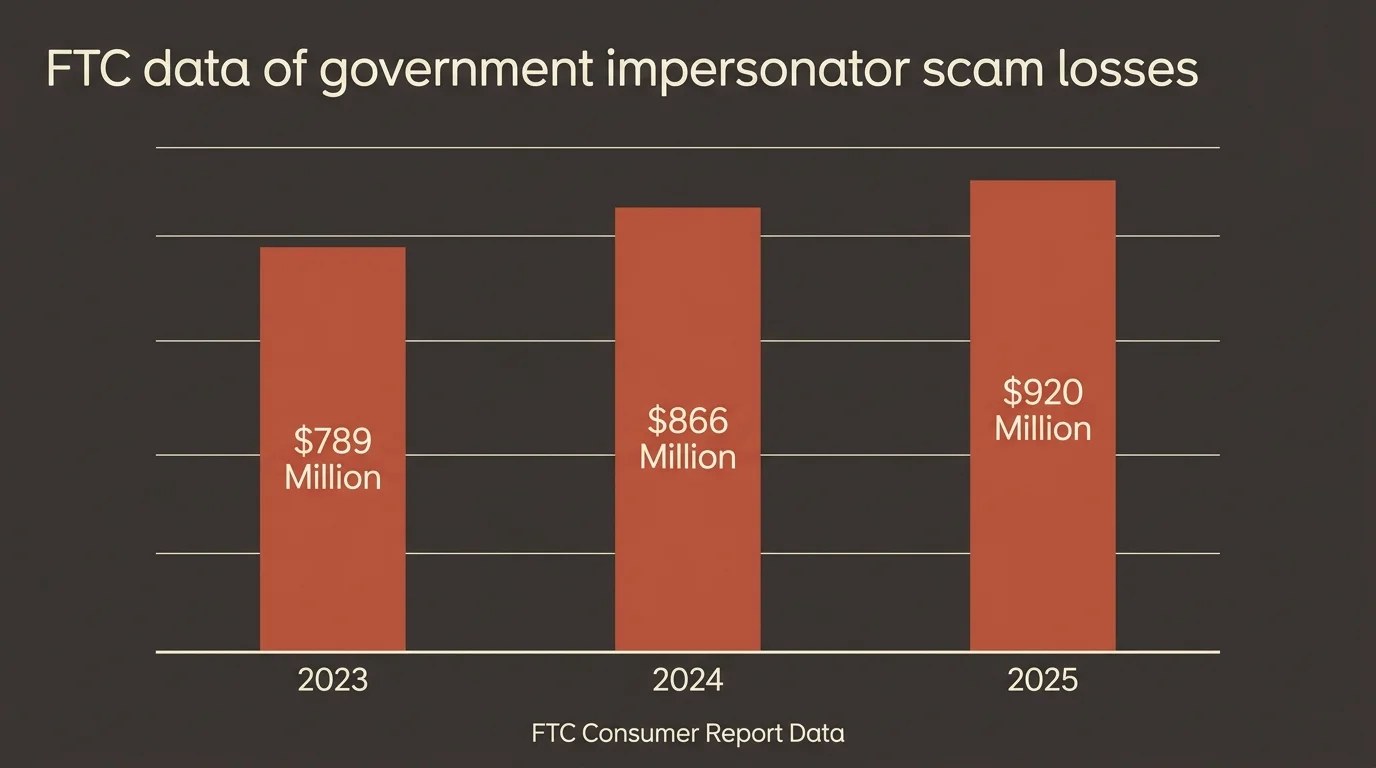
Understanding how legitimate federal agencies operate remains essential for effective social security scam protection. According to Federal Trade Commission data, consumers reported losing approximately $920 million to government impersonators in 2025, up from $866 million in 2024 and $789 million in 2023. Overall imposter scam losses reached $3.5 billion in 2025—nearly tripling since 2020. Criminals achieve these massive losses by generating artificial urgency; they attempt to cause panic before you have time to consult trusted family members or financial advisors.
The Social Security Administration follows strict administrative procedures designed to protect citizens from coercive collection attempts. Federal officials will never call or text you demanding immediate payment, nor will they threaten you with immediate arrest, legal action, or law enforcement intervention. Furthermore, authentic agency representatives will never claim that your Social Security number faces immediate suspension or cancellation—a persistent myth used by fraudsters to intimidate victims into compliance.
Official agencies also maintain clear, non-negotiable rules regarding payment methods. Federal representatives will never demand funds via retail gift cards, wire transfers, cryptocurrency, cash shipments, or physical gold transfers. If any caller or written notice demands that you transfer money into “safe accounts” or purchase gift cards to resolve a legal issue, you are communicating directly with a fraudster. Hanging up immediately on demanding callers gives you total control over your personal security.
For a wide range of resources for older adults, visit AARP and the National Council on Aging (NCOA). Health information is available from the National Institute on Aging.
Tip #3: Beware of Fake Badges, Credentials, and Social Media Impersonators
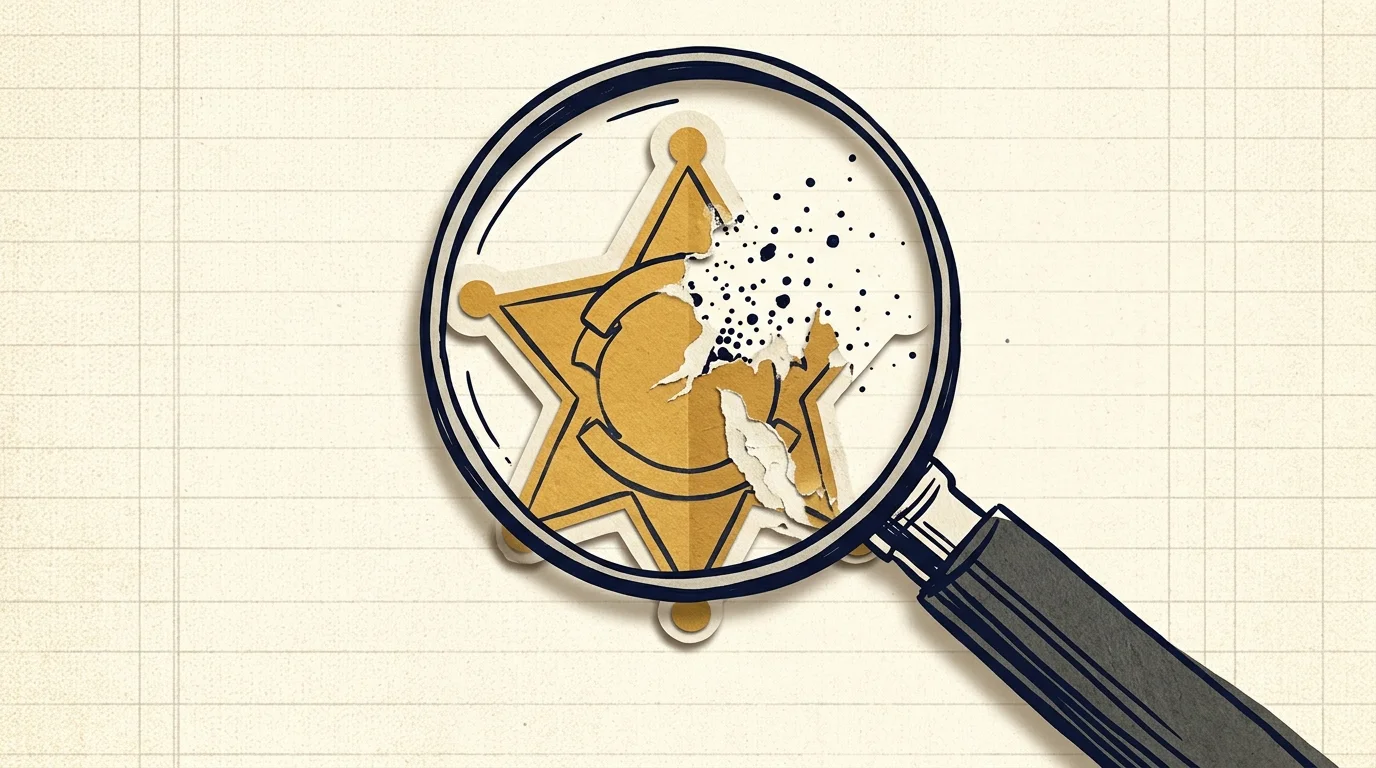
As modern scam tactics evolve, fraudsters rely heavily on convincing visual deceptions to establish false authority. The Social Security Administration Office of the Inspector General has issued explicit alerts warning citizens about imposters using fabricated agency badges, fake government identification credentials, and stolen employee social media profiles. Cybercriminals send these realistic images via text message, email, or direct messaging apps to trick you into believing you are communicating with an authentic federal agent.
These deceptive visual tactics disproportionately affect mature adults. FTC data reveals a more than four-fold increase since 2020 in reports from adults aged 60 and older losing $10,000 or more to impersonation schemes. Furthermore, total losses reported by older adults who lost $100,000 or more leaped eight-fold from $55 million in 2020 to $445 million in 2024. Impostors take advantage of civic trust by pairing official-looking logos with fabricated legal emergencies.
To protect against social security fraud, remember that real government personnel never text or email photos of official badges or identification credentials to your personal devices. Any digital badge sent through text message or social media is entirely fraudulent. If an individual sends a photo ID to prove their government employment, end all communication immediately. Genuine federal representatives verify their credentials through established administrative procedures and official postal correspondence, never through casual messaging channels.
For a wide range of resources for older adults, visit AARP and the National Council on Aging (NCOA). Health information is available from the National Institute on Aging.

Tip #4: Guard Against Phishing Emails Offering Fake Benefit Claims
Phishing emails represent one of the most persistent methods bad actors use to commit social security identity theft. The Social Security Administration Office of the Inspector General frequently issues public warnings regarding malicious email schemes designed to steal sensitive personal information. These deceptive messages often land in your inbox featuring enticing subject lines such as “Claim Benefits!” or “Apply for Your Social Security Benefits,” claiming that you qualify for uncollected funds or urgent benefit increases.
Clicking on links within these fraudulent messages redirects you away from legitimate government portals to spoofed websites that mirror official design styles. These deceptive pages prompt you to enter your Social Security number, full legal name, date of birth, and direct deposit banking details under the pretext of updating your file. Once submitted, criminals use this confidential data to redirect your monthly benefit payments, apply for fraudulent loans, or open unapproved credit lines in your name.
Maintaining a healthy skepticism toward unsolicited benefit offers protects your financial standing. The federal government calculates statutory cost-of-living adjustments automatically without requiring you to complete unprompted online forms or submit financial accounts via email links. If an email claims you must log in to unlock a benefit increase, treat it as an active scam attempt. Navigating directly to official portals by typing the web address into your browser ensures your personal details remain completely secure.
For a wide range of resources for older adults, visit AARP and the National Council on Aging (NCOA). Health information is available from the National Institute on Aging.

Tip #5: Avoid Downloading Unverified Utility Apps or Security Updates
Another dangerous tactic involves fake technical notices engineered to install harmful software on your personal devices. Cybercriminals distribute fake agency notices carrying titles such as “Official Notice: Download Your Social Security Statement Now” or similar formal headers. These communications instruct you to download attached files, security utility apps, or specialized software tools to view your confidential statements or protect your personal profile.
In reality, these downloadable tools contain dangerous malware designed to compromise your device’s operating system. Once installed on your desktop computer, smartphone, or tablet, malicious programs can capture your saved passwords, monitor keystrokes, and record sensitive banking information. In severe cases, sophisticated ransomware locks your personal files, demanding payments to restore access to your personal photographs and private documents.
You can completely eliminate this risk by adopting a strict rule against downloading attachments from unknown senders. The Social Security Administration never attaches software installation programs, utility apps, or executable files to digital notices. Authentic benefit statements are displayed safely inside your web browser after you log into your personal profile. If an email instructs you to download a security tool or application, delete the message immediately without opening attached files.
For a wide range of resources for older adults, visit AARP and the National Council on Aging (NCOA). Health information is available from the National Institute on Aging.

Tip #6: Set Up Your Secure “my Social Security” Account Directly
Proactive account creation offers an exceptional way to secure your personal records before fraudsters attempt to exploit them. Creating your personal profile on the official federal website enables you to monitor earnings records, check benefit projections, and manage direct deposit arrangements directly. Establishing your official account early prevents unauthorized third parties from setting up a fraudulent profile using your Social Security number.
When accessing or creating your personal account, always navigate directly to the verified address by typing ssa.gov into your browser search bar. Enable multi-factor authentication, which requires a temporary secondary code sent to your personal mobile device whenever you log in. This secondary security layer guarantees that even if a criminal uncovers your password, they cannot enter your portal without physical access to your mobile phone.
Reviewing your online statements once or twice a year allows you to verify that reported annual earnings match your employment history accurately. Regular monitoring ensures immediate awareness of any unexpected changes to your profile. Should you ever receive an authentic social security fraud alert from monitoring systems, having established online access allows you to inspect records instantly and resolve discrepancies with ease.
For a wide range of resources for older adults, visit AARP and the National Council on Aging (NCOA). Health information is available from the National Institute on Aging.
Tip #7: Know Exactly How and Where to Report Suspicious Activity
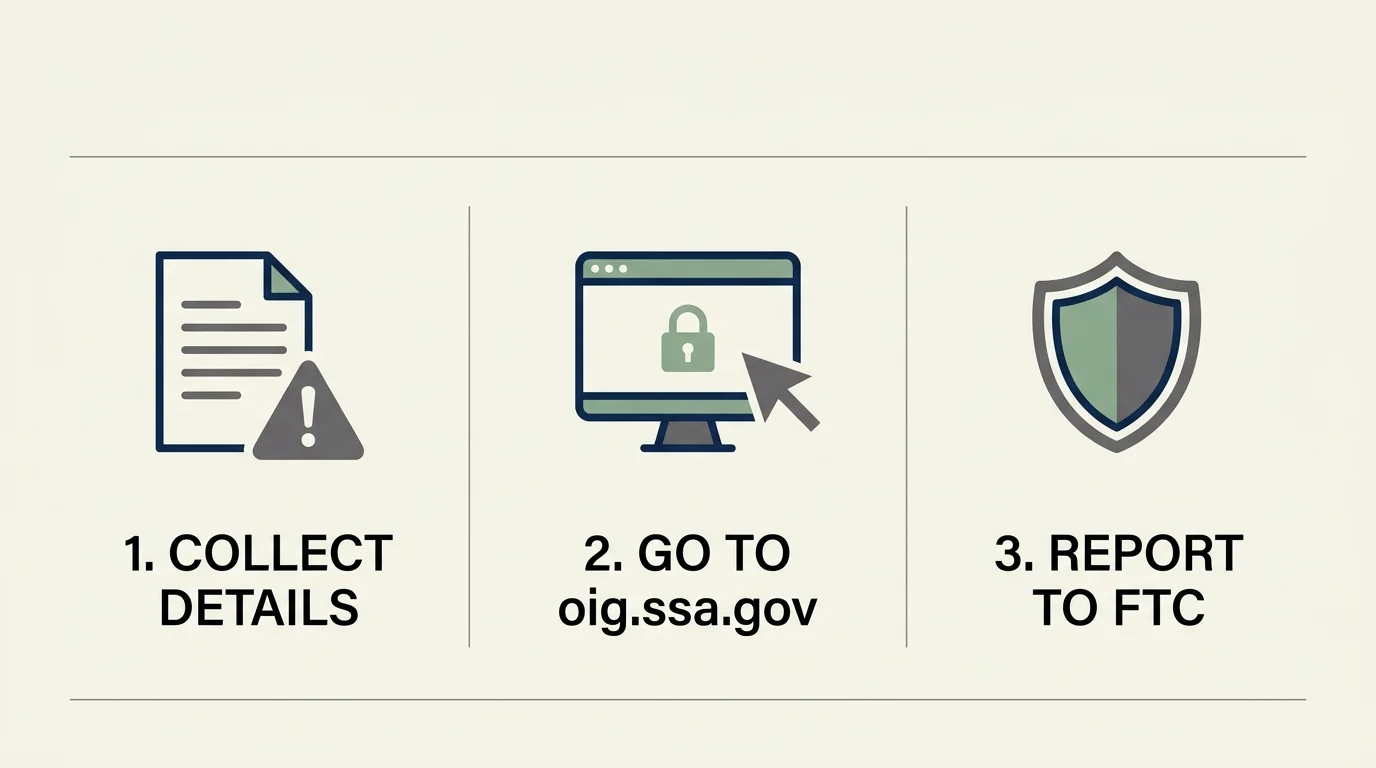
Knowing how to report fraudulent communications quickly safeguards your personal savings while helping protect fellow retirees across the country. Whenever you encounter a deceptive call, suspicious text message, or fraudulent email notice, submitting the details to federal consumer protection authorities gives law enforcement the information needed to locate and disrupt criminal operations.
Official reporting channels are free, confidential, and easily accessible. You can report government impersonation attempts directly to the Social Security Administration Office of the Inspector General by visiting oig.ssa.gov. To report broader imposter scams and commercial deceptive practices, file a report with the Federal Trade Commission at ReportFraud.ftc.gov. If you suspect an imposter has accessed your personal identifiers, visit IdentityTheft.gov to access a customized identity recovery strategy developed by consumer protection experts.
Taking prompt action limits potential financial damage. If you accidentally shared financial details with a suspect sender, notify your bank immediately and place a security freeze on your credit files with the major credit bureaus. Placing credit freezes prevents malicious actors from opening unauthorized credit cards or loan accounts in your name. By staying organized and utilizing official reporting channels, you protect your retirement while actively strengthening fraud defenses for all older Americans.
For a wide range of resources for older adults, visit AARP and the National Council on Aging (NCOA). Health information is available from the National Institute on Aging.

The Takeaway: Living a More Blissful Retirement
Your retirement represents a well-earned period of freedom, personal growth, and relaxation. Safeguarding your hard-earned benefits against deceptive digital schemes does not require technical mastery; it simply requires practical awareness, steady confidence, and proactive habits. When you remember that official government entities communicate through .gov domains, never demand immediate payments via gift cards or wire transfers, and never text photos of employee badges, you make imposter tactics entirely ineffective.
By taking straightforward steps—such as securing your official online account, protecting your confidential information, and reporting suspicious notices—you build a strong barrier around your retirement savings. Confidently dismissing deceptive phone calls and fraudulent emails frees your mind to focus on what matters most: spending time with loved ones, exploring new hobbies, and making every moment of your golden years count. Step into each day with complete confidence, knowing you have all the knowledge needed to stay safe, secure, and financially independent.
For a wide range of resources for older adults, visit AARP and the National Council on Aging (NCOA). Health information is available from the National Institute on Aging.
Frequently Asked Questions
Does the Social Security Administration ever call citizens directly?
Yes, authentic agency representatives may place phone calls to individuals who have scheduled phone appointments, submitted specific claims, or requested official callback services. However, official representatives will never demand immediate payments, threaten arrest, require gift card transfers, or ask for sensitive financial credentials over the telephone. If you receive an unexpected call claiming to be from the agency, hang up and call official support lines directly to confirm the inquiry.
What should you do if you accidentally click a link in a suspicious email?
If you click a link inside a suspicious email, close your web browser immediately without entering any passwords, banking details, or Social Security numbers. Run a full computer virus scan to check your device for potential malware installations. If you entered login credentials on the suspicious page, change your account passwords immediately and contact your financial institutions to monitor your accounts for unauthorized transactions.
Can federal agencies actually suspend your Social Security number?
No, the federal government never suspends or cancels Social Security numbers under any circumstances. Assertions that your number faces immediate suspension due to illegal activity or tax issues are complete fabrications designed to induce panic. Whenever a caller or digital message claims your Social Security number faces cancellation, you can safely dismiss the communication as a scam.
How can you verify whether a physical letter in your mailbox is genuine?
Authentic physical mail sent by the agency displays official letterhead, clear administrative reference details, and instructions directing you to official government web portals or verified toll-free numbers. Fraudulent mailings frequently include urgent payment demands, odd formatting, or instructions to call non-government phone numbers. You can verify any notice by logging into your secure account at ssa.gov or calling verified agency support lines directly.
Disclaimer: This article is for informational and inspirational purposes only. It is not a substitute for professional medical, financial, or psychological advice. Please consult with a qualified expert for guidance tailored to your individual needs.