
You rely on your monthly retirement benefit to enjoy a secure, worry-free routine; knowing exactly when your money arrives keeps your plans on track. When an expected deposit fails to appear, simple solutions can quickly resolve the delay.
Most unexpected disruptions stem from minor administrative updates or simple calendar adjustments rather than permanent financial losses. You can easily troubleshoot and correct these hiccups by taking a few proactive, informed steps.
Learning the real causes behind payment interruptions empowers you to protect your golden years with complete peace of mind. Here is what you need to know to keep your monthly cash flow flowing smoothly.
Tip #1: Misunderstanding the Staggered Monthly Payment Schedule
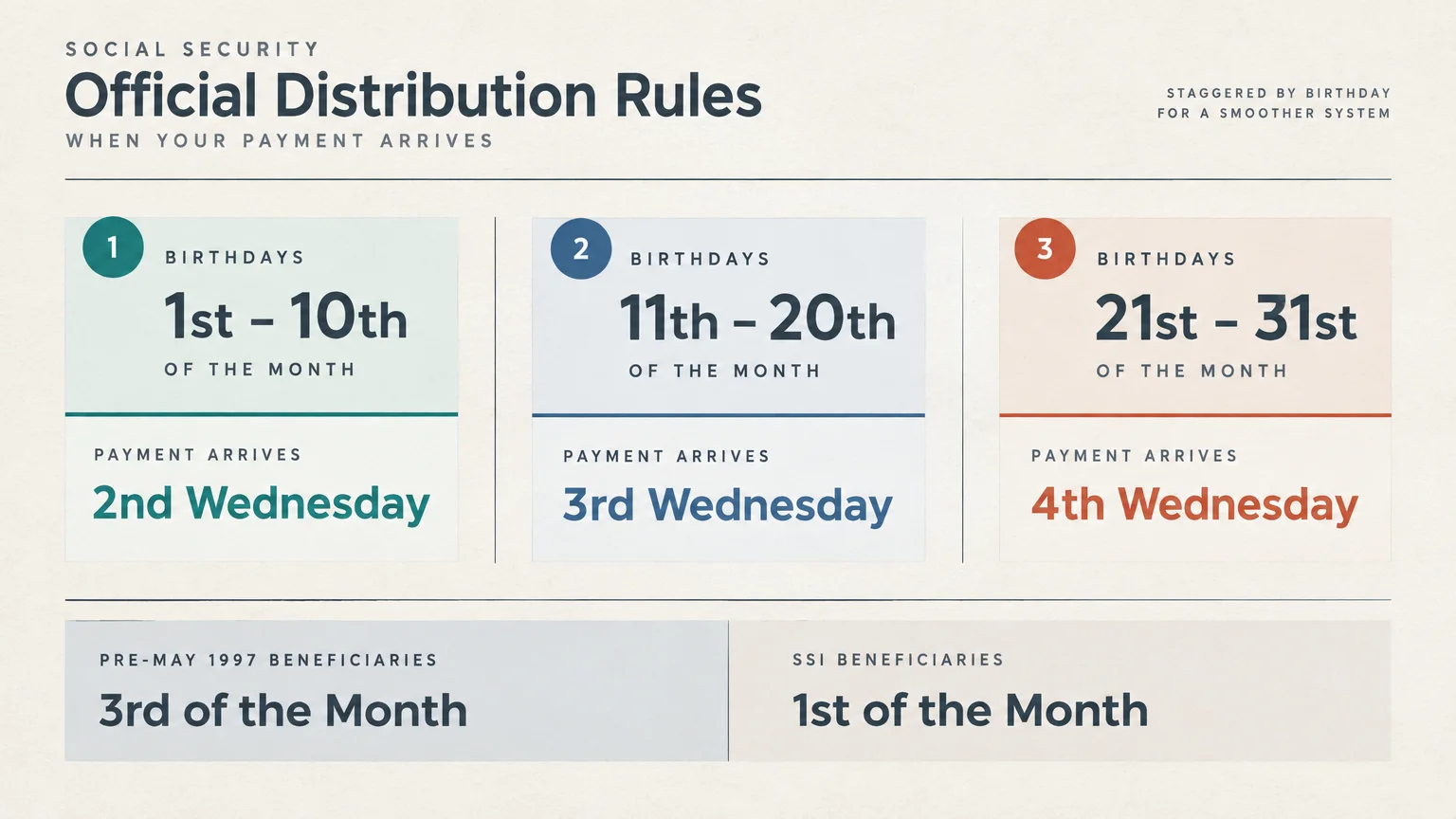
Many retirees assume every beneficiary receives their deposit on the exact same date each month. In reality, the Social Security Administration organizes monthly disbursements using a staggered calendar based on your day of birth.
If you filed for benefits after May 1997, your payment schedule aligns strictly with your birth date. Individuals born between the 1st and the 10th of any month receive funds on the second Wednesday.
Beneficiaries born between the 11th and the 20th receive their deposits on the third Wednesday of the month. If your birthday falls between the 21st and the 31st, your payment arrives on the fourth Wednesday.
Beneficiaries who began receiving payments prior to May 1997 follow a completely separate guideline. Their monthly payments arrive promptly on the third day of every single month.
Supplemental Security Income (SSI) payments arrive on the first day of each month. Mixing up these distinct schedules often leads people to suspect Social Security payment delays when the payment is actually right on time.
Double-checking your designated Wednesday prevents unnecessary financial stress and panic. You can mark your personal distribution day on a wall calendar to maintain total clarity throughout the year.
Knowing your official deposit cycle empowers you to budget bills with complete confidence. You never have to wonder whether your check is delayed when you know your official scheduled Wednesday.

Tip #2: Calendar Shifts Due to Weekends and Federal Holidays
Federal holidays and weekends frequently alter banking deposit routines across the entire country. When an official payment date lands on a federal holiday or Saturday, the payment schedule automatically shifts.
The government never postpones your money until the following business day when a calendar conflict happens. Instead, the agency sends your funds on the business day immediately preceding the holiday or weekend.
If your designated Wednesday falls on an observed holiday, your funds typically land on Tuesday. You might receive your benefit earlier than expected, which alters the gap until your next monthly payment.
This calendar shift often creates the mistaken impression of late checks during the following month. Because you received your money early last month, the subsequent wait feels unusually long.
Reviewing federal bank holidays helps you anticipate these slight timing shifts. When you know a holiday is approaching, check your bank ledger early to verify the prior-day credit.
Staying mindful of holiday shifts ensures you manage your discretionary spending smoothly. You can savor your festive celebrations without worrying about imaginary reasons for late Social Security checks.
A quick glance at the federal calendar keeps your expectations clear and accurate. You will always know whether an early deposit occurred and when to anticipate your next regular deposit.
Tip #3: Outdated or Closed Direct Deposit Banking Details
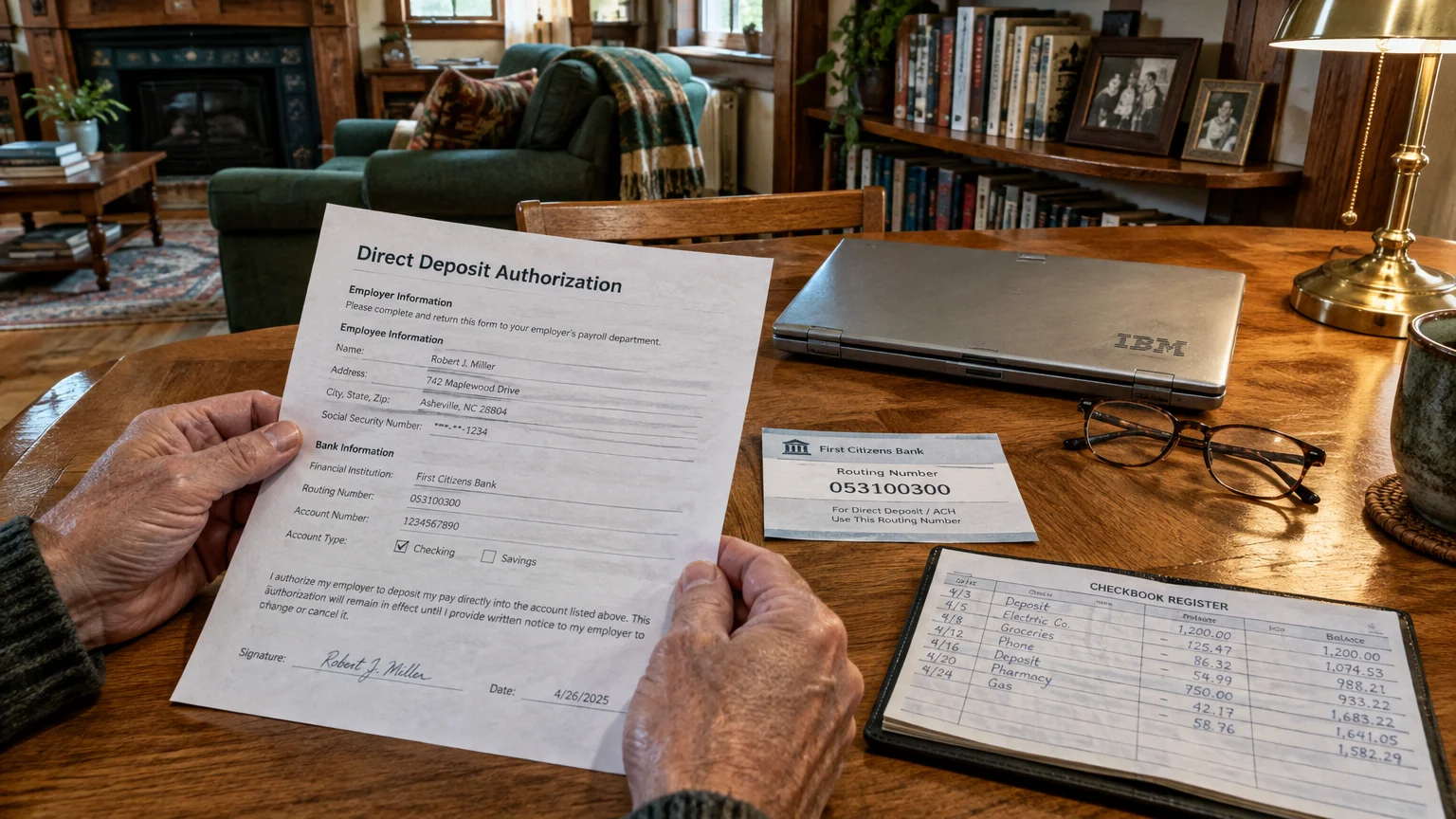
Since March 1, 2013, federal regulations have required all benefit payments to be distributed electronically. Beneficiaries receive their funds through direct deposit into a bank account or onto a Direct Express debit card.
Switching banking institutions without notifying the agency causes immediate payment stalls. If you close an old bank account before the transfer finishes, the Treasury rejects the incoming transaction.
A simple typo in your routing number or account number triggers an instant electronic return. When this happens, fixing delayed benefit payments requires verifying and updating your banking records promptly.
You can update your banking details instantly by logging into your official online profile. Keeping your old account open until the first new payment clears guarantees uninterrupted cash flow.
Never close a prior checking account until your monthly benefit lands safely in your new account. This simple overlap strategy eliminates administrative gaps and prevents financial frustration.
If a payment bounces back, the system holds your funds until you provide correct banking instructions. Once you update your details, the agency promptly reissues your missing funds.
Taking a few minutes to confirm your electronic deposit data preserves your financial peace of mind. Your proactive attention keeps your retirement checks flowing right on schedule.
Tip #4: Earnings Exceeding the Retirement Earnings Test Thresholds
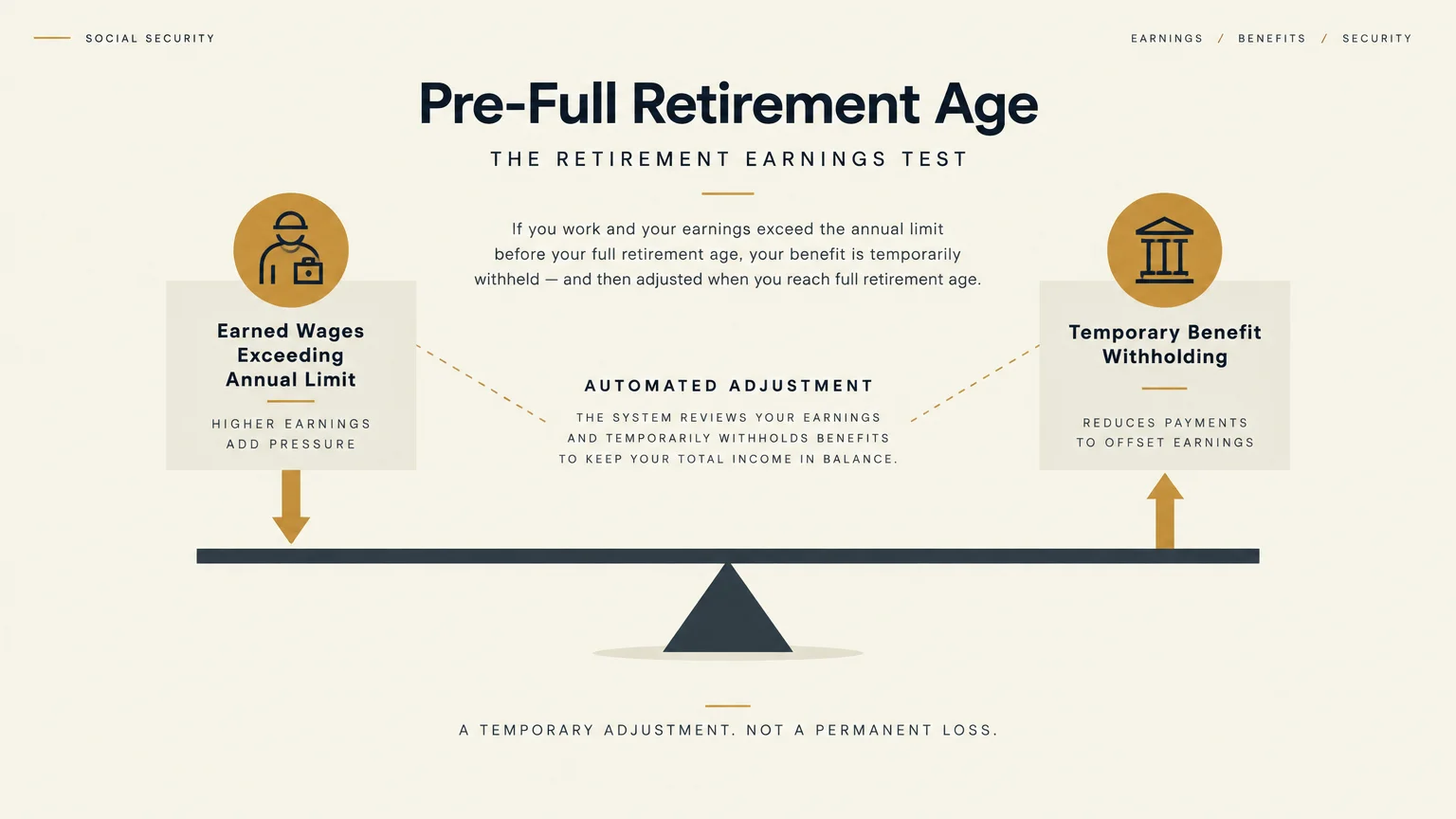
Many energetic older adults choose to work part-time while receiving retirement benefits. However, claiming benefits before reaching your Full Retirement Age triggers the Retirement Earnings Test.
If your annual wages exceed specific federal earnings thresholds, the agency temporarily holds back a portion of your benefit checks. In 2024, the baseline annual earnings limit was set at $22,320.
The agency withholds $1 from your benefits for every $2 you earn above that baseline threshold. For 2025, that annual threshold increases to $23,400 to reflect national wage growth.
Higher limits apply during the calendar year you actually attain your Full Retirement Age. In 2024, that threshold reached $59,520, withholding $1 for every $3 earned above the limit.
For 2025, the threshold for individuals reaching Full Retirement Age climbs to $62,160. Once you pass your Full Retirement Age, the earnings penalty disappears completely, and you keep every dollar.
Withheld benefits are not lost forever; the agency recalculates your monthly benefit upward once you hit full age. Tracking your wages closely helps you avoid unexpected benefit freezes during active working years.
Communicating expected earnings adjustments directly to the agency prevents surprise benefit pauses. You can stay actively engaged in work while optimizing your hard-earned retirement dollars.

Tip #5: Portal Lockouts and Login Authentication Roadblocks
Managing your benefits online provides exceptional convenience and control over your monthly finances. However, recent security updates have changed how beneficiaries access their online profiles.
The agency phased out legacy usernames and passwords to improve digital safety against fraud. Beneficiaries must now authenticate their identity through secure credential services like Login.gov or ID.me.
If you experience an account lockout, you may struggle to review critical notices or update vital banking details. Unresolved digital identity snags represent common Social Security processing issues that delay monthly management.
Set up your multi-factor authentication preferences early using a reliable cell phone number or personal email. Writing down your account recovery codes in a secure household location prevents sudden digital lockouts.
If your online account locks up, resolving the issue quickly ensures direct deposit changes go through without delay. Dedicated support agents can guide you through online verification if technical barriers arise.
Embracing modern online tools allows you to manage your retirement benefits smoothly and securely. A verified profile grants you complete transparency over your monthly payment delivery dates.
Keep your login credentials current so you can inspect payment confirmations whenever you desire. Staying technologically prepared ensures seamless communication with federal benefit administration systems.

Tip #6: Unreported Life Events and Address Discrepancies
Major life transitions bring exciting changes, but they also require timely administrative updates. Life milestones such as marriage, divorce, or relocating across states can affect your benefit record.
If the agency mails you time-sensitive correspondence that gets returned as undeliverable, they may suspend payments. Even if you receive direct deposit, an invalid physical mailing address triggers automated security holds.
Neglecting to update your postal address remains one of the primary Social Security delay causes. The postal service does not always forward official government checks or correspondence indefinitely.
Updating your profile takes only minutes online or over the telephone with a representative. Ensuring your current mailing address matches your records prevents sudden and unnecessary payment freezes.
Changes in marital status can also modify your eligibility for spousal or survivor benefits. Reporting these family milestones promptly guarantees that you receive every single dollar you legitimately earned.
Keep a tidy folder with certified life documents like marriage certificates and residential leases. Having these documents ready allows you to resolve administrative inquiries swiftly and calmly.
Maintaining open lines of communication ensures your retirement income arrives without frustrating administrative pauses. A little organization today provides wonderful serenity for all your retirement tomorrows.
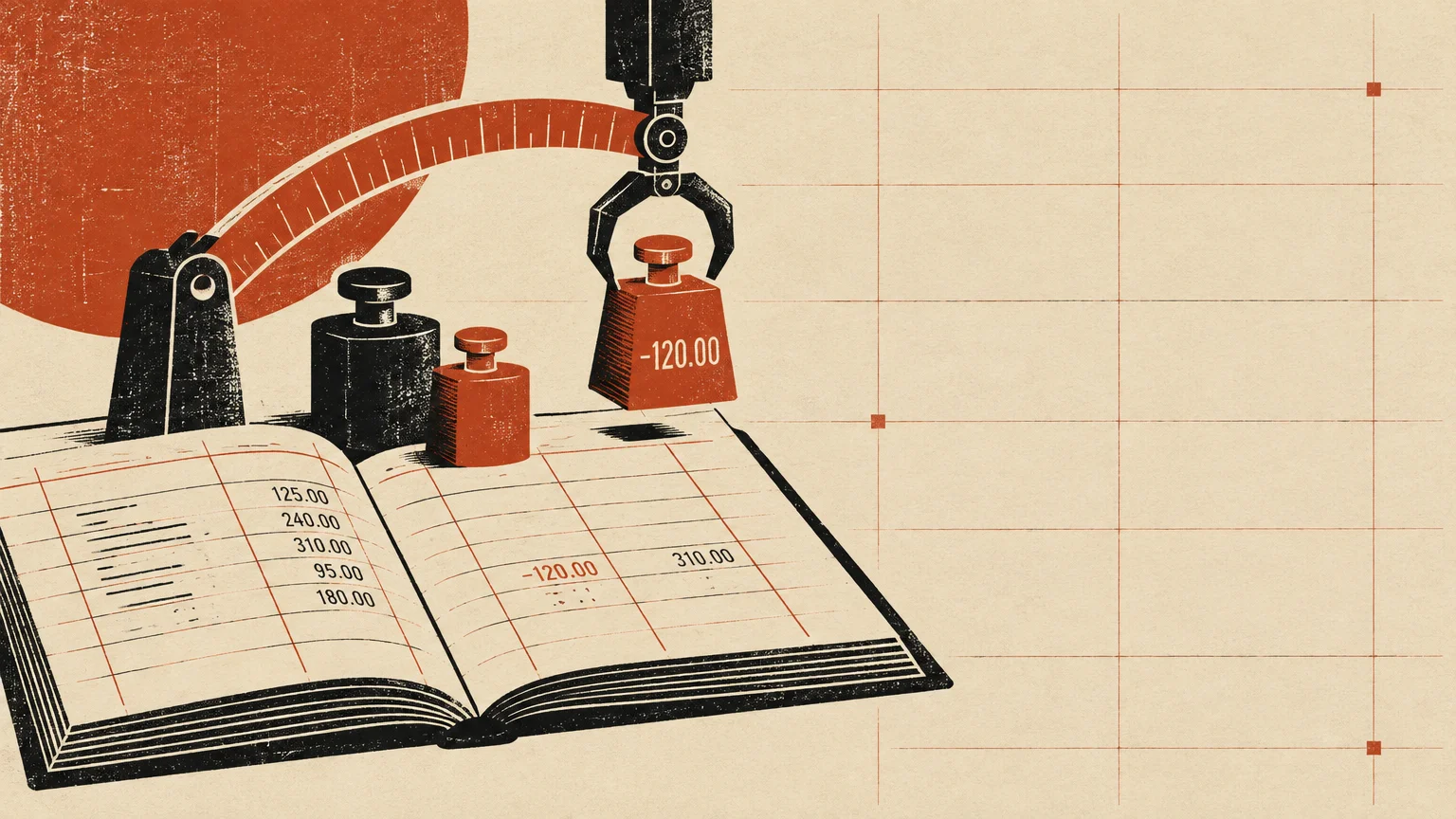
Tip #7: Benefit Offsets and Overpayment Recoupment Actions
Sometimes a payment appears short or delayed because of a federal offset or prior overpayment recoupment. If the agency previously sent you excess funds, they are legally required to recover that balance.
In the past, the agency often intercepted 100 percent of a recipient’s monthly benefit to recover overpayments. This aggressive practice left many retirees without income for basic household necessities.
Fortunately, a compassionate policy change took effect on March 25, 2024. The default withholding rate for overpayment recoupment is now capped at just 10 percent or $10.
This 10 percent ceiling protects 90 percent of your monthly payment while settling your account balance. You maintain steady living income instead of facing an unexpected, total financial cutoff.
Payments can also be reduced by external offsets, such as unpaid student loans or delinquent child support. If you receive an offset notice, contact the agency immediately to request a flexible repayment schedule.
You have the legal right to appeal overpayment determinations or request a hardship waiver. Taking fast action when you receive notice ensures your monthly cash flow stays predictable.
Understanding these deduction rules removes mystery from your benefit statement. With clear facts in hand, you can navigate any benefit adjustment smoothly and confidently.
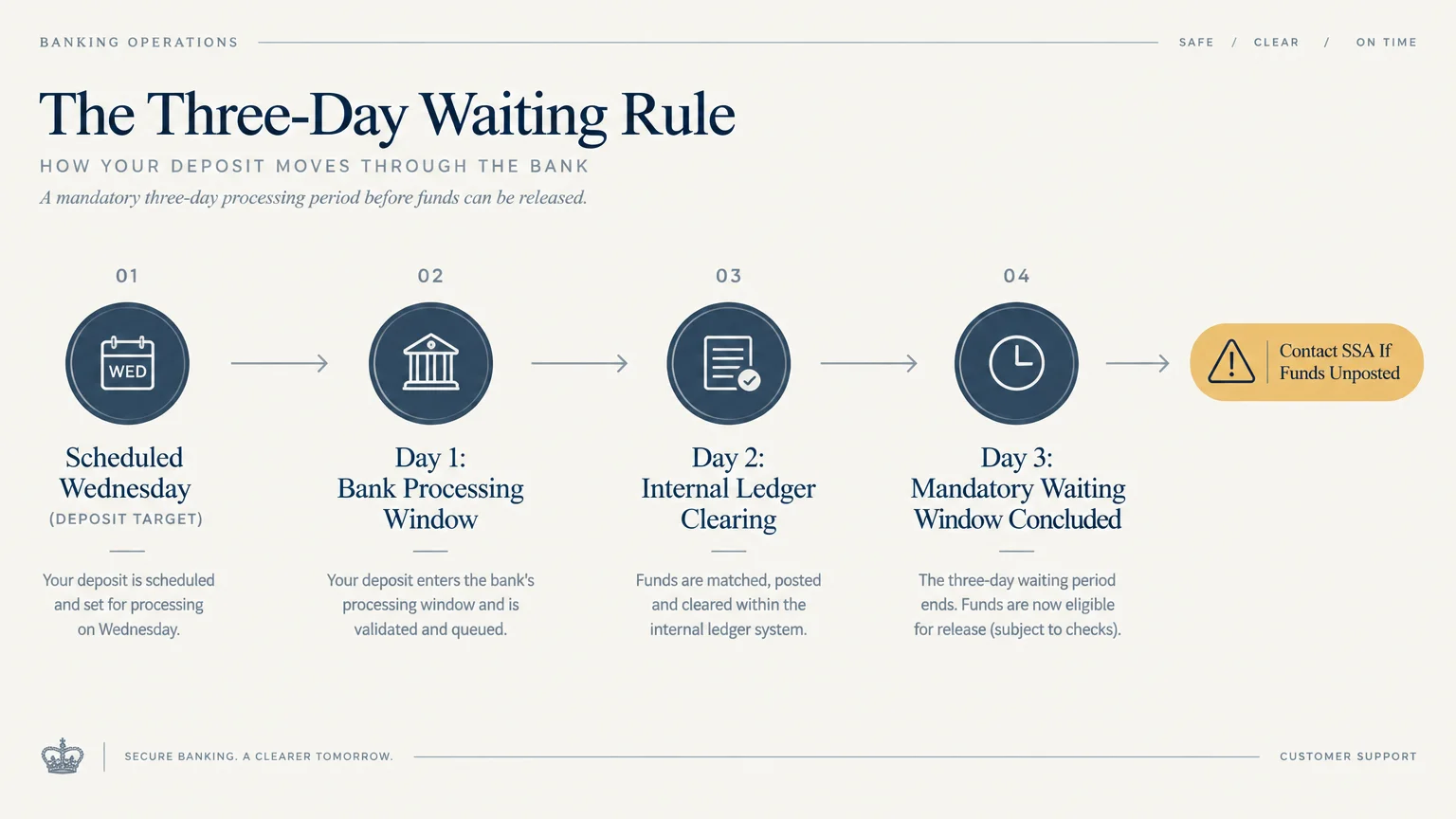
Tip #8: Overlooking the SSA Mandatory Three-Day Waiting Rule
If your payment does not post on its scheduled morning, natural worry can set in quickly. However, the agency asks beneficiaries to follow a mandatory three-day waiting rule before sounding the alarm.
Banking institutions process automated clearing house transactions at differing hours throughout the business day. A deposit might appear by late afternoon even if it was absent at breakfast.
Before filing a missing payment inquiry, contact your financial institution to ask about pending direct deposits. Often, your bank holds incoming transfers briefly for internal security verification.
If your bank confirms no pending deposits exist, wait three full business days before contacting officials. The agency explicitly requires this brief window to allow electronic processing systems to clear minor backlogs.
After three business days pass, call 1-800-772-1213 or visit your local field office for personal support. Having your Social Security number and bank routing details ready speeds up the investigation.
Practicing patience during those three business days prevents unnecessary anxiety and wasted phone time. Most minor electronic delays resolve themselves organically within that short, standard processing window.
Remaining calm and following standard agency protocol puts you firmly in control of your retirement funds. You can resolve any lingering banking delay with clarity, poise, and absolute confidence.

The Takeaway: Living a More Blissful Retirement
Your golden years should be characterized by freedom, joy, and profound relaxation. Understanding how your monthly benefits work ensures you remain confident, prepared, and financially secure.
Administrative delays rarely signal catastrophic problems; they almost always trace back to simple, solvable details. Knowing the rules regarding calendars, banking information, and life updates gives you immediate power.
When you take proactive control of your paperwork, you eliminate needless anxiety from your everyday life. You can focus your energy on cherished hobbies, beloved family members, and fulfilling personal passions.
Keep your online account active and monitor your bank statements with regular, casual diligence. If an unexpected delay ever occurs, use practical steps to resolve the matter efficiently.
Retirement is your hard-earned opportunity to thrive and embrace every wonderful adventure ahead. Protect your financial peace of mind, stay informed, and celebrate every single day of your golden years.
Frequently Asked Questions
What should I do immediately if my direct deposit does not arrive?
First, check your online banking app to verify whether the incoming deposit shows up as pending. Banks often process electronic transfers at different times during the day.
If nothing shows up, wait three business days before contacting the agency at 1-800-772-1213. Following this official protocol ensures customer service agents can initiate a formal trace on your behalf.
Can working in retirement permanently reduce my Social Security payments?
No, working during retirement will never cause a permanent loss of your benefits. Any amounts withheld under the earnings test are recalculated and credited back once you reach Full Retirement Age.
After you achieve Full Retirement Age, the earnings ceiling vanishes entirely. You can earn unlimited wages from employment without forfeiting any of your monthly check.
How long does the SSA take to update new direct deposit details?
Updating your banking information online through your personal portal typically takes effect within thirty to sixty days. Processing speeds depend on the timing of your update relative to the monthly payroll cycle.
To ensure you avoid delayed payments, keep your former bank account active until your first deposit posts. This smooth crossover guarantees continuous income without unexpected interruptions.
How does the 10 percent overpayment withholding rule protect beneficiaries?
Prior to March 2024, the government could withhold your entire monthly check to recover past overpayments. The updated rule caps default recoupment deductions at 10 percent of your total monthly entitlement.
This vital safeguard guarantees that 90 percent of your monthly benefit continues reaching your pocket. You maintain sufficient financial resources to pay for groceries, medication, and essential utility bills.
For a wide range of resources for older adults, visit AARP and the National Council on Aging (NCOA). Health information is available from the National Institute on Aging.
Disclaimer: This article is for informational and inspirational purposes only; it is not a substitute for professional medical, financial, or psychological advice. Please consult with a qualified expert for guidance tailored to your individual needs.