

Leaving the classroom does not mean leaving your best earning years—or your passion for mentoring—behind. Today, you can command strong hourly pay from home while keeping your calendar wide open for travel, grandchildren, and hobbies.
Education remote work lets you skip morning traffic, endless staff meetings, and grading stacks while sharing decades of hard-won expertise. In September 2026, 12.1% of employed workers age 55 and older worked fully remote, outpacing younger workers.
From high-paying curriculum writing to specialized online tutoring jobs, your teaching credentials hold real market value right now.
Lifestyle Idea #1: Specialized One-on-One Online Tutoring on Open Marketplaces
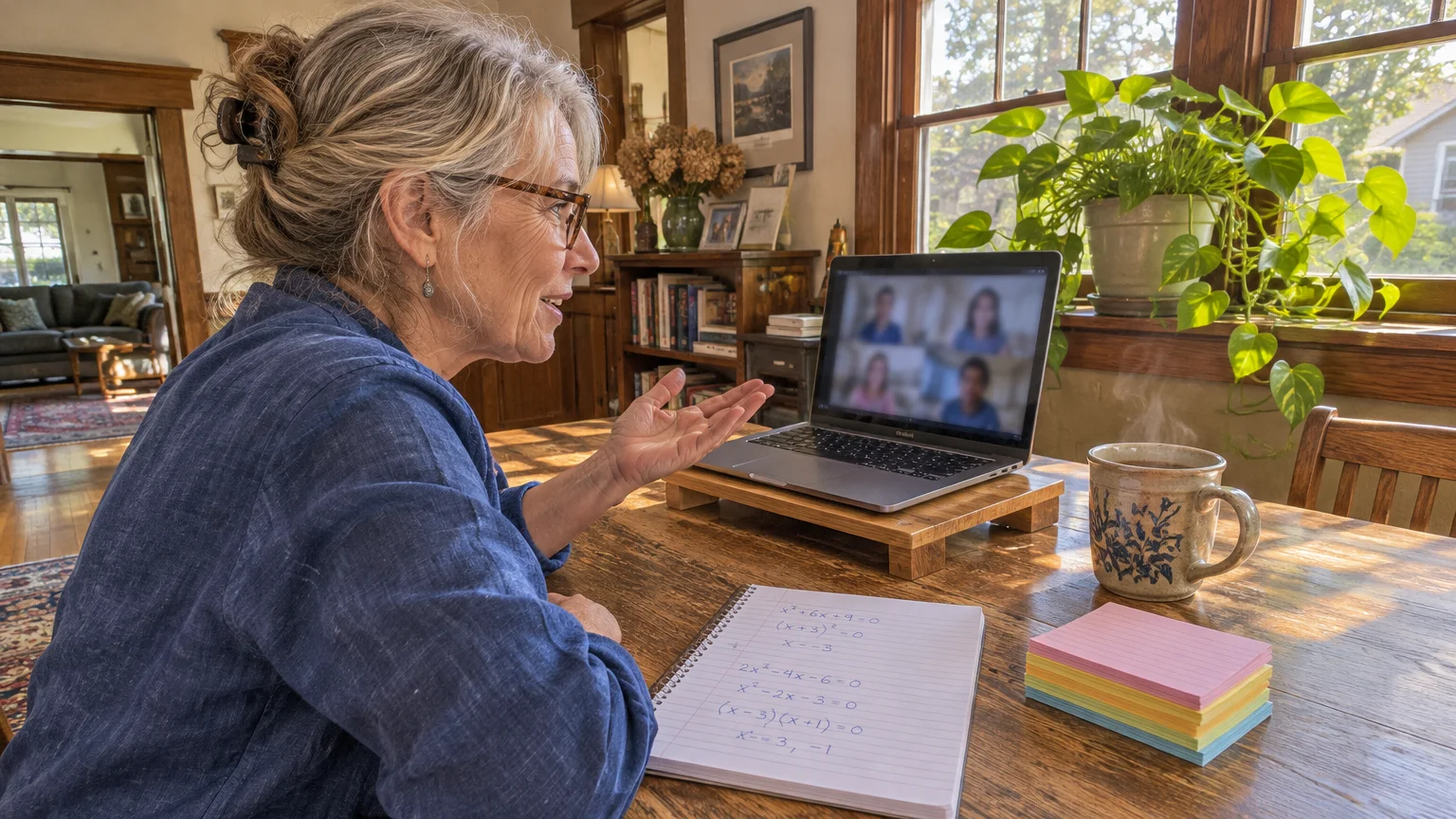
If you miss the lightbulb moments when a struggling student finally grasps a concept, private online tutoring delivers that joy without classroom discipline headaches. You work with motivated learners from your home office and set boundaries around your travel plans.
While the national median wage for employed tutors sits at $43,350 per year—or $20.84 per hour—credentialed veterans often earn far more on open marketplaces. In fact, the top 10% of employed tutors earn $75,990 or more annually.
What You Will Earn and Do
On Wyzant, tutors set their own hourly rates, averaging roughly $35 to $60 per hour online. You keep 75% of your posted rate, since Wyzant charges a flat 25% platform fee plus a separate 9% student service fee.
If you teach languages, test prep, or advanced math, Preply offers another strong option with a sliding-scale commission. You keep 67% at first, rising to 72% after 20 teaching hours and 82% after 400 hours.
Specialized instructors on Preply—such as business English, calculus, and exam prep coaches—regularly charge $50 or more per hour. That flexibility makes specialized online tutoring jobs some of the most lucrative remote jobs retired teachers can choose.
How to Get Started
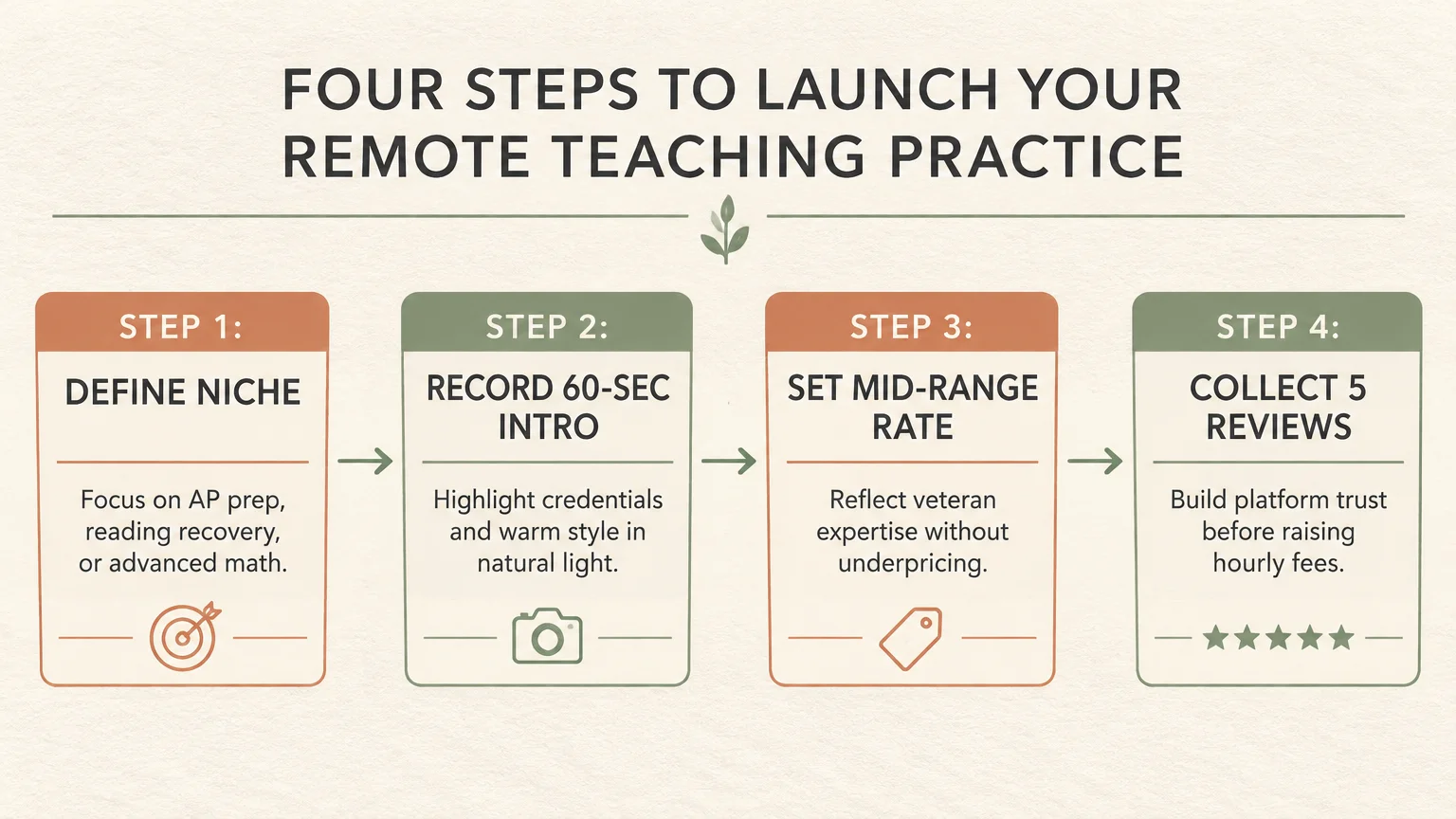
Pick one or two high-demand niches rather than listing every grade level you ever taught. Parents happily pay premium rates for AP exam coaching, Orton-Gillingham reading support, or middle school algebra recovery.
Write a warm, clear profile headline that highlights your years of classroom success and state teaching credentials. Film a brief, friendly 60-second welcome video in bright natural light so families immediately feel your calm, encouraging presence.
Watch Out For
Do not underprice yourself just to land your first student; low rates often attract flaky clients and hurt your perceived expertise. Start near the middle of your niche range and raise your rate for new students once you collect five glowing reviews.
Lifestyle Idea #2: Contract Curriculum Writing and Instructional Design
After decades of adapting textbook lessons so students actually understand them, you already think like an instructional designer. Education publishers and edtech companies rely on experienced teachers to draft engaging units, pacing guides, and digital assessments from home.
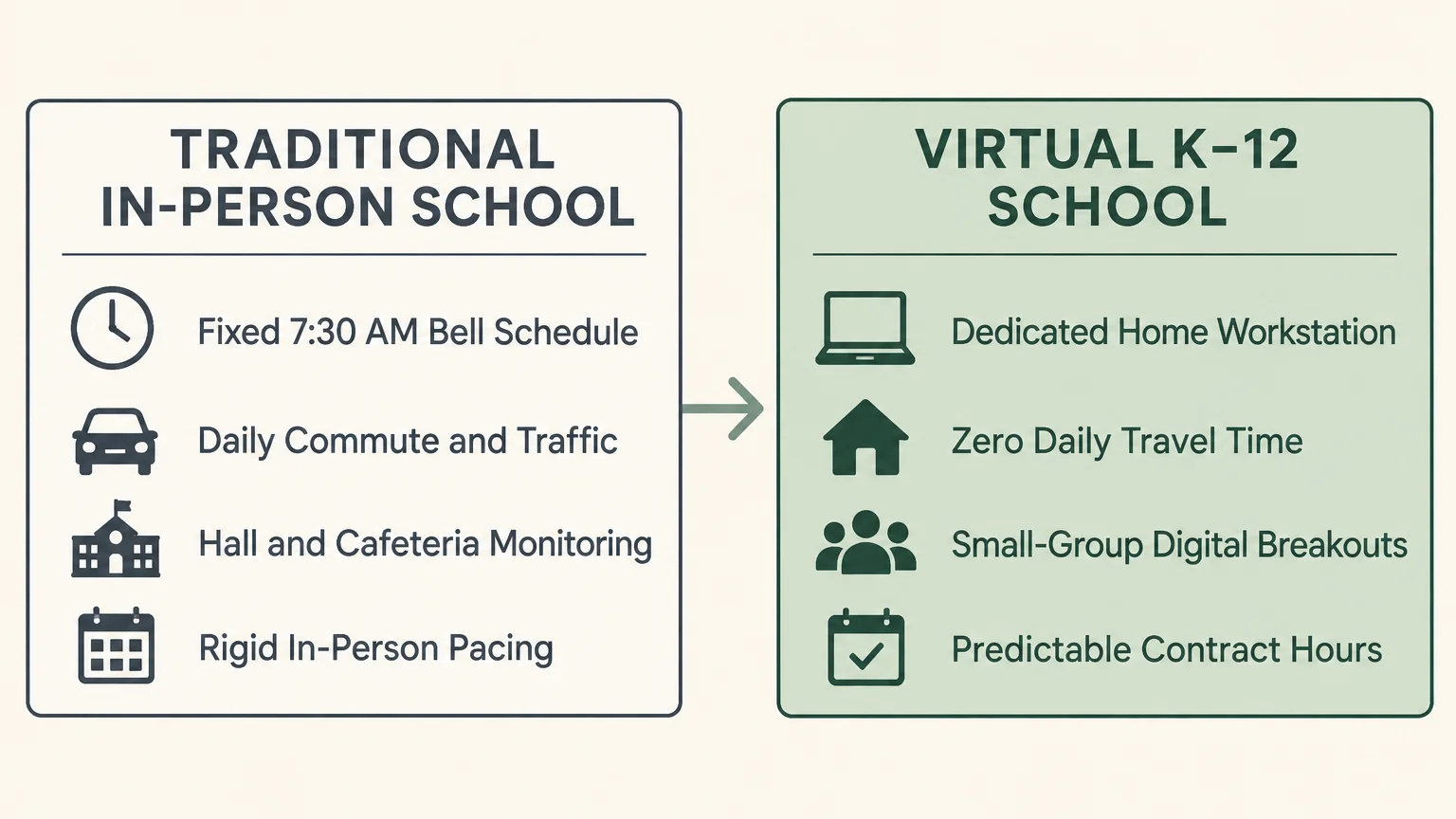
Because you work on project deadlines rather than a school bell schedule, curriculum writing jobs fit effortlessly around volunteer work or extended family visits. You can take a contract in the fall and keep your spring completely free for road trips.
What You Will Earn and Do
According to U.S. Bureau of Labor Statistics data, instructional coordinators—including curriculum writers and specialists—earn a national median wage of $77,440 per year, or $37.23 per hour. Roughly 23,100 annual openings are projected nationwide between 2025 and 2035.
Contract rates are equally impressive for retired educators seeking part-time flexibility. Temporary remote curriculum writers average $38.64 per hour on ZipRecruiter, with most projects paying between $26.20 and $48.80 per hour.
Active 2026 remote postings illustrate that wide range: $25 to $31 per hour for K–12 editorial quality assurance at Kiddom, $24.92 to $35.01 per hour at Miaplaza, and $45 to $55 per hour for curriculum developers at Wilson Language Training.
For full-time remote content and assessment specialists at companies like Pearson and Learners Edge, salaries reach $70,000 to $100,000 per year. Across 591 instructional design listings on Edtech.com in November 2026, the average salary hit $97,112.
How to Get Started
Translate your classroom resume into business language by emphasizing standards alignment, backward design, and assessment creation. Gather two or three polished lesson samples—stripped of school logos—into a clean digital portfolio folder.
Search remote job boards using terms like curriculum developer, content writer, assessment item writer, and instructional coordinator. Highlight your familiarity with state standards and modern classroom software so hiring managers view your tech skills as current.
Watch Out For
Read contract agreements carefully before signing, especially clauses covering ownership of original teaching materials and revision limits. Make sure a fixed-fee project clearly caps how many rounds of edits the client can request without extra pay.

Lifestyle Idea #3: Live Small-Group Enrichment Classes on Outschool
Did you ever wish you could spend an entire week teaching mystery novels, kitchen chemistry, or financial literacy instead of rushing to the next required benchmark? Live enrichment platforms let you design the exact classes you always wanted to teach.
Teaching small groups online also sparks wonderful social energy without draining your battery. You greet lively learners for an hour, share a creative activity, and log off with the rest of your day completely open.
What You Will Earn and Do
On Outschool, independent teachers design live one-on-one or small-group courses for learners and set their own class prices. Under Outschool policy updated in November 2026, you keep 70% of the class price for each enrolled student.
Outschool deducts a fixed 30% teacher fee and charges parents a separate marketplace fee, sending your earnings in U.S. dollars via PayPal. Teaching a six-student book club at $18 per learner nets you $75.60 for a single fun hour.
How to Get Started
Browse existing Outschool listings first to spot gaps where your background shines, such as cursive writing, beginner debate, or fractions through baking. Keep your first class format simple, like a four-week club meeting once a week.
Batch your classes on two mornings or afternoons so you preserve consecutive days off for golf, gardening, or grandparenting. Ask happy families to leave reviews right after your final session to boost your visibility in parent searches.
Watch Out For
Avoid pouring 10 hours of prep into complex slide decks before you know whether a class topic sells. Test an idea with minimal prep first, then expand it into a multi-week series once enrollment fills steadily.
Lifestyle Idea #4: Digital Lesson Sales for Passive Income on Teachers Pay Teachers
Look inside the file cabinets and cloud folders you built over a 25-year career, and you are probably sitting on hidden gold. Fellow teachers gladly pay for tested bell-ringers, escape rooms, sub plans, and graphic organizers that save their Sunday evenings.
Selling digital downloads ranks among the smartest teacher side jobs because you create a resource once and sell it repeatedly. Your store keeps ringing up sales while you hike a national park or visit friends across the country.
What You Will Earn and Do
Teachers Pay Teachers overhauled its seller tiers on October 1, 2026, discontinuing its old Premium Seller option. Today, you choose between Basic Seller and Exclusive Seller plans depending on how much volume you expect.
The Basic Seller tier costs a $29 one-time fee, pays you a 55% royalty rate, and deducts a $0.30 transaction fee per resource. You remain free to sell those same digital resources on your own website or other marketplaces.
The Exclusive Seller tier costs $59.95 per year and raises your payout to 77.5% starting January 1, 2027, following a temporary 80% transition rate. Orders of $3 or more carry zero transaction fees, while items under $3 incur $0.15 per resource.
Existing Premium Sellers have until December 31, 2026, to opt into the Exclusive tier, which requires selling digital educational resources exclusively on TPT.
How to Get Started
Start with your five most reliable classroom hits—perhaps an emergency substitute binder, seasonal writing prompts, or review stations. Update the fonts, double-check answer keys, and export crisp PDFs with bright preview thumbnails.
Begin on the Basic tier while testing demand, then upgrade to Exclusive once your annual sales make the 22.5% payout jump worthwhile. Writing clear, grade-specific descriptions helps busy teachers find your work immediately.
Watch Out For
Never upload materials owned by your former school district or clipart pulled randomly from search engines. Use free-for-commercial-use graphics and verify every copyright rule before publishing your store.
Lifestyle Idea #5: Teaching Part-Time or Full-Time at Virtual K–12 Schools
If you miss having a regular roster of students, faculty camaraderie, and a steady W-2 paycheck, virtual public or private academies offer familiar structure without the commute. You teach from your desk, guide families through coursework, and join online staff rooms for support.
Roughly 2.5% of U.S. students aged 5 to 17 attended full-time virtual schools in the 2022–23 school year, keeping steady demand for experienced educators. Many retirees enjoy taking part-time specialist roles or one-year assignments with clear schedules.
What You Will Earn and Do
Major virtual networks like Connections Academy and Stride K12 hire licensed educators for live lessons, grading, and parent check-ins. Pay follows state or regional schedules rather than one national rate.
For comparison, U.S. Bureau of Labor Statistics data shows traditional kindergarten and elementary teachers earn a median $63,970 annually, while high school teachers earn $72,040. Online listings for Stride K12 teachers average $24.51 per hour in Virginia and $36,442 to $44,621 nationally.
How to Get Started
Check your teaching certificate status first, because virtual academies like Connections Academy require a valid license for the exact state and subject you teach. If you relocated for retirement, check whether your new state offers quick license reciprocity.
Look for part-time virtual interventionist or adjunct high school roles if you want steady pay without a 40-hour week. Emphasize your experience coaching parents and tracking student progress remotely during interviews.
Watch Out For
Before accepting any W-2 public school position, verify your state teacher pension system’s return-to-work rules. Some state retirement plans cap annual hours or earnings if you re-enter a participating public school system, including public virtual charters.
Lifestyle Idea #6: Adult ESL, Literacy, and Career Readiness Instruction
Teaching adults feels refreshingly different from managing a room of restless eighth graders. Adult learners show up eager to improve their English, finish high school credentials, or qualify for better jobs, creating warm, respectful classroom conversations.
You can teach morning conversation cohorts or evening GED prep sessions from your living room, building real friendships with learners from diverse backgrounds. That social connection keeps your mind sharp and your weeks purposeful.
What You Will Earn and Do
According to U.S. Bureau of Labor Statistics figures, adult basic education, secondary education, and ESL teachers earn a strong national median wage of $61,540 per year, or $29.59 per hour. Community colleges, workforce boards, and corporate language vendors regularly hire remote instructors.
By contrast, drop-in conversational ESL apps pay far less because they do not require teaching credentials. Cambly, for example, pays only for active talking minutes at $0.17 per minute—$10.20 per hour—for adults and $0.20 per minute—$12.00 per hour—for Cambly Kids.
While Cambly requires no degree, certificate, or minimum weekly hours, retired teachers with licenses earn much higher rates through accredited adult programs or private business-English tutoring.
How to Get Started
Contact local community colleges, state literacy coalitions, and regional workforce nonprofits about remote adjunct openings. Many expanded virtual classes permanently and actively welcome seasoned teachers with calm communication styles.
If you want casual pocket money while slow-traveling abroad, you can still use flexible apps on rainy afternoons without worrying about minimum schedules. Otherwise, keep your focus on credentialed adult programs that respect your training.
Watch Out For
When tutoring international adult learners, pay close attention to time-zone differences so you do not accidentally commit to 4:00 a.m. sessions. Set clear calendar availability in your own local time zone from day one.

Lifestyle Idea #7: Managed Tutoring Platforms with Built-In Student Matching
Not every retired teacher wants to build a website, market services, or chase down parent payments. Managed tutoring companies handle student matching, billing, and virtual whiteboards so you simply log in and teach.
Because you do not manage marketing, managed platforms work well when you want extra income right away without administrative chores. You accept the hours that fit your social life and skip the rest.
What You Will Earn and Do
Varsity Tutors hires tutors as 1099 independent contractors without benefits, pairing you with K–12, college, or adult learners. Worker-reported pay typically ranges from $15 to $35 per hour, averaging $16.72 on PayScale to $19.94 on Indeed.
You can boost those base rates by sticking with repeat clients through Varsity Tutors’ Membership Incentive Ladder. Each repeat session adds $1 per hour up to a $40 hourly cap, rewarding teachers who build loyal student relationships.
How to Get Started
Complete your subject assessments quickly during onboarding so you unlock higher-demand courses like chemistry, reading intervention, or SAT prep. Prioritize recurring weekly students rather than one-off homework help so your hourly pay climbs steadily.
Keep in mind that age bias still exists in hiring: an AARP survey published in January 2026 found 64% of workers 50 and older had seen or experienced age discrimination at work. In a separate AARP survey published in February 2026, 35% of older workers cited age discrimination as the main reason they expected difficulty finding a new job.
Counter outdated stereotypes effortlessly by using a crisp webcam, clean background, and confident digital whiteboard skills during onboarding. Let hiring teams and parents see right away that you blend veteran wisdom with modern tech ease.
Watch Out For
Watch your net hourly math carefully when factoring in unpaid prep time and self-employment taxes. Treat managed platforms as a fast starting pad, or blend them with higher-paying independent clients once you gain confidence online.
Lifestyle Idea #8: Seasonal Remote Standardized Test Scoring
Suppose you want a solid spring payout to fund summer family vacations—without committing to a job in October or November. Remote standardized test scoring lets you work intensively for a few weeks and then shut your laptop completely.
Scoring essays and open-ended responses also sharpens your eye for student writing while letting you work quietly in comfortable clothes. Many retired teachers enjoy pairing morning scoring shifts with afternoon walks or book clubs.
What You Will Earn and Do
Most scoring roles require a bachelor’s degree, and major testing companies like Measurement Incorporated concentrate hiring seasonally from March through June with paid training. Across the market, remote test scorers average $17.89 per hour according to ZipRecruiter.
At Pearson, standard remote scoring projects average roughly $12.84 to $12.94 per hour on Indeed, with $15 per hour commonly reported. However, specialized Pearson scorer postings requiring an active or recently retired state teaching certificate pay $20.00 to $21.50 per hour.
How to Get Started
Submit applications in January or February before spring testing rosters fill up. Look specifically for certified-educator scoring projects in your former grade band or content area so you qualify for the higher $20-plus hourly tier.
Set up an ergonomic chair, dual monitors if possible, and quiet workspace hours before training begins. Finishing training modules accurately on the first pass helps you stay eligible for every subsequent scoring wave.
Watch Out For
Scoring projects can end abruptly once a state’s batch of essays is finished, so never count on seasonal scoring for fixed monthly bills. View it as joyful bonus income for travel upgrades, gifts, or home projects.
Putting It into Practice: Small Steps for Big Changes
Americans age 65 and older now make up more than 11.6 million workers—a 132% jump since 2004—and 23.1% of men plus 15.7% of women 65 and older participate in the labor force. You are joining a vibrant, growing community reinventing retirement on its own terms.
Even better, an AARP survey published in February 2026 noted that 7% of retirees had reentered the workforce in the prior six months, with 48% prioritizing extra income and 14% seeking active engagement. When you pick flexible education remote work, you get both.
Step 1: Match One Job to Your Ideal Weekly Rhythm
Decide first how many hours you truly want to work—say, eight hours on Tuesdays and Wednesdays—before browsing a single job board. Then choose just one path above, whether curriculum writing, tutoring, or selling lesson plans, and commit 30 days to testing it.
Step 2: Check Your Social Security Rules Before Earning
If you taught in a non-Social Security state like Texas, Massachusetts, or Colorado, celebrate major good news: the Social Security Fairness Act signed in January 2025 permanently repealed the Windfall Elimination Provision and Government Pension Offset. Retired public educators no longer lose Social Security or spousal benefits because of a teacher pension.
If you already claim Social Security before your Full Retirement Age—age 67 for anyone born in 1960 or later—watch the annual earnings limit. In 2026, you can earn up to $24,480 without benefit withholding, rising to $25,560 in 2027.
Earnings above that threshold trigger a temporary $1 withholding for every $2 over the limit, though those benefits are recalculated upward later. In the calendar year you reach Full Retirement Age, the limit jumps to $65,160 in 2026 and $67,920 in 2027 before your birthday month.
Once you reach Full Retirement Age, the earnings limit disappears completely, letting you earn as much as you like alongside your Social Security check. Remember too that benefits received a 2.8% cost-of-living boost in 2026 and rise another 3.6% in 2027.
Step 3: Set Aside Taxes for 1099 Side Income
Most tutoring marketplaces and curriculum contracts pay you as an independent contractor rather than withholding taxes from each check. For 2026 payments, companies only issue Form 1099-NEC or 1099-MISC once payments reach $2,000, while payment apps follow a $20,000 and 200-transaction Form 1099-K threshold.
Regardless of whether a form arrives in your mailbox, you must report all net freelance profits once they reach $400 or more for the year. Those profits carry the 15.3% self-employment tax, though you can deduct half of that tax from your adjusted gross income.
Open a separate high-yield savings account and transfer 25% of every freelance payout straight into it. Keeping tax money separate turns April into a stress-free non-event.
Frequently Asked Questions
How do I avoid looking outdated on video calls or in job interviews?
Place a small desk lamp behind your laptop facing you, raise your camera to eye level on a stack of books, and keep a tidy wall or bookshelf behind your chair. Practice screen-sharing a lesson slide with a grandchild or friend once, and you will look completely natural.
What if I have social anxiety about marketing myself after years in a union district?
Start on a structured platform like Varsity Tutors, Connections Academy, or seasonal test scoring where clients do not expect you to pitch yourself. Once a few learners praise your patience and clarity, transitioning to higher-paying independent tutoring feels much easier.
Can I test remote teaching without spending money upfront on gear?
Yes—use the laptop or tablet you already own, a quiet room, and free software like Google Docs or basic video tools before buying anything new. Wait until your first few tutoring paychecks arrive before investing in an upgraded microphone or digital drawing pad.
What if I retire mid-year and want to start tutoring right away?
Social Security’s first-year special monthly rule helps mid-year retirees avoid penalties even if your earlier teaching salary exceeded the annual cap. In 2026, you still receive full monthly checks in any month you earn $2,040 or less—provided self-employment hours stay below substantial-service limits.
For resources on retirement living, travel, and finance, visit AARP. Official information on Social Security is available at SSA.gov.
For travel advisories, consult the U.S. Department of State.
Disclaimer: This article provides lifestyle suggestions for informational purposes. Financial, legal, or travel decisions should be made in consultation with qualified professionals.