

Planning your retirement budget requires clear facts about your upcoming healthcare expenses. Understanding your Medicare premiums 2027 options early lets you protect your hard-earned savings while securing outstanding coverage.
Major updates to deductibles, drug caps, and premium adjustments will directly influence your monthly cash flow next year. Staying informed helps you choose coverage that fits your lifestyle and healthcare needs.
With a little proactive guidance, you can confidently navigate every adjustment without unexpected surprises. Here is your essential roadmap to Medicare costs next year and how to maximize every single dollar.
Tip #1: Understand the Projected 2027 Medicare Part B Premium
What the Part B Monthly Rate Covers
Medicare Part B covers essential outpatient medical services, including routine doctor visits, diagnostic tests, and preventive screenings. Keeping track of this monthly expense helps you protect your retirement budget and manage your household cash flow smoothly.
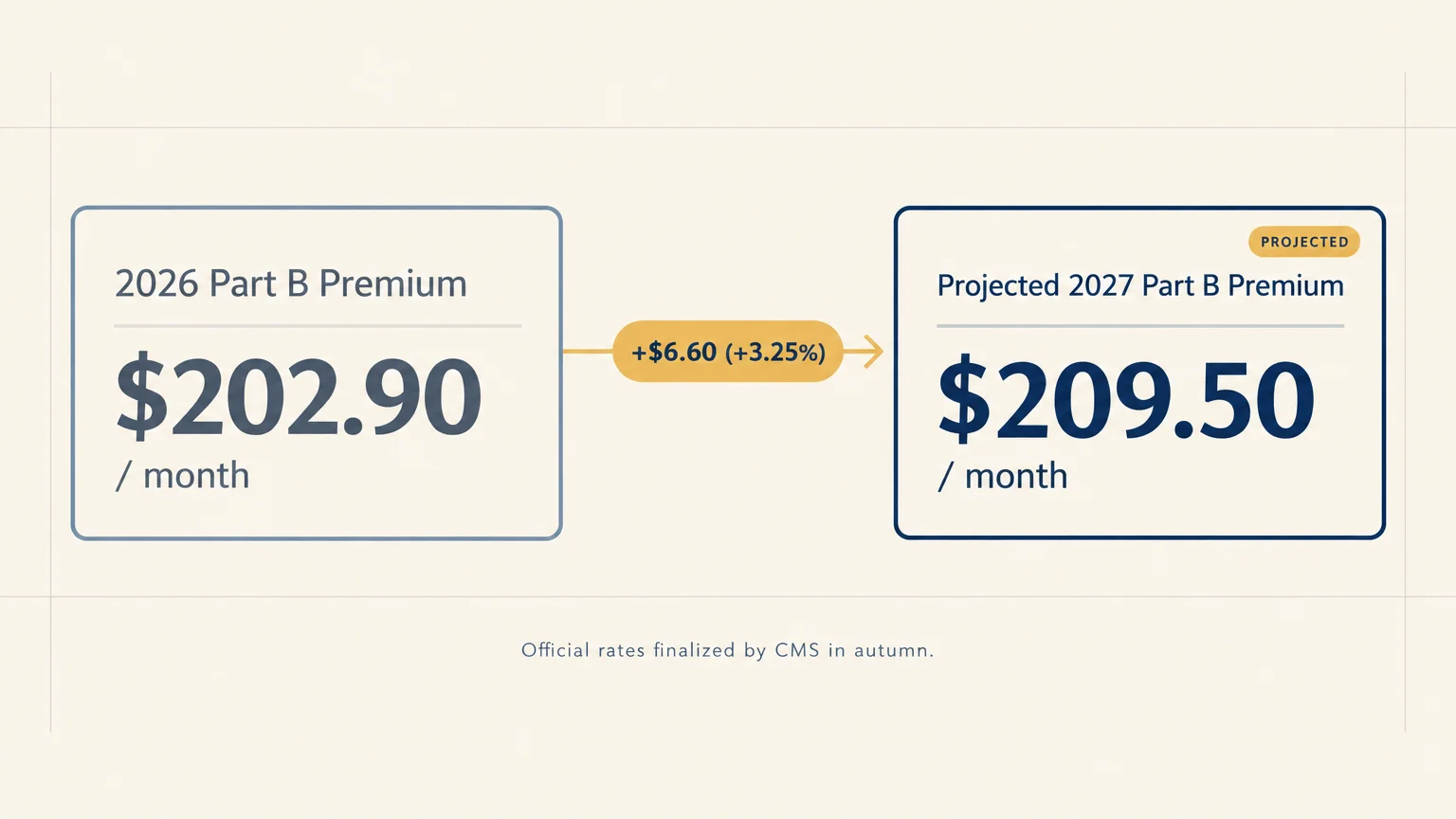
According to the 2026 Medicare Board of Trustees report, the standard monthly Medicare Part B premium 2027 will reach $209.50. This represents a modest increase of $6.60, or 3.25 percent, from the 2026 monthly rate of $202.90.
While this projection provides a dependable planning figure, the Centers for Medicare and Medicaid Services officially finalizes rates each autumn. CMS typically announces the official numbers in late October or November.
Knowing this benchmark in advance prevents surprises when your updated benefits arrive. You can confidently adjust your savings goals and enjoy your daily life without financial anxiety.
Managing Your Monthly Premium Payments
If you already receive Social Security benefits, the federal government automatically deducts your monthly Part B premium from your check. This automatic deduction simplifies your financial life and guarantees you never miss a payment.
Beneficiaries who delay Social Security receive a quarterly billing notice called Medicare Premium Bill Form CMS-500. You can easily pay these bills online using Medicare Easy Pay through your secure Medicare account.
Setting up recurring electronic payments ensures continuous outpatient coverage throughout the entire year. Taking care of this basic task grants you wonderful peace of mind.
Understanding these automated systems gives you total control over your health expenses. When you manage your healthcare proactively, your golden years stay bright and stress-free.
Planning for Future Healthcare Expenses
Monitoring your monthly premium lets you balance medical costs against your fun lifestyle activities. Whether you enjoy traveling or gardening, predictable healthcare costs make leisure planning much easier.
Review your annual Social Security statements every December to confirm your exact net deduction. Verifying your personal numbers guarantees that your household budget remains perfectly balanced.
Sound financial habits turn retirement into an uplifting and empowering phase of your life. Staying informed allows you to approach the upcoming year with steady confidence and optimism.
Tip #2: Prepare for Updated Part B and Part A Deductibles
Understanding the Outpatient Part B Deductible
Your Medicare deductible 2027 is the specific amount you pay out of pocket before your coverage begins paying. Preparing for these deductibles helps you budget effectively for routine doctor visits and specialty appointments.
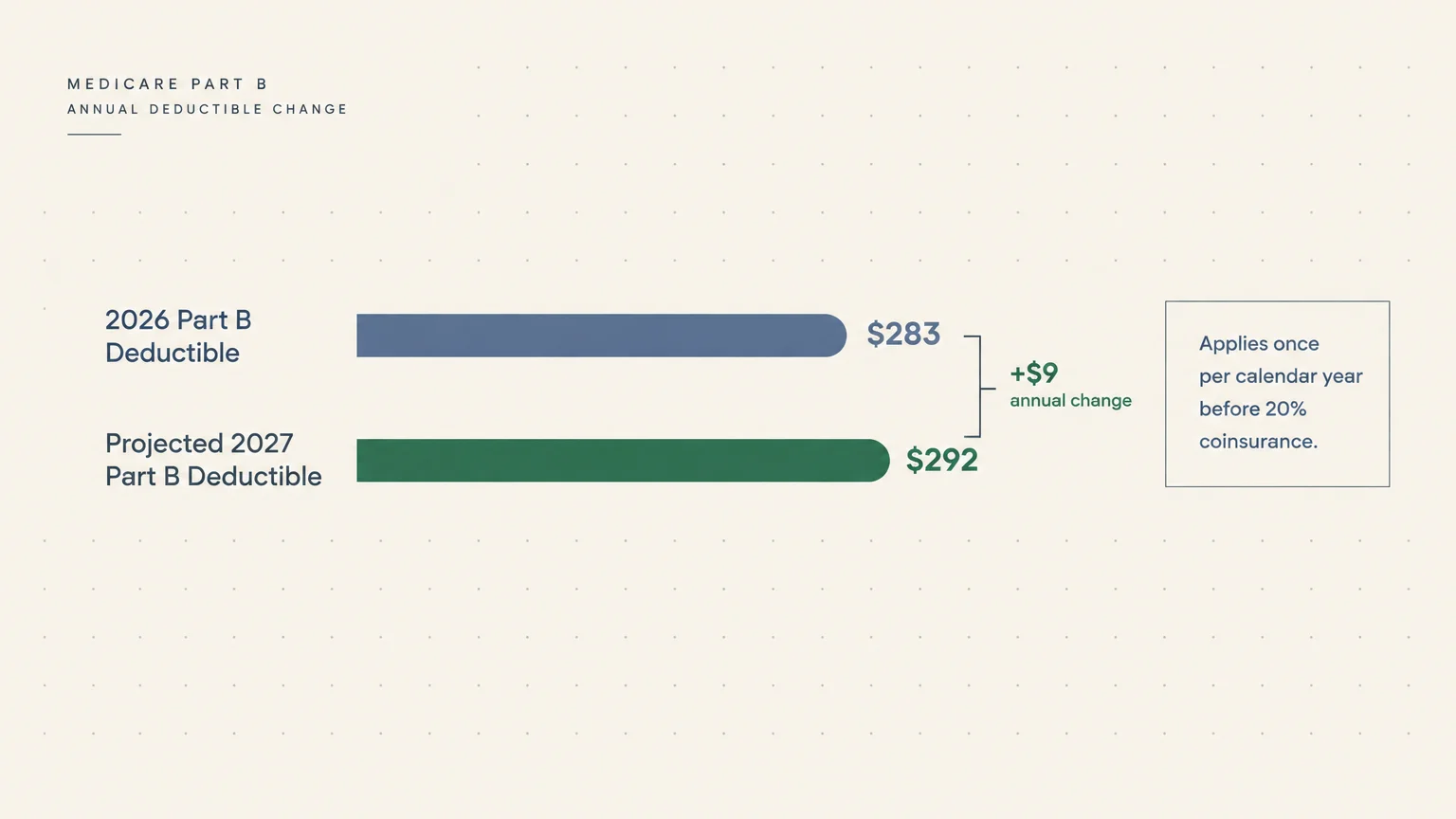
The Medicare Trustees project that the annual Part B deductible will rise from $283 in 2026 to $292 in 2027. This modest nine-dollar increase applies once per calendar year across all outpatient healthcare services.
After you satisfy this annual threshold, you generally pay twenty percent of the Medicare-approved amount for care. Fortunately, annual wellness visits and many preventive health screenings remain completely free of charge.
Take full advantage of these free preventive exams to protect your long-term health and vitality. Catching potential issues early keeps you feeling energetic and safeguards your nest egg.
Navigating Part A Inpatient Hospital Deductibles
Medicare Part A covers inpatient hospital stays, hospice care, and skilled nursing services. Approximately ninety-nine percent of Medicare enrollees pay zero dollars in monthly premiums for Part A coverage.
You earn premium-free Part A by working and paying Medicare taxes for at least ten years. This valuable earned benefit provides an enduring safety net for older Americans nationwide.
However, Part A does include an inpatient hospital deductible for every distinct benefit period. Trustees project that this inpatient hospital deductible will increase from $1,736 in 2026 to $1,788 in 2027.
A benefit period begins when you enter a hospital and ends after you remain home for sixty consecutive days. Because multiple benefit periods can occur in one year, planning for this cost is wise.
Protecting Your Savings with Supplemental Coverage
Many retirees purchase supplemental Medigap policies to shield their retirement savings from unexpected hospital deductibles. Popular options like Medigap Plan G pay your entire Part A inpatient deductible on your behalf.
Other supplemental options, such as Medigap Plan N, provide substantial protection with slightly lower monthly premiums. Choosing a plan that matches your risk tolerance keeps your out-of-pocket costs remarkably predictable.
Reviewing your supplemental insurance coverage today ensures you stay protected against major unexpected bills. Strategic preparation keeps your health and finances thriving side by side.
Taking simple precautions gives you freedom to focus on your passions and family. You deserve a relaxing retirement free from unexpected hospital bills.

Tip #3: Benefit from the Social Security COLA Offset and Part B Rebate
Keeping More of Your Social Security Raise
Retirees often worry that rising Medicare costs next year will consume their annual cost-of-living adjustments. Fortunately, 2027 brings very welcome news that preserves your monthly disposable income.
The Social Security Cost-of-Living Adjustment for 2027 reaches 3.6 percent, up from 2.8 percent in 2026. This meaningful adjustment helps protect your purchasing power against general living expenses.
Because the projected 3.25 percent Part B premium increase is smaller than the COLA boost, you keep more money. This marks the first time since 2023 that your net monthly Social Security check expands noticeably.
Seeing your net income rise brings an immediate sense of relief to your monthly financial planning. You can allocate these extra dollars toward hobbies, healthy dining, or visiting grandchildren.
The One-Time Ninety-Dollar Premium Rebate
In October 2026, the federal government announced a special one-time Medicare Improvement Fund Premium Rebate. This relief package grants ninety dollars for eligible individuals and one hundred eighty dollars for qualifying married couples.
Approximately 20.8 million beneficiaries enrolled in Original Medicare will receive this helpful financial credit directly on their statements. The rebate assists enrollees who do not pay high-income surcharges or receive Medicaid assistance.
This welcome credit directly reduces your Part B expenses, leaving extra cash in your personal account. Small policy wins like this enhance your financial comfort and reward your careful retirement planning.
You do not need to fill out any complicated forms or call government agencies to receive this rebate. Federal systems automatically credit eligible accounts, delivering effortless savings straight to your household.
Turning Extra Savings into Everyday Joy
Use these extra savings to invest in activities that bring vitality and happiness into your golden years. A local fitness class or a weekend getaway can revitalize your spirit and physical wellbeing.
Positive financial developments allow you to focus on self-care and meaningful personal relationships. When your basic healthcare expenses stay manageable, retirement becomes a truly blissful chapter.
Celebrate these favorable financial adjustments as you map out your upcoming schedule. Embracing positive changes empowers you to live life on your own terms with absolute confidence.

Tip #4: Navigate Part D Drug Plan Premium Changes and Subsidy Shifts
Average Stand-Alone Prescription Drug Rates
Medicare Part D delivers vital prescription drug coverage for medications you pick up at your neighborhood pharmacy. Understanding upcoming premium shifts ensures you always secure affordable medications without any disruption.
CMS projects that the national average total monthly premium for stand-alone Part D plans will reach approximately $36.00 in 2027. This tiny increase from $35.09 in 2026 indicates overall stability at the national level.
However, national averages do not reflect what every individual will pay in their specific geographic region. Private insurers frequently adjust their pricing structures based on local market factors and pharmacy contracts.
Checking your local plan details is the smartest way to protect your monthly household budget. Proactive research keeps your medication costs completely under control.
The End of the Premium Stabilization Demonstration
CMS is officially ending the Part D Premium Stabilization Demonstration at the end of 2026. This conclusion arrives one full year earlier than its original three-year timeline.
This federal demonstration provided $9.8 billion in subsidies to stabilize stand-alone Part D premiums during 2025 and 2026. Because these subsidies expire, private insurers may adjust their individual rates and plan structures substantially.
Some stand-alone drug plans may raise monthly premiums, while other plans might alter formulary tiers and copayments. Consequently, comparing your options during enrollment is more critical than ever before.
Pay close attention to the Annual Notice of Change packet that arrives in your mailbox each September. This essential letter outlines all upcoming changes to your drug coverage, premiums, and copay tiers.
Using Modern Tools to Find the Best Drug Coverage
The official Medicare Plan Finder tool allows you to compare every available plan in your zip code. Entering your exact medications and preferred pharmacies reveals the most cost-effective plan for your unique profile.
Taking thirty minutes to review competing options can save you hundreds of dollars in annual prescription costs. Being an active, engaged consumer always pays rich dividends in retirement.
Switching plans is straightforward and takes effect automatically on January 1 with zero interruption to your prescriptions. Empowering yourself with accurate plan comparisons protects both your health and your wallet.
Tip #5: Budget for the New 2027 Prescription Out-of-Pocket Cap and Deductible
The Expanding Out-of-Pocket Spending Ceiling
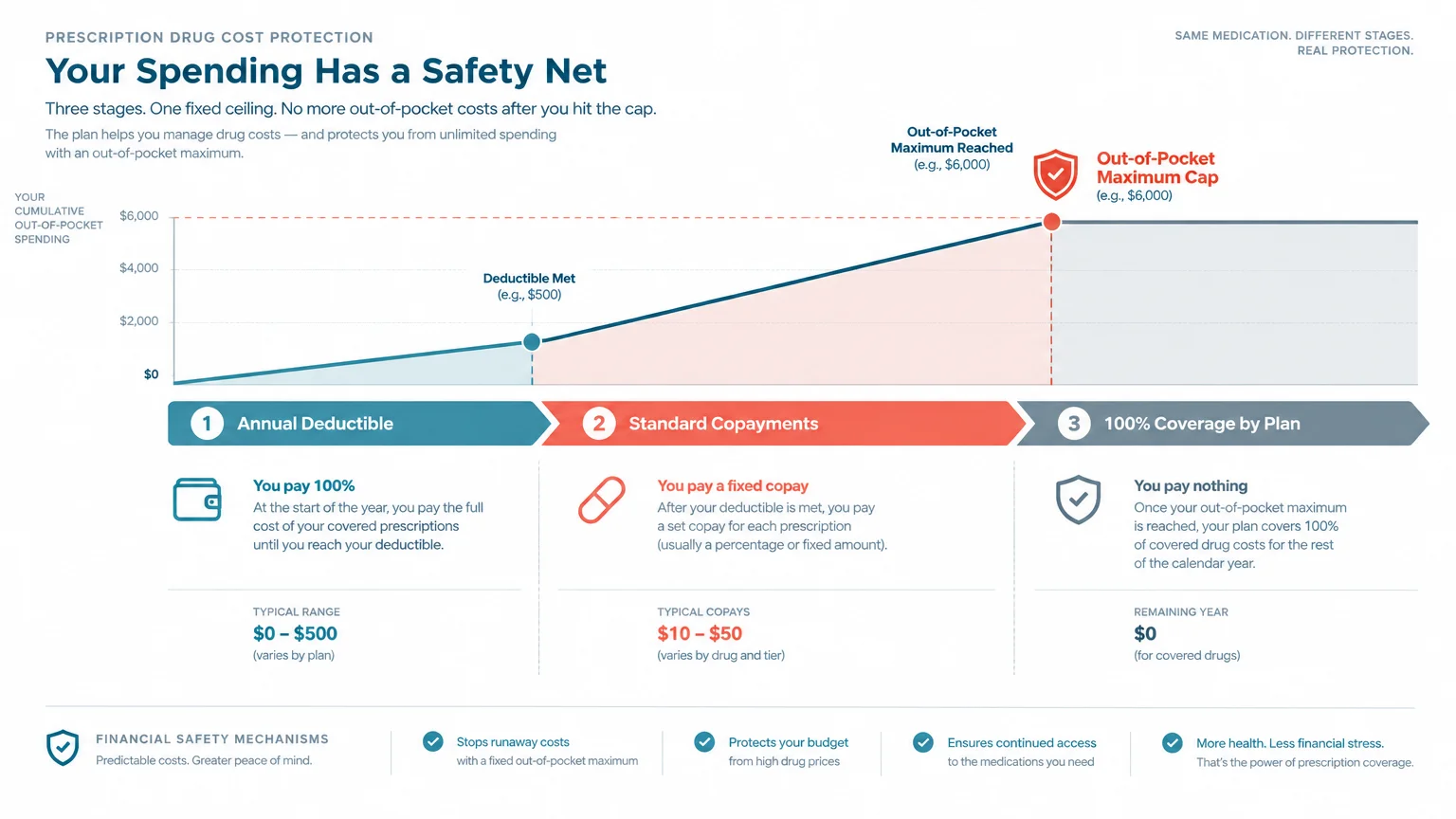
The Inflation Reduction Act continues to transform prescription drug affordability for millions of American seniors. In 2027, the annual out-of-pocket spending cap on covered Part D prescription drugs adjusts to $2,400.
This cap rose from $2,000 in 2025 and $2,100 in 2026 to reflect broader pharmaceutical economic trends. Once your out-of-pocket spending reaches $2,400, your plan covers one hundred percent of your covered medication costs.
This permanent ceiling shields you from catastrophic expenses if you take specialized brand-name therapies. You can receive advanced medical treatments without worrying about draining your hard-earned retirement nest egg.
Knowing that your medication expenses have a firm upper limit brings tremendous peace of mind. You can plan your long-term healthcare expenses with complete clarity and confidence.
Navigating the Standard Part D Deductible
Alongside the spending cap, the maximum allowable standard Part D deductible will rise in 2027. The deductible increases by eighty-five dollars, or roughly fourteen percent, climbing from $615 in 2026 to $700.
Not every prescription drug plan enforces this maximum allowable deductible amount. Many private plans offer lower deductibles, while others waive the deductible entirely on widely used generic medications.
Ask your doctor or pharmacist whether generic equivalents exist for your ongoing daily prescriptions. Choosing generic drugs helps you bypass the deductible and keeps your monthly expenses extremely low.
Simple medication adjustments can generate huge savings throughout your entire retirement journey. Taking an active role in your healthcare decisions always yields positive financial results.
Smoothing Costs with the Medicare Prescription Payment Plan
You can also enroll in the Medicare Prescription Payment Plan through your Part D provider at no additional cost. This program spreads your out-of-pocket pharmacy expenses into predictable, interest-free monthly payments throughout the year.
Spreading your expenses prevents large, sudden bills at the pharmacy counter during January and February. You enjoy steady, budget-friendly payments that align perfectly with your monthly pension or Social Security check.
Combining the out-of-pocket spending cap with smooth monthly installments provides unmatched financial stability. You can focus on living vibrant golden years without stressing over sudden prescription spikes.

Tip #6: Explore Falling Medicare Advantage Plan Premiums
Falling Monthly Premiums for Part C Enrollees
Medicare Advantage plans, also known as Medicare Part C, bundle hospital, doctor, and prescription coverage into one convenient policy. For 2027, Medicare Advantage enrollees will enjoy remarkable cost reductions across the board.
CMS announced that weighted average monthly premiums for Medicare Advantage plans are projected to drop by more than sixteen percent. This significant reduction makes comprehensive managed care even more budget-friendly for older adults.
Furthermore, average prescription drug premiums within Medicare Advantage plans are projected to plummet by thirty-eight percent. These historic price reductions offer extraordinary value for retirees seeking affordable, all-inclusive healthcare solutions.
Strong market competition among commercial insurers drives these beneficial rate drops nationwide. You can leverage these falling premiums to lower your fixed monthly retirement overhead significantly.
Valuable Wellness Perks and Extra Benefits
Many Medicare Advantage plans feature zero-dollar monthly premiums while offering generous supplemental benefits. These plans frequently include routine dental care, vision exams, hearing aids, and free gym memberships.
Taking advantage of gym memberships and wellness programs helps you maintain physical strength, flexibility, and positive mental health. Incorporating regular exercise into your daily routine is one of the best investments you can make.
Some plans also provide over-the-counter allowances for vitamins, personal care supplies, and healthy food items. These practical extras directly offset your everyday household living expenses throughout the entire year.
Enjoying comprehensive care with robust wellness perks enriches your overall quality of life. Medicare Advantage continues to deliver uplifting options that support an active and fulfilling lifestyle.
Checking Networks and Prior Authorizations
Before selecting a Medicare Advantage plan, carefully confirm that your trusted doctors and hospitals remain in-network. Staying in-network ensures you receive the lowest copayments and avoid unexpected out-of-pocket charges.
Review the plan’s prior authorization requirements for specialist consultations, advanced imaging, and elective surgical procedures. Understanding these administrative guidelines upfront ensures you navigate your medical care smoothly and without frustration.
Also check the plan’s maximum out-of-pocket limit, which caps your total annual medical expenses. Finding a plan with a low out-of-pocket ceiling provides dependable financial protection during health challenges.
Choosing the right plan empowers you to enjoy retirement with absolute comfort and freedom. When your coverage aligns with your personal medical needs, you thrive in every way.
Tip #7: Plan Ahead for 2027 IRMAA Surcharges
How the Two-Year Lookback Rule Works
Higher-earning beneficiaries pay an extra monthly surcharge on their Part B and Part D premiums, known as IRMAA. Understanding the IRMAA 2027 rules prevents unexpected deductions from surprising your retirement budget.
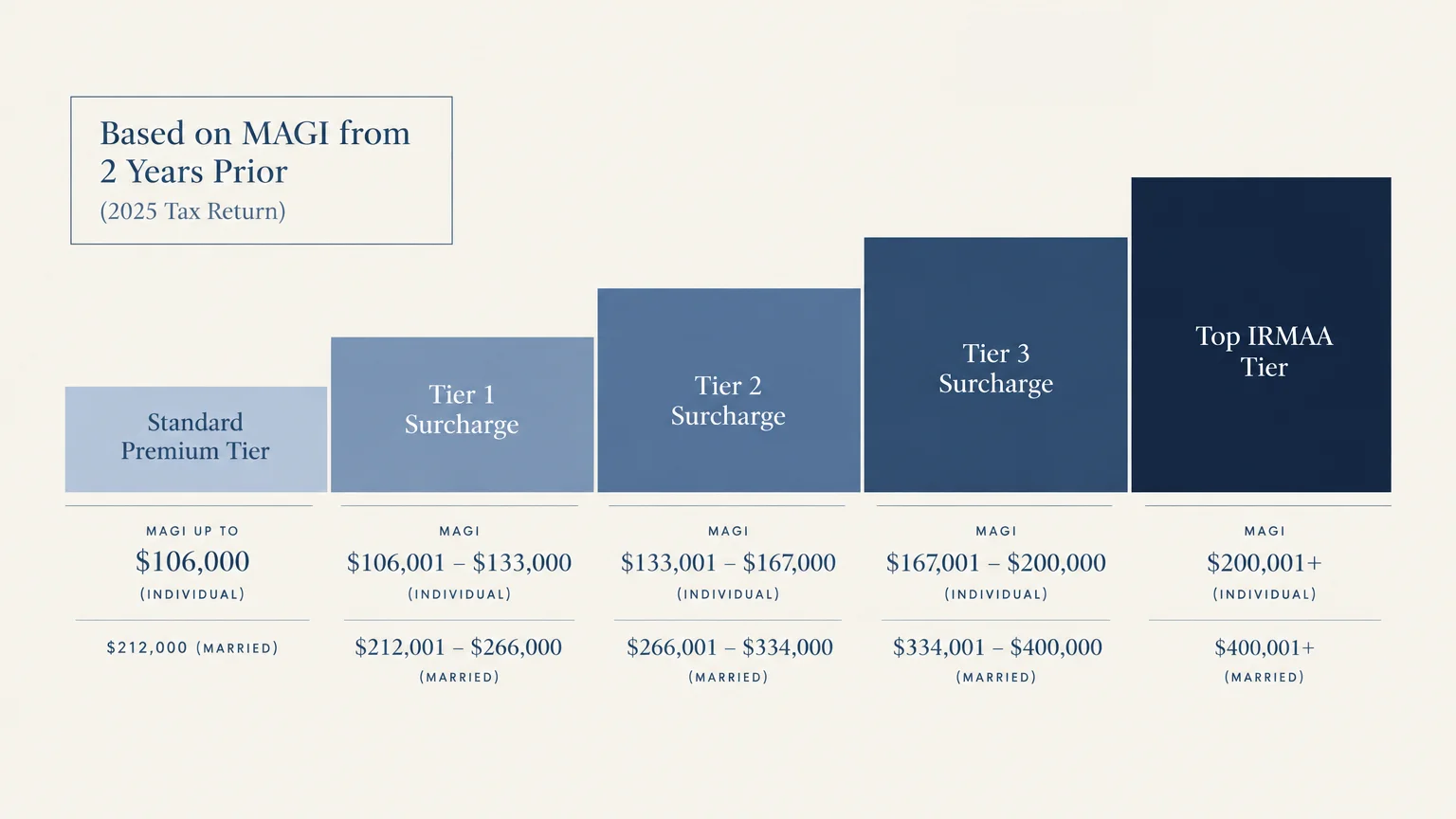
The Social Security Administration calculates your surcharge using a strict two-year lookback period. Therefore, the Modified Adjusted Gross Income reported on your 2025 federal tax return determines your 2027 premiums.
In 2026, surcharges began at incomes over $109,000 for single filers and $218,000 for married joint filers. CMS will announce the official finalized income tiers for 2027 late this autumn.
By federal statute, the top IRMAA brackets remain frozen through 2028 at $500,000 for single filers and $750,000 for couples. Beneficiaries exceeding these frozen income levels will pay the highest monthly surcharge tier.
Appealing Surcharges with Form SSA-44
Many seniors experience a major drop in income between 2025 and 2027 due to stepping away from the workforce. If your financial situation has changed, you do not have to accept an outdated surcharge.
You can file an official appeal with the Social Security Administration using Form SSA-44. This form allows you to report life-changing events that significantly reduced your taxable household income.
Recognized life-changing events include retirement, work reduction, marriage, divorce, or the loss of income-producing assets. Submitting evidence of your lower earnings enables Social Security to adjust your premiums to your current reality.
Successful appeals often recover thousands of dollars in unnecessary premium charges over a single calendar year. Taking the time to file this paperwork preserves your retirement capital for the things you cherish.
Strategic Tax Planning for Future Premiums
Coordinating with a qualified tax professional helps you manage future capital gains, Roth conversions, and required minimum distributions. Thoughtful financial planning keeps your reported income below critical IRMAA thresholds.
Spacing out major taxable events over several calendar years minimizes the likelihood of triggering higher Medicare premiums. Strategic money management puts you firmly in control of your retirement finances.
Protecting your income from unnecessary surcharges brings lasting confidence and satisfaction. When you plan ahead, you preserve your hard-earned assets and enjoy total financial security.

Tip #8: Harness Open Enrollment and 15 Newly Negotiated Drug Prices
Key Dates for Medicare Open Enrollment
The annual Medicare Open Enrollment period runs from October 15 through December 7, 2026. Any adjustments you make to your coverage take effect on January 1, 2027.
This annual enrollment window is your prime chance to compare health plans, adjust drug coverage, or explore Medicare Advantage. Staying proactive ensures your coverage continues to match your personal health priorities.
Insurance providers frequently update their doctor networks, drug formularies, and cost-sharing amounts each year. Reviewing your plan annually prevents unwelcome surprises and guarantees you receive the best value.
Create an account on the official Medicare website to review personalized plan options easily. Having digital access streamlines your plan comparison and makes enrollment smooth and straightforward.
Fifteen Newly Negotiated Prescription Medications
Starting January 1, 2027, Medicare-negotiated prices will take effect for fifteen additional brand-name Part D prescription drugs. This major advancement follows the initial ten negotiated medications launched in 2026.
These lower negotiated prices target widely prescribed therapies for diabetes, cardiovascular disease, cancer, and respiratory illness. Beneficiaries taking these essential medications will see their out-of-pocket costs drop substantially at the pharmacy.
Check the updated Medicare formulary listings to determine if your regular prescriptions appear on the negotiated price list. Lower prescription prices free up monthly funds, helping you maintain financial vitality.
Federal drug price negotiations represent a lasting structural benefit for older adults across the country. You can look forward to accessing vital medications at far more reasonable prices.
Unbiased Community Help from SHIP Counselors
If you feel overwhelmed by plan choices, connect with your local State Health Insurance Assistance Program. SHIP counselors provide free, unbiased, and completely personalized guidance to help you navigate enrollment.
These trained volunteers do not sell insurance or earn commissions, ensuring you receive objective advice. Tapping into community support empowers you to make informed decisions for your health.
Treat open enrollment as a rewarding annual checkup for your personal financial wellbeing. Aligning your coverage with your lifestyle sets the foundation for a vibrant and worry-free year.

The Takeaway: Living a More Blissful Retirement
Navigating your healthcare coverage does not have to feel overwhelming or intimidating. With clear facts and timely preparation, you can confidently steer your retirement finances toward lasting stability.
The 2027 healthcare landscape brings encouraging trends, including lower Medicare Advantage premiums, expanding drug caps, and meaningful Social Security COLA gains. These favorable developments offer genuine reassurance for your household budget.
By reviewing your plan choices between October 15 and December 7, you protect both your physical health and your savings. Small, thoughtful actions today create tremendous freedom and happiness tomorrow.
Retirement is your time to pursue passions, connect with loved ones, and embrace every sunrise with joy. When you master your Medicare premiums, you remove worry and invite pure bliss into your daily life.
Step forward into the coming year knowing you possess the knowledge and tools to thrive. Your golden years should be your brightest, healthiest, and most fulfilling chapter yet.
Frequently Asked Questions
When does CMS officially announce final 2027 Medicare premiums?
The Centers for Medicare and Medicaid Services typically announces finalized Medicare premiums 2027 in late October or November. While the Trustees report provides dependable estimates, CMS confirms exact figures in late autumn.
Reviewing CMS announcements ensures your budget accounts for official rates before the new calendar year starts. Staying informed keeps your financial planning accurate and worry-free.
Can I lower my IRMAA surcharge if my income dropped recently?
Yes, you can appeal your surcharge by submitting federal Form SSA-44 to the Social Security Administration. You must document a qualifying life-changing event, such as retirement, marriage, or work reduction.
If approved, Social Security will recalculate your premiums using your current, lower income level. This straightforward appeal process can save you thousands of dollars in unnecessary surcharges.
How does the $2,400 prescription drug out-of-pocket cap help me?
The $2,400 cap limits the total amount you spend out of pocket on covered Part D medications during 2027. Once you reach this limit, your plan pays one hundred percent of your covered prescription costs.
This spending ceiling prevents catastrophic drug expenses and provides complete predictability for seniors taking expensive medications. You can manage chronic health conditions without fearing devastating pharmacy bills.
Who is eligible for the one-time $90 Medicare Part B rebate?
The one-time $90 rebate benefits approximately 20.8 million enrollees who have Original Medicare coverage. Eligible married couples enrolled in Original Medicare will receive a combined rebate of $180.
To qualify, you must not pay IRMAA high-income surcharges or receive Medicaid assistance. The federal government automatically credits eligible accounts, so no application is necessary.
For a wide range of resources for older adults, visit AARP and the National Council on Aging (NCOA). Health information is available from the National Institute on Aging.
Disclaimer: This article is for informational and inspirational purposes only. It is not a substitute for professional medical, financial, or psychological advice. Please consult with a qualified expert for guidance tailored to your individual needs.