

Gathering your tax documents before the calendar turns to January removes winter stress and keeps your retirement savings intact. You can easily streamline your filings and claim every new senior deduction with simple advance planning.
Starting your tax season preparation today gives you time to track down missing paperwork before early deadlines arrive. It also prevents the frantic scramble that often accompanies winter financial chores.
By assembling your tax prep checklist now, you protect your peace of mind and secure your financial freedom. Here are the eight essential records you should locate and organize right now.
Tip #1: Retirement Account Statements and Form 1099-R Records
Retirement accounts provide the bedrock of your golden years; however, their annual tax documentation requires careful attention. You should gather all distribution statements from your pensions, annuities, and traditional IRAs before January begins.
Your plan custodians will eventually send Form 1099-R in early winter to report these distributions. Reviewing your year-end account summaries now allows you to verify those official tax forms against your personal records.
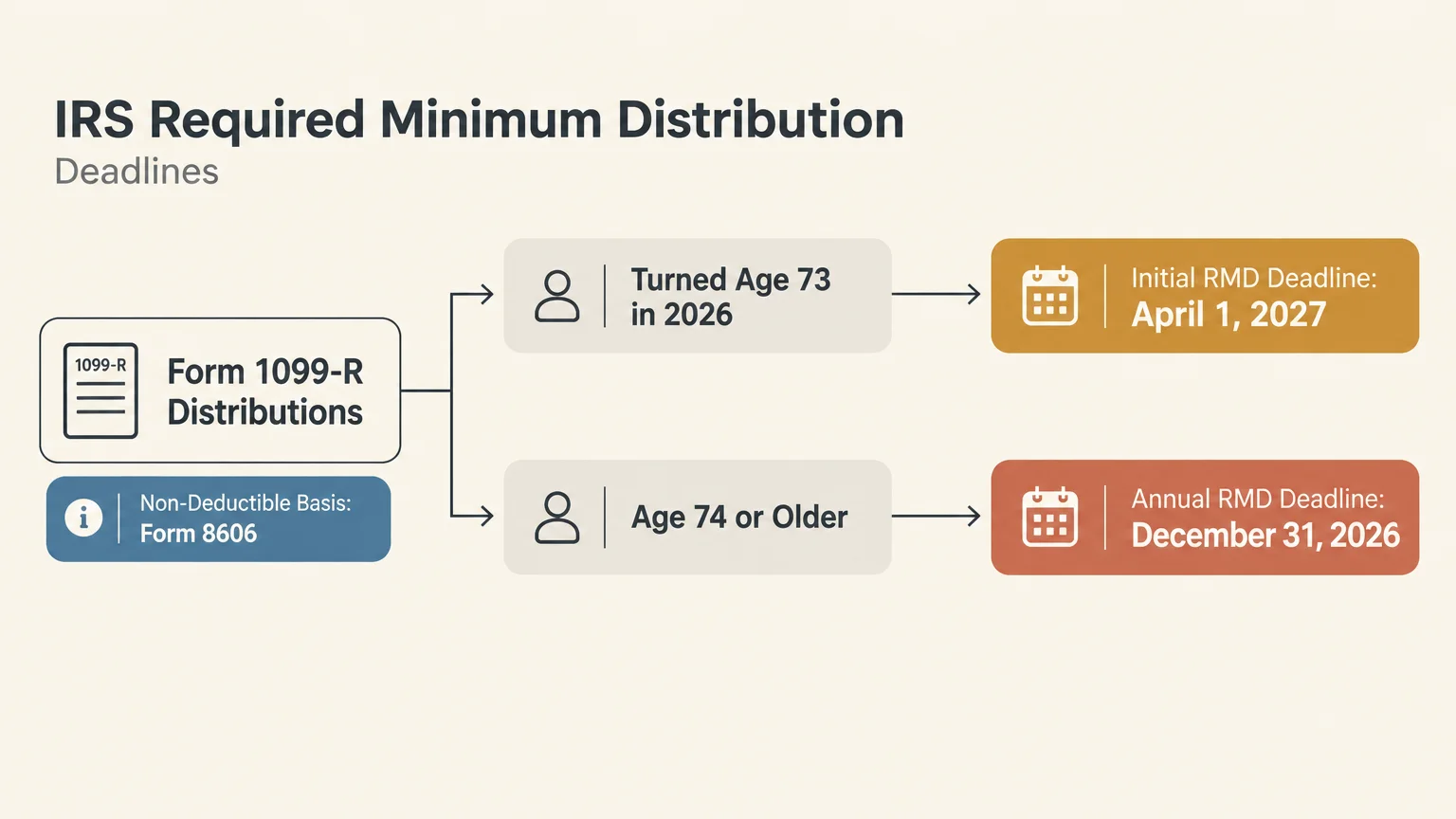
If you reached age 73 or older in 2026, you must navigate the IRS rules for required minimum distributions (RMDs). Missing an RMD can trigger steep excise tax penalties, so proactive verification is essential.
Account owners who turned 73 during 2026 have until April 1, 2027, to take their initial distribution. If you reached age 74 or older, your 2026 distribution deadline was December 31, 2026.
Locate your year-end withdrawal receipts immediately to confirm that your total distributions satisfied the mandatory formula. You will feel far more confident entering January knowing your accounts align with federal requirements.
Take time to examine the voluntary tax withholding indicated on your monthly retirement disbursements. Many retirees choose to withhold federal income taxes directly from pension checks and IRA withdrawals.
Compare your cumulative withholdings against your projected total tax liability for the year. Doing so helps you identify any tax shortfalls before the new filing season officially opens.
You should also organize records of any non-deductible contributions made to traditional retirement accounts. These contributions require Form 8606 so that you do not pay income tax twice on the same dollars.
Create a designated digital folder or a labeled physical hanging file for each retirement account custodian. Label each folder clearly with the institution name and the corresponding account number.
When your official 1099-R forms arrive in the mail, you can simply drop them into their prepared folders. This early habit keeps your filing process smooth and entirely stress-free.

Tip #2: Social Security Benefit Statements and Form SSA-1099
Social Security benefits represent a significant income stream for millions of retirees across the country. Form SSA-1099 provides the official report of the total benefits you received during the calendar year.
The Social Security Administration typically mails these forms throughout January. You can prepare right now by gathering your bank statements that reflect each monthly direct deposit.
Logging into your personal account on the official Social Security portal offers an immediate way to check your records. Verify that your current mailing address matches their database so your paperwork arrives without delay.
Up to 85 percent of your Social Security benefits may be taxable depending on your overall income level. Calculating your combined income early helps you anticipate whether your benefits cross taxable thresholds.
Your combined income equals your adjusted gross income plus non-taxable interest and half of your annual Social Security benefits. Understanding this calculation keeps you fully in control of your retirement budget.
Check your monthly bank statements to see if you had taxes voluntarily withheld from your Social Security payments. Voluntary withholding helps retirees manage their annual obligations without paying quarterly estimates.
Ensure that you also record your monthly Medicare Part B premium deductions. These premiums are automatically withheld from Social Security checks and qualify as deductible medical expenses if you itemize.
Place your monthly benefit award letters inside your Social Security tax folder before January arrives. These letters detail your gross benefit, Medicare deductions, and net monthly payments.
Comparing your award letter against your December bank statement takes only a few minutes. This simple step ensures that any discrepancy gets corrected before you begin your tax filing.
Preparing your Social Security paperwork in advance guarantees that you will file your tax paperwork January submissions with complete confidence. You will enter the new year feeling organized and empowered.
Tip #3: Charitable Giving Receipts and QCD Acknowledgment Letters
Charitable generosity brings immense fulfillment during retirement, and it also unlocks valuable tax advantages. Organizing your charitable donation receipts before January is one of the smartest financial moves you can make.
If you are age 70½ or older, you can utilize Qualified Charitable Distributions (QCDs) directly from your traditional IRA. In 2026, you can transfer up to $111,000 directly to qualified charities completely tax-free.
A QCD provides an exceptional financial benefit because it satisfies your required minimum distribution without raising your adjusted gross income. However, a significant tax trap catches many retirees unaware.
Custodians report QCDs on Form 1099-R as normal distributions rather than distinguishing them as tax-free gifts. The IRS places the responsibility entirely on you to substantiate the tax-free transfer.
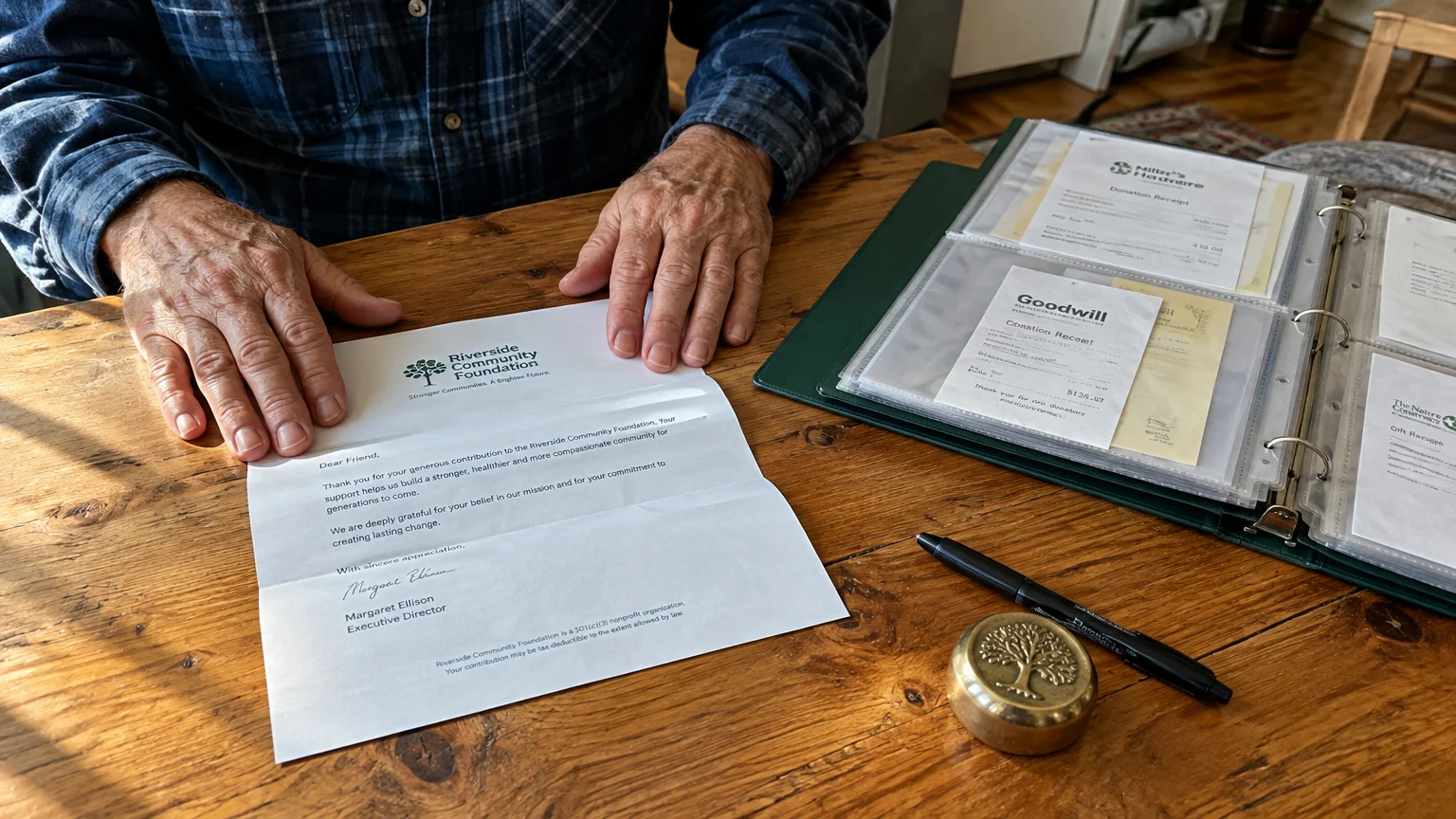
You must obtain written acknowledgment letters directly from each recipient charity before January. These letters must explicitly confirm that you received no goods or services in exchange for your donation.
Store these charity acknowledgment letters right alongside your IRA distribution records. Doing so provides immediate proof if the IRS ever requests clarification on your return.
Exciting updates also benefit donors who do not utilize complex retirement distributions. Starting in the 2026 tax year, taxpayers claiming the standard deduction can claim a new non-itemizer charitable deduction.
Non-itemizers can deduct up to $1,000 for single filers or $2,000 for married couples filing jointly for cash contributions. This new deduction rewards generous givers regardless of whether they itemize on Schedule A.
Gather every physical receipt, bank acknowledgment, and credit card statement showing charitable contributions made during 2026. Keep them organized in a single folder sorted by organization name.
Having these documents ready before January ensures you capture every dollar of deductions you deserve. Your generosity will bring happiness to worthy causes while lowering your overall tax burden.
Tip #4: Estimated Quarterly Tax Payment Records and Form 1040-ES Receipts
Many active seniors and retirees pay quarterly estimated taxes rather than relying on employer wage withholdings. If you earn income from investments, pensions, or self-employment, organizing your estimated payment records is vital.
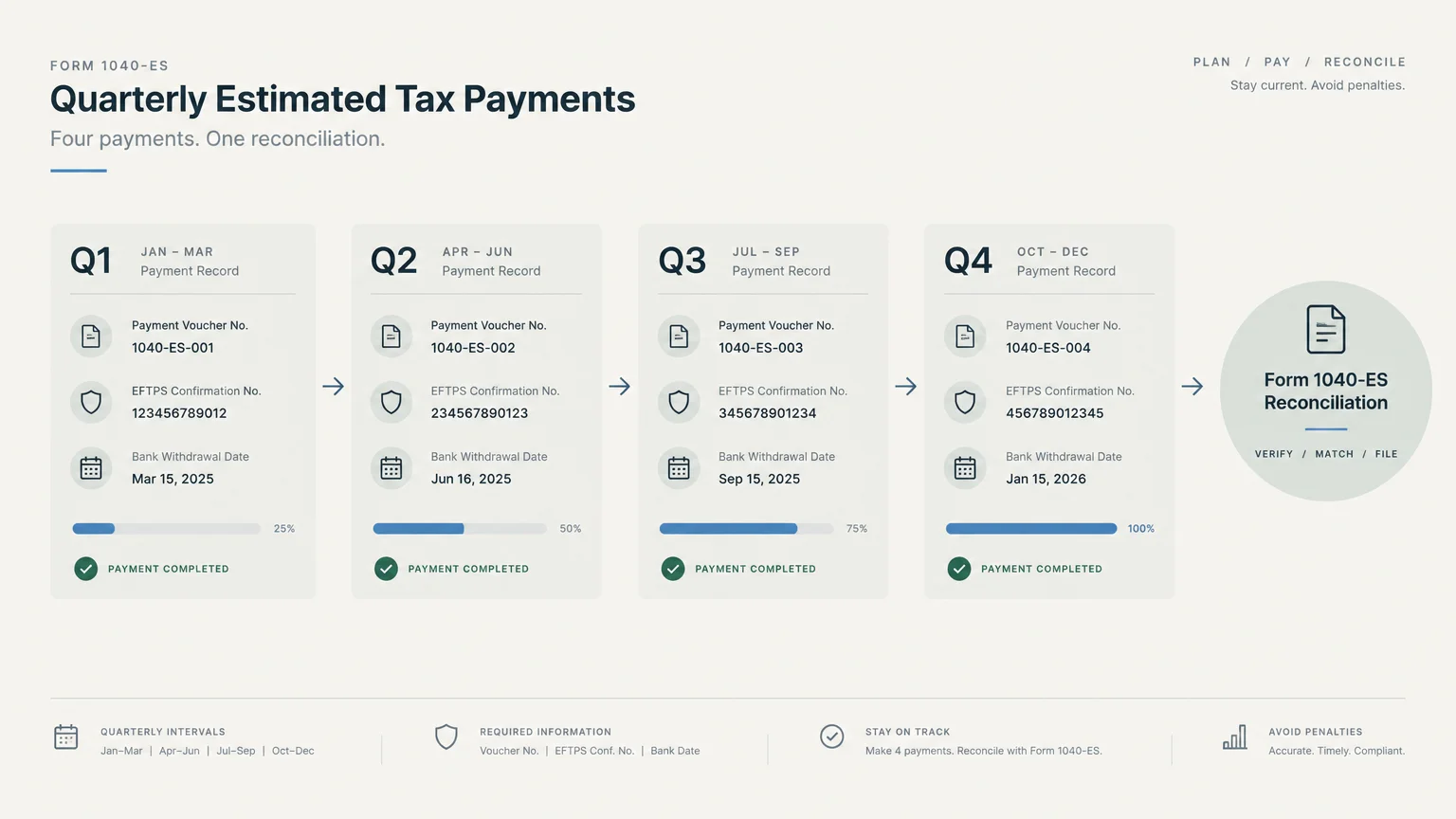
The fourth-quarter estimated tax payment for the 2026 tax year is due on January 15, 2027. Organizing your payment history before January arrives prevents rushed calculations during the busy holiday season.
Pull together your payment records for the first three quarters of 2026, which occurred in April, June, and September. Having all four quarters documented in one place ensures complete reporting on your final tax return.
Locate your cancelled checks or download electronic payment confirmations from the Electronic Federal Tax Payment System (EFTPS). These receipts serve as concrete proof that the IRS received your funds on time.
Compare your total estimated payments against your safe harbor targets to avoid underpayment penalties. Paying at least 90 percent of your current tax or 100 percent of your prior-year tax generally protects you.
If your adjusted gross income exceeded $150,000 in the prior tax year, your safe harbor target requires 110 percent of that liability. Checking these calculations in December gives you time to make any necessary adjustments.
Do not forget to gather records of any estimated state income tax payments you submitted throughout the year. State taxing authorities require similar documentation to credit your account accurately.
Create a simple summary ledger sheet listing the date, payment amount, and confirmation number for each quarterly payment. This ledger will save your tax preparer substantial time and prevent expensive accounting errors.
If you discover an underpayment before January 15, 2027, you can increase your fourth-quarter payment to minimize penalties. Being proactive puts you in control of your financial destiny.
Maintaining accurate estimated tax files brings clarity and order to your financial life. You can celebrate the new year knowing that your quarterly obligations are completely settled.
Tip #5: Medical, Dental, and Healthcare Expense Logs
Healthcare costs often represent one of the largest budget categories during retirement. Organizing your medical receipts before January helps you determine whether itemizing deductions will reduce your tax bill.
The IRS permits you to deduct qualifying unreimbursed medical and dental expenses that exceed 7.5 percent of your adjusted gross income. Meeting this threshold requires thorough documentation of every out-of-pocket dollar spent.
Standard deductions for the 2026 tax year stand at $16,100 for single filers and $32,200 for married couples filing jointly. Heads of household enjoy a base standard deduction of $24,150.
Seniors age 65 and older receive an additional traditional deduction of $2,050 for single filers or $1,650 per qualifying spouse on joint returns. These figures give older adults a substantial baseline deduction.
Furthermore, the enhanced senior deduction under the One Big Beautiful Bill Act provides an additional $6,000 bonus deduction per person age 65 and older. Married couples who are both 65 or older receive an extra $12,000 deduction.
This bonus deduction phases out at a 6 percent rate for modified adjusted gross income over $75,000 for single filers and $150,000 for joint returns. Knowing these limits helps you decide whether to itemize medical expenses.
If you faced major surgeries, dental implants, or long-term care expenses, your total costs might surpass standard deduction levels. Gathering your documentation now enables an accurate comparison.
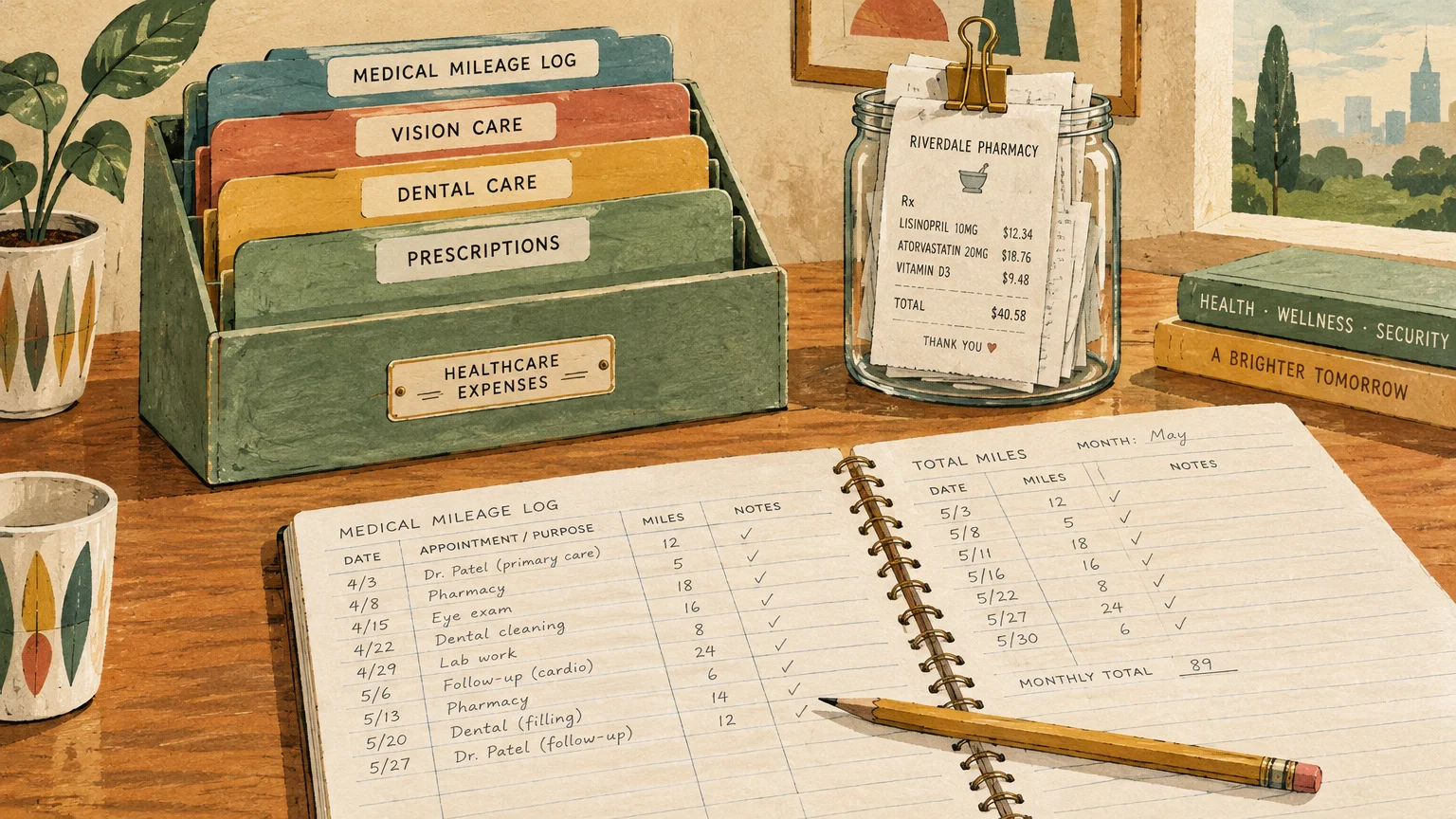
Request an annual prescription expense report from your pharmacy before December ends. Pharmacies can print a comprehensive summary of all copayments you made throughout the entire calendar year.
Gather explanation of benefits (EOB) statements from Medicare and your supplemental insurance plans to verify out-of-pocket costs. Keep receipts for eyeglasses, hearing aids, dental work, and specialized medical transportation mileage.
Store these healthcare receipts in a secure folder organized by category. Preparing these figures ahead of time guarantees you will not overlook valuable medical deductions when filing season arrives.
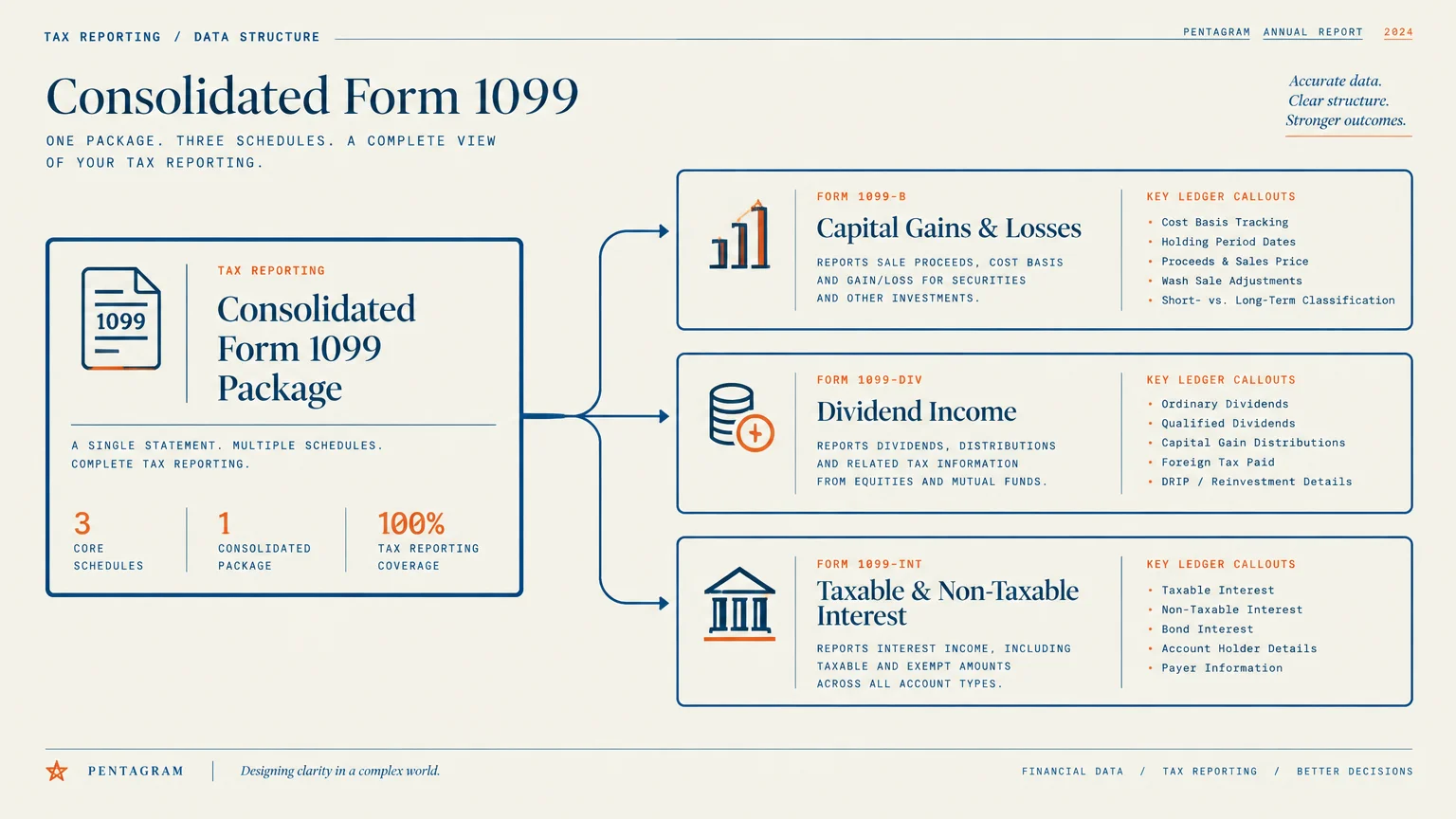
Tip #6: Brokerage Records, Capital Gains Data, and 1099 Consolidated Summaries
Taxable investment accounts provide wonderful financial growth, but they also generate detailed tax reporting requirements. Organizing your capital gains data and year-end brokerage statements before January simplifies your filing process.
Financial institutions have until February 16, 2027, to furnish Form 1099-B, Form 1099-DIV, Form 1099-INT, and consolidated 1099 statements. Waiting until late February can slow down your tax preparation if you do not prepare ahead.
You can easily review your year-to-date realized gains and losses by logging into your brokerage portals in December. Checking these figures early gives you a preview of your taxable investment income.
If you sold assets throughout 2026, verify that your brokerage platform tracked your cost-basis method accurately. Having records of your original purchase dates and purchase prices prevents costly tax calculation discrepancies.
Capital losses can offset taxable capital gains dollar for dollar on your tax return. If your losses exceed your gains, you can deduct up to $3,000 of excess losses against ordinary income.
Unused net capital losses can carry forward into future tax years indefinitely. Keeping your prior-year tax returns accessible ensures you carry forward previous losses correctly onto your 2026 return.
Track mutual fund capital gain distributions, which fund companies typically pay out in November and December. These distributions remain taxable even if you automatically reinvested the proceeds back into more shares.
Collect year-end documentation for any municipal bonds or tax-exempt income funds you own. While municipal interest is generally exempt from federal tax, it impacts the taxation of Social Security benefits.
Create an investment folder that holds your December brokerage statements and transaction confirmation slips. This organization allows you to quickly audit your consolidated 1099 statements when they arrive in mid-February.
Advance preparation keeps your investment portfolio working efficiently for your retirement goals. You will enjoy total confidence when reporting your dividends and investment earnings.

Tip #7: Employment and Gig Economy Earnings Records
Many older adults embrace consulting roles, part-time jobs, or creative gig work during their golden years. If you earned active income in 2026, organizing your employment paperwork before January is essential.
Because January 31, 2027, falls on a Sunday, employers and businesses must furnish W-2 and 1099 forms by Monday, February 1, 2027. Gathering your own earnings records now helps you verify those forms quickly.
Recent tax law changes have altered reporting thresholds for independent contractors and freelancers. Under the One Big Beautiful Bill Act, the reporting threshold for Form 1099-NEC and 1099-MISC increased from $600 to $2,000 for 2026.
Businesses do not have to send you a 1099-NEC if they paid you less than $2,000. However, the IRS still requires you to report every dollar of earned income regardless of receiving a form.
For seniors selling items or accepting payments online, payment apps only send a Form 1099-K if gross payments exceed $20,000 and 200 transactions. Keeping your own payment ledgers ensures accurate reporting without guesswork.
Assemble all consulting invoices, business bank statements, and client deposit receipts before the new year arrives. Maintaining these files prevents income omissions that could trigger IRS correspondence.
If you work as an independent contractor, organize receipts for ordinary business expenses such as supplies, equipment, and professional mileage. Deducting legitimate business expenses reduces your net earnings and lowers self-employment taxes.
If you contributed to retirement plans while working, verify that you respected the 2026 contribution limits. The 401(k) base limit is $24,500, with an $8,000 catch-up contribution for workers aged 50 and older.
Workers aged 60 to 63 can utilize a special super catch-up limit of $11,250, allowing total 401(k) contributions of $35,750. Note that workers earning over $150,000 in 2025 wages must make catch-up contributions to Roth accounts.
Traditional IRA contribution limits for 2026 total $7,500, plus an increased $1,100 catch-up contribution for individuals aged 50 and older. Organizing your pay stubs now guarantees your retirement contributions stay compliant.
Organizing your active earned income records today keeps your tax paperwork January tasks quick and effortless. You will protect your earnings and enjoy your purposeful retirement endeavors.

Tip #8: Real Estate Property Tax Bills and Home Improvement Receipts
Your home represents one of your most valuable assets, offering significant opportunities for tax savings. Gathering real estate documents and property tax statements before January ensures you capture every available housing deduction.
Locate your local property tax receipts for payments made during the 2026 calendar year. These receipts are necessary when calculating your State and Local Tax (SALT) deduction on Schedule A.
Review your mortgage interest statements if you still carry a loan or home equity line of credit on your residence. Lenders send Form 1098 in January, but reviewing your December statement confirms your interest totals early.
If you installed energy-efficient equipment in 2026, such as heat pumps, solar systems, or efficient windows, collect your contractor receipts immediately. Federal clean energy credits provide substantial tax savings for qualifying home improvements.
Collect manufacturer certification statements for all installed energy equipment to verify that your upgrades qualify for federal credits. Storing these documents now prevents frantic searching when filing Form 5695.
Seniors who modified their homes for medical reasons should also organize contractor invoices and physician recommendation letters. Improvements like wheelchair ramps, widened doorways, or ground-floor accessible bathrooms can qualify as medical expense deductions.
Unlike general home improvements that add value, capital improvements made for medical care may be deducted to the extent they exceed home value increases. Keeping appraisal records and contractor invoices validates your medical claim.
Check with your local township or county assessor to verify whether you qualify for senior property tax homestead exemptions. Many jurisdictions offer property tax freezes or discounts for homeowners aged 65 and older.
Keep a copy of your county property assessment notice in your real estate tax folder. This notice confirms your assessed valuation and provides supporting evidence for your local tax payments.
Preparing your property documents before January simplifies filing whether you use Form 1040 or Form 1040-SR for Seniors. Your organized records ensure that you maximize every home-related financial benefit.

The Takeaway: Living a More Blissful Retirement
Approaching tax season preparation with a proactive mindset transforms what could be a stressful chore into an empowering achievement. By assembling these eight crucial tax documents to organize before January, you gain complete clarity over your finances.
Early organization eliminates the frantic search for missing records and protects you from costly reporting mistakes. You also position yourself to take full advantage of generous senior deductions and new charitable allowances.
A well-structured filing system frees up mental energy, allowing you to focus on the things that truly bring happiness. Retirement should be filled with family time, creative passions, and restful relaxation rather than tax anxiety.
Set aside an afternoon this week to set up your folders and review your year-end financial summaries. The peaceful confidence you gain will carry you smoothly through the entire tax season.
Celebrate the wonderful progress you make as you check each document off your tax prep checklist. You deserve a smooth, rewarding, and truly blissful retirement.
Frequently Asked Questions
When will my financial institutions send my W-2 and 1099 forms?
Employers and businesses must furnish Form W-2 and Form 1099-NEC by Monday, February 1, 2027. This deadline shifts from January 31 because the final day of January falls on a Sunday.
Financial institutions providing Form 1099-B, Form 1099-S, and consolidated brokerage statements have until February 16, 2027, to furnish their reports. Organizing your accounts in December ensures you spot any missing forms quickly.
Should I itemize my deductions or take the standard deduction this year?
Most retirees benefit from taking the standard deduction due to substantial senior bonus amounts. Single filers age 65 and older receive the base $16,100 deduction plus an additional $2,050 traditional senior deduction.
Furthermore, qualifying seniors can claim an enhanced senior deduction of $6,000 per person under recent legislation. You should only itemize if your deductible mortgage interest, state taxes, and large medical expenses exceed that total.
What should I do if my 1099-R does not show my Qualified Charitable Distribution?
Financial institutions report total distributions on Form 1099-R without identifying whether funds went directly to charity. This reporting method is standard IRS practice and does not mean your distribution is taxable.
To claim the distribution tax-free, keep your written acknowledgment letter from the charity before January. You or your tax preparer will indicate the QCD directly on Form 1040 when filing.
What is the official deadline to file my 2026 federal tax return?
The federal tax filing deadline for your 2026 individual income tax return is Thursday, April 15, 2027. This date is also the deadline to make prior-year contributions to traditional or Roth IRAs.
Filing your return well before the April deadline prevents identity theft and speeds up any refund you may be owed. Early preparation gives you total peace of mind throughout the spring.
For a wide range of resources for older adults, visit AARP and the National Council on Aging (NCOA). Health information is available from the National Institute on Aging.
Disclaimer: This article is for informational and inspirational purposes only, and it is not a substitute for professional medical, financial, or psychological advice. Please consult with a qualified expert for guidance tailored to your individual needs.