
You can save hundreds of dollars each year simply by claiming hidden bank benefits for seniors that institutions rarely advertise. Many financial institutions quietly waive everyday fees the moment you celebrate your sixty-fifth birthday.
These money-saving perks range from complimentary paper statements to waived monthly maintenance fees. However, tellers will rarely apply these discounts to your profile unless you proactively ask for them.
Unlocking these exclusive senior banking perks takes just a quick phone call or branch visit. Here are seven valuable privileges waiting for your accounts right now.
Tip #1: Waived Monthly Checking Account Fees
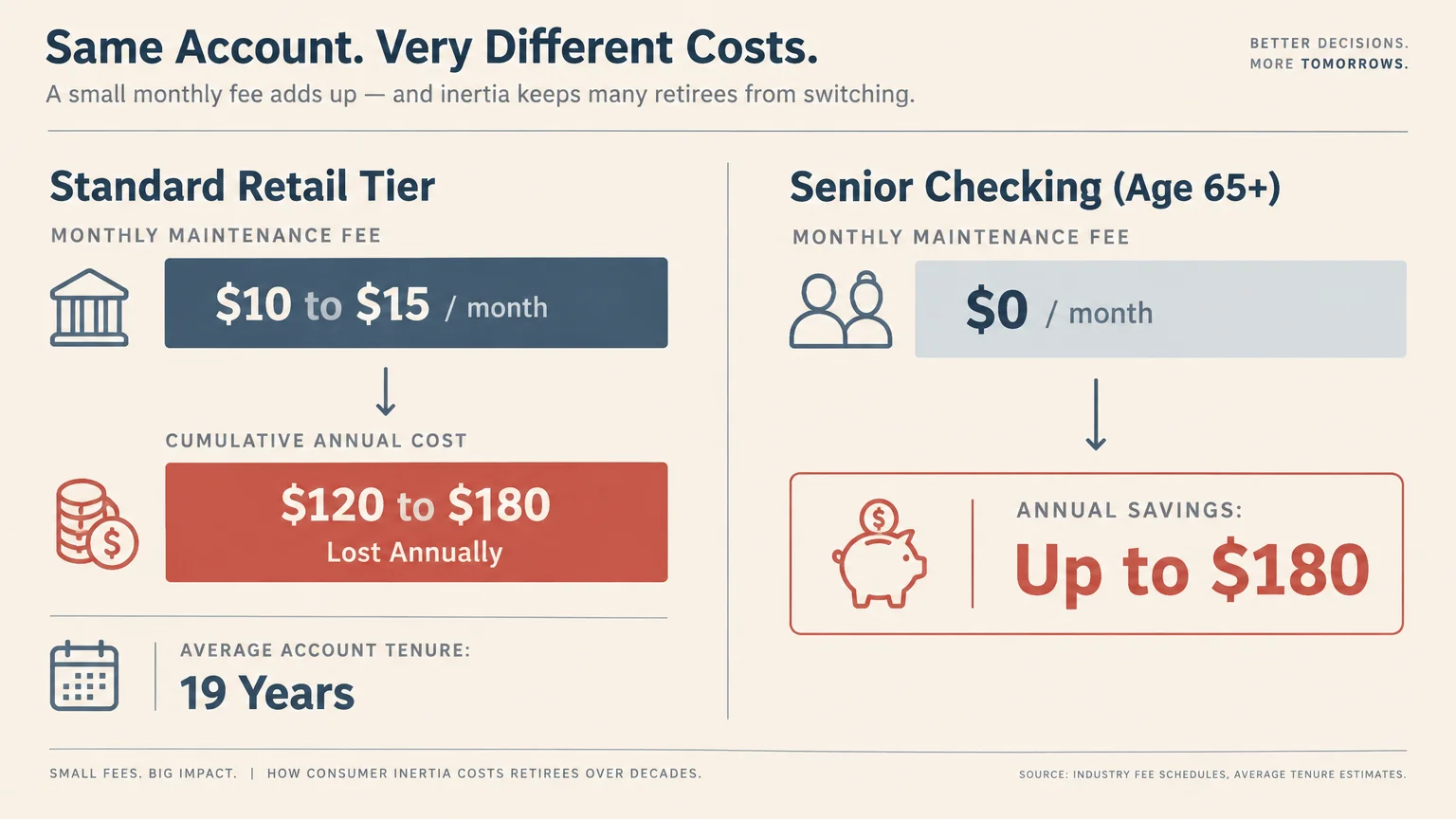
Standard retail checking accounts quietly siphon money from retirees through recurring maintenance fees. Major banks routinely charge between $10 and $15 each month just to keep an account active.
Over a full calendar year, those administrative deductions quietly cost you between $120 and $180. That is money that belongs in your travel budget or retirement portfolio.
Fortunately, several major institutions offer complete fee waivers based solely on your age. For example, the U.S. Bank Bank Smartly® Checking account automatically waives its $12 monthly maintenance fee for customers aged 65 and older.
Securing genuine free checking for seniors protects your cash reserves from steady erosion. You do not need to maintain massive minimum balances to eliminate these recurring deductions.
Yet millions of older depositors continue to pay these monthly costs year after year. A major reason for this problem is consumer account inertia.
According to Bankrate consumer banking data, Americans hold on to their checking accounts for an average of 19 years. Because people stay put, their original account structures often remain frozen in time.
Retail banks rarely upgrade your profile status automatically when you celebrate your sixty-fifth birthday. Instead, their automated systems continue billing you under whatever retail tier you selected decades ago.
You can easily fix this oversight by reviewing your current terms. Requesting a transition into qualified senior bank accounts stops those monthly charges permanently.
Call your branch representative today and ask them to confirm your date of birth. That single inquiry can keep nearly two hundred dollars in your pocket every single year.

Tip #2: Complimentary Paper Statement Delivery
Digital banking tools provide remarkable speed, but many retirees still prefer physical paper statements. Physical records offer clear documentation for tracking expenses and monitoring fraud without staring at screens.
Unfortunately, financial institutions have turned paper mailings into a lucrative revenue stream. Most retail banks now charge between $2 and $5 every month to send physical account summaries.
Those monthly document fees quietly add up to between $24 and $60 each year. Paying a financial institution simply to read your own transaction history is an unnecessary burden.
Helpful banks quietly remove these mailing penalties for their older clients. Institutions like TD Bank waive standard paper statement fees on their designated 60+ account tiers.
Similarly, U.S. Bank eliminates statement charges for customers aged 65 and older. This policy ensures you can track your hard-earned funds using traditional mail without incurring penalties.
Paper statements also simplify household tax preparation and estate planning. They provide a tangible, organized trail that your accountant or loved ones can easily reference during tax season.
Do not accept automatic billing for physical statements as an unchangeable policy. These waivers represent essential bank benefits for seniors who appreciate tangible documentation.
Reach out to customer service to verify your current document delivery preferences. Ensuring your age waiver is active keeps your physical financial records arriving completely free of charge.

Tip #3: Substantial Discounts on Safe Deposit Boxes
Safeguarding physical assets remains an essential component of a secure retirement. Traditional vault storage protects family heirlooms, physical property deeds, passports, and precious jewelry from house fires or theft.
Renting a secure safe deposit box typically costs between $30 and $150 or more each year. Box pricing increases rapidly depending on the physical dimensions you require for your valuables.
Thankfully, mature customers can leverage substantial banking discounts for seniors to lower those annual leasing costs. Many retail institutions quietly offer safe deposit box discounts ranging from 10% to 50% off.
For instance, U.S. Bank grants an impressive 50% discount on annual safe deposit box rental fees for account holders aged 65 and older. That benefit cuts your storage bill in half every year.
Similarly, Regions Bank provides discounts between 30% and 50% on box rentals through its 62+ LifeGreen account tiers. These savings make maintaining secure off-site vault storage remarkably economical.
Safe deposit boxes provide vital peace of mind when organizing critical legacy records. Storing your original legal documents in a protected vault shields your family from unexpected complications.
Most branches do not advertise these vault discounts on their lobby posters or marketing brochures. You must speak directly with a branch officer to apply the discount to your box lease.
Bring your identification to your local branch during your next visit. Upgrading your vault rental agreement ensures your family treasures stay protected for a fraction of the standard price.
Tip #4: Free Personal Checks and Official Cashier’s Checks
Even in our digital era, paper checks remain an indispensable tool for older adults. They offer a reliable way to pay home contractors, settle property taxes, and send gifts to grandchildren.
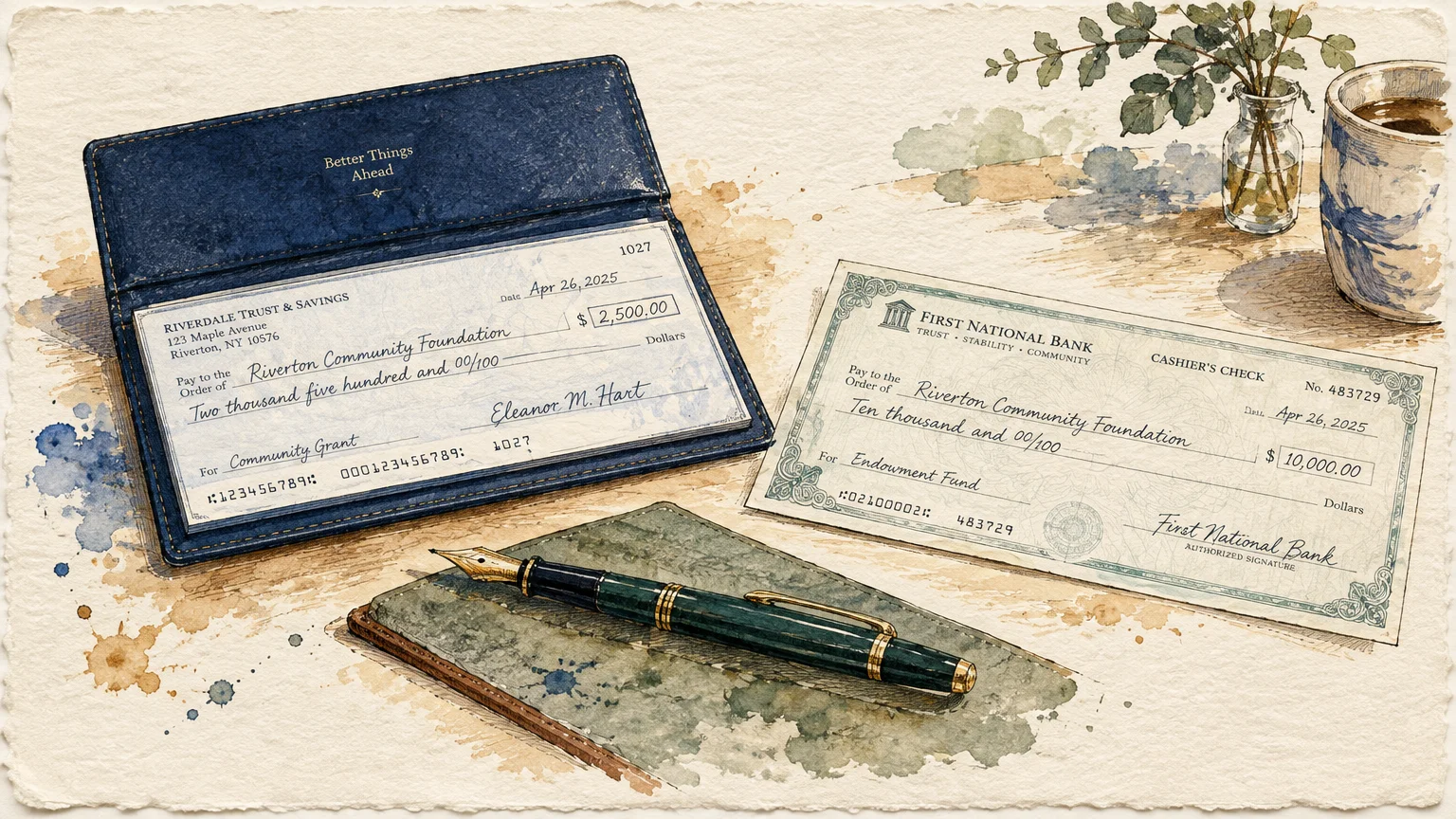
Yet ordering a single box of basic personal checks often costs between $15 and $35. Furthermore, cashier’s checks and official money orders routinely cost between $5 and $15 per document.
These routine transaction fees can quickly accumulate if you handle real estate closings, estate distributions, or vehicle purchases. Fortunately, select senior bank accounts provide these payment instruments at no cost.
Accounts such as TD 60 Plus Checking provide complimentary standard personal checks directly to qualifying depositors. They also waive fees on official bank drafts and cashier’s checks.
Online institutions have embraced this generous approach as well. Axos Bank Golden Checking, designed for clients aged 55 and older, offers free personal checks alongside official fee waivers.
Using official cashier’s checks provides superior payment verification for major household transactions. Having these drafts provided free of charge saves you considerable money on administrative overhead.
Review your checkbook supply before ordering your next box through third-party printers. Switching your checking account tier allows you to receive high-quality checkbooks without spending a dime.
Ask your banker whether your existing account tier includes complimentary check supplies. You might already qualify for free boxes without realizing that the privilege exists.
Tip #5: Domestic Out-of-Network ATM Fee Reimbursements
Retirement gives you the freedom to explore scenic towns, visit family, and take spontaneous road trips. However, accessing quick cash while traveling can become remarkably expensive if you leave your bank’s branch network.
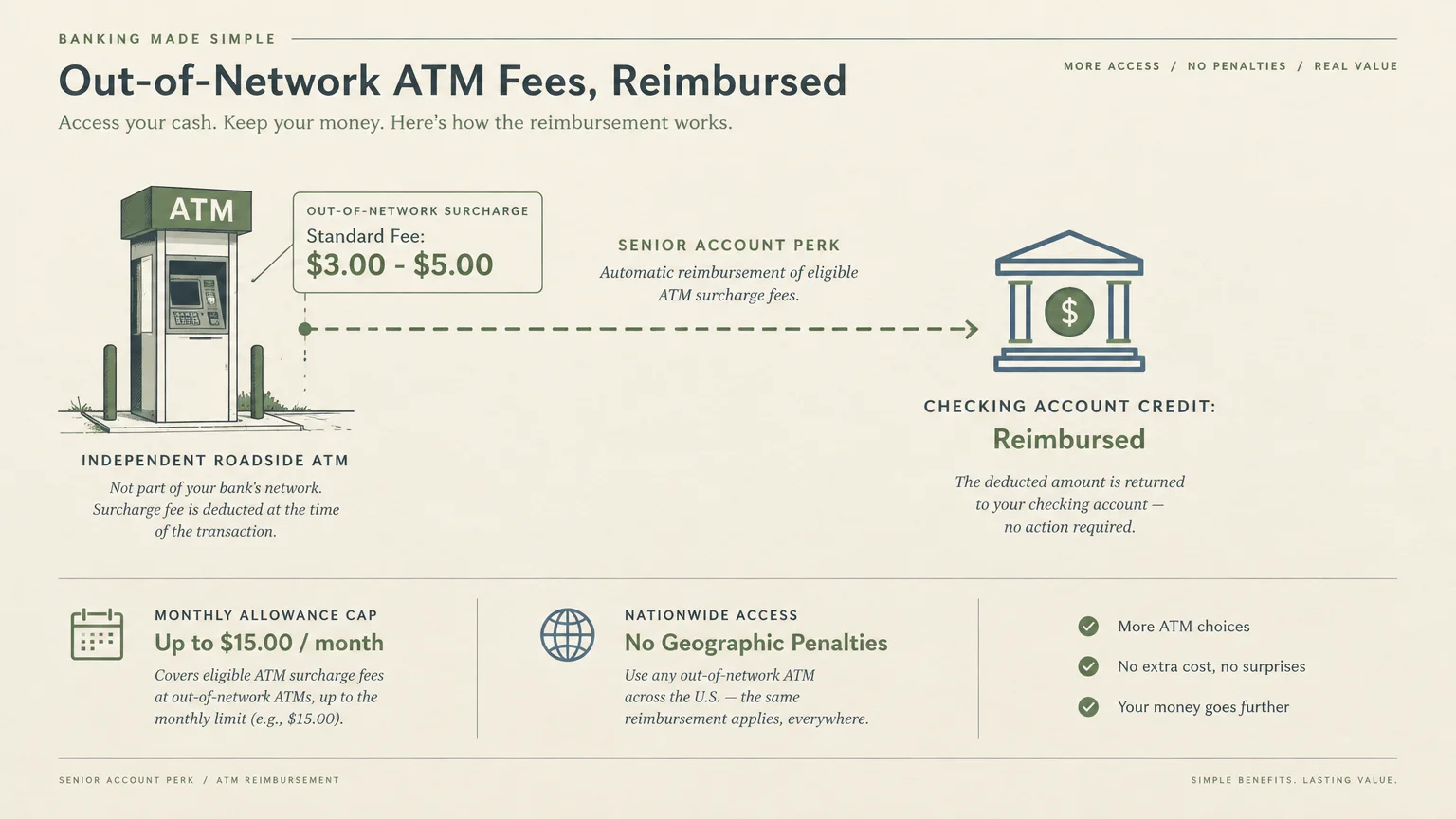
The average total fee for using an out-of-network automated teller machine now regularly exceeds $4.50 per withdrawal. That total combines your home bank’s penalty with the independent machine owner’s surcharge.
Incurring that fee multiple times during a weekend getaway quickly bites into your vacation budget. Fortunately, forward-thinking institutions provide ATM fee refunds as part of their senior banking perks.
For example, the Axos Bank Golden Checking account provides up to $8 each month in domestic out-of-network ATM reimbursements. This allowance reimburses the surcharges other operators charge you.
This practical flexibility means you never have to waste fuel searching for a specific brand-name terminal. You can withdraw cash at neighborhood convenience stores, regional airports, or community markets with total confidence.
The reimbursement credits deposit directly into your ledger at the close of every monthly statement cycle. It eliminates the frustration of checking ATM locators while enjoying your well-deserved travels.
When comparing account options, always prioritize institutions that minimize cash access fees. These savings provide genuine freedom and convenience wherever your retirement adventures take you.
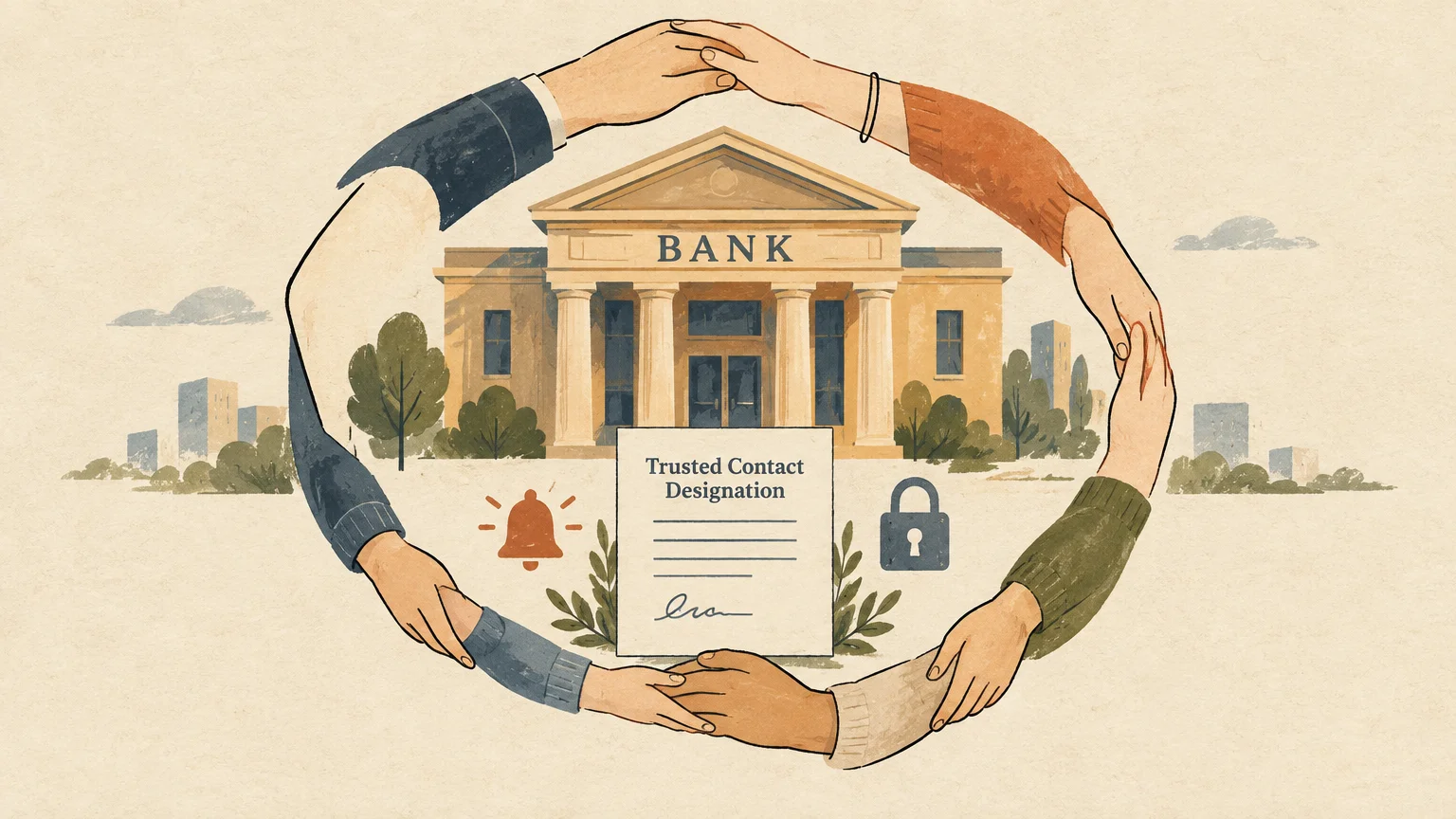
Tip #6: Designated Trusted Contact Rules and Fraud Shields
Safeguarding your retirement savings from increasingly sophisticated financial scams is paramount for long-term security. Criminals aggressively target older adults through imposter calls, fraudulent investment opportunities, and deceptive emails.
Federal data highlights the staggering scale of this modern challenge. Financial institutions file over 150,000 Suspicious Activity Reports involving suspected elder financial exploitation each year, representing tens of billions in losses.
To combat this threat, lawmakers passed the federal Senior Safe Act of 2018. This legislation shields trained bank staff from liability when they report suspected financial exploitation to adult protective services.
Beyond government reporting, banks quietly offer an invaluable security tool known as a “Trusted Contact.” You can formally list a reliable family member, attorney, or trusted friend on your account.
A designated trusted contact cannot see your balance, withdraw money, or execute transactions. Their status grants them zero ownership or management authority over your private financial assets.
Instead, your bank contacts this person only if fraud investigators detect alarming activity on your account. For example, sudden large wire transfers or unexpected overseas withdrawals will trigger immediate inquiry.
This feature allows your bank to pause suspicious transactions without revoking your financial independence. It creates a powerful safety buffer that shields your nest egg from predatory actors.
Setting up a trusted contact takes only a few minutes during a routine branch visit. It provides tremendous reassurance for both you and the loved ones who care about you.
Take advantage of these advanced security measures to preserve your hard-earned wealth. Partnering with your bank creates an impenetrable wall between your retirement funds and opportunistic fraudsters.

Tip #7: Dedicated Priority Customer Service and Fee Forgiveness
Nothing ruins a peaceful morning faster than getting trapped inside a convoluted telephone answering tree. Modern automated phone systems often make reaching a live representative feel like an impossible task.
To address this frustration, several banks quietly provide dedicated priority telephone lines for senior depositors. These private channels connect you directly to seasoned, empathetic representatives without endless menu selections.
These specialists possess the training needed to resolve intricate account questions, clarify statement details, and assist with online navigation. They deliver patient, dignified service tailored to your exact communication preferences.
Furthermore, branch managers frequently extend quiet fee forgiveness courtesies to long-standing mature clients. If an accidental overdraft occurs or a transfer fee posts unexpectedly, managers readily reverse those charges upon request.
Your decades of responsible patronage carry enormous weight with local branch leadership. Banks understand the tremendous value of loyal depositors and empower managers to protect those vital relationships.
Some institutions even offer priority teller lines inside physical branches during peak banking hours. This convenience minimizes waiting on your feet when handling routine deposits or withdrawals.
Never hesitate to advocate for yourself and mention your long-standing loyalty to the branch. Asking for personalized service ensures you receive the attentive respect and care you have earned over decades.

The Takeaway: Living a More Blissful Retirement
Your golden years should focus on pursuing passions, spending time with family, and enjoying complete financial tranquility. Paying unadvertised administrative fees for everyday checking services contradicts that joyful mission.
Banks quietly offer these powerful perks because they value your stability and lifetime loyalty. However, overcoming account inertia requires you to take proactive ownership of your banking relationship.
Review your recent bank statements to verify whether recurring fees are chipping away at your money. A single conversation with your branch manager can instantly unlock substantial bank benefits for seniors.
Eliminating maintenance fees, securing free checks, and discounting safe deposit boxes creates meaningful cumulative savings. Those preserved dollars can fund delightful dinners, family outings, and memorable travel experiences.
Take charge of your financial setup today by demanding the accounts and protections you deserve. Embracing these quiet advantages empowers you to live a more secure and blissful retirement.
Frequently Asked Questions
Do banks automatically upgrade my account when I turn 65?
Most financial institutions do not automatically modify your account tier when you turn 65. Because of account inertia, your profile usually remains under the exact terms you signed years ago.
To unlock senior discounts and fee waivers, contact your bank and request an account review. The representative will gladly update your profile to an eligible senior tier.
Does naming a Trusted Contact give someone access to my money?
No, a trusted contact receives absolutely no access to your balances or transaction capabilities. They cannot withdraw funds, view statements, or make decisions regarding your money.
The bank contacts them solely if fraud analysts detect alarming signs of financial exploitation or cognitive impairment. This protocol protects your assets while preserving your complete personal independence.
What documentation do I need to present to receive senior bank discounts?
Unlocking age-based privileges usually requires verifying your date of birth with government-issued identification. A standard driver’s license, state ID card, or passport is sufficient.
You can present this identification at your local branch or verify your details through secure phone banking. Once verified, the fee waivers apply to your account moving forward.
Are online banks safe for seniors seeking better perks?
Online institutions like Axos Bank are fully insured by the FDIC and offer robust cybersecurity protections. They often provide higher interest rates and lower fees than traditional competitors.
If you feel comfortable navigating mobile apps and websites, online accounts offer exceptional convenience. However, choose a traditional brick-and-mortar bank if you prefer in-person teller interactions.
For a wide range of resources for older adults, visit AARP and the National Council on Aging (NCOA). Health information is available from the National Institute on Aging.
Disclaimer: This article is for informational and inspirational purposes only. It is not a substitute for professional medical, financial, or psychological advice. Please consult with a qualified expert for guidance tailored to your individual needs.