

Oprah Winfrey qualifies for a maximum Social Security benefit of $5,181 per month in 2026. Understanding how she reached that figure gives you clear blueprints to boost your own monthly retirement check.
Although she commands a multibillion-dollar fortune, federal law entitles her to collect benefits based on decades of career earnings. Her financial journey reveals crucial lessons about work credits and claiming milestones.
You can use these same federal retirement rules to make informed decisions for your golden years. Knowing how the formula works puts you firmly in control of your financial future.

Tip #1: Discover How Oprah Qualifies for the Maximum Social Security Benefit
Have you ever wondered about how much Social Security Oprah gets each month? As a media pioneer born on January 29, 1954, Oprah Winfrey reached age 72 in 2026.
Her financial standing remains historic; Forbes estimates her net worth at $3.4 billion, while Celebrity Net Worth reports $5 billion. Despite that immense wealth, federal regulations treat her like any other eligible American worker.
The program calculates monthly benefits by examining your 35 highest-earning career years. If you work fewer than 35 years, the government fills the empty years with zeros, which drags down your monthly average.
From 1986 to 2011, The Oprah Winfrey Show dominated television syndication and shattered industry revenue records. Oprah earned well above the taxable earnings cap for decades, easily replacing any early low-earning years.
Because she maxed out her contributions across her entire career, she qualified for the highest possible tier. In 2026, the maximum Social Security benefit reaches $5,181 per month for someone claiming at age 70.
That monthly check totals $62,172 across an entire year of retirement payments. In 2027, that top-tier monthly payment increases to $5,358 per month, or $64,296 annually.
You can use this core principle to enhance your own golden years. Working even a year or two longer at a higher salary can replace an earlier low-earning year from your twenties.
Every zero you remove from your 35-year earnings record permanently lifts your primary insurance amount. Taking proactive steps today pays lifelong dividends for your personal retirement security.
Tip #2: Leverage Delayed Retirement Credits to Grow Your Payment
Your claiming age directly dictates the size of your monthly payment. Celebrity Social Security checks show just how dramatically delayed retirement credits boost long-term cash flow.
Because Oprah was born between 1943 and 1954, her Full Retirement Age was 66; she reached that milestone in January 2020. At that exact point, she faced a classic financial crossroad.
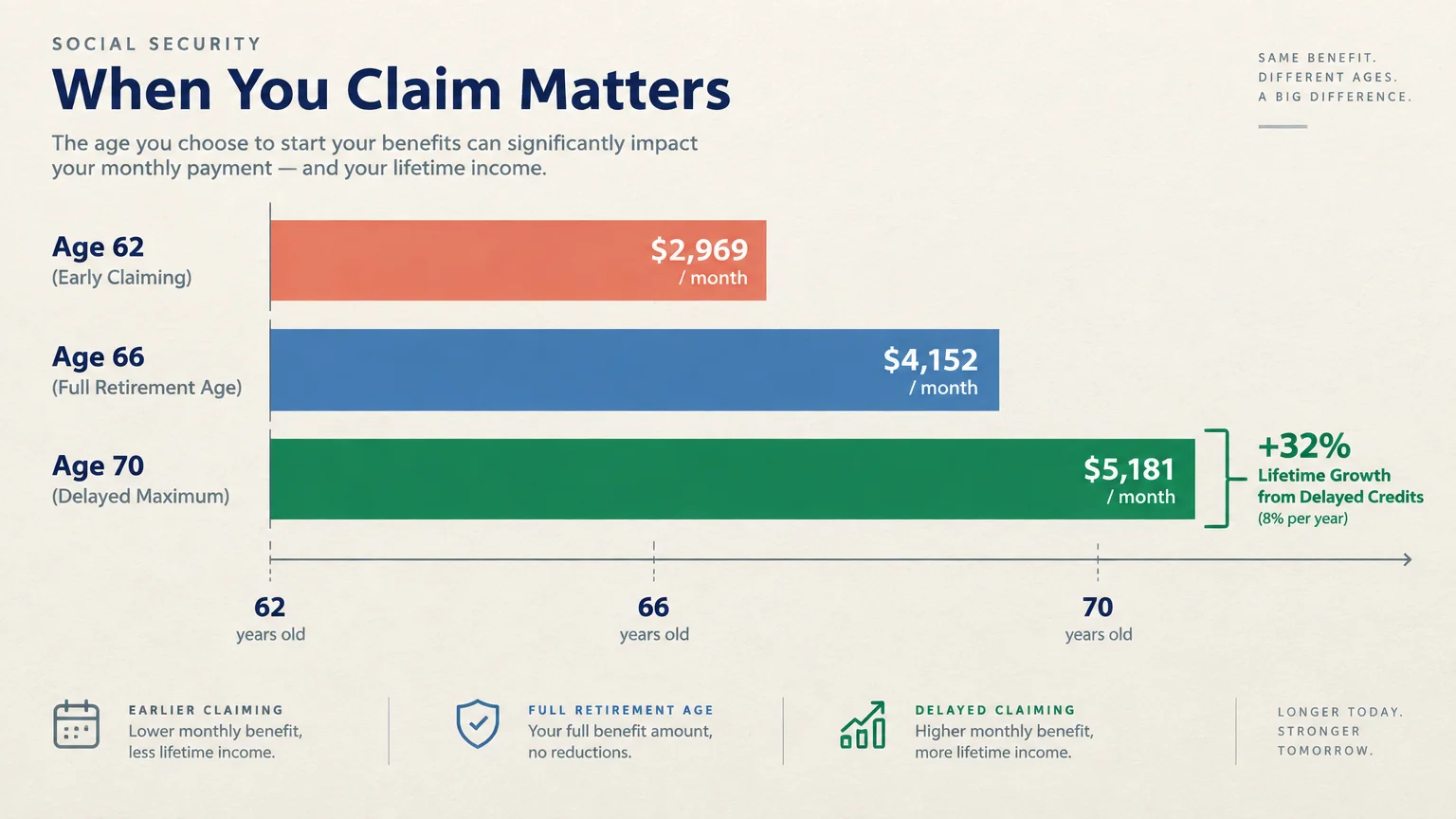
If she had claimed early at age 62, her 2026 maximum benefit would equal just $2,969 per month. Waiting until her Full Retirement Age of 66 would have yielded $4,152 per month in 2026.
That Full Retirement Age baseline increases slightly to $4,188 per month in 2027. Oprah, however, chose to let her benefit grow until age 70, which she reached in January 2024.
The government rewards patience with delayed retirement credits; you earn an 8% annual boost for each year you wait past Full Retirement Age. Those credits compound until you reach age 70, when all additional growth stops.
Delaying from age 66 to age 70 increased Oprah’s check by roughly 32% for life. That decision pushed her monthly benefit from $4,152 all the way up to $5,181 in 2026.
You can apply this exact strategy to your personal retirement roadmap. If you possess outside savings or continue working, delaying your claim provides an unmatched guaranteed rate of return.
Private annuities rarely offer the same inflation-protected growth that delayed credits deliver. Evaluating your family health history and lifestyle needs helps you determine your optimal claiming date.
Tip #3: Understand the Taxable Wage Base Cap and High Earnings
Many people assume that Social Security for the wealthy functions like an open-ended investment account. In reality, strict statutory caps limit both contributions and final benefit checks.
Social Security relies on a defined payroll tax structure rather than unlimited wealth accumulation. Employees pay a 6.2% tax on their wages, matched by another 6.2% from their employer.
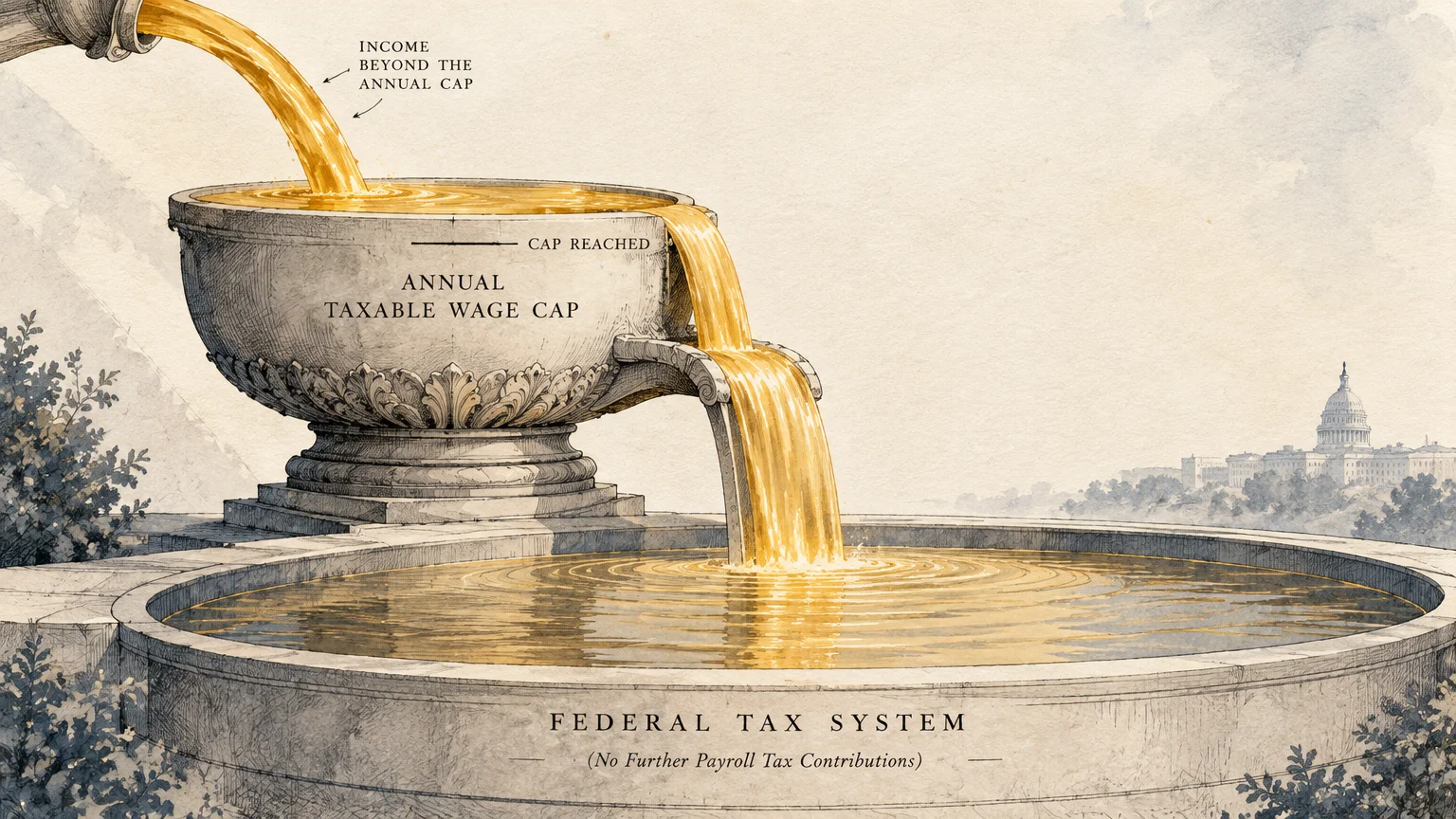
High earners do not pay this tax on every dollar they generate; Congress established an annual wage base cap. In 2026, the taxable wage base cap stands at $184,500, resulting in a maximum employee tax contribution of $11,439.
In 2027, the cap rises to $192,300, which sets the maximum employee tax payment at $11,922.60. For an earner making hundreds of millions annually, their Social Security tax obligations finish within the first week of January.
Because high earners stop paying into the system once they hit that cap, their eventual checks stop growing too. The system does not reward billionaires with oversized checks that reflect their true wealth.
This cap protects the integrity of the social safety net while ensuring benefits stay tied to actual tax contributions. Oprah receives the exact same maximum check as a corporate manager or physician who earned up to the cap.
Recognizing this ceiling allows you to assess the system with complete clarity. You do not need to build a billion-dollar empire to secure the highest possible government retirement check.
Consistently hitting the wage cap over your career guarantees you the very same top benefit that entertainment legends receive. Focus on maximizing your current career earnings to move closer to that federal maximum.

Tip #4: Work Past Full Retirement Age Without Penalties
Do you plan to consult, manage a small business, or pursue a passion project during retirement? Many older adults worry that continuing to earn income will reduce their monthly benefit checks.
The retirement earnings test can indeed claw back benefits, but only if you claim early before your Full Retirement Age. In 2026, workers below Full Retirement Age face an earnings limit of $24,480.
In 2027, that pre-retirement age earnings threshold climbs to $25,560. If you earn income above those limits prior to Full Retirement Age, the government withholds a portion of your benefits.
Once you reach your Full Retirement Age, that penalty disappears completely. Because Oprah reached Full Retirement Age at 66 in 2020, she can generate hundreds of millions without losing a single dollar.
At age 72, she remains fully exempt from all earnings tests and clawback provisions. You enjoy that identical legal freedom the moment you cross your personal Full Retirement Age.
You can run a company, publish books, or take on freelance assignments without jeopardizing your monthly check. Any new income you generate simply enhances your retirement lifestyle and builds financial flexibility.
Staying active in the workforce also supports cognitive health, fosters community, and gives structure to your week. You can pursue the professional projects you love while collecting the full benefits you earned.
Plan your post-career pursuits with confidence knowing that your hard work will not trigger a benefit reduction. Full Retirement Age offers total liberation for your ongoing entrepreneurial ambitions.
Tip #5: Plan Ahead for Federal Taxes on Retirement Checks
Collecting a substantial retirement check sounds wonderful, but taxes can quickly erode your take-home cash. The Oprah Social Security equation illustrates the heavy tax exposure high earners face.
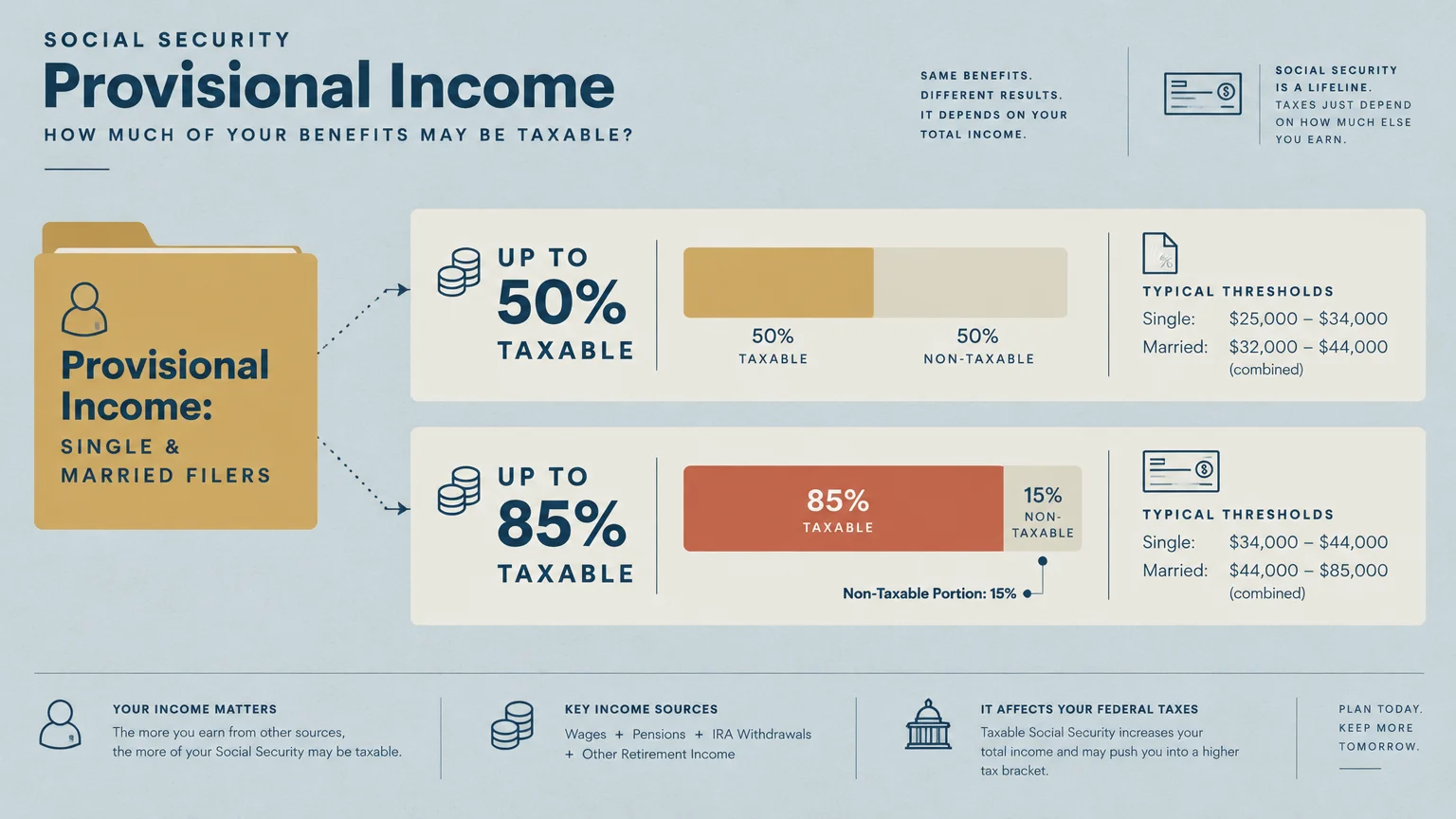
The Internal Revenue Service calculates your tax liability using a metric known as combined income. Combined income equals your adjusted gross income, plus nontaxable interest, plus half of your annual Social Security benefits.
If your combined income exceeds $34,000 as an individual filer, up to 85% of your benefits become taxable. For married couples filing jointly, that 85% threshold kicks in at combined income above $44,000.
Because Oprah generates massive ongoing income from investments and production deals, her benefits face the maximum 85% tax rate. Her checks are taxed at the top federal individual income tax rate of 37%.
While Oprah absorbs that top bracket easily, moderate earners must navigate these thresholds carefully. A sudden distribution from a traditional 401(k) or IRA can push your combined income into the taxable zone.
You can manage this tax bite by diversifying your income streams before you begin claiming checks. Roth IRA distributions, for example, do not count toward your combined income calculation.
Strategically timing your retirement account withdrawals keeps your taxable income below crucial thresholds. Working with a fee-only financial planner helps you design a tax-efficient withdrawal sequence.
Protecting your retirement income from unnecessary taxation gives you more resources to enjoy travel, hobbies, and family gatherings. Smart tax planning ensures you keep more of every dollar you earned.

Tip #6: Watch Cost-of-Living Adjustments Keep Pace With Inflation
Inflation poses a persistent threat to fixed-income retirees, but Social Security provides a vital hedge. Automatic Cost-of-Living Adjustments, or COLA, guarantee that your checks adjust as consumer prices rise.
In 2026, Social Security recipients received a 2.8% COLA increase across all benefit tiers. That steady adjustment helped millions of seniors maintain their household budgets amid fluctuating living costs.
On October 14, 2026, the Social Security Administration announced an even stronger 3.6% COLA for 2027. This 3.6% boost takes effect with the January 2027 payment cycle.
These annual increases produce meaningful, measurable dollar gains for everyday retirees. The average retiree check of $2,095 per month in 2026 rises by $75 to reach $2,170 per month in January 2027.
For maximum earners like Oprah, that 3.6% COLA creates an even larger absolute dollar bump. Her maximum payment climbs from $5,181 per month in 2026 up to $5,358 per month in 2027.
That adjustment represents an extra $177 in monthly income, translating to $2,124 in additional cash across 2027. Because COLA compounds year after year, your monthly purchasing power stays durable over decades.
Very few private pensions or annuities offer guaranteed, compound inflation adjustments. Knowing that your base benefit automatically resets upward brings wonderful peace of mind to your retirement budget.
Monitor the annual October COLA announcements so you can update your financial plans for the coming year. Tracking these adjustments ensures your household spending remains aligned with economic shifts.

Tip #7: Apply Celebrity Social Security Lessons to Your Golden Years
Examining celebrity benefits is entertaining, but applying those insights transforms your personal future. Oprah’s numbers demonstrate that retirement security stems from discipline, patience, and knowledge.
Start by creating or logging into your personal account on the official Social Security website. Your personal statement details your complete earnings history dating back to your very first job.
Review every single year listed on your statement to confirm that your reported earnings match your tax records. Employers occasionally make reporting mistakes; catching errors early ensures your 35-year average stays accurate.
Next, evaluate how your claiming timeline coordinates with your spouse if you are married. High-earning spouses can delay their claims to age 70 to lock in the largest possible survivor benefit.
If one partner passes away, the surviving spouse inherits the higher monthly check for the rest of their life. Coordinating your filing dates provides unmatched financial security for the person you love.
Remember that true wealth extends far beyond monthly government disbursements. Cultivating good physical health, enriching relationships, and purposeful daily activities creates a truly blissful retirement.
Social Security checks simply supply the predictable financial baseline that lets you live life on your terms. Use that steady foundation to explore new passions, give back to your community, and cherish your family.
You earned every credit through decades of dedicated effort and perseverance. Step into your retirement years with pride, clarity, and complete confidence in your financial plan.

The Takeaway: Living a More Blissful Retirement
Oprah Winfrey’s estimated $5,181 monthly check proves that federal retirement rules apply equally to everyone. Her eligibility highlights the power of 35 high-earning years and the incredible value of waiting until age 70.
While you might not command a billion-dollar media empire, you control the critical variables in your own retirement equation. You can optimize your claiming age, monitor your earnings record, and manage your tax brackets.
Retirement represents an exhilarating new chapter filled with possibilities for growth, connection, and joy. Take time to celebrate the milestones you achieved throughout your working life.
By making informed financial choices today, you protect your independence and create room for lasting bliss. Embrace your golden years with enthusiasm, knowing you hold the tools to build a secure tomorrow.
Frequently Asked Questions
Does Oprah Winfrey actually cash her Social Security checks?
Oprah has never publicly disclosed whether she filed for or currently cashes her monthly Social Security checks. The Social Security Administration cannot legally release individual benefit records due to strict federal privacy laws.
However, she earned every legal right to collect benefits by paying payroll taxes throughout her career. Many wealthy Americans choose to collect their earned checks and donate the funds directly to charitable foundations.
Can a billionaire receive Social Security if they never stop working?
Yes, any billionaire can receive full Social Security checks while working, provided they have reached Full Retirement Age. The program requires 40 work credits, which equates to roughly 10 years of covered employment.
Because the earnings test ends at Full Retirement Age, outside income no longer reduces benefit checks. Active billionaires over age 66 or 67 collect their complete checks regardless of their annual salary.
What is the maximum Social Security benefit possible in 2026 and 2027?
In 2026, the maximum benefit is $2,969 at age 62, $4,152 at Full Retirement Age, and $5,181 at age 70. These maximum figures require a worker to earn at or above the taxable wage base cap for 35 years.
In 2027, the maximum Full Retirement Age benefit rises to $4,188 per month. For those who delay claiming until age 70, the 2027 maximum payout expands to $5,358 per month.
Why isn’t Social Security means-tested for wealthy Americans?
Social Security operates as a social insurance program funded by dedicated payroll taxes rather than a welfare benefit. Workers earn their future protection by contributing a portion of their wages throughout their working lives.
Means-testing would fundamentally alter the character of the program from an earned benefit into public assistance. Capping the maximum benefit check prevents high earners from draining disproportionate resources from the trust funds.
For a wide range of resources for older adults, visit AARP and the National Council on Aging (NCOA). Health information is available from the National Institute on Aging.
Disclaimer: This article is for informational and inspirational purposes only. It is not a substitute for professional medical, financial, or psychological advice. Please consult with a qualified expert for guidance tailored to your individual needs.