
Tip #6: Designated Trusted Contact Rules and Fraud Shields
Safeguarding your retirement savings from increasingly sophisticated financial scams is paramount for long-term security. Criminals aggressively target older adults through imposter calls, fraudulent investment opportunities, and deceptive emails.
Federal data highlights the staggering scale of this modern challenge. Financial institutions file over 150,000 Suspicious Activity Reports involving suspected elder financial exploitation each year, representing tens of billions in losses.
To combat this threat, lawmakers passed the federal Senior Safe Act of 2018. This legislation shields trained bank staff from liability when they report suspected financial exploitation to adult protective services.
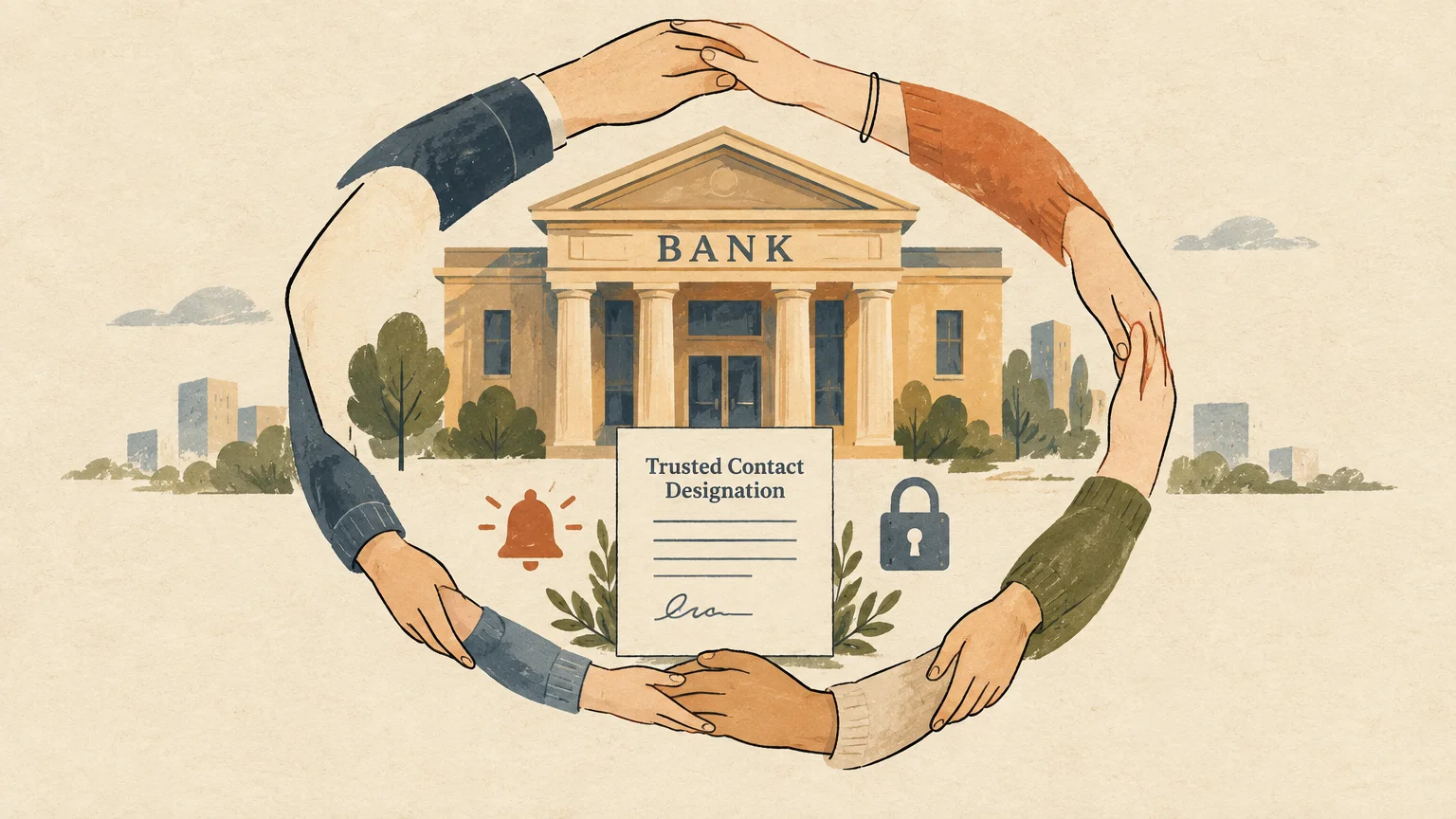
Beyond government reporting, banks quietly offer an invaluable security tool known as a “Trusted Contact.” You can formally list a reliable family member, attorney, or trusted friend on your account.
A designated trusted contact cannot see your balance, withdraw money, or execute transactions. Their status grants them zero ownership or management authority over your private financial assets.
Instead, your bank contacts this person only if fraud investigators detect alarming activity on your account. For example, sudden large wire transfers or unexpected overseas withdrawals will trigger immediate inquiry.
This feature allows your bank to pause suspicious transactions without revoking your financial independence. It creates a powerful safety buffer that shields your nest egg from predatory actors.
Setting up a trusted contact takes only a few minutes during a routine branch visit. It provides tremendous reassurance for both you and the loved ones who care about you.
Take advantage of these advanced security measures to preserve your hard-earned wealth. Partnering with your bank creates an impenetrable wall between your retirement funds and opportunistic fraudsters.