

Reviewing your estate plan gives you total command over your financial destiny and protects the people you cherish most. Taking action this year ensures your hard-earned assets flow smoothly to your loved ones without costly court delays.
Recent legal shifts and economic updates make proactive planning more rewarding than ever. A quick refresh aligns your paperwork with your current lifestyle and family priorities.
Updating a will in retirement brings lasting peace of mind, freeing you to savor every moment of your golden years.
Tip #1: Preparing for the 2025 Tax Cuts and Jobs Act Sunset
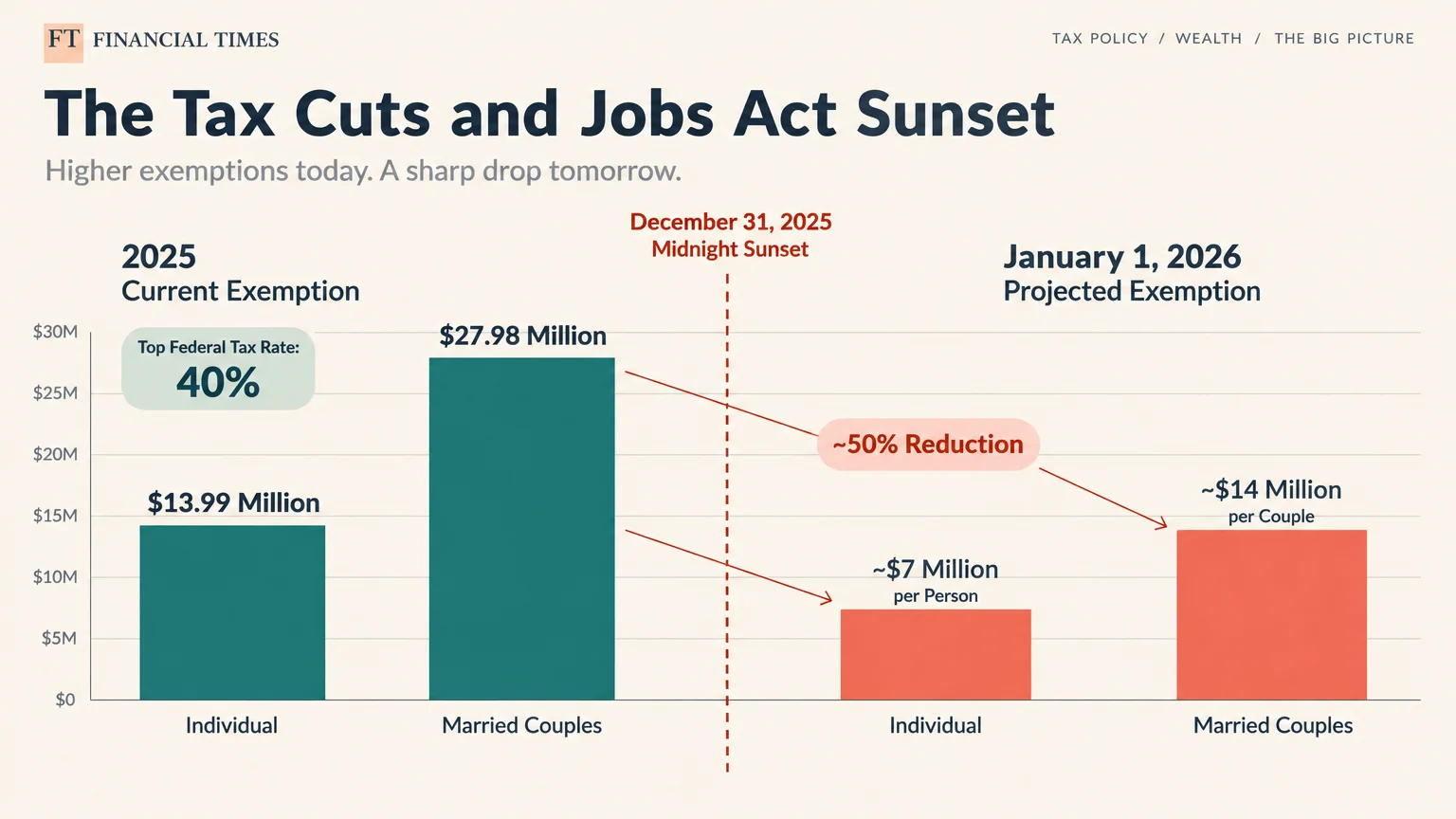
Major federal tax rules will change dramatically at midnight on December 31, 2025. Congress designed the 2017 Tax Cuts and Jobs Act provisions to expire automatically unless lawmakers pass new legislation.
For 2025, the federal estate tax exemption stands at a generous $13.99 million for individuals and $27.98 million for married couples. Any estate exceeding those limits faces a top federal tax rate of 40%.
On January 1, 2026, the basic exclusion will drop by roughly 50% to approximately $7 million per person. Savvy retirees are assessing their balance sheets right now to shield family wealth from this impending reduction.
Reviewing your documents early allows you to lock in favorable lifetime gift options. Consulting an estate attorney today prevents hurried decisions before the sunset deadline arrives.
Taking charge of these changes ensures that more of your legacy enriches your family rather than the government.
Tip #2: Navigating the Final IRS Inherited IRA Distribution Rules
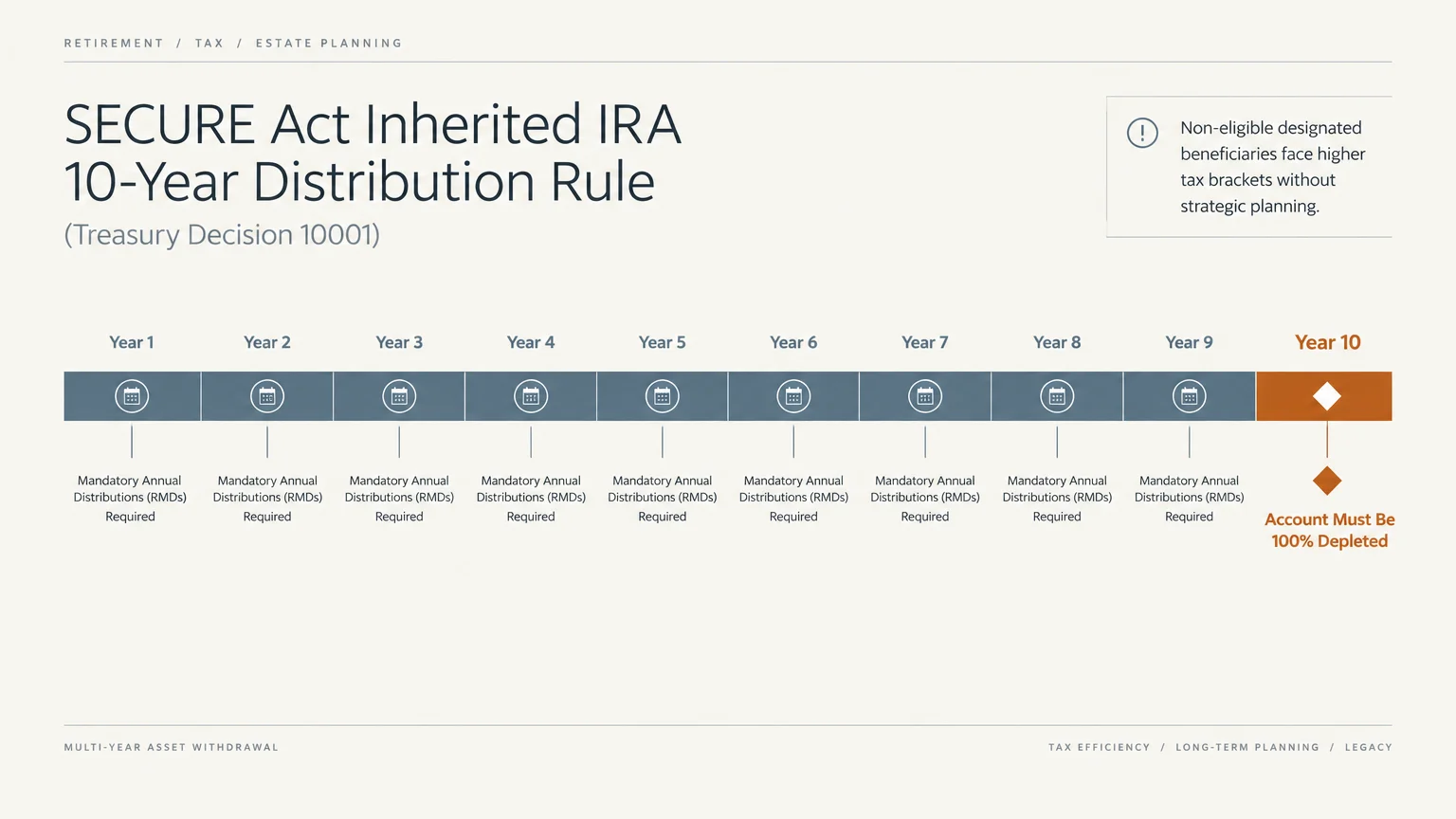
The IRS issued Treasury Decision 10001 in July 2024, finalizing strict distribution requirements under the SECURE Act. These rules create critical reasons to review your will alongside your primary retirement accounts.
Beginning in 2025, most non-eligible designated beneficiaries who inherit traditional IRAs must take annual distributions. If the original account owner had already reached their mandatory distribution age, heirs must withdraw funds during years one through nine.
The entire remaining balance must be fully emptied by the end of the tenth year. This rapid distribution schedule can push your adult children into their highest lifetime tax brackets.
Many retirees are revising their instructions to distribute assets across lower-income heirs or through specialized testamentary trusts. Smart planning protects your beneficiaries from sudden, burdensome tax surprises.
You can establish a balanced distribution strategy that preserves your family wealth across multiple generations.
Tip #3: Harmonizing Beneficiary Designations with Your Will
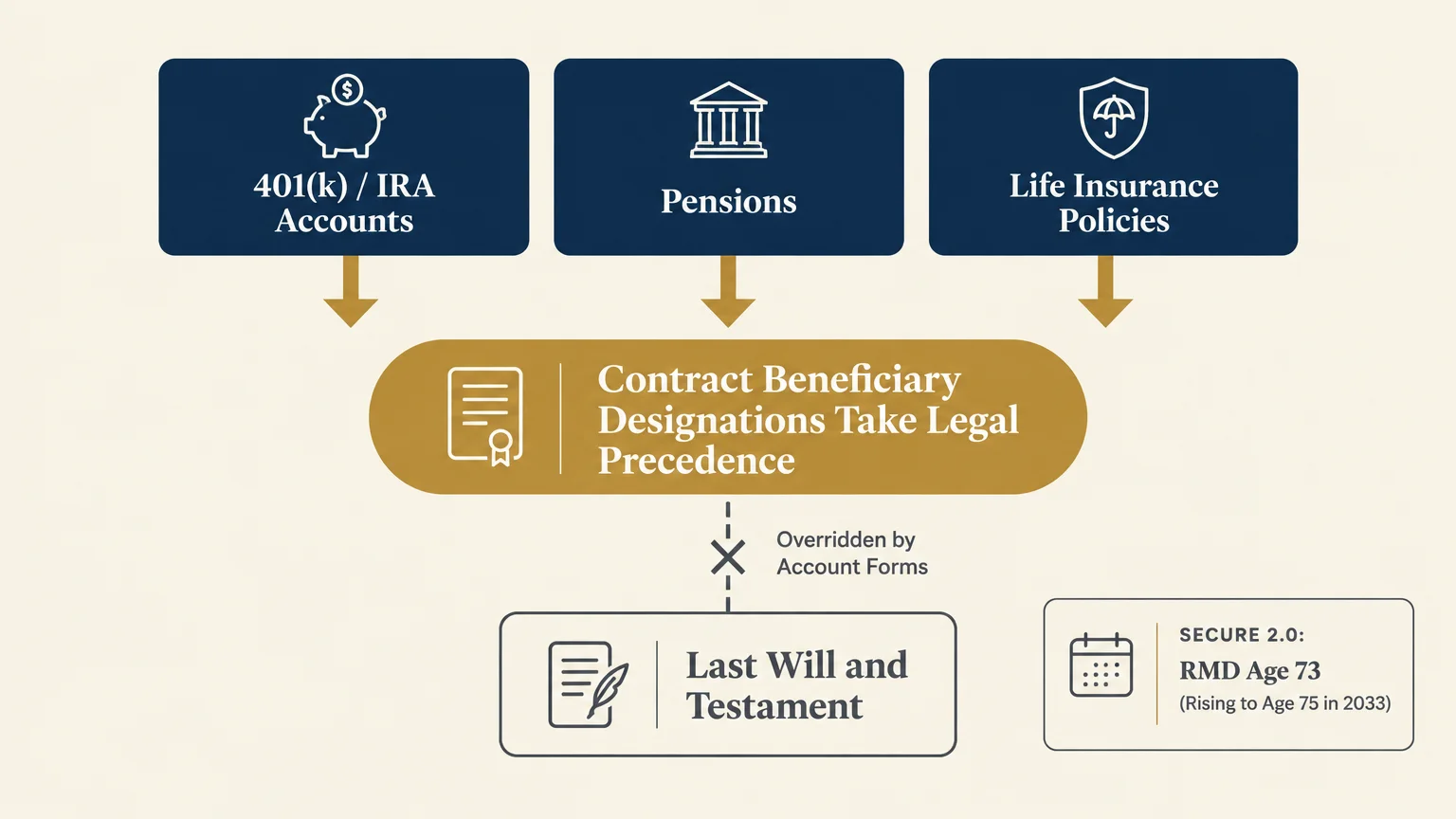
Many retirees assume that a last will and testament governs all of their financial property. In reality, beneficiary designations on retirement accounts, pensions, and life insurance policies legally override your will.
Under SECURE 2.0, the starting age for Required Minimum Distributions is currently age 73, rising to age 75 in 2033. These evolving rules make synchronized documentation essential for an effective estate plan.
Outdated beneficiary forms can unintentionally send substantial retirement assets to an ex-spouse or bypass beloved grandchildren entirely. Reconciling these contracts with your current intentions prevents heartbreaking legal disputes among surviving relatives.
Creating a unified will review checklist retirement strategy guarantees that your testamentary wishes and account forms match perfectly. You maintain absolute clarity and harmony across your entire financial landscape.
A quick annual audit of your primary and contingent beneficiaries safeguards your true testamentary intentions.

Tip #4: Accounting for Interstate Relocations and State Estate Taxes
Relocating to a sunnier climate or moving closer to family is one of the greatest joys of retirement. However, crossing state lines often subjects your estate to completely different probate codes and local tax systems.
While the federal exemption remains elevated, 12 states and the District of Columbia enforce independent state estate taxes. Several jurisdictions enforce thresholds as low as $1 million in Oregon or $2 million in Massachusetts.
Additionally, six states levy inheritance taxes directly on the recipients of your legacy, with Maryland enforcing both levies. A will drafted in your former home state may miss out on key local tax shelters.
Moving also impacts the validity of statutory health directives, powers of attorney, and marital property classifications. Updating your documents under the laws of your new domicile prevents painful administrative delays for your heirs.
Taking this step lets you fully embrace your new community with total legal security.

Tip #5: Maximizing New Annual Gifting Limits
Watching your family enjoy an inheritance while you are here to celebrate with them brings immense personal fulfillment. Updating your estate plan helps you coordinate lifetime gifting with your long-term testamentary roadmap.
For 2025, the IRS raised the annual gift tax exclusion to $19,000 per recipient, up from $18,000 in 2024. Married couples who elect gift-splitting can now transfer up to $38,000 per recipient without filing gift tax returns.
These strategic transfers reduce the overall taxable value of your estate while providing timely financial support for loved ones. You can fund down payments for your children or contribute directly to college savings plans.
Revising your will ensures that lifetime advancements are correctly factored into your ultimate asset distribution. Clear accounting prevents misunderstandings among siblings and preserves family harmony.
Thoughtful gifting allows you to witness the joyful impact of your generosity firsthand.

Tip #6: Protecting Your Legacy Against Rising Healthcare Costs
Maintaining your physical health is a key priority, but planning for potential medical challenges protects your financial independence. Long-term custodial care remains a significant expense that Medicare rarely covers.
Caring.com reports that only 32% of American adults maintain estate planning documents, leaving millions vulnerable to sudden medical crises. Proactive estate planning updates retirees undertake often integrate durable powers of attorney and health care proxies.
Pairing a comprehensive will with an advance directive ensures trusted advocates manage your medical choices and personal finances seamlessly. This coordination protects your assets from being depleted by disjointed administrative procedures or unexpected court conservatorships.
You can also specify guidelines for assisted living facilities or in-home care preferences within your broader plan. Defining these wishes relieves your children from making agonizing emotional decisions during stressful times.
A modern estate plan provides a secure safety net, supporting your well-being throughout every stage of aging.

Tip #7: Welcoming New Grandchildren and Blended Family Dynamics
Family structures evolve naturally over time as children marry, grandchildren arrive, and new relationships blossom. When family trees expand, knowing when to revise your will becomes an essential step in loving stewardship.
An outdated will may unintentionally disinherit newer grandchildren or fail to mention stepchildren who hold a cherished place in your heart. You can choose whether your estate distributes funds per stirpes or per capita among descending generations.
In blended families, thoughtful planning prevents friction between surviving spouses and biological children from earlier marriages. Establishing clear testamentary guidelines ensures that your current partner receives lifelong security while your children retain their rightful inheritance.
You can also establish special educational incentives or age-staged trust distributions for younger grandchildren. These provisions encourage wise financial stewardship while providing lasting resources for their future endeavors.
Clear family provisions foster warmth, unity, and gratitude across multiple generations.

Tip #8: Modernizing Digital Assets and Online Accounts
Life in the modern era involves dozens of digital platforms, from online investment portals to social media accounts. If your will was written a decade ago, it likely lacks legal authority covering your valuable digital footprint.
Most states have enacted the Revised Uniform Fiduciary Access to Digital Assets Act to govern digital property administration. Without explicit testamentary authorization, federal privacy laws prevent executors from accessing your digital photo archives, cryptocurrency, or email accounts.
Reviewing your estate plan allows you to grant specific digital access powers to your personal representative. You can safely organize an encrypted inventory of login credentials, subscription services, and online financial portals.
This modern step prevents lost funds, identity theft, and the permanent disappearance of treasured family photos stored in the cloud. Your executor can resolve administrative duties smoothly without hitting frustrating digital roadblocks.
Safeguarding your virtual life completes your overall protection strategy in our connected world.
Tip #9: Re-evaluating Your Chosen Executors and Trustees
The personal representative named in your original will may no longer be the best fit for the role today. Friends or siblings who were once eager to serve may now face health issues or live far away.
Administering an estate requires diligent organization, clear communication, and the energy to manage probate courts and financial institutions. Selecting an executor who has the time and capability is vital for smooth execution.
Many retirees choose to name an adult child or appoint a professional corporate trustee to oversee complex asset distributions. Professional fiduciaries provide impartial guidance, which helps eliminate potential emotional friction among grieving siblings.
You should always name secondary and tertiary contingent executors in case your primary fiduciary cannot serve. Confirming your choice ensures that someone you respect and trust explicitly stands at the helm.
Having capable leadership over your estate grants you profound serenity and confidence for the years ahead.

Tip #10: Incorporating Meaningful Philanthropic and Charitable Goals
Retirement offers a wonderful season to reflect on your core values and the lasting difference you want to create. Many seniors update their wills to dedicate specific resources to organizations that champion causes close to their hearts.
Designating a registered non-profit organization as a charitable beneficiary generates substantial tax efficiencies for your estate. You can leave a fixed dollar amount, a designated percentage of your residuary estate, or specific real property.
Furthermore, retirees aged 70½ or older can coordinate Qualified Charitable Distributions from their IRAs alongside their wills. This parallel strategy reduces your adjusted gross income during life while creating a meaningful philanthropic footprint.
You can support animal shelters, community foundations, medical research, or educational scholarships that reflect your life’s passions. Framing your legacy around community impact creates an enduring source of inspiration for your descendants.
Making a purposeful charitable gift transforms your estate into a beacon of hope and positive change.
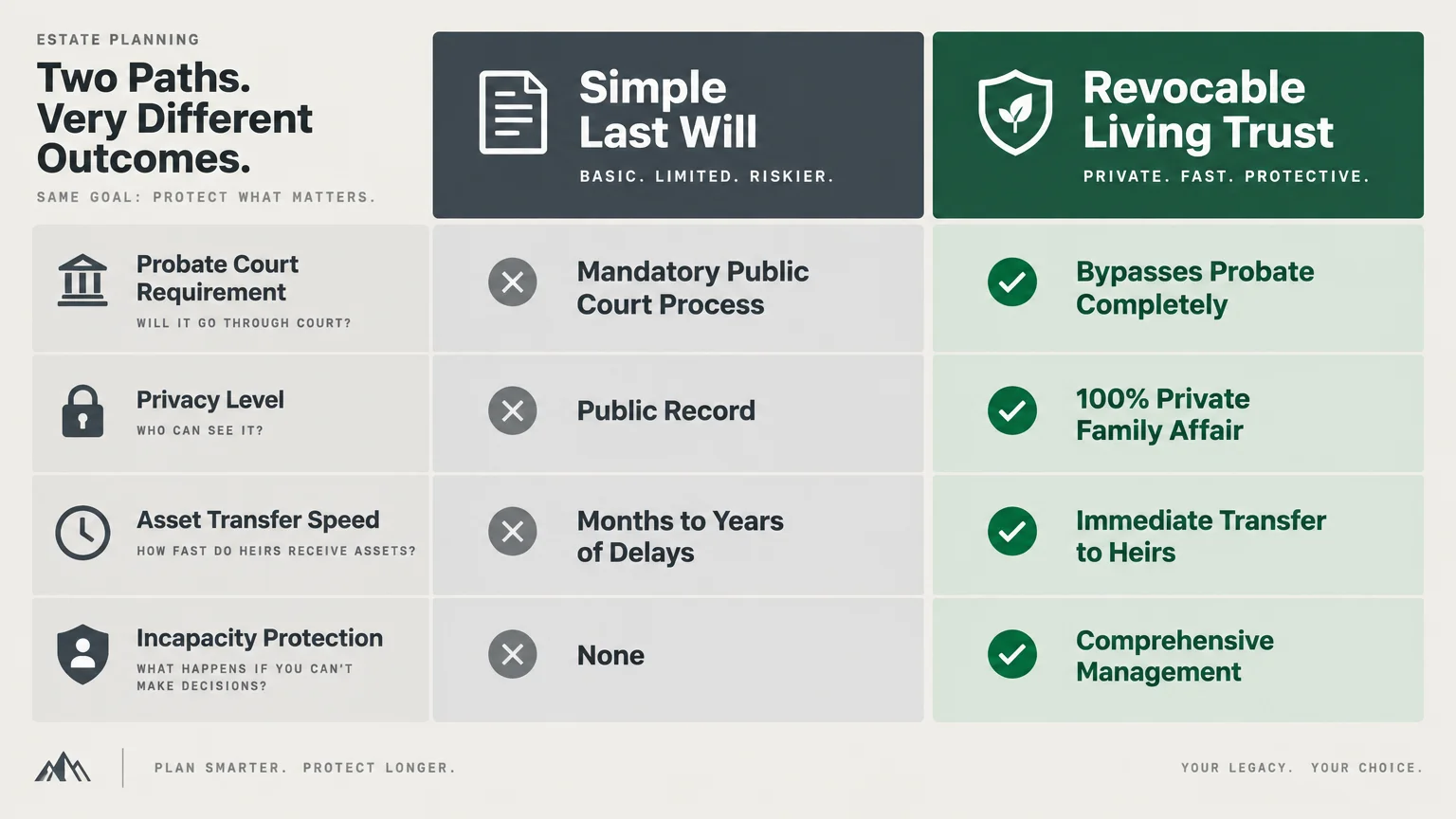
Tip #11: Choosing Between a Simple Will and a Revocable Living Trust
As personal assets accumulate and life matures, a basic will may no longer address all your estate planning objectives. Deciding whether to transition to a revocable living trust is a central discussion among retirees reviewing their affairs.
A standard last will and testament generally costs between $300 and $1,500 to draft with an attorney. In contrast, comprehensive revocable living trust packages typically range from $1,500 to $4,000 or more, depending on estate complexity.
While wills must proceed through public probate court, living trusts transfer assets privately and immediately without court supervision. If you own real estate in multiple states, a trust avoids separate, costly probate hearings in every jurisdiction.
Living trusts also provide immediate asset management if you ever experience temporary cognitive decline or physical incapacitation. Evaluating this strategic upgrade ensures your legal framework matches the actual size and scope of your retirement portfolio.
Selecting the right legal vehicle delivers unmatched efficiency and enduring protection for your family.

The Takeaway: Living a More Blissful Retirement
Taking the time to refresh your estate documents is one of the kindest gifts you can bestow upon your family. An accurate, updated plan removes ambiguity, reduces tax burdens, and eliminates stressful disputes during difficult times.
Reviewing your documents does not need to feel overwhelming or somber. Instead, view it as an empowering celebration of everything you have accomplished throughout your industrious life.
Caring.com notes that 31% of older adults cite reaching retirement as the primary motivation for completing an estate plan. By seizing this moment, you join a thoughtful group of retirees who take charge of their future.
Partner with a licensed estate planning attorney in your area to review your documents and verify beneficiary designations. Aligning your legal affairs with current regulations brings genuine peace of mind.
When your legal foundation is secure, you can relax and truly relish the golden adventures of your retirement.
Frequently Asked Questions
How often should retirees review their estate planning documents?
Legal professionals recommend reviewing your estate documents every three to five years. You should also schedule a prompt review whenever you experience major life events, such as marriage, divorce, or relocation.
Significant tax law changes, such as the upcoming 2025 sunset, also warrant an immediate evaluation. Staying proactive prevents surprises and keeps your plan working smoothly.
Can I update my will using a simple codicil?
A codicil is a formal legal amendment used to make minor revisions to an existing will. If you only need to change an executor or update a small bequest, a codicil works well.
However, if you are making substantial changes to your beneficiaries or restructuring asset distributions, drafting a new will is safer. A fresh document eliminates contradictions and reduces the likelihood of probate disputes.
Do beneficiary designations always override instructions in a will?
Yes, beneficiary designations on life insurance, 401(k) plans, and IRAs supersede instructions in your last will and testament. These contractual agreements transfer assets directly to the designated individual outside of probate.
If your will leaves everything to your children, but an old IRA form names an ex-spouse, the IRA custodian must pay the ex-spouse. Regularly confirming your designations guarantees that your assets flow exactly where you intend.
What is the difference between an estate tax and an inheritance tax?
Estate taxes are levied directly against the overall net worth of the deceased person’s estate before distributions occur. In contrast, inheritance taxes are paid by the individual beneficiaries who receive the bequeathed assets.
While the federal government levies only an estate tax, state laws vary considerably across the country. Working with a qualified tax professional helps you navigate state-specific rules effectively.
For a wide range of resources for older adults, visit AARP and the National Council on Aging (NCOA). Health information is available from the National Institute on Aging.
Disclaimer: This article is for informational and inspirational purposes only; it is not a substitute for professional medical, financial, or psychological advice. Please consult with a qualified expert for guidance tailored to your individual needs.