
Relocating closer to your grandchildren often sounds like the ultimate retirement dream. Before you pack your moving boxes, you must evaluate how this massive transition impacts your daily routine and happiness.
Smart planning protects your financial security and keeps your family relationships healthy and joyful. Examining potential pitfalls early helps you design a rewarding lifestyle on your own terms.
Discover the key factors you should weigh before making this life-changing family move. You deserve a vibrant retirement that honors both your personal passions and your family bonds.

Tip #1: Guard Against Becoming the Default Babysitter
Many grandparents look forward to spending joyful afternoons playing games and sharing stories. However, moving near grandkids can quickly blur the line between loving relative and unpaid full-time childcare.
Your adult children juggle demanding work schedules and daily domestic pressures. When you live right down the street, family members may naturally view you as their primary childcare backup.
You might suddenly find yourself managing morning drop-offs, sick days, and afternoon carpools every single week. While lending a hand brings joy, daily caregiving requires substantial physical stamina.
Over time, constant babysitting responsibilities can crowd out the personal hobbies you planned for retirement. You may feel uncomfortable saying no because you love your family deeply.
Resentment often quietly builds when family expectations clash with your desire for relaxation. You might feel taken for granted, even though your children never intended to burden you.
Clear communication prevents this common frustration before you ever sign a real estate contract. Establish realistic availability guidelines early so everyone understands your boundaries.
Setting healthy expectations ensures that time spent with your grandchildren remains special and uplifting rather than exhausting.
Consider testing the waters by visiting for an extended stay before relocating permanently. This trial period reveals real daily dynamics without locking you into an irreversible routine.
You can offer genuine support while still protecting the leisurely lifestyle you worked so hard to earn.
Tip #2: Remember That Busy Family Schedules Limit Quality Time
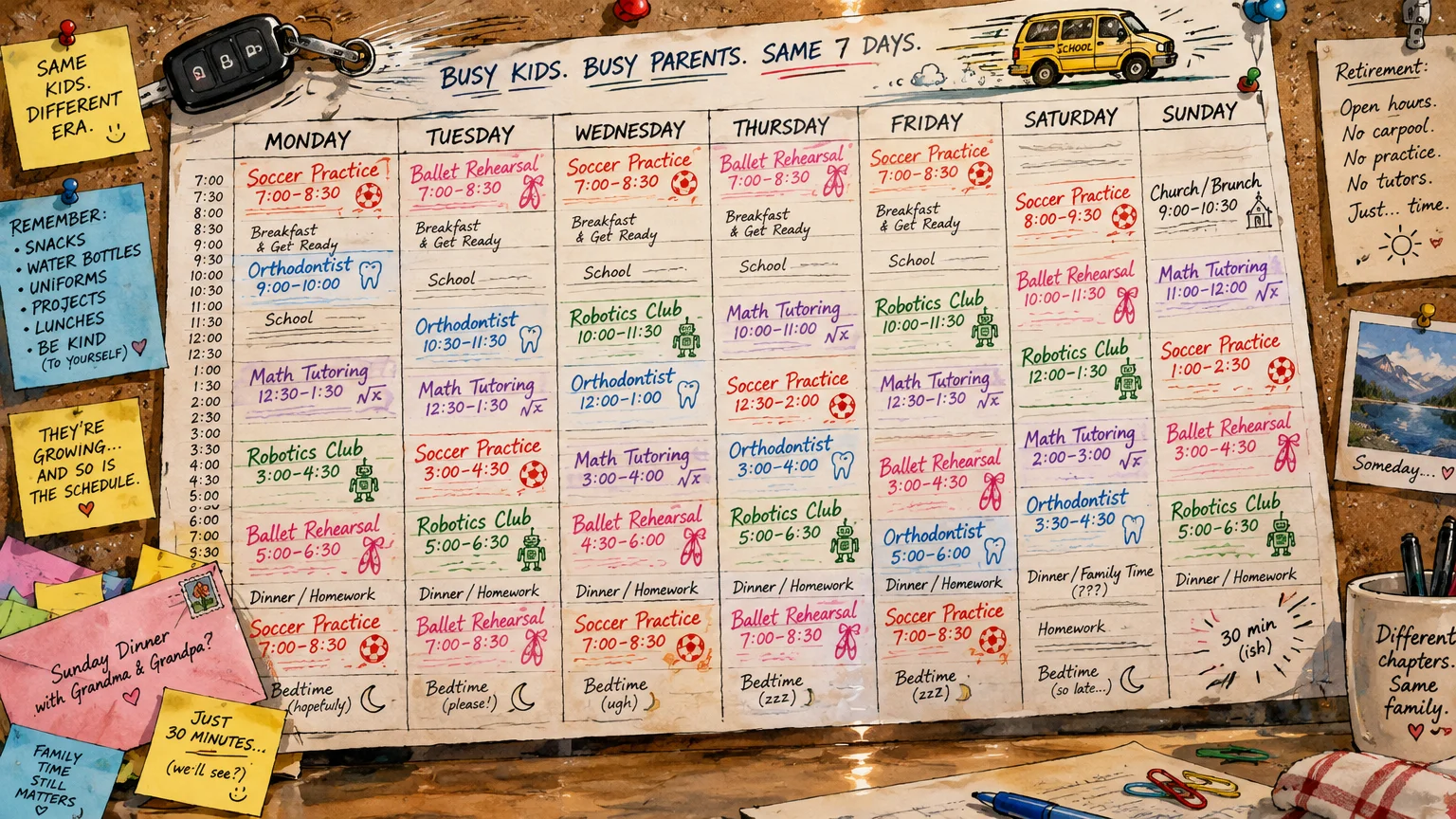
Grandparents often envision spontaneous weekend picnics and cozy weekday dinners together. The reality of modern family life, however, moves at an intensely frantic pace.
School-age children balance intense homework loads, sports practices, music lessons, and weekend birthday parties. Parents spend their evenings shuttling kids across town rather than relaxing at home.
When you relocate, you might expect frequent visits that simply never fit into their crowded calendar. Finding an open weekend afternoon can require weeks of advance planning.
Retirees relocating near family often feel disappointed when drop-in visits prove rare and fleeting. Sitting home waiting for invitations can leave you feeling sidelined and lonely.
Your loved ones do not intend to neglect you; their attention is simply pulled in dozens of competing directions. Modern parenting demands immense focus and constant coordination.
Before moving, spend a full typical school week observing their normal household schedule. Notice how little spare downtime actually exists between dawn and bedtime.
Understanding these calendar constraints prevents unrealistic expectations from souring your relationship. You can then plan intentional visits that fit smoothly into their active life.
True quality time values deep connection over sheer quantity of hours spent together.
Building a fulfilling routine of your own guarantees you remain happy even during their busiest weeks.
Keeping your own calendar filled with engaging activities ensures you never depend solely on their availability.

Tip #3: Leaving Your Established Social Circle Can Cause Isolation
Moving to a brand-new town means leaving behind neighbors, trusted doctors, and lifelong friends. Rebuilding a rich social network in your golden years takes considerable time and persistent effort.
Many retirees expect their family to serve as their entire social universe after moving. Placing that heavy burden on your children can quickly strain family relationships.
Adult children cannot replace the camaraderie of peer friendships and community clubs. You need peers who share your generation, your memories, and your daily life perspective.
Retirement relocation regrets frequently stem from losing the community roots you spent decades cultivating. Walking into an unfamiliar neighborhood where nobody knows your name can feel deeply disorienting.
Making new friends in retirement requires actively joining clubs, volunteering, and attending local events. If you are naturally introverted, putting yourself out there over and over feels daunting.
Consider what daily comforts you cherish most in your current hometown. Your favorite coffee spot, walking trail, and faith community all contribute meaningfully to your emotional well-being.
Weigh the joy of seeing family against the emotional cost of uprooting your established support system. Preserving strong roots often brings far greater daily peace than starting completely from scratch.
If you choose to move, proactively investigate local senior centers, volunteer opportunities, and social organizations beforehand.
A diverse circle of friends ensures you always have companionship, laughter, and support close at hand.

Tip #4: Your Adult Children Might Move Away for Career Changes
The modern workforce is more mobile and unpredictable than ever before. Corporate restructuring, new job promotions, and company relocations can happen without much warning.
If you sell your home and buy a house nearby, your family might not stay permanently. A sudden promotion could lead your adult children to move across the country within months.
You could easily find yourself stranded in an unfamiliar city without the family you moved to join. Selling a home twice in a short period creates severe financial and emotional stress.
Retiree family moves should always consider long-term employment stability before making binding housing commitments. Ask your children honest questions about their career aspirations and corporate mobility.
Do they plan on remaining in their current city for the next decade? Are they hoping to relocate for better school districts or career advancements elsewhere?
If your children express interest in eventual career moves, pause your relocation plans. Remaining settled in your own hometown protects you from getting left behind unexpectedly.
Alternatively, consider renting near them for a year rather than purchasing permanent real estate immediately. Renting provides total flexibility if their job situation shifts down the road.
Smart planning keeps your housing options open while protecting your hard-earned retirement savings.
Flexibility empowers you to navigate family transitions smoothly without enduring unnecessary disruption.
You can maintain close ties through regular visits without tying your homeownership to another person’s job.

Tip #5: A Higher Cost of Living Can Erode Your Nest Egg
Families often settle in major metropolitan areas or booming suburban hubs to access prime job markets. Unfortunately, those exact regions frequently carry significantly higher housing costs, property taxes, and grocery bills.
Moving closer to grandchildren might force you to downsize substantially while paying a much higher monthly mortgage. Increased living expenses can deplete your retirement nest egg faster than anticipated.
State income taxes, local sales taxes, and healthcare service charges vary dramatically across state lines. A fixed retirement income that felt comfortable in your hometown may feel uncomfortably tight elsewhere.
Financial worry quickly drains the joy from your golden years. You should never compromise your long-term security simply to live within a short drive of relatives.
Run detailed budgetary comparisons between your current residence and your prospective new location. Factor in utility rates, insurance premiums, HOA fees, and routine medical co-pays.
Consult a qualified financial professional to review how relocation expenses impact your portfolio over time. Objective financial modeling gives you clarity before you commit your funds.
Staying in a lower-cost home may actually leave you with ample discretionary travel funds. You can use those surplus funds to finance fantastic family vacations and frequent seasonal visits.
Maintaining solid financial health ensures peace of mind throughout every phase of retirement.
Financial freedom allows you to treat your grandkids to memorable experiences without feeling financial pressure.

Tip #6: Grandchildren Naturally Grow Up and Cultivate Independence
Grandchildren are adorable when they are toddlers, and they readily shower you with affection. Remember, however, that children grow up remarkably fast.
Within a few short years, cute toddlers transform into busy preteens and independent teenagers. Adolescents naturally prioritize peer groups, school sports, after-school jobs, and social media over grandparent visits.
A teenager who once loved spending every Saturday baking cookies may soon prefer hanging out with friends. This shift is completely normal and healthy for adolescent development.
Still, watching this natural transition unfold from close proximity can feel emotionally painful. If you relocated primarily to spend daily time with them, you might feel deeply abandoned.
Before packing your bags, look ahead five or ten years into the future. Consider what your daily life will look like once your grandkids reach high school and drive cars.
Will the new city still appeal to you when the kids leave for college? Having a vibrant personal life outside the family protects you from an empty nest twice over.
Celebrate their independence while focusing enthusiastically on your own goals and adventures. You can remain their trusted confidant and wisdom guide without needing daily face-to-face interactions.
Supporting their growth from a healthy distance deepens mutual respect across the generations.
Your personal vitality serves as an inspiring role model for growing grandkids to admire.

Tip #7: Family Boundary Issues Can Create Unwanted Tension
Living in close proximity makes avoiding everyday friction nearly impossible. Generational differences in parenting philosophies, nutrition choices, and screen time rules can provoke unexpected disagreements.
You might disagree with how your adult children discipline their kids or organize their home. Even well-intentioned advice can feel like harsh criticism to an exhausted modern parent.
Unsolicited suggestions often create defensive reactions and emotional distance between loved ones. Walking on eggshells in your own family circle causes needless chronic stress.
Furthermore, boundary lines easily blur when families live just a few minutes apart. Unannounced drop-ins, differing opinions on privacy, and unsolicited input can strain relationships beyond repair.
Healthy relationships require emotional space and clear, respectful boundaries. Distance often provides the natural buffer that keeps family visits warm, festive, and harmonious.
When you visit occasionally, small quirks and minor disagreements rarely erupt into arguments. Everyone remains on their best behavior, savoring the special time together.
If you do move nearby, commit to respecting your children’s parental authority completely. Never offer parenting advice unless your adult children explicitly ask for your perspective.
Treating your adult children as capable, autonomous peers preserves mutual harmony and affection.
Thoughtful boundaries protect your family peace and allow love to flourish naturally.
Respecting personal privacy keeps visits joyful and prevents petty annoyances from undermining your close bond.

Tip #8: You Risk Neglecting Your Own Passions and Purpose
Retirement represents your hard-earned opportunity to pursue lifelong passions and explore exciting interests. Centering your entire existence on your grandchildren can inadvertently derail your personal growth.
You spent decades working, raising your own family, and fulfilling obligations to others. Your golden years should reflect your dreams, whether that involves painting, traveling, or writing.
When you anchor your retirement solely to other people, you risk losing your distinct sense of identity. You need personal goals that ignite your enthusiasm every morning.
Retirees who maintain fulfilling hobbies and independent pursuits report significantly higher levels of daily happiness. An engaging lifestyle protects your mental health and keeps your mind sharp.
Ask yourself what activities bring you the most profound sense of accomplishment and joy. Make sure your chosen retirement destination offers abundant opportunities to pursue those specific passions.
A fulfilling retirement combines loving family connections with rich personal achievements. You do not have to sacrifice your personal dreams to remain an incredible grandparent.
Pursue your unique talents and share your adventures with your grandchildren. They will love hearing about your creative projects, travels, and exciting community endeavors.
Living an inspired life shows your family that aging brings continuous adventure and vitality.
Never hesitate to place your own happiness and personal fulfillment at the center of your golden years.

The Takeaway: Living a More Blissful Retirement
Choosing where to spend your retirement is one of the most exciting decisions you will ever make. While staying close to family is wonderful, your personal happiness and well-being must remain top priorities.
Take time to weigh your choices carefully before making a major relocation. You can build rich memories with grandchildren through planned visits, video calls, and memorable family trips.
Empower yourself to design a lifestyle that brings you peace, purpose, and genuine fulfillment. Your golden years belong to you, and you have earned every moment of joy.
For a wide range of resources for older adults, visit AARP and the National Council on Aging (NCOA). Health information is available from the National Institute on Aging.
Celebrate your freedom, nurture your friendships, and embrace the bright future ahead with confidence.
Frequently Asked Questions
How can I stay close to my grandkids if I choose not to relocate?
Modern technology makes maintaining strong bonds across distances easier than ever. Schedule regular video chats, send handwritten letters, and play online games together each week.
Planning special one-on-one visits or hosting summer grandparent camp creates lasting memories that children cherish forever.
How do I tell my adult children I decided not to move closer?
Frame your decision with warmth, gratitude, and honesty. Emphasize that staying in your current community allows you to protect your established friendships and personal interests.
Reassure them that you remain fully committed to spending meaningful quality time together through frequent visits.
What is a good trial period before committing to a permanent family move?
Renting a furnished apartment or home for three to six months offers the ideal trial run. This extended period allows you to experience daily traffic, weather, and real family routines.
A temporary stay provides firsthand clarity without the financial stress of selling and buying real estate.
How far away should retirees live from family to maintain healthy boundaries?
Many families find that living thirty to forty-five minutes away creates the perfect balance. This driving distance prevents unannounced drop-in visits while keeping shared dinners and weekend events very convenient.
A short drive gives both households personal space while keeping family connections warm and accessible.
Disclaimer: This article is for informational and inspirational purposes only. It is not a substitute for professional medical, financial, or psychological advice. Please consult with a qualified expert for guidance tailored to your individual needs.