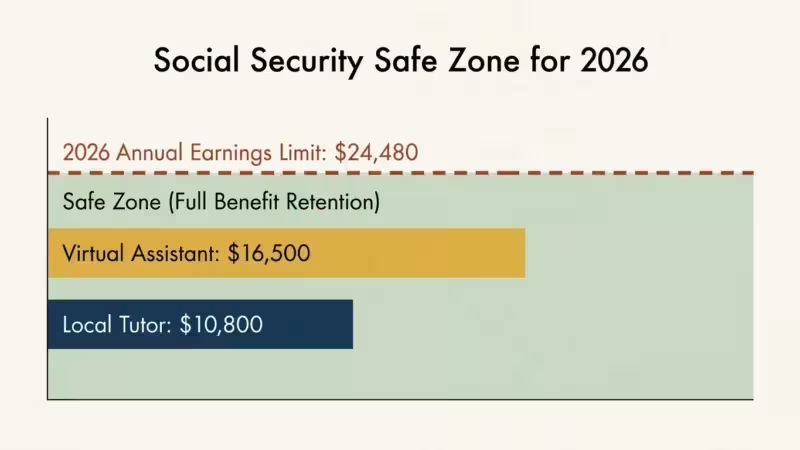

Understanding the future of your retirement benefits gives you the clarity to build a resilient financial plan. You can protect your lifestyle and retire with total confidence once you understand how the system works.
Social Security faces an important funding milestone in late 2032 as reserves decline. Knowing what happens if Congress delays action empowers you to safeguard your hard-earned nest egg today.
With proactive planning, you can navigate these potential shifts smoothly. Let us explore what to expect and how you can continue thriving throughout your golden years.
Tip #1: Automatic Benefit Reductions Take Effect Immediately
Under current law, the primary retirement reserve fund faces a strict legal cutoff. Without new legislation, the system cannot pay out money it does not possess.
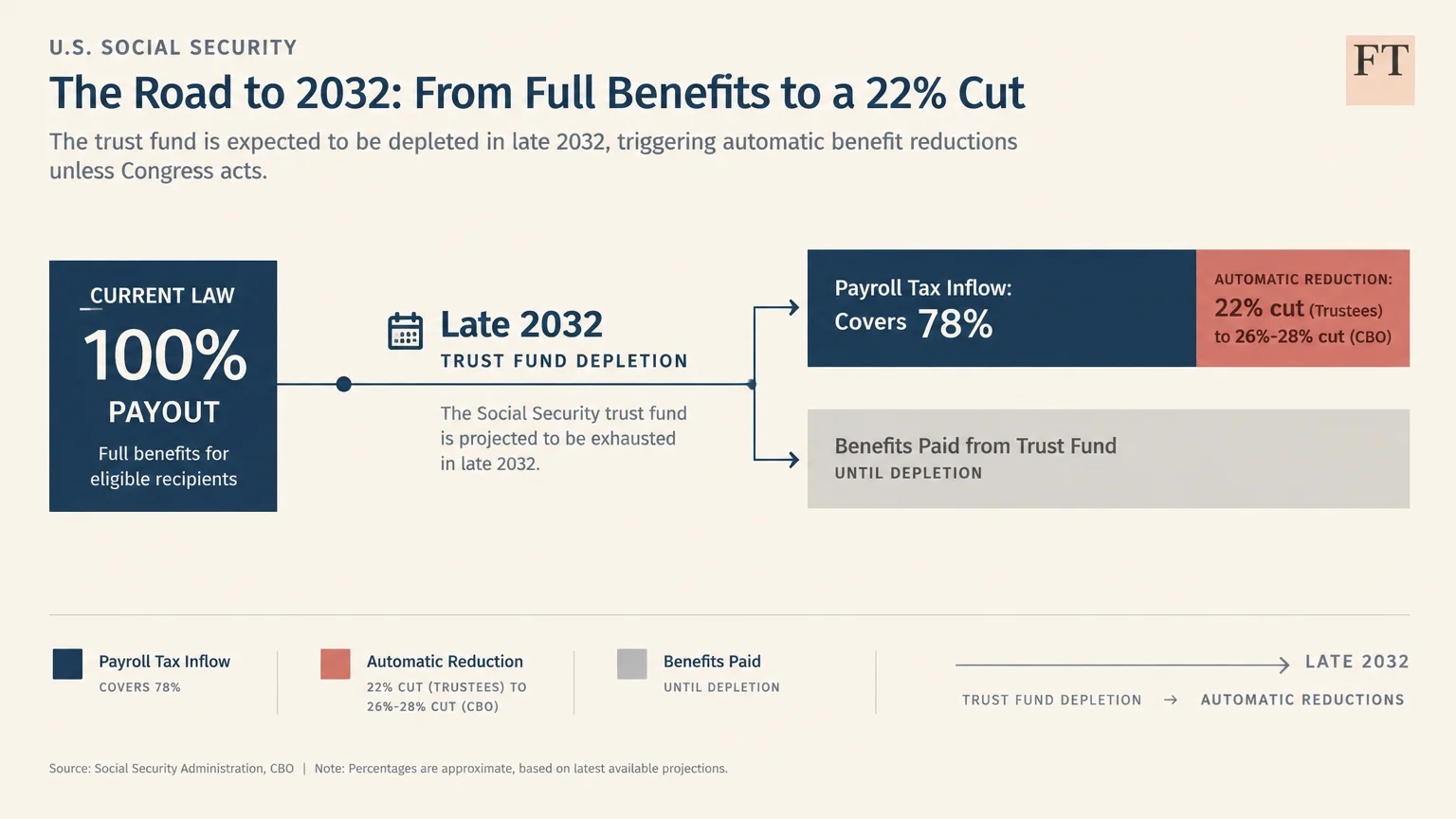
The 2026 Social Security Trustees Report projects that the Old-Age and Survivors Insurance (OASI) Trust Fund reserves will deplete by late 2032. The Congressional Budget Office similarly points to fiscal year 2032.
When social security trust fund depletion occurs, incoming payroll taxes will cover only about 78 percent of scheduled benefits. This shortfall triggers automatic social security benefit cuts without requiring any separate congressional vote.
Trustees estimate an immediate across-the-board reduction of roughly 22 percent. Meanwhile, CBO projections suggest cuts could reach between 26 percent and 28 percent.
You can prepare today by calculating how a temporary reduction would affect your baseline expenses. Creating a lean monthly budget now provides immediate peace of mind.
Building your personal safety margin now ensures that your daily lifestyle remains vibrant and secure.
Tip #2: The Antideficiency Act Prohibits Borrowing and Deficit Spending
Many people assume the federal government can simply borrow extra money to keep benefit checks whole. However, federal law strictly forbids this practice for the retirement program.
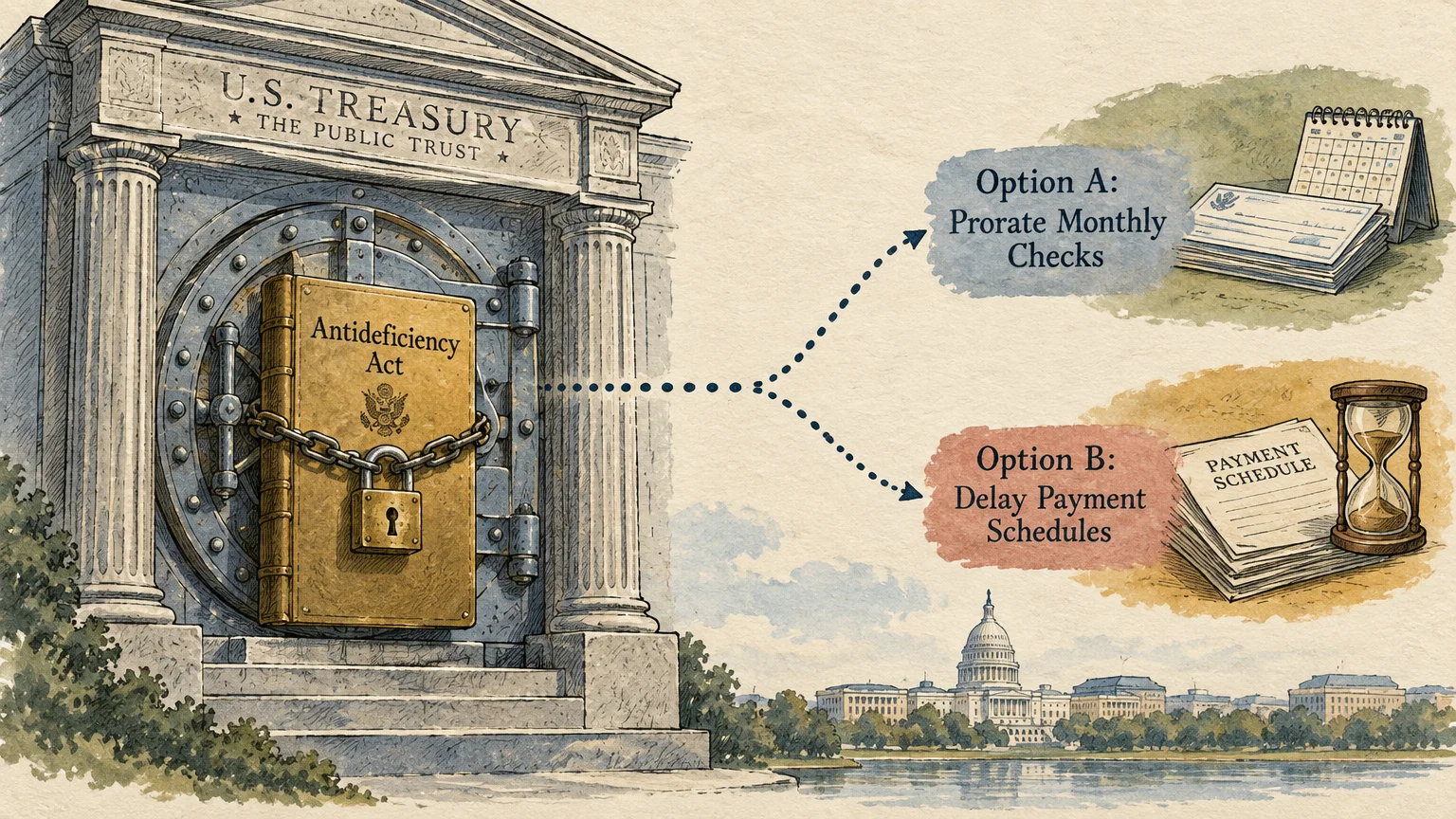
Under the Antideficiency Act and the Social Security Act, the program cannot deficit-spend or draw from general tax revenues. The agency lacks statutory authority to borrow funds to cover shortfalls.
Without congressional intervention, the Social Security Administration would face two administrative choices. It must either prorate monthly checks or delay payment schedules until sufficient tax revenue arrives.
Prorating means every recipient receives a smaller percentage on their regular distribution date. Delaying payments would mean waiting longer periods between checks while payroll receipts accumulate.
Knowing this legal reality helps you avoid relying on false assumptions about automatic federal bailouts. Building a dedicated emergency cash cushion ensures your bills stay paid regardless of administrative delays.
Establishing a liquid cash reserve gives you tremendous peace of mind against any bureaucratic disruptions.
Tip #3: Payments Rely Entirely on Inflow from Current Workers
You might wonder what happens if social security runs out of reserve assets. The vital truth is that the program will never completely run dry or stop operating.
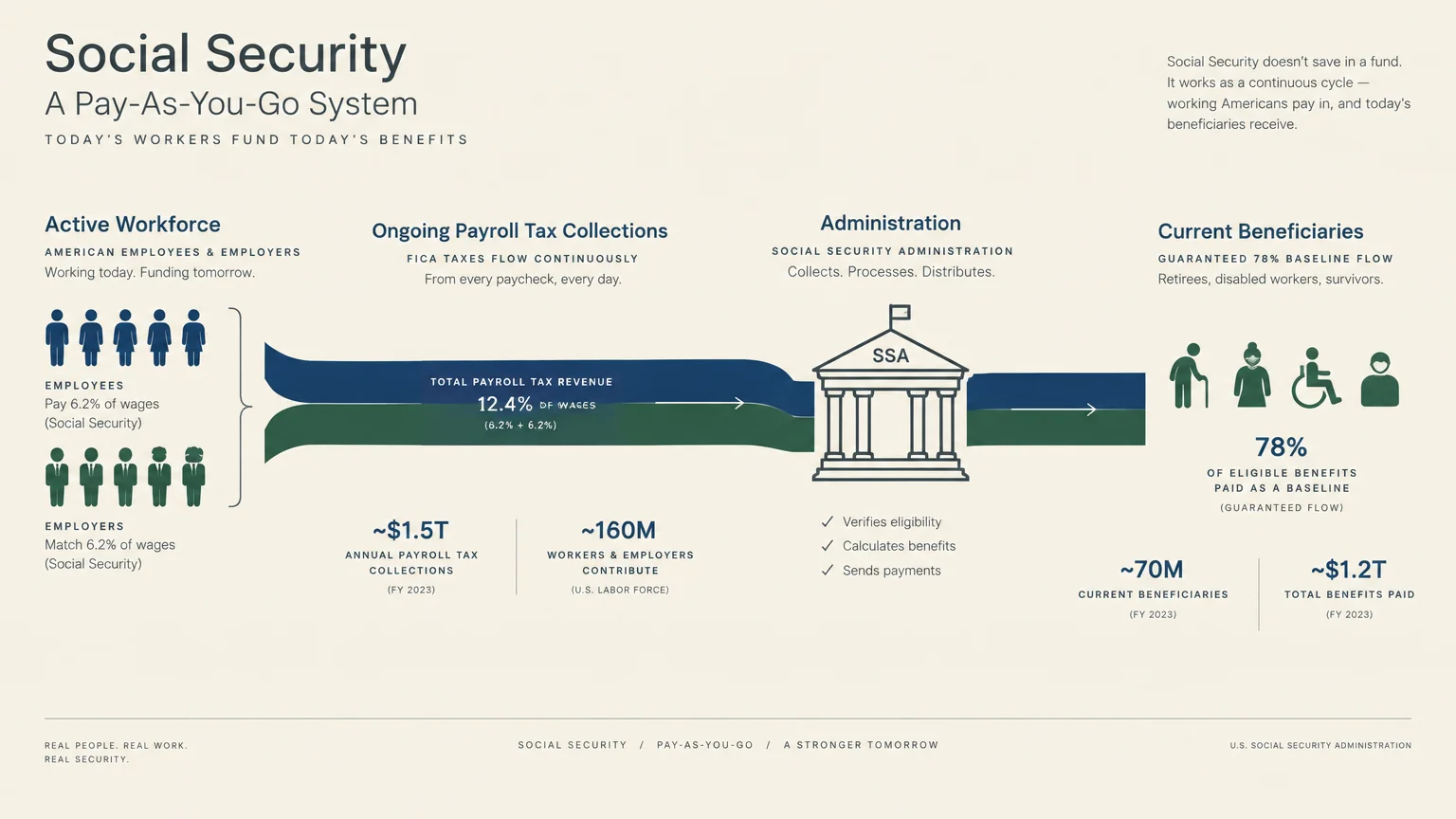
Social Security operates primarily as a pay-as-you-go system. As long as American employers and employees pay payroll taxes, money flows directly to beneficiaries every month.
Even after reserve exhaustion, ongoing payroll collections will immediately finance roughly 78 percent of full promised payouts. Your benefit checks will continue arriving each month at that substantial baseline level.
This continuous tax stream provides an enduring foundation that cannot disappear overnight. You can count on receiving the majority of your earned benefits under any foreseeable economic scenario.
Recognizing that core revenue remains intact helps replace sensational headlines with grounded optimism. You can plan your long-term lifestyle around this reliable baseline of continuous funding.
Focusing on guaranteed income floors keeps your overall financial perspective balanced and constructive.
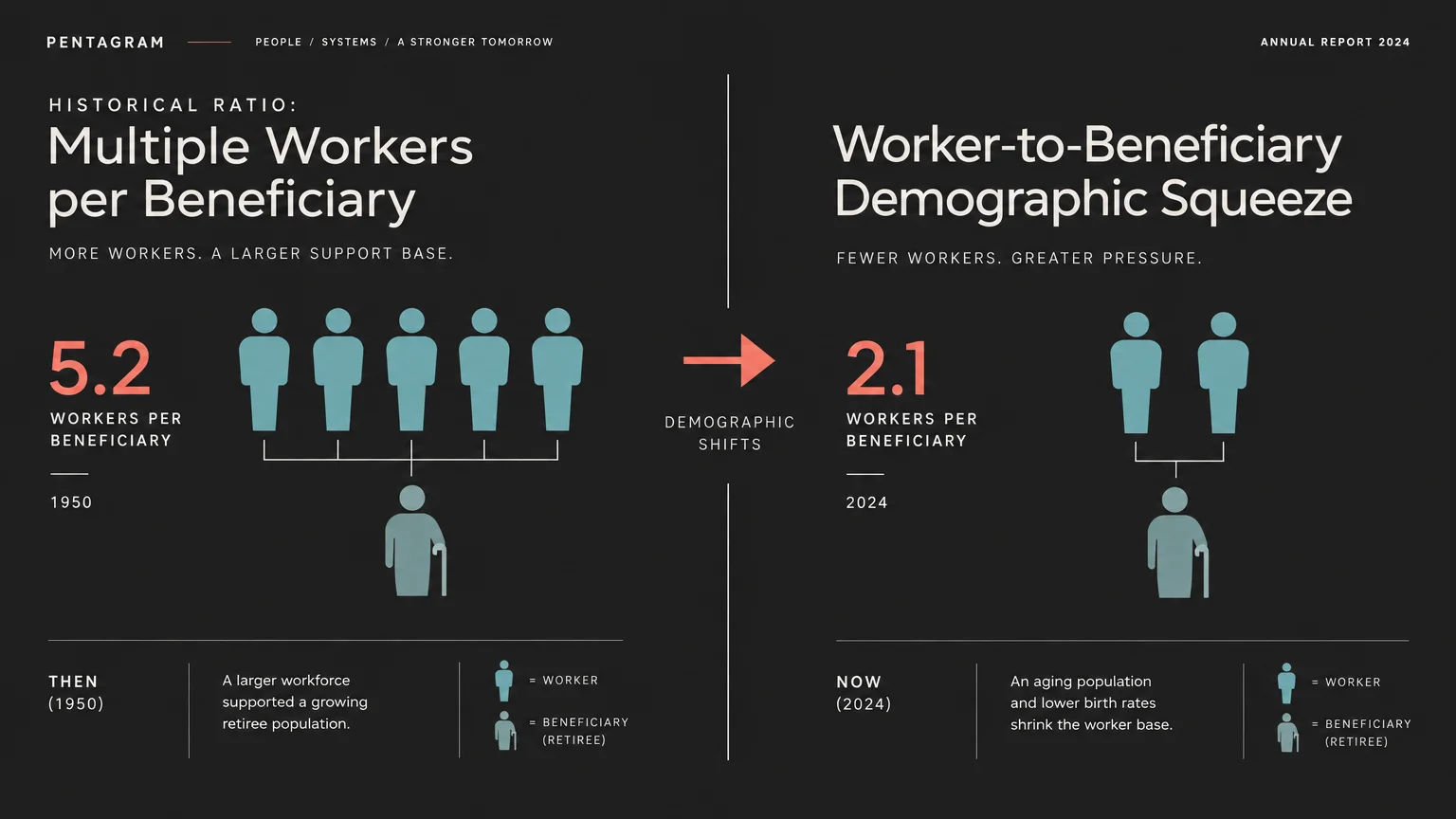
Tip #4: The Worker-to-Beneficiary Ratio Pressures Program Cash Flow
Demographic changes represent the primary driving force behind the program’s current financial imbalance. Americans are living longer, healthier lives while birth rates have steadily declined.
In 1960, more than five covered workers paid payroll taxes for every single beneficiary receiving monthly checks. Today, that worker-to-beneficiary ratio has dropped sharply to approximately 2.9 to 1.
Actuaries project this ratio will fall further to roughly 2.2 to 1 by the 2070s. This shifting demographic scale leaves fewer active workers supporting each retired person’s monthly benefit.
This structural change explains why the system faces a 75-year financing shortfall of $30 trillion to $31 trillion. That gap represents an actuarial deficit of about 4.42 percent to 4.57 percent of taxable payroll.
Understanding these demographics helps you appreciate the exact pressure points lawmakers must solve. It also reinforces the wisdom of establishing multiple personal income streams for your retirement.
Taking charge of your own supplemental wealth ensures that demographic trends never dictate your happiness.
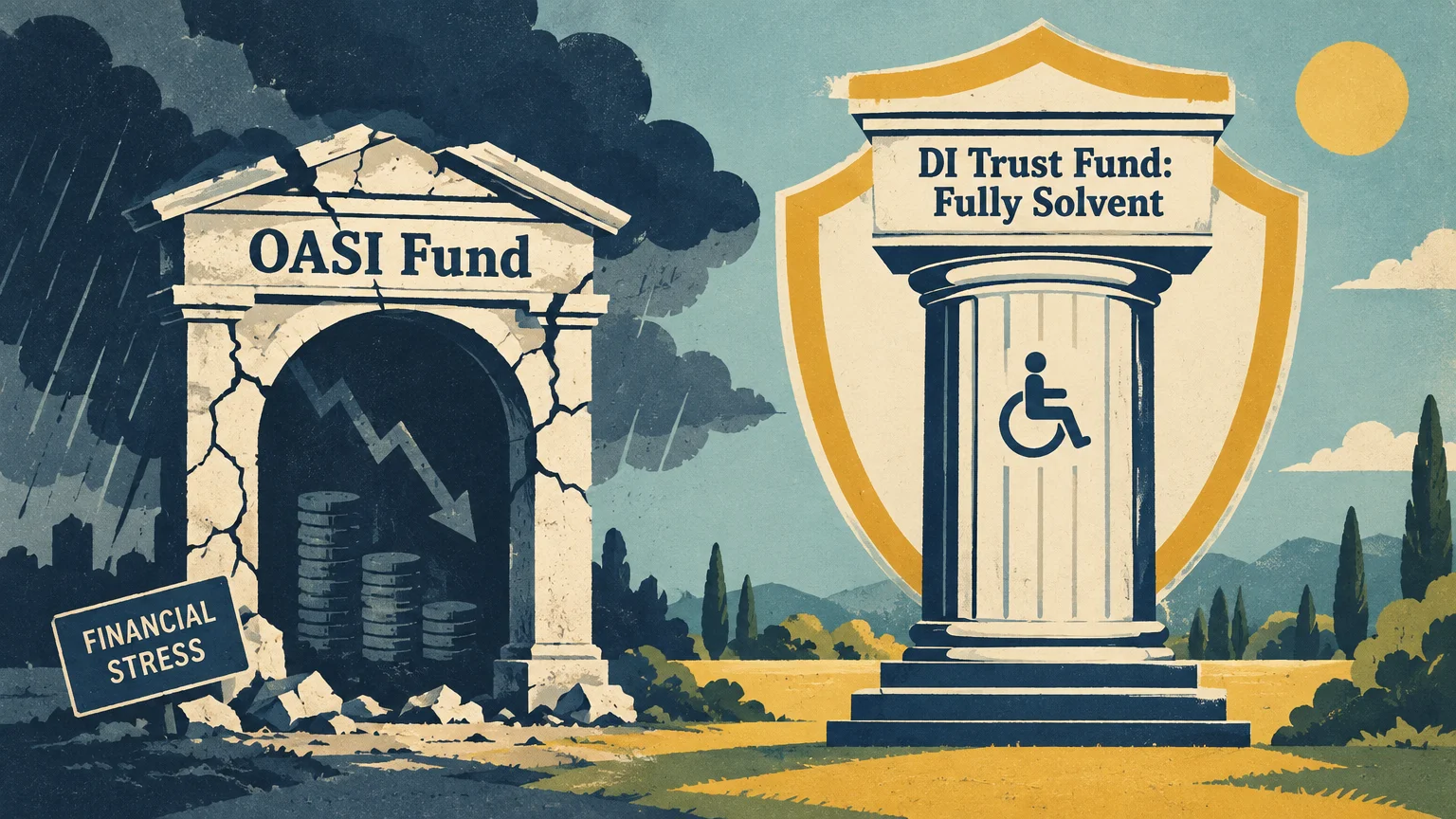
Tip #5: Disability Insurance Funds Remain Fully Protected and Solvent
Discussions regarding social security insolvency often overlook the crucial distinction between the system’s two separate trust funds. The retirement fund and the disability fund operate under completely different financial conditions.
While the retirement fund faces depletion in late 2032, the Disability Insurance (DI) Trust Fund remains exceptionally sound. Trustees project the DI fund will pay 100 percent of scheduled benefits through at least the year 2100.
If lawmakers hypothetically combined both trust funds, the combined reserves would last until 2033 or 2034. At that point, combined revenues would cover approximately 83 percent of scheduled benefits.
However, current law keeps these accounts separate unless Congress explicitly reallocates payroll tax revenues between them. For now, disability beneficiaries enjoy long-term fiscal security without immediate risk of reduction.
This financial strength proves that structural reforms and demographic shifts can produce lasting solvency. It provides a hopeful blueprint for resolving the retirement fund’s balance sheet as well.
Learning about these positive fiscal areas helps you maintain an objective, well-informed outlook on reform.
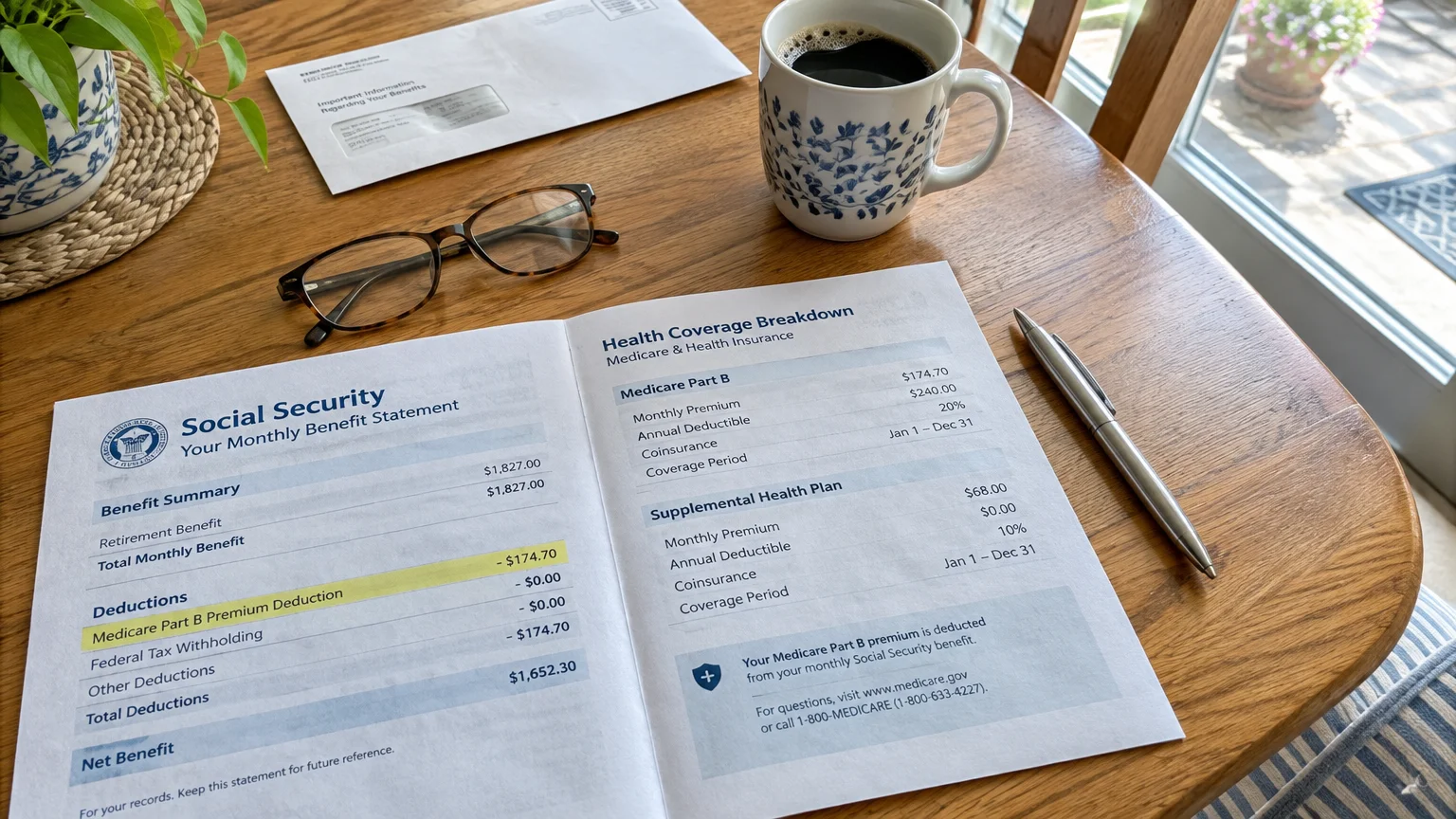
Tip #6: Medicare Part B Deductions Create a Deeper Squeeze
An automatic reduction in gross Social Security benefits creates a hidden squeeze on your actual take-home cash. The federal government deducts Medicare Part B premiums directly from your monthly Social Security check.
Because Medicare premiums rise steadily with healthcare inflation, they consume a fixed dollar amount regardless of your benefit level. A lower gross check means Medicare takes a substantially larger percentage of your payment.
For example, if your gross benefit drops by 22 percent while your medical premium stays unchanged, your net disposable income falls significantly more. This compounded reduction impacts your day-to-day spending power directly.
You can cushion this impact by optimizing your health coverage choices during annual enrollment periods. Comparing Medicare Advantage plans and Medigap policies can help lower your overall out-of-pocket medical costs.
Funding a Health Savings Account before full retirement also creates a tax-advantaged reserve for future medical expenses. Taking these active steps shields your monthly lifestyle from unexpected healthcare deductions.
Proactive healthcare planning lets you preserve your hard-earned discretionary income for the activities you love.

Tip #7: Vulnerable Households and Poverty Rates Experience Rising Pressure
Social Security serves as the financial bedrock for approximately 71 million Americans today. Millions of retirees rely on their monthly check to cover essential food, utilities, and housing.
Census Bureau Supplemental Poverty Measure data shows older adult poverty has reached 15.4 percent, affecting over 10 million seniors. Benefit reductions would place immediate financial strain on households with limited supplemental savings.
Researchers calculate that an abrupt reduction exceeding 20 percent would push millions more retirees below the federal poverty line. Low-income widows and older seniors who cannot return to work face the greatest vulnerability.
Fortunately, numerous community programs and support structures provide valuable assistance when budgets tighten. Exploring property tax exemptions, utility discounts, and local assistance programs can offset significant living expenses.
Strengthening your personal support network and investigating regional assistance gives you immediate resilience. Proactive awareness ensures you can access every resource available in your community.
Tapping into local community programs can significantly reduce your everyday living costs without sacrificing comfort.
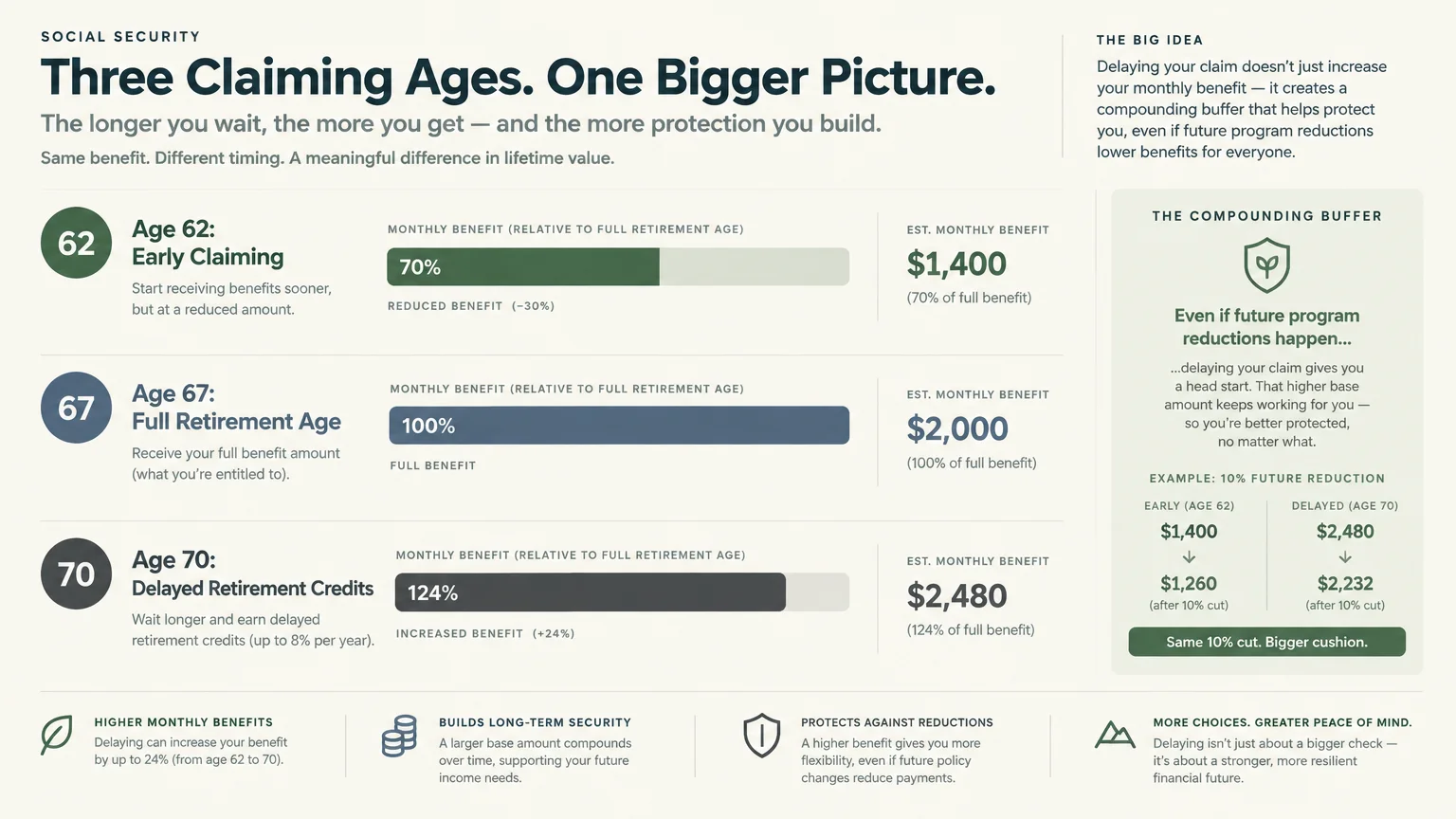
Tip #8: Claiming Age Strategies Become Even More Vital
Your claiming strategy plays an enormous role in shaping your monthly cash flow during retirement. In an environment with potential benefit adjustments, maximizing your guaranteed baseline becomes even more valuable.
Claiming at age 62 permanently reduces your monthly benefit by up to 30 percent compared to your full retirement age. Conversely, delaying your claim past full retirement age earns delayed retirement credits of 8 percent annually until age 70.
A larger baseline check provides a much stronger buffer against potential future benefit cuts. Even after an across-the-board reduction, a delayed benefit check remains substantially larger than an early-claim payout.
If your health and finances allow, working a year or two longer can significantly elevate your lifetime income. That extra time also allows your existing investments to compound undisturbed.
Analyzing your claiming strategy with a certified financial planner helps you identify the ideal timing for your situation. Strategic patience often pays tremendous dividends for your long-term security.
Timing your claim thoughtfully gives you the highest possible permanent payout for your golden years.

Tip #9: Private Savings and Flexible Income Sources Step Up
Relying solely on government programs can leave your budget vulnerable to shifting legislative timelines. Diversifying your retirement income ensures you maintain total control over your lifestyle and personal freedom.
The future of social security highlights the immense value of building independent wealth pillars. Traditional IRAs, Roth accounts, and personal brokerage accounts provide reliable supplemental income whenever you need it.
Many modern seniors also embrace part-time consulting, seasonal work, or creative passion projects during retirement. Earning even modest monthly income keeps your mind sharp while relieving pressure on your portfolio.
Additionally, evaluating your home equity through downsizing or refinancing can unlock substantial liquid capital. Transforming static home equity into income-generating reserves strengthens your overall financial posture.
Taking ownership of your income streams creates an inspiring sense of personal independence. You build a thriving retirement grounded in your own achievements and resourcefulness.
Cultivating multiple streams of cash flow provides the ultimate buffer against any outside economic changes.

Tip #10: Lawmakers Face Powerful Incentives for Bipartisan Compromise
History demonstrates that Congress rarely allows major social safety net programs to suffer catastrophic cuts. With 71 million voting beneficiaries, lawmakers face immense political pressure to enact meaningful solutions before deadlines arrive.
In 1983, the trust funds stood within months of complete depletion. Lawmakers from both parties united to raise the full retirement age and adjust payroll tax formulas, successfully securing decades of solvency.
Potential compromise solutions today include gradually raising the payroll tax cap or adjusting benefit formulas for top earners. Minor legislative adjustments can easily eliminate the projected 75-year shortfall.
Because older Americans vote at higher rates than any other demographic, your voice carries extraordinary influence. Lawmakers understand that failing to act would produce devastating political consequences across every congressional district.
Staying optimistic while making sensible financial preparations allows you to enjoy retirement without anxiety. You can remain confident that public pressure will ultimately drive constructive legislative action.
Voter engagement remains one of the most effective catalysts for protecting the retirement benefits you earned.

The Takeaway: Living a More Blissful Retirement
Headlines surrounding entitlement programs often emphasize fear and worst-case outcomes over practical reality. When you understand the actual mechanisms at play, you can replace worry with purposeful, positive action.
Social Security will not vanish into thin air, and incoming payroll taxes guarantee substantial baseline payouts for generations. By pairing that reliable foundation with diversified savings and mindful budgeting, you take charge of your destiny.
Your golden years represent an exciting season of growth, relaxation, and joyful connection with family. Financial awareness simply provides the sturdy scaffolding that allows your dreams to flourish.
Stay informed, stay engaged, and celebrate the wonderful milestone of retirement that you earned through decades of dedicated effort. A fulfilling and blissful retirement remains entirely within your reach.
Empowering yourself with knowledge today turns potential uncertainties into opportunities for intentional, joyful living.
For a wide range of resources for older adults, visit AARP and the National Council on Aging (NCOA). Health information is available from the National Institute on Aging.
Frequently Asked Questions
Will Social Security completely stop sending checks if the trust fund empties?
No, Social Security will never completely stop paying benefits. The program collects ongoing payroll taxes every month from more than 180 million working Americans.
Those continuing tax receipts will cover approximately 78 percent of scheduled benefits even if reserves hit zero. Benefit checks would continue arriving on schedule at that prorated level.
When is the retirement trust fund projected to run out of reserves?
The 2026 Social Security Trustees Report projects that the OASI Trust Fund reserves will deplete in late 2032. The Congressional Budget Office estimates a matching timeline in fiscal year 2032.
This projection gives lawmakers several years to negotiate bipartisan solutions to restore long-term fiscal balance. Timely adjustments can protect scheduled benefits for current and future retirees.
How can I protect my personal retirement plan against potential benefit cuts?
You can protect your finances by delaying your claiming age toward 70 to maximize your monthly benefit base. Delaying provides guaranteed growth of 8 percent per year past full retirement age.
Additionally, diversifying into Roth IRAs, building emergency cash reserves, and reducing fixed debts provides strong insulation. Having multiple income streams ensures your monthly budget remains comfortable and resilient.
Why can’t the government just borrow money to fund Social Security deficits?
Federal law prohibits Social Security from deficit spending or drawing general tax revenues under the Antideficiency Act. The program operates as an independent, self-funded trust fund system.
Congress must pass explicit statutory changes to authorize general revenue transfers or adjust payroll tax rates. Until lawmakers act, the agency cannot legally distribute more money than it takes in.
Disclaimer: This article is for informational and inspirational purposes only. It is not a substitute for professional medical, financial, or psychological advice. Please consult with a qualified expert for guidance tailored to your individual needs.