

Reviewing your annual Medicare Advantage coverage protects your health and wallet long before changes take effect on January 1. Research from KFF shows that nearly 7 out of 10 Medicare beneficiaries never compare their plan options during the Annual Enrollment Period from October 15 to December 7, leaving millions vulnerable to surprise out-of-pocket costs and dropped doctors. Taking control of your plan renewal ensures you maintain access to trusted healthcare providers while keeping medical expenses predictable. By watching for clear medicare advantage red flags on your Annual Notice of Change (ANOC), you can confidently navigate your choices, protect your finances, and enjoy a vibrant, worry-free retirement.

Tip #1: Dropped Doctors and Contracting Network Shrinkage
Every September, your insurance provider mails an Annual Notice of Change (ANOC) document. Among the most critical medicare plan renewal warning signs to inspect first is provider network shrinkage. Insurance carriers renegotiate annual contracts with health systems, medical groups, and individual specialists; when these negotiations break down, primary care physicians, cardiologists, orthopedic surgeons, or regional hospital systems can quietly leave your network.
If you remain enrolled in a Health Maintenance Organization (HMO) plan after your primary physician leaves, your plan will no longer cover care from that doctor outside of emergency situations. Preferred Provider Organization (PPO) plans may still allow you to see out-of-network physicians, but your co-pays and co-insurance rates will rise significantly. Never assume that a doctor who accepts your plan today will continue to accept it next year; provider directories update constantly throughout the autumn months.
To safeguard your healthcare access, contact your doctor’s billing office directly every autumn. Ask them explicitly whether they plan to maintain their contract with your specific Medicare Advantage network for the upcoming calendar year. If your core care team is leaving, treat it as an immediate sign to begin choosing medicare advantage carefully by exploring alternative plans available in your zip code.
Tip #2: Escalating Maximum Out-of-Pocket (MOOP) Limits
One of the primary advantages of Medicare Advantage over Original Medicare is the built-in Maximum Out-of-Pocket (MOOP) cap. Original Medicare features no ceiling on medical expenses, whereas Medicare Advantage plans establish an annual spending limit for covered in-network services. Once you hit this dollar threshold through deductibles, co-pays, and co-insurance, the plan pays 100% of covered medical costs for the rest of the calendar year. However, a sudden spike in your plan’s MOOP is a major warning sign bad medicare plan shifts are occurring.
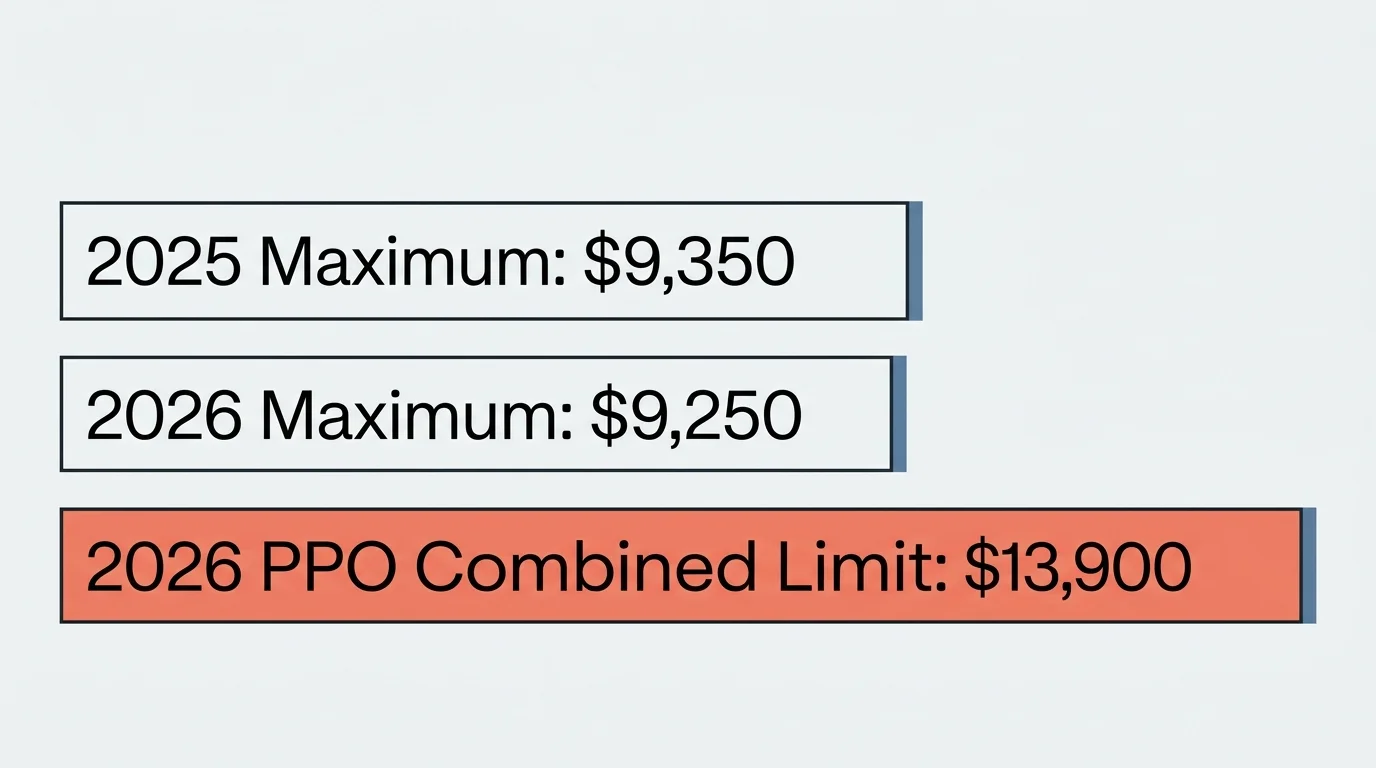
Federal regulations establish maximum legal caps for these limits; for 2025, the federal maximum in-network MOOP cap stands at $9,350, dropping slightly to $9,250 for 2026. For PPO plans offering combined in-network and out-of-network coverage, the total ceiling reaches $13,900 in 2026. While insurance companies often set lower internal limits to attract enrollees—such as $3,500 or $4,500—they hold the right to raise these caps at annual renewal.
If your plan increases its out-of-pocket limit from $4,000 to $8,000, your potential financial exposure doubles if you experience a major medical event like surgery, stroke recovery, or cancer treatment. Review your financial safety net carefully. If a higher spending cap creates unacceptable financial risk, switch to a plan with a more protective spending limit during the annual enrollment window.
Tip #3: Prescription Drug Formulary Shifts and Tier Reclassifications
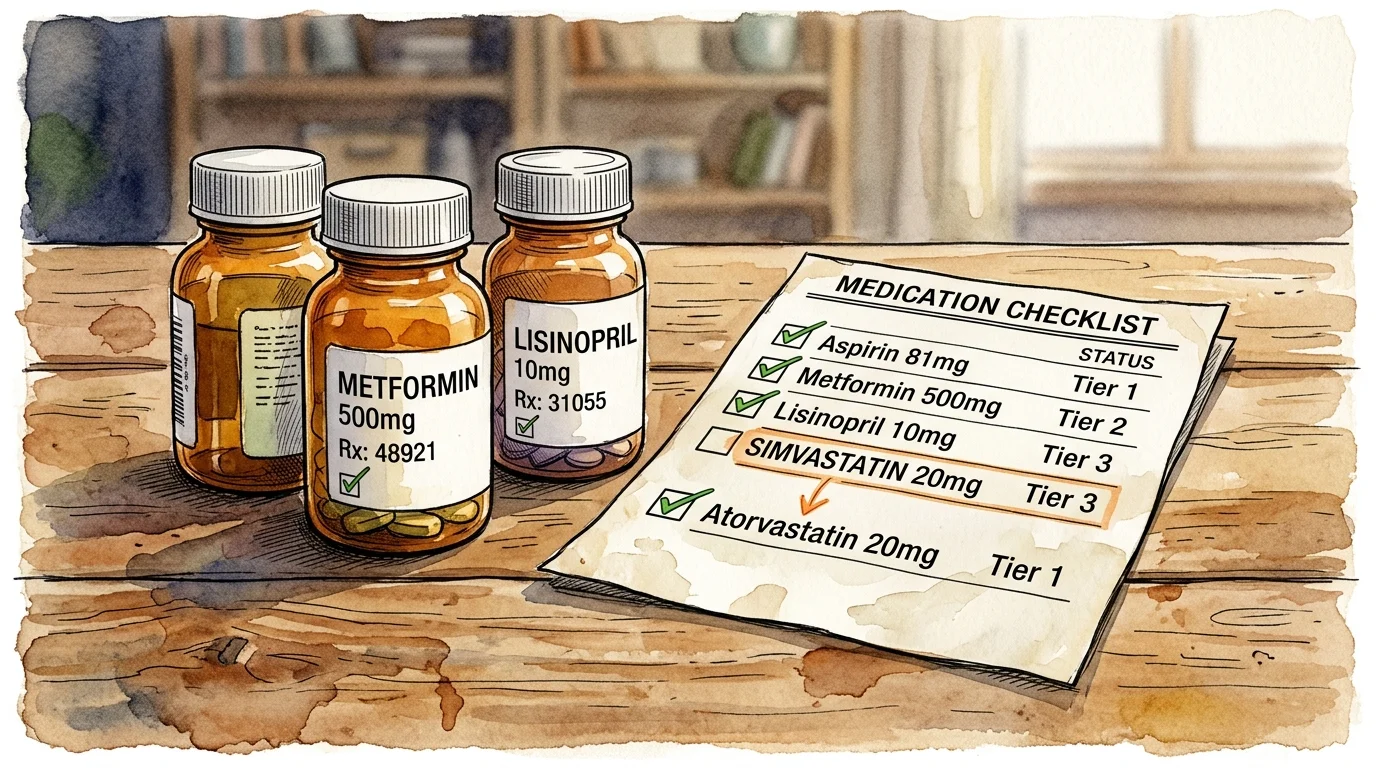
Most Medicare Advantage plans bundle Part D prescription drug coverage directly into their overall healthcare package. However, insurance plans frequently overhaul their drug formularies—the list of covered medications—prior to the new plan year. A drug that costs you $10 per month today could cost hundreds of dollars per month next year if your insurer shifts it to a higher cost-sharing tier or removes it from the formulary entirely.
The Inflation Reduction Act introduced major cost protections that offer significant financial relief for seniors. In 2025, out-of-pocket spending on covered Part D prescription drugs is capped at $2,000 per calendar year, rising slightly to $2,100 in 2026. Once you reach this out-of-pocket maximum, you pay $0 for your covered Part D prescription drugs for the remainder of that year. Furthermore, the maximum allowable standard deductible for Part D prescription coverage is capped at $590 in 2025 and $615 in 2026.
Despite these essential safety nets, reclassifications within intermediate tiers can still impact your monthly budget before you reach the cap. Insurers may also add new utilization controls—such as prior authorization or step therapy—requiring you to try cheaper alternatives before approving your established prescription. Essential medicare advantage plan review tips include entering your exact medication list into the Medicare.gov Plan Finder tool every October to calculate your true yearly pharmacy expenses across competing options.

Tip #4: Expanding Prior Authorization Hurdles and Administrative Delay
Prior authorization requires your medical providers to obtain formal approval from your insurance company before administering specialized tests, hospital admissions, outpatient procedures, or expensive treatments. While insurers argue that prior authorization prevents unnecessary medical spending, excessive authorization demands can create frustrating delays in critical care and lead to stress during health emergencies.
Fortunately, federal updates offer stronger protections for Medicare beneficiaries. Under the CMS-0057-F final rule effective January 1, 2026, Medicare Advantage plans must process standard prior authorization requests within 7 calendar days and urgent requests within 72 hours. In addition, insurance companies must provide specific, actionable reasons for any service denial, making it far easier for you and your healthcare providers to file successful appeals.
Despite these incoming rules, an expansion of prior authorization requirements across everyday medical treatments remains a major red flag during plan renewal. If your ANOC indicates that routine imaging, specialized therapy, or diagnostic procedures now demand prior approval, your administrative burden will rise. Select plans that prioritize streamlined doctor-patient decision-making over bureaucratic gatekeeping.

Tip #5: Decreased Supplemental Benefits and Allowance Reductions
Supplemental benefits—such as comprehensive dental coverage, vision care, hearing aid allowances, over-the-counter (OTC) grocery cards, and fitness memberships—are among the most popular features of Medicare Advantage. Insurers frequently highlight these extra perks in advertising campaigns to attract new enrollees. However, when health plans adjust their financial budgets at renewal, these extra benefits are often the first items trimmed back.
Examine your renewal paperwork for subtle reductions in these supplemental categories. For example, a plan might lower its quarterly over-the-counter allowance from $150 down to $30, restrict dental coverage to basic cleanings while eliminating coverage for crowns or dentures, or eliminate transport services to medical appointments. What appears to be a subtle policy update can translate into hundreds of dollars out of your pocket for routine care.
To evaluate these changes accurately, tally the real cash value of the extra benefits you actually use each year. If a plan slashes your dental allowance by $1,000, that loss offsets any benefit of keeping a $0 premium plan. Focus your decision on total overall value rather than promotional marketing headlines.

Tip #6: Rising Everyday Co-pays, Co-insurance, and Facility Fees
A plan advertising a $0 monthly premium can obscure significant cost increases hidden inside daily operational co-pays. While your monthly premium remains zero, your out-of-pocket expenses every time you visit a physician, clinic, or hospital could jump dramatically starting January 1.
Carefully analyze the daily cost structure outlined in your renewal notice. Look specifically at inpatient hospital stay co-pays; a change from $275 per day for days 1 through 5 to $400 per day for days 1 through 7 adds over $1,400 to a single hospital stay. Similarly, specialist visit co-pays might rise from $35 to $55, outpatient surgery co-insurance could jump from 15% to 20%, and emergency room visit co-pays could increase from $90 to $130.
Calculate your expected annual expenses based on your current healthcare utilization patterns. Multiply your average annual specialist visits, physical therapy sessions, lab tests, and hospital stays by the proposed co-pay amounts. If your calculated expenses spike noticeably, treat this trend as one of the clearest medicare plan renewal warning signs and explore more cost-effective options.

Tip #7: Declining CMS Star Ratings and Customer Service Performance
The Centers for Medicare & Medicaid Services (CMS) evaluates Medicare Advantage plans annually using a transparent 1-to-5 Star Rating scale. This system measures clinical quality, member satisfaction, care coordination, drug plan safety, and responsiveness to customer grievances. Plans earning 4 stars or higher receive quality bonus payments from the federal government, which they use to fund extra benefits and maintain low out-of-pocket costs.
A drop in your plan’s Star Rating—for instance, slipping from 4.5 stars down to 3 stars—serves as an objective signal of worsening quality. Lower ratings frequently point to increased denial rates for medical claims, extended hold times for customer support, poor handling of member appeals, or deteriorating coordination between insurers and health providers. CMS even flags consistently low-performing plans with a special warning icon on Medicare.gov.
Check your plan’s official Star Rating during every enrollment season on Medicare.gov. If your plan rating drops significantly, or if member complaint volume spikes, consider moving to a top-rated plan in your service area. Choosing a plan with a proven 4.5 or 5-star track record ensures smoother customer support, better care management, and greater peace of mind throughout your retirement.
For a wide range of resources for older adults, visit AARP and the National Council on Aging (NCOA). Health information is available from the National Institute on Aging.

The Takeaway: Living a More Blissful Retirement
Retirement offers a wonderful opportunity to focus on wellness, travel, family, and personal fulfillment. Ensuring your health insurance supports your goals without financial surprises gives you the freedom to enjoy this chapter to its fullest. By staying proactive and watching for key medicare advantage red flags each fall, you retain complete authority over your health and financial security.
Remember that you hold two key opportunities each year to adjust your Medicare Advantage coverage. The Medicare Annual Enrollment Period (AEP) runs from October 15 to December 7, with all coverage changes taking effect on January 1. Furthermore, if you are currently enrolled in a Medicare Advantage plan, the Medicare Advantage Open Enrollment Period (MA OEP) from January 1 to March 31 allows you a one-time window to switch to a different Medicare Advantage plan or return to Original Medicare with a standalone Part D plan.
Take time to review your Annual Notice of Change, verify your doctor network status, check your prescription drug coverage against new caps, and compare local plan options. Empowering yourself with clear information guarantees that your health coverage continues to serve your lifestyle, protecting both your physical well-being and your peace of mind.
Disclaimer: This article is for informational and inspirational purposes only. It is not a substitute for professional medical, financial, or psychological advice. Please consult with a qualified expert for guidance tailored to your individual needs.
Frequently Asked Questions
When can I review and change my Medicare Advantage plan?
You can review and switch your Medicare Advantage plan during the Annual Enrollment Period (AEP), which runs every year from October 15 to December 7. Any coverage changes made during AEP become effective on January 1. Additionally, if you are already enrolled in a Medicare Advantage plan, you can use the Medicare Advantage Open Enrollment Period (MA OEP) from January 1 to March 31 to make a one-time switch to another Medicare Advantage plan or return to Original Medicare.
What is the Annual Notice of Change (ANOC) and when will I receive it?
The Annual Notice of Change (ANOC) is a formal document sent by your insurance provider every September. It outlines all upcoming changes to your plan starting January 1, including adjustments to monthly premiums, deductibles, co-pays, drug formularies, provider networks, and extra benefits. Reviewing this document thoroughly is the best way to catch medicare plan renewal warning signs early.
What should I do if my doctor leaves my Medicare Advantage plan network?
If your doctor leaves your plan’s network, call their billing department to confirm which alternative Medicare Advantage plans they accept for the upcoming year. During the Annual Enrollment Period (October 15 to December 7), you can switch to another Medicare Advantage plan that includes your doctor or switch back to Original Medicare, which is accepted by the vast majority of physicians nationwide.
How do new federal prescription drug caps protect me during renewal?
Thanks to federal changes under the Inflation Reduction Act, out-of-pocket spending on covered Part D prescription drugs is capped at $2,000 in 2025 and $2,100 in 2026. Once your out-of-pocket drug payments hit this threshold, you pay $0 for covered Part D medications for the remainder of the calendar year. The maximum standard deductible for Part D drug plans is also capped at $590 in 2025 and $615 in 2026.