

Planning your dream retirement requires more than a solid financial portfolio; it demands open family discussions to ensure your expectations align with reality. By addressing your future lifestyle choices, living arrangements, and boundary expectations early, you protect your family relationships and set the stage for a stress-free next chapter. Many individuals assume their loved ones automatically understand their changing needs, which often leads to avoidable friction down the road. Initiating these essential dialogues empowers you to define your senior lifestyle clearly, coordinate mutual support, and secure profound peace of mind. You worked hard for this freedom, and communicating your vision ensures you enjoy your well-deserved golden years to the fullest.
Tip #1: Defining Your New Daily Routine and Boundaries
Transitioning from a busy career to full-time leisure brings a dramatic shift in your daily routine. While you might view this new chapter as an opportunity to finally relax, your family members might hold entirely different expectations about your availability. Spouses often discover that spending twenty-four hours a day together requires a significant adjustment period; one partner might eagerly anticipate traveling the globe, while the other looks forward to quiet mornings tending the garden. You need to sit down with your partner and map out a shared vision that respects both individual hobbies and shared activities.
Beyond your spouse, your adult children might unintentionally view your newfound free time as an open invitation for unlimited favors. Many new retirees suddenly find themselves acting as full-time babysitters, pet sitters, or errand runners for their busy children. While you undoubtedly love your grandchildren and want to support your family, you also deserve the time and energy to pursue your own senior lifestyle goals.
Leaving the workforce often strips away a major source of identity and structure. Discussing your daily schedule helps rebuild your sense of purpose and prevents the transition from feeling overwhelming. You reclaim your autonomy by actively deciding how each day unfolds, rather than passively letting family demands dictate your schedule.
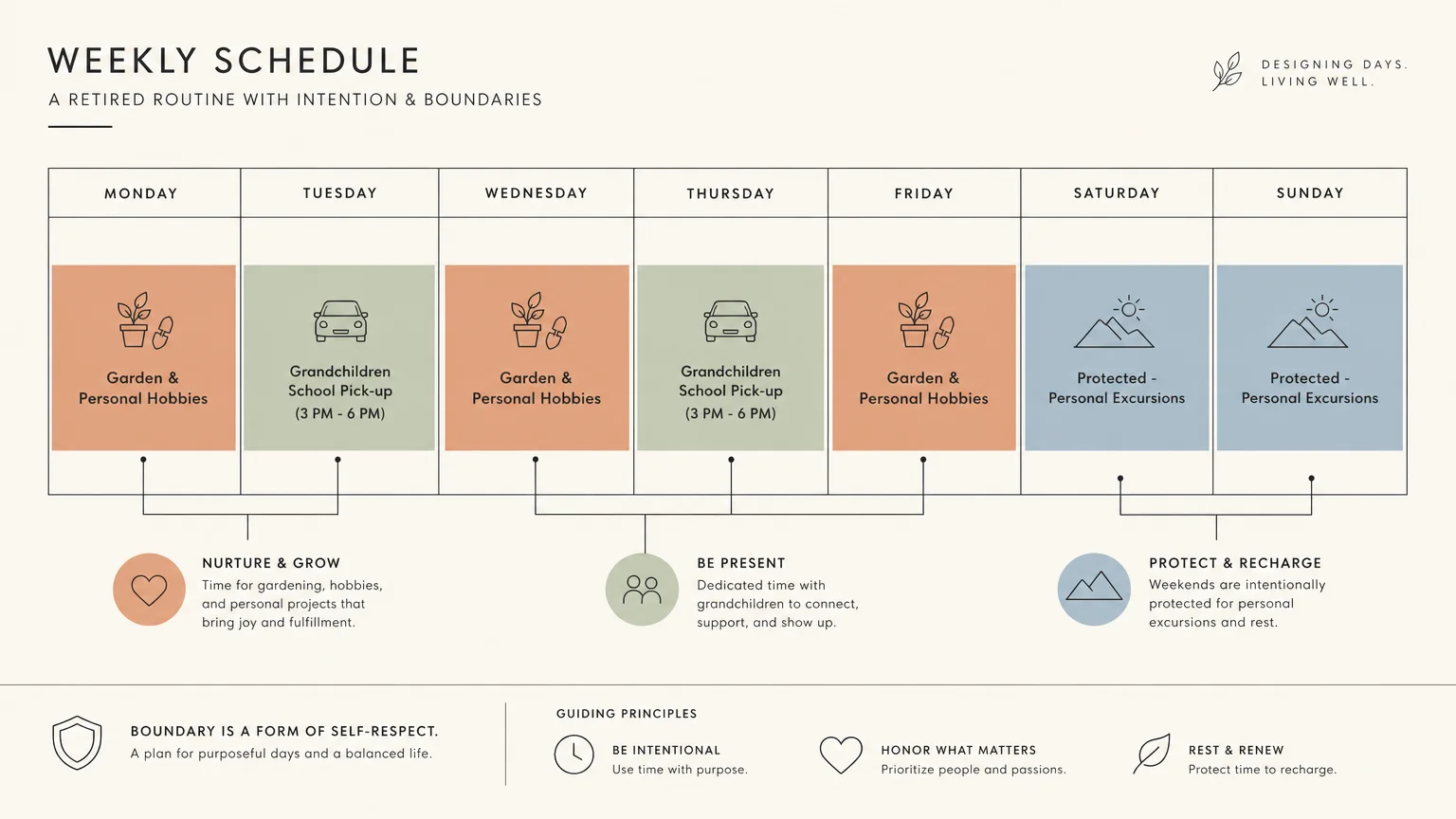
Take charge of your time by establishing clear, loving boundaries early on. Communicate your availability plainly to your children. For example, you might offer to pick the grandchildren up from school on Tuesdays and Thursdays, while protecting your weekends for your own excursions. Framing these boundaries positively prevents resentment and ensures that the time you do spend with your family remains joyful and fulfilling.
Practical insights make this process much easier. Sit down with a blank calendar and physically block out time for your personal hobbies, exercise routines, and social engagements. Treat these personal appointments with the same respect you gave your professional meetings. When your family sees that you have a structured, active life, they will naturally begin to respect your time, leading to healthier family relationships and a more balanced, blissful retirement.

Tip #2: Clarifying Your Long-Term Living Arrangements
Your home represents decades of cherished memories, holiday gatherings, and family milestones. Naturally, deciding where you will live during your golden years carries profound emotional weight for both you and your children. Clarifying your long-term living arrangements ranks among the most vital family discussions you can initiate, as it directly impacts your physical safety and financial security.
Many older adults passionately desire to age in place, remaining in their beloved family homes for as long as possible. If this aligns with your retirement decisions, you must discuss the practical realities of home maintenance and accessibility with your family. Walk through your current house and objectively assess its long-term safety. You might need to install walk-in showers, add sturdy handrails, or relocate your primary bedroom to the ground floor. Sharing these modification plans with your children reassures them that you are taking a proactive approach to your own well-being.
You must also consider the financial impact of maintaining a large property. Roof repairs, landscaping, and rising property taxes rapidly drain fixed incomes over time. Evaluate whether your retirement budget can comfortably absorb these ongoing expenses, and share these calculations with your trusted family members so everyone understands the financial realities of your housing choice.
Alternatively, you might realize that maintaining a large, empty-nest property drains your energy. Downsizing to a comfortable, single-story home or transitioning into an active 55-plus community often provides immense relief and introduces vibrant new social opportunities. If you plan to sell the family home, give your children ample notice. This allows them time to process the emotional transition and retrieve any childhood belongings they left behind.
Sometimes, retirees consider relocating closer to their adult children to enjoy more frequent visits and secure a reliable support system. Before making a cross-country move, have an honest conversation about expectations. Discuss how often you expect to see them and verify that their current location suits your preferred climate and healthcare needs. By mapping out your housing strategy clearly, you eliminate the guesswork and prevent your family from having to make frantic, crisis-driven decisions on your behalf later on.

Tip #3: Aligning on Financial Support and Expectations
Money remains one of the most sensitive topics for families to tackle, yet achieving absolute clarity on financial expectations is essential for your peace of mind. As you transition to a fixed income, your financial landscape shifts dramatically. You can no longer rely on your next paycheck to replenish your savings, which means you must fiercely protect your retirement nest egg.
Many generous parents fall into the trap of functioning as the “Bank of Mom and Dad,” continuously bailing their adult children out of debt or funding lavish lifestyles. While wanting to help your children is a natural instinct, jeopardizing your own financial independence ultimately burdens your family down the line. You must initiate a transparent conversation about your new financial realities and establish firm limits on monetary support.
Explain the critical importance of maintaining an untouched emergency fund. Your adult children need to realize that you no longer have a corporate salary to rebuild depleted savings. Framing your financial boundaries around your own need for security helps your family understand that saying “no” to a loan is a responsible choice, not a personal rejection.
Start by comprehensively reviewing your retirement budget. Calculate exactly what you need to cover your essential living expenses, healthcare costs, and lifestyle goals. Once you understand your own financial boundaries, communicate these parameters to your children with warmth and firmness. If you previously paid for their cell phone plans, car insurance, or annual vacations, give them a definitive timeline for assuming these expenses themselves.
This conversation also extends to funding your grandchildren’s education. If you plan to contribute to a college savings fund, specify the exact amount you can comfortably afford each year. Conversely, if your retirement planning does not leave room for tuition assistance, state this clearly so your children can make their own appropriate financial arrangements.
Approaching financial discussions with honesty rather than secrecy fosters mutual respect. Explain that preserving your financial independence is the greatest gift you can give them, as it ensures you will never become a financial burden in your later years. When everyone understands the economic boundaries, you eliminate the risk of unspoken resentment and cultivate a mature, supportive dynamic within your family.

Tip #4: Mapping Out Healthcare and Medical Wishes
Navigating healthcare and medical choices often feels daunting, but leaving these critical decisions up to chance invites unnecessary stress into your family’s life. Mapping out your healthcare wishes stands as a profound act of love; it relieves your children of the agonizing burden of guessing what you would want during a medical emergency.
Begin this vital process by discussing advance directives with your loved ones. An advance directive, or living will, explicitly outlines your preferences regarding life-sustaining medical treatments, resuscitation, and artificial nutrition. While discussing end-of-life care feels uncomfortable initially, pushing past the awkwardness guarantees your medical wishes remain respected, regardless of your physical state.
Medical preferences often evolve as you age, making this an ongoing conversation rather than a one-time event. Make it a habit to review these documents with your family every five years or after any major change in your health status. Keeping your family informed of your current mindset provides them with lasting reassurance.
You also need to legally designate a healthcare proxy—a trusted individual granted the medical power of attorney to make healthcare decisions on your behalf if you become incapacitated. Choose a family member who possesses the emotional resilience to advocate for your documented wishes, even under intense pressure. Sit down with this person and explain your philosophy on medical interventions, quality of life, and palliative care to ensure they fully grasp your perspective.
Beyond emergency scenarios, you must address your long-term care strategy. The costs associated with assisted living facilities, in-home nursing aides, and memory care quickly deplete savings if left unaddressed in your retirement planning. Discuss how you intend to fund potential long-term care needs. Do you hold a robust long-term care insurance policy? Do you expect to utilize your home equity to cover these expenses?
By addressing these complex healthcare scenarios while you remain healthy and sharp, you empower your family to act decisively and confidently when the time comes. They will never have to agonize over whether they made the right choice, because you already provided them with a clear, unambiguous roadmap to follow.
Tip #5: Sharing Your Legacy and End-of-Life Planning
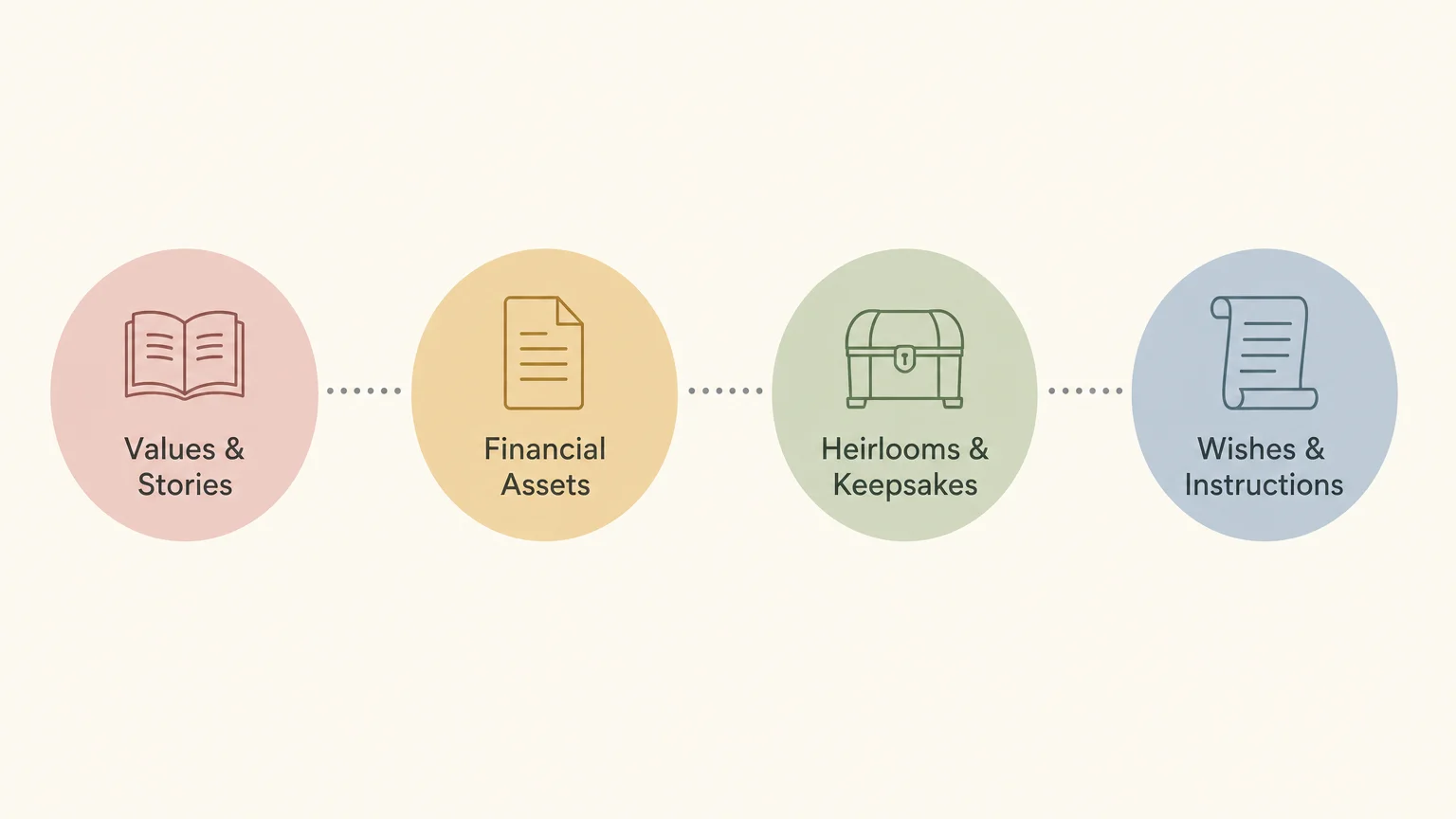
Your legacy encompasses far more than the financial assets outlined in your bank accounts; it includes your values, your family history, and the cherished possessions you accumulated over a lifetime. Sharing your legacy and detailing your end-of-life planning ensures your memory brings your family joy rather than administrative chaos.
Estate planning serves as the foundation of this conversation. Ensure your children know exactly where to locate your most recent will, trust documents, life insurance policies, and property deeds. Organize a comprehensive “when I am gone” folder containing these essential legal papers, alongside a list of your bank accounts and contact information for your estate attorney and financial advisor.
In our modern era, your digital footprint demands equal attention. Ensure your trusted family members know how to access your online photo galleries, email accounts, and social media profiles. Leaving clear instructions on how to handle your digital presence prevents your treasured digital memories from being permanently locked away or lost.
However, the most contentious disputes among siblings rarely involve money; they usually revolve around objects possessing deep sentimental value. The antique grandfather clock, your mother’s wedding china, or your collection of vintage photographs can easily trigger emotional conflicts. Proactively ask your children which specific items hold the most meaning to them. By openly discussing the distribution of physical heirlooms now, you can address any competing desires equitably and document your decisions to prevent future friction.
Take this opportunity to share the rich stories behind these possessions. Explain the history of the family quilt or the circumstances surrounding an old piece of jewelry. Consider recording yourself narrating family history, sharing your favorite memories, or writing personal letters to your children and grandchildren.
These intimate family discussions transform the concept of end-of-life planning from a bleak administrative task into a beautiful celebration of your life. Giving your loved ones a well-organized estate and a documented family history provides them with immeasurable comfort, allowing them to grieve peacefully and celebrate your legacy without the distraction of preventable logistical nightmares.
For a wide range of resources for older adults, visit AARP and the National Council on Aging (NCOA). Health information is available from the National Institute on Aging.

The Takeaway: Living a More Blissful Retirement
Initiating these five essential conversations represents a powerful step toward securing the joyful, stress-free future you deserve. While discussing topics like medical directives, financial boundaries, and end-of-life planning might initially feel daunting, leaning into these dialogues ultimately strengthens your family bonds. You replace anxiety and uncertainty with profound mutual understanding and respect.
Your retirement marks a spectacular new beginning, offering you the canvas to paint the lifestyle you always envisioned. By clearly articulating your daily routine, securing your living arrangements, and transparently communicating your financial and medical wishes, you eliminate the guesswork that so often leads to family conflict. You empower your children to transition from dependents to supportive allies in your senior journey.
Take action today by scheduling a relaxed family meeting to tackle the first topic on this list. Approach the discussion with warmth, optimism, and an open heart. When you take the lead in communicating your vision, you protect your autonomy and ensure your golden years remain a time of immense happiness, vibrant health, and unbroken family harmony.
Frequently Asked Questions
How do I start a difficult conversation with my adult children?
Begin by choosing a calm, neutral environment free from distractions. Frame the conversation positively by emphasizing that you want to share your retirement plans to ensure everyone stays on the same page. Use “I” statements, such as “I want to share my thoughts on my new schedule,” which prevents your loved ones from feeling defensive. Remind them that your goal is to protect your relationship and make the future as easy as possible for the entire family.
What if my spouse and I have entirely different visions for our retirement?
Diverging expectations are incredibly common among couples entering their golden years. The key involves active listening and a willingness to compromise. Schedule dedicated time to discuss your individual dreams without interrupting one another. Look for intersecting interests where your visions overlap. You can blend your goals; for example, you might agree to dedicate three months of the year to travel, while spending the remainder of the year enjoying quiet hobbies at home.
When is the right time to have these family discussions?
The absolute best time to initiate these conversations is right now, while you are healthy, active, and fully capable of making sound decisions. Waiting for a health crisis or a financial emergency to force these discussions often leads to rushed, highly emotional outcomes. Proactive planning empowers you to make thoughtful choices and gives your family ample time to process and support your retirement decisions.
Disclaimer: This article is for informational and inspirational purposes only. It is not a substitute for professional medical, financial, or psychological advice. Please consult with a qualified expert for guidance tailored to your individual needs.