

You can maximize your monthly retirement income and protect your financial independence by mastering key Social Security rules today. Clear knowledge transforms complex government guidelines into dependable lifetime cash flow for your golden years.
Recent policy updates bring substantial changes to cost-of-living adjustments, earnings limitations, and claiming strategies. Understanding these mechanics gives you total control over your retirement budget and future lifestyle.
Whether you plan to file next month or several years from now, reliable answers will guide your decisions. Explore these eleven vital questions to secure every dollar you earned.
Tip #1: How Much Will the 2027 COLA Increase Your Monthly Check?
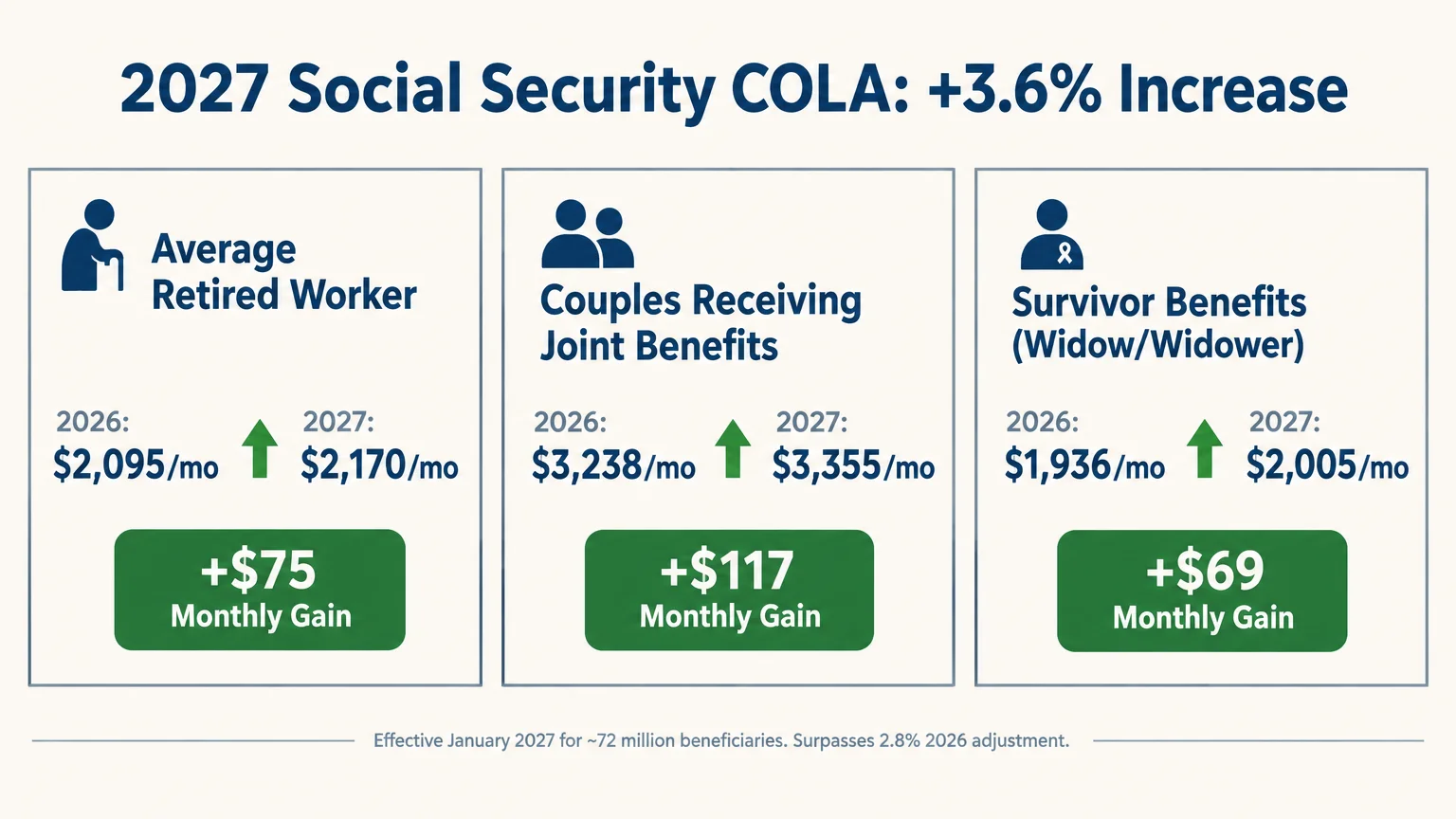
The Social Security Administration announced on October 14, 2026, that benefits will increase by 3.6% in 2027. This welcome raise surpasses the 2.8% adjustment delivered in 2026.
The higher payment begins in January 2027 for nearly 72 million Social Security recipients. Approximately 7.3 million Supplemental Security Income recipients will receive their elevated payments on December 31, 2026.
For the average retired worker, this 3.6% bump adds about $75 per month to household income. Average monthly checks will climb from $2,095 to $2,170.
Couples receiving joint benefits will see an even larger boost in their monthly budget. Their average combined payment increases from $3,238 to $3,355.
Widows and widowers living alone will also gain meaningful relief against persistent living costs. The average monthly survivor benefit rises from $1,936 to $2,005.
You can verify your specific increase before postal mailings arrive at your home. Beneficiaries who set up a personal account by November 18, 2026, can access their official notice online.
If you prefer physical mail, the agency delivers printed statements throughout December. Knowing your exact figure helps you plan your upcoming holiday season and New Year spending with ease.
Remember that Supplemental Security Income payments also rise with this cost-of-living formula. The federal payment standard increases from $994 for individuals and $1,491 for couples in 2026 to $1,029 and $1,544 in 2027.
Meanwhile, resource limits for SSI remain steady at $2,000 for individuals and $3,000 for married couples. Keep these resource caps in mind when organizing your savings.
This positive boost provides breathing room as you manage recurring utility bills, grocery receipts, and prescription expenses. Treat this extra money as a stepping stone toward a worry-free financial season.

Tip #2: What Is Your Exact Full Retirement Age?
Your Full Retirement Age represents the benchmark when you qualify for 100% of your earned retirement benefit. Claiming before this designated birthday permanently reduces your monthly check.
Federal law establishes your retirement age based strictly on the year you were born. Knowing your specific date prevents costly miscalculations that could reduce your lifetime income.
If you were born in 1959, your Full Retirement Age is exactly 66 years and 10 months. You reach full eligibility shortly before your sixty-seventh birthday.
For everyone born in 1960 or later, Full Retirement Age reaches the statutory maximum of 67. This standard applies to millions of workers currently preparing for their transition out of the workforce.
Reaching this milestone unlocks crucial financial flexibility for your household. You can collect your complete baseline payout without any reduction or penalty.
Claiming before this statutory benchmark results in a permanent reduction of your monthly income. For every month you file prior to your Full Retirement Age, the government shaves a fraction of a percent from your baseline payment.
You also eliminate all restrictions on outside earned income once you reach this milestone. Reviewing your birth year ensures you choose a retirement date that suits your personal timetable.
Take time to mark your exact milestone month on your home calendar. Doing so brings clarity and structure to your long-term wealth strategy.
Tip #3: How Much Do You Permanently Lose by Claiming at Age 62?
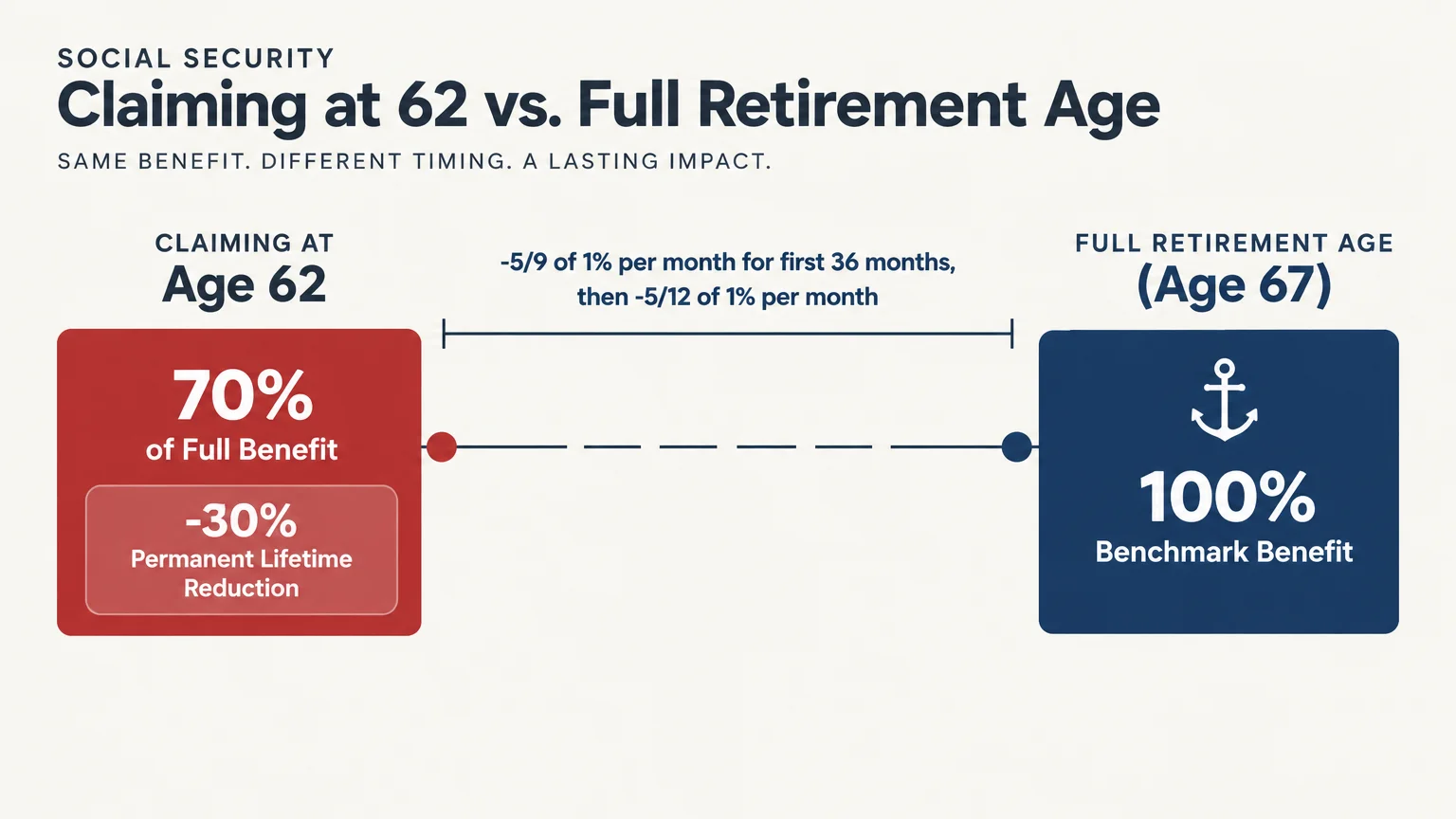
You can claim your retirement benefits as early as age 62. However, choosing this early path comes with a permanent reduction in your monthly income.
Filing at age 62 reduces your baseline monthly check by up to 30%. This reduction stays in effect for the rest of your life.
To put this into perspective, the maximum benefit for someone claiming at age 62 in 2026 is $2,969. That figure sits well below the maximum available at later ages.
The government reduces your payment because actuarial tables assume you will collect checks across a longer span of years. Early filing spreads your lifetime pool of money across more months.
Claiming early can make sense if you face health challenges or urgent cash needs. It offers an immediate financial cushion when other income sources dry up.
Early filing can also affect the survivor benefits your spouse might receive down the road. If you lock in a reduced check, your surviving spouse may receive that smaller baseline amount.
Yet, if you enjoy good health and active work, early filing might leave substantial money on the table. You lock in lower checks that compound more slowly across future cost-of-living increases.
Carefully weigh your current lifestyle, family health history, and alternative savings before making this permanent decision. A measured choice today creates enduring peace of mind for tomorrow.

Tip #4: Why Does Delaying Social Security Until Age 70 Pay Off?
Patience yields extraordinary financial dividends when it comes to your Social Security benefits. Delaying your claim past your Full Retirement Age earns you guaranteed delayed retirement credits.
Your monthly benefit grows by 8% per year for every year you delay until age 70. No standard commercial annuity or savings bond guarantees that level of annual growth.
For someone with a Full Retirement Age of 67, waiting until age 70 increases your monthly benefit by 24%. That dramatic increase protects your purchasing power throughout your later decades.
Consider the top earners who maximize their benefits through this strategy. In 2026, the maximum monthly benefit at age 70 was $5,181; in 2027, that figure jumps to $5,358.
Delayed credits stop accumulating the month you reach age 70. There is no financial benefit to waiting beyond your seventieth birthday to claim your funds.
Delaying can serve as an exceptional longevity insurance policy. It guarantees that you receive your largest possible inflation-adjusted check during your most vulnerable years.
This guaranteed annual increase provides a powerful hedge against long-term inflation. Over ten or twenty years of retirement, those larger base payments result in significantly higher cost-of-living dollar increases.
If your personal savings or ongoing employment allow you to wait, delaying offers remarkable peace of mind. Every additional month of patience builds a stronger foundation for your future.

Tip #5: Can You Work and Collect Social Security at the Same Time?
You can certainly work while receiving Social Security, but specific earnings limits apply if you have not reached Full Retirement Age. The Retirement Earnings Test temporarily withholds benefits if your wages exceed annual thresholds.
If you remain under Full Retirement Age throughout 2026, the annual earnings limit is $24,480 ($2,040 per month). In 2027, that earnings threshold increases to $25,560 ($2,130 per month).
The agency withholds $1 in benefits for every $2 you earn above these baseline limits. This rule applies solely to earned wages and self-employment income, not investments or pensions.
A more generous formula applies during the calendar year you reach your Full Retirement Age. The limit rises to $65,160 ($5,430 per month) in 2026, and expands to $67,920 ($5,660 per month) in 2027.
During that milestone year, the government withholds only $1 for every $3 you earn above the threshold. This calculation counts only the months leading up to your birthday.
Starting the exact month you reach Full Retirement Age, the earnings penalty disappears completely. You can earn an unlimited salary without losing a single dollar of your benefits.
Keep accurate records of your monthly wages throughout the year if you work while collecting. Providing timely earnings estimates to the administration prevents sudden clawbacks or delayed payments.
Furthermore, withheld money is never truly lost; the agency recalculates your check at Full Retirement Age to credit those withheld sums back. Continuing to work can keep your mind sharp while replenishing your nest egg.
Tip #6: How Much of Your Social Security Benefit Is Subject to Federal Income Tax?
Many retirees are surprised to learn that Social Security benefits can trigger federal income taxes. The IRS uses a specific formula called provisional income to determine your tax liability.
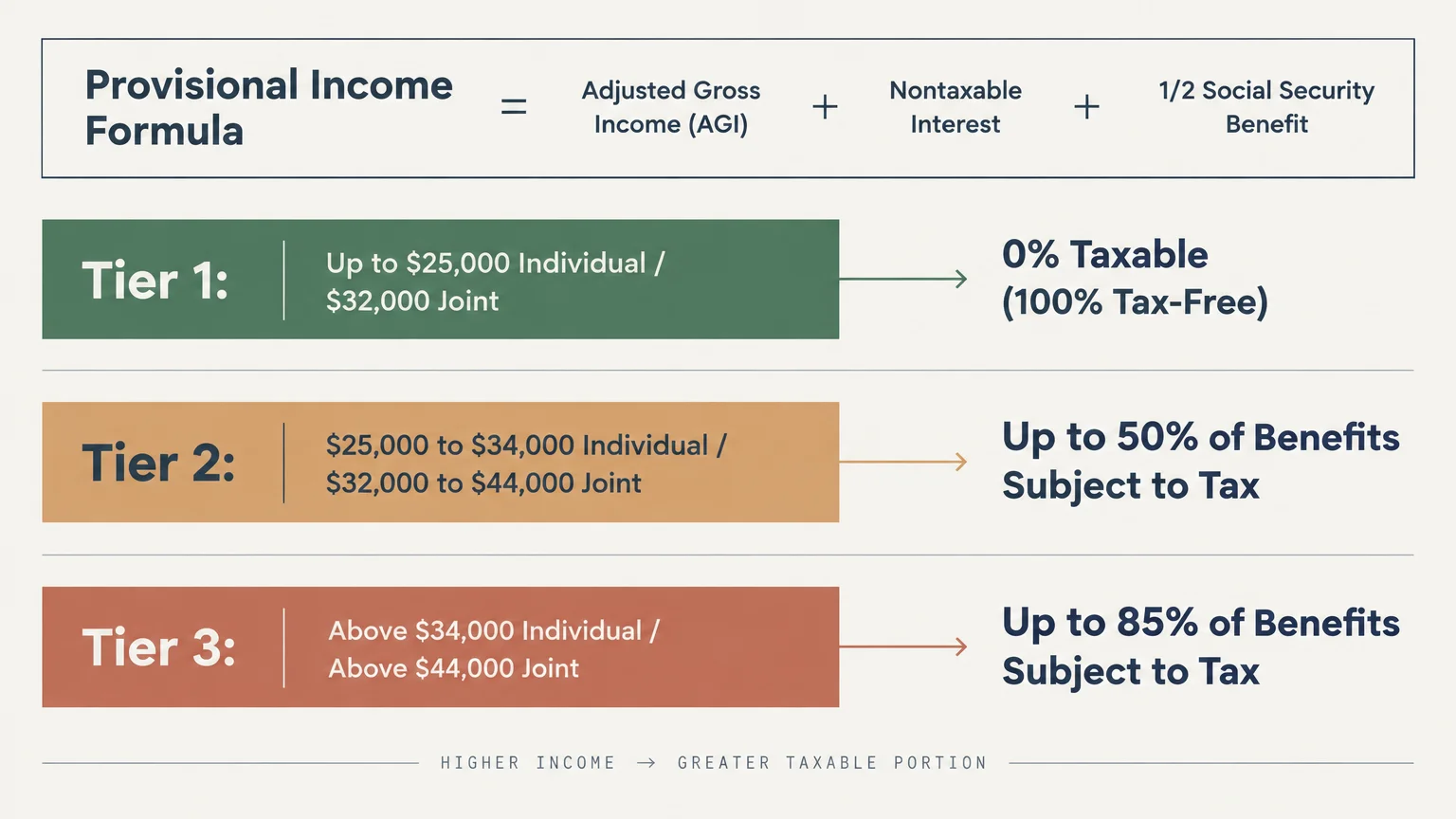
To calculate your provisional income, combine your adjusted gross income, nontaxable interest, and exactly 50% of your annual Social Security benefits. That single total determines your tax bracket.
For single filers, provisional income between $25,000 and $34,000 exposes up to 50% of benefits to income tax. If your income exceeds $34,000, up to 85% becomes taxable.
For married couples filing jointly, provisional income between $32,000 and $44,000 taxes up to 50% of benefits. Crossing above $44,000 makes up to 85% of your benefits subject to federal taxation.
Because Congress established these thresholds decades ago without automatic inflation adjustments, more beneficiaries cross them each year. Even modest pension payments or investment gains can push you over the mark.
Municipal bond interest, though exempt from federal income tax, still counts toward provisional income. Be mindful of tax-exempt interest when calculating whether your benefits will face taxation.
You can manage this tax burden through thoughtful, proactive withdrawal strategies. Drawing funds from Roth IRAs or health savings accounts generates income that avoids inflating your provisional calculation.
Work with a trusted financial planner to map your distributions efficiently each calendar year. Strategic tax planning preserves your wealth and keeps more hard-earned money in your pocket.

Tip #7: Will the Social Security Trust Fund Really Run Out of Money?
Sensational headlines often claim that Social Security is going broke, causing unnecessary anxiety for millions of older Americans. The actual financial situation is far more nuanced and manageable than alarmists suggest.
The June 2026 Trustees Report projects that Old-Age and Survivors Insurance Trust Fund reserves will be depleted during the fourth quarter of 2032. That projection highlights the need for sensible legislative action.
Even if reserves deplete entirely, Social Security will never go bankrupt or cease payments. Ongoing payroll taxes from millions of active workers will continue flowing into the system every single payday.
Without congressional reform, incoming tax revenue would still cover approximately 78% of scheduled benefits in late 2032. If hypothetically combined with Disability Insurance reserves, funds would cover 83% of benefits through the third quarter of 2034.
Congress has historically acted to protect Social Security whenever solvency deadlines approached. Lawmakers understand that older voters depend heavily on these reliable checks for daily sustenance.
Historically, previous generations faced similar funding deadlines and watched federal leaders implement bipartisan compromises. You can remain confident that policymakers will protect this essential cornerstone of American retirement.
Potential solutions include adjusting the payroll wage cap, modifying tax rates, or adjusting full retirement ages for future generations. None of these proposed adjustments target current retirees.
Stay optimistic and avoid making premature claiming decisions out of fear. The foundation of this vital American program remains remarkably durable and widely supported across the political spectrum.

Tip #8: How Do Spousal and Survivor Benefits Protect Your Household?
Social Security provides extraordinary protections for families through spousal and survivor benefits. These provisions ensure that a lower-earning partner maintains dignity and financial security throughout retirement.
As a spouse, you can claim up to 50% of your partner’s Full Retirement Age benefit amount. You receive this payout even if you never worked outside the home or accumulated your own work credits.
To qualify for a spousal benefit, your spouse must already be collecting their own retirement check. Your personal payout does not reduce your partner’s monthly benefit in any way.
Divorced spouses can also receive benefits based on an ex-partner’s earnings record. You qualify if your marriage lasted at least ten consecutive years and you remain currently unmarried.
Survivor benefits offer even deeper protection if your spouse passes away before you. A surviving widow or widower can step into 100% of the deceased spouse’s actual monthly benefit.
To claim survivor benefits, you must have been married for at least nine months before your spouse’s passing, with exceptions for accidents. Exploring these rules early ensures your family avoids administrative delays during difficult times.
In 2027, the average monthly benefit for an aged widow or widower living alone rises to $2,005. That represents an increase from $1,936 in 2026.
Meanwhile, an aged couple where both receive benefits will see average combined payments rise from $3,238 to $3,355 in 2027. Coordinate your filing plans together to maximize this vital safety net for both lifetimes.
Tip #9: What Is the Maximum Monthly Benefit You Can Possibly Receive?
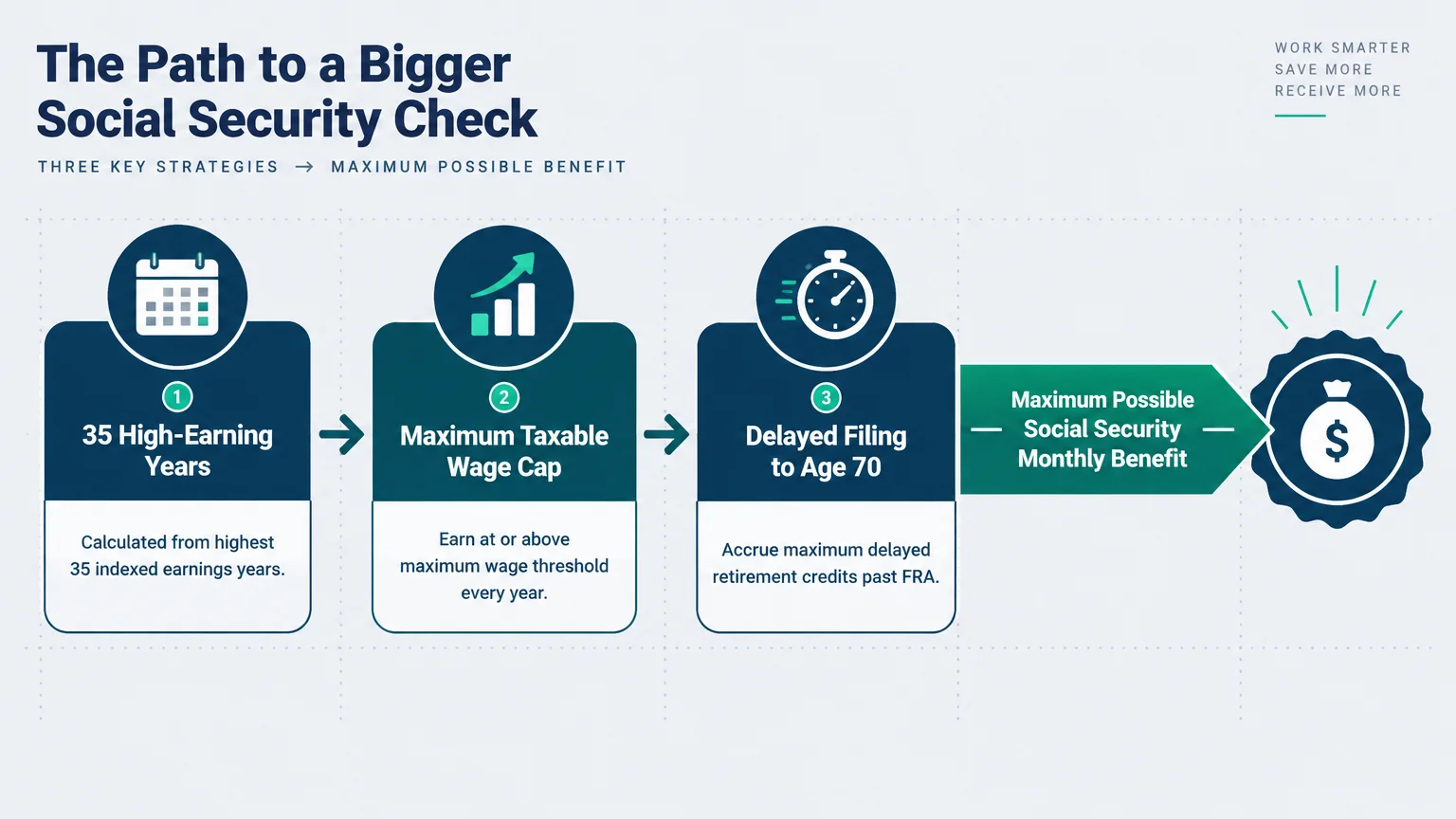
Many retirees wonder about the absolute top payout possible under the Social Security formula. Earning the maximum benefit requires decades of peak earnings and strategic claiming.
For a worker claiming at Full Retirement Age, the maximum monthly benefit climbs from $4,152 in 2026 to $4,188 in 2027. That provides an exceptionally robust financial foundation.
Workers who delay filing until age 70 unlock the highest potential checks in the system. Their maximum monthly payment increases from $5,181 in 2026 to an impressive $5,358 in 2027.
To achieve these peak figures, you must earn at or above the federal taxable wage cap for at least 35 years. In 2026, that wage cap is $184,500; in 2027, it expands to $192,300.
Earnings up to that threshold face the 6.2% Social Security payroll tax each year. The 1.45% Medicare tax applies to all your earnings without any cap.
Keep in mind that earnings above the taxable wage cap do not generate additional Social Security credits or benefits. Knowing this limit helps high earners optimize their overall tax and retirement savings strategy.
While few workers reach the absolute ceiling, knowing these thresholds helps you appreciate how higher career earnings elevate your checks. Every year of solid earnings replaces a leaner wage year in your calculation.
Focus on maximizing your own personal formula rather than comparing checks with neighbors. Every intentional career step and delayed filing decision brings you closer to your personal maximum.

Tip #10: How Many Work Credits Do You Need to Qualify for Retirement Benefits?
Qualifying for Social Security retirement benefits requires accumulating a minimum number of work credits throughout your working life. The system measures your eligibility through these modest quarterly milestones.
You must earn 40 lifetime credits to qualify for retirement checks, which equals roughly ten full years of work. You can earn a maximum of four credits during any single calendar year.
Earning a credit depends entirely on your wages, not the calendar quarters you spend on the clock. In 2026, you earn one credit for every $1,890 in earnings, requiring $7,560 for four credits.
In 2027, the requirement adjusts slightly upward to $1,970 per credit, requiring $7,880 to capture the full four credits. Even part-time work easily clears this low hurdle.
Once you reach 40 credits, your eligibility is locked in for life. Additional credits do not increase your payout; your benefit amount depends solely on your highest 35 earning years.
If you qualify for disability benefits, the administration adjusts the substantial gainful activity limit annually. In 2026, the limit is $1,690 per month for non-blind individuals and $2,830 for blind individuals.
In 2027, those monthly disability thresholds rise to $1,770 for non-blind recipients and $2,950 for blind recipients. This adjustment allows disabled workers to earn slightly more while maintaining essential assistance.
If you have fewer than 35 years of covered earnings, the government inserts zero-income years into your formula. Working a few extra years replaces those zeros with positive wages, quickly boosting your payout.
Check your work history regularly to confirm that all your lifetime earnings appear accurately on your official record. Ensuring your credits are documented correctly guarantees the retirement security you rightfully earned.

Tip #11: When and How Should You Check Your Official Social Security Statement?
Your official Social Security statement provides a comprehensive snapshot of your earned credits, estimated payments, and recorded lifetime wages. Reviewing this document annually is one of the smartest financial habits you can cultivate.
You can view your statement anytime by creating a free, secure account on the official administration website. Setting up your online portal takes only a few minutes and protects your identity from potential scammers.
Reviewing your earnings history ensures your employers properly reported your annual wages to the federal government. Catching clerical mistakes early prevents permanent reductions in your future retirement benefits.
Reviewing your statement also helps you verify that no identity theft has occurred under your number. Spotting unfamiliar earnings reports allows you to alert the administration immediately and protect your record.
Digital account holders also receive critical updates faster than individuals waiting for physical mail. Beneficiaries must enroll in paperless notices by November 18, 2026, to view their 2027 COLA notice online in late November.
Your statement provides customized benefit estimates for claiming at age 62, Full Retirement Age, and age 70. These concrete projections empower you to test different retirement scenarios and select your ideal retirement date.
The portal also tracks your eligibility for disability protection and family survivor benefits. It serves as your personal command center for long-term household wealth planning.
Make a habit of downloading your updated statement every year around your birthday. Staying informed gives you confidence and keeps you in full control of your golden years.

The Takeaway: Living a More Blissful Retirement
Navigating Social Security does not have to feel overwhelming or intimidating. When you understand the core rules governing cost-of-living increases, claiming milestones, and family benefits, you turn uncertainty into steady confidence.
Your benefits represent decades of dedication, hard work, and discipline. Taking full advantage of delayed credits and tax-smart distribution strategies ensures you savor the happy, fulfilling retirement you deserve.
Look toward your future with optimism and enthusiasm as you plan your upcoming adventures. A dependable monthly income stream allows you to focus on your hobbies, friendships, and lifelong passions.
For a wide range of resources for older adults, visit AARP and the National Council on Aging (NCOA). Health information is available from the National Institute on Aging.
Keep asking questions, stay curious, and celebrate each milestone along your path. You possess all the tools needed to construct a joyful, secure, and blissful next chapter.
Disclaimer: This article is for informational and inspirational purposes only. It is not a substitute for professional medical, financial, or psychological advice. Please consult with a qualified expert for guidance tailored to your individual needs.
Frequently Asked Questions
Does receiving a pension affect my Social Security payments?
If you earned a pension from an employer that did not withhold Social Security taxes, government offset rules may reduce your benefit. Typical examples include certain municipal or public school positions.
The Windfall Elimination Provision and the Government Pension Offset can adjust your retirement or spousal checks. Review your employment history with a benefits specialist to verify how your pension interacts with federal programs.
Consulting your local Social Security office can help you calculate the exact dollar impact before you officially retire. Planning ahead prevents unexpected surprises in your monthly household budget.
Can you change your mind after claiming Social Security early?
The Social Security Administration offers a limited one-time withdrawal option if you regret filing early. You must submit Form SSA-521 within twelve months of your initial approval date.
You must also repay all benefits received by you and your family during that period. Once completed, your earnings record resets, allowing your benefits to grow again until you file later.
Keep in mind that you can only take advantage of this withdrawal option once in your lifetime. Make sure you possess the necessary funds to repay all received benefits before submitting the paperwork.
What happens to your benefit if your spouse passes away?
When a spouse passes away, the surviving partner generally receives the higher of the two monthly benefits. You cannot combine both checks into a single massive payout.
The lower benefit ceases, while the surviving spouse transitions smoothly to the larger amount. In 2027, the average monthly benefit for an aged widow or widower living alone increases to $2,005.
You can file for survivor benefits as early as age 60, or age 50 if you are disabled. However, claiming survivor benefits before your own Full Retirement Age will reduce that monthly payout amount.
How does remarriage affect your Social Security spousal or survivor benefits?
If you remarry before age 60 (or age 50 if disabled), you forfeit eligibility for survivor benefits on a deceased former spouse’s record. However, remarrying after age 60 does not impact your survivor eligibility.
For standard spousal benefits on a living ex-spouse, remarriage terminates your eligibility entirely. You would instead look to your new spouse’s work record for future spousal claims.
If your subsequent marriage later ends due to divorce or death, your eligibility for benefits on your original ex-spouse’s record is restored. This flexible rule protects your long-term independence regardless of future life changes.