

A late direct deposit can disrupt your monthly budget and instantly test your hard-earned peace of mind. Taking immediate, structured steps resolves banking hiccups and restores your steady retirement income without prolonged stress.
Most transfer delays stem from routine calendar rotations, federal holidays, or simple administrative updates between institutions. Understanding clear banking timelines empowers you to handle these brief interruptions with total confidence.
You can easily locate missing funds, safeguard your household budget, and eliminate costly overdraft fees today. Follow this reliable checklist whenever an expected payment fails to arrive on time.
Tip #1: Verify Your Official Scheduled Payment Date
Before worrying about a late direct deposit, confirm your payer’s official distribution schedule. Many retirees assume payments arrive on identical calendar dates each month, which causes unnecessary concern.
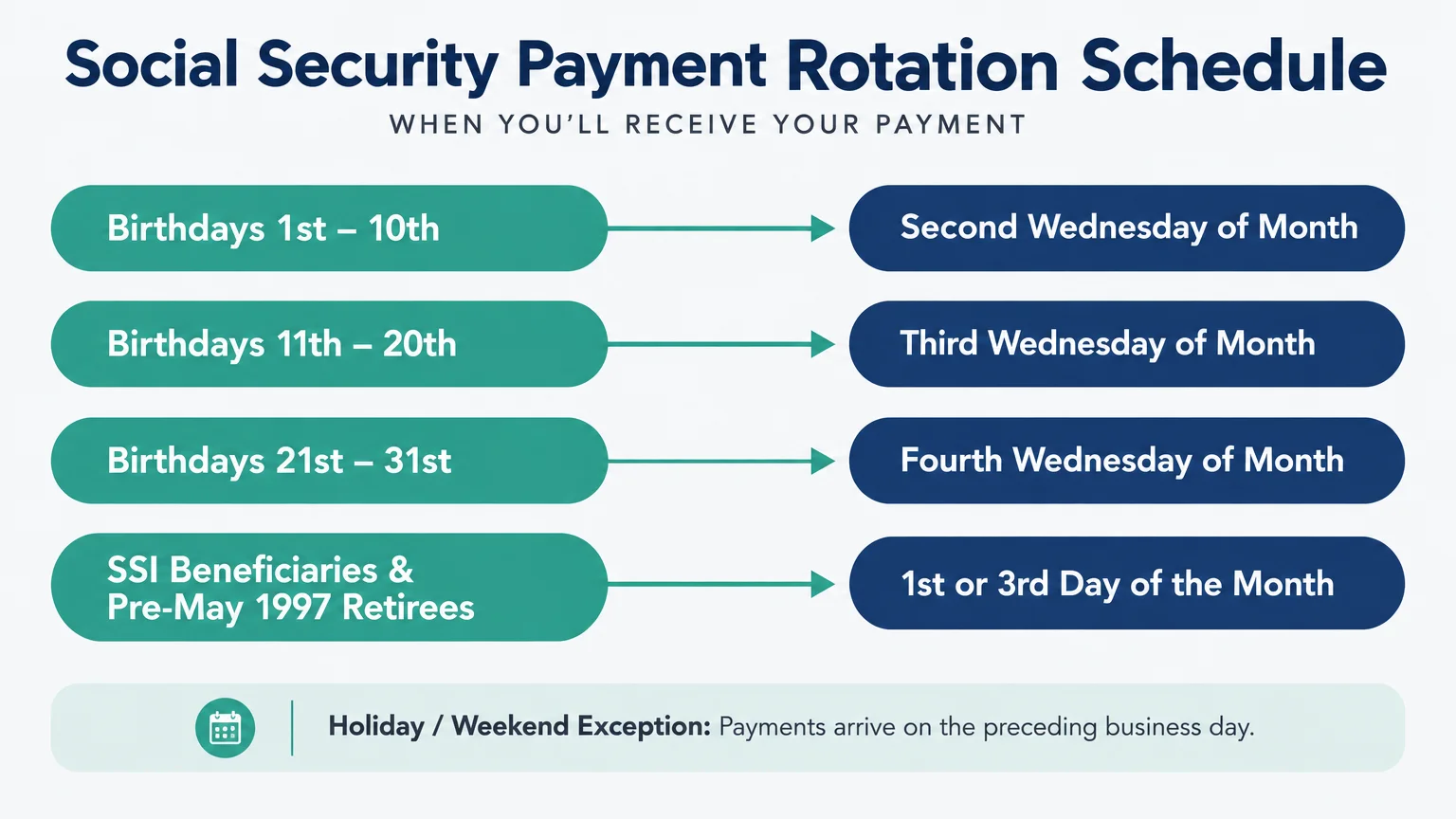
For anyone who began receiving Social Security benefits after May 1997, payments follow a Wednesday schedule determined by birth date. This structured rotation distributes federal processing volume evenly throughout every month.
If your birthday falls between the 1st and the 10th of the month, your funds arrive on the second Wednesday. You can count on this regular mid-week deposit to anchor your household budget.
Beneficiaries born between the 11th and the 20th receive deposits on the third Wednesday of each month. Meanwhile, birthdays falling between the 21st and the 31st receive their money on the fourth Wednesday.
Supplemental Security Income (SSI) follows a distinct schedule; beneficiaries receive their funds on the first day of the month. This predictable start-of-month timing simplifies rent and utility payments for millions of households.
Beneficiaries who started receiving Social Security before May 1997 receive payments on the third of each month. The government also uses this third-day schedule for individuals who receive both Social Security and SSI benefits.
Federal holiday and weekend rules can also alter your expected deposit arrival day. If your scheduled payment date lands on a Saturday, Sunday, or legal holiday, your payment arrives on the preceding business day.
Double-checking your calendar against these official federal rules resolves many perceived delays instantly. Knowing your exact date keeps your retirement planning grounded and peaceful.

Tip #2: Review Your Online Bank Portal and Pending Transactions
Log into your financial institution’s digital portal or mobile app to inspect your recent activity. Often, your missing funds already sit safely inside the banking system awaiting final clearance.
Automated Clearing House (ACH) transfers move through regional hubs in batches throughout the standard banking day. A transfer may show as pending for several hours before posting directly to your available balance.
Examine both your checking and savings accounts when reviewing your balances online. Financial institutions occasionally reroute incoming deposits to secondary accounts when account structures change or automatic transfer rules activate.
Check your portal for administrative notifications regarding temporary system maintenance or batch-processing updates. Banks routinely update their electronic platforms overnight, which can temporarily delay transaction displays until morning.
Take a clear digital screenshot of any pending transaction entries that appear on your screen. This visual record provides concrete evidence if you need to consult a bank specialist later.
Digital banking tools provide remarkable visibility into incoming payments once you know where to look. Checking pending activity replaces anxiety with immediate clarity.
Make it a healthy habit to verify these digital logs before calling customer service desks. You save valuable time by confirming internal account statuses from the comfort of home.
Remember that pending funds usually become available for immediate withdrawal by the next business morning. Staying informed through your digital portal ensures complete confidence in your daily banking.
Tip #3: Understand Early Direct Deposit Limitations
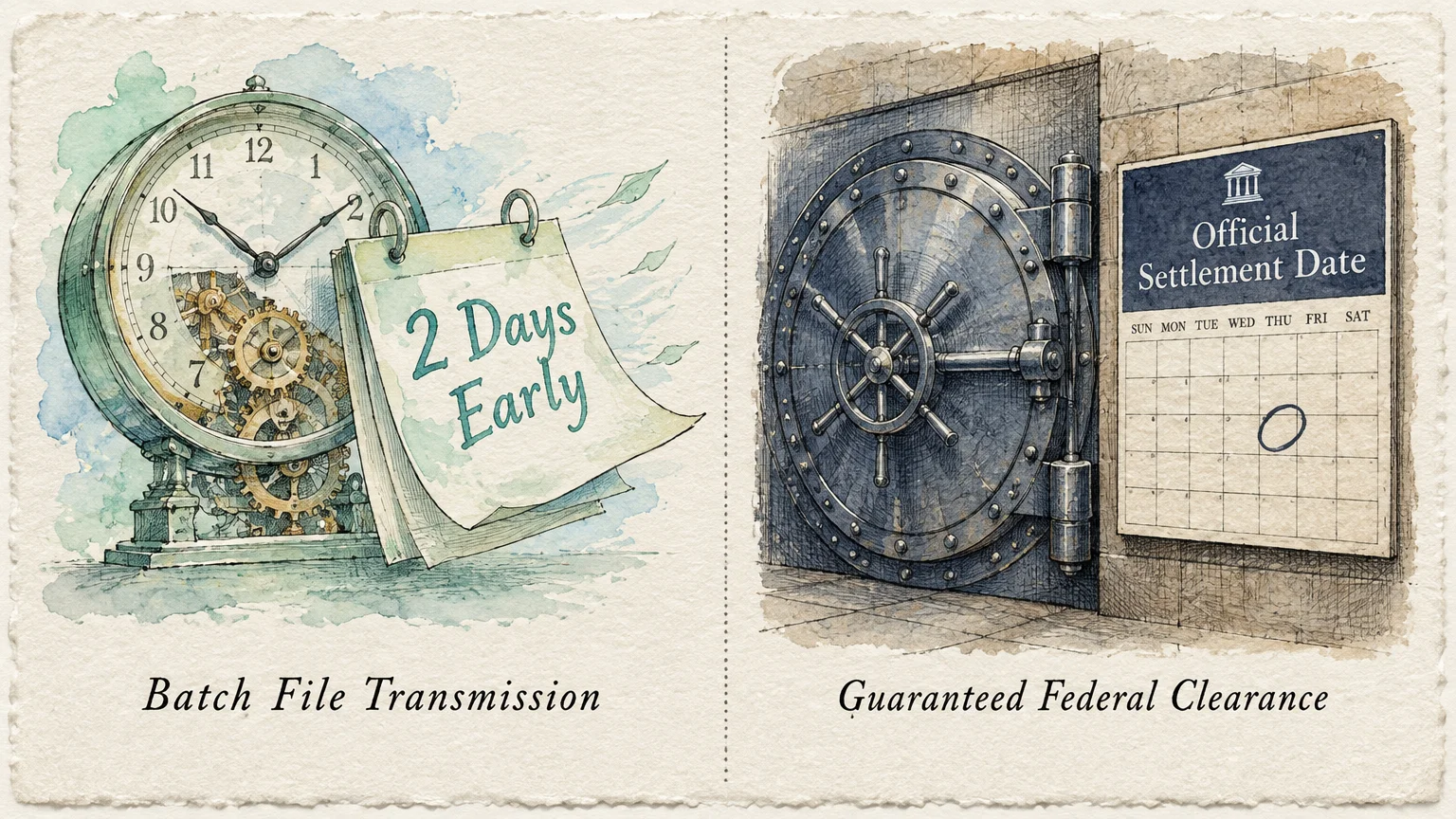
Many modern banks and credit unions advertise early direct deposit perks to attract retirement accounts. These institutions promise to release electronic funds up to two business days before your scheduled payday.
While this promotional perk feels wonderful, financial institutions do not guarantee early delivery on every cycle. Your bank can only post payments early if your payer transmits its payroll notification files ahead of schedule.
If your payer submits electronic files on a standard schedule, your deposit arrives on the official date instead. Your deposit is not officially late until your actual scheduled payday passes completely.
Clearinghouse volume surges around major holidays can also disrupt early deposit processing windows. When processing traffic spikes, banks prioritize standard clearing schedules over optional courtesy perks.
Align your monthly bill payments with your official distribution day rather than an anticipated early arrival. This simple boundary safeguards your financial commitments against unexpected processing lags.
Treating early deposits as a pleasant bonus rather than a strict entitlement preserves your peace of mind. You remain relaxed and in total control of your household finances regardless of processing shifts.
Celebrate early arrivals when they happen, but keep your budget anchored to your official calendar date. That disciplined mindset keeps your retirement finances secure and stress-free.
Recognizing the difference between courtesy processing and official distribution protects you from unnecessary worry. Clear expectations help you navigate your retirement budget smoothly every single month.
Tip #4: Inspect Recent Bank Account or Routing Number Changes
Switching your checking account to a new financial institution requires careful timing and patient oversight. Electronic distribution networks need ample administrative runway to update your routing details across complex databases.
When changing bank account or direct deposit information with the Social Security Administration, updates take 30 to 60 days. This standard processing window spans one to two complete payment cycles.
Closing an old bank account before the switch is finalized is a leading cause of missing direct deposit issues. If an issuing agency directs funds to a closed account, the receiving bank rejects the transfer immediately.
Bounced payments return to the originating agency, which can trigger an automatic hold on future distributions. Resolving a returned deposit can take several weeks of administrative verification.
Protect your monthly income by keeping your previous bank account active and funded with a small buffer. Wait until your first deposit posts successfully to your new account before closing the old one.
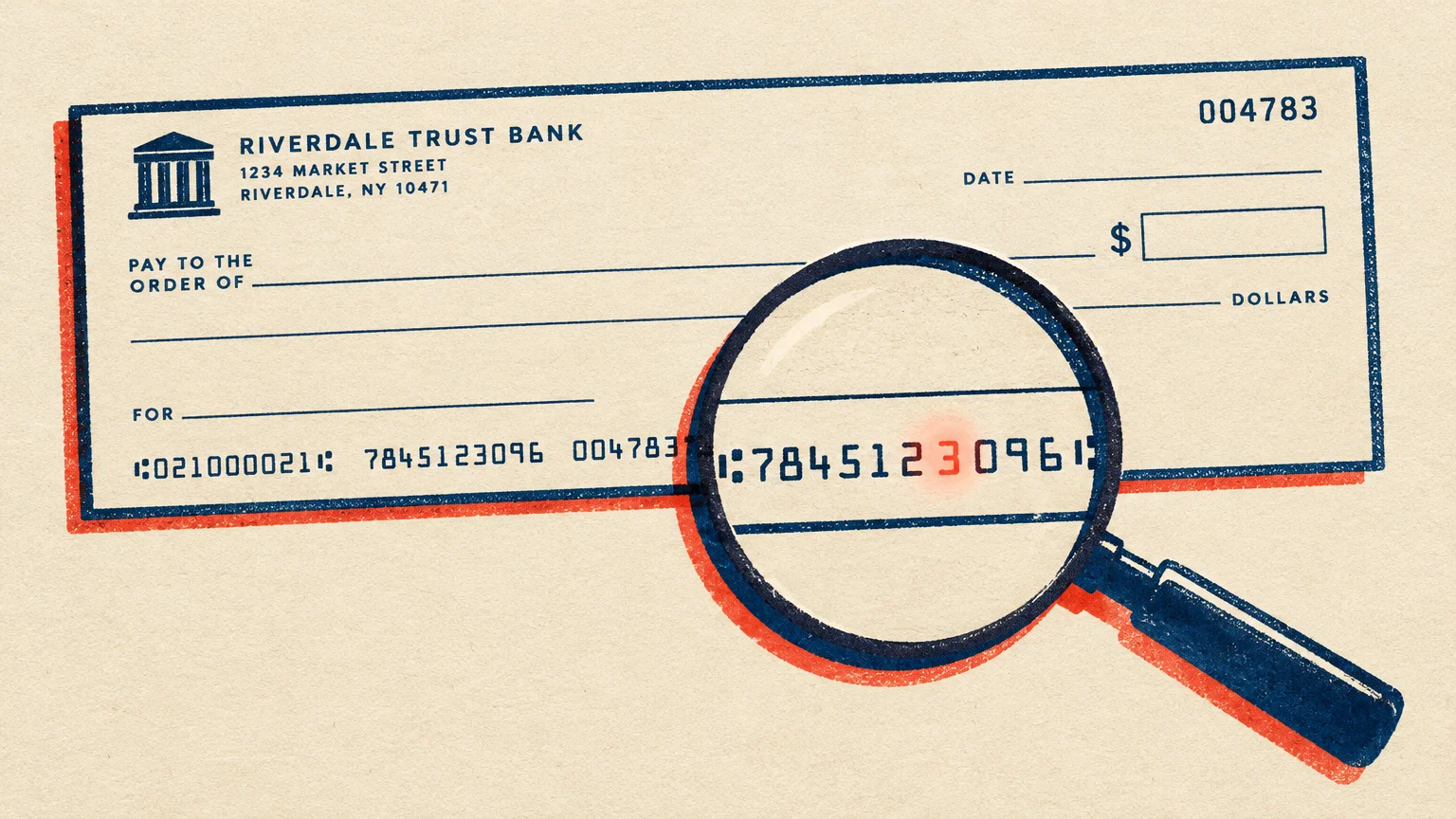
Verify that you entered every routing and account digit accurately on your direct deposit authorization forms. An accidental digit swap sends your funds into an unassigned clearing queue at your financial institution.
Requesting a written confirmation letter from your new bank ensures all electronic routing numbers match federal records. Taking this proactive precaution keeps your monthly benefits flowing uninterrupted.
Diligent recordkeeping transforms a potentially stressful account transition into a smooth, seamless experience. Protecting your payment path ensures continuous stability for your golden years.
Tip #5: Request the 15-Digit ACH Trace Number
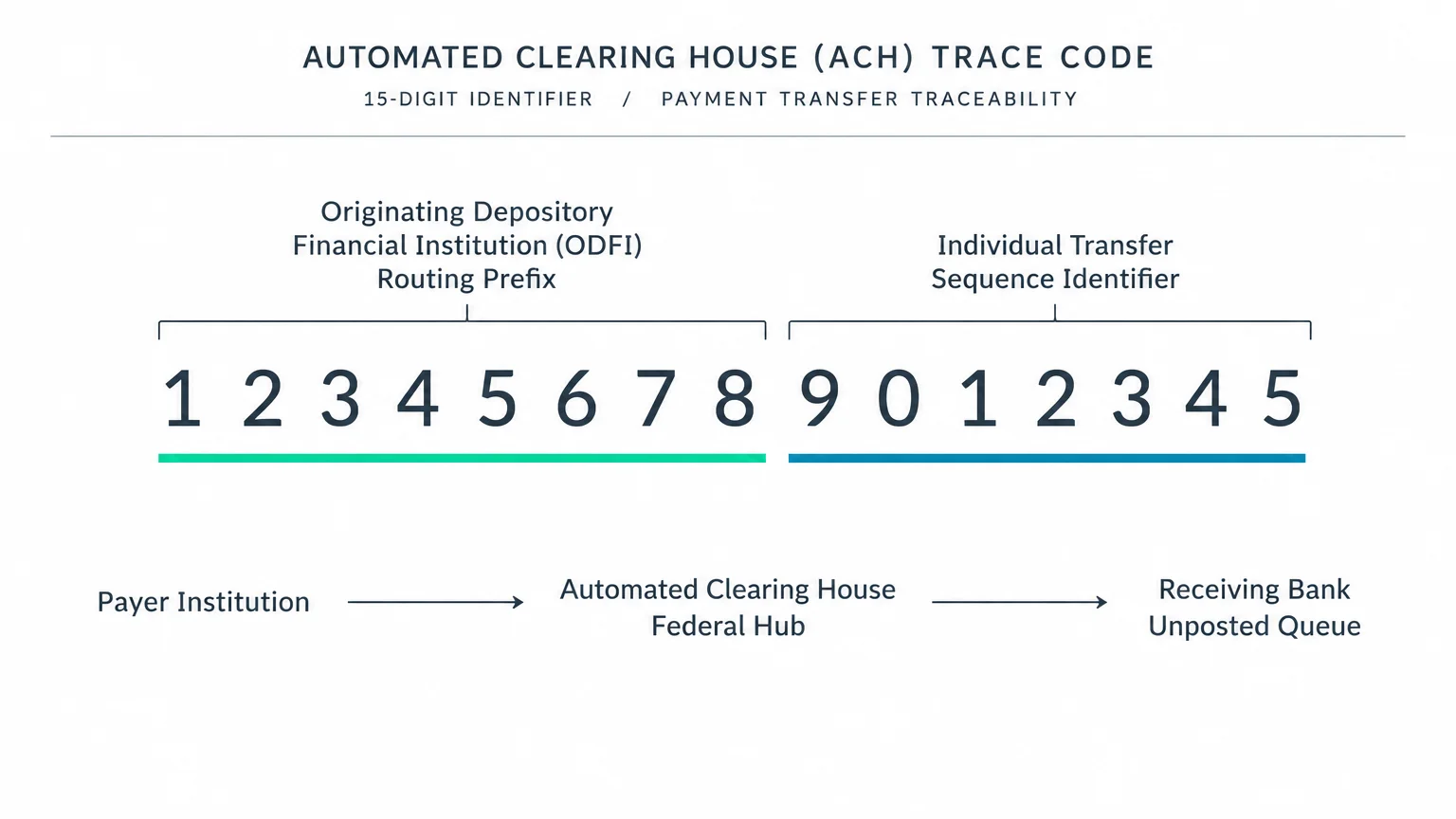
When your scheduled payment date passes without an arrival, contact your payer’s accounting or benefits office immediately. Ask the issuing administrator to provide your transaction’s official 15-digit ACH Trace Number.
Automated Clearing House networks assign this unique numeric string to every individual electronic fund transfer nationwide. It acts as a certified tracking number for digital currency moving between financial institutions.
This vital identifier proves that the payer successfully transmitted your money into the federal clearing system. It eliminates finger-pointing between payers and banks by establishing concrete electronic proof.
Providing this 15-digit code to your receiving bank enables specialists to locate your deposit within minutes. Branch representatives use internal tracking tools to identify trapped transfers instantly.
Knowing what to do payment delayed situations arise gives you immense personal leverage during financial inquiries. You replace vague inquiries with authoritative, verifiable transaction data that demands fast resolution.
Keep a dedicated notebook to record the trace number, distribution date, and the names of representatives you contact. Organized documentation commands immediate attention from financial customer service teams.
Obtaining your trace number turns confusing delays into straightforward administrative tracking tasks. You can monitor your money with total clarity every step of the way.
Reliable tracking tools ensure you never have to wonder where your hard-earned retirement dollars are sitting. Clear verification brings swift resolution and lasting peace of mind.

Tip #6: Contact Your Financial Institution’s Support Team
Reach out to your financial institution’s customer support department with your transaction details in hand. Dedicated bank specialists can view incoming file batches that mobile banking applications cannot display.
Inquire whether your bank is experiencing internal technical difficulties or temporary clearing interruptions. Routine system maintenance occasionally causes localized bank deposit problems that affect thousands of customers at once.
Familiarize yourself with Federal Reserve Regulation CC, also known as the Expedited Funds Availability Act. Under federal law, electronic direct deposits (ACH credits) are subject to next-day availability rules.
This federal standard requires banks to make funds available no later than the business day after receiving the payment. Citing this regulation demonstrates your knowledge of federal banking standards during support conversations.
If the bank received the funds, ask the specialist to release the deposit into your available balance immediately. Front-line managers often have the administrative authority to expedite pending transfers for loyal account holders.
Always maintain a calm, professional, and gracious demeanor when speaking with bank customer service representatives. Helpful courtesy encourages representatives to advocate for you and waive potential processing fees.
Request an official reference number for your support call before hanging up the telephone. Documenting your conversation establishes a helpful paper trail for future follow-up discussions.
Active communication with your bank bridges gaps quickly and prevents administrative errors from lingering. You deserve responsive service that honors your hard-earned retirement assets.
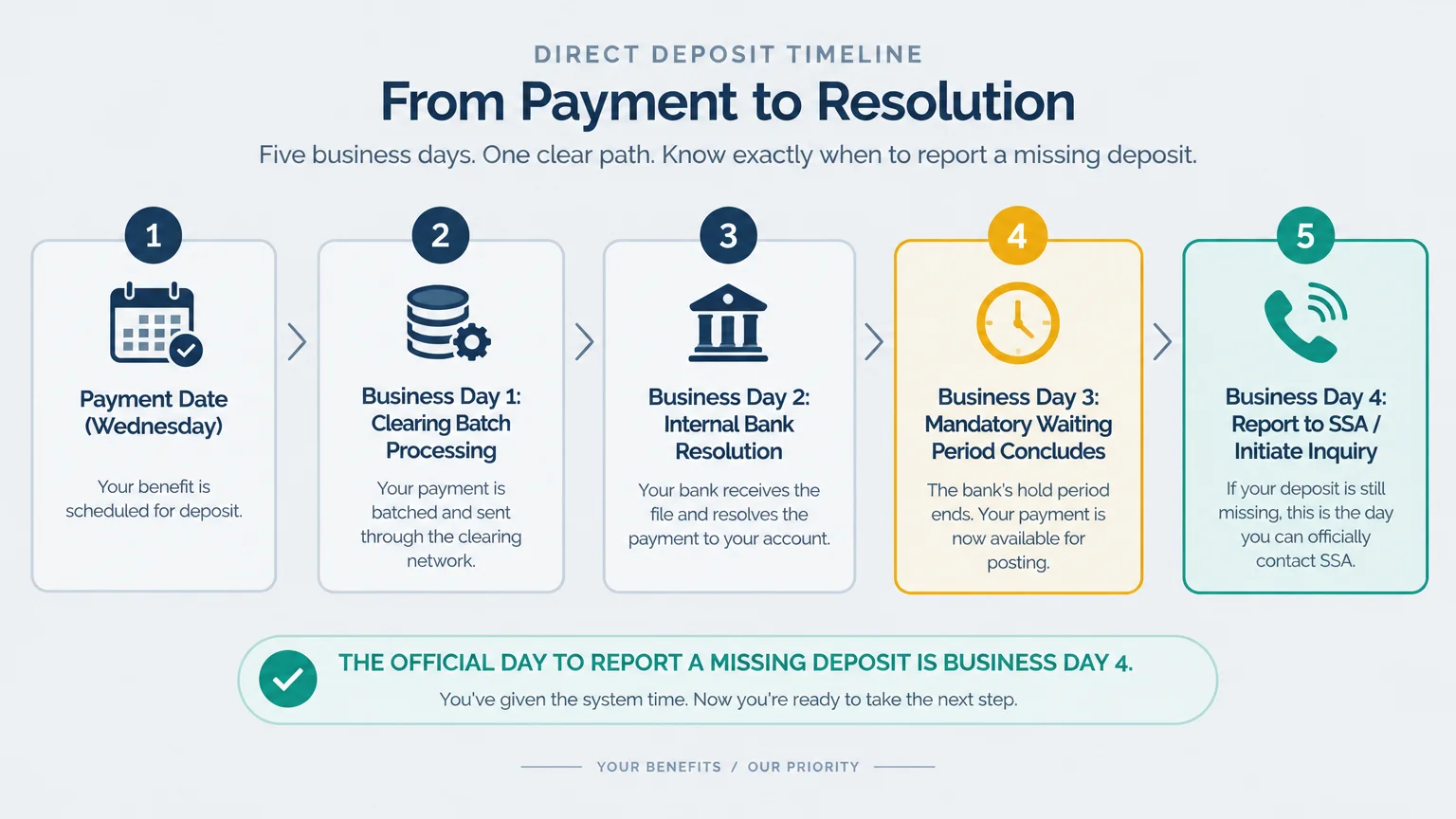
Tip #7: Observe the Social Security Three-Day Waiting Rule
Discovering your social security payment late can feel concerning, but following official guidelines ensures the quickest resolution. The Social Security Administration establishes explicit protocols for reporting delayed benefits.
The agency instructs beneficiaries to check with their bank first and wait at least 3 business days after the scheduled date. This mandatory waiting period allows electronic clearing networks to resolve temporary transfer bottlenecks naturally.
Federal clearinghouses often process delayed files during overnight batch runs without requiring manual intervention. Calling the agency before this waiting window expires usually results in a polite instruction to wait.
You can track your payment status immediately without waiting on hold by visiting SSA.gov. Log into your personal my Social Security account to view recent payment disbursements and account alerts.
Your secure online profile confirms whether the Treasury Department issued your payment on schedule or placed a temporary hold. Accessing this dashboard delivers immediate clarity at any time of day or night.
Use this mandatory waiting window to verify your current mailing address and direct deposit information inside your profile. Ensuring your personal details remain accurate prevents recurring delays in upcoming months.
Patient observation combined with online monitoring keeps you informed while respecting federal processing procedures. You stay productive and prepared without unnecessary stress.
Following these established guidelines ensures you take the right steps at the right time. Clear protocol simplifies your retirement administration and preserves your valuable energy.
Tip #8: Reach Out to the Social Security Administration
If three business days pass and your funds remain missing, contact the Social Security Administration directly. Prompt communication initiates a formal payment trace through the United States Treasury Department.
Call the agency toll-free at 1-800-772-1213 to speak with a trained claims representative. Beneficiaries who are deaf or hard of hearing can reach support by calling TTY 1-800-325-0778.
Representatives are available to assist you Monday through Friday from 8:00 a.m. to 7:00 p.m. Calling early in the morning or late in the afternoon often minimizes telephone hold times.
Inform the representative that you are reporting a missing direct deposit and have already verified the delay with your bank. Have your Social Security number, banking records, and scheduled payment date ready before dialing.
The representative will review federal disbursement logs to verify whether the payment was returned or misdirected. If necessary, they will submit a formal trace request to locate the electronic funds.
In cases where a deposit was canceled or lost, the agency can issue an expedited replacement disbursement. This priority action protects your living budget while investigators review the original transaction.
Write down the representative’s name, employee identification number, and the official inquiry confirmation code. Keeping thorough notes ensures continuity if you need to call the agency for further status updates.
Federal representatives handle thousands of payment inquiries daily and possess the tools to solve your problem. Trust in the process while advocating firmly for your monthly retirement benefits.
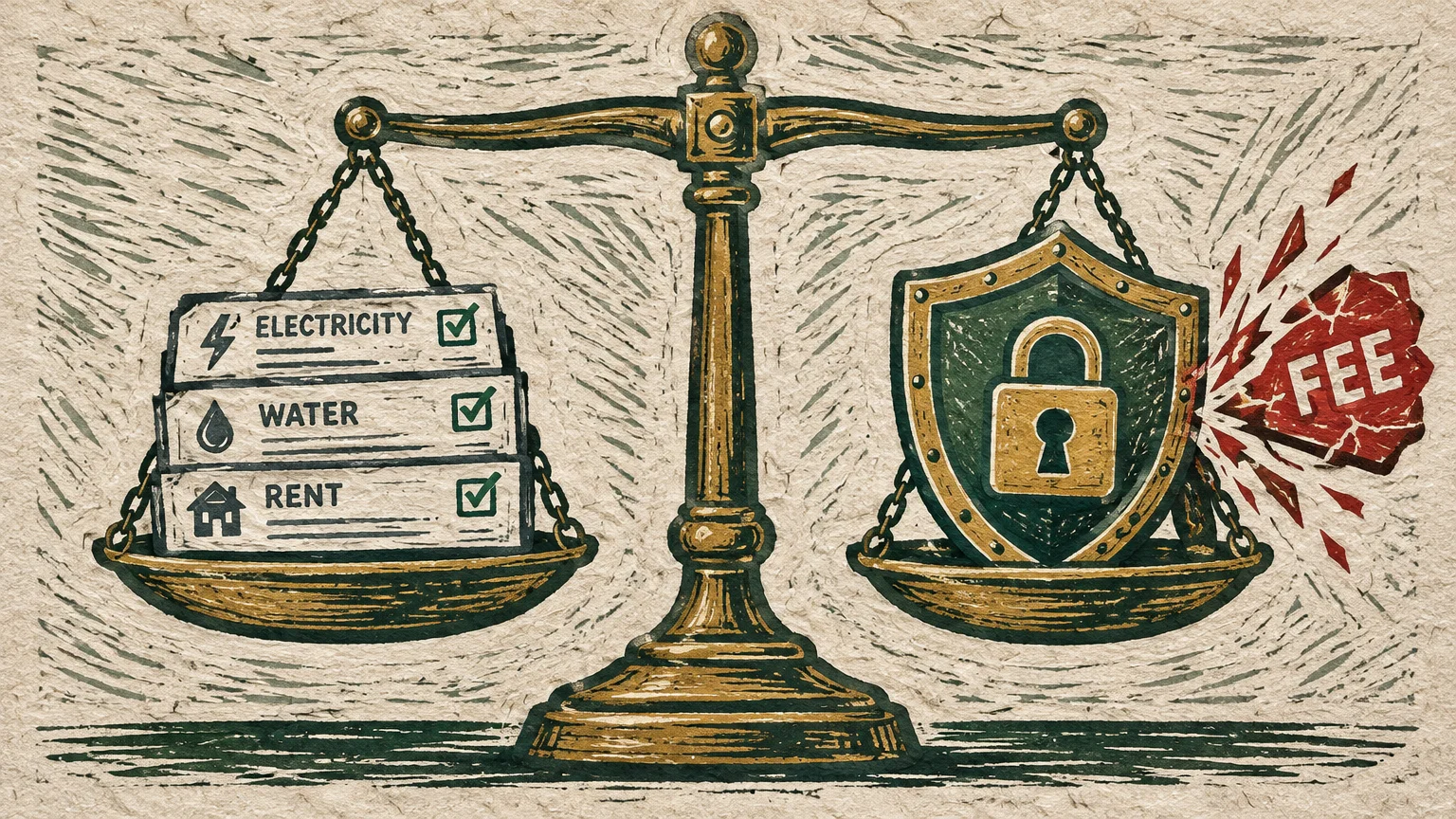
Tip #9: Protect Yourself Against Overdraft Fees and Paused Bills
A late direct deposit can cascade through your household budget, threatening automatic bill payments and scheduled withdrawals. Taking swift defensive action protects your credit score and prevents costly overdraft penalties.
Contact your bank branch manager immediately to explain that an expected retirement deposit is experiencing a temporary delay. Request a temporary waiver or refund for any overdraft fees that occur during this window.
Most financial institutions gladly forgive overdraft charges when loyal customers maintain proactive communication. Presenting proof of an incoming transfer encourages branch managers to grant generous courtesy adjustments.
Call your utility companies, mortgage servicer, and credit card providers before bill due dates arrive. Inform customer representatives that your scheduled payment is momentarily delayed due to an electronic banking glitch.
Most major service providers provide short payment grace periods without assessing late fees or reporting negative marks. Communicating openly keeps your credit record pristine and prevents unexpected service interruptions.
Log into your online banking portal to temporarily pause non-essential automated bill deductions. Pausing discretionary withdrawals preserves whatever remaining balance you have for vital necessities like groceries and medications.
Maintain a small emergency cash reserve in an accessible savings account to buffer against temporary processing delays. Having a rainy-day fund ensures complete peace of mind whenever banking hiccups occur.
Taking charge of your financial perimeter transforms a stressful disruption into a manageable temporary pause. You remain resilient, capable, and firmly in command of your household economy.

Tip #10: Prepare for Replacement Checks and New Check-Hold Rules
If an electronic deposit cannot be recovered quickly, issuing agencies typically issue a paper replacement check. Depositing a physical check requires familiarity with federal fund availability standards and holding policies.
Recent inflation adjustments to Federal Reserve Regulation CC offer improved protection for bank customers depositing checks. Banks must make at least the first $275 of a deposited check available the next business day.
This statutory availability minimum increased from the prior $225 threshold, putting essential cash in your hands faster. You can immediately access these funds to cover critical daily expenses without waiting for total clearance.
Furthermore, federal regulators increased the large deposit exception hold threshold from $5,525 to $6,725. Checks below this updated $6,725 limit clear faster without triggering mandatory extended holds.
When depositing a replacement check in person, ask the teller if they can verify funds and clear them immediately. Tellers often possess the authority to waive standard holds for government-issued retirement checks.
Endorse physical checks inside the bank branch rather than signing them ahead of time at home. Proper endorsement in front of bank personnel prevents administrative processing questions or rejection risks.
Familiarizing yourself with these modern banking rules empowers you to access your money without unnecessary delays. Knowledge turns complicated banking regulations into practical tools for your retirement security.
Once your replacement funds clear, you can restore standard electronic deposit instructions for future payments. Your retirement income stream will quickly return to its smooth, predictable routine.

The Takeaway: Living a More Blissful Retirement
Financial delays can temporarily disrupt your daily plans, but they do not have to diminish your retirement happiness. Approaching banking hurdles with structured knowledge and calm confidence restores your financial balance quickly.
Every electronic transfer leaves a traceable digital trail across the federal banking network. By verifying dates, requesting trace numbers, and communicating with officials, you resolve delays efficiently.
Remember that federal regulations exist specifically to protect your hard-earned assets and guarantee fund availability. You have substantial legal protections and dedicated customer support teams ready to assist you.
Use this experience to strengthen your overall financial resilience for the years ahead. Building a small emergency buffer and maintaining open communication with your bank protects your golden years.
Retirement offers an extraordinary opportunity to focus on wellness, family, and purposeful daily living. Do not allow temporary administrative delays to steal the joy from your hard-earned independence.
With the right checklist in your hands, you can overcome any electronic banking obstacle with ease. Embrace each day with confidence, knowing you possess the tools to manage your finances masterfully.
Celebrate your ability to advocate for yourself and safeguard your household budget with poise. Your golden years belong to you, filled with vitality, serenity, and lasting peace of mind.
Stay proactive, keep your financial records organized, and continue enjoying the rewarding lifestyle you deserve. A vibrant, worry-free retirement remains well within your reach every single day.
Frequently Asked Questions
Why is my direct deposit late if my payday is today?
Direct deposits process in clearinghouse batches throughout the normal business day rather than arriving at midnight. Your financial institution may still be processing incoming transfer files from the Federal Reserve network.
Additionally, unexpected clearing delays or internal bank maintenance can postpone account updates until later in the afternoon. Check your mobile app periodically or contact your branch to confirm pending transactions.
Can a federal holiday delay my direct deposit?
Federal holidays close commercial banks and the Federal Reserve network, pausing automated electronic transfer processing. When a scheduled payday lands on a federal holiday, rules dictate how payments adjust.
For Social Security benefits, federal regulations require the government to issue deposits on the preceding business day. Private employers may distribute funds either the business day before or after the holiday.
What should I do if my direct deposit was sent to an old bank account?
If an electronic deposit is transmitted to a closed account, the receiving bank automatically rejects the transfer. The funds then return to the originating payer or federal agency within several business days.
Contact your payer immediately to provide your updated banking details and confirm the return status. Updating direct deposit instructions with the Social Security Administration can take 30 to 60 days to complete.
How does an ACH trace number locate a missing payment?
An ACH trace number is a 15-digit electronic tracking code assigned to every automated transfer. It serves as permanent digital proof that the originating institution transmitted funds into the banking network.
When you provide this unique number to your bank, research specialists can locate the exact batch file. This eliminates administrative confusion and helps your bank deposit problems resolve rapidly.
For a wide range of resources for older adults, visit AARP and the National Council on Aging (NCOA). Health information is available from the National Institute on Aging.
Disclaimer: This article is for informational and inspirational purposes only. It is not a substitute for professional medical, financial, or psychological advice. Please consult with a qualified expert for guidance tailored to your individual needs.