

Exploring the world with your grandchildren creates priceless memories that span generations. A little proactive planning transforms potential travel stress into smooth, joyful adventures that everyone cherishes.
Skip-generation adventures offer a remarkable opportunity to bond deeply away from daily routines. You get uninterrupted quality time, while parents enjoy a well-deserved break at home.
Spotting common hurdles before you pack your bags protects your peace of mind. Here are seven things that could go wrong when vacationing with grandkids—and how to prevent them.
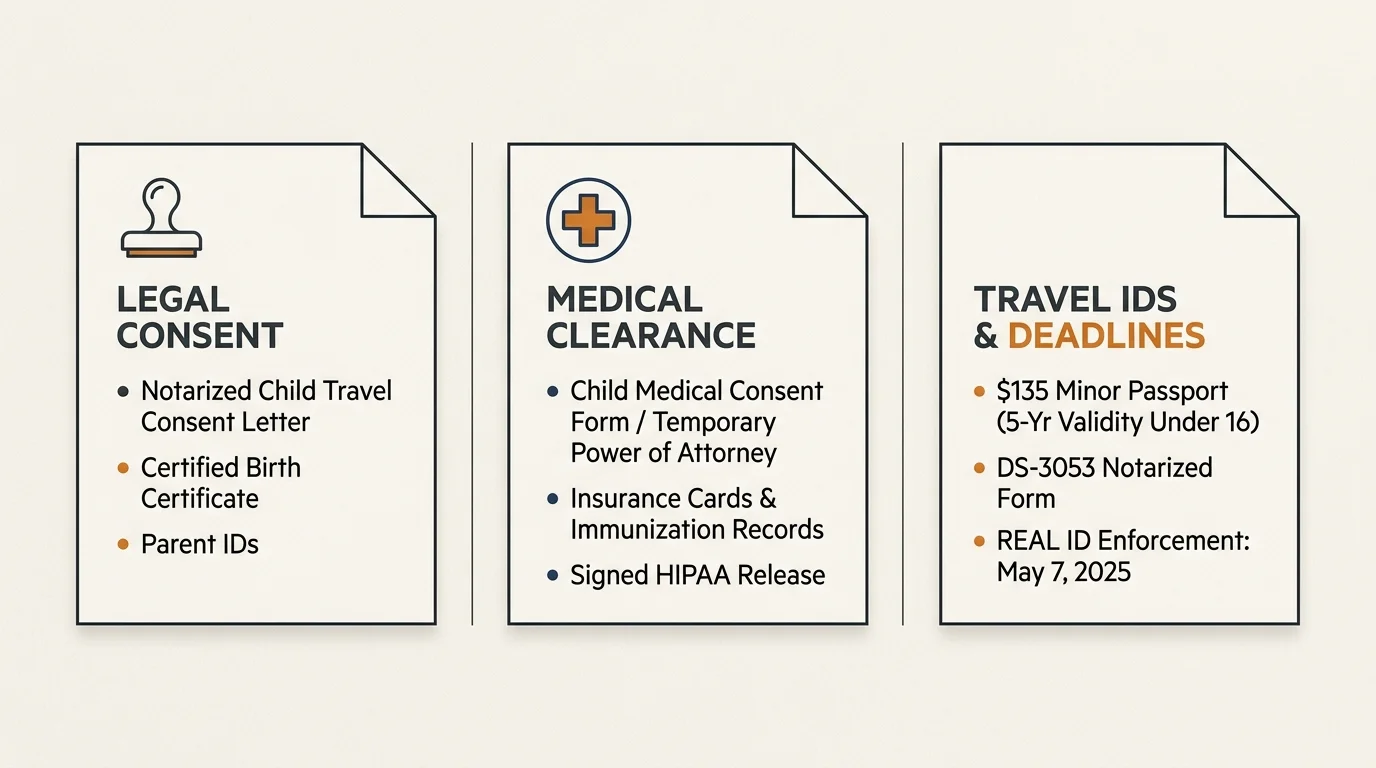
Tip #1: Overlooking Critical Legal and Medical Paperwork
Embarking on a journey without proper legal documentation can bring an exciting trip to an abrupt halt. When traveling without parents, border officials and transportation authorities enforce strict security standards to safeguard children. U.S. Customs and Border Protection (CBP) and international border agents strongly advise grandparents to carry a signed, notarized Child Travel Consent Letter from both legal parents. Without this written consent alongside certified copies of the child’s birth certificate and parental identification, you risk severe delays or denied entry at airport gates and international border crossings.
Medical emergencies demand equal preparation. Emergency departments and urgent care clinics generally require formal parental consent before administering non-life-threatening treatments to minors. You should always carry a signed Child Medical Consent Form or Temporary Medical Power of Attorney, along with copies of your grandchildren’s health insurance cards, immunization records, active prescription lists, and a signed HIPAA release form. Having these documents organized in a waterproof travel folder ensures that doctors can treat unexpected illnesses or sports sprains without bureaucratic delays.
Passports and government identification also require close attention during your multigenerational travel planning. U.S. passports for children under age 16 remain valid for only five years, unlike the ten-year validity granted to adults and older teens. Securing a minor passport costs $135—consisting of a $100 application fee and a $35 execution fee—and requires both parents to appear in person or provide a notarized Form DS-3053. Check all expiration dates at least six months before departure to avoid last-minute panics.
Domestic air travel identification rules also impact your journey. Starting May 7, 2025, the U.S. Department of Homeland Security requires all travelers aged 18 and older to present a REAL ID-compliant driver’s license, state ID card, or passport at TSA checkpoints. While minors under 18 do not need a REAL ID when flying domestically with an adult companion, you must ensure your own identification complies fully with federal regulations to breeze through security checkpoints.
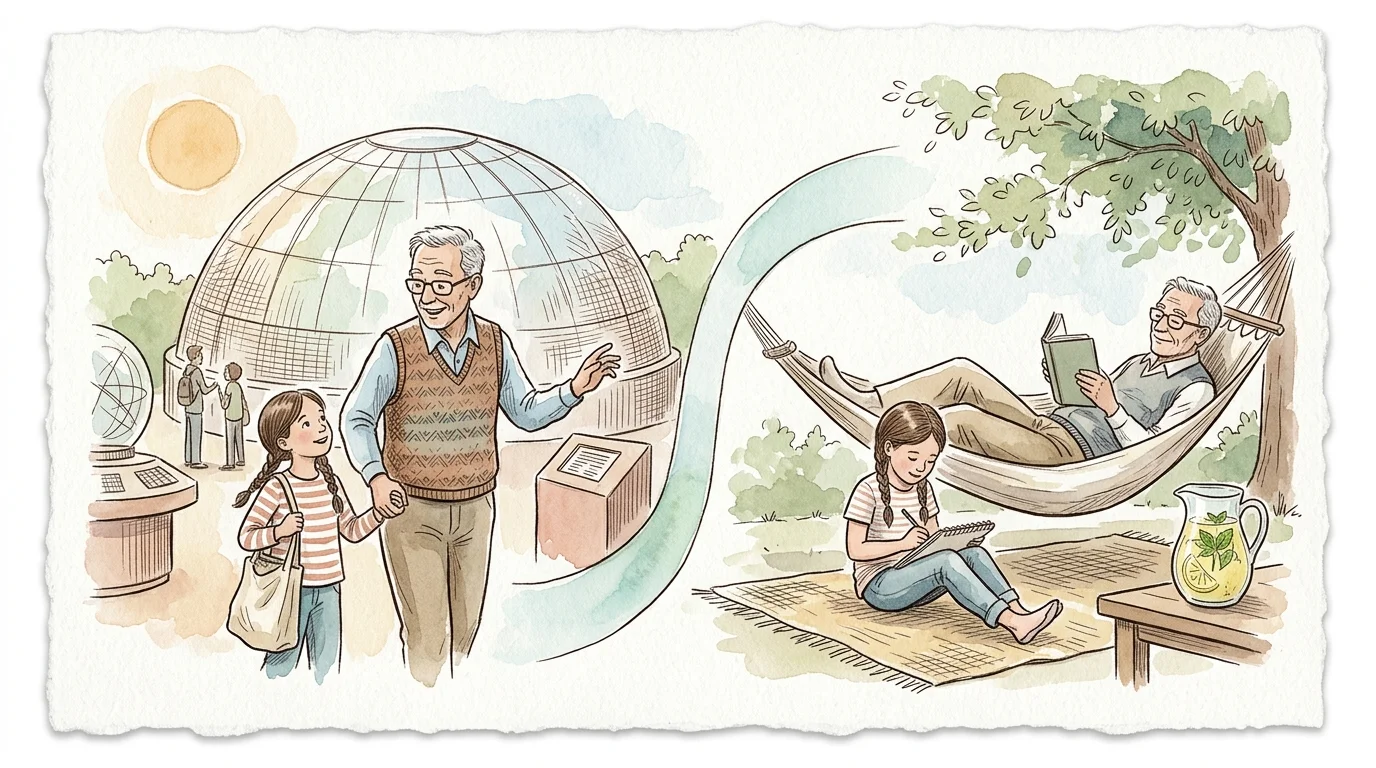
Tip #2: Overpacking the Itinerary and Overestimating Stamina
Cramming every waking hour with sightseeing excursions, museum tours, and theme park rides is one of the most common family vacation mistakes. Grandparents and grandchildren often operate on completely different biological energy cycles. Young children wake up energized at dawn; teenagers prefer sleeping past ten in the morning; and adults over 50 naturally benefit from a peaceful mid-afternoon respite. Forcing everyone into a rigid, non-stop schedule inevitably produces cranky kids, sore feet, and frazzled nerves.
According to research from AARP and the Family Travel Association (FTA), over 50% of traveling families engage in multigenerational vacations, and pacing disputes frequently top the list of trip frustrations. You can eliminate this tension by adopting the “Rule of One.” Plan just one marquee morning activity each day—such as touring an interactive science center or taking a scenic boat ride—and leave your afternoons unstructured for swimming, reading, or quiet park strolls.
Building intentional rest periods into your daily itinerary keeps everyone enthusiastic. Allow plenty of buffer time between destinations so you never have to rush through airport corridors or parking structures. Embracing a slower, more deliberate travel pace transforms routine moments into wonderful bonding opportunities; a relaxed afternoon eating gelato by a fountain often creates far fonder memories than rushing through three consecutive museums.
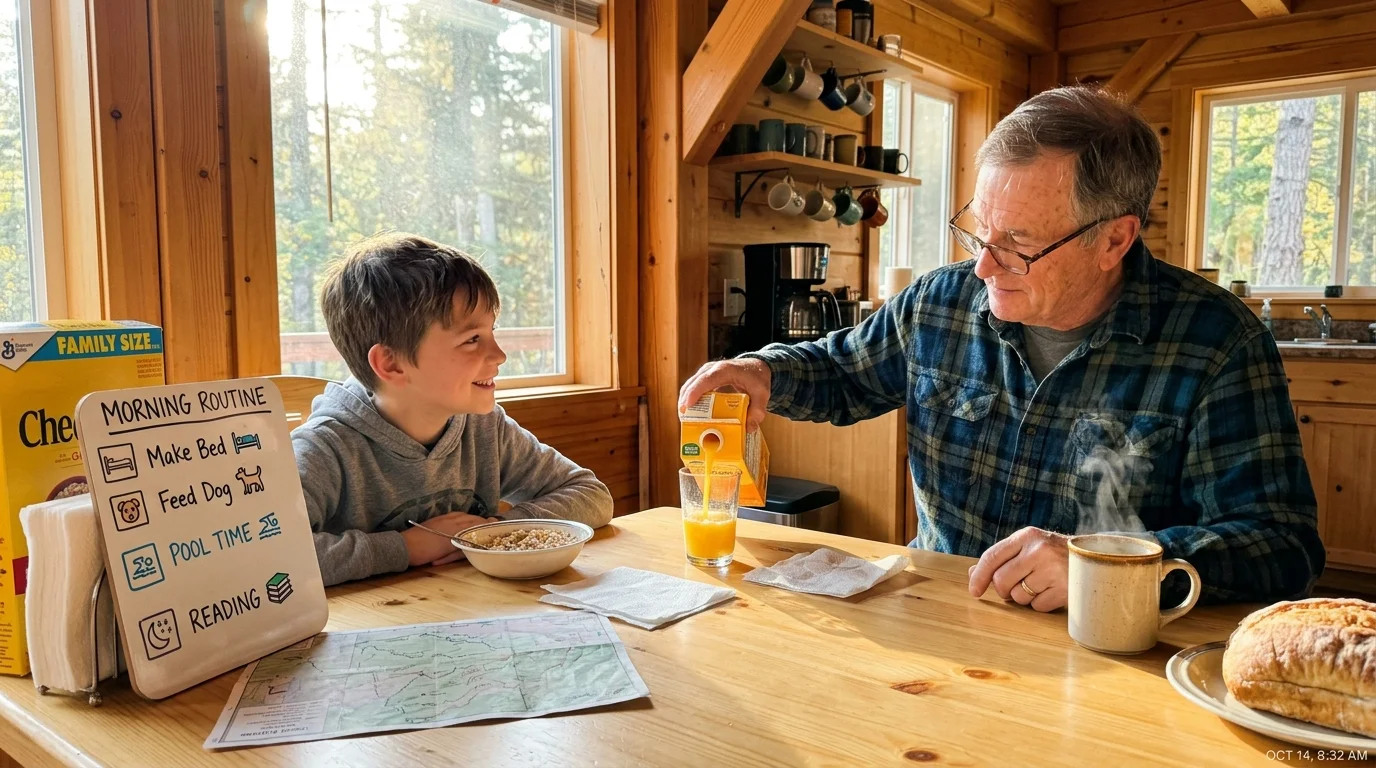
Tip #3: Clashing Over Daily Routines and Household Rules
Grandparents naturally love spoiling their grandchildren, but abandoning every household rule can spark behavioral challenges. When daily bedtime schedules vanish, screen time becomes unlimited, and sugar intake skyrockets, children quickly become overtired and overstimulated. Emotional meltdowns often follow, leaving you feeling exhausted as you try to restore order in an unfamiliar hotel room or rental property.
Prevent friction by hosting a relaxed pre-trip alignment meeting with the children’s parents. Ask the parents about non-negotiable family routines, dietary restrictions, screen time limits, and effective discipline strategies. Understanding how parents handle behavioral outbursts provides you with a proven blueprint to maintain calm, respectful boundaries throughout your travels.
You can still treat your grandchildren to special moments while honoring essential health boundaries. Preserve regular meal times and prioritize protein-packed breakfasts before heading out for the day; stable blood sugar levels keep children cheerful and attentive. Designate specific times for fun treats—such as a visit to a local bakery after a morning hike—so that indulgences feel like celebratory rewards rather than chaotic free-for-alls.
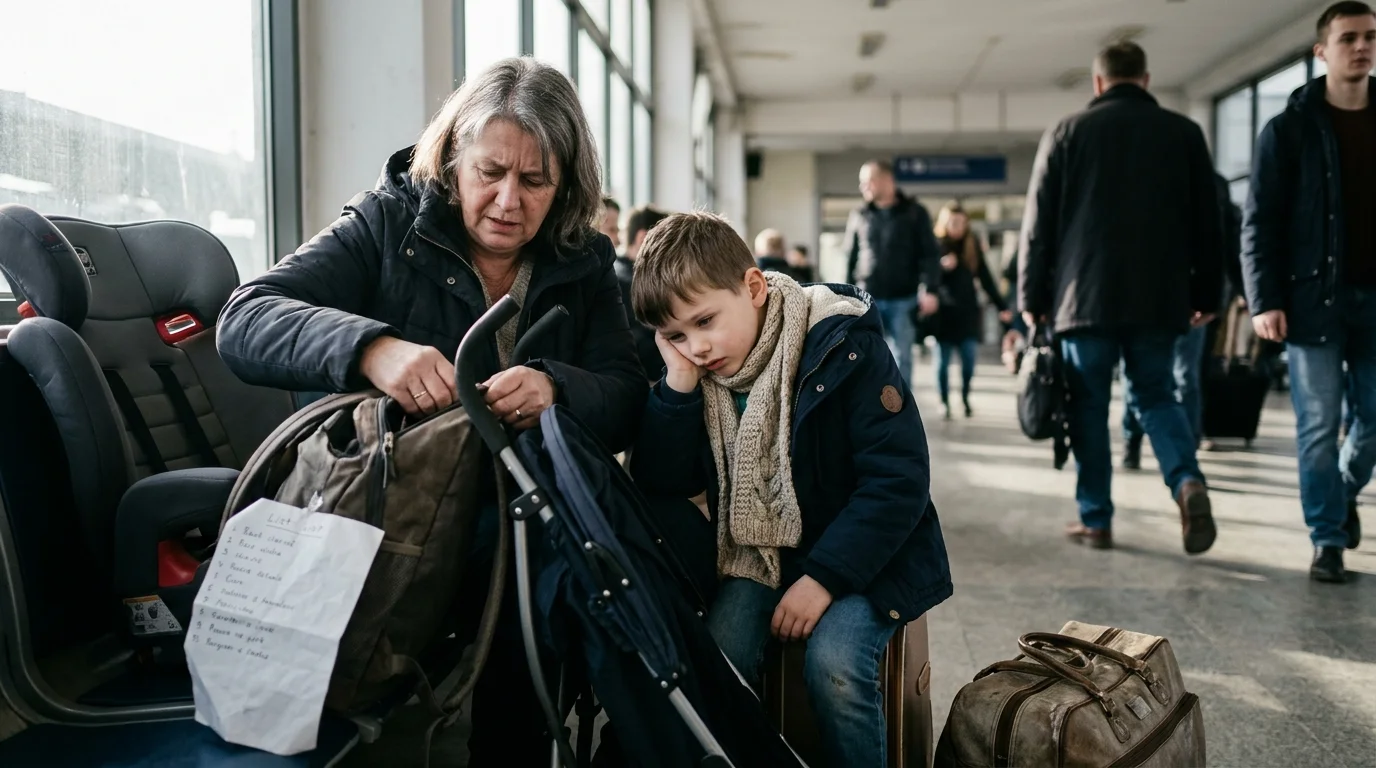
Tip #4: Underestimating Transportation Logistics and Safety Needs
Navigating airplanes, trains, and rental vehicles with young passengers requires specialized planning. Motor vehicle child passenger safety laws vary significantly from state to state and country to country. Assuming your car rental agency will have the correct booster seat or rear-facing infant carrier waiting on arrival is a risky gamble; rental seats are often expensive, worn, or occasionally out of stock. Research the specific safety seat laws for your destination and consider bringing lightweight travel car seats or FAA-approved child harnesses for flights.
Flight logistics also demand careful attention during booking. Never rely on basic economy seat assignments that split your party across different rows of the aircraft. Select your seats together during the initial reservation process so you remain seated directly beside your grandchildren throughout the flight. This proximity allows you to help them with seatbelts, manage entertainment devices, and soothe any flight anxiety during takeoff and landing.
Road trips require an equally thoughtful approach to logistics. Pack a dedicated travel organizer containing non-drowsy motion sickness remedies, acupressure wristbands, disinfecting wipes, barf bags, spill-proof water cups, and changes of clothing. When driving, schedule brief rest stops every two hours at rest areas or state parks. These stops allow energetic youngsters to stretch their legs and use restrooms, which prevents stressful roadside emergencies.

Tip #5: Choosing Activities That Bore or Overwhelm Your Grandkids
Planning a vacation around activities you enjoyed decades ago can easily lead to disengaged or grumpy grandchildren. A lengthy antique shopping excursion or an exhaustive historical walking tour might fascinate adults, but it rarely captures the imagination of an eight-year-old or a teenager. Conversely, subjecting yourself to chaotic, noisy amusement parks from morning until night can leave you utterly depleted.
Skip-generation travel has surged in popularity; AARP and FTA studies reveal that between 30% and 33% of grandparents now take solo trips with their grandchildren. The secret to a triumphant skip-gen trip lies in collaborative planning. Involve your grandchildren in the decision-making process weeks before you leave home. Present three carefully curated, age-appropriate excursions and allow each grandchild to choose an activity for the itinerary.
Blend interactive education with active outdoor recreation to keep everyone engaged. Choose hands-on venues like living history farms, interactive aquariums, wildlife boat charters, or beginner-friendly kayaking tours. Be mindful of sensory thresholds as well; crowded venues with blaring music and flashing lights can overwhelm young children. Balancing stimulating outings with calm nature walks ensures an uplifting experience for every generation.
Tip #6: Neglecting Financial Boundaries and Souvenir Expectations
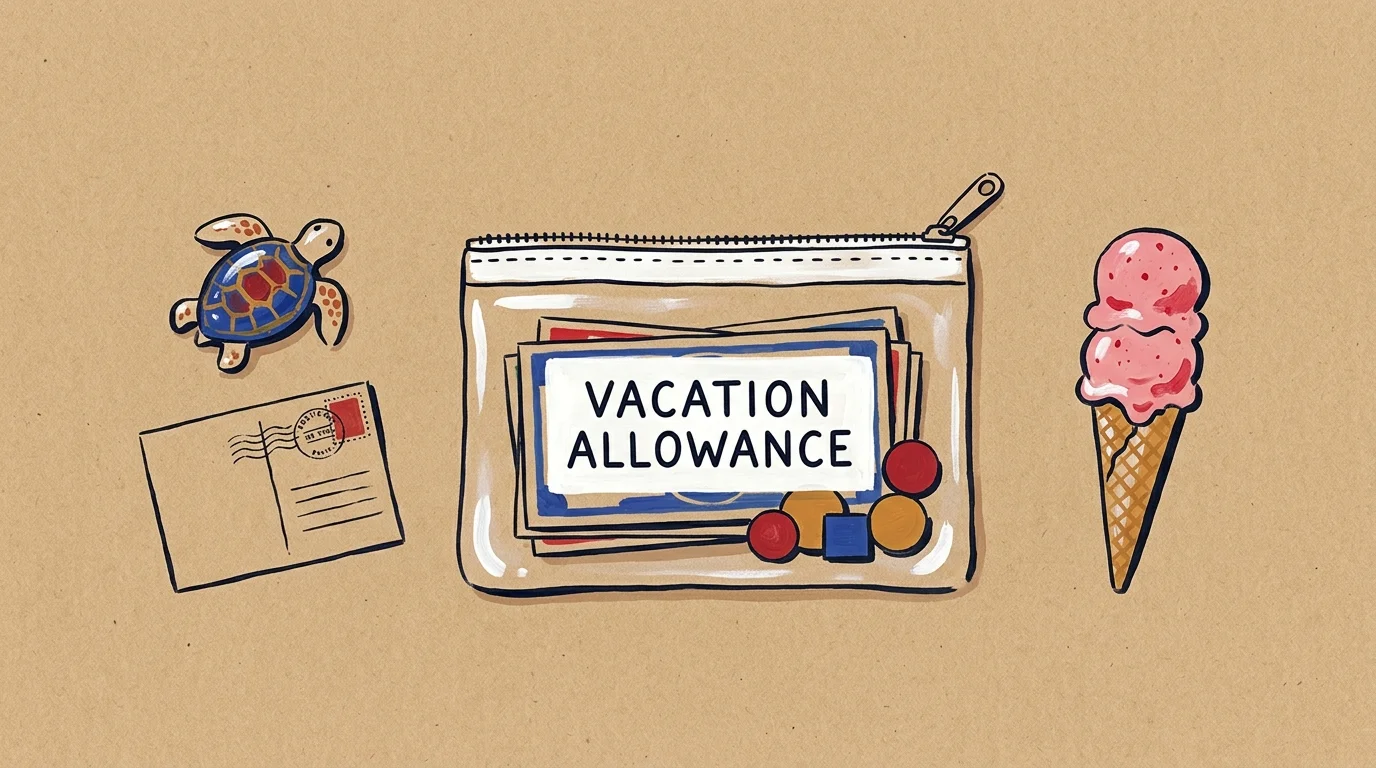
Theme park gift shops, boardwalk arcades, and airport novelty stores present constant temptations for young travelers. Without clear financial ground rules, you may face persistent pleading for overpriced toys and sugary snacks at every turn. Giving in repeatedly can strain your vacation budget, while constantly saying “no” creates unnecessary emotional tension.
Financial misunderstandings can also occur between you and the children’s parents. Before embarking on the trip, clarify all financial expectations in writing or through a candid family conversation. Determine whether the parents are covering specialty event tickets, airline baggage fees, and emergency medical out-of-pocket costs, or if you are gifting the entire vacation as a retirement treat.
Eliminate souvenir battles with your grandkids by establishing a clear, fun spending system on day one. Give each grandchild a prepaid debit card or a fixed cash envelope dedicated exclusively to personal souvenirs. Let them know that once their funds are gone, no additional souvenir purchases will take place. This approach eliminates begging, respects your budget, and teaches your grandchildren valuable lessons in financial decision-making and budgeting.

Tip #7: Sacrificing Your Own Physical Health and Well-Being
Grandparents often pour so much energy into entertaining their grandchildren that they neglect their own personal health. Skipping your daily medications, walking beyond your physical comfort limits, or eating erratic meals can quickly lead to exhaustion, dehydration, or illness. You cannot provide a safe, joyful trip for your grandkids if your own health falters along the way.
Keep your daily health regimen organized and accessible throughout the entire journey. Store all prescription medications, vitamins, and medical supplies in a durable carry-on organizer rather than in checked luggage. Set alarms on your phone or smart watch to remind yourself to take daily doses on schedule, especially when traveling across different time zones. Carry a written list detailing your medical history, primary care physician contact information, and current dosages in your wallet.
Choose accommodations that promote physical comfort and restorative sleep. Reserving a multi-room vacation rental or adjoining hotel suites provides you with a private sanctuary to unwind at the end of the day. Listen to your body and honor your physical limits without hesitation. Finding a shady park bench to read while your grandkids play tag on the lawn is not just practical; it models healthy self-care and keeps you energized for the entire vacation.

The Takeaway: Living a More Blissful Retirement
Vacationing with grandkids is one of the most rewarding privileges of your golden years. These special getaways bridge generational divides, foster profound family connections, and create cherished memories that your grandchildren will carry with them for decades. Stepping into the role of a traveling grandparent enriches your retirement with purpose, vitality, and shared laughter.
Anticipating potential travel obstacles does not dampen the adventure—it empowers you to travel with unwavering confidence. By organizing legal documents in advance, pacing your daily schedule, establishing positive boundaries, and protecting your personal wellness, you create a safe foundation for joyful exploration. Embrace the unexpected moments with humor and patience, celebrate every discovery, and savor the extraordinary bond that makes traveling with grandchildren a truly blissful experience.
For a wide range of resources for older adults, visit AARP and the National Council on Aging (NCOA). Health information is available from the National Institute on Aging.
Disclaimer: This article is for informational and inspirational purposes only. It is not a substitute for professional medical, financial, or psychological advice. Please consult with a qualified expert for guidance tailored to your individual needs.
Frequently Asked Questions
What is the best age to start taking grandchildren on solo vacations?
Most travel experts suggest that children between the ages of six and eight are ideal candidates for their first solo trip with grandparents. At this developmental stage, children can manage basic self-care, communicate their physical needs clearly, and adapt to changing schedules without frequent daytime naps. However, shorter overnight trips or weekend camping excursions can start even earlier to build confidence and establish travel routines.
Do I need legal permission to take my grandchildren out of state or abroad?
While domestic road trips rarely require formal checkpoints, carrying legal permission is essential for flights, medical visits, and international travel. Border agencies such as U.S. Customs and Border Protection recommend a signed, notarized Child Travel Consent Letter from both custodial parents for any international journey. Having this document, along with a Temporary Medical Power of Attorney, protects you against travel delays and ensures access to immediate medical care in an emergency.
How can we prevent homesickness during a multi-day trip?
You can minimize homesickness by establishing a predictable communication schedule with parents before departing. Arrange a brief video call each evening before bedtime so your grandchildren can share their daily adventures with mom and dad. Encourage young children to pack a familiar comfort item, such as a favorite pillowcase or stuffed animal, and keep your evenings relaxed and reassuring to foster a secure environment.
Do minor children need a REAL ID to fly with grandparents on domestic flights?
No, the Transportation Security Administration (TSA) does not require minors under the age of 18 to present a REAL ID or state identification card when traveling domestically with an adult companion. However, all adult travelers aged 18 and older must possess a REAL ID-compliant driver’s license, state ID, or valid U.S. passport to clear TSA checkpoints starting May 7, 2025. Grandparents must ensure their own travel credentials meet these updated federal security standards.