

Claiming your rightful healthcare benefits puts hundreds of dollars back into your wallet every single month. When Social Security serves as your primary income, medical costs should never force you to sacrifice your hobbies, travel dreams, or personal well-being.
State-sponsored relief programs can eliminate your monthly Medicare premiums, office copayments, and high prescription drug bills. You can redirect those recovered dollars toward vibrant social gatherings, family visits, and fulfilling retirement projects.
Five powerful support options offer immediate financial relief while safeguarding your hard-earned nest egg. Explore how these vital resources can upgrade your lifestyle and energize your retirement today.
Lifestyle Idea #1: Qualified Medicare Beneficiary (QMB) Protection
Navigating retirement on a fixed income requires smart financial tools that protect your monthly cash flow. The Qualified Medicare Beneficiary program, known as QMB, delivers the most comprehensive financial shield available to seniors.
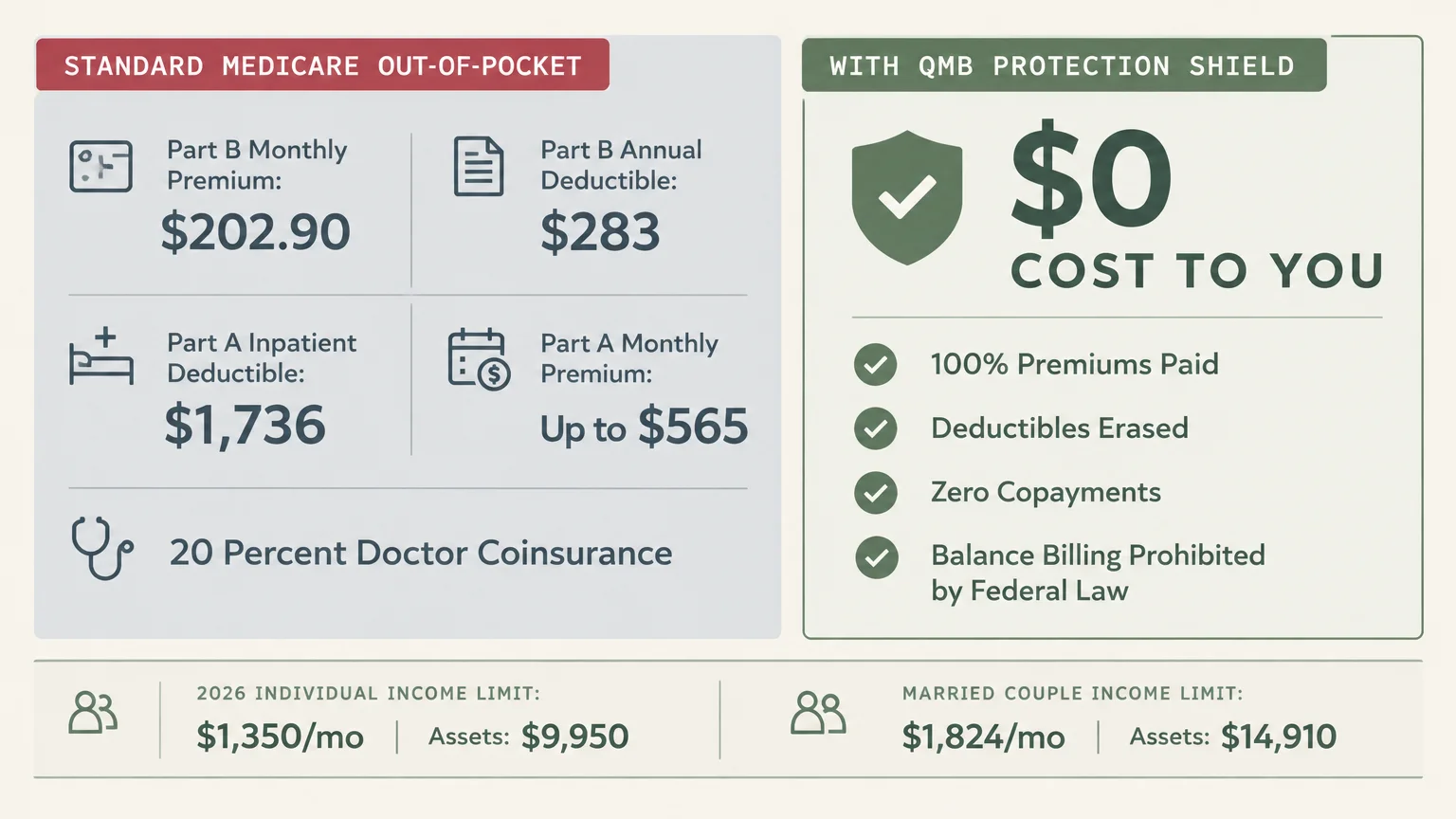
This state-administered plan covers your monthly Medicare Part B premium, which stands at $202.90 in 2026. If you must purchase Medicare Part A, QMB pays that costly premium as well.
Standard Part A premiums can reach up to $565 per month for individuals with fewer work credits. Eliminating this expense protects your budget from severe financial strain.
QMB also erases the annual Medicare Part B deductible of $283. Furthermore, it pays the substantial $1,736 Part A inpatient hospital deductible for every benefit period.
You will never face 20 percent coinsurance charges or doctor office copayments under this program. Federal law strictly prohibits healthcare providers from balance billing QMB enrollees for Medicare-covered services.
To qualify in 2026, your monthly countable income must stay at or below $1,350 as an individual. Married couples qualify with a combined monthly income up to $1,824.
The resource cap allows you to maintain $9,950 in countable assets as an individual. Married couples can hold up to $14,910 in savings and investments.
This incredible financial relief transforms your daily living experience. You can attend medical appointments without dreading unexpected bills in your mailbox.
Protecting your budget from hospital and doctor copays removes a massive psychological barrier to wellness. You feel empowered to schedule preventative physical therapy sessions or consult nutritionists without fear of hidden fees.
The money you preserve allows you to invest in healthy lifestyle habits. Consider joining a local gym, enrolling in pottery classes, or taking watercolor workshops with friends.
Relieving medical worries directly enhances your daily personal relationships. You can attend neighborhood book clubs, host family game nights, and focus fully on your grandchildren rather than bill statements.
Predictable healthcare costs give you the confidence to host weekend dinners for your family. You can enjoy your golden years without constant financial tension hanging overhead.
Many seniors use their liberated income to adopt a pet or support animal rescue organizations. Companionship and daily dog walks boost your physical fitness while introducing you to fellow animal lovers.
Explore these vital medicare savings programs through your local state Medicaid office. Securing QMB protection ensures your physical health and financial vitality thrive together.
Lifestyle Idea #2: Specified Low-Income Medicare Beneficiary (SLMB) Freedom
If your monthly income slightly exceeds the QMB limits, you still have exceptional options. The Specified Low-Income Medicare Beneficiary program, or SLMB, provides direct and meaningful financial relief.
SLMB focuses entirely on eliminating your monthly Medicare Part B premium. The program pays the standard $202.90 monthly premium on your behalf throughout 2026.
Over a full calendar year, SLMB deposits $2,434.80 back into your household budget. The Social Security Administration simply stops deducting that premium directly from your monthly benefit check.
For 2026, the monthly income limit for an individual stands at $1,616. Married couples can earn up to $2,184 per month and qualify for full premium coverage.
The resource limits match the QMB standard precisely. An individual can retain $9,950 in countable assets, while married couples can keep $14,910.
Understanding the difference between qmb slmb guidelines helps you pinpoint your best financial path. SLMB provides a wider income doorway while delivering instant monthly relief.
An extra $202.90 each month opens doors to rewarding social experiences. You can establish a monthly dining fund to meet longtime coworkers and neighbors for Sunday brunch.
Having $202.90 added back to your benefit check provides immediate breathing room for self-care. You can easily afford quality walking shoes, supportive orthotics, or new athletic apparel for morning walks.
Use your recovered funds to fuel your personal passions and creative hobbies. That monthly surplus easily covers materials for woodworking, sewing projects, or professional musical instruments.
This consistent cash surplus also allows you to surprise friends with thoughtful birthday gifts and holiday cards. Small generous gestures build deeper friendships and maintain vital social ties throughout retirement.
Many seniors use their SLMB savings to fund seasonal road trips and scenic park outings. Reliable access to reliable transportation keeps you connected to your wider community.
Consider allocating a portion of these monthly savings toward an emergency travel fund. Knowing you have cash set aside for unexpected family trips brings profound peace of mind.
Securing help paying medicare premiums reduces everyday stress and expands your horizons. Taking advantage of SLMB ensures your retirement remains active, engaging, and socially rich.
Lifestyle Idea #3: Qualifying Individual (QI) Premium Support
Seniors who earn slightly more than the SLMB cap often feel left out of assistance programs. Fortunately, the Qualifying Individual program expands access to valuable premium relief.
Like SLMB, the QI program pays your entire $202.90 monthly Medicare Part B premium. That protection preserves $2,434.80 every single year for your personal budget.
In 2026, individual applicants can qualify with monthly countable income up to $1,816. Married couples can qualify with a combined monthly income of up to $2,455.
Resource limits remain capped at $9,950 for individuals and $14,910 for married couples. These generous income ceilings accommodate seniors receiving slightly higher monthly Social Security checks.
The average monthly Social Security benefit for a retired worker reached $2,092.17 in October 2026. Many beneficiaries qualify for QI by utilizing standard state income disregards and deductions.
You must submit an annual application for the QI program through your state. States grant approvals on a first-come, first-served basis, giving priority to returning recipients.
Applying early in the calendar year guarantees you secure your spot in this vital program. The administrative effort pays immense dividends for your active lifestyle and financial independence.
Imagine redirecting more than $200 each month toward your personal wellness and social life. You could join a community tennis league or enroll in invigorating aquatic exercise classes.
Retaining an additional $2,434.80 annually makes home hobby spaces and workshops much more accessible. You can upgrade your craft room, organize your garden shed, or invest in reliable woodworking machinery.
Engaging deeply in hands-on hobbies fosters a profound sense of purpose and pride. Sharing your handmade quilts, pottery, or furniture pieces with loved ones strengthens family bonds across generations.
These funds also make attending family celebrations and milestone events much easier to manage. You can purchase flights or train tickets to visit grandchildren without worrying about your balance.
Because QI acceptance operates annually, marking your calendar for timely renewal protects your lifestyle continuity. Staying proactive guarantees you preserve that extra $202.90 each month without administrative interruptions.
Financial stability fosters emotional well-being and active community participation. Don’t leave this powerful program on the table when planning your retirement spending.

Lifestyle Idea #4: Extra Help Medicare Prescription Assistance
Prescription drug costs represent one of the heaviest financial burdens for seniors living on Social Security. The federal Extra Help program eliminates that burden by subsidizing Part D medication costs.
The Social Security Administration estimates the total value of this program at approximately $5,700 per year. That substantial savings keeps your healthcare affordable and predictable.
When you qualify for QMB, SLMB, or QI, you receive Extra Help automatically. You can also apply for standalone coverage if your income slightly exceeds standard state limits.
Standalone applicants in 2026 can earn up to $23,940 annually as an individual, or $2,015 monthly with standard disregards. Married couples can earn up to $32,460 annually, or $2,725 monthly.
Countable resource limits for standalone applicants reach $18,090 for individuals in 2026. Married couples can retain up to $36,100, which includes specialized burial allowances.
Extra help medicare benefits eliminate your monthly drug plan premium and waive annual prescription deductibles. The program also forgives any late enrollment penalties you might have accumulated previously.
In 2026, your copayments drop to no more than $5.10 for generic drugs. Brand-name prescriptions cost you no more than $12.65 per covered medication.
In addition, federal legislation caps total Part D out-of-pocket prescription spending at $2,100 in 2026. That cap adjusts to $2,400 in 2027, preventing catastrophic drug expenses.
When medication copayments drop to $5.10 for generics, your monthly pharmacy trip stops causing anxiety. You can fill every prescribed therapy promptly, ensuring consistent vitality and energy for daily social activities.
Predictable, low drug costs allow you to maintain your wellness routine without second-guessing doctor recommendations. Steady health maintenance lets you plan extended visits with out-of-town friends without unexpected medical interruptions.
Affordable prescriptions mean you never have to skip doses or skimp on groceries. Reliable health maintenance keeps your energy high for hiking, volunteering, and mentoring local youth.
You can use your drug cost savings to support healthy nutritional choices every week. Fresh produce, specialty cooking ingredients, and farmers market visits become regular delights rather than luxuries.
Saving thousands annually on prescriptions means you can confidently support local charity events or religious organizations. Contributing to causes you believe in creates meaningful social connections and reinforces personal fulfillment.
Robust prescription assistance protects your body and empowers your social calendar. Securing this support keeps you active, energized, and deeply connected with family and community.
Lifestyle Idea #5: Qualified Disabled and Working Individuals (QDWI) Security
Many individuals under age 65 navigate retirement early due to a disability. If you decide to return to work, you might worry about losing your medical coverage.
The Qualified Disabled and Working Individuals program protects working individuals who lost premium-free Part A. It steps in to pay your monthly Medicare Part A hospital insurance premium.
Without this program, buying Part A can cost up to $565 per month in 2026. Beneficiaries with 30 to 39 work quarters still face a hefty $311 monthly bill.
For 2026, the base countable income limit stands at $2,660 monthly for an individual. Married couples qualify with a base countable limit of $3,607 per month.
Because program rules disregard more than half of your earned income, actual earning limits are generous. An individual can earn roughly $5,405 gross monthly, while couples can earn $7,319.
The resource caps for QDWI remain at $4,000 for an individual. Married couples can hold up to $6,000 in qualifying financial assets.
This unique form of low income medicare assistance bridges the gap between disability and productive employment. You can pursue meaningful work without sacrificing your essential hospital insurance.
Re-entering the workforce brings profound emotional, mental, and social benefits. Engaging in part-time consulting, tutoring, or retail roles connects you with diverse groups of people every day.
For working disabled individuals, staying active in the workforce offers essential cognitive stimulation and personal autonomy. Engaging with customers, clients, or colleagues keeps your conversational skills sharp and your days structured.
Earning money while keeping hospital insurance coverage paid for provides the ultimate safety net. You build valuable savings while expanding your network of workplace acquaintances and professional mentors.
Staying active in professional settings combats social isolation and sharpens your cognitive abilities. You earn supplemental income while QDWI protects your physical well-being.
The income you generate can fund enriching adult education courses or certification programs. Learning new computer skills, foreign languages, or creative writing keeps your retirement years intellectually stimulating.
You can use your supplemental earnings to fund dream vacations, new hobbies, and home renovations. Work becomes an enriching lifestyle choice rather than a frantic necessity.
Check your eligibility for QDWI through your state medical assistance office. This targeted program empowers you to thrive socially, professionally, and financially.

Putting It into Practice: Small Steps for Big Changes
Transforming your financial life begins with taking clear, manageable action steps today. You do not need to navigate complex paperwork alone or feel overwhelmed by government regulations.
Start by gathering your recent financial documents in one organized folder. Collect your Social Security benefit statement, bank account balances, and investment records.
Remember that government rules exclude your primary residence and one personal vehicle from asset calculations. Your furniture, clothing, household belongings, and burial plots do not count toward resource limits either.
You can also set aside up to $1,500 per person specifically for burial expenses. These protections ensure you retain your core possessions while qualifying for life-changing assistance.
Keep in mind that individual states often expand these baseline federal rules significantly. For instance, California and New York have raised income limits or eliminated asset tests entirely.
Always check your specific state regulations to determine your full qualification potential. You may easily qualify even if your assets appear slightly above federal baseline figures.
Prepare for upcoming adjustments to your monthly retirement benefit check as well. On October 14, 2026, officials announced a 3.6 percent cost-of-living adjustment for 2027.
That adjustment will increase the average retirement benefit by about $75 per month starting January 2027. Income limits for assistance programs will adjust upward accordingly to maintain your eligibility.
Contact your local State Health Insurance Assistance Program to receive free, personalized counseling. Trained SHIP volunteers help you complete applications accurately and quickly.
You can submit your application directly online through your state Medicaid portal. Many local senior centers also offer in-person administrative support to guide you through the process.
Take time to discuss these programs openly with your family members and trusted peers. Removing the stigma around financial assistance encourages friends to check their own eligibility and claim savings.
Organizing a small support group at your local senior center can help everyone complete applications together. Collaborative paperwork sessions turn administrative tasks into cheerful, productive social gatherings.
Once enrolled, dedicate your recovered healthcare dollars to activities that enrich your life. Create a special account for travel, community events, and family gatherings.
Once approved, celebrate your financial victory with a simple, joyful outing like a picnic in the park. Acknowledging your success reinforces positive financial habits and marks the beginning of an exciting new chapter.
Rekindle your favorite creative passions and invite friends to join your adventures. Financial stability grants you the freedom to make retirement the most joyful chapter of your journey.
Frequently Asked Questions
Review these common questions to clear up lingering doubts and take action with total confidence. Understanding program details ensures you maximize every available benefit.
Will applying for low income medicare assistance affect my home or car ownership?
No, applying for these programs will never jeopardize your home or personal vehicle. Program guidelines explicitly exclude your primary residence and one automobile from countable resource calculations.
You can comfortably maintain your home, drive your car, and enjoy your personal belongings without worry. The state will not place liens on these protected assets when you enroll.
These programs exist solely to help low-income seniors afford necessary healthcare coverage. You can apply with complete confidence that your family home remains entirely safe and protected.
Can I still qualify if my Social Security benefit increases with the 2027 COLA?
Yes, you can remain qualified even after receiving your cost-of-living benefit raise. Federal poverty levels and program income thresholds adjust each year alongside Social Security changes.
The announced 3.6 percent COLA for 2027 increases benefits by about $75 monthly for average recipients. State income ceilings adjust to ensure eligible seniors maintain continuous premium relief.
When the 2027 COLA takes effect in January, federal income thresholds typically rise in early spring. You will not lose your benefits due to standard inflation adjustments.
What should I do if my income is slightly too high for QMB or SLMB?
If your income sits just above SLMB limits, apply immediately for the QI program. You should also explore standalone Part D Extra Help, which features much higher income thresholds.
Additionally, states deduct specific out-of-pocket medical expenses and standard income disregards from your gross calculation. Always consult a local benefits counselor before assuming your income is too high.
Some states also operate dedicated pharmaceutical assistance programs with even higher financial thresholds. Local community health centers can connect you with supplemental regional prescription resources.
How quickly will I see the extra money in my monthly Social Security check?
Most states process applications within 30 to 45 days after receiving your documents. Once approved, the state notifies the Social Security Administration to stop withholding your Part B premium.
Your benefit checks reflect the extra $202.90 within one to two payment cycles. In many instances, the government provides retroactive reimbursements for premiums paid during the processing window.
Keep your official approval letter in your files as proof of active enrollment. You can present this letter to your doctor or pharmacist if billing questions arise before records update.
For resources on retirement living, travel, and finance, visit AARP. Official information on Social Security is available at SSA.gov. For travel advisories, consult the U.S. Department of State.
Disclaimer: This article provides lifestyle suggestions for informational purposes. Financial, legal, or travel decisions should be made in consultation with qualified professionals.