

Medicare brings transformative perks in 2027 that can significantly lower your healthcare spending and expand your wellness benefits. These strategic updates empower you to access brand-name medications and comprehensive home-based care without draining your retirement nest egg.
From capped prescription expenses to innovative chronic care models, the upcoming changes reward proactive planning. Knowing how these new policies function helps you secure the coverage you deserve while protecting your budget.
You can easily maximize these valuable enhancements to live a healthier, more vibrant life. Let us explore the most exciting updates arriving in 2027 and how you can make the most of every advantage.
Tip #1: Unlock Lower Prices on Popular Brand-Name Medications
Direct Federal Price Negotiations Take Effect
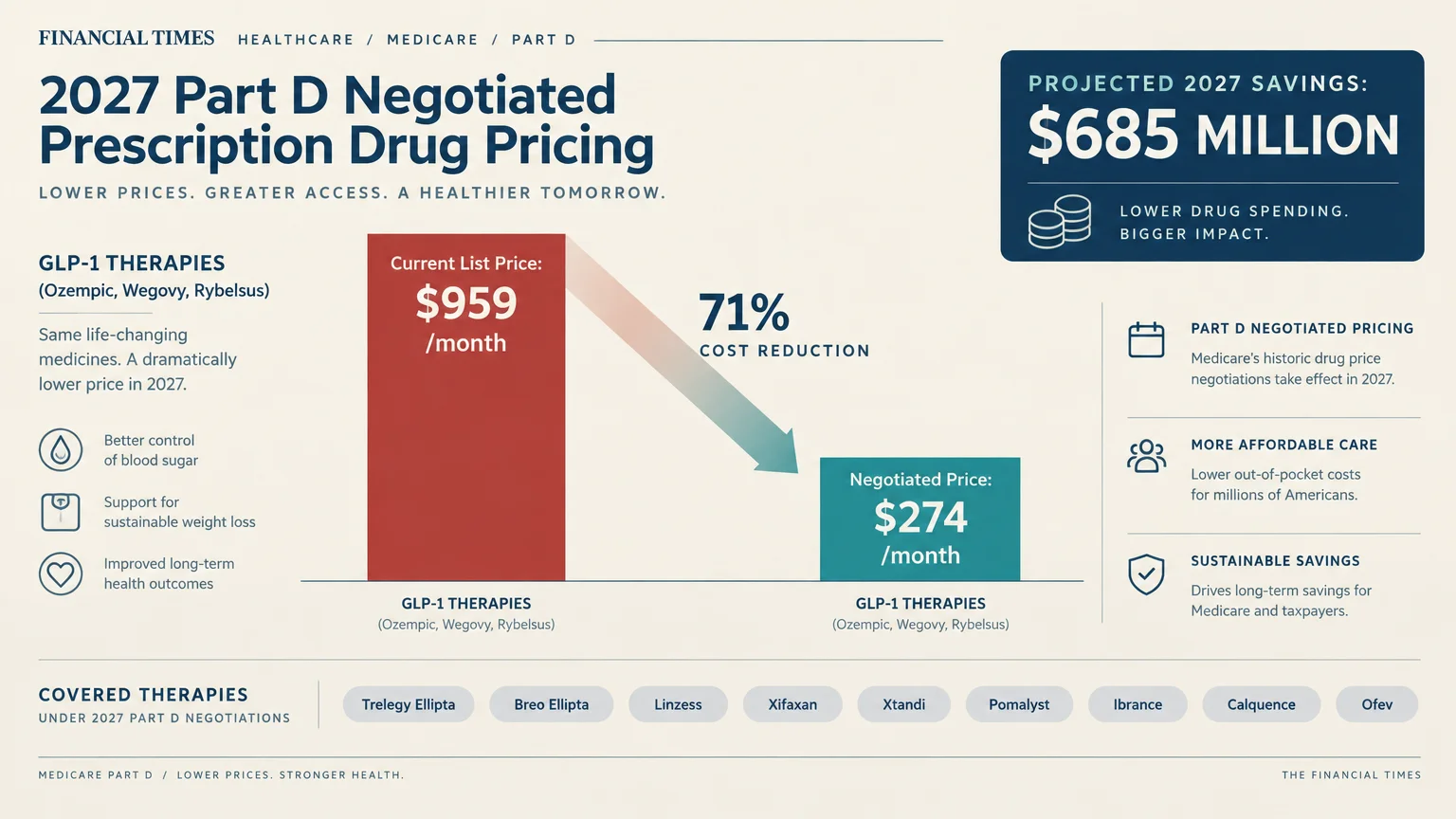
Starting January 1, 2027, Medicare implements newly negotiated prices for 15 high-profile Part D medications. This bold federal initiative directly targets costly therapies for chronic health conditions.
The Centers for Medicare and Medicaid Services (CMS) projects that these reduced prices will save beneficiaries $685 million in out-of-pocket costs in 2027 alone. You will feel that financial relief right at the pharmacy counter.
Substantial Relief for Diabetes and Heart Health
Popular GLP-1 medications like Ozempic, Wegovy, and Rybelsus see dramatic reductions under this policy. Their current list price of roughly $959 per month drops to a negotiated rate of just $274 monthly.
If you take these treatments to manage type 2 diabetes or related cardiovascular concerns, your monthly copayments could fall substantially. This change protects your retirement budget while preserving access to essential treatments.
Expanded Coverage for Chronic Conditions
The updated pricing list covers a broad spectrum of vital daily medications. It includes respiratory inhalers such as Trelegy Ellipta and Breo Ellipta, alongside digestive treatments like Linzess and Xifaxan.
Cancer treatments like Xtandi, Pomalyst, Ibrance, and Calquence also feature prominently on the 2027 negotiation roster. Enrollees managing pulmonary conditions will benefit from lower rates on therapies like Ofev.
Other covered prescriptions include Austedo, Austedo XR, Tradjenta, Vraylar, Janumet, Janumet XR, and Otezla. These targeted reductions mean fewer difficult trade-offs between your physical health and personal finances.
How to Maximize Your Medication Savings
Review your annual formulary notice as soon as it arrives in the mail each autumn. Confirm that your specific dosages and delivery methods remain covered on your chosen plan tier.
Schedule a routine medication checkup with your prescribing physician before the new plan year begins. Verifying your prescriptions early ensures seamless coverage when January arrives.

Tip #2: Utilize the Medicare GLP-1 Bridge for Weight and Metabolic Health
Understanding the New GLP-1 Bridge Benefit
A brand-new initiative known as the Medicare GLP-1 Bridge debuts in 2027. This program offers unprecedented access to transformative metabolic therapies for qualified Part D beneficiaries.
If your current prescription drug plan does not cover GLP-1 medications for weight loss, this initiative closes that coverage gap. It allows eligible seniors to pursue clinically supervised weight management without extreme expenses.
Predictable Costs with Capped Copayments
Under this pathway, eligible enrollees pay a capped $50 copayment for a full one-month supply. This flat fee provides financial predictability for therapies that previously cost thousands of dollars each year.
You must keep one critical financial nuance in mind regarding this perk. The $50 bridge copayment does not count toward your standard Part D annual out-of-pocket maximum.
Qualifying for the GLP-1 Bridge
Eligibility requires specific medical indications showing that medically supervised weight loss will improve your overall health. Your doctor must document that excess weight exacerbates chronic risks like joint distress or high blood pressure.
Medicare designed this program to curb preventable complications before they lead to emergency hospitalizations. Talk to your primary doctor about whether your health profile qualifies you for this benefit.
Combining Medication with Healthy Living
These breakthrough treatments deliver their best results when paired with mindful nutrition and consistent movement. Use this medical bridge as a launching pad for lasting lifestyle vitality.
Celebrate your renewed energy by exploring gentle physical activities like swimming, walking, or chair yoga. Transforming your metabolic health gives you the freedom to enjoy your golden years to the fullest.

Tip #3: Receive Home-Based Support with the ACCESS Chronic Care Model
Modern Chronic Care Delivered at Home
Managing ongoing medical conditions becomes vastly easier in 2027 through the innovative ACCESS Chronic Care Model. This program specifically supports Original Medicare enrollees living with conditions like diabetes, hypertension, and depression.
The program delivers coordinated, comprehensive medical guidance directly into your living room at little to no cost. It eliminates the exhausting need to commute to medical clinics for routine status check-ins.
Modern Wearable Devices and Remote Monitoring
A standout perk of the ACCESS model is coverage for approved health wearables and monitoring tools. Beneficiaries receive digital blood pressure cuffs, connected scales, and glucose monitors that automatically transmit readings to their care teams.
Your doctors receive real-time data alerts if your vital signs shift outside your healthy baseline range. This proactive oversight catches potential complications early, preventing unnecessary trips to the emergency department.
Dedicated Lifestyle Coaching and Emotional Support
The ACCESS model pairs you with certified lifestyle coaches who guide your dietary choices and activity goals. These caring professionals help you build sustainable habits that fit your unique routine and physical capabilities.
The program also addresses mental health challenges like chronic stress and depression. Virtual counseling sessions provide compassionate emotional support, ensuring your mind stays as vibrant and resilient as your body.
Enrolling in the ACCESS Model
Ask your primary care physician whether their medical practice participates in the ACCESS framework. Many regional health systems and independent clinics are actively integrating this model for 2027.
Enrolling requires zero complex paperwork on your end once your participating doctor initiates the service. Embracing this home-based support system gives you continuous clinical peace of mind throughout retirement.

Tip #4: Enjoy Extended Telehealth Freedoms and Virtual Wellness Sessions
Convenient Virtual Visits Extended Through 2027
You can continue seeing your trusted medical providers from the comfort of home through December 31, 2027. Congress and Medicare extended broad telehealth flexibilities, safeguarding virtual appointments for all beneficiaries nationwide.
You do not need to travel to a designated medical facility to connect with specialists or primary doctors. You can simply use your smartphone, tablet, or home computer from your favorite living room chair.
Expanded Diabetes Prevention Goes Fully Virtual
The Medicare Diabetes Prevention Program expands its reach in 2027 by embracing live online sessions and virtual-only providers. This vital perk empowers you to participate in proven wellness curricula regardless of where you live.
Enrollees who struggled with rural transportation or rigid clinic schedules can now attend engaging virtual cohorts. Interactive video meetings allow you to learn practical cooking techniques and exercise tips alongside supportive peers.
Saving Time and Energy on Healthcare Logistics
Virtual appointments eliminate the stress of heavy traffic, inclement weather, and crowded waiting rooms. Preserving your physical stamina allows you to focus your precious time on hobbies, family, and travel.
Routine prescription refills, lab review consultations, and cognitive wellness checks adapt seamlessly to video screens. Healthcare becomes an effortless, natural part of your daily retirement lifestyle.
Preparing for Seamless Telehealth Appointments
Test your camera, microphone, and internet connection a day or two before your scheduled consultation. Having your current medication bottles and written questions right beside you ensures a smooth, productive discussion.
Invite a family member or trusted friend to sit in on your video calls if you want an extra set of ears. Telehealth makes collaborative healthcare simpler and more comforting than ever before.
Tip #5: Spread Your Prescription Costs Across the Year Smoothly
Smooth Out Out-of-Pocket Expenses with Monthly Budgeting
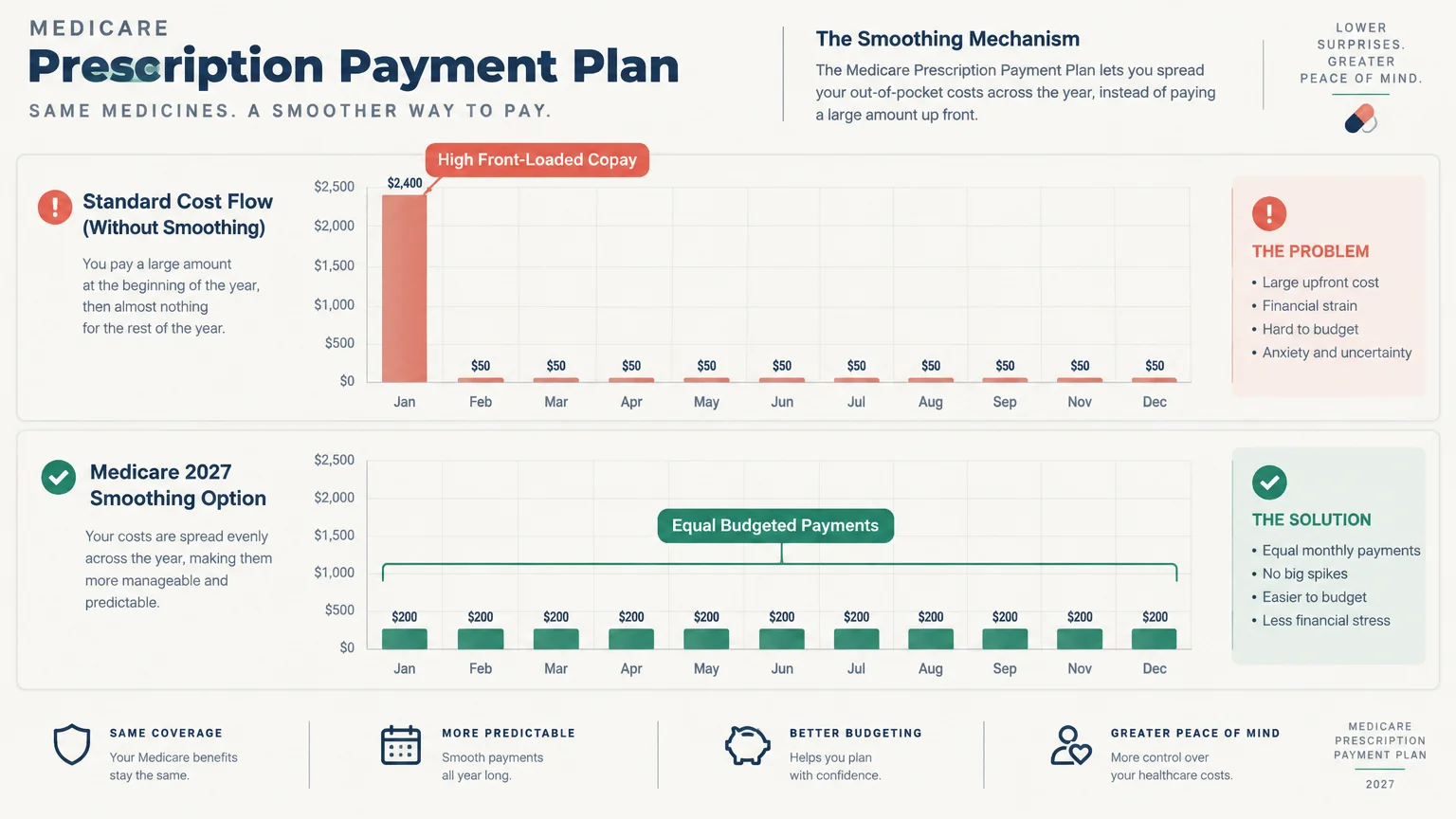
The Medicare Prescription Payment Plan continues as a cornerstone financial benefit in 2027. This payment mechanism allows you to spread out-of-pocket prescription expenses into predictable, capped monthly payments across the calendar year.
Instead of facing daunting pharmacy bills in January and February, you spread those identical costs evenly across twelve months. This predictable arrangement protects fixed retirement incomes from seasonal cash-flow strains.
Automatic Re-Enrollment for Returning Participants
If you utilized this payment smoothing program in 2026 and stay with the same plan, you enjoy automatic re-enrollment for 2027. You do not need to submit fresh enrollment forms or make stressful telephone inquiries.
Beneficiaries exploring this feature for the first time must actively opt in through their Part D plan administrator. You can request enrollment at any point during the plan year or during annual enrollment.
Understanding How the Math Protects Your Cash Flow
This program charges zero interest and zero added service fees for distributing your pharmacy balances over time. You pay the exact same out-of-pocket total for your medications; you simply avoid front-loaded winter costs.
Your plan calculates your monthly payment based on your remaining pharmacy charges and the months left in the year. If you experience an unexpected prescription adjustment, your plan smoothly recalibrates future installments.
Deciding If Payment Smoothing Fits Your Needs
Beneficiaries taking expensive specialty medications or multiple maintenance prescriptions benefit the most from this option. It transforms unpredictable pharmacy spikes into an orderly, manageable utility-style bill.
Review your annual drug costs to determine if spreading payments brings clarity to your personal household budget. Contact your Part D carrier to request an illustrative calculation of your projected monthly installments.

Tip #6: Navigate New Eligibility Standards for Chronic-Illness Living Perks
The Evolution of Chronic-Illness Supplemental Benefits
Medicare Advantage plans frequently offer Special Supplemental Benefits for the Chronically Ill (SSBCI) to assist vulnerable enrollees. These attractive perks encompass free nutritious grocery allowances, utility bill credits, and healthy home-delivered meals.
For 2027, the Centers for Medicare and Medicaid Services introduced stricter administrative rules for these popular programs. Enrollees can no longer self-certify their personal medical eligibility on simple plan questionnaires.
Enforcing Objective Medical Criteria
Medicare Advantage carriers must now enforce published, objective clinical criteria to verify who qualifies for chronic-illness perks. Your insurer will examine documented medical records from your doctor confirming specific diagnoses like congestive heart failure, diabetes, or autoimmune disorders.
This regulatory shift guarantees that supplemental funds flow directly to beneficiaries with genuine clinical needs. It also creates total transparency regarding who qualifies for high-value daily lifestyle allowances.
Gathering Clinical Documentation Early
Schedule an annual wellness visit with your physician during autumn to ensure your medical charts reflect your current health diagnoses. Ask your doctor to document how lifestyle supports like nutritious foods directly benefit your long-term prognosis.
Having proper clinical documentation on file prevents administrative delays when requesting grocery or utility allowances. Proactive communication with your medical team protects your access to these valuable household subsidies.
Auditing Your Plan’s Evidence of Coverage
Examine your insurer’s Evidence of Coverage document to understand the exact eligibility thresholds for supplemental perks. Compare qualifying lists between competing regional plans to see which carrier offers the best support for your health profile.
Do not assume that an allowance you enjoyed last year will renew automatically without valid medical verification. Verifying the updated requirements ensures your monthly budget remains steady and fully supported.
Tip #7: Seize Lower Medicare Advantage Premiums While Auditing Your Network
Average Monthly Premiums Plummet for 2027
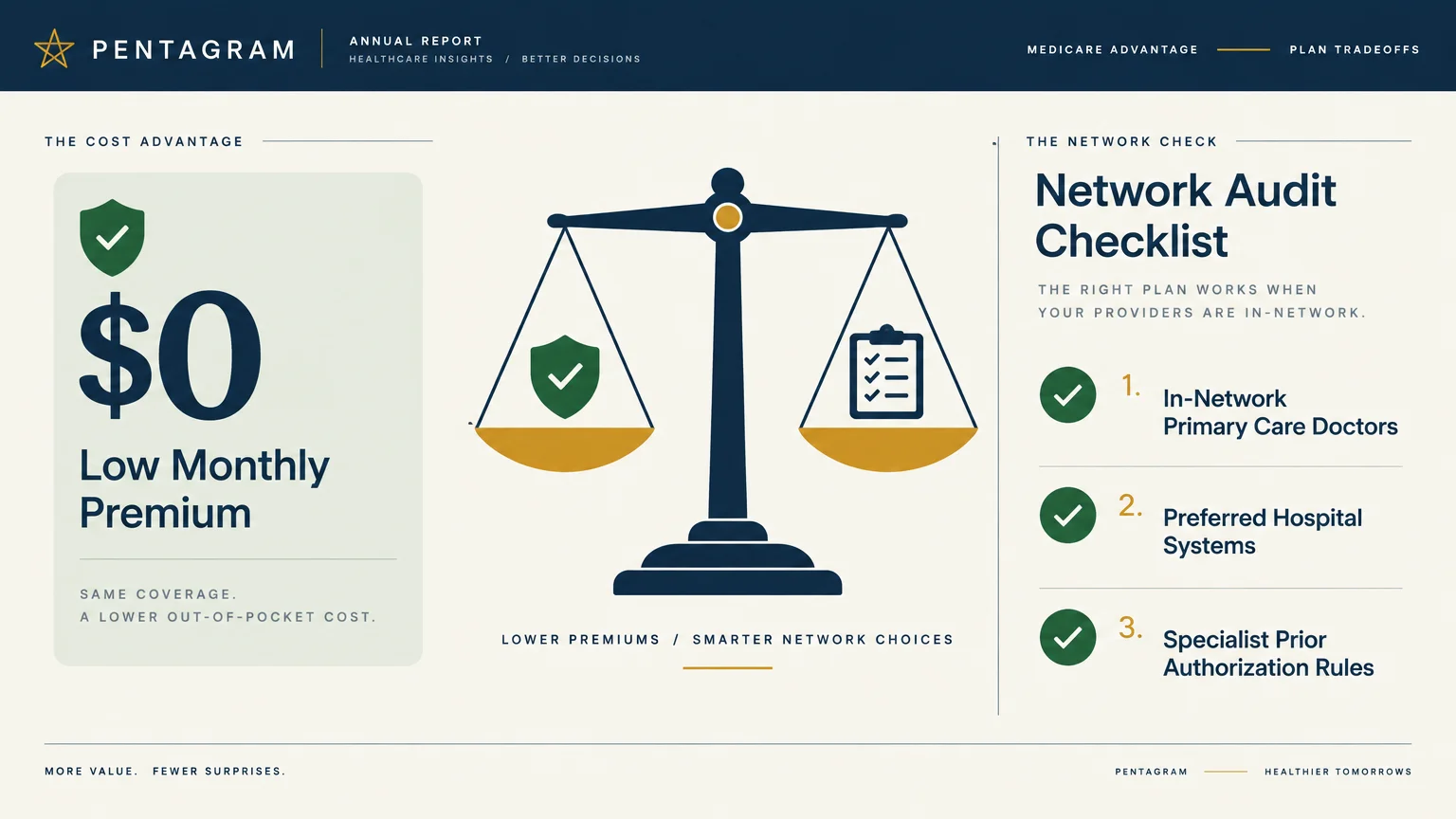
Medicare Advantage enrollees receive a welcome financial boost in 2027 with falling monthly plan fees. The national average monthly premium drops by 16.5% down to just $12.00 per month.
This reduction marks a notable drop from the $14.37 average monthly rate recorded during the 2026 plan year. Robust competition keeps baseline enrollment costs exceptionally low for seniors transitioning into managed Medicare options.
Unprecedented Plan Availability Across the Nation
Choice remains exceptionally abundant across the United States for seniors shopping for private Medicare coverage. Over 99% of all Medicare beneficiaries retain access to at least one Medicare Advantage option in their zip code.
Furthermore, 97% of beneficiaries can compare 10 or more distinctive private health plans in their home county. This broad competitive landscape allows you to choose plans offering the exact perks and physicians you prefer.
Tighter Insurer Margins and Benefit Trims
While average premiums decline, major insurers have noticeably tightened their operational budgets to balance rising clinical costs. Leading carriers like UnitedHealthcare, Centene, and Clover Health have trimmed supplemental dental allowances for 2027.
In addition, many carriers increased their maximum out-of-pocket thresholds by roughly 10% to offset lower monthly premiums. Carefully scrutinize your annual plan notices to verify copays for specialist visits and outpatient procedures.
Managing Carrier Exits and Provider Network Shifts
Pay close attention to market changes, as Humana is discontinuing specific plans affecting roughly 600,000 members nationwide. If your current plan exits the market, you receive a Special Enrollment Period to choose a new plan without penalty.
National Star Ratings dipped slightly to an average of 3.99 for 2027, with only 15 contracts earning 5 stars. Verify that your favorite hospitals, clinics, and specialists remain firmly in-network before renewing your contract.
Tip #8: Guard Your Savings with the $2,400 Part D Out-of-Pocket Cap
A Permanent Ceiling on Prescription Drug Expenses
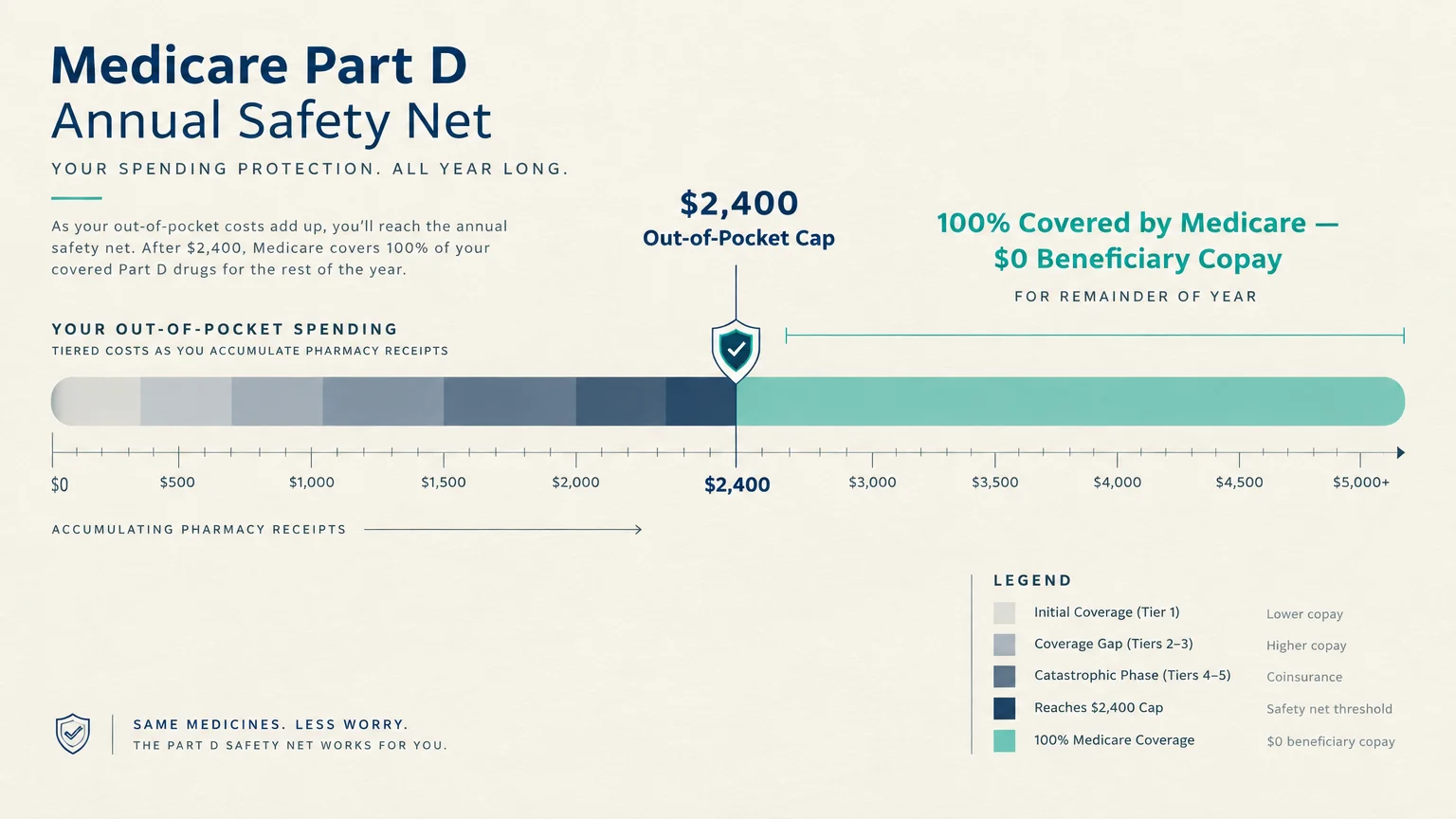
Your personal finances gain ironclad security in 2027 through the newly adjusted Part D out-of-pocket maximum. The federal spending threshold is set at $2,400 for covered prescription drugs throughout the calendar year.
While this marks an adjustment from the $2,100 limit in 2026, it maintains absolute financial protection for retirees. Once your qualifying pharmacy spending reaches $2,400, your plan pays 100% of covered drug costs for the rest of the year.
Understanding the 2027 Maximum Part D Deductible
The standard maximum deductible for Part D prescription drug plans rises to $700 in 2027. Some competitive plans may offer lower deductibles, but $700 represents the federal ceiling carriers may charge before standard benefits activate.
Budgeting for this initial deductible during the opening months of the year prevents unexpected financial strain. Once you meet this deductible, your standard coinsurance and copayments begin counting toward your $2,400 annual cap.
Standalone Part D Premium Trends
CMS projects that standalone Part D premiums will average approximately $36.00 per month during 2027. This projection shows only a modest increase from the $35.09 monthly average recorded in 2026.
A temporary federal premium-stabilization program expires after 2026, which means individual plan rates may fluctuate somewhat. Fortunately, CMS expects that the vast majority of standalone Part D premium increases will remain under $10 monthly.
The Base Beneficiary Premium Benchmark
The national base beneficiary premium increases to $41.33 per month for 2027, up from $38.99 in 2026. Medicare uses this standardized benchmark figure to calculate late-enrollment penalties for individuals who delayed Part D coverage.
Maintaining continuous, creditable drug coverage protects you from compounding monthly penalties throughout your retirement. Take comfort knowing that the $2,400 cap completely shields you from catastrophic, open-ended medication bills.
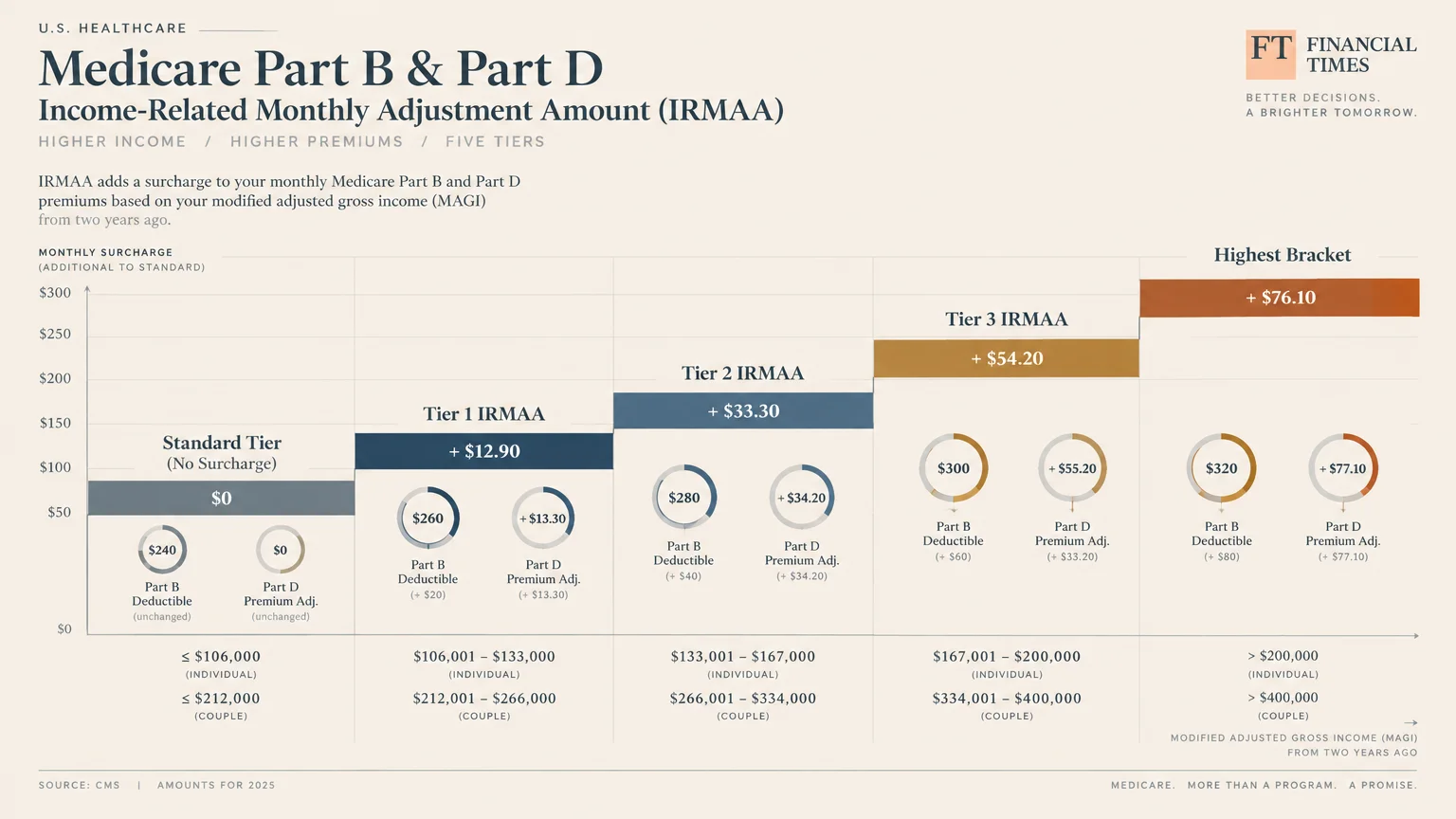
Tip #9: Prepare for Adjusted Original Medicare Deductibles and IRMAA Brackets
Projected Part B Premiums and Annual Deductibles
Planning for Original Medicare expenses ensures your monthly retirement cash flow remains perfectly balanced. Official Medicare Trustees Report projections set the standard Part B premium at $209.50 monthly for 2027, up from $202.90.
The annual Part B medical deductible is projected to increase modestly to $292 for the 2027 plan year. This small adjustment reflects baseline inflationary updates across outpatient medical visits and clinical laboratory services.
Hospital and Skilled Nursing Deductibles for Part A
Part A inpatient hospital coverage adjustments also take effect on January 1, 2027. The inpatient hospital deductible is projected to reach $1,788 per benefit period, compared to $1,736 in 2026.
Daily hospital coinsurance for days 61 through 90 is projected at $447 daily, while lifetime reserve days reach $894. Skilled nursing facility coinsurance for days 21 through 100 is projected at $223.50 per day.
Updated High-Income IRMAA Surcharges
Higher-earning retirees will encounter higher income thresholds before triggering Income-Related Monthly Adjustment Amount (IRMAA) surcharges. Based on 2025 tax returns, the initial single-filer threshold rises to approximately $113,000 for 2027.
This upward adjustment protects more moderate-income retirees from paying supplementary premiums on their Part B and Part D plans. If your earnings dropped recently due to retirement or widowhood, you can appeal your IRMAA determination.
Strategic Medigap Pairing for Total Protection
If you prefer Original Medicare, pairing it with a comprehensive Medigap supplemental policy eliminates unpredictable out-of-pocket gaps. Plans like Medigap Plan G absorb hospital deductibles and daily coinsurance charges cleanly.
Reviewing your Medicare supplement policies each year ensures your overall health spending remains predictable. Thoughtful financial planning shields your assets from unexpected inpatient medical bills.

Tip #10: Master the 2027 Enrollment Windows and 5-Star Plan Opportunities
Marking the Fall Open Enrollment Calendar
Your primary window for adjusting Medicare coverage runs from October 15 through December 7, 2026. Every change you execute during this Annual Enrollment Period takes effect on January 1, 2027.
Use this dedicated window to switch drug plans, evaluate Medicare Advantage offerings, or transition back to Original Medicare. Acting early in the enrollment cycle guarantees your insurance cards arrive well before New Year’s Day.
The Medicare Advantage Open Enrollment Window
If you begin 2027 enrolled in a Medicare Advantage plan and discover it does not fit, you have a second chance. The Medicare Advantage Open Enrollment Period runs from January 1 through March 31, 2027.
During these three months, you can switch to another Medicare Advantage plan or return to Original Medicare. This flexible safety valve gives you valuable peace of mind if your healthcare needs change unexpectedly.
The Exclusive 5-Star Special Enrollment Privilege
Medicare awards elite 5-star quality ratings to top-performing health plans evaluating customer service and clinical excellence. For 2027, only 15 Medicare contracts nationwide attained this distinguished 5-star performance rating.
If a 5-star plan serves your geographic county, you gain a Special Enrollment Period to switch into that plan anytime. You can utilize this exclusive enrollment perk once between December 8 and November 30 of the plan year.
Creating Your Personal Enrollment Action Checklist
Begin your annual coverage review by compiling a detailed list of all your current daily medications and preferred doctors. Input these personal details into the official Medicare plan finder tool to view accurate out-of-pocket estimates.
Never rely solely on television commercials or generic marketing mailers when selecting your coverage for 2027. Independent research ensures you secure the lowest overall healthcare costs while protecting your preferred clinical relationships.

The Takeaway: Living a More Blissful Retirement
Empower Your Future with Proactive Health Decisions
The Medicare updates arriving in 2027 bring genuine optimism and tangible financial relief for American seniors. Federal drug price negotiations and the new GLP-1 Bridge dramatically reduce the cost of life-enhancing prescriptions.
Simultaneously, programs like the ACCESS Chronic Care Model and extended telehealth flexibilities deliver outstanding medical care right to your home. You no longer have to sacrifice personal comfort or independence to receive top-tier chronic condition management.
Taking Charge of Your Healthcare Journey
A fulfilling retirement is built upon the dual pillars of robust physical vitality and disciplined financial security. Mastering Medicare’s evolving policies enables you to protect both your health and your hard-earned retirement assets.
Approach each enrollment season as an empowering opportunity to align your health insurance with your personal lifestyle aspirations. When you take charge of your healthcare options, you unlock true peace of mind for the golden years ahead.
For a wide range of resources for older adults, visit AARP and the National Council on Aging (NCOA). Health information is available from the National Institute on Aging.
Disclaimer: This article is for informational and inspirational purposes only. It is not a substitute for professional medical, financial, or psychological advice. Please consult with a qualified expert for guidance tailored to your individual needs.
Frequently Asked Questions
How do the newly negotiated drug prices affect my pharmacy copayments?
The negotiated rates taking effect on January 1, 2027, lower the baseline pricing for 15 major Part D medications. Because copayments and coinsurance depend on total drug prices, your direct out-of-pocket costs will fall considerably.
For high-demand medications like Ozempic and Wegovy, negotiated pricing reduces monthly costs from roughly $959 to $274. Check your plan formulary to confirm how your insurer categorizes these newly discounted treatments.
Can I use the Medicare GLP-1 Bridge if I already have prescription coverage?
The GLP-1 Bridge specifically serves Part D enrollees whose current plan does not cover these therapies for weight and metabolic management. If your existing policy covers your medication, your standard plan benefits apply instead.
Eligible seniors utilizing the bridge pay a capped $50 copay for a one-month supply. Remember that this specific $50 copayment does not count toward your Part D annual out-of-pocket cap.
What should I do if my Medicare Advantage plan is discontinued for 2027?
With carriers like Humana discontinuing plans affecting roughly 600,000 beneficiaries, plan discontinuations require prompt attention. If your carrier drops your plan, you automatically qualify for a Special Enrollment Period to choose new coverage.
You can choose a competing Medicare Advantage plan or transition back to Original Medicare with a Medigap policy. Research your regional alternatives during the fall enrollment window to prevent any gap in your health insurance.
Does the Medicare Prescription Payment Plan reduce the total amount I owe?
The payment plan spreads your out-of-pocket prescription drug costs across twelve monthly payments rather than reducing your total balance. You pay the exact same total sum, but you avoid massive pharmacy bills during the winter months.
This program charges zero interest or hidden administrative fees, making it an excellent budgeting tool for fixed incomes. Returning participants in the same plan re-enroll automatically, while new users must actively opt in.