
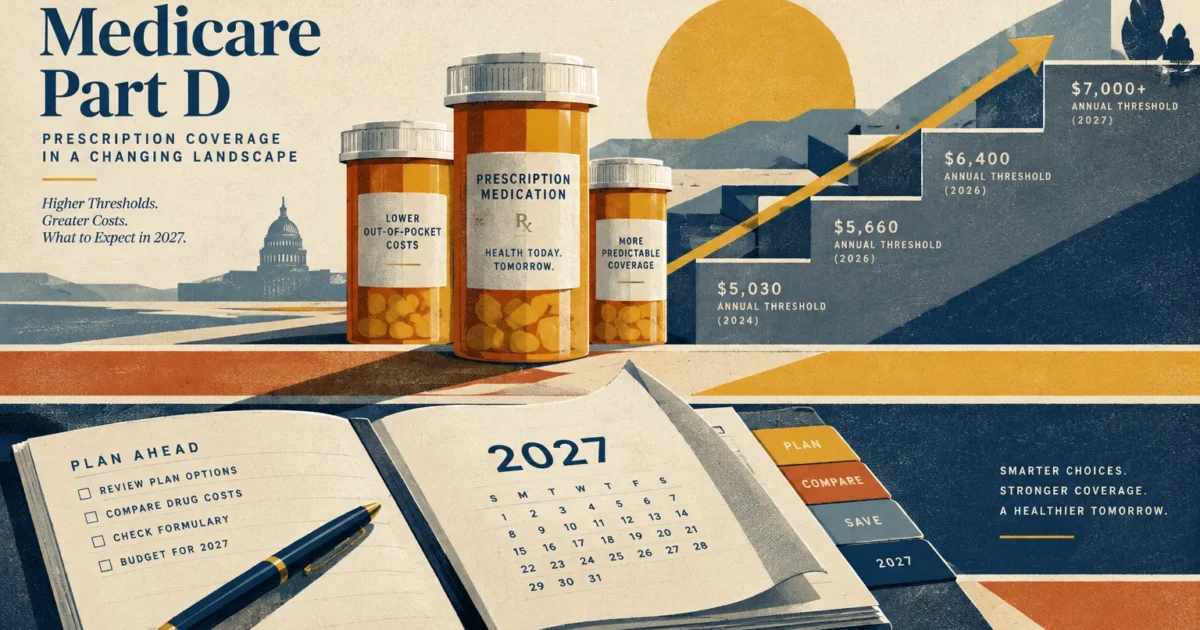
Planning your healthcare budget for 2027 requires a clear look at upcoming Medicare adjustments. Recent policy updates bring several significant rule shifts that will increase your out-of-pocket prescription drug spending.
Understanding these key part d changes 2027 brings helps you protect your retirement savings. You can easily adjust your coverage during the annual open enrollment window to keep medication expenses manageable.
Navigating these ten critical changes empowers you to take charge of your healthcare journey. With the right practical tools, you will secure the best benefits for a healthy, joyful retirement.
Tip #1: The Maximum Standard Deductible Climbs to $700
Understanding the Higher Upfront Threshold
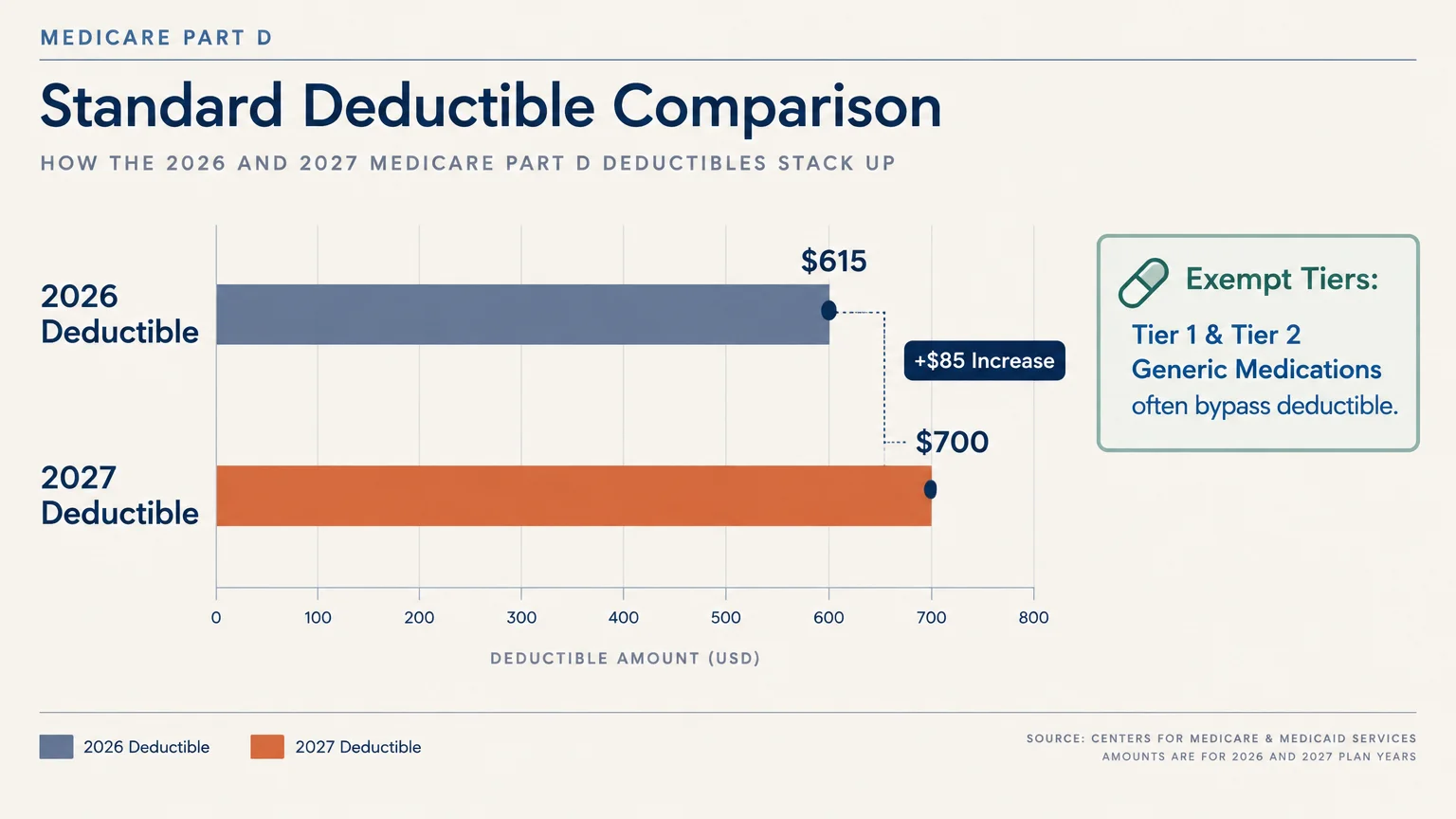
Your prescription drug coverage begins each calendar year with an annual deductible phase. For 2027, Medicare sets the maximum allowable standard deductible at $700.
This new limit represents an $85 increase from the $615 deductible ceiling established in 2026. Consequently, you must spend more of your own money before your plan begins paying.
During this initial stage, you pay 100% of the negotiated retail price for covered medications. Your insurance plan pays nothing toward these claims until your receipts reach the $700 mark.
Why Early-Year Pharmacy Refills Cost More
Many seniors feel this financial adjustment most acutely during January and February. When your deductible resets on January 1, routine pharmacy refills can produce surprisingly large bills.
If you take brand-name medications, a single monthly refill can easily consume the full $700 deductible. Planning ahead prevents this early-year pharmacy shock from derailing your monthly household budget.
Budgeting for the higher part d deductible 2027 requires proactive cash-flow management early in the year. Setting dedicated funds aside ensures your necessary healthcare remains uninterrupted.
Actionable Steps to Protect Your Wallet
Fortunately, you can take practical measures to shield yourself from this upfront cost. Many standalone plans exclude common generic medications from their annual deductible.
Review your plan formulary to confirm whether Tier 1 and Tier 2 drugs bypass this deductible. Choosing medications on exempt tiers delivers immediate copay savings from your first pharmacy visit.
You can also ask your doctor about lower-cost therapeutic alternatives before the plan year begins. Exploring equivalent substitutions keeps your out-of-pocket expenses minimal right from the start.
Tip #2: The Annual Out-of-Pocket Spending Cap Increases to $2,400
The Shifting Ceiling on Drug Expenses
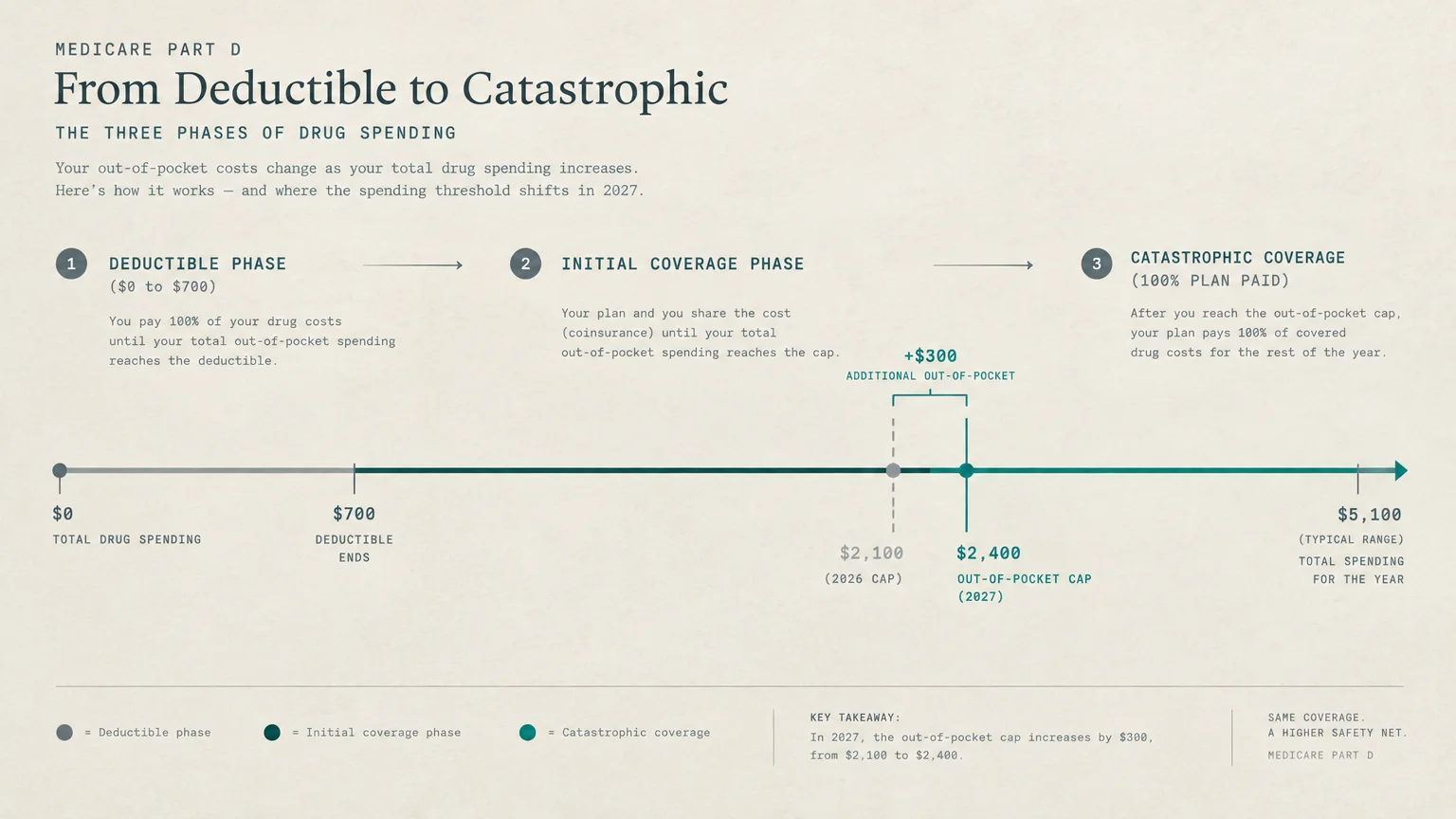
Managing your medicare drug costs 2027 requires understanding this shifting ceiling. In 2027, Medicare’s annual out-of-pocket spending maximum rises to $2,400.
This adjustment marks a $300 increase over the $2,100 spending limit established for 2026. Beneficiaries must now contribute more personal funds before qualifying for complete cost relief.
Once your qualifying spending reaches $2,400, you enter the catastrophic coverage phase. At that milestone, your plan pays 100% of all covered prescription drug costs through December 31.
How the Increase Impacts Seniors with High Medication Needs
If you manage chronic health conditions or take specialty medications, you likely reach this cap every year. You will need to absorb an extra $300 in personal expenses during 2027.
While paying more is never pleasant, this cap still provides vital financial predictability. You remain fully shielded from limitless catastrophic drug expenses throughout your golden years.
Understanding this threshold helps you calculate the maximum amount you will spend on covered prescriptions. That clarity allows you to budget your annual healthcare spending with confidence.
Practical Ways to Plan for the $2,400 Limit
Keep track of your True Out-of-Pocket spending by reading your monthly Explanation of Benefits statements. These monthly reports show exactly how close you are to the $2,400 catastrophic threshold.
Consider dividing this maximum liability across twelve months to establish a steady monthly healthcare reserve. That simple habit prevents unexpected spending spikes from disrupting your retirement lifestyle.
Speak with your pharmacist about your projected annual costs to optimize your timing. Managing your refills effectively ensures a smooth, predictable transition into catastrophic coverage.

Tip #3: The Expiration of the Federal Premium Stabilization Subsidy
The Sunset of the Federal Financial Buffer
Federal officials previously cushioned policyholders against dramatic rate spikes through the Part D Premium Stabilization Demonstration. This temporary federal program officially expires on December 31, 2026.
Under this initiative, the federal government subsidized standalone plans by roughly $16 per month per enrollee. The demonstration also placed a strict limit on year-over-year premium increases.
Private insurers must now price their 2027 drug plans without this crucial federal financial cushion. Without government assistance, insurance carriers must bear the full brunt of rising claims.
Why Rate Hikes Are Hitting Policyholders Directly
Because carriers no longer receive this monthly subsidy, they are redesigning their 2027 pricing structures. Many insurers are passing these operational expenses directly along to enrollees through higher charges.
This dynamic creates unexpected rate jumps for popular plans that previously enjoyed subsidized stability. Being aware of this transition prevents unpleasant financial surprises when new billing statements arrive.
Market analysts expect standalone drug plans to show significant pricing volatility as a direct result. Taking control of your coverage details is the best defense against these industry-wide pressures.
Proactive Steps for Every Savvy Senior
Never permit your prescription drug plan to renew automatically without a thorough annual review. Carefully inspect your Annual Notice of Change document when it arrives in late September.
This document details exact premium changes, deductible shifts, and formulary modifications for the coming year. Identifying these changes early gives you ample time to shop for better alternative coverage.
Evaluate competing plans to determine whether another provider offers comparable benefits at lower rates. Shopping the marketplace ensures you keep your retirement savings working efficiently for you.

Tip #4: The Complete Disappearance of $0-Premium Standalone Plans
A Major Shift in Budget-Friendly Standalone Options
For many years, budget-conscious seniors relied on standalone Part D plans that charged a $0 monthly premium. In 2027, that cost-effective option disappears entirely from the standalone marketplace.
An extensive analysis by the Kaiser Family Foundation reveals there are zero $0-premium standalone plans available in 2027 for beneficiaries who do not qualify for Extra Help.
Approximately 4 million enrollees who paid $0 per month in 2026 must now pay monthly premiums. This structural change requires an immediate adjustment to your monthly retirement cash flow.
The Impact on Your Household Budget
Transitioning from a zero-dollar premium to an active monthly invoice adds a permanent line item to your expenses. Over an entire year, even modest monthly charges accumulate into significant sums.
If you currently belong to a zero-dollar standalone plan, your insurer will assign a monthly premium for 2027. Reviewing this new charge ensures it still fits comfortably within your living budget.
Allowing automatic reassignment without checking the premium could lead to unexpected deductions from your bank account or Social Security check. Staying informed keeps you in total control of your money.
Positive Strategies to Offset Premium Costs
First, check your eligibility for the federal Low-Income Subsidy program, commonly known as Extra Help. This program eliminates or drastically reduces monthly premiums for qualifying individuals.
Second, investigate whether a Medicare Advantage plan offering prescription coverage aligns with your medical preferences. Many Medicare Advantage plans continue to offer $0 monthly premiums in 2027.
Compare both standalone and integrated options to find the most cost-effective arrangement for your lifestyle. Exploring every available avenue protects your hard-earned retirement dollars.
Tip #5: The Rising Part D Late Enrollment Penalty Rate
How the Penalty Calculation Formula Works
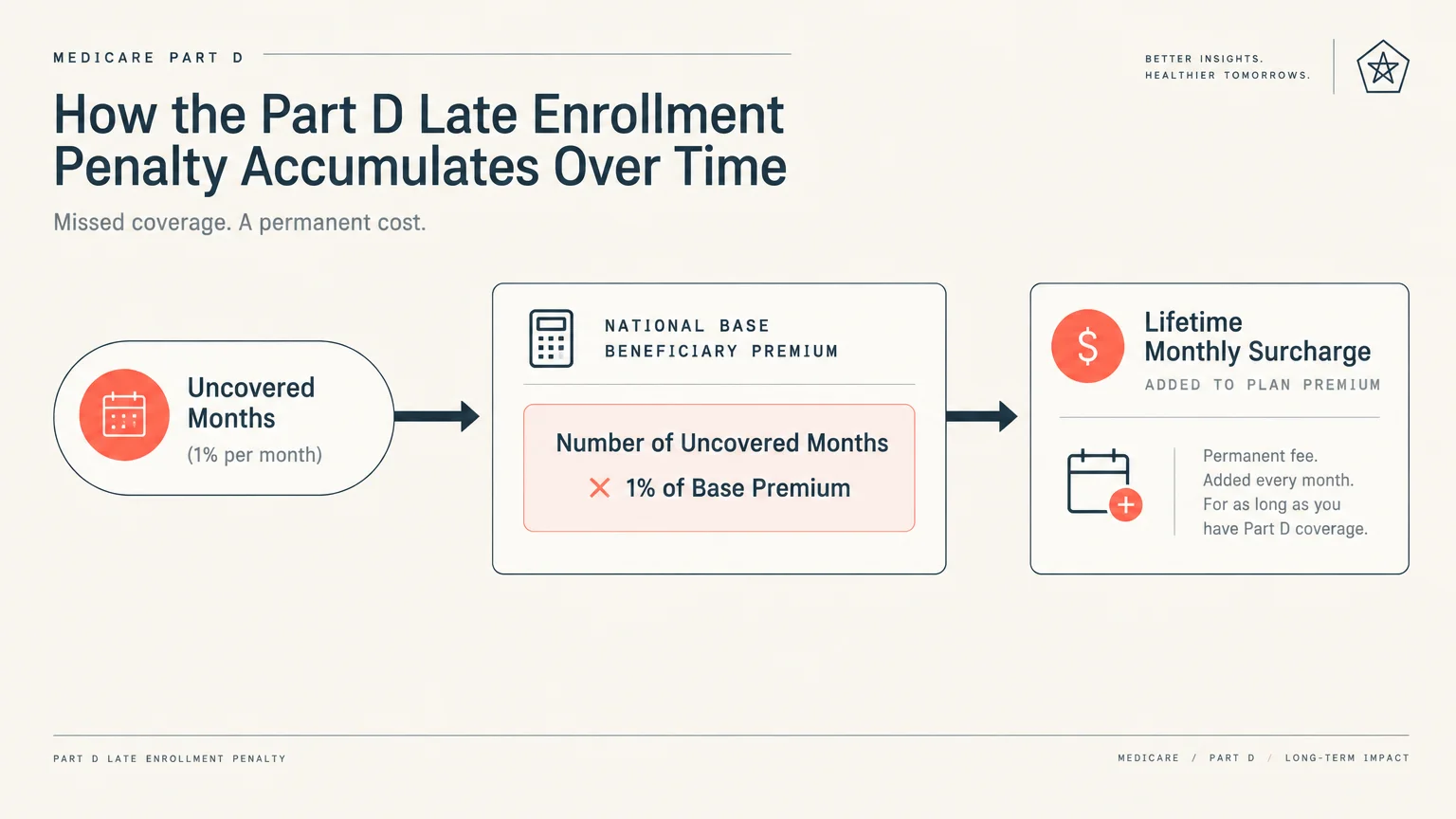
Medicare calculates your late enrollment penalty using the national base beneficiary premium. For 2027, the Centers for Medicare and Medicaid Services set this benchmark figure at $41.33.
This base rate reflects a 6% increase from the $38.99 amount used in 2026. Because penalties tie directly to this formula, anyone paying a penalty will see their monthly fee increase.
Medicare determines your penalty by multiplying 1% of the national base premium by your total uncovered months. That calculated dollar amount is then added to your monthly premium indefinitely.
Why Your Monthly Penalty Grows Every Year
Many seniors mistakenly believe that their late enrollment penalty remains locked at a fixed dollar amount forever. In reality, the penalty climbs whenever the national base beneficiary premium increases.
Even if you never accumulate another uncovered month, your penalty dollar amount will expand in 2027. This compounding formula makes late enrollment penalties increasingly expensive over a long retirement.
Understanding this mathematical reality reinforces the vital importance of securing creditable drug coverage without delay. Timely enrollment protects your financial well-being for decades to come.
Protecting Yourself from Lifelong Surcharges
Always maintain continuous, creditable prescription coverage from the moment you turn 65 or leave employment. Request written proof of creditable coverage whenever you transition away from employer group health plans.
Keep these verification letters safely stored in your permanent healthcare records. Providing this documentation prevents Medicare from assessing mistaken late enrollment surcharges against your account.
If Medicare assesses an inaccurate penalty, submit an official reconsideration appeal immediately. Successfully appealing the determination permanently removes the extra monthly charge from your future statements.

Tip #6: Skyrocketing Plan-Specific Monthly Premiums
Average Figures Hide Substantial Individual Spikes
CMS projections indicate that the overall average standalone Part D premium will rise modestly from $35.09 in 2026 to $36.00 in 2027. However, this national average masks dramatic price increases in specific plans.
Insurers face soaring operational obligations, with the National Average Monthly Bid Amount climbing to $296.05 for 2027. This represents an estimated 25% cost jump over 2026 basic benefit projections.
To offset these rising claims, insurance companies are implementing substantial premium increases on individual policies. Many popular standalone plans will become far more expensive in 2027.
Examining Steep Jumps in Major Standalone Plans
Independent research reveals that enrollees remaining in the AARP Medicare Rx Preferred plan face severe price increases. Enrollees in every single state will endure premium increases of at least $50 per month.
Furthermore, policyholders in 37 states will see that plan’s monthly premium surge by over $75 per month. Such steep adjustments can add nearly $1,000 to your annual healthcare expenses.
These stark figures illustrate why passive plan renewal can be hazardous to your retirement budget. Actively comparing standalone part d premiums 2027 features is essential for keeping costs low.
Using Medicare Plan Finder for True Cost Comparisons
Log into Medicare.gov during open enrollment to evaluate options using the official Plan Finder tool. Enter your current medications, exact dosages, and preferred retail pharmacies into the software.
Review the total estimated annual cost, which combines premium payments with anticipated copays and coinsurance. Selecting a plan with lower monthly premiums often saves significant money over the year.
Enlisting the help of a licensed Medicare broker or state insurance counselor can simplify your comparison. Expert guidance ensures you identify an affordable plan that covers all your prescriptions.

Tip #7: Fewer Standalone Choices and Major Carrier Market Exits
A Contracting Marketplace for Standalone Drug Plans
The total number of standalone Prescription Drug Plans across the country drops to 312 in 2027, down from 360 in 2026. This market contraction represents a continuing trend of carrier consolidation.
The average Medicare beneficiary will have just 9 standalone plans to choose from, down from 11 in 2026. Fewer choices means you must examine remaining options with greater care.
Reduced competition in regional markets can lead to stricter formularies and fewer preferred pharmacy networks. Staying proactive ensures you secure robust coverage despite having fewer standalone options.
Disruptions Caused by Major Insurer Market Exits
More than 1 million seniors will lose their existing standalone drug plans entirely as companies reorganize their portfolios. CVS Health’s Aetna is withdrawing its standalone plans from roughly half of all states.
If your carrier exits your region, you will receive an official non-renewal notice before open enrollment starts. Failing to act could leave you without drug coverage or auto-enrolled into a pricier alternative.
Losing your coverage requires active decision-making to maintain your health security and avoid coverage gaps. Fortunately, the annual enrollment window offers ample time to select an outstanding new plan.
Key Deadlines to Protect Your Coverage
The Annual Open Enrollment Period runs from October 15, 2026, through December 7, 2026. Any new coverage you select during this window will take effect on January 1, 2027.
Mark these dates clearly on your calendar so you can evaluate replacement options without rushing. Selecting your replacement policy early gives you complete peace of mind heading into the holidays.
Taking prompt control of your enrollment guarantees uninterrupted access to life-enhancing medications. Your proactive choices keep your golden years healthy, relaxed, and worry-free.
Tip #8: Higher Coinsurance Rates in the Initial Coverage Stage
Understanding Percentage Charges Versus Fixed Copays
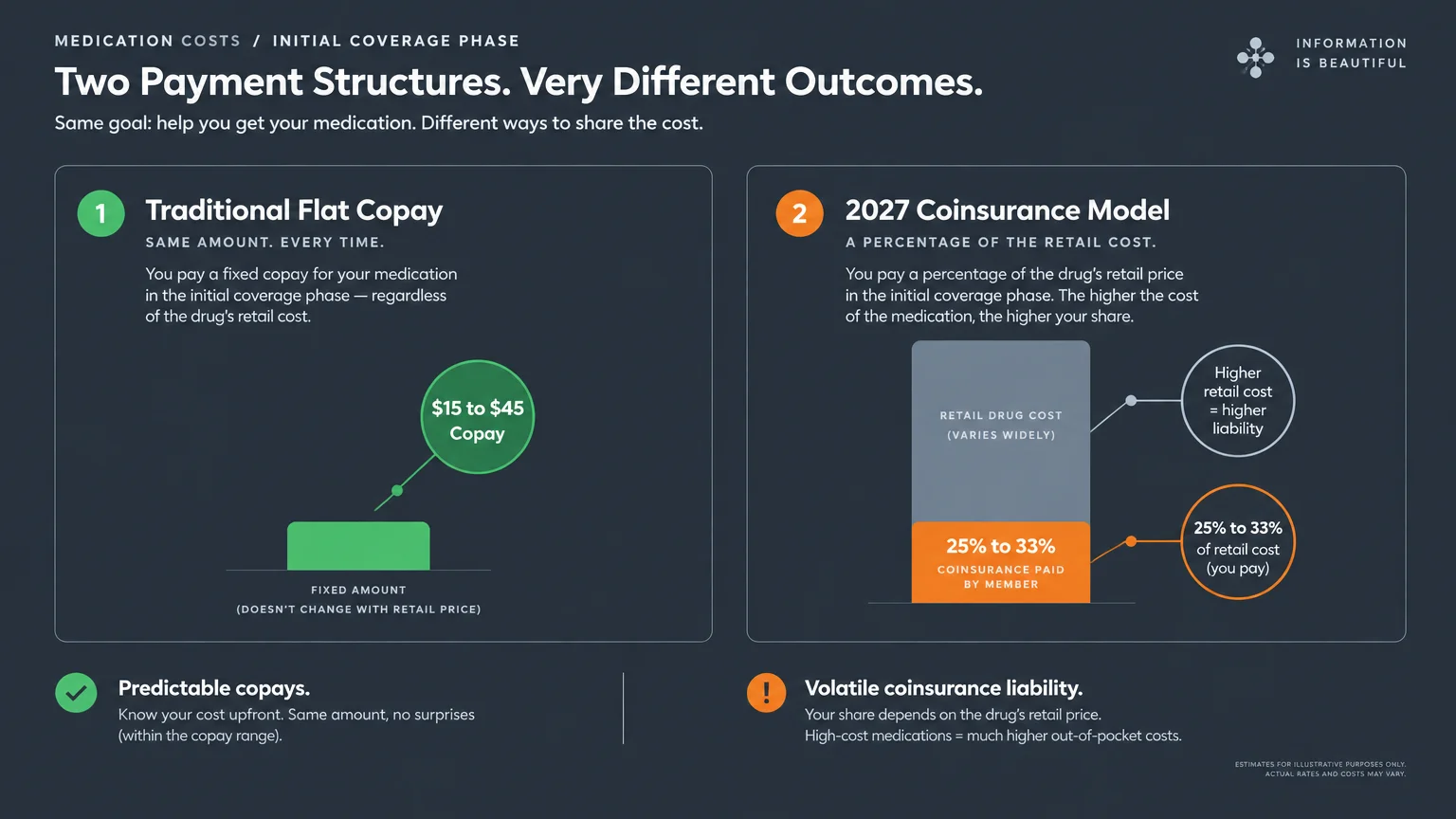
After you satisfy your $700 annual deductible, you enter the initial coverage stage of your Part D benefit. During this phase, plans can charge up to 25% coinsurance on covered medications.
Unlike fixed copays that charge a predictable dollar fee, coinsurance requires you to pay a percentage of the drug’s negotiated price. As list prices rise, your out-of-pocket payment increases proportionally.
Paying 25% coinsurance on expensive specialty medications can mean spending hundreds of dollars at each refill. You remain subject to these percentage charges until reaching the $2,400 spending cap.
Relief Through Newly Negotiated Medicare Prices
Thankfully, new price protections will help mitigate coinsurance costs for several widely used medications in 2027. Fifteen additional drugs will feature newly negotiated Medicare prices taking effect on January 1, 2027.
This negotiated list includes popular medications such as Ozempic, Wegovy, Rybelsus, Eliquis, Trelegy Ellipta, and Xtandi. Because these baseline retail prices drop, your 25% coinsurance charge will be significantly lower.
These lower negotiated prices provide direct relief for seniors managing conditions like diabetes, heart disease, and respiratory illness. This progress represents a major win for retirement healthcare budgets.
Actionable Formulary Strategies with Your Doctor
Schedule an annual prescription review with your doctor before the open enrollment period closes in December. Bring your plan’s updated 2027 formulary to review drug tiers and coinsurance requirements together.
Ask your physician if switching to a newly negotiated drug or generic alternative makes medical sense for you. Making simple therapeutic adjustments can save you substantial money during the initial coverage phase.
Confirm that your preferred local pharmacy belongs to your plan’s preferred network. Preferred pharmacies offer the lowest possible coinsurance rates, maximizing your prescription savings all year long.
Tip #9: Non-Counting Costs for GLP-1 Bridge and Cash Discount Cards
New Savings Options with a Crucial Catch
Medicare is introducing innovative ways to help seniors afford life-changing therapies during 2027. The Medicare GLP-1 Bridge program offers access to designated weight-loss and metabolic drugs for a $50 monthly copay.
Additionally, federal authorities are encouraging the use of the TrumpRx.gov cash discount coupon platform. While both avenues provide immediate price discounts, they come with a critical coverage catch.
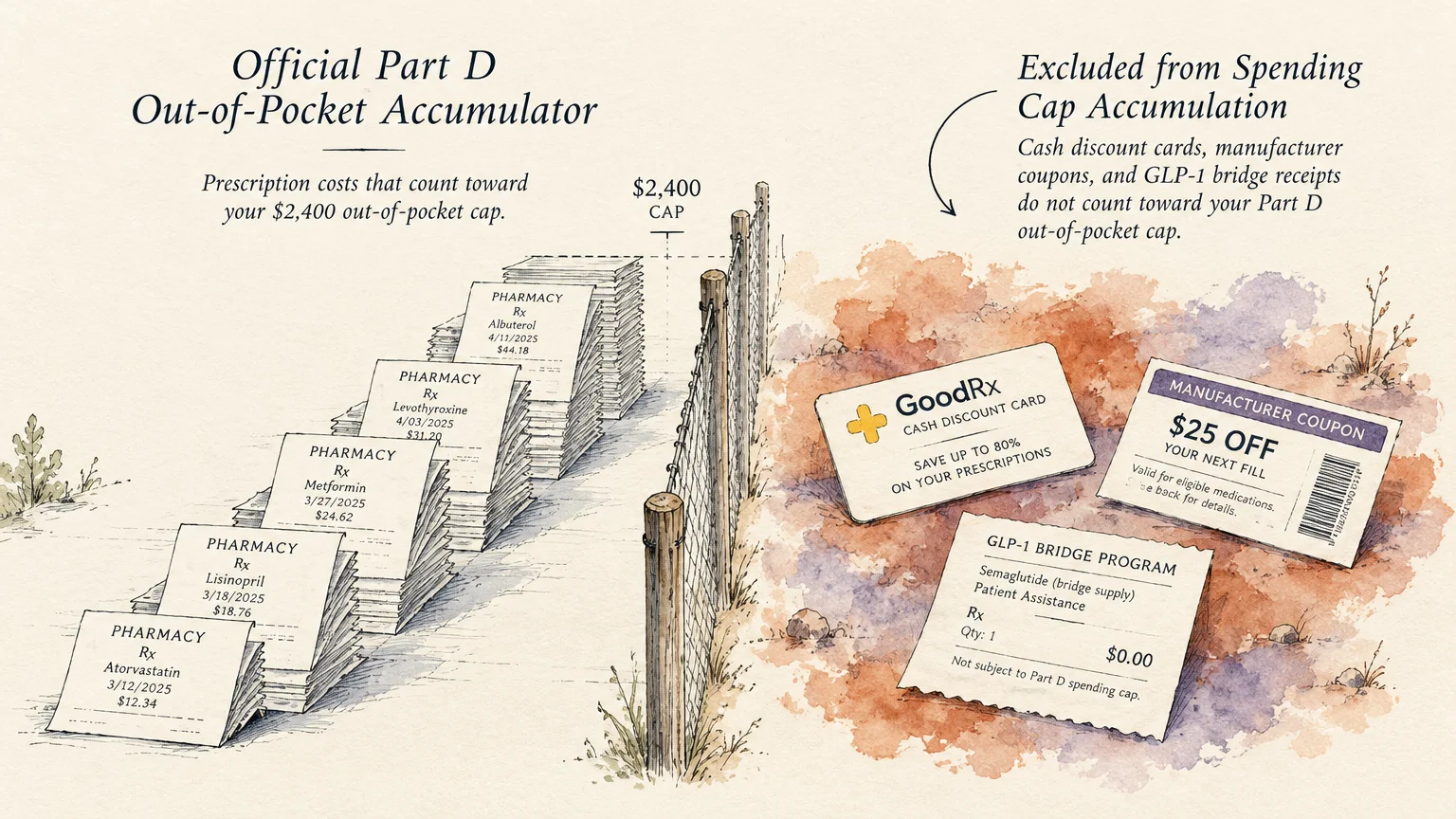
Under official CMS regulations, payments made through these alternative programs do not count toward your Medicare Part D benefit. This rule fundamentally changes how these discounts affect your wallet.
Why Your Spending Cap Remains Out of Reach
Neither the $50 GLP-1 Bridge copay nor purchases made via TrumpRx.gov count toward your $700 Part D deductible. Even more importantly, they do not apply toward your $2,400 out-of-pocket maximum.
Spending money on discount programs keeps you from progressing toward catastrophic coverage. You could spend hundreds of dollars out-of-pocket while remaining at the very start of your Part D benefit.
This dynamic creates a hidden cost trap for seniors with multiple high-cost prescriptions. Understanding how these programs interact with your cap prevents unexpected delays in reaching $0 copays.
How to Choose the Most Cost-Effective Path
Analyze your overall prescription expenses across the entire calendar year before using cash discount programs. If you take multiple medications, processing them through Part D helps you reach the $2,400 cap quickly.
Once you hit that threshold, Medicare covers 100% of your covered medications for the remainder of the year. Reaching catastrophic coverage early often delivers far greater savings than temporary cash discounts.
If you take only one or two inexpensive medications, cash coupon programs might remain practical and convenient. Carefully weigh immediate cash savings against long-term out-of-pocket caps to make the smartest choice.

Tip #10: Increased Annual Liability Under Payment Plan Auto-Renewal
How Payment Smoothing Helps Your Monthly Cash Flow
The Medicare Prescription Payment Plan allows you to spread out-of-pocket prescription expenses across predictable monthly installments. This program prevents large, sudden bills when refilling expensive prescriptions early in the year.
If you enrolled in this program during 2026, your participation automatically renews for 2027 if you stay with the same plan. Automatic renewal ensures smooth billing continuity without requiring new paperwork.
This payment plan does not add interest charges or administrative fees to your monthly pharmacy balances. It offers an effective cash-flow management tool for seniors living on steady monthly retirement incomes.
Understanding Your Higher Maximum Annual Liability
While the program smooths out your payments across the year, it does not reduce your total prescription expenses. Because the out-of-pocket maximum rises to $2,400 in 2027, your total liability increases.
If you reach the cap, your plan divides that larger $2,400 sum across your remaining monthly statements. Consequently, your monthly installment bills may be noticeably higher than they were in 2026.
Recognizing this distinction ensures you never mistake payment smoothing for an actual price discount. Being prepared for larger installment amounts keeps your personal finances balanced and predictable.
Actionable Tips to Track Your Monthly Payments
Review every monthly installment bill to ensure your pharmacy charges match your actual prescription refills. Monitoring your statements prevents billing errors from compounding over the course of the plan year.
You can opt out of the payment program at any time if you prefer paying at the pharmacy register. Maintaining flexibility allows you to adapt your payment methods as your healthcare needs evolve.
Managing prescription costs medicare participants face is easiest when you monitor your monthly budget closely. Proactive financial management ensures you enjoy complete peace of mind throughout your golden years.

The Takeaway: Living a More Blissful Retirement
Navigating the evolving Medicare landscape requires attention, but it should never diminish your retirement joy. With the right knowledge and practical strategies, you can easily navigate every 2027 rule adjustment.
Preparing early for Open Enrollment gives you total control over your health and financial future. Taking decisive action ensures you secure dependable coverage while keeping your hard-earned retirement dollars safe.
Review your Annual Notice of Change carefully to evaluate premium shifts, deductible changes, and formulary updates. Comparing available options on Medicare.gov ensures you find a plan perfectly tailored to your needs.
Take full advantage of newly negotiated drug prices on therapies like Eliquis, Trelegy Ellipta, and Ozempic. These lower prices provide substantial relief when combined with the right preferred pharmacy network.
Empowering yourself with accurate information allows you to focus on what truly matters in retirement. Staying proactive with your healthcare decisions creates a vibrant, worry-free foundation for a wonderful future.
Celebrate your retirement journey with confidence, knowing that your health and financial security are firmly protected. A joyful, blissful retirement is yours to enjoy every single day.
For a wide range of resources for older adults, visit AARP and the National Council on Aging (NCOA). Health information is available from the National Institute on Aging.
Disclaimer: This article is for informational and inspirational purposes only. It is not a substitute for professional medical, financial, or psychological advice. Please consult with a qualified expert for guidance tailored to your individual needs.
Frequently Asked Questions
When do the 2027 Medicare Part D changes take effect?
All 2027 Medicare Part D changes take effect on January 1, 2027. You can adjust your plan during the Annual Open Enrollment Period from October 15 through December 7, 2026.
Selecting your coverage before December 7 ensures your new plan card and updated pricing are active on New Year’s Day. Timely enrollment guarantees completely uninterrupted access to all your necessary medications.
Why did the maximum out-of-pocket spending cap rise to $2,400?
Federal law indexes the Part D out-of-pocket spending cap to national per-capita prescription drug expenditures. As overall medication spending increases across the healthcare system, the statutory limit adjusts upward accordingly.
Even with this $300 increase, the $2,400 cap provides unmatched financial protection against catastrophic prescription expenses. Once you reach that limit, you pay $0 for covered medications through year-end.
Can I still find $0 copay prescriptions in 2027?
Yes, many Medicare Part D plans continue to offer Tier 1 generic medications with a $0 copay at preferred network pharmacies. These low-cost tiers often bypass the standard $700 deductible entirely.
Always review your plan’s specific formulary tiers and preferred retail pharmacy partnerships during open enrollment. Checking these details helps you take full advantage of zero-copay generic prescriptions.
What happens if my insurance carrier leaves the Part D market?
If your plan sponsor exits your state, they must send you an official non-renewal notification by October 2. You will then have the opportunity to choose a new plan during Open Enrollment.
You may also qualify for a Special Enrollment Period that extends beyond December 7, giving you extra time to secure replacement coverage. This protection prevents you from experiencing unintended coverage gaps.