
An accurate Social Security statement ensures you receive every single dollar of the retirement benefits you earned through decades of hard work. Spotting a mistake on your earnings record can feel concerning, but you can correct missing income or miscalculated monthly payments by organizing the right paperwork before filing an official dispute. Gathering key financial records, tax documents, and agency forms protects your lifetime earnings baseline so you can enjoy a financially secure retirement. Taking prompt action empowers you to safeguard your monthly check and maintain total peace of mind.
Tip #1: Form W-2 Wage and Tax Statements
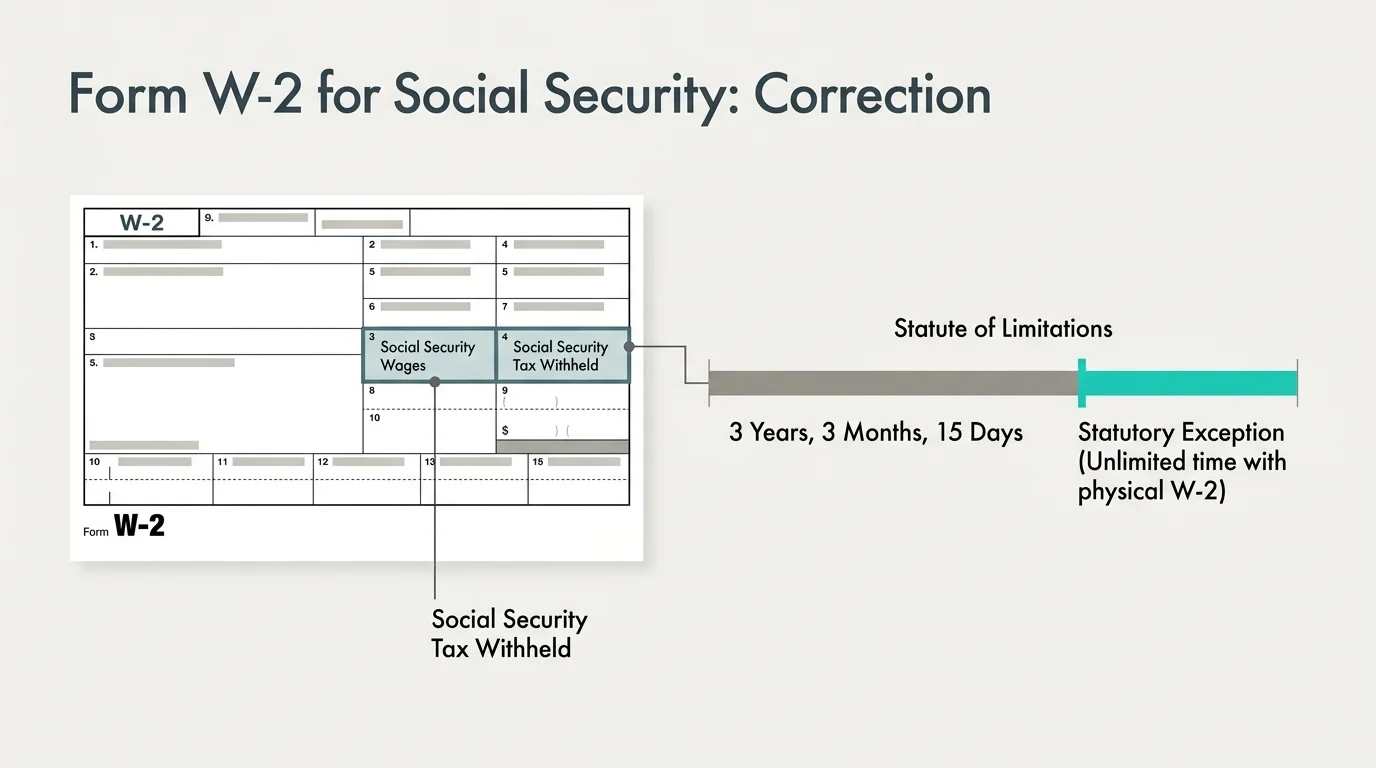
Form W-2 serves as the absolute gold standard when correcting a Social Security mistake. Box 3 displays your total Social Security wages, while Box 4 reveals the exact amount of Social Security tax your employer withheld. Under Section 205(c)(4) of the Social Security Act, a general statute of limitations limits earnings record corrections to 3 years, 3 months, and 15 days following the tax year in which you earned the income. However, possessing an official Form W-2 triggers a statutory exception to this strict deadline, allowing the Social Security Administration (SSA) to update your record regardless of how many years have passed.
For example, if a former employer underreported your wages in 1998, presenting your archived W-2 from that year provides immediate legal proof of your actual income. Search your physical tax folders, old filing cabinets, or digital records for paper or PDF copies of your annual W-2s. If you missing an old W-2, contact your former employer’s human resources department or request a copy from the IRS. Securing these forms establishes an unassailable evidentiary baseline for your wage dispute.
For a wide range of resources for older adults, visit AARP and the National Council on Aging (NCOA). Health information is available from the National Institute on Aging.
Tip #2: Filed Federal Tax Returns and Schedule SE
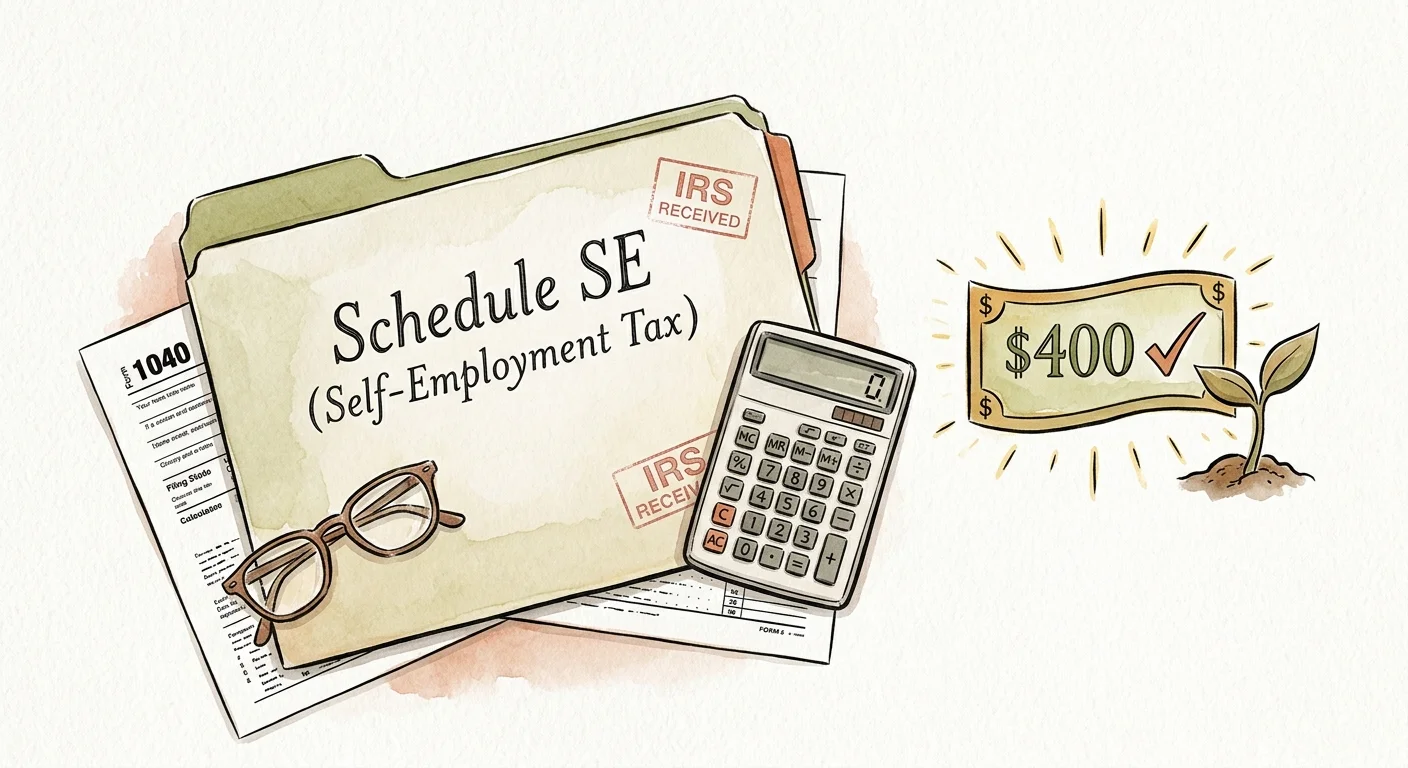
If you worked as a freelancer, independent contractor, or small business owner, IRS Form 1040 along with Schedule SE (Self-Employment Tax) represent crucial Social Security error appeal documents. The SSA enforces a minimum net earnings threshold of $400 for self-employed individuals in a tax year. You must net at least $400 to earn work credits toward your Social Security record; anything below that threshold does not qualify for coverage.
When the SSA fails to credit your self-employment income, providing tax returns stamped by the IRS proves that you reported your net earnings and paid the required self-employment tax. If an employer improperly classified you as an independent contractor on Form 1099, your tax return documents the taxes you paid under that classification. You can request official tax return transcripts directly from the IRS website for free. These certified tax transcripts verify that you fulfilled your federal tax duties, forcing the SSA to credit your account accordingly.
For a wide range of resources for older adults, visit AARP and the National Council on Aging (NCOA). Health information is available from the National Institute on Aging.

Tip #3: Official Social Security Earnings Statement
Understanding how to fix Social Security record discrepancies requires auditing your full career history. You can access your complete earnings statement immediately by logging into your free my Social Security online account. This document details your reported wages for every single working year throughout your career.
To qualify for retirement benefits, you need a minimum of 40 work credits—roughly equivalent to 10 years of covered employment. Furthermore, the SSA calculates your base monthly benefit using your highest 35 years of indexed earnings. If your earnings history contains an unrecorded year listed as $0, your monthly benefit payment will decrease significantly. Print your statement, review every line item against your historical income records, and highlight any year where reported earnings appear inaccurate or missing. This annotated statement forms the roadmap for your dispute.
For a wide range of resources for older adults, visit AARP and the National Council on Aging (NCOA). Health information is available from the National Institute on Aging.

Tip #4: Form SSA-561-U2 (Request for Reconsideration)
When disputing incorrect Social Security benefits or contesting an official calculation error, Form SSA-561-U2 is your primary legal paperwork. You use this administrative appeal form when you disagree with an initial determination regarding your eligibility, payment amount, or benefit reductions. Completing this form triggers a formal secondary review by an SSA officer who had no involvement in the initial decision.
Pay strict attention to time limits when filing Form SSA-561-U2. You must submit your request within 60 calendar days after receiving your determination letter. The SSA applies a 5-day mail presumption rule; they assume you received their letter 5 calendar days after the date printed on the notice. This rule gives you an effective total window of 65 days from the date stamped on the letter to file your appeal. Use the text box on Form SSA-561-U2 to outline the clear factual reasons why you disagree with their figures, and reference all supporting evidence you plan to attach.
For a wide range of resources for older adults, visit AARP and the National Council on Aging (NCOA). Health information is available from the National Institute on Aging.
Tip #5: Form SSA-7008 (Request for Correction of Earnings Record)
Form SSA-7008 stands among the most essential documents needed to dispute Social Security error claims involving missing or incorrectly credited wage amounts. While Form SSA-561 appeals benefit decisions, Form SSA-7008 focuses explicitly on correcting your underlying wage history baseline. Filling out this form prompts the agency to audit your record and correct historical employer records.
This form requires specific background details regarding your former employers. You must supply employer names, exact business addresses, employment start and end dates, total gross wages earned per year, and the specific names used on your payroll records. If your employer deducted Social Security taxes but failed to report those wages to the government, note that fact clearly on the form. Submitting Form SSA-7008 directs agency staff to cross-check internal tax clearinghouses and resolve gaps in your lifetime record.
For a wide range of resources for older adults, visit AARP and the National Council on Aging (NCOA). Health information is available from the National Institute on Aging.

Tip #6: Form SSA-7011-F4 and Employer Verification Letters
Sometimes, the Social Security Administration requires direct confirmation from your past employers to verify unrecorded wages. Form SSA-7011-F4 (Statement of Employer) gives the agency authorization to contact your former employer directly to request certified payroll records. However, if a previous employer went out of business or merged with another corporation, gathering secondary proof on your own becomes essential.
Look for personal employment documentation, such as signed job offer letters, employment contract agreements, promotion notices, or official termination papers. Signed affidavits from former managers, colleagues, or payroll officers also provide valuable support. These documents demonstrate that you maintained an active employment relationship during the disputed tax years, filling in missing evidentiary details when corporate payroll archives are unavailable.
For a wide range of resources for older adults, visit AARP and the National Council on Aging (NCOA). Health information is available from the National Institute on Aging.
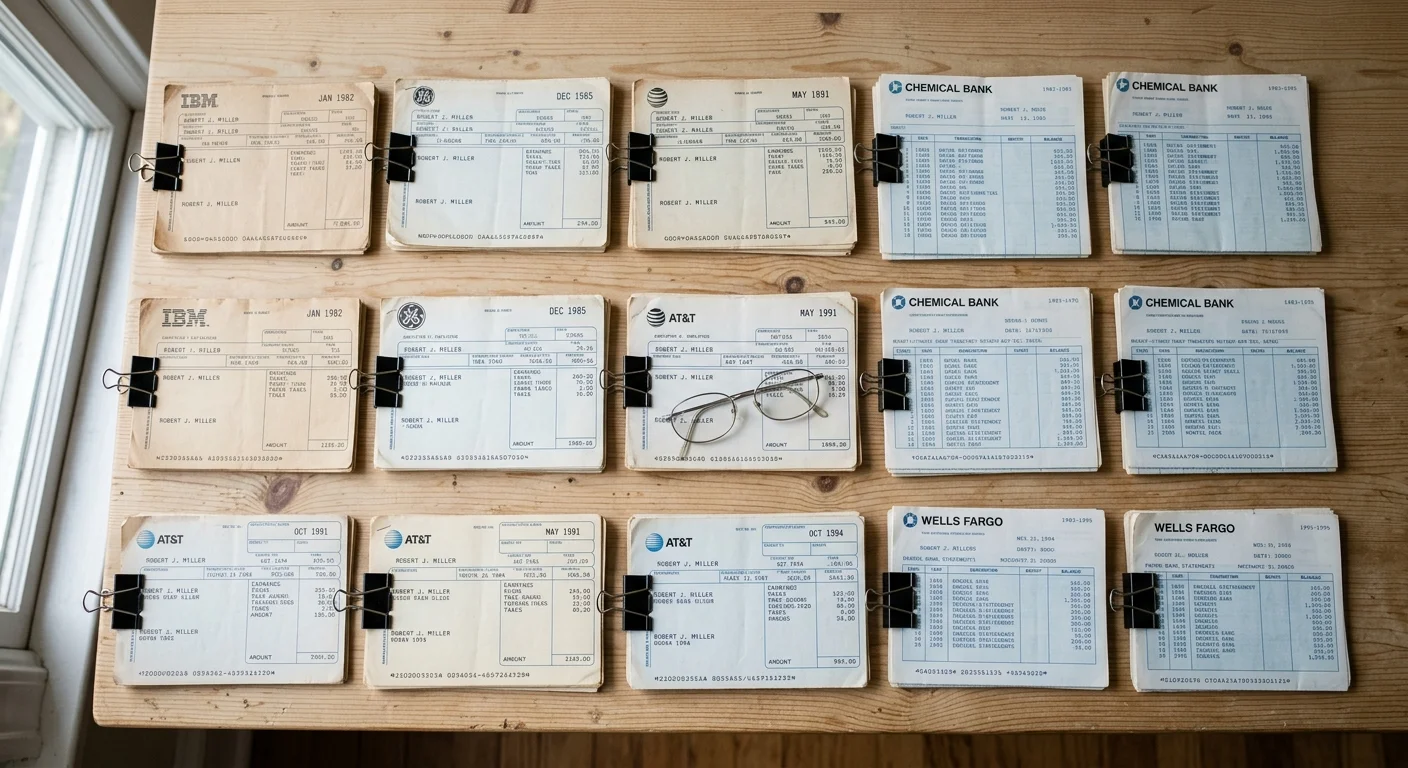
Tip #7: Historical Pay Stubs, Direct Deposit Records, and Bank Statements
If formal tax forms like W-2s are unavailable, financial institution records provide compelling secondary proof of income. Retaining physical paper pay stubs—especially final end-of-year pay stubs that display cumulative year-to-date gross wages and total Social Security tax withholdings—proves your exact earnings without ambiguity.
Electronic financial records also strengthen your case. Monthly bank statements and direct deposit confirmation receipts showing wage payments originating from your employer’s corporate bank account verify compensation. Compile these financial records chronologically by calendar year; doing so creates a clear audit trail that validates your income when official state or federal tax records contain omissions.
For a wide range of resources for older adults, visit AARP and the National Council on Aging (NCOA). Health information is available from the National Institute on Aging.
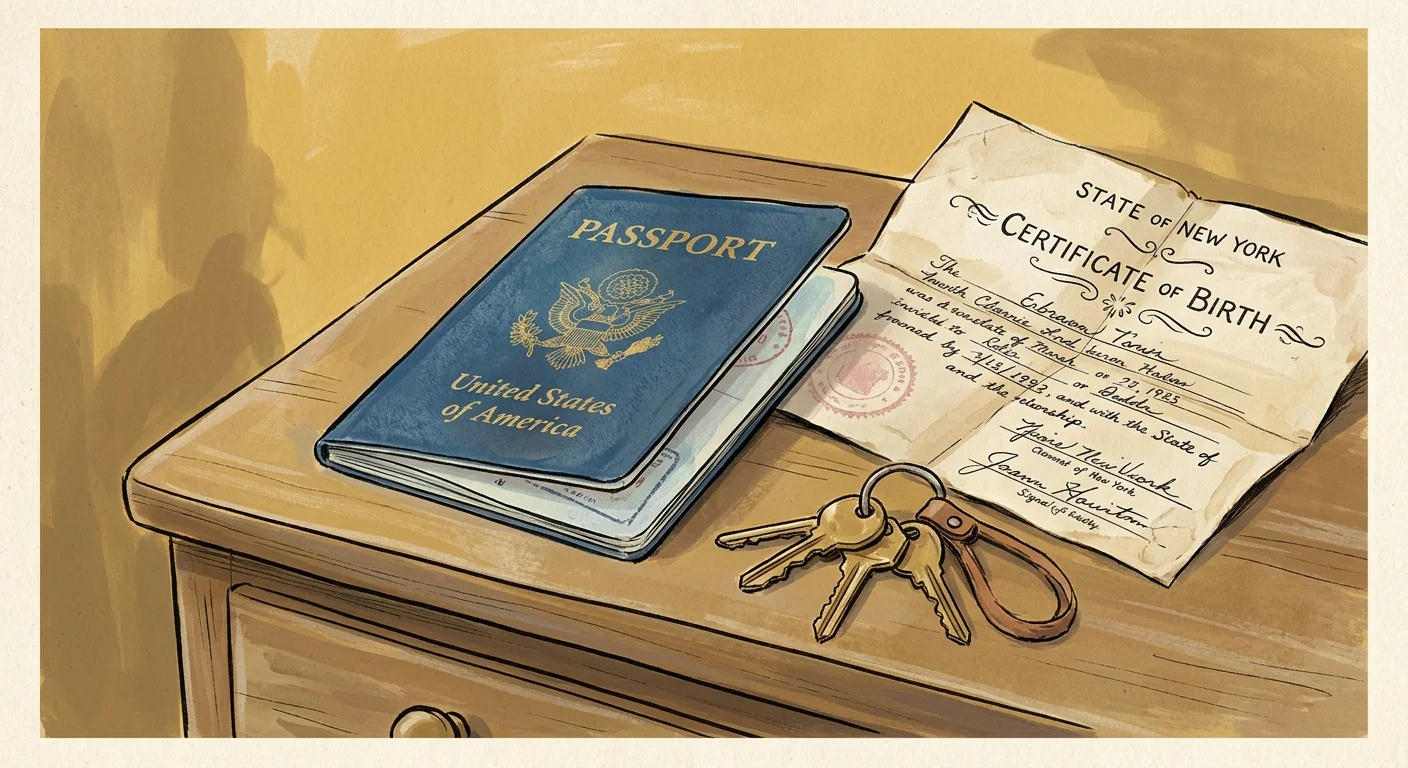
Tip #8: Proof of Legal Identification and Age
The Social Security Administration strictly enforces identity verification rules before altering lifetime earnings records or adjusting monthly benefit disbursements. You must present valid, certified proof of identity and date of birth whenever you file a formal error dispute or administrative appeal.
Gather original or certified documents issued by official government agencies. Acceptable identity proof includes your state-issued driver’s license, state identification card, original birth certificate, valid U.S. passport, or naturalization certificate. Avoid submitting uncertified photocopies, as the SSA will reject unverified documents and delay your appeal processing time. Keeping your original identity documents organized ensures smooth verification during in-person visits or mailed submissions.
For a wide range of resources for older adults, visit AARP and the National Council on Aging (NCOA). Health information is available from the National Institute on Aging.
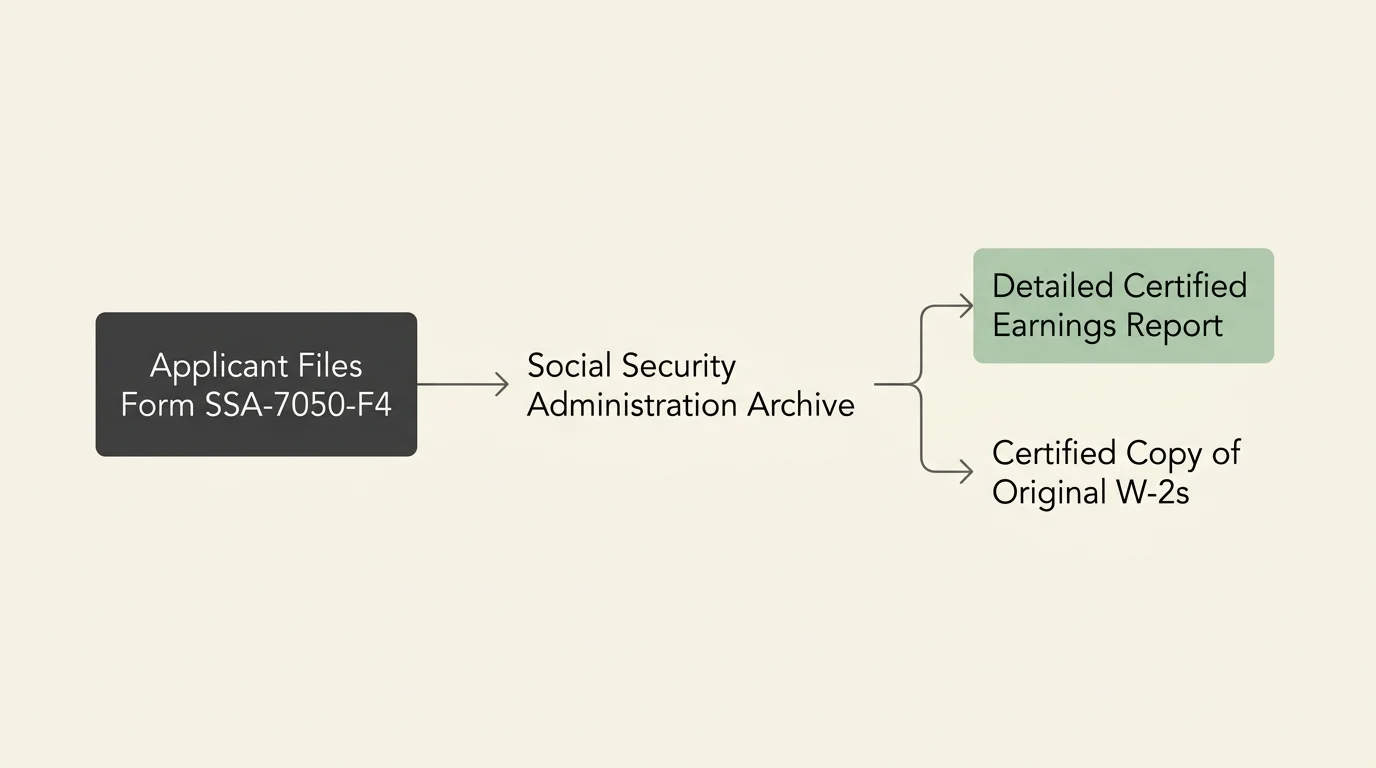
Tip #9: Form SSA-7050-F4 (Request for Detailed Earnings Information)
When dealing with complex disputes involving missing work history across multiple employers, standard online earnings statements may lack sufficient granular detail. Form SSA-7050-F4 allows you to request a comprehensive, detailed, or certified earnings report that lists individual employer names, business addresses, and precise annual earnings totals for every employer in your working past.
While basic annual totals on your online account are free, requesting detailed certified earnings records via Form SSA-7050 may incur an administrative fee if requested for non-program purposes. However, when disputing serious calculation errors or missing employment periods spanning multiple years, this itemized breakdown provides certified proof. It traces exactly where reporting breakdowns occurred between specific employers and the federal government, making it an essential evidentiary tool.
For a wide range of resources for older adults, visit AARP and the National Council on Aging (NCOA). Health information is available from the National Institute on Aging.

Tip #10: Official Social Security Determination Letters and Notices
Organize every written letter you receive from the Social Security Administration into a dedicated physical binder or digital file. Keep your initial Notice of Award letter, annual benefit adjustment statements, and primary eligibility calculation letters organized in chronological order.
These official agency letters contain critical claim numbers, specific legal citations, detailed payment breakdowns, and precise mailing dates. Referencing these documents allows you to track your 60-day appeal window accurately and ensures you respond within statutory deadlines. Presenting a neat, chronological history of official notices demonstrates organization and speeds up your review process when meeting with SSA claims representatives.
For a wide range of resources for older adults, visit AARP and the National Council on Aging (NCOA). Health information is available from the National Institute on Aging.

The Takeaway: Living a More Blissful Retirement
Taking control of your Social Security record represents one of the most proactive, empowering steps you can take to protect your retirement security. Discrepancies on your earnings record do not have to diminish the retirement income you spent a lifetime building. By gathering W-2s, tax returns, pay stubs, and official agency forms before filing your dispute, you prepare yourself to fix record errors efficiently and confidently.
Audit your lifetime earnings statement today through your online account. Collect your supporting evidence, fill out the designated appeal forms, and submit your corrections promptly within established statutory deadlines. Securing every dollar of your rightful benefits grants you peace of mind, allowing you to enjoy a fulfilling, worry-free retirement.
Disclaimer: This article is for informational and inspirational purposes only. It is not a substitute for professional medical, financial, or psychological advice. Please consult with a qualified expert for guidance tailored to your individual needs.
For a wide range of resources for older adults, visit AARP and the National Council on Aging (NCOA). Health information is available from the National Institute on Aging.
Frequently Asked Questions
What is the statute of limitations for requesting a correction to my Social Security earnings record?
Under Section 205(c)(4) of the Social Security Act, the standard statute of limitations to request an earnings record correction is 3 years, 3 months, and 15 days after the end of the tax year in which you earned the income. However, important exceptions exist. If you provide official tax forms such as Form W-2, certified IRS Form 1040 tax returns, or Schedule SE proving that you reported your earnings and paid taxes, the Social Security Administration can update your record past this deadline.
What happens if I miss the 60-day deadline to file an appeal for incorrect benefits?
You must file appeals using Form SSA-561-U2 within 60 calendar days after receiving your determination letter, plus 5 calendar days allowed for mailing (65 days total from the notice date). If you miss this deadline, the SSA may dismiss your appeal unless you prove “good cause” for the delay. Examples of good cause include severe illness, missing records beyond your control, or serious personal emergencies. You must submit a written explanation detailing why you missed the deadline along with supporting proof.
How many work credits do I need to qualify for Social Security retirement benefits?
You need 40 work credits to qualify for Social Security retirement benefits, which equals approximately 10 years of covered work history. The SSA calculates your credits based on your total annual earnings. In 2024, you earn one credit for every $1,730 in wages or self-employment income, up to a maximum of 4 credits per year. Correcting missing work credits on your record ensures you reach this threshold and maximizes your monthly payout based on your highest 35 years of earnings.
Is there a fee to review my detailed Social Security earnings history?
Accessing your basic annual earnings summary through your online my Social Security account is completely free. However, if you submit Form SSA-7050-F4 to request a detailed, certified earnings report listing specific employer names and addresses for non-SSA program purposes, the agency charges an administrative fee depending on the number of years requested. If you request the certified information directly for an official SSA administrative dispute or appeal, the agency often waives or minimizes these fees.