

You can master your cash flow in retirement without sacrificing the joys of your everyday lifestyle. Establishing a dependable routine protects your nest egg while granting you freedom to travel, dine out, and pursue your passions.
Modern retiree money management focuses on clarity rather than painful deprivation. When you align your daily habits with clear financial boundaries, peace of mind naturally follows.
Discovering the right simple budget methods helps you navigate inflation and healthcare costs with complete confidence. Let us explore ten straightforward systems that make tracking your spending easy and deeply rewarding.

Tip #1: The Classic Cash Envelope Method
Tangible currency gives you immediate control over your discretionary purchases. You physically divide your monthly cash into labeled envelopes designated for groceries, hobbies, and social outings.
According to behavioral economists, paying with paper cash triggers sensory awareness that curbs impulse buys by roughly fifteen percent. Once an envelope empties, your spending in that category pauses until next month.
Many retirees use this system exclusively for variable lifestyle categories while managing recurring utilities digitally. It creates a reassuring tactile boundary that eliminates end-of-month surprises.
You do not need complicated equipment or digital screens to make this system thrive. A simple set of paper envelopes from your stationery drawer transforms your daily financial awareness instantly.
If you enjoy dining out with friends on weekends, set aside twenty-dollar bills specifically for those meals. You relish your restaurant experience knowing that the money is already accounted for and completely guilt-free.
This tactile ritual brings tremendous clarity to your everyday life; you always know where your money goes. It prevents mindless card tapping from depleting your hard-earned checking account reserve.
You can also pair this system with a coin jar to collect leftover change at the end of each week. Watching those small coins accumulate provides a satisfying visual reminder of your discipline.
Tip #2: The Two-Account Paycheck System
Transitioning from a steady salary to portfolio distributions can feel unsettling without a predictable rhythm. You can recreate the comfort of a regular payday by utilizing two separate checking accounts.
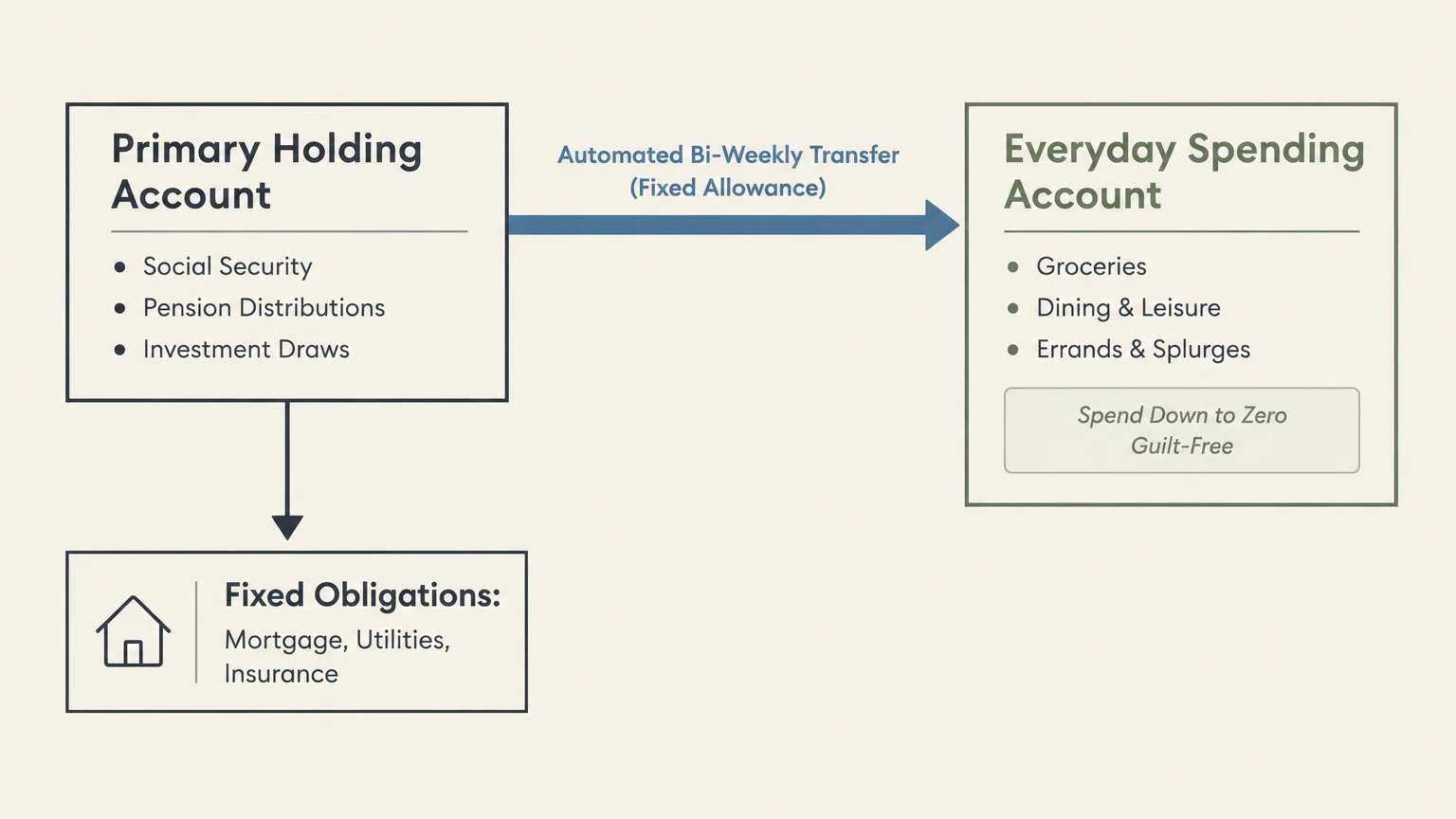
Direct all your pension, Social Security, and investment distributions into your primary holding account. This baseline account handles your mortgages, insurance premiums, and recurring utility bills automatically.
Every two weeks, transfer a fixed allowance into your secondary everyday spending account. You treat this secondary balance as your disposable spending pool for errands, gifts, and impromptu entertainment.
This simple wall between overhead and leisure prevents discretionary splurges from jeopardizing your essential living costs. You never have to worry about whether a fun weekend will compromise your property tax payment.
Research from the Consumer Financial Protection Bureau demonstrates that separating fixed obligations from variable expenses significantly lowers financial stress for older adults.
You enjoy complete autonomy with your second account; spend it down to zero without a single drop of remorse. When the funds run low, you simply wait until your next scheduled transfer arrives.
Most credit unions and commercial banks permit you to establish multiple checking accounts without extra maintenance fees. Setting up this automated transfer takes less than an hour of your time.

Tip #3: The Weekly Ledger Notebook
Sometimes the simplest methods deliver the deepest peace of mind. Keeping a handwritten ledger allows you to step away from screens and connect directly with your daily expenditures.
Choose an attractive bound journal and dedicate ten minutes every Saturday morning to record your receipts. Pair this peaceful habit with your morning tea or coffee to make it an enjoyable ritual.
Write down the date, merchant, and dollar amount for every purchase made throughout the week. Scribing each number by hand engages cognitive centers that enhance memory retention and financial mindfulness.
At the end of the month, tally your totals into three main columns: essential living, social recreation, and unexpected surprises. You instantly see patterns emerge without wrestling with complex software.
Many active seniors prefer paper tracking because it remains entirely private and impervious to passwords or software updates. It offers an uncluttered, tangible record of your golden years journey.
Keeping a small pocket pad inside your purse or jacket captures expenses while you run daily errands. You transfer those figures into your master journal during your quiet weekend session.
Reviewing past pages provides a nostalgic record of the lunches, books, and trips that enriched your year. It frames your spending as a life well lived rather than a dry list of numbers.

Tip #4: Automated Expense Tracking Apps
If you prefer digital convenience, expense tracking apps provide real-time updates on your financial position. Tools like Quicken Simplifi and Empower aggregate your balances into one intuitive dashboard.
These secure platforms automatically categorize your debit and credit card transactions within seconds of purchase. They flag unusual charges, track bill due dates, and monitor your monthly burn rate effortlessly.
Studies indicate that digital tracking tools can save users several hours of manual calculation each month. You gain crystal-clear visibility into your cash flow while relaxing in your favorite armchair.
Most reputable apps use bank-grade 256-bit encryption to safeguard your sensitive information around the clock. You can review your categorized spending graphs on your tablet or smartphone whenever curiosity strikes.
For retirees who manage multiple income streams, automated software eliminates human error and captures subtle financial leaks. It turns complex numbers into straightforward, colorful charts you can interpret at a glance.
Embracing modern technology allows you to track spending in retirement with minimal daily friction and maximum precision. You stay thoroughly informed without letting administration dominate your week.
Set aside twenty minutes to configure custom alert notifications for large transactions or low account balances. These real-time nudges ensure that you stay in full control without hovering over your screen all day.
Tip #5: The Proportional 60/30/10 Retirement Rule
Traditional working-age formulas rarely fit the realities of post-career living. Adapting percentage benchmarks into a retirement-specific framework keeps your spending aligned with your core values.
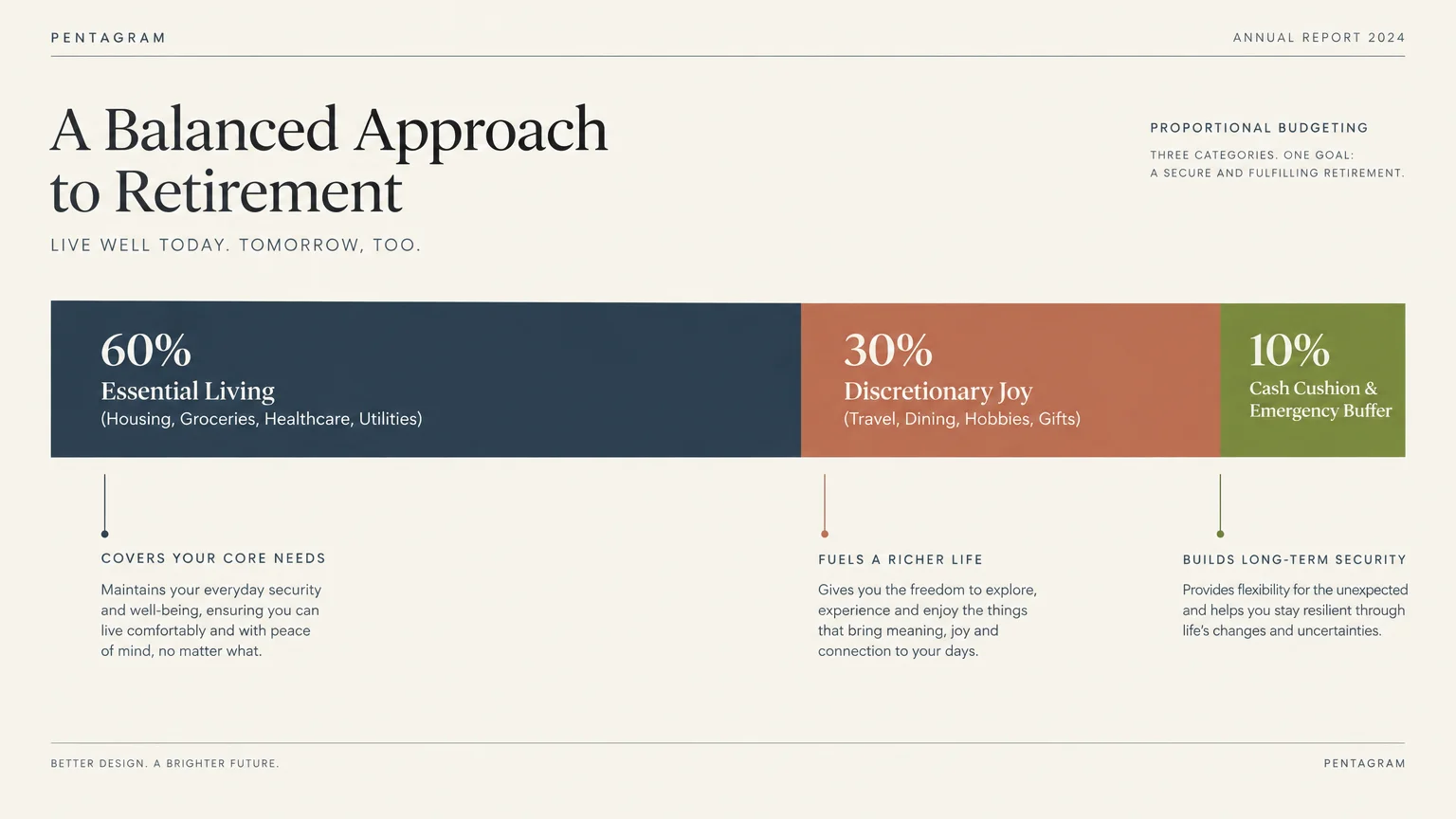
Allocate sixty percent of your monthly distributions toward essential necessities like housing, groceries, healthcare, and insurance. This allocation forms the stable foundation of your household security.
Dedicate thirty percent to discretionary pursuits that bring joy, such as travel, hobbies, gardening, and family gatherings. This guilt-free bucket funds the vibrant lifestyle you worked so hard to create.
Reserve the remaining ten percent in a dedicated cash reserve for periodic annual expenses like auto repairs or dental work. This buffer protects your main investments from untimely emergency liquidations.
Proportional models give you room to breathe because they adjust automatically whenever your income fluctuates. You maintain structural discipline without tracking every single cup of coffee down to the penny.
When your financial priorities are balanced by design, your golden years feel organized, resilient, and bountiful. You honor both your practical needs and your heartfelt lifestyle dreams.
Feel free to adjust these percentages to suit your unique circumstances as healthcare or travel demands evolve. The power of this model rests in its enduring flexibility and psychological ease.
Tip #6: The High-Low Category Spreadsheet
If you enjoy working on your computer, a customized spreadsheet offers unlimited flexibility and control. You do not need advanced formulas to build an effective personal spending tracker.
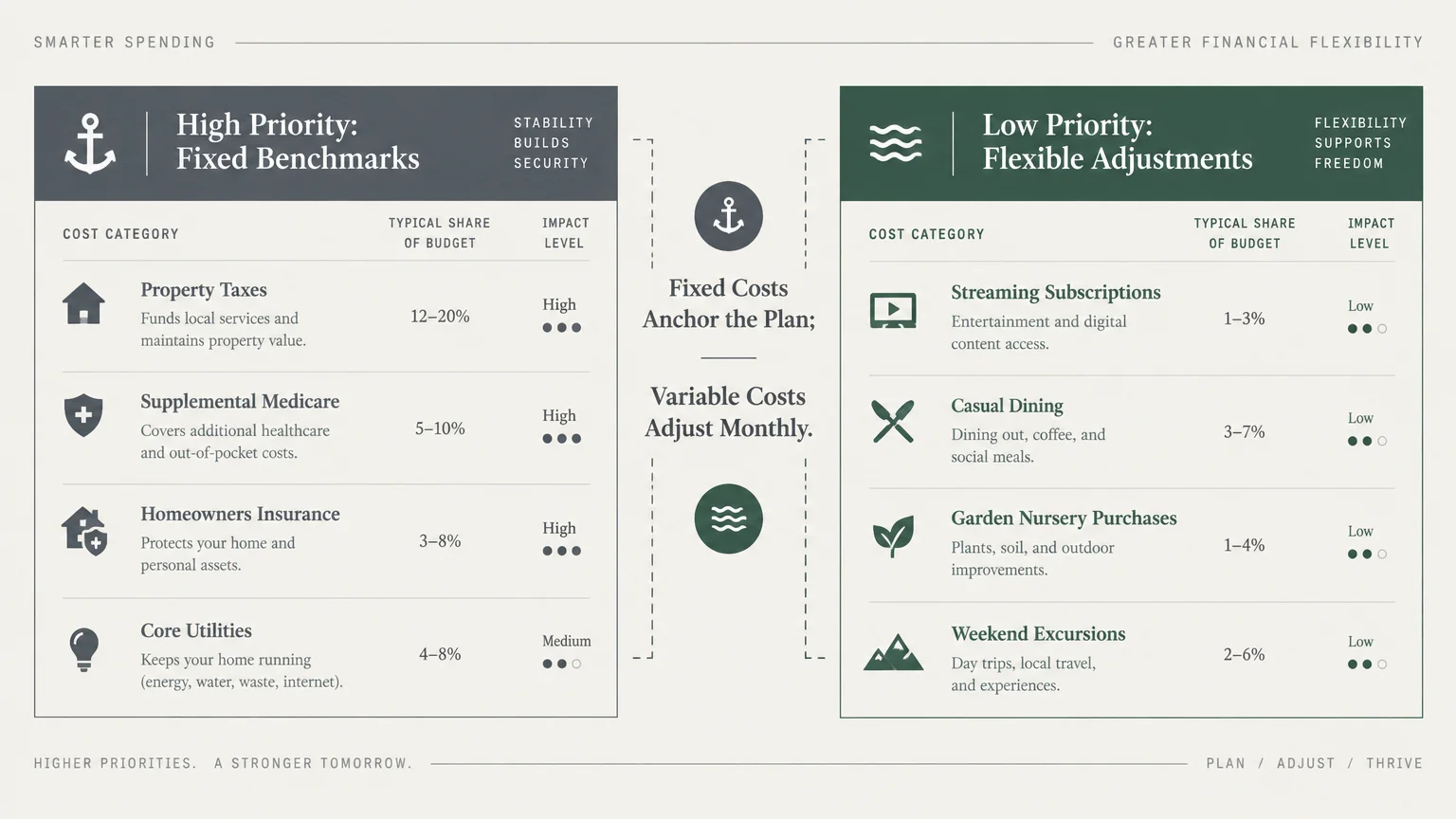
Set up two primary columns on a clean sheet: fixed overhead expenses and flexible lifestyle choices. Fixed costs remain predictable, while flexible costs reflect your weekly decisions and leisure activities.
Update your entries once a week to track trends before they turn into costly long-term habits. You can easily spot creeping subscription fees or rising grocery bills across seasonal cycles.
A survey by the American Institute of CPAs revealed that adults who maintain personal spreadsheets report greater confidence in their long-term solvency. Customizing your own rows lets you honor your unique hobbies.
Store your document securely in cloud storage like Google Drive so you can access it anywhere. With basic addition formulas, your spreadsheet does the heavy lifting while you enjoy your afternoon.
Mastering simple budget methods through a spreadsheet grants you complete sovereignty over your household finances. You see the immediate numerical impact of every mindful decision you make.
Color-code your categories with soft pastels to make your spreadsheet visually engaging and simple to read. A bright green row for savings and a soft blue for groceries keeps your numbers welcoming.

Tip #7: The Single-Card Strategy
Managing multiple credit cards with different billing cycles often leads to confusion and scattered receipts. Consolidating your day-to-day transactions onto a single dedicated card simplifies your oversight instantly.
Select one card that offers clear statement categorization alongside modest, straightforward cash-back rewards. Charge all your discretionary groceries, gas, and entertainment solely to this individual account.
At the end of each billing cycle, your single monthly statement serves as an itemized spending report. You can review your entire lifestyle footprint in one convenient document without cross-referencing multiple statements.
Pay the balance in full every month from your primary checking account to prevent costly interest charges. This disciplined habit builds strong credit while keeping your financial footprint tidy and transparent.
By eliminating the noise of five or six payment methods, you gain immense administrative relief. You know precisely which card handles your routine living costs and where to look for discrepancies.
Select a card that offers automated email alerts whenever a charge exceeds a specific dollar limit. That way, you maintain immediate oversight over major purchases without adding paperwork to your day.
This streamlined arrangement protects your mental energy so you can focus on creative projects and family moments. Simplicity remains the truest form of sophistication during your retirement years.

Tip #8: The Annual Reverse Budgeting Blueprint
Reverse budgeting flips conventional money tracking on its head by prioritizing your big goals first. Instead of recording every purchase retrospectively, you fund your obligations and priorities upfront.
At the start of each month, immediately fund your fixed bills, healthcare savings, and emergency reserve funds. Once you satisfy those non-negotiable commitments, the remaining balance in your account is yours to spend freely.
You never have to log individual receipts or categorize minor grocery items under this liberating structure. If you have three hundred dollars left in your checking account, you spend it without anxiety.
Financial psychologists emphasize that reverse budgeting reduces the emotional friction often associated with rigid bookkeeping. It allows retirees to savor their independence without the burden of constant arithmetic.
This system proves especially valuable for retirees who have already established a stable, guaranteed baseline income. You fulfill your essential civic and personal duties first, leaving only room for joy.
If unexpected expenses arise mid-month, you simply adjust your discretionary spending downward for the remaining days. You preserve your core savings without recalculating dozens of individual spending buckets.
Living with this brand of financial freedom liberates your mind from petty calculations and constant second-guessing. You enjoy the fruits of your lifelong labor with total poise and dignity.
Tip #9: The Bucket Approach Cash Cushion System
Market volatility can trigger significant anxiety when you rely on investment withdrawals for daily living. The bucket system solves this dilemma by maintaining distinct pools of capital segmented by time horizon.
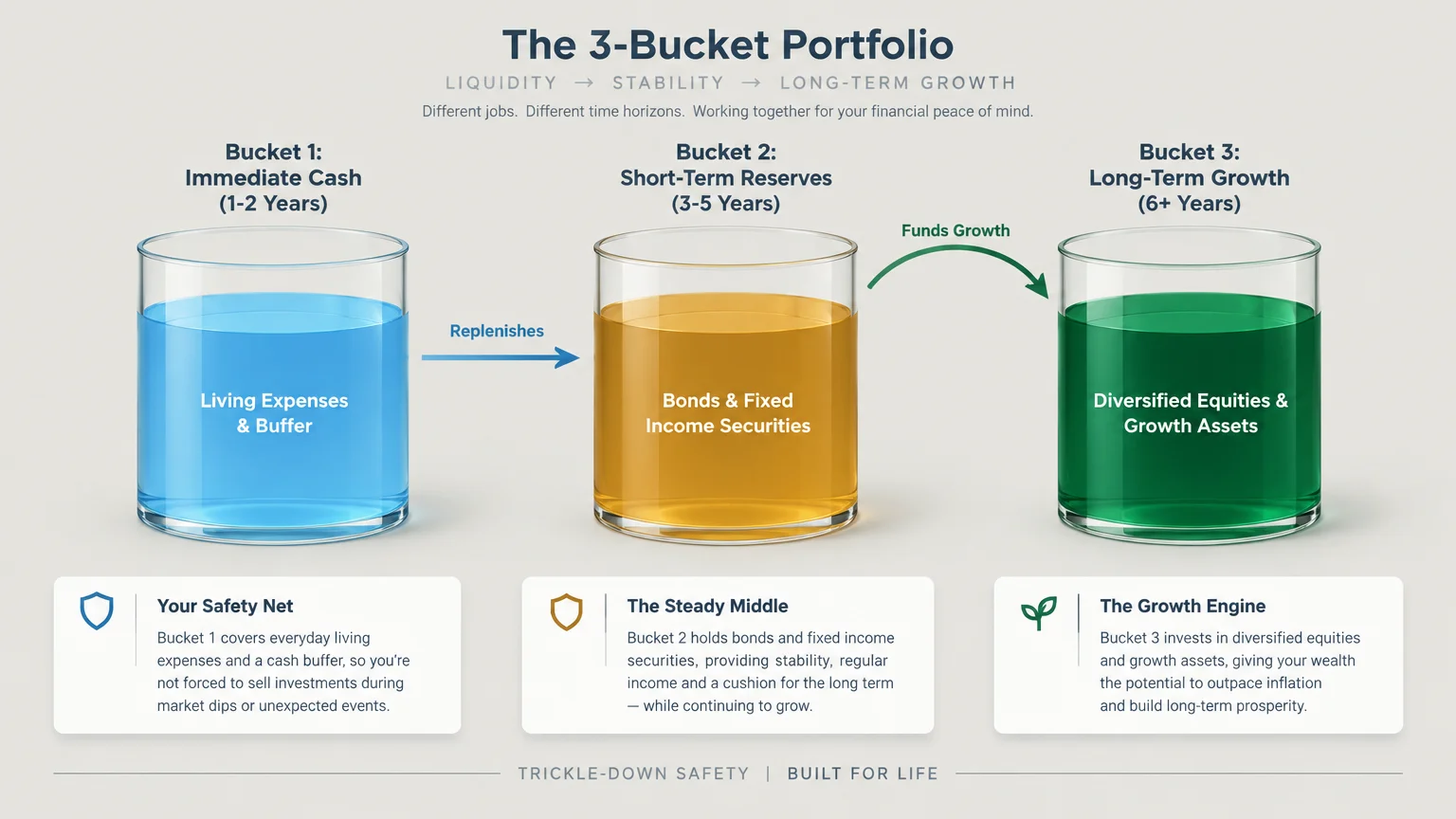
Bucket one holds one to two years of living expenses in liquid checking accounts and high-yield savings. You draw your daily spending solely from this safe, cash-filled reservoir.
Bucket two holds conservative fixed-income assets that replenish your cash bucket over three-to-seven-year periods. Meanwhile, bucket three contains long-term equities that continue growing over multiple decades.
Tracking spending becomes remarkably straightforward because you only monitor withdrawals originating from bucket one. Stock market fluctuations on Wall Street will not affect your ability to purchase groceries or visit family.
Leading retirement researchers highlight that cash cushions protect older adults from the devastating effects of sequence-of-returns risk. You enjoy uninterrupted purchasing power, regardless of economic cycles.
This elegant method turns retirement budgeting systems into a rock-solid fortress of emotional and fiscal stability. You sleep peacefully knowing your immediate living needs remain fully insulated from market downturns.
Replenish your cash bucket annually by taking scheduled portfolio gains during up markets. This structured cadence eliminates the emotional stress of selling assets during temporary downturns.

Tip #10: The Monthly Money Date Routine
Tracking your finances should feel like a celebration of your life rather than a dreary administrative chore. Scheduling a dedicated monthly review creates space to celebrate progress and make gentle adjustments.
Pick a recurring date on your calendar, brew a pot of specialty coffee, and play your favorite acoustic music. Whether you manage finances alone or with a partner, this deliberate setting removes tension from the conversation.
Spend thirty uninterrupted minutes reviewing your total outlays, upcoming seasonal expenses, and upcoming travel plans. You focus on shared lifestyle values rather than micro-managing trivial expenditures.
Open communication prevents hidden money worries from escalating into interpersonal strain or sleepless nights. When both partners understand where the money goes, mutual trust and security flourish.
Use this session to celebrate financial victories, like paying off a vehicle or funding a grandchild’s educational milestone. Viewing your ledger through the lens of gratitude enriches your golden years journey immeasurably.
Conclude each money date by planning a small, joyful reward, such as a walk in the botanical garden or an ice cream cone. Connecting financial stewardship with positive experiences reinforces lasting peace of mind.
Regular gentle conversations prevent minor discrepancies from ballooning into overwhelming financial surprises later in the year. You steer your retirement ship together with mutual admiration and shared confidence.

The Takeaway: Living a More Blissful Retirement
Taking charge of your retirement spending does not mean depriving yourself of the comforts you have earned. Instead, it grants you the freedom to invest your energy into the relationships and experiences that matter most.
Whether you choose a simple paper notebook, modern expense tracking apps, or cash envelopes, consistency remains your greatest ally. Pick the method that feels effortless and enjoyable for your lifestyle.
When you remove financial uncertainty, you unlock the full joy of your golden years. Your retirement represents a vibrant new chapter filled with discovery, connection, and profound personal freedom.
Step forward today with practical confidence; you possess the wisdom and tools to steward your nest egg with grace. Celebrate your milestones and embrace the peace that comes with mindful living.
For a wide range of resources for older adults, visit AARP and the National Council on Aging (NCOA). Health information is available from the National Institute on Aging.
Disclaimer: This article is for informational and inspirational purposes only. It is not a substitute for professional medical, financial, or psychological advice. Please consult with a qualified expert for guidance tailored to your individual needs.
Frequently Asked Questions
How often should you track spending in retirement?
Most retirees find that a weekly five-minute check-in prevents small oversights from ballooning into large budget discrepancies. A brief monthly review ensures your overall strategy remains aligned with seasonal costs.
What is the easiest budget method for seniors who dislike technology?
The cash envelope system or a classic spiral ledger provides maximum simplicity without requiring passwords or software. Both techniques give you physical, visual clarity over your discretionary funds at all times.
How do you handle unexpected medical bills within your tracking system?
Establish a dedicated health savings reserve separate from your everyday spending account to insulate your baseline budget. Draw from this emergency buffer whenever unexpected out-of-pocket medical or dental expenses occur.
Can you switch spending tracking systems if your chosen method feels burdensome?
Yes, you can adapt your approach whenever your personal lifestyle or preferences evolve. The best system is the one you enjoy maintaining without unnecessary friction or stress.