

Smart medication management protects your retirement savings while keeping you vibrant and healthy every day. Navigating recent pharmacy refill policies can save you hundreds of dollars each year.
Many retirees face unexpected charges at the pharmacy counter due to complex prescription refill rules changes. Fortunately, learning how these health insurance systems operate puts you back in complete control of your wallet.
By understanding hidden billing triggers, you can prevent medication refill mistakes before they impact your savings. Take a look at the key rules shaping your prescription costs right now.
Tip #1: Navigating the 75% Refill-Too-Soon Utilization Rule
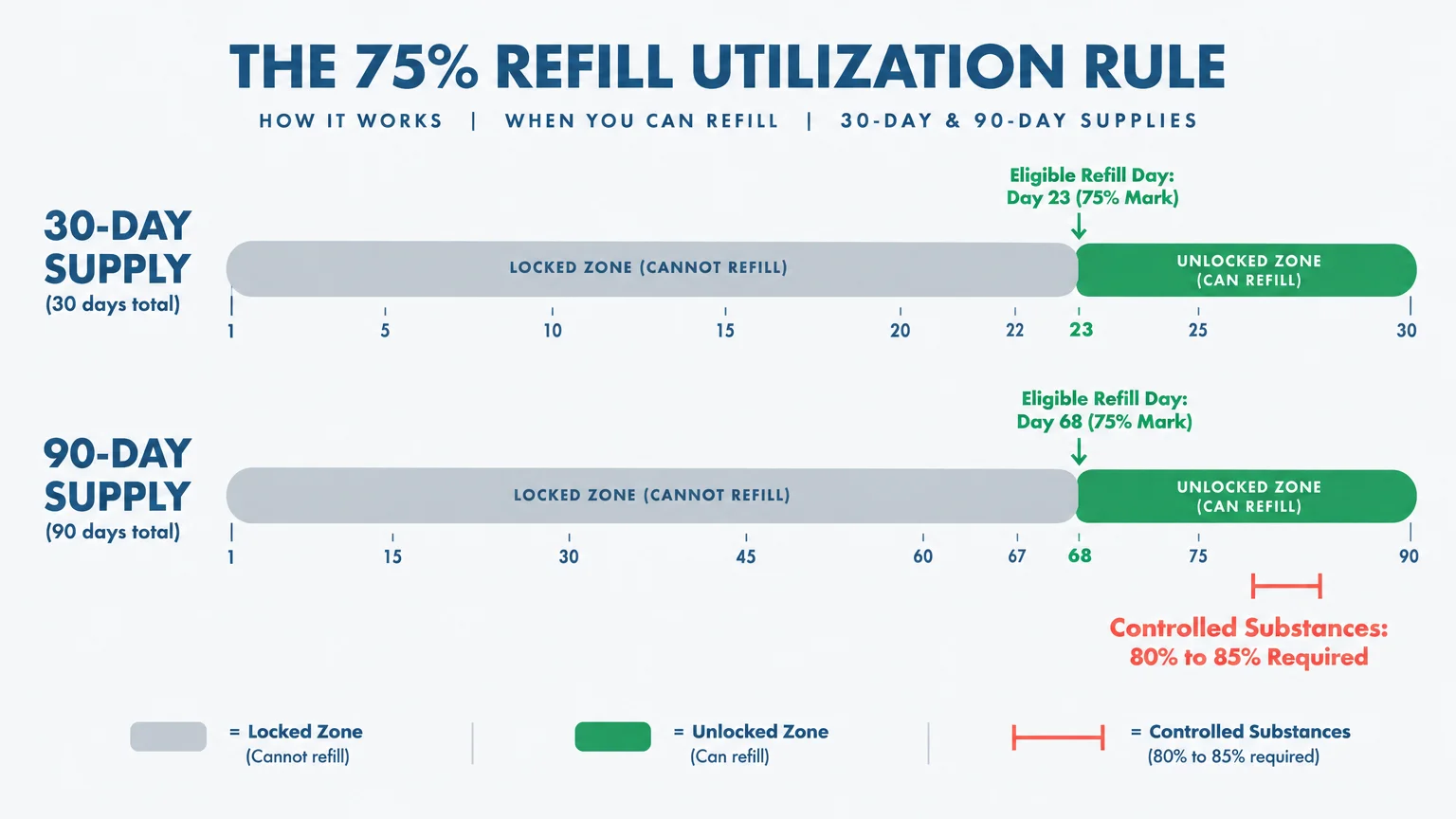
Automated pharmacy benefit systems closely track how many pills you take each day. These computer algorithms reject your refill request until you consume at least 75% of a standard maintenance medication.
For a standard 30-day prescription, you must wait until day 23 before your insurance approves the claim. If you take a 90-day supply, the system locks your refill until day 68.
Controlled substances require an even stricter threshold across most plans. Insurance companies generally demand that you consume 80% to 85% of your current supply before approving a new fill.
Attempting to pick up your medication early can trigger an immediate denial at the register. Unprepared retirees often pay 100% of the retail price out of pocket just to avoid missing doses.
If you travel or relocate seasonally as a snowbird, this automated restriction can disrupt your schedule. Paying full cash price at the pharmacy counter can quickly deplete your leisure funds.
You can avoid this expense by contacting your prescriber and insurance carrier well before your journey. Ask your doctor to submit a formal travel override to guarantee seamless insurance coverage.
Tip #2: Preparing for the Higher Annual Part D Deductible
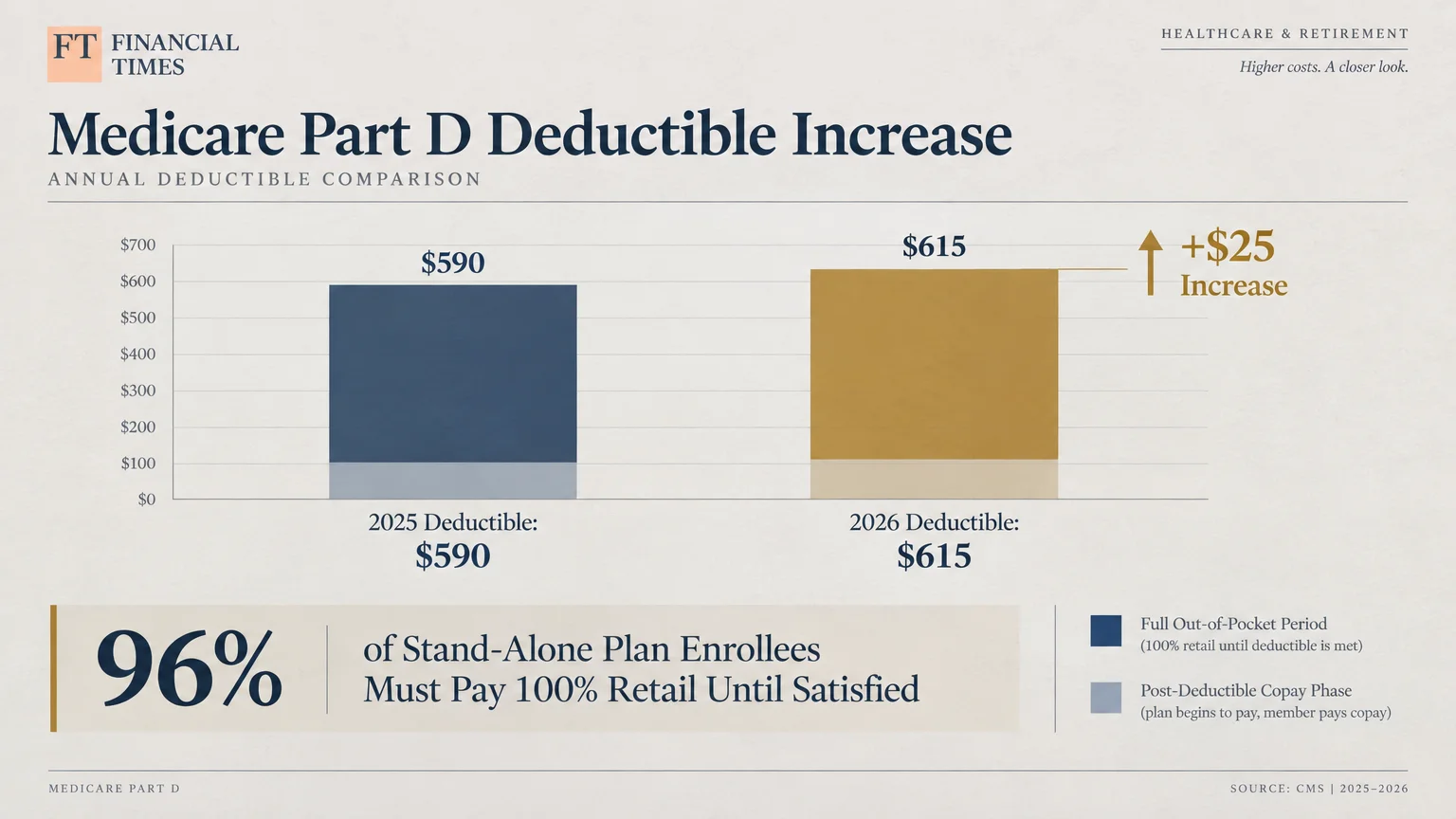
The maximum standard Medicare Part D deductible rose to $615 in 2026, up from $590 in 2025. Approximately 96% of stand-alone prescription drug plan enrollees must satisfy this deductible before receiving cost-sharing benefits.
When you refill high-tier maintenance drugs in January, you must pay 100% of the negotiated retail price yourself. This sudden expense at the start of the year can surprise your monthly household budget.
Many seniors assume their plan provides immediate copayment discounts on every covered pill. Instead, your pharmacy charges you the full retail price until you satisfy that $615 threshold.
You can manage these rising retirees prescription costs by setting aside funds in late autumn. Planning ahead ensures that the annual January deductible reset never derails your retirement lifestyle.
Consult your pharmacist to see if generic alternatives can help you navigate this deductible phase more affordably. Choosing lower-tier options keeps your cash flow steady while delivering identical clinical benefits.
Tracking your spending online through your Medicare account allows you to anticipate exactly when your deductible clears. Once you meet the requirement, your standard low copayments resume immediately.
Tip #3: Opting In Early to the Medicare Prescription Payment Plan
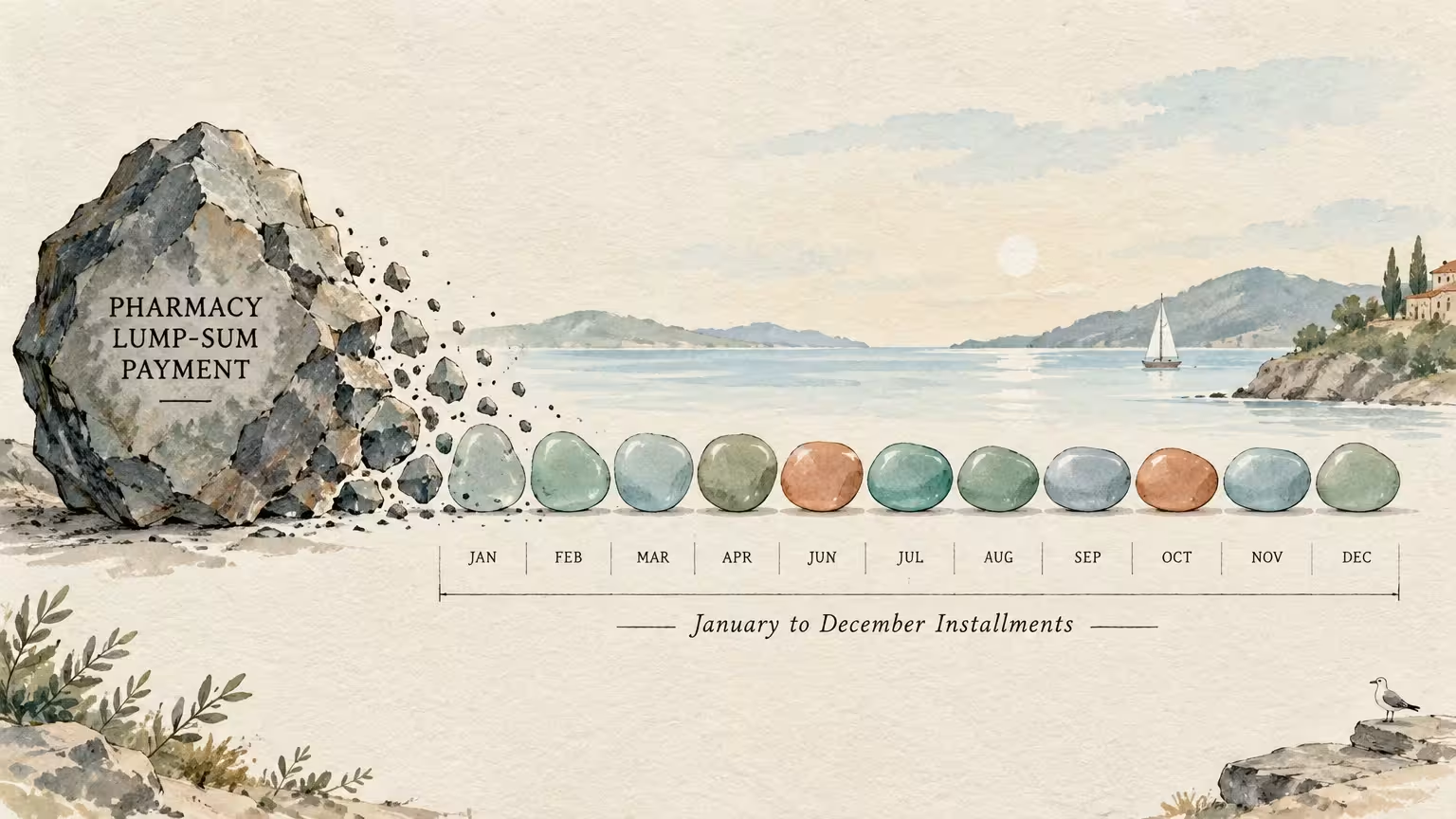
The Inflation Reduction Act established the Medicare Prescription Payment Plan to help smooth out your yearly drug expenses. This program divides your out-of-pocket costs into manageable monthly installments instead of requiring large upfront payments.
However, participation in this payment smoothing program is entirely voluntary; your enrollment is never automatic. If you do not opt in proactively with your plan, you must pay the entire bill upfront.
Pharmacies cannot retroactively add past purchases to an installment plan once you pay at the register. Failing to enroll before refilling an expensive medication forces you to shoulder the entire cost at once.
Contact your Medicare Part D plan sponsor before your next scheduled pharmacy refill. Opting in early spreads heavy expenses across remaining calendar months without any added interest or financial penalties.
This predictable budgeting structure protects your retirement savings from sudden cash drains during expensive refill months. It empowers you to maintain your wellness routine without worrying about sudden spikes at the register.
Check your plan website or call member services to verify your enrollment status today. Taking this simple step ensures your monthly healthcare expenses stay completely balanced and stress-free.
Tip #4: Watching for Off-Formulary Drugs Outside the Out-of-Pocket Cap
Federal regulations cap out-of-pocket spending on covered Part D medications at $2,100 in 2026, following the $2,000 cap in 2025. This safety net provides tremendous financial relief for retirees managing chronic health conditions.
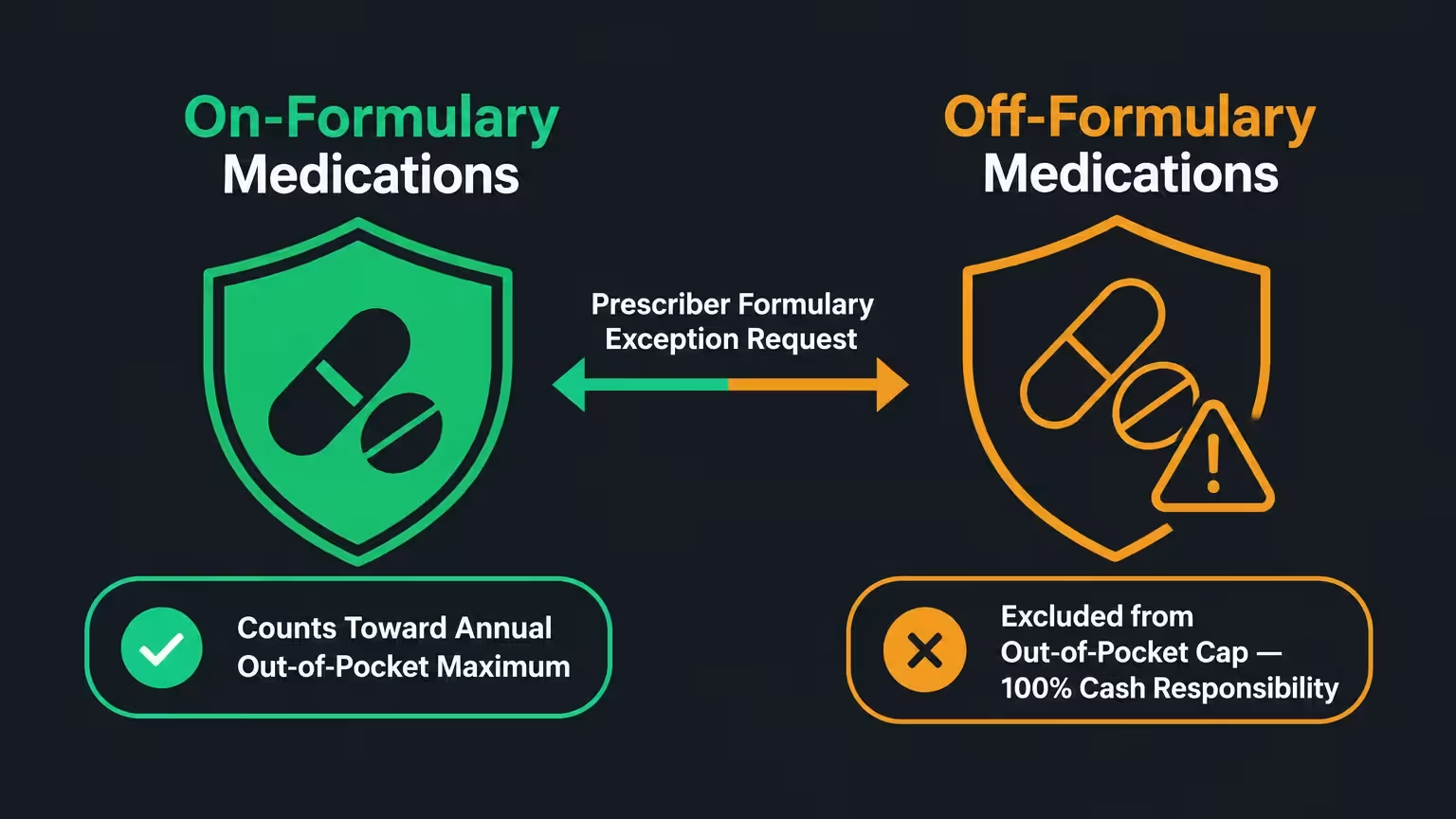
However, this spending cap applies strictly to medications listed on your specific plan formulary. If your doctor prescribes an off-formulary drug, every dollar you spend falls completely outside this protective limit.
Unapproved brand-name refills leave you exposed to uncapped expenses that can rapidly deplete your savings. You could spend thousands of dollars without making any progress toward your annual cap.
Review your plan formulary every autumn to confirm that your vital maintenance medications remain covered. If your plan removes a medication, collaborate with your physician to file a formal exception request immediately.
Securing an approved formulary exception ensures your prescription counts toward your $2,100 threshold. It also grants you preferred cost-sharing rates, keeping your personal expenses predictable and low.
Never accept an off-formulary denial without exploring your appeal rights alongside your healthcare provider. Advocating for your medication coverage protects your health and your retirement nest egg simultaneously.

Tip #5: Choosing Preferred Pharmacies Over Standard Network Locations
Most Medicare Part D plans use tiered pharmacy networks consisting of preferred and standard retail locations. While both options are technically in-network, their out-of-pocket prices differ dramatically for the exact same prescription.
Refilling your prescriptions at a standard retail counter often triggers significantly higher copayments or percentage coinsurance. You might pay double or triple the price for identical pills simply by using the wrong pharmacy.
Many seniors unknowingly patronize standard pharmacies purely out of long-standing habit or neighborhood convenience. Reviewing new pharmacy refill policies reveals which nearby stores offer preferred status and the deepest discounts.
Log in to your insurer online portal or call member services to locate preferred pharmacies near your home. Moving your maintenance medications to a preferred retail partner can save you hundreds of dollars annually.
Many preferred retail partners also offer convenient drive-through pickup and complimentary home delivery options. This makes switching pharmacies an effortless upgrade that saves both time and money.
Taking a few minutes to confirm your pharmacy status ensures you never overpay for your essential prescriptions. It is one of the easiest ways to keep your retirement budget fully intact.
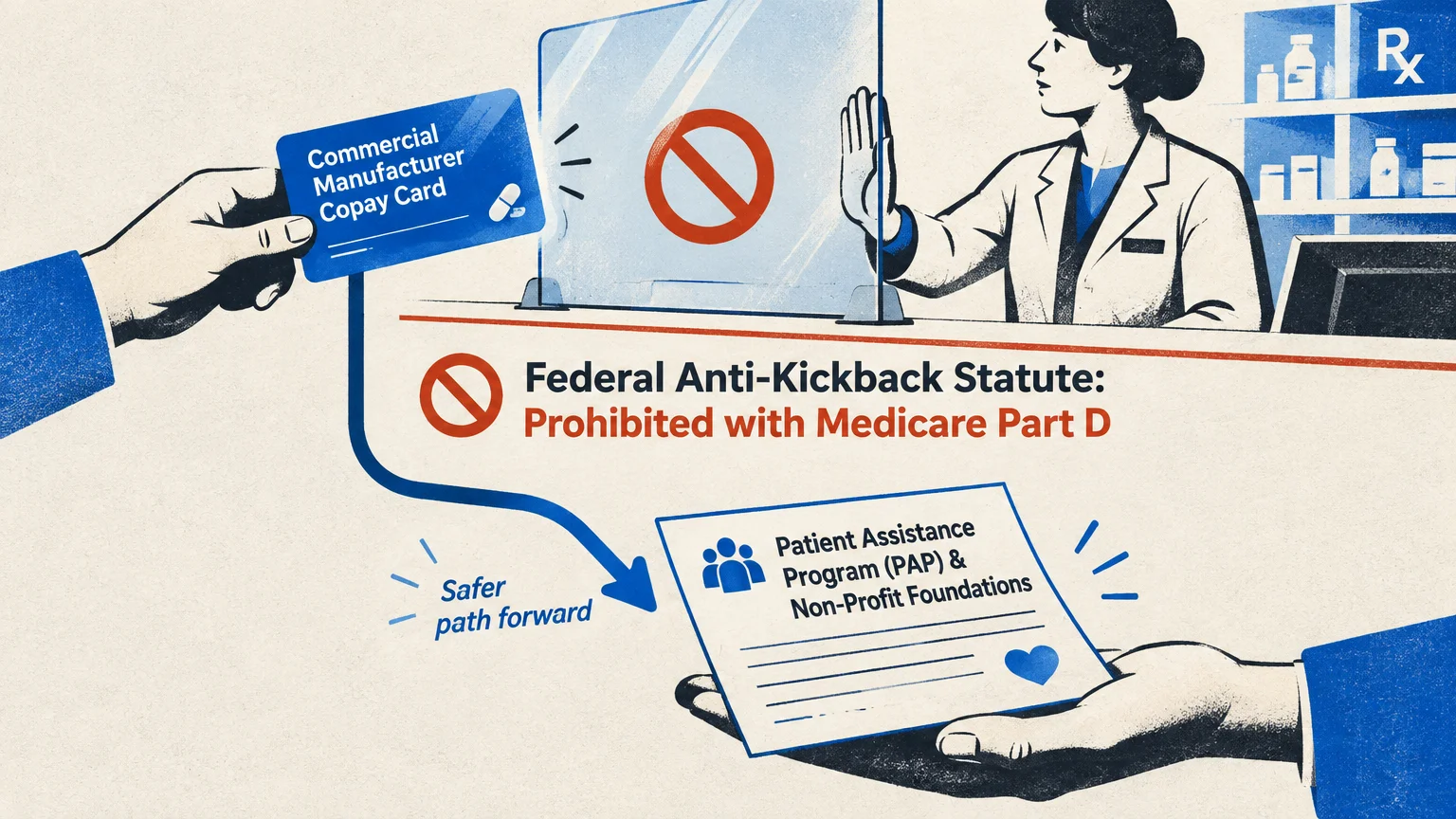
Tip #6: Understanding the Ban on Commercial Manufacturer Copay Cards
Pharmaceutical manufacturers frequently advertise copay cards that reduce brand-name drug costs to just ten dollars. While these commercial savings coupons look wonderful on television, Medicare beneficiaries cannot legally use them.
Under the federal Anti-Kickback Statute, seniors enrolled in Part D or Medicare Advantage cannot apply manufacturer copay cards. Federal law considers these discounts an improper inducement for patients participating in government-funded healthcare programs.
Retirees who expect steep discounts at the counter are often shocked when charged full tier-based copayments. Relying on commercial coupons creates unexpected financial strain and contributes to rising prescription costs for seniors.
Instead of relying on commercial coupons, explore legitimate patient assistance foundations that support seniors on Medicare. Many independent non-profit organizations offer financial grants based on medical conditions rather than specific drug brands.
You can also ask your doctor about generic or therapeutic alternatives that carry much lower copayments. Switching to an effective alternative helps you avoid high brand-name expenses without violating federal regulations.
Discussing affordable options directly with your pharmacist unlocks helpful state assistance programs and foundation grants. These compliant resources deliver authentic savings tailored specifically for your golden years.
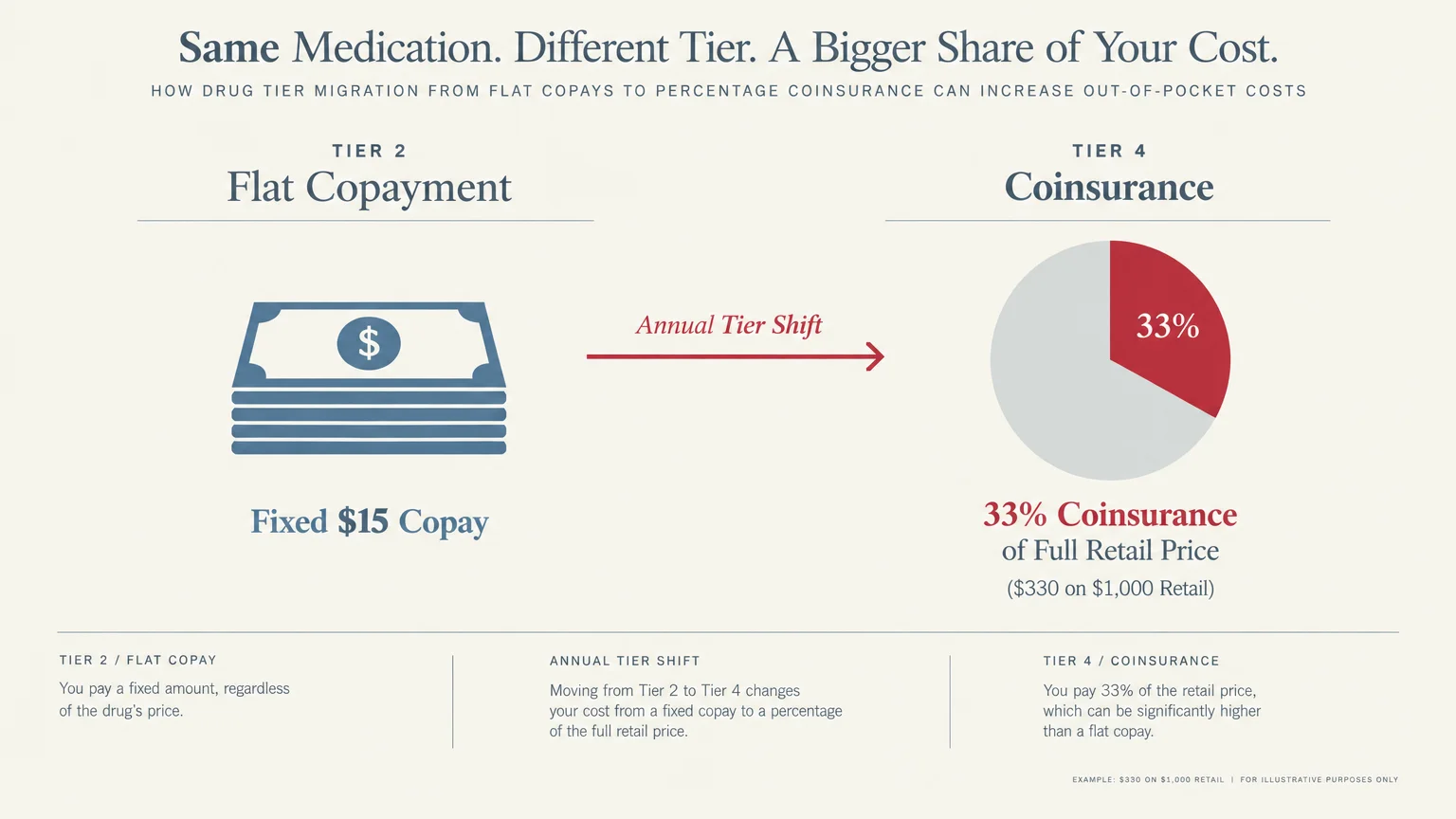
Tip #7: Spotting Prescription Tier Migration to Percentage Coinsurance
Health plans frequently adjust their drug formularies each year by shifting medications into higher tiers. When a medication moves from Tier 2 or Tier 3 to Tier 4 or Tier 5, your pricing model completely changes.
Instead of paying a predictable flat copayment, you become responsible for a 25% to 33% coinsurance rate. Coinsurance ties your out-of-pocket payment directly to the negotiated retail price of the medication.
If the drug manufacturer raises retail prices during the year, your refill bill climbs higher alongside it. This subtle shift increases retirees prescription costs without any change in your daily dosage or routine.
Examine your Annual Notice of Change document every autumn to see if your regular prescriptions shifted tiers. If your drug now requires coinsurance, ask your doctor if a comparable alternative remains in a flat-copay tier.
You can also request a tiering exception from your insurance company with clinical support from your prescriber. A successful tiering exception lowers your cost-sharing back down to a more affordable tier level.
Staying vigilant about tier adjustments preserves your financial peace of mind throughout retirement. It prevents sudden billing surprises from cutting into your monthly living expenses.
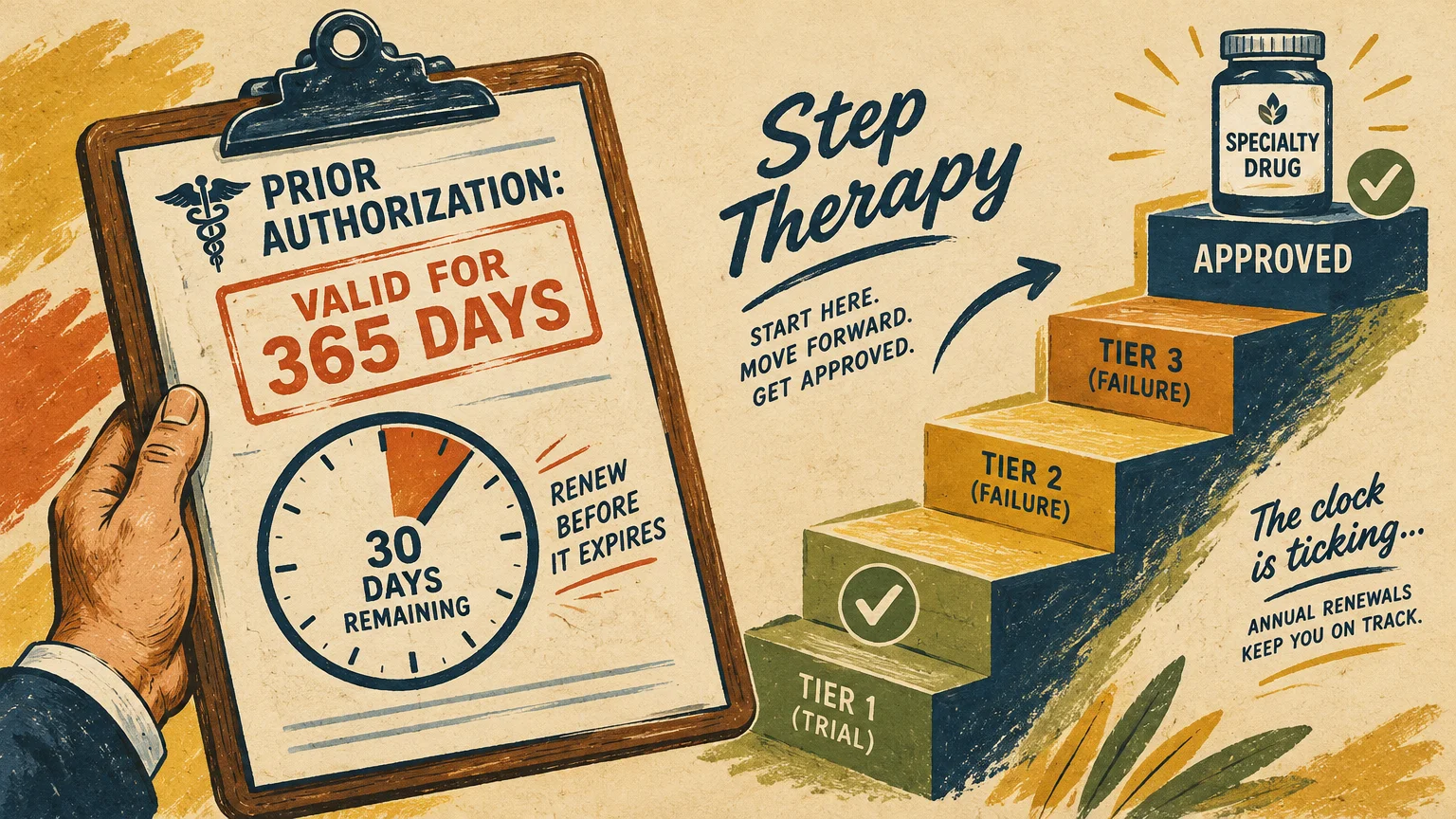
Tip #8: Preventing Prior Authorization and Step Therapy Expirations
Many specialized prescriptions require formal prior authorization or step therapy documentation from your physician before insurance approves coverage. What many retirees do not realize is that these clinical approvals routinely expire on December 31.
When the new calendar year arrives, the pharmacy claims system flags the lapsed approval and rejects your refill. This administrative hurdle is one of the most common medication refill mistakes seniors experience every January.
Faced with a sudden denial, panicked patients often pay high out-of-pocket costs for emergency bridge supplies. These temporary cash fills rarely count toward your deductible or your annual out-of-pocket spending limit.
Schedule a brief check-in with your doctor office every November to ensure all necessary paperwork is renewed early. Asking your physician to submit renewal forms before the holidays prevents costly delays at the pharmacy counter.
If an authorization expires unexpectedly, ask your pharmacist to contact your plan for an urgent temporary transition fill. Federal rules allow short-term transitional fills so you never miss essential doses while paperwork processes.
Taking early action safeguards your continuous medication access while keeping your personal expenses completely protected. It turns a potentially stressful obstacle into a smooth, manageable routine.
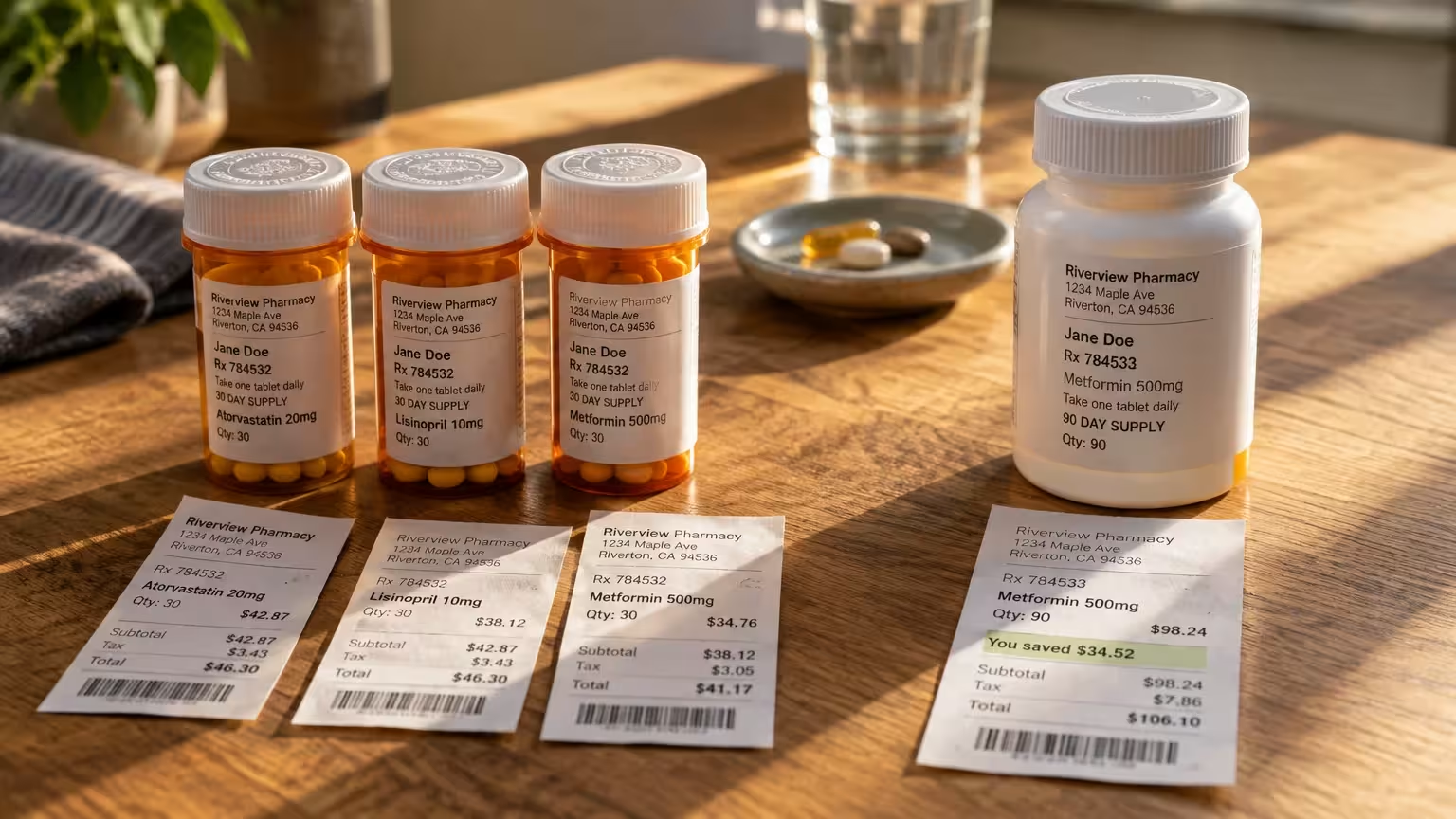
Tip #9: Switching from 30-Day Retail Refills to 90-Day Supplies
Picking up a 30-day supply of maintenance medication every month may feel familiar, but it often costs you significantly more money. Most insurance plans structure their pricing models to encourage 90-day orders through mail-order or preferred retail partners.
Purchasing three separate 30-day refills at a retail counter usually costs more than a single 90-day order. Some plans even penalize maintenance medications refilled at retail counters beyond two or three consecutive fills.
By consolidating your routine prescriptions into 90-day supplies, you unlock lower bundled copayments and reduce transportation expenses. A 90-day mail-order fill often saves you the equivalent of a full monthly copay each quarter.
Ask your doctor to write your maintenance prescriptions for a full 90-day supply with three annual refills attached. This simple administrative change slashes your pharmacy trips and preserves your retirement funds for leisure and travel.
Having a generous three-month supply on hand also provides tremendous peace of mind during seasonal weather disruptions. You will never have to worry about running low on essential pills during severe winter storms.
Check with your plan to see whether preferred retail pharmacies or mail-order services offer the lowest 90-day rates. Choosing the optimal delivery route maximizes both your convenience and your financial savings.
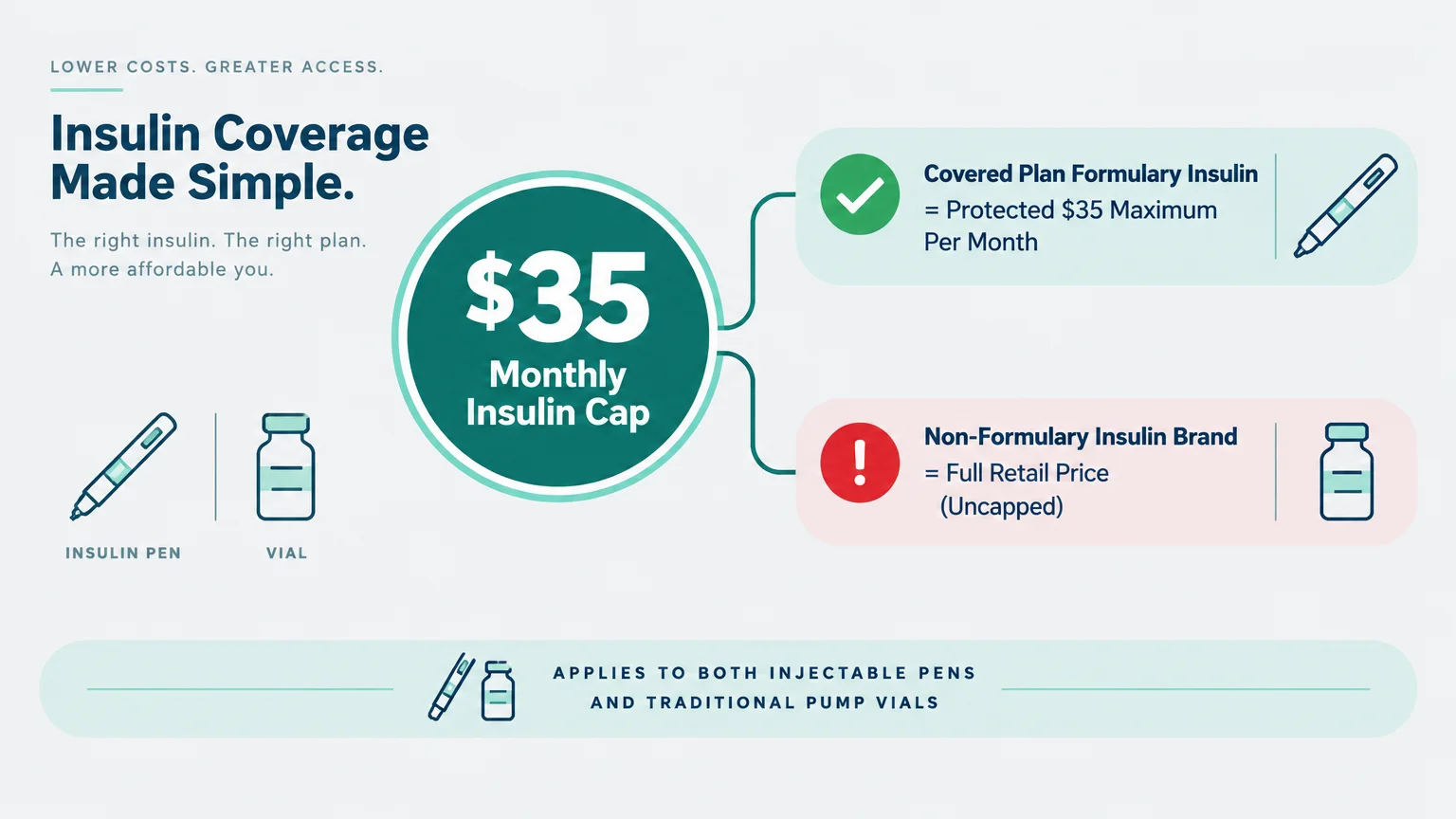
Tip #10: Verifying Formulary Inclusion Under the $35 Insulin Cap
Federal legislation successfully capped out-of-pocket insulin costs at $35 per month per covered product, or $105 for a 90-day supply. This rule provides wonderful financial relief and exempts covered insulin from the annual Part D deductible entirely.
However, this vital pricing cap applies strictly to insulin products explicitly included on your plan approved formulary list. If your physician prescribes an unlisted insulin brand, your insurance will reject the $35 cap outright.
Refilling an excluded insulin brand leaves you responsible for the full retail cost, which can exceed several hundred dollars per package. Many retirees mistakenly assume that all insulin formulations are universally capped at $35 regardless of insurance.
Always verify that your specific insulin pen, vial, or cartridge appears on your plan formulary before ordering a refill. If your plan prefers a different manufacturer brand, talk with your doctor about safely switching to the covered alternative.
Transitioning to an approved formulary brand allows you to enjoy the full benefits of the $35 monthly protection. Your physician can confirm that the alternative delivers the exact same metabolic control and daily convenience.
Understanding this formulary distinction protects your health while keeping your monthly diabetic care affordable and completely stress-free. It ensures you never overpay for life-saving daily treatment.

The Takeaway: Living a More Blissful Retirement
Protecting your physical health and your retirement wealth should always go hand in hand. By mastering modern prescription refill rules changes, you eliminate unnecessary fees and keep your healthcare costs entirely predictable.
Empowering yourself with practical knowledge allows you to advocate confidently for your wellness at the doctor office and pharmacy counter. Every dollar you save on maintenance medications is money you can redirect toward hobbies, family, and travel.
Partnering with your physician and pharmacist transforms confusing billing systems into a seamless, manageable routine. You deserve to enjoy your golden years with complete peace of mind and total financial security.
Embrace these simple proactive strategies today to ensure your retirement remains vibrant, financially independent, and wonderfully fulfilling. Taking charge of your prescription care is one of the most empowering gifts you can give yourself.
For a wide range of resources for older adults, visit AARP and the National Council on Aging (NCOA). Health information is available from the National Institute on Aging.
Disclaimer: This article is for informational and inspirational purposes only and does not substitute for professional medical, financial, or psychological advice. Please consult with a qualified expert for guidance tailored to your individual needs.
Frequently Asked Questions
Can I get an early refill if I am traveling for an extended vacation?
Yes, most Medicare Part D plans allow a one-time vacation override for non-controlled maintenance medications. Contact your insurance provider and retail pharmacy at least one week before traveling to request this exception.
Your pharmacist can submit an administrative override code directly through the billing system once your plan grants approval. This ensures you receive your necessary pills before departing without paying full cash prices.
How do I enroll in the Medicare Prescription Payment Plan?
You can opt in directly through your Medicare Part D plan sponsor or Medicare Advantage provider at any time. Contact the member services phone number on your card or visit their official website to submit your election.
Enrolling before filling expensive prescriptions ensures your out-of-pocket costs are smoothly distributed into monthly installment bills. This prevents large upfront payments at the checkout counter and stabilizes your monthly budget.
What should I do if my prescription is denied under the refill-too-soon rule?
Check the exact date when 75% of your current supply will be finished. If you experienced a dosage increase or damaged your pills, ask your prescriber to submit an emergency override.
Your pharmacist can often coordinate directly with your doctor to resolve the rejection quickly. Clear communication between your clinic and pharmacy prevents unnecessary out-of-pocket expenses.
Why did my copay jump significantly in January compared to December?
Your refill costs often jump in January because the annual Medicare Part D deductible resets to $615 in 2026. You must pay full negotiated retail rates until your spending satisfies this annual threshold.
Once you meet that deductible, your standard plan copayments or coinsurance rates return for the rest of the year. Planning for this annual reset protects your household budget from unexpected winter strain.