

You can reclaim your mornings and soothe spinal stiffness simply by adjusting your daily rest patterns. Lingering under the covers often feels soothing, yet prolonged rest actively aggravates lumbar tension and steals your vitality.
Understanding the connection between staying in bed and back pain allows you to safeguard your mobility. When you replace excessive resting with gentle morning movement, you protect your spine and preserve your active independence.
Modern clinical research reveals that your body thrives on consistent, gentle motion rather than extended immobilization. Let us explore why too much bed rest bad for back health occurs and how you can restore your daily physical comfort.
Tip #1: Prevent Rapid Muscle Deconditioning and Strength Loss
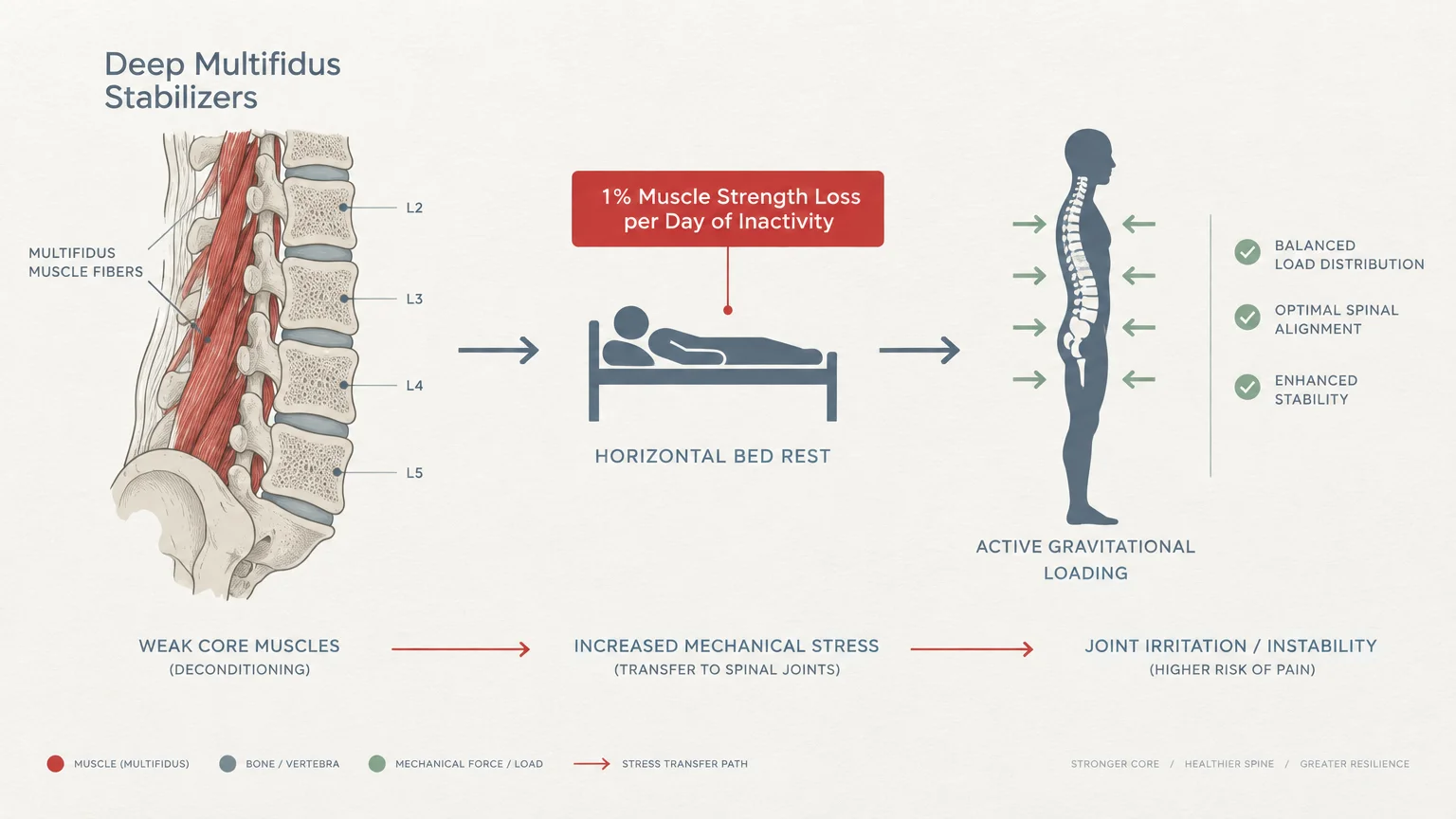
Your spine relies on a delicate web of core musculature to hold vertebrae in safe alignment. When you lie horizontally for prolonged periods, those vital supporting muscles disengage and quickly lose their functional tone.
Clinical studies from the National Institutes of Health reveal that muscle atrophy occurs two to three times faster in adults over 50. Inactivity robs mature spines of structural stability far quicker than younger backs.
Healthy older adults can lose approximately 1% of total muscle strength for every single day of complete bed rest. That quiet loss accumulates, leaving your spine unsupported when you stand up to start your day.
Understanding the Effects of Excessive Bed Rest
The deep multifidus muscles that stabilize your individual vertebrae require regular gravitational loading to remain strong. Without upright activity, these crucial fibers weaken and transfer excessive mechanical stress straight into your joints.
This deconditioning prompts your superficial back muscles to overcompensate by clenching into protective spasms. These painful contractions produce that familiar dull ache that lingers across your lower back all morning.
Understanding the effects of excessive bed rest helps you realize that resting in bed does not heal tired muscles. Instead, sustained stillness starves your postural muscles of the neural stimulation they require.
Practical Steps to Rebuild Core Stability
You do not need exhausting workouts to keep your spinal stabilizers alert and healthy. Gentle seated pelvic tilts and mild abdominal bracing exercises awaken your deepest core muscles with minimal effort.
Take a brisk five-minute stroll around your garden or living room immediately after dressing. Regular low-impact movement signals your body to retain muscle mass and keep your spine happily aligned.
Tip #2: Avoid Spinal Disc Swelling and Pressure Imbalance
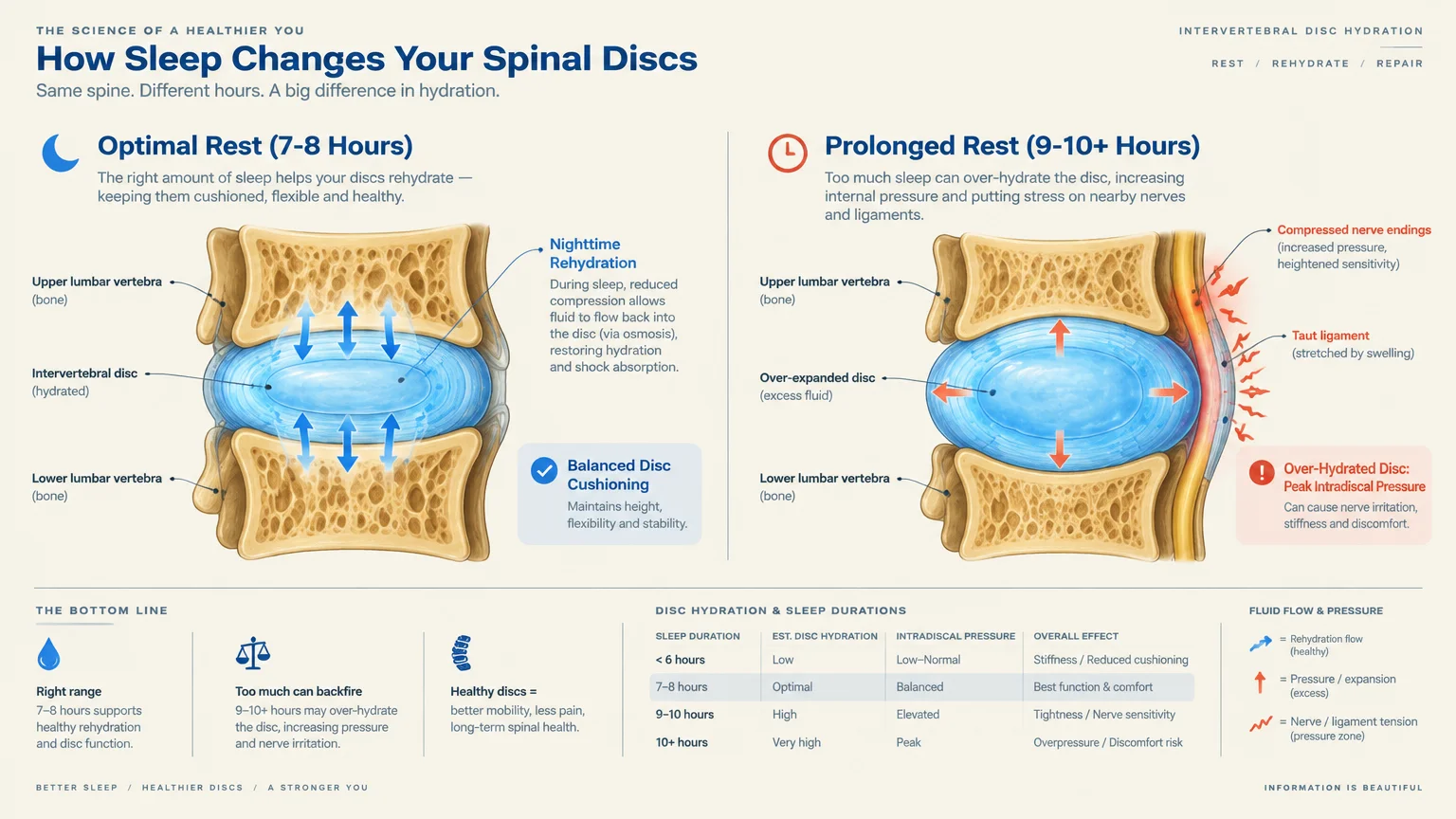
Your intervertebral discs function as resilient shock-absorbing cushions between each spinal bone. During the night, these spongy structures naturally absorb surrounding fluid and expand while you rest horizontally.
This nocturnal rehydration maintains disc height and cushions your spine for daytime activities. However, spending more than nine to ten hours in bed causes discs to overfill with excessive fluid.
Over-hydrated discs become tightly stretched and exert substantial pressure against adjacent spinal ligaments. This increased internal tension explains why your lower back feels exceptionally stiff and resistant when you wake up late.
The Link Between Back Pain and Sleep Habits
Leading research from the National Sleep Foundation indicates that seven to eight hours of sleep is ideal for mature adults. Sleeping longer than nine hours frequently exacerbates back pain and sleep habits complications.
When you stay in bed for ten hours, your discs reach maximum fluid capacity and lose natural compressibility. The resulting intradiscal pressure heightens sensitivity in the tiny nerve endings surrounding your outer disc walls.
Waking up at a consistent hour prevents discs from becoming engorged with unneeded fluid. Maintaining this rhythm preserves disc elasticity and eases early morning discomfort.
Healthy Morning Spinal Decompression
Avoid bending forward deeply or lifting heavy objects during your first thirty minutes out of bed. Your discs require time in an upright posture to discharge extra fluid through gentle gravitational compression.
Try performing gentle standing back bends by placing your palms on your lower back and leaning back slightly. This simple movement gently coaxes your discs back into their optimal daytime position.

Tip #3: Stop Joint Capsule Stiffness from Freezing Your Movement
Your vertebrae glide against each other through small, cartilage-covered connections known as facet joints. These delicate joints rely entirely on regular motion to circulate nourishing synovial fluid throughout the joint space.
When you spend extended periods immobilized under blankets, your synovial fluid thickens like cold oil. Without frequent movement, surrounding collagen fibers tighten and form rigid, unyielding bands across the joint capsules.
The Centers for Disease Control and Prevention reports that 28% of American adults experience lower back troubles over any three-month window. Excessive hours spent horizontal directly aggravate these sensitive joint structures.
Why Facet Joints Need Daily Lubrication
Joint cartilage lacks direct blood vessels, meaning it absorbs oxygen and nutrients solely through dynamic motion. Prolonged stillness deprives facet cartilage of fresh nourishment while allowing cellular waste to pool locally.
When you finally rise from bed, dry joint surfaces grind together uncomfortably. That friction sends warning signals to your central nervous system, resulting in sharp, catching sensations across your hips and waist.
Maintaining joint lubrication through timely waking protects your cartilage from unnecessary premature wear. Consistent movement keeps your joint capsules supple and ready for joyful retirement adventures.
Gentle Waking Routines for Fluid Joints
Before tossing back the covers, spend two minutes performing slow, rhythmic ankle rotations and gentle knee rolls. These easy movements warm up the joint capsules before your feet touch the carpet.
Follow these rolls with gentle pelvic rocks while lying flat on your mattress. This easy exercise distributes lubricating fluid throughout your lumbar joints, ensuring a comfortable, flexible start to your day.
Tip #4: Correct Poor Alignment from Unsupportive Mattresses
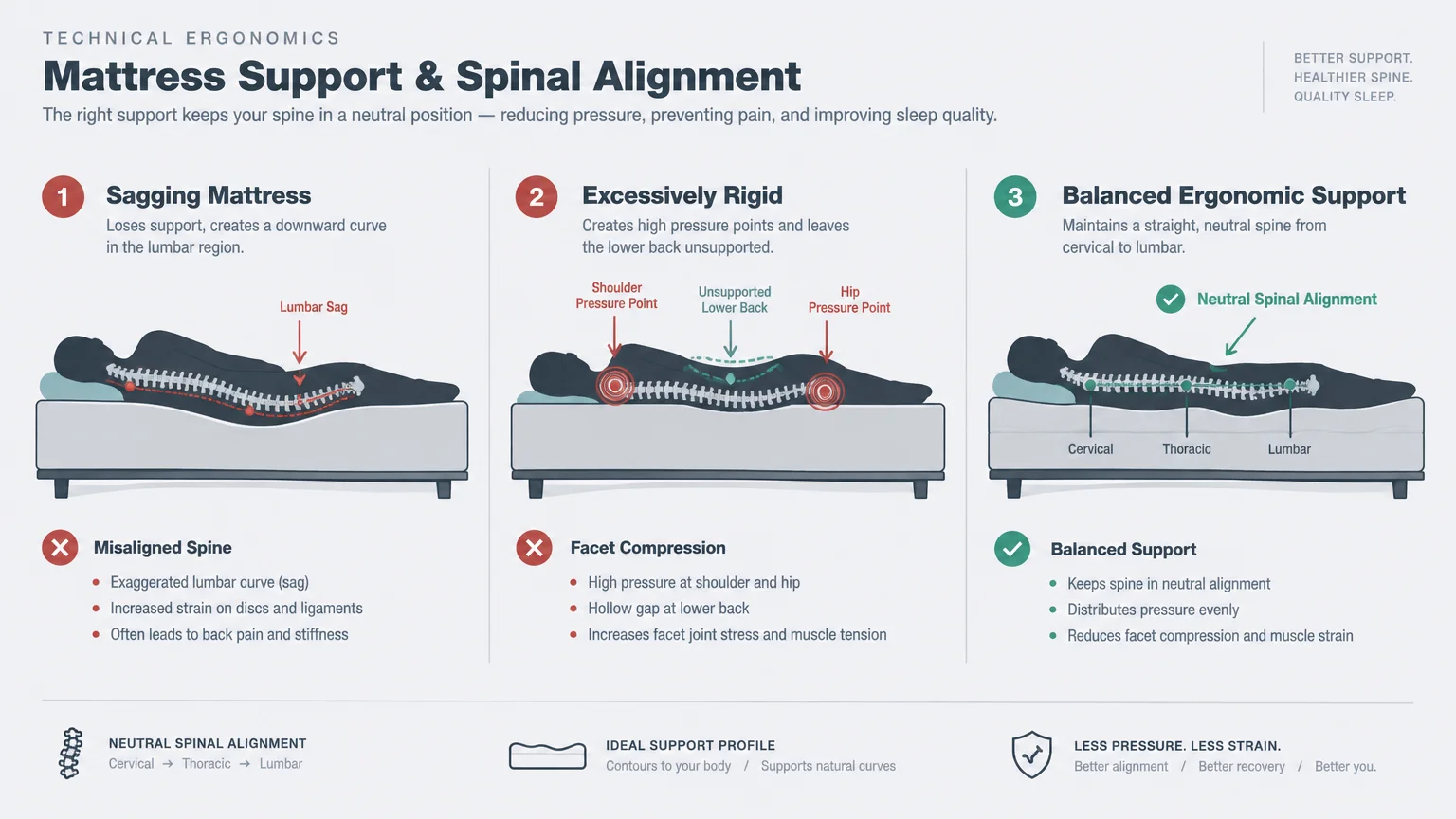
Even the highest-quality mattresses eventually soften and lose structural support after years of continuous use. Spending extra hours in an unsupportive bed forces your lumbar spine into awkward, unnatural curvatures.
A major clinical trial in The Lancet found that participants using medium-firm mattresses were twice as likely to experience pain reduction compared to those on firm mattresses. Balance between contouring and support proves essential.
When a mattress sags beneath your hips, your lower spine bends like a hammock for hours on end. This unnatural sagging pinches posterior spinal joints and stretches delicate lumbar ligaments past their comfort zone.
Analyzing Mattress Support and Alignment
Recognizing the risks of staying in bed and back pain requires an honest assessment of your mattress. If your mattress exhibits noticeable body indentations or exceeds eight years of age, it may need replacement.
Excessive firmness also creates problems by failing to accommodate the natural contours of your hips and shoulders. A medium-firm surface supports your spine evenly without exerting painful pressure on bony prominences.
Investing in a supportive sleep surface protects your spine during your designated resting hours. Quality support ensures your back rests in neutral alignment rather than struggling against gravitational stress.
Strategic Pillow Positioning for Spinal Health
Side sleepers should always place a firm contour pillow between their knees to keep their pelvis level. This simple addition prevents your top hip from rotating forward and twisting your lumbar vertebrae.
If you sleep flat on your back, slip a small pillow beneath your knees to relax your psoas muscles. This slight knee bend reduces lumbar arching and allows your back muscles to relax completely.

Tip #5: Limit Inactivity to Prevent Lower Extremity Weakness
Your lower back relies heavily on robust gluteal muscles and stable hamstrings to support your upper body weight. Prolonged bed rest deactivates these essential pelvic muscles, leaving your spine unprotected during daily tasks.
Rigorous clinical research demonstrates that healthy older adults can lose 10% to 12% of lower extremity strength per week of bed rest. Prolonged lounging accelerates this physical deconditioning dramatically.
Physical therapists frequently warn about gluteal amnesia, where the buttocks muscles forget how to fire properly after lengthy inactivity. When glutes fail to engage, your lower back muscles must lift your entire torso alone.
The Impact of Tight Hip Flexors
Lying in bed for hours often keeps your hips bent in a curled or flexed posture. This sustained position shortens your powerful iliopsoas muscles, which anchor directly onto your lumbar vertebrae.
When you stand upright with tight hip flexors, they yank your pelvis forward into an exaggerated anterior tilt. That forward tilt jams your lumbar facet joints together, producing nagging back soreness throughout the afternoon.
Limiting excessive bed rest keeps your hip flexors long, flexible, and relaxed. Free hips relieve tension from your lower back, allowing you to walk with upright elegance and comfort.
Reactivating Your Lower Body Support
Awaken dormant gluteal muscles by performing gentle glute bridges on your bedroom floor or firm bed. Squeeze your buttocks at the peak of each lift to reactivate those critical spinal supporters.
Complement bridges with gentle standing calf raises while resting your hands lightly against the wall. Building lower extremity strength provides a sturdy foundation that absorbs walking shock before it reaches your spine.

Tip #6: Reduce Systemic Inflammation and Sluggish Circulation
Every time you walk or stretch, your muscles act as secondary pumps that propel venous blood toward your heart. Extended horizontal bed rest halts this muscular pumping action, causing your systemic circulation to slow dramatically.
Global health data from the World Health Organization shows that 619 million people currently suffer from low back pain. Prevalence peaks sharply between ages 50 and 55, making proactive circulation management paramount for retirees.
Staying in bed beyond nine to ten hours leads to an elevation in circulating inflammatory cytokines. These inflammatory markers settle into low-flow areas around spinal joints, provoking continuous achiness and swelling.
Confronting Back Pain Lifestyle Causes
Recognizing back pain lifestyle causes enables you to break the destructive cycle of chronic morning pain. Lingering in bed to soothe aches often backfires by fueling localized inflammatory buildup.
Sluggish blood flow prevents fresh oxygen and vital amino acids from reaching weary spinal tissues. By deciding to get up promptly, you flush stagnant fluids out of your lumbar region.
Physical movement serves as your body’s most effective natural anti-inflammatory medicine. Active mornings sweep away irritants and restore comfortable elasticity to your spinal ligaments.
Hydration and Movement Protocols
Drink a tall glass of cool water immediately upon waking to rehydrate your circulatory system and cellular tissues. Rehydration boosts blood volume, aiding in the rapid removal of nighttime metabolic waste products.
Step outside to enjoy fifteen minutes of gentle walking under natural morning light. Sunlight and light cardio stimulate natural mood-boosting endorphins, which block pain signals and elevate your daily vitality.
Tip #7: Break the Cycle of Movement Avoidance and Chronic Pain
Decades ago, medical professionals routinely ordered extended bed rest for almost any type of back complaint. Modern orthopedic science now recognizes that old advice as counterproductive and potentially harmful.
Clinical practice guidelines from the American College of Physicians and the AAFP strongly advise against prolonged bed rest. If acute agony necessitates lying down, limit it strictly to 24 to 48 hours.
Remaining immobilized beyond two days delays tissue recovery, weakens stabilizing tendons, and promotes chronic disability. Active recovery keeps your neural pathways healthy and accelerates real physical healing.
Overcoming the Fear of Daily Movement
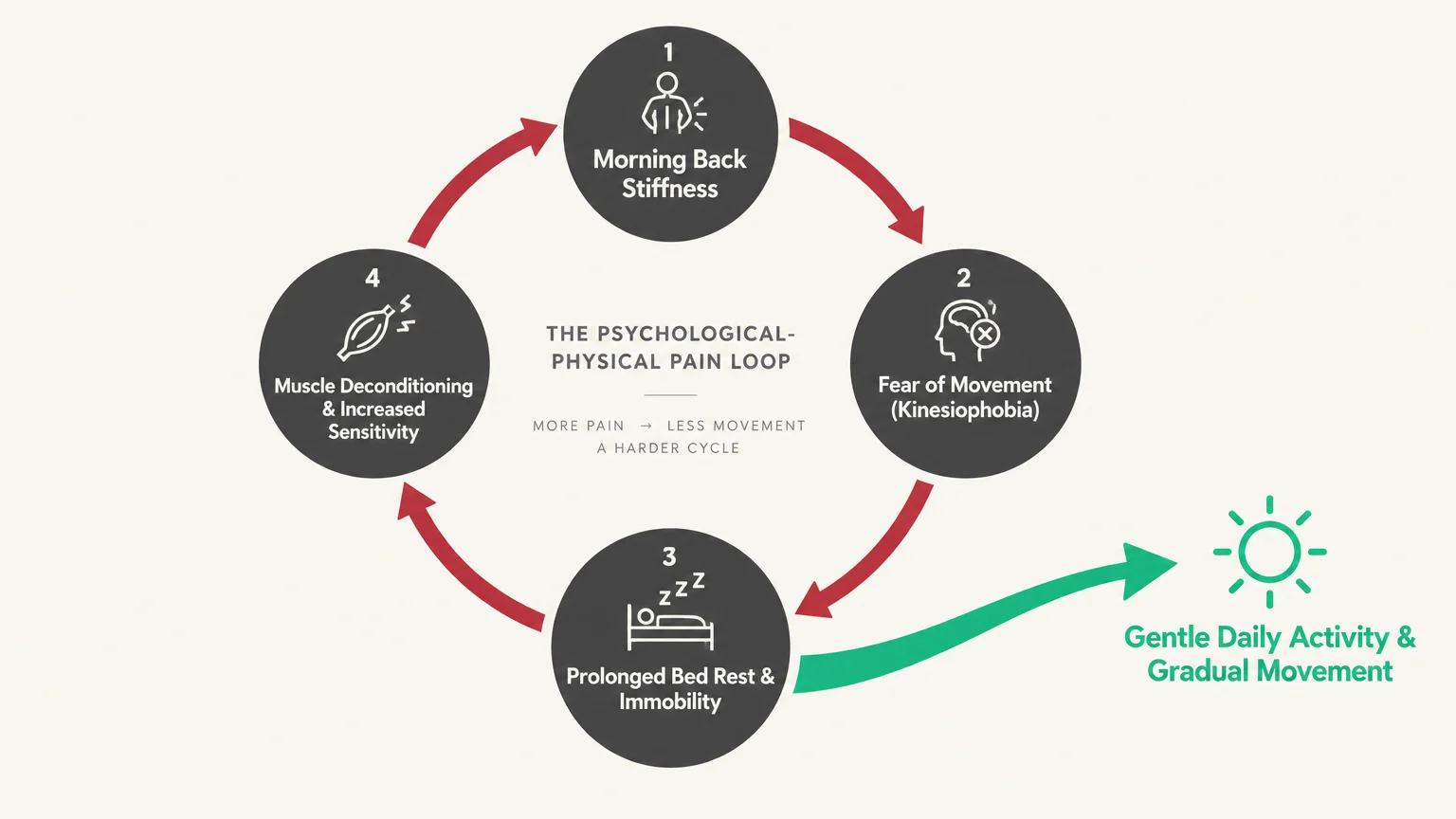
When back pain strikes, experiencing anxiety around everyday physical activities feels completely natural. However, psychological fear of movement—known medically as kinesiophobia—traps you in bed and worsens your physical condition.
Understanding why too much bed rest bad for back health reframes how you view recovery. Gentle, respectful movement is not dangerous; it is the essential catalyst that heals damaged spinal tissues.
Every slow, confident step teaches your nervous system that movement remains safe and beneficial. Overcoming avoidance behaviors protects your long-term independence and restores your physical confidence.
Gentle Pacing for Pain-Free Living
Adopt an active pacing approach where you alternate short periods of light activity with relaxing seated breaks. Tending to container plants or folding laundry keeps your spine moving without risking strain.
Work closely with your healthcare provider or a licensed physical therapist to create an empowering activity plan. Staying active allows you to savor every rich opportunity your retirement years offer.

The Takeaway: Living a More Blissful Retirement
Your golden years represent a wonderful season to cultivate vibrant wellness, pursue meaningful hobbies, and cherish time with loved ones. You possess the practical knowledge needed to protect your spinal comfort every single morning.
Limiting your nightly rest to seven or eight hours keeps your intervertebral discs, facet joints, and postural muscles thriving. Moving promptly out of bed prevents joint stiffness from casting a shadow over your day.
Embrace gentle morning stretches, stay well-hydrated, and enjoy regular outdoor walks to nurture your body naturally. When you replace prolonged bed rest with positive physical activity, your back responds with strength and ease.
Celebrate your body’s remarkable capacity for renewal by starting tomorrow morning with positive movement. A comfortable, active, and fulfilling retirement awaits you as you rise with joyful purpose each day.
For a wide range of resources for older adults, visit AARP and the National Council on Aging (NCOA). Health information is available from the National Institute on Aging.
Frequently Asked Questions
How many hours of sleep should adults over 50 aim for each night?
The National Sleep Foundation and CDC recommend seven to eight hours of sleep per night for adults over 50. Spending more than nine hours horizontal increases joint stiffness and causes disc fluid pressure imbalances.
What should you do if your back feels extremely stiff when you wake up?
Begin with gentle ankle pumps and small pelvic rocks while still lying down to circulate synovial fluid. Once upright, drink a glass of water and walk around your home for several minutes before bending.
Give your intervertebral discs thirty minutes to adapt to upright gravitational loads before lifting objects or performing chores. Gentle movement gradually eases tightness without irritating sensitive spinal nerves.
Is strict bed rest ever recommended for acute back injuries?
Clinical practice guidelines advise against strict bed rest for low back pain whenever possible. If severe acute discomfort forces you off your feet, limit bed rest strictly to 24 to 48 hours.
What is the best sleeping position for lower back support?
Sleeping on your side with a supportive pillow placed between your knees maintains proper pelvic and spinal alignment. If you prefer sleeping on your back, place a pillow beneath your knees to relieve lumbar tension.
Disclaimer: This article is for informational and inspirational purposes only. It is not a substitute for professional medical, financial, or psychological advice. Please consult with a qualified expert for guidance tailored to your individual needs.