

You can turn your upcoming monthly raise into real personal freedom by planning ahead today. The official 3.6% COLA gives your wallet extra room to breathe, but hidden traps can quietly diminish that extra cash.
A little proactive preparation ensures you protect every dollar for travel, lively hobbies, and quality time with your family. Staying ahead of these policy adjustments keeps your retirement vibrant, joyful, and completely financially secure.
Understanding the upcoming social security raise 2027 allows you to protect your hard-earned benefits before deductions take effect. Let us explore the two major catches and the lifestyle steps you should take now.
Lifestyle Idea #1: Catch 1 — Rising Medicare Premiums and Healthcare Costs
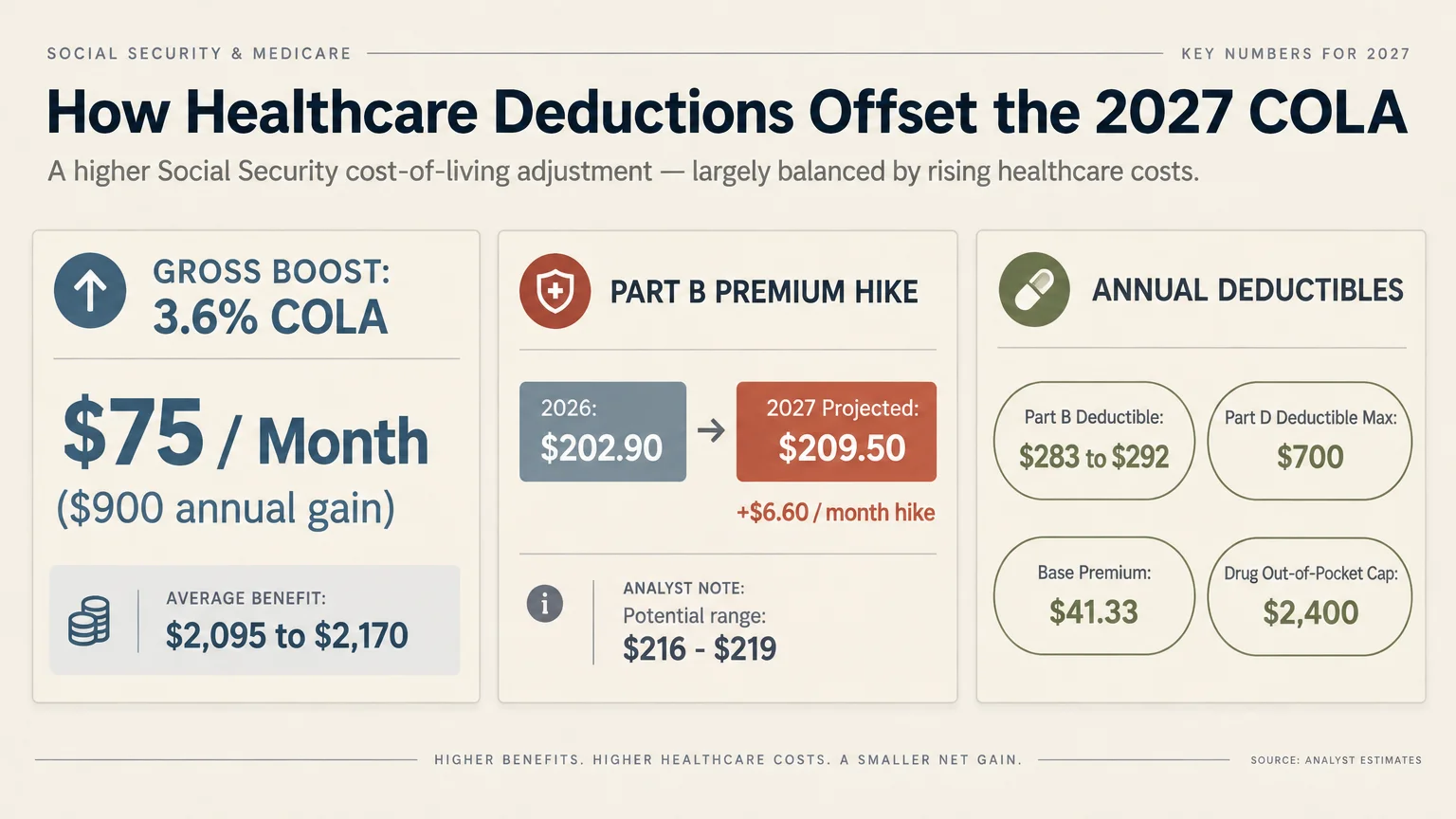
The Social Security Administration announced the official social security COLA 3.6% on October 14, 2026. This adjustment marks the largest annual increase since 2023, outpacing the 2.8% bump retirees received in 2026.
For the average retired worker, this update adds an estimated $75 per month to household income. Over a full calendar year, that boost puts about $900 back into your spending plan.
Typical monthly benefit payments will climb from approximately $2,095 to $2,170 starting in January 2027. Meanwhile, about 7.3 million Supplemental Security Income recipients will notice their increased payments earlier, on December 31, 2026.
In total, roughly 76 million Americans rely on these vital adjustments to maintain their standard of living. That massive figure includes nearly 72 million dedicated Social Security beneficiaries across our nation.
While an extra $75 each month sounds like a wonderful dining treat, rising deductions present serious obstacles. Healthcare costs represent the most immediate threat to your actual net payout.
Because Medicare Part B premiums deduct directly from your monthly checks, standard rate hikes take priority. Higher medical deductions can swallow your entire raise before you ever see a single dime.
The standard Part B premium was confirmed at $202.90 per month throughout 2026. The Medicare Board of Trustees projects that the standard rate will climb by $6.60 to $209.50 in 2027.
Some private healthcare analysts forecast an even steeper surge, warning that premiums could land between $216 and $219. Such jumps create an immediate friction point between federal cost-of-living adjustments and basic medical needs.
Beyond monthly premiums, annual medical deductibles also eat into your personal lifestyle funds. Projections from the Trustees suggest the Part B deductible will climb from $283 in 2026 to $292 in 2027.
Prescription drug plans under Part D bring additional mandatory expenses into your household ledger. Confirmed figures from Medicare show that the maximum Part D deductible will reach $700 in 2027.
Fortunately, the annual out-of-pocket spending cap offers relief by limiting prescription drug costs to $2,400. However, the national base beneficiary premium will sit at $41.33 next year.
These shifting health rules highlight the complicated reality of the medicare premiums COLA dynamic. If you want your extra income to fuel fun activities, you must outmaneuver these recurring expenses.
High-income earners face an even heavier burden through the Income-Related Monthly Adjustment Amount, known as IRMAA. These surcharges hit Part B and Part D without mercy.
In 2026, IRMAA thresholds applied to single filers with modified adjusted gross income above $109,000. For married couples filing jointly, those surcharges began at $218,000.
Keep in mind that Medicare calculates your 2027 surcharges using your tax return from two years prior. That means your total earnings from 2025 determine whether you pay these steep surcharges.
You must also remember that the Social Security hold harmless rule does not protect you from IRMAA adjustments. When surcharges kick in, your take-home check can actually shrink despite a positive cost-of-living announcement.
Reviewing Your Coverage Before Critical Deadlines
You can safeguard your monthly cash flow by reviewing your benefit statements as early as possible. Beneficiaries have until November 18, 2026, to log into their personal digital portal and choose paperless communication.
Opting into electronic notices lets you view your personalized cost-of-living adjustment and Medicare deductions in late November. If you prefer physical mail, paper notices will arrive in your mailbox throughout December 2026.
Comparing available health plans during Open Enrollment gives you the power to counter these premium jumps. Reassessing drug formularies ensures you never pay unnecessary pharmacy fees during your travels.
Reviewing pharmacy networks lets you identify preferred dispensaries near your home or winter vacation spot. Small changes in how you source medications keep your out-of-pocket expenses firmly under the annual cap.
Check whether your current supplemental plan continues to offer the best value for your typical health needs. Switching to a plan that covers specialty care can prevent unwelcome hospital co-pays from disrupting your budget.
Taking control of these administration deadlines gives you peace of mind throughout the holiday season. You can focus on celebrating with loved ones instead of stressing over unexpected insurance bills.
Staying Active with Low-Cost Social Hobbies
Investing your energy into preventive wellness is the most enjoyable way to trim out-of-pocket medical expenses. Regular physical activity with friends builds stamina and significantly reduces your dependence on clinical visits.
Consider joining a local walking group or community hiking club this season. Moving outdoors provides fantastic cardiovascular exercise while surrounding you with supportive, uplifting companions.
Community gardens offer another outstanding blend of physical movement, fresh nutrition, and social bonding. Tending garden beds keeps your joints flexible while connecting you with fellow green-thumb enthusiasts.
Many local senior centers provide low-cost yoga, water aerobics, and balance classes tailored for older adults. Participating in these programs keeps your spirits high and protects your personal entertainment budget.
Group exercise also provides built-in accountability that makes healthy lifestyle choices easy to sustain. Celebrating fitness milestones with peers transforms daily wellness into a vibrant social event.
Strong social connections stimulate mental acuity and reduce feelings of isolation during colder months. Surrounding yourself with positive friends helps you maintain physical independence and emotional vitality.
Creating a Protected Healthcare Escrow for Fun
You can protect your lifestyle goals by establishing a dedicated healthcare savings account. Directing your net raise into a separate reserve prevents medical copays from disrupting your travel dreams.
When you ring-fence your funds, spontaneous weekend road trips and visits with grandchildren remain fully funded. Financial clarity allows you to explore new restaurants and local theater productions with complete confidence.
Look into automated transfers between your checking account and a high-yield savings vehicle. Saving a consistent surplus each month builds a comfortable buffer against unexpected medical bills.
Treating healthcare savings like a standard utility payment removes emotional anxiety from doctor appointments. You can pay copays calmly, knowing your leisure funds remain untouched for weekend getaways.
Review this dedicated fund quarterly to ensure it aligns with your actual spending patterns. Celebrating a healthy balance allows you to reallocate surplus dollars into your personal vacation envelope.
Communicating with Your Partner About Budget Adjustments
Discussing upcoming benefit adjustments with your spouse prevents misunderstandings about discretionary spending. Clear communication ensures both of you share the same priorities for travel, entertainment, and home projects.
Schedule a relaxed budget review over coffee to examine upcoming Medicare deductions together. Treating financial planning as a collaborative teamwork exercise deepens intimacy and eliminates money-related friction.
Identify the shared activities that bring both of you the greatest joy and satisfaction. Allocating your disposable income toward meaningful experiences strengthens your bond throughout retirement.
Lifestyle Idea #2: Catch 2 — Unindexed Tax Thresholds and Bracket Creep
The second major hurdle awaiting retirees involves federal income taxation on your monthly benefits. An increase in your gross benefit can push your total income into taxable territory without your realization.
This stealthy tax expansion occurs because Congress never indexed benefit tax thresholds to account for inflation. Decades of unadjusted limits produce insidious bracket creep every single time seniors receive a raise.
The Internal Revenue Service measures your tax exposure using a specific formula called provisional income. You determine this number by combining your adjusted gross income, nontaxable interest, and 50% of your Social Security benefits.
For single filers, provisional income between $25,000 and $34,000 exposes up to 50% of benefits to income taxation. If your provisional income crosses $34,000, up to 85% of your benefits become taxable.
Married couples filing jointly face similarly outdated limits that penalize their combined retirement savings. Provisional income between $32,000 and $44,000 subjects up to 50% of your joint benefits to taxes.
When a married couple’s provisional income exceeds $44,000, up to 85% of their benefits face federal taxation. These static dollar limits mean that your 2027 COLA can inadvertently trigger a larger tax bill.
Understanding these COLA downsides empowers you to structure your taxable distributions with surgical precision. Proactive tax planning prevents the government from claiming the lion’s share of your annual bump.
Furthermore, senior advocates frequently critique the Consumer Price Index for Urban Wage Earners and Clerical Workers, known as CPI-W. The 3.6% boost relies on CPI-W numbers moving from 317.265 in Q3 2025 to 328.746 in Q3 2026.
Because the CPI-W reflects urban workers, it underweights senior-heavy expenses like prescription therapies, specialized care, and housing. Consequently, your annual adjustment may not reflect the real expenses you face in daily living.
Accelerating benefit payouts also places additional pressure on the long-term solvency of the Social Security program. Trustees warn of a potential 23% benefit cut across the board if lawmakers fail to enact legislative remedies.
Awareness of these structural realities encourages retirees to build resilient, diversified financial foundations. Taking personal charge of your resources guarantees that you maintain an abundant lifestyle regardless of policy debates.
Navigating Earnings Limits for Working Retirees
Many older adults choose to stay active in the workforce to mentor younger colleagues and fund hobbies. If you work before reaching Full Retirement Age, strict earnings limitations apply to your checks.
For 2027, the annual earnings limit rises to $25,560, which breaks down to $2,130 per month. The agency withholds $1 from your benefits for every $2 you earn above that annual threshold.
That figure represents a helpful increase from the 2026 earnings cap of $24,480 per year. Knowing these boundaries lets you work fulfilling consulting or part-time roles without sacrificing your monthly checks.
For seniors reaching Full Retirement Age during 2027, the earnings cap expands generously to $67,920 annually. In that transition year, the agency withholds $1 for every $3 earned above the limit.
That cap climbs from $65,160 in 2026, offering greater financial runway in the months before full retirement. Once you reach Full Retirement Age, the earnings test disappears entirely, letting you earn without any penalties.
Older professionals who maintain substantial salaries should also note the updated Social Security payroll tax cap. Maximum earnings subject to the 6.2% payroll tax will rise from $184,500 in 2026 to $192,300 in 2027.
Meanwhile, the maximum monthly check for workers claiming at Full Retirement Age will rise to $4,188. That marks an increase from the $4,152 maximum monthly benefit established for 2026.
Structuring your work schedule around these limits allows you to stay socially engaged and intellectually sharp. Part-time employment provides wonderful camaraderie without disrupting your carefully planned retirement cash flow.
Balancing Withdrawals with Fun Social Traditions
You can bypass tax traps by coordinating withdrawals across your traditional accounts and Roth retirement balances. Taking tax-free distributions from Roth IRAs keeps your provisional income below those unindexed taxation thresholds.
Managing your taxable footprint frees up disposable cash for unforgettable experiences with your loved ones. You can host memorable dinner parties or finance weekend escapes without dreading next spring’s tax forms.
Cultivate enriching social traditions that rely on genuine shared connection rather than lavish spending. Organizing weekly trivia matches, amateur book clubs, or crafting circles creates tremendous joy at minimal expense.
These intimate gatherings foster deep friendships and keep your social circle energized throughout your golden years. Prioritizing meaningful relationships shields your budget from the corrosive effects of unindexed tax brackets.
Potluck dinner clubs allow friends to share gourmet meals while splitting the cooking duties and grocery expenses. Rotating host duties gives everyone an opportunity to entertain without exhausting their culinary budgets.
Outdoor picnics at scenic county parks offer another wonderful venue for laughter and conversation with lifelong peers. Nature provides an inspiring backdrop that costs nothing and encourages wholesome relaxation.
Passing Down Values and Experiences Over Material Gifts
Grandparenting provides an incredible opportunity to share wisdom, laughter, and affection without draining your accounts. Taking your grandchildren to museums, state parks, or historic sites builds lasting memories far beyond store-bought toys.
Teach younger generations family recipes, woodworking crafts, or musical instruments during relaxed weekend afternoons. These shared moments nurture family bonds while keeping your annual discretionary spending completely predictable.
Storytelling sessions and collaborative photo albums celebrate your family heritage across generations. Your time and presence will always mean more to your grandchildren than expensive financial gifts.
Plan interactive scavenger hunts or birdwatching afternoons in your neighborhood with the grandkids. Engaging their natural curiosity creates laughter and strengthens generational ties without costing a penny.
Preserving family traditions through handwritten letters or memory journals leaves an enduring legacy of love. These thoughtful personal treasures will be cherished long after manufactured holiday novelties are forgotten.
Rediscovering Free Cultural Attractions in Your Area
Many metropolitan regions and regional towns sponsor free admission days for local museums and botanical gardens. Scheduling your social outings around these community days lets you experience world-class culture without spending money.
Local colleges and community playhouses frequently host complimentary concerts, theatrical readings, and lecture series. Attending these cultural events enriches your mind and broadens your perspectives alongside fellow community members.
Public libraries also offer passes to regional parks, historical landmarks, and science centers at zero cost. Checking out these community passes turns an ordinary weekday into an exciting adventure with close companions.

Putting It into Practice: Small Steps for Big Changes
Transforming financial policy updates into a fulfilling lifestyle requires a few simple, intentional adjustments. Taking decisive action right now ensures that you maximize your upcoming cost-of-living increase.
Step 1: Check Your Digital Portal Before the Deadline
Create your personal account on the official administration website prior to the November 18, 2026 deadline. Selecting paperless delivery allows you to view your customized benefit figures and deduction amounts weeks ahead.
Reviewing your statement early lets you spot any surprising healthcare premium shifts before January arrives. Knowledge is your greatest ally when designing a realistic, rewarding budget for the coming year.
Bookmark your account login details securely so you can monitor updates whenever personal circumstances shift. Staying informed gives you the confidence to manage your finances with complete clarity.
Step 2: Recalculate Your Net Monthly Discretionary Income
Calculate your actual take-home increase rather than relying on the gross $75 monthly average. Subtract your projected Part B premium increase of $6.60 or more to find your true disposable gain.
Knowing your exact net boost prevents accidental overspending on household items or recurring monthly memberships. Direct the remaining surplus toward an activity that enriches your personal happiness and social life.
Allocate that specific dollar surplus to an activity that brings you authentic, revitalizing joy. Even a modest monthly reserve can fund an inspiring painting workshop or monthly dinner outing.
Step 3: Organize a Low-Cost Social Calendar
Fill your seasonal calendar with community events, cultural festivals, and recreational pursuits that fit your budget. Exploring local libraries, art galleries, and botanical gardens costs very little while offering wonderful companionship.
Coordinate regional day trips with neighboring retirees to share vehicle travel costs and lodging expenses. Traveling off-peak opens up incredible discounts while allowing you to enjoy popular destinations without crowded corridors.
Sharing vacation expenses with dear friends makes travel far more accessible and deeply enjoyable. You will return home refreshed, with memorable stories and a budget that remains completely intact.
Step 4: Audit Subscriptions to Free Up Leisure Dollars
Review your recurring credit card statements to eliminate subscriptions and services you rarely utilize. Canceling unread digital publications or unused streaming platforms frees up dozens of discretionary dollars each month.
Redirect those recaptured funds toward personal passions, fitness gear, or travel gear that enhances your wellbeing. Trimming redundant subscriptions gives your retirement budget immediate flexibility without altering your daily comfort.
Step 5: Connect with Local Community Resources
Local senior organizations and recreation departments offer a wealth of complimentary resources and activities. Engaging with these community programs connects you with active peers who share your passions and values.
Make it a personal habit to explore community bulletins and public recreation schedules every single month. Embracing your neighborhood resources ensures a rich social calendar regardless of national economic trends.
Frequently Asked Questions
Will the 3.6% Social Security increase trigger higher Medicare Part B premiums automatically?
Yes, Medicare Part B premiums deduct directly from your Social Security checks each month. The projected standard premium rise of $6.60 to $209.50 in 2027 will reduce your net raise.
Setting aside funds in advance ensures you manage these mandatory healthcare deductions smoothly. Planning ahead protects your disposable income for fun outings, day trips, and rewarding personal hobbies.
How can I prevent the 2027 COLA from pushing me into a higher tax bracket?
You can manage your taxable exposure by drawing funds from Roth IRAs and reducing taxable distributions. Consulting a certified tax professional helps you keep provisional income under the static taxation thresholds.
Strategic timing of distributions preserves your hard-earned benefits from unexpected tax liabilities. Keeping your tax liability low leaves more discretionary income for leisure activities and travel.
Can I work part-time in retirement without losing my COLA boost?
You can earn up to $25,560 in 2027 without any benefit withholdings if you are under Full Retirement Age. Once you attain Full Retirement Age, you can earn unlimited income without any penalty.
Part-time work offers fantastic intellectual stimulation and social interaction alongside steady pocket money. You can mentor colleagues or pursue creative consulting while keeping your benefits completely protected.
How do I maintain an active social life and travel hobby if healthcare costs rise?
Focus on regional exploration, off-peak travel discounts, and community-based hobbies like hiking clubs or potlucks. Prioritizing affordable social adventures preserves your financial peace while ensuring a vibrant retirement lifestyle.
Sharing travel costs with companions and booking midweek getaways slashes transportation and accommodation expenses. You can experience incredible new destinations without compromising your long-term healthcare reserves.
For resources on retirement living, travel, and finance, visit AARP. Official information on Social Security is available at SSA.gov.
For travel advisories and destination safety updates, consult the U.S. Department of State. Reviewing official guidance ensures your domestic and international journeys remain seamless.
Disclaimer: This article provides lifestyle suggestions for informational purposes. Financial, legal, or travel decisions should be made in consultation with qualified professionals.