

Your hard-earned Social Security check carries significantly more purchasing power when you relocate to a state designed to stretch every dollar. Following the recent 2.8% cost-of-living adjustment (COLA) that raised average monthly retirement benefits to $2,072, smart retirees are discovering that geographic arbitrage can double their monthly discretionary spending. By choosing destinations with exceptionally low housing costs, minimal overall tax burdens, and deeply discounted everyday goods, you can transform a fixed income into a luxurious lifestyle. Moving to a budget-friendly state allows you to stretch your savings, eliminate financial strain, and enjoy a vibrant, active retirement without sacrificing the quality healthcare and amenities you deserve.
Tip #1: Mississippi — Unmatched Purchasing Power and Tax Relief
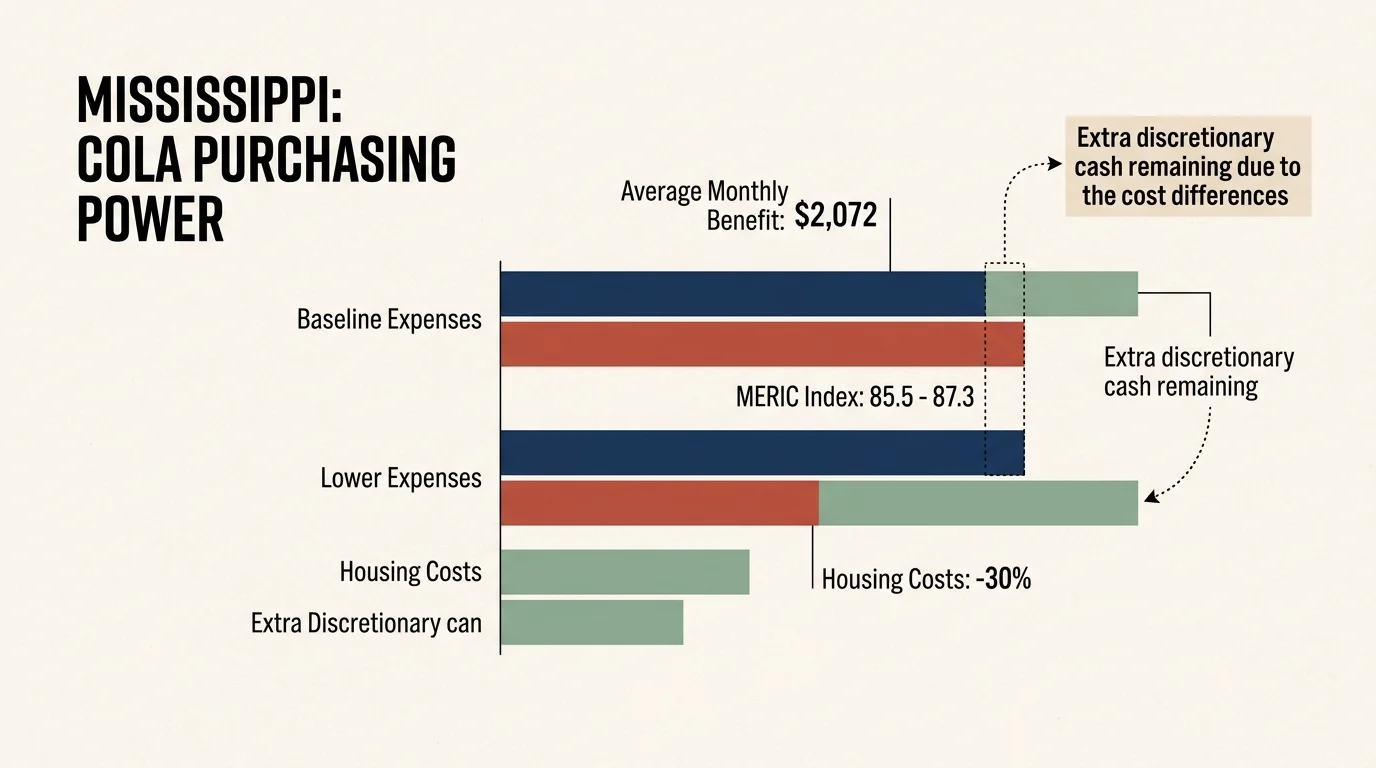
Mississippi routinely ranks at the top of national affordability lists, boasting a Missouri Economic Research and Information Center (MERIC) cost-of-living index between 85.5 and 87.3. That means your overall living expenses run roughly 13% to 15% below the national average. Housing costs in Mississippi sit nearly 30% below baseline levels, which frees up thousands of dollars from your annual budget for leisure, travel, or creative hobbies.
The real financial magic happens when tax season arrives; Mississippi exempts all qualified retirement income from state taxes, including Social Security benefits, traditional IRAs, 401(k) distributions, and private pensions. When your average monthly Social Security benefit increases to $2,072 after the 2.8% COLA, every single dollar remains in your bank account. Combine those savings with gentle winters and coastal charm along the Gulf Coast, and you have a financial haven where your purchasing power expands dramatically.
Beyond tax exemptions, daily expenses in Mississippi stretch far beyond national standards. Local farmers’ markets, affordable dining, and accessible municipal golf courses mean that your entertainment budget goes twice as far. Retirees who move to friendly towns like Biloxi, Ocean Springs, or Hattiesburg enjoy rich cultural experiences without worrying about escalating property taxes or heavy local assessments.

Tip #2: Oklahoma — Ultra-Affordable Housing and Low Everyday Expenses
Oklahoma delivers extraordinary value for retirees seeking spacious living without a steep price tag. With a MERIC cost-of-living index ranging between 84.4 and 85.5, Oklahoma shares the top rank as one of America’s most affordable places to live. Real estate prices in vibrant hubs like Tulsa and Oklahoma City remain remarkably modest, allowing you to purchase a comfortable, updated home for a fraction of the cost found in coastal markets.
In addition to affordable real estate, Oklahoma fully exempts Social Security benefits from state income tax. Utility costs also sit well below the national average thanks to abundant local energy production. When you combine cheap electricity, inexpensive groceries, and low property taxes, your monthly COLA increase goes directly toward elevating your daily lifestyle. You can dine out at local eateries, join community golf clubs, or build a robust emergency savings fund while relying primarily on your monthly benefit check.
The state also invests heavily in senior services and community recreation. With dozens of state parks, scenic lakes, and cultural districts, Oklahoma provides endless opportunities for outdoor activity and continuous learning. Your retirement dollars buy a higher quality of life, letting you host family gatherings, travel, and invest in your personal wellness with complete financial peace of mind.

Tip #3: Alabama — Exceptionally Low Property Taxes and Coastal Charm
Alabama appeals to retirees who crave warm weather, Southern hospitality, and unbeatable tax relief. While its overall MERIC index score sits between 87.6 and 87.9, the state’s biggest competitive advantage is its record-low property tax structure. Alabama maintains the second-lowest effective property tax rate in North America at roughly 0.40%, meaning a $250,000 home might incur around $1,000 in annual property taxes—a fraction of what you would pay in the Northeast or West Coast.
Furthermore, Alabama does not tax Social Security benefits or traditional defined-benefit pensions. The state allows your monthly benefit check to cover essential expenses easily while leaving plenty of room for recreational activities. Whether you settle near the serene foothills of the Appalachian Mountains or the sun-drenched beaches of Gulf Shores, your cost-of-living adjustment unlocks a higher standard of living than you ever thought possible on a fixed income.
Healthcare infrastructure in Alabama also supports retirees looking for high-value medical care. The University of Alabama at Birmingham (UAB) Health System offers world-class specialty care, ensuring that your health needs are met locally. Lower medical overhead combined with low housing costs means you keep more of your $57 monthly COLA bump where it belongs: in your pocket.

Tip #4: West Virginia — Scenic Mountain Living and Complete Tax Phase-Outs
Nestled in the heart of the Appalachian region, West Virginia offers breathtaking mountain scenery paired with incredible economic advantages for fixed-income retirees. West Virginia holds a low MERIC index score around 88.1 to 88.6, reflecting deeply discounted real estate and cheap daily living expenses. You can secure a charming home surrounded by nature for a fraction of the national median home price.
The financial picture for retirees in West Virginia keeps getting brighter. The state completed a multi-year legislative effort to phase out state income taxes on Social Security benefits completely by 2026. This policy change means that your entire 2.8% COLA increase stays in your pocket to offset utility bills, groceries, and medical expenses. Lower costs for personal services and outdoor recreation allow you to build an active, fulfilling retirement without worrying about shrinking purchasing power.
Living in the Mountain State gives you immediate access to national parks, historical sites, and tranquil rivers. Towns like Shepherdstown, Morgantown, and Lewisburg offer thriving arts scenes, historic architecture, and tight-knit communities. For retirees who love outdoor adventures, fresh mountain air, and incredibly affordable living, West Virginia stands out as a premier destination.
Tip #5: Missouri — Central Location with Total Exemption on Social Security
Missouri combines heartland charm with aggressive tax cuts designed specifically to attract retirees. Holding a MERIC index score of 88.0 to 89.0, the Show-Me State makes everyday living exceptionally budget-friendly. Major urban centers like St. Louis and Kansas City, alongside picturesque small towns in the Ozarks, offer diverse lifestyle options at costs well below national averages.
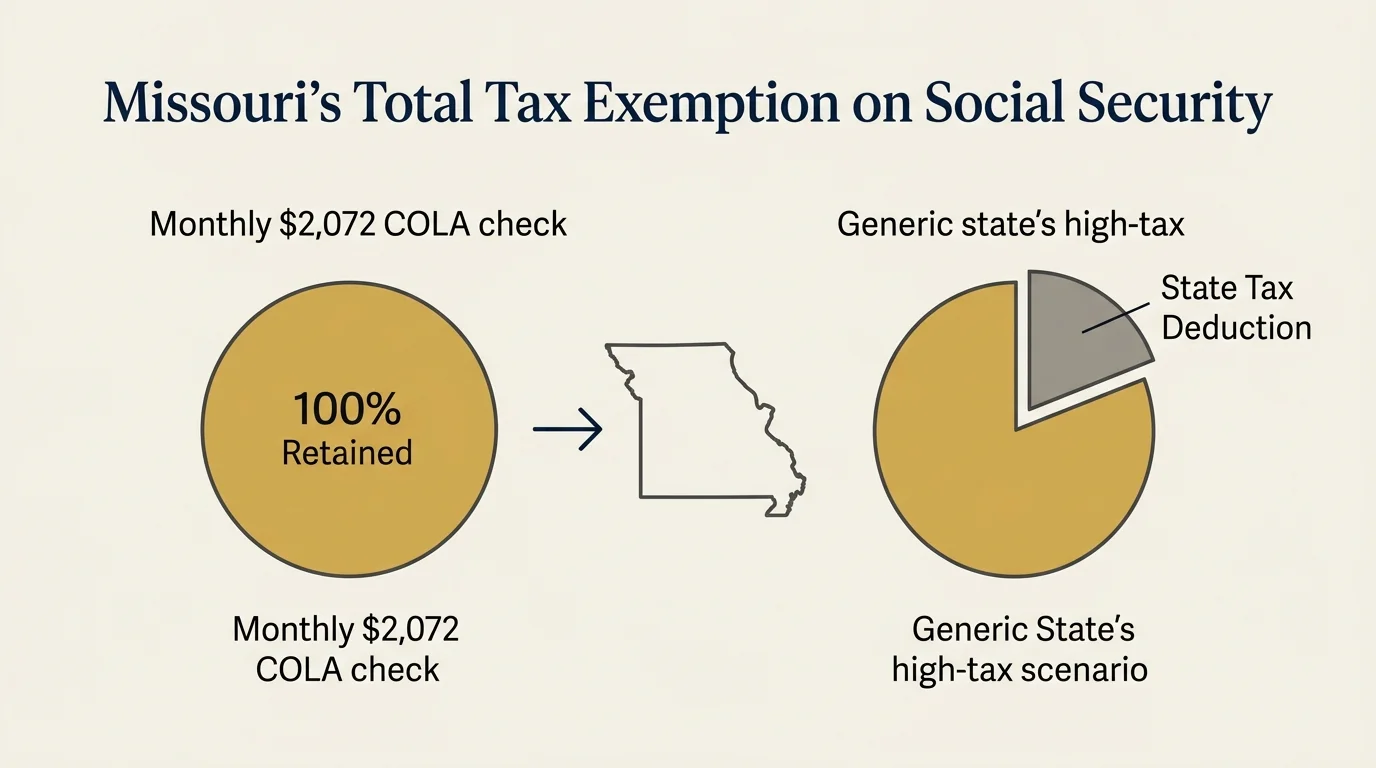
A major milestone occurred in 2024 when Missouri fully eliminated state income taxes on Social Security benefits for all eligible taxpayers. This landmark reform ensures that the recent bump in average monthly benefits to $2,072 isn’t eroded by state taxation. Additionally, Missouri boasts world-class healthcare centers, such as Barnes-Jewish Hospital, providing top-tier medical care without forcing you to pay premium prices for your housing or daily essentials.
Missouri’s central geographic location also makes traveling to visit children and grandchildren easy and affordable. You can enjoy rich cultural attractions, botanical gardens, world-class barbecue, and major league sports events while maintaining low monthly expenditures. Your COLA check buys a level of comfort and convenience that makes retirement feel like a continuous vacation.

Tip #6: Kansas — Heartland Comfort with Newly Minted Tax Exemptions
Kansas represents one of the Midwest’s most stable and welcoming destinations for seniors looking to stretch their purchasing power. Holding a MERIC cost-of-living score between 88.9 and 89.7, Kansas provides cheap housing, affordable groceries, and low transportation costs. Quiet suburban neighborhoods and friendly small towns offer a relaxed pace of life with strong community connections.
Kansas joined the movement toward retiree tax relief by enacting comprehensive tax reform in 2024 that eliminated state income tax on Social Security benefits entirely. Previous income thresholds that taxed higher earners were swept away, allowing every retiree to keep 100% of their Social Security COLA adjustments. Lower real estate prices combined with favorable tax policies make your monthly check stretch much further, leaving extra cash for travel, home improvements, or family visits.
The state also boasts low traffic congestion, excellent community college programs with senior discounts, and immaculate local parks. Towns like Manhattan, Lawrence, and Overland Park provide rich cultural programming, university-level athletic events, and active senior centers, proving that high quality of life and budget-friendly living go hand in hand.

Tip #7: Arkansas — Natural Beauty with Low Property Taxes
Known as the Natural State, Arkansas gives retirees access to stunning lakes, dense forests, and thermal hot springs at a price point that respects your budget. With a MERIC cost-of-living index score ranging from 89.3 to 90.5, Arkansas offers a standard of living that lets fixed incomes flourish. Property taxes remain among the lowest in the nation, keeping monthly homeownership expenses manageable year after year.
Arkansas does not tax Social Security benefits, nor does it levy heavy taxes on lower-income retirees. Popular master-planned communities like Bella Vista offer affordable access to golf courses, hiking trails, and private lakes. By reallocating your housing savings into local entertainment and wellness activities, your monthly Social Security check provides a rich, active lifestyle without financial stress.
In addition to outdoor recreation, Arkansas features charming historic towns like Eureka Springs and cultural hubs like Bentonville, home to the world-renowned Crystal Bridges Museum of American Art. Retirees can immerse themselves in art, history, and nature while keeping their annual tax burden minimal.
Tip #8: Iowa — Vibrant Retirement Communities and 2026 Tax Relief
Iowa offers exceptional quality of life, outstanding healthcare systems, and a tax environment that treats seniors with maximum respect. With a MERIC cost-of-living index around 89.6 to 90.3, Iowa delivers affordable housing stock and low everyday service costs across its vibrant cities and rolling countrysides.
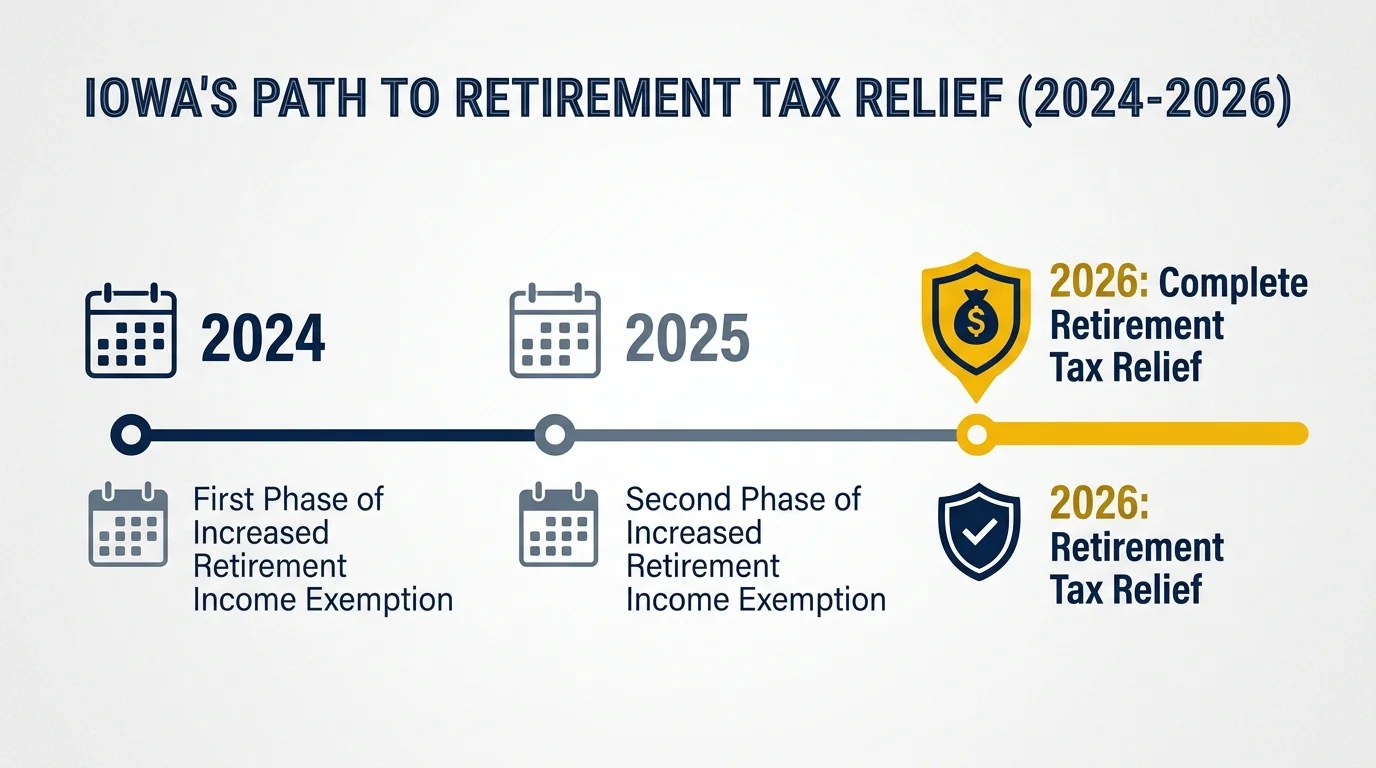
Iowa implemented a complete elimination of state income tax on all retirement income—including Social Security, IRAs, 401(k) payouts, and pensions—effective for tax years starting in 2026. This tax-friendly environment ensures that your 2.8% COLA increase stays untouched by state auditors. Pairing complete tax exemption with world-class healthcare facilities, such as the University of Iowa Hospitals and Clinics, creates an unbeatable haven for seniors seeking security and value.
Iowa’s cities consistently win national awards for safety, civic engagement, and cleanliness. Towns like Des Moines, Iowa City, and Cedar Rapids provide vibrant downtowns, extensive biking trails, and rich arts programming. Moving to Iowa allows you to trade high coastal living costs for economic stability and genuine community warmth.
For a wide range of resources for older adults, visit AARP and the National Council on Aging (NCOA). Health information is available from the National Institute on Aging.

The Takeaway: Living a More Blissful Retirement
Maximizing your purchasing power in retirement isn’t just about saving pennies; it is about reclaiming freedom and peace of mind. When your Social Security benefit goes twice as far, you can replace financial anxiety with exciting opportunities for travel, personal growth, and vibrant community living. The recent 2.8% COLA bump gives you an annual increase, but pairing that bump with a low-cost state magnifies its real-world impact exponentially.
Take time to analyze what matters most to your long-term happiness. Whether you prioritize proximity to world-class medical facilities, warm coastal breezes, low property taxes, or complete exemption from state income taxes, these eight states offer incredible launching pads for your next chapter. Evaluate your monthly budget, explore these welcoming communities, and take confident steps toward a financially secure and joyful retirement.
Frequently Asked Questions
How does the Social Security COLA affect my purchasing power?
The Social Security cost-of-living adjustment (COLA) increases your monthly benefit to help offset national inflation. For instance, the 2.8% COLA for 2026 raised the average retired worker’s benefit from $2,015 to $2,072 per month. However, national inflation measures reflect average prices across the entire country. Moving to a state with a cost-of-living index well below 90 effectively doubles the value of that bump, because goods, services, and housing cost far less than the national average.
Which states still impose income tax on Social Security benefits?
Only nine states continue to tax Social Security benefits to varying degrees: Colorado, Connecticut, Minnesota, Montana, New Mexico, Rhode Island, Utah, Vermont, and West Virginia. However, West Virginia is completing its full phase-out by 2026. Meanwhile, 41 states—including Missouri, Kansas, Iowa, Oklahoma, Alabama, and Mississippi—do not tax Social Security income at all, maximizing your monthly payout.
Besides housing costs, what factors lower the cost of living for retirees?
Beyond housing, overall affordability depends on state income tax policies on retirement accounts, property tax rates, sales taxes on essential goods like food and medicine, utility costs, and healthcare expenses. States like Alabama feature low property taxes, while states like Oklahoma offer cheaper energy costs. Combined, these savings significantly reduce your monthly cash outflows.
How do I calculate if moving to another state will save me money?
To determine your net savings, create a comparison budget that evaluates your current housing expenses, state income tax rate, local property tax, auto insurance rates, and average healthcare expenditures against target cities in your destination state. Factor in one-time moving costs to ensure your long-term monthly savings outweigh the initial expenses of relocating.
Disclaimer: This article is for informational and inspirational purposes only. It is not a substitute for professional medical, financial, or psychological advice. Please consult with a qualified expert for guidance tailored to your individual needs.