
You can stretch a $50,000 annual retirement budget along the East Coast without sacrificing coastal charm or comfortable living. Smart retirees choose thriving communities where affordable housing and sensible state tax policies protect their fixed incomes.
An annual budget of $50,000 matches what an average retired couple receives from Social Security alone. When you align your housing costs with that income, you unlock a vibrant lifestyle filled with culture, recreation, and sunshine.
Discover twelve scenic East Coast towns that offer great healthcare access, lower living costs, and rich daily experiences. You can easily embrace your golden years with total financial peace of mind.
Tip #1: Homosassa Springs, Florida
Homosassa Springs gives you classic Gulf Coast relaxation without the steep resort price tag. Crystal-clear river waters and protected manatee sanctuaries create an enchanting backdrop for your everyday retirement adventures.
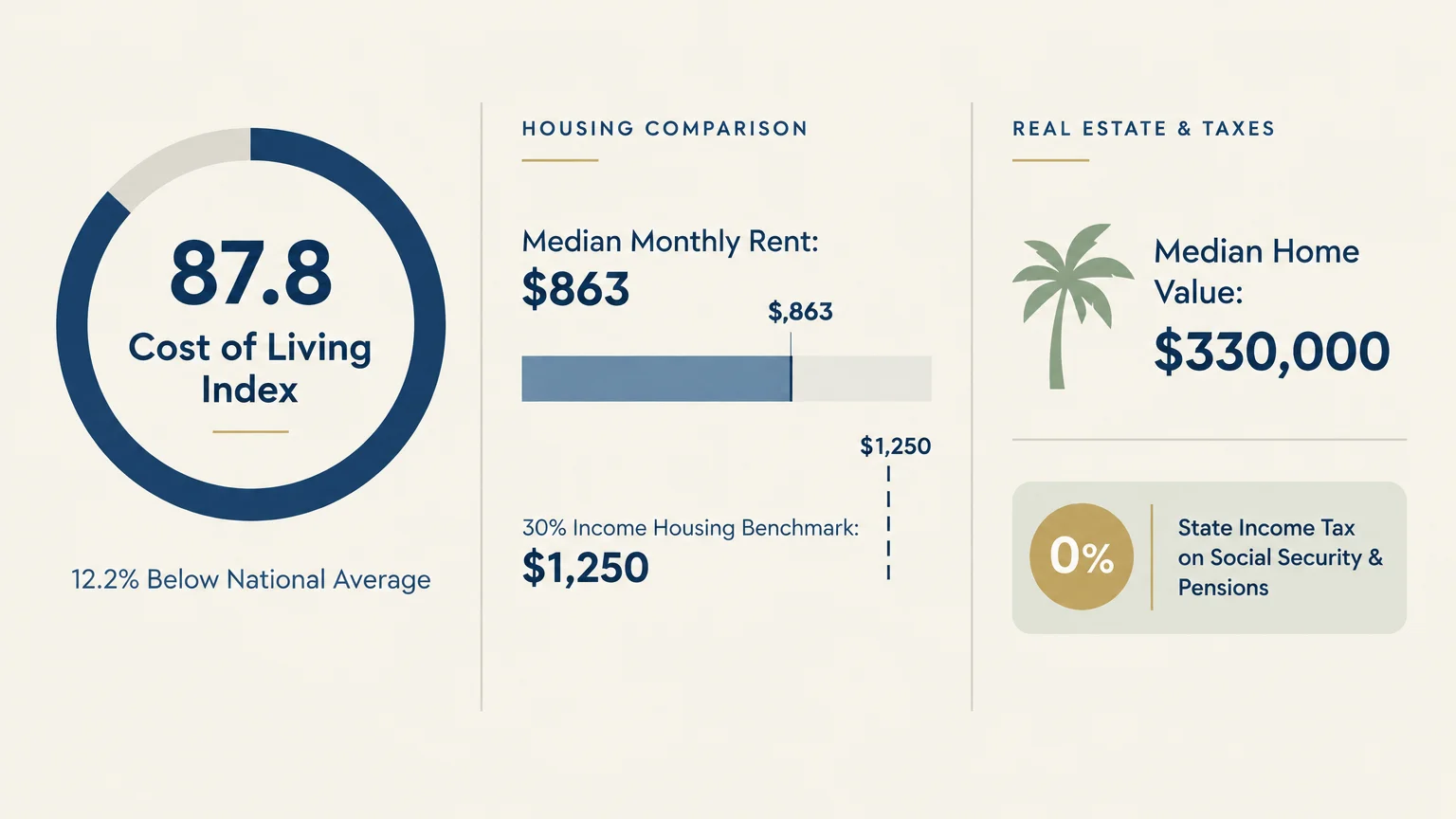
You will find exceptional everyday value here. The local cost-of-living index sits at 87.8, which places daily expenses more than twelve percent below the national average.
Housing costs remain friendly to fixed incomes. The median monthly rent is $863, and the median home value hovers near $330,000; both fit comfortably within your annual budget.
Financial advisors suggest capping housing at thirty percent of income, or $1,250 monthly on $50,000. Homosassa Springs allows you to beat that benchmark effortlessly.
Florida also levies no state income tax on Social Security checks, pensions, or IRA distributions. You keep every dollar you withdraw, leaving extra funds for boating and fresh seafood dinners.
Spend your mornings kayaking the Homosassa River or exploring Old Homosassa’s rustic waterfront parks. Citrus County also provides well-equipped medical centers and specialized senior care close by.
Friendly civic clubs and community garden projects make meeting new neighbors easy. You can build a wonderful social circle without spending a dime.

Tip #2: Myrtle Beach, South Carolina
Myrtle Beach offers sixty miles of uninterrupted sandy coastline paired with mild winters. It stands out among the best retirement towns east coast buyers target for beachside value.
Housing prices provide a tremendous advantage when you downsize. The median home sale price is $264,000, well below the national median approaching $400,000.
If you sell an expensive northern home, you can easily purchase a coastal property with cash. Eliminating a mortgage keeps your living expenses far beneath $50,000 annually.
South Carolina also treats retirees with generous tax relief. The state exempts Social Security benefits entirely and allows residents aged sixty-five and older to deduct up to $10,000 in retirement income.
You can join local walking clubs along the Grand Strand or practice your swing on dozens of championship golf courses. Comprehensive regional medical centers ensure your healthcare needs are met close to home.
Fill your calendar with community theater, live music, and coastal festivals without stretching your wallet. Myrtle Beach delivers an active oceanfront lifestyle on a predictable budget.
Off-season tranquility allows you to enjoy world-class beaches in peace. You gain the benefits of a major vacation resort while paying sensible local rates.

Tip #3: Lynchburg, Virginia
Lynchburg nestles against the stunning Blue Ridge Mountains, blending historic architecture with vibrant community energy. It ranks among the most rewarding east coast retirement towns for budget-conscious seniors.
Your money stretches further here than almost anywhere else in the mid-Atlantic. The local cost-of-living index registers at 80.9, almost twenty percent below the national benchmark.
Renters enjoy remarkable affordability across town. The median monthly rent is just $908, leaving you ample financial breathing room each month.
If you plan to buy, home prices sit far below national averages. You can secure a charming historic home or quiet townhome without taking on burdensome debt.
Spend your afternoons walking the paved Blackwater Creek Trail or browsing fresh produce at the historic downtown community market. Centra Health provides advanced medical facilities right in town.
Lynchburg’s thriving arts scene and academic lectures offer endless mental stimulation. You enjoy scenic mountain vistas every day while staying firmly within your financial boundaries.
Local senior programs offer low-cost fitness classes and art workshops throughout the year. You will find plenty of opportunities to stay active, healthy, and connected.

Tip #4: Pittsburgh, Pennsylvania
Pittsburgh combines big-city healthcare and cultural riches with surprisingly low living costs. This resilient city provides everything you need to retire on $50000 a year in comfort.
The cost-of-living index sits at 92.8, making urban life remarkably accessible. Median rents average $1,050 monthly, and median home prices range between $215,000 and $250,000.
Pennsylvania offers one of the nation’s best tax structures for seniors. The state fully exempts all retirement income, including Social Security, public and private pensions, and 401(k) distributions.
Access world-renowned medical care through the University of Pittsburgh Medical Center and Allegheny Health Network. High-quality healthcare access protects both your well-being and your financial reserves.
Ride the historic funicular railways up Mount Washington for breathtaking skyline views. You can wander through the Phipps Conservatory or spend quiet afternoons at world-class art museums.
Pennsylvania’s senior transit program also provides free rides on local buses and light rail. You can leave the car at home while exploring diverse cultural neighborhoods.
Vibrant neighborhood markets like the Strip District offer fresh produce and specialty foods at competitive prices. You can eat gourmet meals at home without straining your grocery budget.

Tip #5: Charleston, West Virginia
Charleston sits alongside the Kanawha River, offering picturesque Appalachian scenery and a warm, close-knit community. It is a premier choice for retirees seeking a low cost retirement.
Everyday living costs remain exceptionally gentle on a fixed income. Charleston’s cost-of-living index is 82.5, keeping daily expenses well under typical regional levels.
Housing here is among the most affordable on the East Coast. The median home price is $140,000, and median rent is just $750 monthly.
West Virginia delivers significant tax advantages for retirees. Effective January 1, 2026, the state completed its multi-year phase-out of taxes on Social Security benefits, making them completely tax-exempt.
Stroll along the Kanawha Boulevard riverwalk, or visit the Clay Center for the Arts and Sciences for live performances. Local farmers markets supply fresh mountain produce all summer long.
Charleston Area Medical Center delivers comprehensive cardiology, oncology, and surgical care right in town. Excellent medical infrastructure ensures you never have to travel far for specialized treatment.
Charleston proves you do not need a massive nest egg to live gracefully. You can savor historic neighborhood charm and clean mountain air on a modest income.

Tip #6: Wilmington, Delaware
Wilmington offers coastal mid-Atlantic appeal with strategic financial advantages. It delivers an attractive balance of culture, convenience, and sensible living costs for modern retirees.
Delaware imposes zero state sales tax, which provides immediate savings on everything from groceries to home furnishings. You keep more money in your pocket every single day.
Housing remains attainable compared to neighboring metropolitan areas. The median home price is $255,000, and median rent is $1,150 per month, keeping you inside the $1,250 housing limit.
Wilmington’s overall cost-of-living index stands at 101.8, close to the national baseline. The absence of sales tax helps offset general costs, preserving your retirement cash flow.
Take relaxing strolls along the revitalized Wilmington Riverfront, featuring scenic boardwalks, riverboat cruises, and charming bistros. Major transit links let you visit Philadelphia or Baltimore in less than an hour.
Explore world-class botanical collections at Longwood Gardens just across the nearby Pennsylvania border. ChristianaCare provides top-ranked medical centers and geriatric specialists throughout the area.
Wilmington lets you savor mid-Atlantic heritage without enduring major metropolitan price tags. It provides an ideal home base for active, cultured retirees.

Tip #7: Spring Hill, Florida
Spring Hill sits along Florida’s Nature Coast, delivering sunshine, palm trees, and easy Gulf access. It offers one of the most affordable east coast towns for outdoor-loving seniors.
The local cost-of-living index is 95.9, offering genuine Florida living below national averages. Median monthly rent sits around $1,127, fitting safely under your monthly housing ceiling.
Florida’s complete lack of state income tax makes your retirement dollars go further. You keep all your Social Security, pension, and investment income for your daily enjoyment.
Spend warm afternoons watching the famous underwater mermaid shows at Weeki Wachee Springs State Park. You can also kayak down the crystal-clear spring-fed river out toward the Gulf.
The community features numerous golf courses, public parks, and active senior centers. Convenient healthcare systems ensure you receive excellent preventative care and medical support nearby.
Hernando County maintains paved multi-use trails like the Suncoast Trail for cycling and brisk morning walks. You can maintain an energetic lifestyle outdoors nearly every day of the year.
Spring Hill provides a quiet suburban retreat without the frantic congestion of South Florida. You can bask in the sunshine and build lasting friendships without overspending.

Tip #8: Georgetown, South Carolina
Georgetown is South Carolina’s third-oldest city, brimming with live oaks, historic architecture, and waterfront charm. It provides authentic Lowcountry tranquility without the inflated costs of nearby Charleston.
Housing prices remain surprisingly realistic for a historic coastal community. Median home prices range between $206,000 and $250,000, creating an ideal market for downsizing cash buyers.
South Carolina does not tax your Social Security benefits; it also allows seniors sixty-five and older to deduct up to $10,000 in other retirement income.
Walk beneath Spanish moss along the scenic Harborwalk, watching shrimp boats return with their daily catch. Local seafood markets allow you to prepare delicious, healthy coastal dinners at home.
The historic downtown district features friendly cafes, antique shops, and independent bookstores. Community organizations welcome new volunteers, making it easy to build a supportive social circle.
Tidelands Health operates modern medical facilities right in Georgetown, ensuring immediate access to quality physicians. You can rest easy knowing emergency care and specialists are close.
Georgetown lets you embrace Lowcountry elegance and coastal breezes on a modest budget. You gain timeless Southern hospitality while preserving your nest egg.

Tip #9: Altoona, Pennsylvania
Altoona rests in the scenic Logan Valley, surrounded by rolling Allegheny Mountain peaks. Homes.com recently ranked this historic rail hub as a top ten affordable retirement community nationwide.
Real estate prices here make homeownership effortless on a fixed income. Typical home values fall far below the national median of nearly $400,000, keeping housing expenses minuscule.
Pennsylvania’s senior-friendly tax code fully exempts all retirement income. Whether you live on Social Security, a municipal pension, or 401(k) distributions, the state takes nothing.
UPMC Altoona provides regional specialty healthcare, including cardiology and orthopedic surgery. Having a major hospital hub nearby offers immense security for retirees.
Enjoy outdoor excursions to Horseshoe Curve or take tranquil nature walks in Canoe Creek State Park. The historic Mishler Theatre brings touring concerts, ballet, and plays to town year-round.
Low local grocery prices and affordable utility rates help keep your non-housing expenses under control. You will find that simple country living leaves plenty of room for savings.
Altoona provides an unpretentious, friendly mountain lifestyle where neighbors look out for one another. Your retirement funds stretch comfortably, giving you genuine peace of mind.
Tip #10: Buffalo, New York
Buffalo has undergone a dramatic waterfront and cultural renaissance in recent years. It offers retirees rich urban amenities at a fraction of typical East Coast metropolitan prices.
Buffalo’s overall cost-of-living index is 87.5, reflecting substantial everyday savings. The median home price sits at $185,000, and median rent averages $950 per month.
Both housing benchmarks fall well within the $1,250 monthly budget standard for $50,000 annual incomes. You can live centrally without straining your monthly pension or Social Security check.
New York State exempts Social Security benefits from state income tax and allows a generous private pension exclusion. The Buffalo Niagara Medical Campus offers cutting-edge medical research and top-tier care.
Stroll through Frederick Law Olmsted’s historic city park system, or explore world-class modern art at the Buffalo AKG Art Museum. Lake Erie breezes keep summer days delightfully comfortable.
Canalside hosts free outdoor fitness classes, concerts, and historical walking tours throughout the warmer months. You can take advantage of numerous civic activities without dipping into your retirement principal.
Buffalo’s proud cultural heritage and hearty food scene provide an invigorating backdrop for your retirement. You gain premier cultural amenities on an everyday budget.

Tip #11: Weirton, West Virginia
Weirton rests peacefully in the northern panhandle along the winding Ohio River. It offers unprecedented affordability just thirty-five miles west of downtown Pittsburgh.
Housing costs here rank among the lowest anywhere in the eastern United States. The median home value is $150,000, and median monthly rent is an incredible $548.
That ultra-low rent takes less than half of your recommended $1,250 monthly housing allowance. The extra savings allow you to build an emergency fund or travel frequently.
West Virginia completed its complete elimination of state income tax on Social Security benefits in 2026. This policy ensures you keep every cent of your federal retirement checks.
Take advantage of Pittsburgh’s world-class healthcare centers and international airport with a short highway drive. You enjoy big-city resources while paying small-town prices for daily life.
Weirton Medical Center supplies dependable local care, including emergency services, diagnostic testing, and physical therapy. You get reliable hometown healthcare right in your neighborhood.
Weirton’s peaceful riverside setting and welcoming community make settling down easy. You can enjoy a relaxing, financially secure retirement without worry.

Tip #12: Rockland, Maine
Rockland sits on Penobscot Bay, serving as the cultural heart of midcoast Maine. It offers authentic maritime living at a fraction of the cost found in neighboring resort harbors.
While communities like Camden or Bar Harbor feature home prices exceeding $1 million, Rockland provides realistic alternatives. Working harbor neighborhoods still feature homes in the $206,000 to $250,000 range.
If you downsize from an expensive market, you can secure a charming coastal cottage here. Living mortgage-free makes thriving on a $50,000 budget entirely feasible.
Walk down the historic granite breakwater to the Rockland Breakwater Lighthouse, surrounded by open ocean air. The town is home to the world-renowned Farnsworth Art Museum and diverse independent galleries.
Savor fresh Maine lobster right off the docks, and participate in lively seasonal harbor festivals. Pen Bay Medical Center provides dependable healthcare right in the community.
Enjoy scenic day trips by passenger ferry to charming offshore islands like Vinalhaven and North Haven. You can immerse yourself in classic New England coastal life every weekend.
Rockland delivers the genuine, rugged beauty of the Maine coast without the pretension. You can live your coastal dream while keeping your financial plan secure.
The Takeaway: Living a More Blissful Retirement
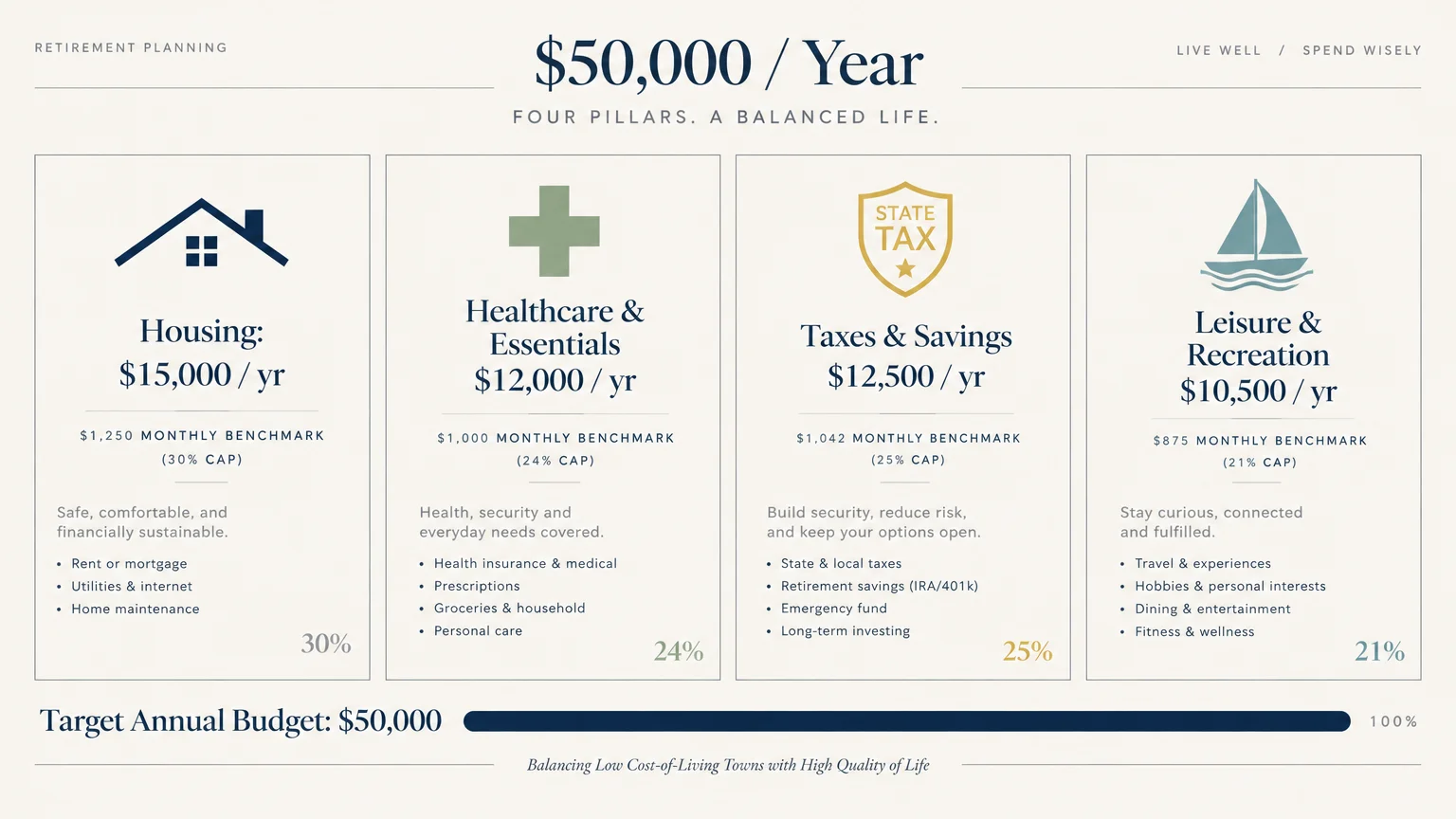
Retiring on $50,000 a year along the East Coast is completely achievable when you choose the right community. A modest income does not force you to give up ocean breezes, mountain vistas, or cultural richness.
Keep your housing expenses within the thirty percent guideline, which equals $1,250 per month on $50,000. Look for states like Pennsylvania, Florida, or West Virginia that protect your retirement income from aggressive taxation.
Consider downsizing your current property to purchase your next home outright with cash. Eliminating a monthly mortgage payment provides unmatched freedom and protects you against fluctuating interest rates.
Maintain an active social life by engaging in local volunteer groups, community arts, and walking clubs. Fulfilling relationships and purposeful hobbies contribute far more to your happiness than expensive luxury purchases.
Take time to visit potential towns during different seasons before packing your bags. Experience the local healthcare facilities, grocery stores, and neighborhoods firsthand to confirm the fit.
You worked hard to reach this milestone, and your golden years belong to you. Choose an affordable community that honors your budget, and step forward into a joyful, secure future.
For a wide range of resources for older adults, visit AARP and the National Council on Aging (NCOA). Health information is available from the National Institute on Aging.
Disclaimer: This article is for informational and inspirational purposes only. It is not a substitute for professional medical, financial, or psychological advice.
Please consult with a qualified expert for guidance tailored to your individual needs.
Frequently Asked Questions
Can a retired couple live comfortably on Social Security alone?
Yes, a retired couple can thrive on Social Security alone in affordable towns. The average monthly benefit is approximately $2,071 per worker, which totals nearly $50,000 annually for two earners.
Managing your housing costs is the key to comfort. When you keep rent or mortgage payments below $1,250 monthly, Social Security covers healthcare, food, and recreation easily.
Furthermore, the upcoming 3.6% Cost-of-Living Adjustment for 2027 will increase the average monthly check by about $75. This reliable increase helps your budget keep up with inflation over time.
How do upcoming Medicare changes affect a $50,000 retirement budget?
Standard Medicare Part B premiums currently cost $202.90 per month, with a $283 annual deductible. Projections suggest premiums will rise to roughly $209.50 in 2027 with a $292 deductible.
Fortunately, Medicare Part D caps your annual out-of-pocket prescription medication costs at $2,100, rising to $2,400 in 2027. This cap shields your fixed budget from catastrophic pharmaceutical expenses.
Routine medical care remains manageable when you plan for these benchmarks in advance. Budgeting roughly $300 to $400 per person monthly easily covers Medicare premiums and standard supplemental coverage.
Which East Coast states are best for avoiding taxes on retirement income?
Florida and New Hampshire impose no state income tax on any income, including retirement distributions. Pennsylvania offers exceptional tax relief by exempting all retirement income, including pensions, Social Security, and 401(k) distributions.
West Virginia also made Social Security benefits 100% tax-exempt starting in 2026. Conversely, watch out for high property tax states like New Jersey (1.88%) and Connecticut (1.54%), which quickly eat into fixed incomes.
What is the most effective way to downsize into an affordable town?
Sell your existing property to unlock built-up equity before relocating. Buying a home in cash eliminates modern 7.40% mortgage interest rates and completely removes monthly housing debt.
Start decluttering several months ahead of your move to reduce moving costs. Renting for six months in your target town also helps you evaluate the area before buying.
Take time to walk the local neighborhoods and talk with current residents. You will make confident choices when you experience daily life in the community firsthand.