

Your monthly Social Security check buys less today than it did a decade ago, and everyday bills keep climbing. Instead of sitting back, millions of retirees are cutting three specific costs to keep their budgets balanced and calendars full.
The good news is that trimming expenses does not mean giving up travel, friendships, or peace of mind. With a few smart swaps, you can protect your lifestyle while stretching every dollar further.
Here is how retirees are reshaping spending across discretionary fun, household essentials, and healthcare without sacrificing joy.
Lifestyle Idea #1: Refreshing Discretionary Dining, Travel, and Entertainment
When inflation outpaces benefit checks, fun money is usually the first category to feel the squeeze. Many older adults are making targeted retiree budget cuts around restaurants, shopping, and trips so their core bills stay covered.
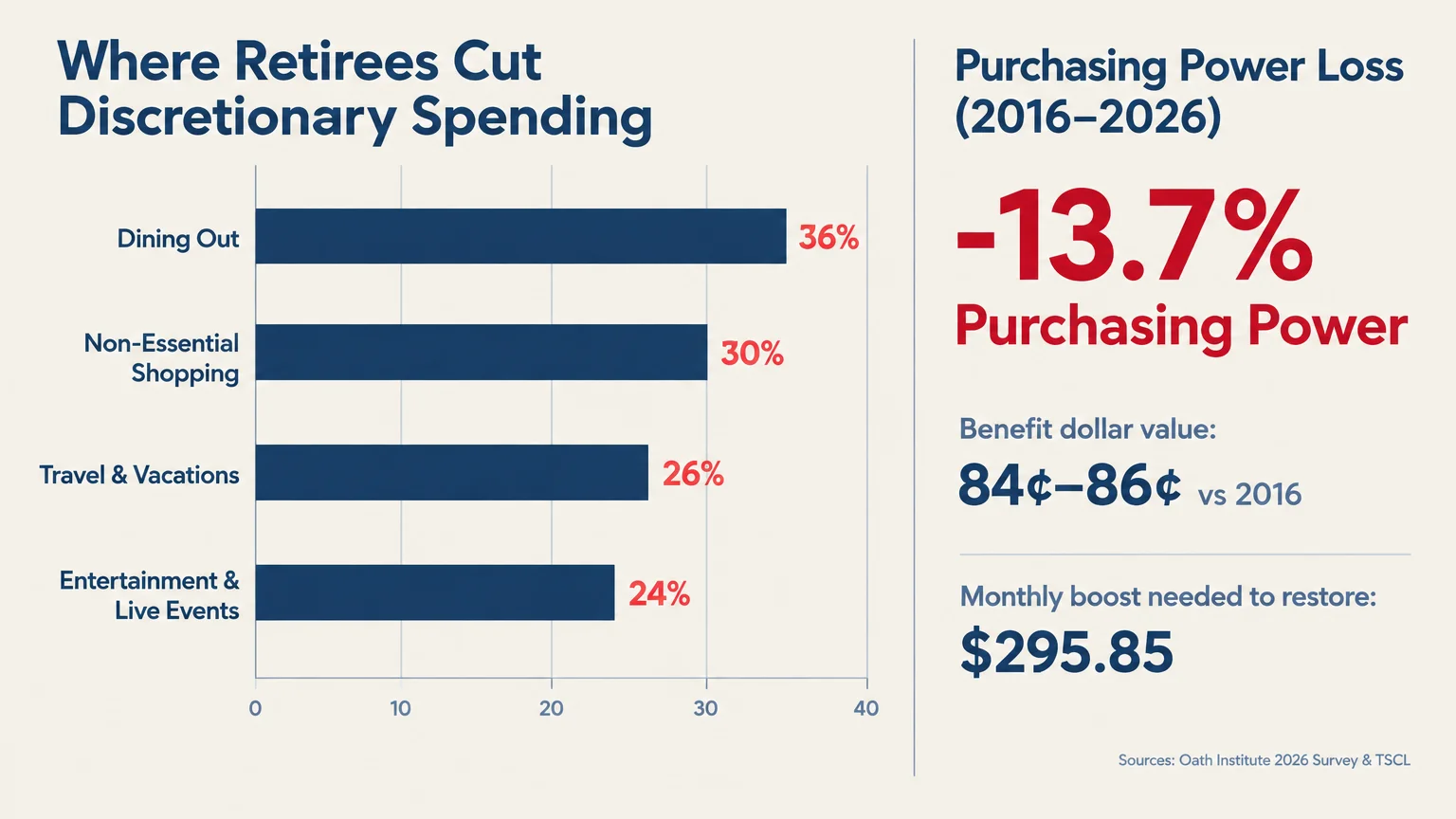
The Oath Money and Meaning Institute Q3 2026 Survey highlights exactly where households are pulling back. Among respondents who trimmed spending over the past year, 36% cut dining out and 30% reduced non-essential shopping.
Another 26% scaled back on travel and vacations, while 24% cut entertainment and live events. Similarly, the Nationwide Retirement Institute 2026 Healthcare Costs Survey found Americans dialing down non-essential travel, hobbies, and food delivery.
Those shifts do not have to shrink your social life. By changing how and where you gather, you can stay active while keeping cash in your pocket.
Why Social Security Purchasing Power Feels Tighter
On paper, annual adjustments look helpful; on October 14, 2026, the Social Security Administration (SSA) announced a 3.6% cost-of-living adjustment (COLA) for 2027. That raises average retirement benefits by roughly $75 a month, from about $2,095 to $2,170.
Yet many retirees still feel like the Social Security COLA falling short is becoming an annual pattern. In 2025, the adjustment was 2.5%, followed by 2.8% in 2026, which initially added around $56 to the average monthly check.
According to The Senior Citizens League (TSCL), Social Security purchasing power fell 13.7% between 2016 and 2026. That drop leaves a benefit dollar worth roughly 84 to 86 cents compared with 2016 prices.
TSCL estimates the average beneficiary would need a 15.8% boost, or $295.85 more each month, just to restore 2016 buying power. In TSCL’s June 2026 Senior Survey, 89% of respondents said the 2.8% adjustment was too low.
Part of the disconnect comes from the formula Congress requires the SSA to use. By law, adjustments rely on the Consumer Price Index for Urban Wage Earners and Clerical Workers (CPI-W), which tracks younger working households.
Senior groups including TSCL and the National Committee to Preserve Social Security and Medicare point out that CPI-W underweights housing and medical bills. They favor the experimental Consumer Price Index for the Elderly (CPI-E), which better reflects the cost of living retirees actually face.
For households leaning heavily on monthly benefits, that gap matters immediately. SSA research shows roughly half of Americans age 65 and older live in households where Social Security provides at least half of family income.
About one-quarter rely on benefits for 90% or more of their income. Meanwhile, TSCL’s 2026 survey estimates 54% of seniors live on less than $2,000 a month.
Host Rotating Social Nights Instead of Pricey Restaurant Bills
According to the Bureau of Labor Statistics (BLS), food away from home climbed 3.5% over the 12 months ending September 2026. Add tax and tip to an entree, and a casual dinner for two easily strains a weekly budget.
Instead of skipping time with friends, turn dining out into an interactive home ritual. Start a monthly themed potluck with neighbors, former coworkers, or members of your walking group.
One person hosts and handles the main dish, while guests bring salads, bread, or dessert. Everyone eats well for a fraction of a restaurant tab, and nobody gets stuck rushing out the door for the next table.
If you still love eating out, shift your schedule to lunch specials or early-evening menus. Sharing an appetizer and one main plate with your spouse or friend also cuts the bill in half while keeping portion sizes comfortable.
For solo mornings, swap daily cafe stops for a weekend coffee meetup on a neighbor’s porch or at a local park. You keep the warm conversation and lose the markup.
Trade Peak-Season Flights for Local Adventures and Off-Peak Travel
Getting away feels harder when airfare spikes; BLS data shows airline fares jumped 22.4% in the 12 months ending September 2026. Gasoline also surged 34.2% over that stretch, making spontaneous long-distance road trips noticeably pricier.
You can still satisfy your curiosity by embracing shoulder-season trips and regional stays. Travel mid-week during spring or autumn when hotel rates drop and crowds thin out.
Look within a two-hour drive for state parks, historic towns, botanical gardens, or coastal boardwalks you have never explored. Packing a picnic cooler turns a scenic drive into a full-day getaway without steep dining bills.
Consider house-sitting or home-swapping through trusted networks of friends and extended family. Staying in a cousin’s guest cottage or trading homes with retirees in another state eliminates hotel costs altogether.
When you do fly to see grandkids, set fare alerts months ahead and travel on Tuesdays or Wednesdays. Combining family visits with local museum passes keeps entertainment expenses predictable.
Swap Paid Entertainment for Community Clubs and Grandparent Outings
Concert tickets, streaming bundles, and theater passes quietly drain discretionary cash each month. Audit your bank statement for subscriptions you rarely use and cancel all but one or two favorites.
Your public library offers far more than paperbacks; most branches provide free museum passes, movie streaming, book clubs, and craft workshops. Check community centers and local colleges for discounted lectures, matinee rehearsals, and fitness classes designed for adults 50 and older.
Grandparenting memories also flourish without expensive theme parks. Plan backyard scavenger hunts, teach a grandchild how to bake family recipes, or build birdhouses together from scrap lumber.
Ask friends to join a weekly card league, trivia team at a community hall, or volunteer shift at a botanical garden. Volunteering delivers purpose, movement, and fresh friendships at zero cost.
Lifestyle Idea #2: Rebalancing Groceries, Food, and Household Utilities
Cutting restaurant outings helps, yet many households are now trimming everyday essentials too. Retirees cutting expenses are looking closely at grocery carts, electric bills, and routine upkeep.
A September 2026 AARP Data Stories report shows large shares of adults 50 and older buying fewer groceries, switching to lower-cost brands, or skipping items altogether. Even a small 5% drop in income pushes many older adults to postpone major purchases and delay home or car repairs.
Healthcare pressure makes those food and utility cuts even sharper. A March 2026 West Health–Gallup survey found roughly one-third of U.S. adults—more than 82 million people—cut back on food, utilities, or daily necessities to pay for medical care.
Similarly, an American Diabetes Association (ADA) survey conducted between June and October 2026 revealed that 1 in 3 respondents reduced grocery spending because of healthcare bills. Managing essentials strategically keeps your pantry stocked and your home comfortable without draining reserves.
Upgrade Your Grocery Routine Without Sacrificing Nutrition
Overall food prices rose 2.5% in the 12 months ending September 2026, with food at home rising 1.8%, according to BLS figures. While groceries inflated more slowly than energy or airfare, cumulative price jumps over recent years still pinch fixed budgets.
Start by shopping your own pantry and freezer for three days before writing any grocery list. Building meals around items you already own prevents duplicate purchases and cuts food waste.
Trade down from national labels to store brands for staples like oats, canned tomatoes, olive oil, and spices. Store-brand basics often match name-brand quality for less.
Lean into affordable, nutrient-dense proteins such as eggs, dried lentils, canned salmon, and bone-in chicken thighs. Pairing frozen vegetables with seasonal produce gives you full nutrition without paying out-of-season markups.
If large club-store packs spoil before a one- or two-person household can finish them, split bulk buys with a neighbor or adult child. You both capture wholesale unit prices while keeping storage manageable.
Finally, check local farmers markets near closing time or ask independent grocers about senior discount days. Saving 5% to 10% every Tuesday adds up quickly across twelve months.
Tame Rising Utility and Gas Bills With Simple Daily Habits
Energy costs jumped 20.4% in the 12 months ending September 2026, according to BLS inflation tracking. Natural gas climbed 5.0%, electricity rose 4.4%, and shelter costs increased 3.2%.
For older adults on fixed checks, utility spikes quickly crowd out leisure spending. BLS Consumer Expenditure Survey data shows households headed by someone 65 and older spend an average of $61,432 a year, or about $5,119 a month.
Those 75 and older average roughly $53,000 annually, aligning with a July 2026 Financial Planning Review study showing median retiree real spending declines steadily over retirement. Keeping fixed utility overhead low makes that natural spending curve much easier to navigate.
Ask your electric and gas providers for a free home energy audit or senior budget-billing plan. Budget billing smooths winter heating and summer cooling spikes into predictable monthly payments.
Install a programmable thermostat and lower temperatures by a few degrees overnight or while running errands. Sealing drafty windows with weatherstripping and closing curtains against afternoon sun reduces heating and cooling strain immediately.
Run dishwashers and laundry machines only with full loads during off-peak utility hours if your provider offers time-of-use rates. Unplugging rarely used electronics and switching remaining bulbs to LEDs quietly trims baseline usage every month.
To soften steep gasoline prices—which jumped 37.4% over the 12 months ending October 2026—batch your errands into one well-planned loop twice a week. Sharing rides with friends to club meetings or church services saves fuel and sparks great conversation along the way.
Keep Your Home and Car Maintained Before Small Repairs Grow
BLS figures show motor vehicle maintenance and repair prices rose 5.8% over the 12 months ending September 2026. When money feels tight, skipping an oil change or roof inspection feels tempting.
Yet delaying basic upkeep often turns a $100 tune-up into a $2,000 emergency. Carve out a modest monthly maintenance jar—even $40 or $50 set aside automatically—so routine service never blindsides you.
Swap seasonal chores with handy neighbors or family members whenever possible. You might watch a neighbor’s dog for a weekend in exchange for gutter cleaning, snow shoveling, or help changing furnace filters.
If your home is larger than you need, assess whether property taxes, insurance, and upkeep fit your long-term budget. Downsizing or renting out a spare room to a vetted graduate student or traveling nurse can turn unused space into steady support.
Lifestyle Idea #3: Protecting Healthcare, Medications, and Caregiving Buffers
The third—and riskiest—area where households make retiree budget cuts involves healthcare, prescriptions, and future financial buffers. Rising premiums and out-of-pocket bills quietly eat away at monthly benefits before you even pay for groceries.
Consider how Medicare deductions affect your deposit; most retirees have Part B premiums automatically taken out of Social Security. In 2026, the standard Part B premium jumped 9.7%, rising $17.90 to $202.90 a month.
That single increase absorbed nearly one-third of the average retiree’s $56 monthly 2026 COLA. Meanwhile, the 2026 Part B annual deductible climbed to $283, and the Part A hospital inpatient deductible reached $1,736.
Looking ahead, the 2026 Medicare Trustees Report projects the Part B premium will climb again in 2027 to $209.50 a month, with a $292 deductible. A one-time $90 rebate announced in October 2026 covers 20.8 million original Medicare beneficiaries, excluding roughly 36.1 million Medicare Advantage enrollees, and offsets less than half of one month’s premium.
Across the year, hospital services rose 5.6% and overall medical care services rose 2.5% in the 12 months ending September 2026. Schroders’ May 2026 U.S. Retirement Survey found retirees spend an average of 16% of monthly income on healthcare.
In that same survey, 87% worried about higher-than-expected medical bills, and 58% had expected Medicare to cover a larger share of costs. Fidelity’s 2026 estimate projects a single 65-year-old retiring in 2026 will need $185,500 after tax for lifetime medical expenses.
Those numbers explain why strained households sometimes make painful trade-offs. While Oath’s survey of retirees averaging $500,000 in savings showed just 3% delayed medical care, lower-buffer households face tougher choices.
The ADA’s October 2026 National Access and Affordability Survey found 41% of surveyed households with diabetes or obesity rationed, delayed, or skipped insulin or treatment due to cost. Protecting your health means finding safer ways to lower medical spending without skipping vital care.
Trim Prescription and Medicare Costs Without Skipping Vital Care
Never stretch pills or skip doctor visits to save money; preventable hospital stays cost far more financially and physically. Instead, use built-in program rules and annual reviews to lower your bills safely.
Under final federal rules, the maximum Medicare Part D prescription deductible rises from $615 in 2026 to $700 in 2027. The annual Part D out-of-pocket cap also moves from $2,100 in 2026 to $2,400 in 2027.
At the same time, Medicare-negotiated prices took effect for 10 high-cost drugs in January 2026 and expand to 15 additional Part B and Part D medications on January 1, 2027. Review your plan every autumn during Open Enrollment to confirm your prescriptions sit on the lowest cost tier.
Ask your doctor and pharmacist whether generic equivalents, 90-day mail-order fills, or therapeutic alternatives can cut co-pays. Sometimes paying a pharmacy’s cash discount price beats using insurance for common generics.
If your income and assets fall within state guidelines, apply for Medicare Savings Programs or Part D Extra Help. These programs can pay premiums, deductibles, and co-pays automatically, freeing up hundreds of dollars each month.
Take full advantage of zero-cost preventive benefits under Medicare, including annual wellness visits and key screenings. Catching small health changes early keeps you active and protects your budget.
Ease Caregiving Expenses Through Shared Resources and Local Support
Many retirees and older workers are not just covering their own bills; they are supporting a spouse, aging parent, or adult child. An October 2026 AARP caregiving report found family caregivers spend an average of $11,508 a year—about $959 a month—out of pocket.
That represents a 59% jump from $7,242 in 2021. Many caregivers report cutting their own healthcare spending and retirement contributions to pay for a loved one’s needs.
You do not have to carry that weight solo. Call your local Area Agency on Aging to ask about respite grants, meal delivery, transportation vouchers, and adult day programs.
Hold an honest family meeting with siblings or adult children to divide both hands-on shifts and supply expenses. Even modest monthly contributions from relatives for groceries or medical supplies relieve enormous pressure on the primary caregiver.
Ask hospital social workers about equipment lending closets before buying wheelchairs, walkers, or home-care gear retail. Nonprofit medical loan banks often lend clean, sturdy equipment for free.
Guard Your Savings Buffer and Watch Social Security Tax Thresholds
Rising living expenses are also rippling through pre-retirees and working adults age 50 and older. An October 2026 TIAA survey showed 43% of Americans cut or stopped retirement contributions over the past year to pay daily expenses.
Similarly, a November 2026 LiveCareer report found 61% of workers over 50 withdrawing from retirement accounts for everyday bills, while 75% delayed retirement due to market swings. Protecting any remaining savings buffer is critical because Social Security itself faces long-term uncertainty.
According to the 2026 Social Security Trustees Report, the trust fund is projected to be depleted by 2032. Without congressional action, that shortfall would trigger an automatic across-the-board benefit cut of roughly 22%.
Taxes quietly shrink benefits as well because federal income thresholds on Social Security have never been indexed to inflation. Single filers with combined income above $25,000 and joint filers above $32,000 can owe taxes on up to 50% of benefits.
Above $34,000 for singles or $44,000 for couples, up to 85% of benefits become taxable. Roughly half of retirees pay federal tax on benefits today, and SSA projections show an average of 56% of beneficiary families paying through 2050.
Working with a tax professional to coordinate withdrawals from Roth accounts versus traditional retirement accounts can help keep combined income below key cliffs. Avoiding unnecessary tax surprises leaves more cash for daily living.

Putting It into Practice: Small Steps for Big Changes
Turning budget awareness into real breathing room works best one manageable step at a time. Start this week by checking your exact net Social Security deposit after Medicare premiums and taxes are deducted.
Next, pick one swap from each of the three cost categories above. Host a potluck instead of dining out, audit your pantry before shopping, and review your prescription tiers ahead of the next plan year.
If you work part-time before reaching full retirement age to offset higher prices, track the SSA Retirement Earnings Test limits carefully. In 2026, the exempt limit is $24,480 a year, rising to $25,560 a year—or $2,130 a month—in 2027, with $1 withheld for every $2 earned above the cap.
For resources on retirement living, travel, and finance, visit AARP. Official information on Social Security is available at SSA.gov. For travel advisories, consult the U.S. Department of State.
Small, steady adjustments restore your sense of control without dimming your enthusiasm for retirement. Celebrate every dollar redirected toward memories, health, and peace of mind.
Frequently Asked Questions
How can you cut social spending without feeling isolated?
Focus on changing the setting rather than canceling plans with friends. Swap expensive dinners and ticketed shows for morning coffee walks, library events, potlucks, or volunteer shifts where connection comes free.
Be upfront with your circle when a venue exceeds your budget; chances are several friends feel the exact same relief when you suggest a simpler gathering.
What if your monthly income is already stretched to cover basics?
Start by checking whether you qualify for local property tax relief, utility assistance, or Medicare Extra Help programs. Those targeted benefits immediately lower fixed bills so your Social Security check covers food and housing more comfortably.
You can also call 211 or contact your Area Agency on Aging to uncover neighborhood food pantries, senior transit passes, and free repair programs designed for older residents.
Should you work part-time if Social Security isn’t keeping up?
Flexible part-time work—such as tutoring, seasonal retail, pet sitting, or consulting—can bridge inflation gaps and add daily structure. Just weigh extra income against tax thresholds and Medicare premium brackets before committing.
Remember that if you are under full retirement age, earning above $25,560 in 2027 temporarily withholds part of your benefit, though checks are recalculated upward once you reach full retirement age.
How do you avoid dangerous healthcare cuts when drug prices rise?
Never skip doses or cancel essential checkups without talking to your doctor first. Ask your prescriber about lower-cost generics, patient assistance programs from manufacturers, or whether any of your prescriptions qualify for newly negotiated Medicare prices.
Comparing Part D plans every autumn ensures rising deductibles and formulary shifts do not catch you off guard in January.
Disclaimer: This article provides lifestyle suggestions for informational purposes. Financial, legal, or travel decisions should be made in consultation with qualified professionals.