
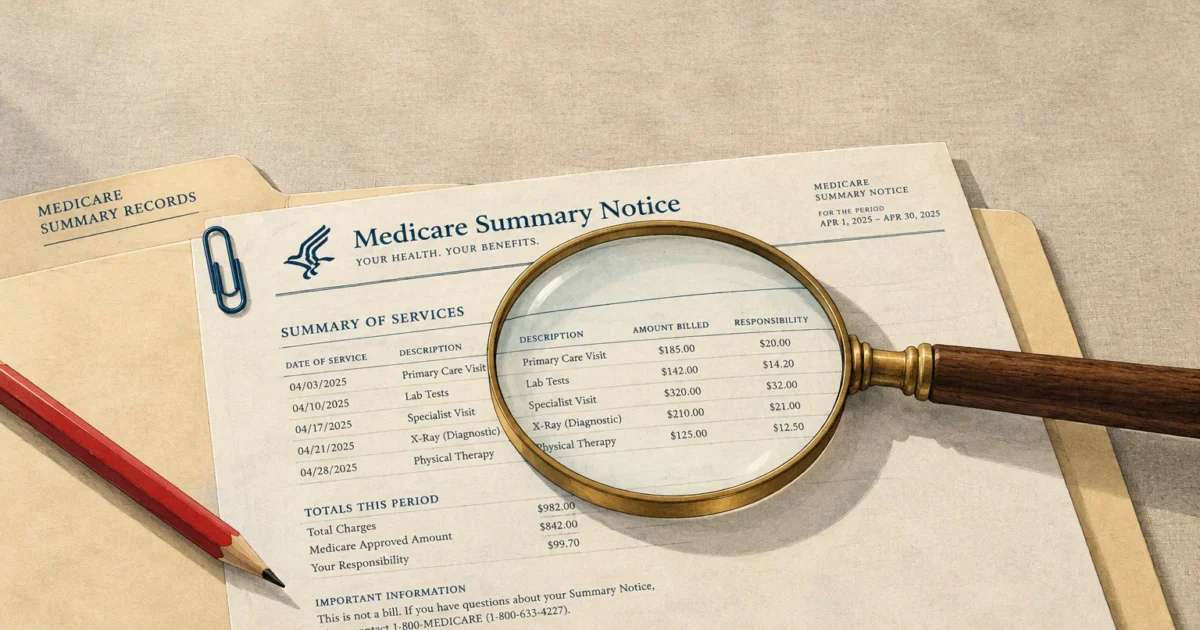
Reviewing your healthcare statements protects your hard-earned retirement savings and gives you complete peace of mind. Catching simple paperwork mistakes early prevents surprise medical bills and keeps your coverage running smoothly.
Every few months, Medicare sends a statement that lists the recent services, procedures, and supplies billed under your name. Learning how to read medicare statement documents takes only minutes once you know what details to verify.
You can easily safeguard your personal benefits and financial health by learning how to spot potential medicare statement errors. Here are eight straightforward strategies to help you review your paperwork with confidence and clarity.
Tip #1: Match Dates of Service Against Your Personal Calendar
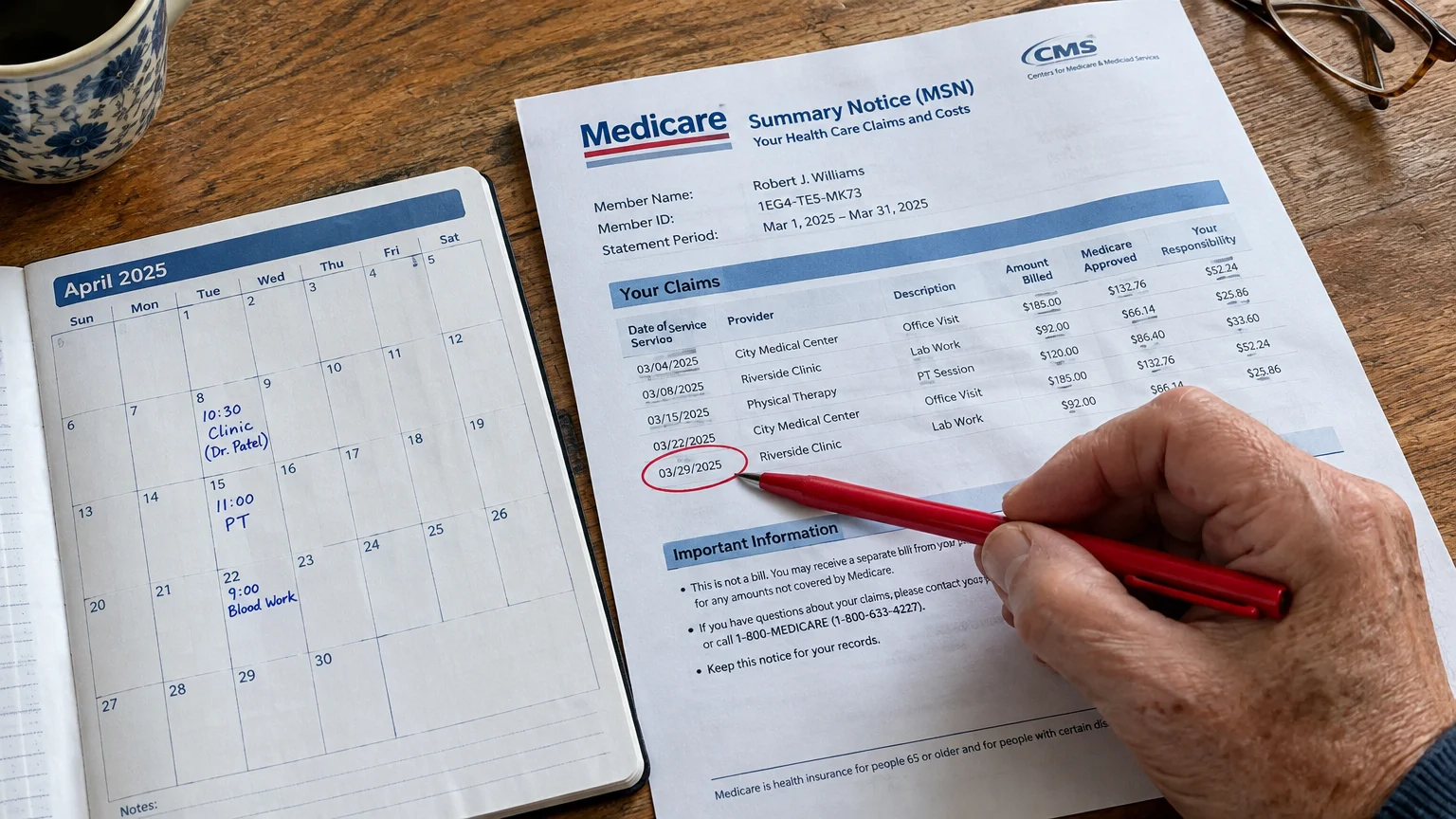
The most straightforward way to begin your review is by cross-referencing appointment dates. Keep a simple wall calendar or pocket planner where you jot down every clinic visit.
When your statement arrives, compare each listed date of service directly with your calendar entries. This quick comparison instantly highlights appointments that never actually took place.
Billing offices process thousands of claims each week, making accidental typographical errors quite common. A busy clerk can easily enter a wrong digit and log a service on a day you were away.
Take special notice if you see visits recorded on major holidays or weekends when your clinic was closed. Similarly, verify that you were not charged for appointments you canceled in advance.
If an appointment was canceled properly, the clinic cannot bill Medicare for providing that consultation. Uncovering these phantom dates protects your annual benefit limits from unauthorized usage.
When you find a discrepancy, circle the date in red ink right on your paperwork. Then, call the provider to ask if the date represents a clerical slip or an erroneous claim.
Most healthcare providers will appreciate your diligence and will gladly correct the claim before it causes further issues. A few minutes with your pocket calendar can save you hours of administrative confusion.
Tip #2: Inspect Service Descriptions for Duplicate Billings
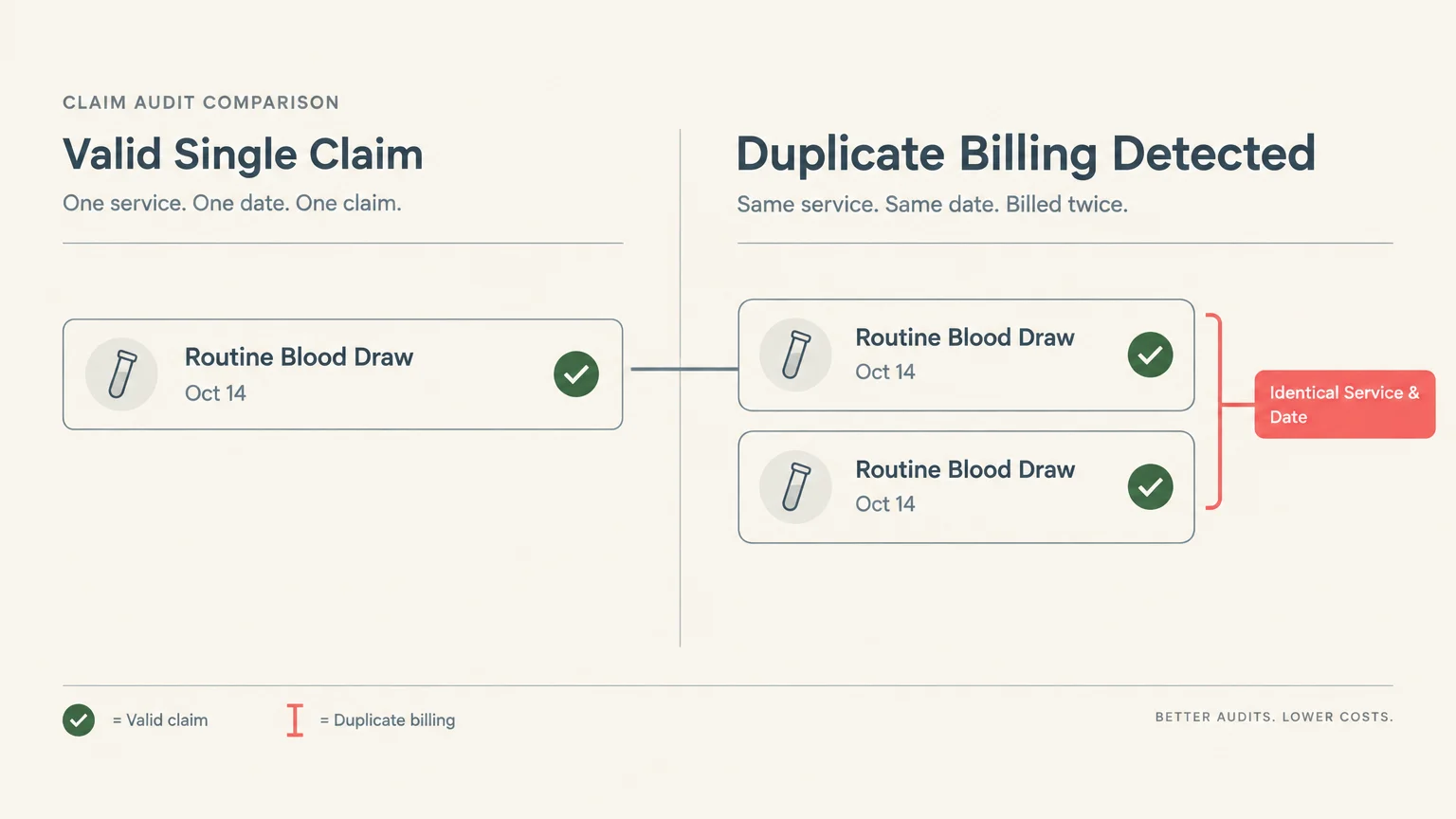
Duplicate billing remains one of the most frequent types of medicare billing errors. This mistake occurs when a clinic submits the exact same procedure or office consultation more than once.
Carefully read down the itemized list of medical services on your statement. Check whether any test, injection, or physical therapy session appears repeatedly with identical dates and pricing.
Sometimes automated hospital software glitches and re-submits an identical electronic claim to Medicare. In other instances, separate hospital departments inadvertently bill for the same blood draw or routine X-ray.
Medicare should never pay twice for a single service that you received only once. If Medicare pays both charges, you could end up paying double the required copayment or coinsurance.
Look closely at laboratory work and diagnostic screenings, as these items are especially prone to accidental duplication. Verify that you received two distinct tests before agreeing that both charges are valid.
If two identical charges show up on the same date, contact your doctor billing department immediately. Ask them to verify their electronic billing log and reverse the redundant charge right away.
Promptly resolving double charges ensures your deductible calculations remain accurate and fair throughout the year. You deserve to pay only for the exact care you received.
Tip #3: Verify That You Received Every Listed Item and Supply
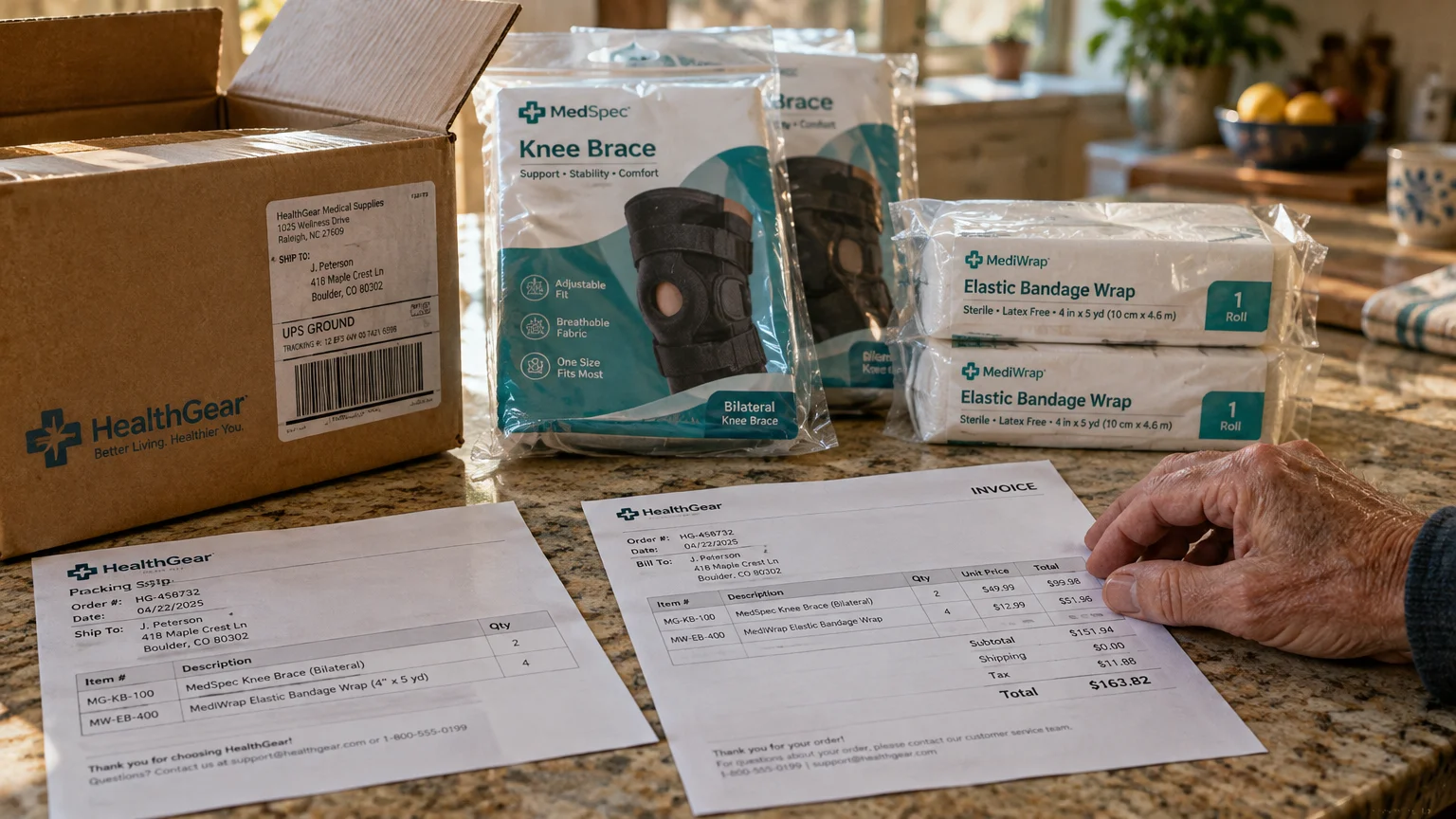
Always verify that you actually received every physical item, prescription, and piece of equipment listed on your notice. Never assume that an unfamiliar medical supply item was just part of your routine checkup.
Unscrupulous suppliers sometimes bill Medicare for durable medical equipment that patients never requested or received. Common items involved in these questionable claims include back braces, knee braces, and diabetes test monitors.
Check your statement carefully for specialized equipment, custom orthotics, or bulk supplies that you do not recognize. If you see a wheelchair, walker, or monitor you never touched, mark it immediately.
Even honest supply companies can occasionally make shipping or tracking mistakes in their accounting software. A company might bill Medicare for supplies that were backordered and never delivered to your door.
Reviewing this section prevents your Medicare allotment for medical equipment from being exhausted prematurely. If Medicare believes you already received an expensive brace, they may deny a future brace you genuinely need.
When you spot equipment you never received, contact the billing supplier first to request documentation of delivery. If they cannot prove delivery, inform Medicare customer service that the charge is inaccurate.
Taking these proactive steps protects your benefits and helps stop improper billing practices across the healthcare system. Your vigilance keeps resources available for everyone who relies on Medicare.

Tip #4: Check Healthcare Provider and Facility Names
Every line on your Medicare statement displays the name of the physician, therapist, or medical facility that submitted the charge. Take the time to confirm that you recognize every professional named on the document.
Keep in mind that some medical practices bill under the legal name of a supervisory physician or corporate group. For example, a nurse practitioner or lab technician might bill under the head physician of the clinic.
Radiologists and pathologists who review your scans or lab samples behind the scenes often bill independently. You might not meet them face-to-face, but their charges should still correspond to appointments you attended.
However, you should never see charges from doctors, specialists, or surgical facilities located in cities you have never visited. A claim from an unfamiliar doctor across the country is an immediate red flag.
Stolen Medicare numbers are sometimes used by bad actors to bill for fictitious treatments at distant clinics. Spotting an unknown provider name is often the first visible clue that your information was compromised.
Whenever you find a provider name you cannot identify, call your primary doctor office to ask if they ordered the consult. If they have no record of that provider, you should report medicare fraud to the authorities.
Catching identity misuse early stops further unauthorized claims and protects your personal medical records from corruption. Staying alert keeps your healthcare identity safe and secure.
Tip #5: Scrutinize Billing Codes for Upcoding and Unbundling
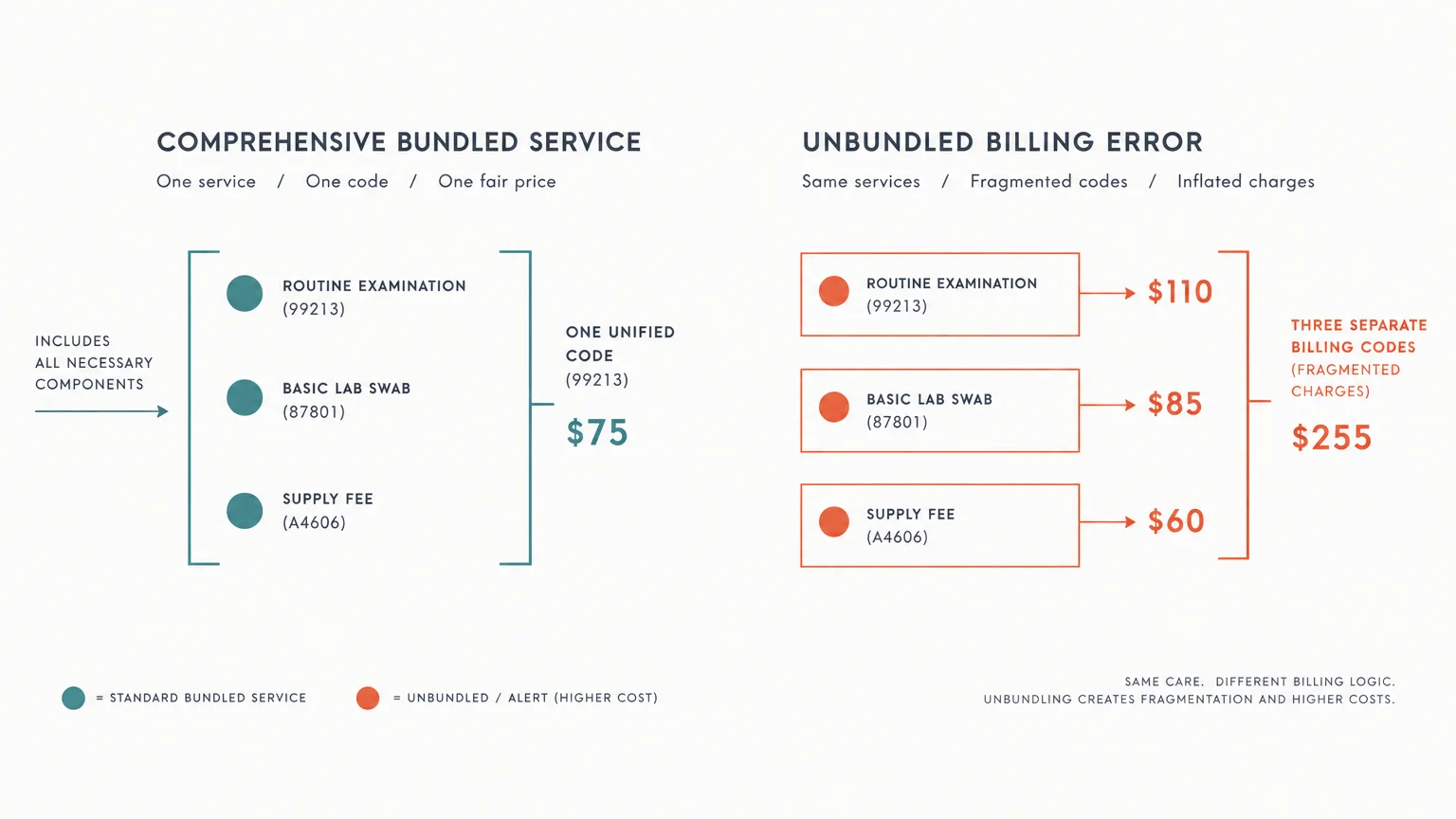
Medical coders translate every examination, treatment, and lab test into standardized numerical billing codes. Two common practices that inflate healthcare costs are known as upcoding and unbundling.
Upcoding occurs when a provider bills for a more complex or expensive service than the one you actually received. For instance, a basic ten-minute wellness visit might be billed as an intensive forty-five-minute consultation.
Unbundling happens when a provider separates services that Medicare normally covers together as a discounted package. By billing each component separately, the provider attempts to collect higher total reimbursements from Medicare.
According to CMS data, federal improper payments in Medicare Fee-for-Service totaled 6.55 percent or $28.83 billion in fiscal year 2025. Across all Medicare programs, improper payments exceed $50 billion annually, largely driven by coding mistakes and paperwork gaps.
While you do not need to memorize medical billing codes, you can read the English descriptions next to each code. Compare those written explanations against the exact care and duration of treatment you experienced.
If the statement claims you received complex surgical therapy when you only had a minor skin exam, speak up. Contact the billing department to ask for a formal coding review of your medical chart.
Correcting inflated billing codes reduces your coinsurance responsibility and helps hold the healthcare system accountable to federal standards. Accurate records protect both your wallet and your peace of mind.
Tip #6: Compare Your Notice Against Your Explanation of Benefits
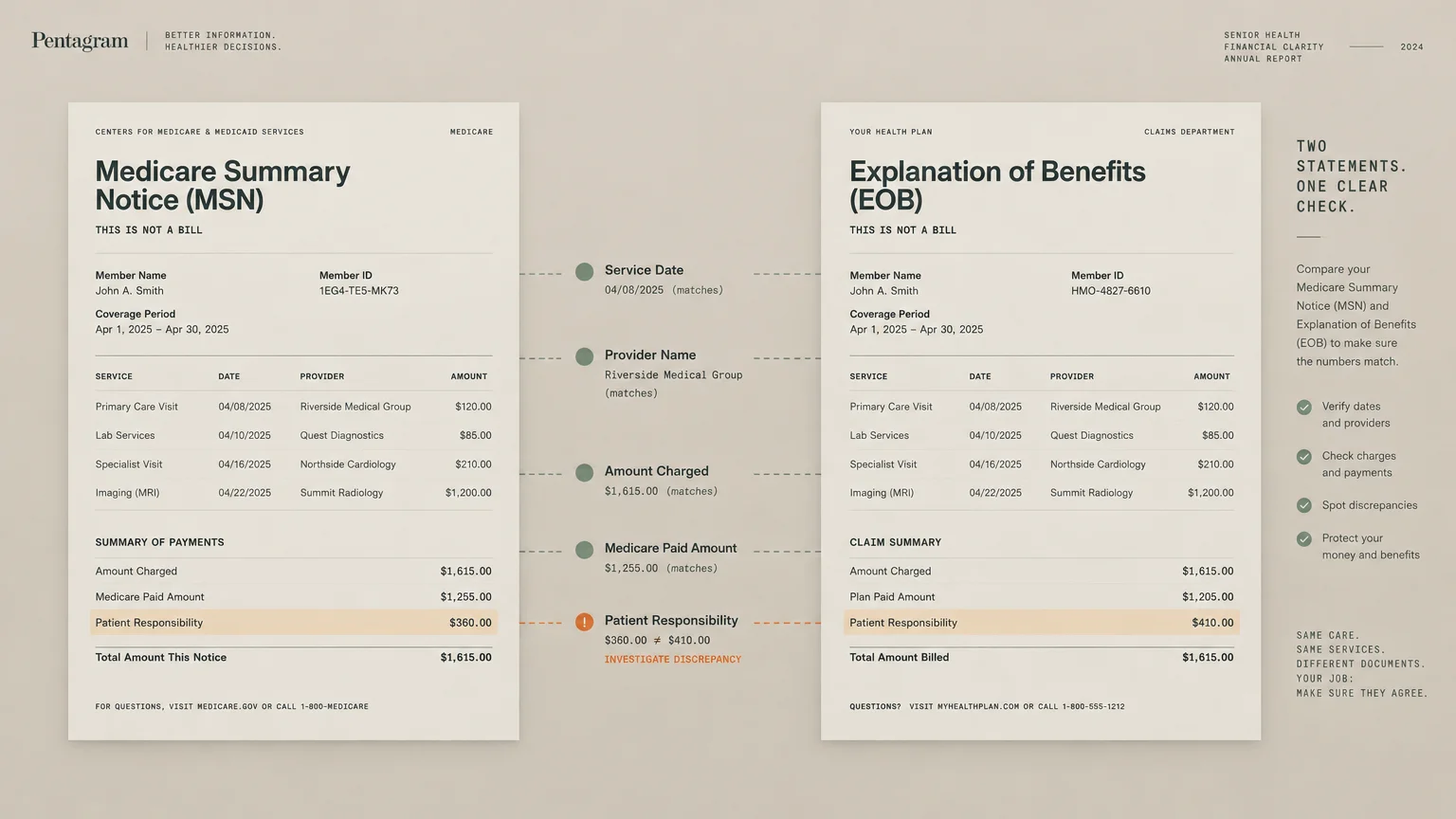
Understanding the specific type of document you receive is essential for organizing your retirement healthcare records. Beneficiaries in Original Medicare Parts A and B receive a Medicare Summary Notice, commonly known as an MSN.
Medicare mails your MSN every six months if you received care during that time, or monthly if you use Medicare.gov. If you have a Medicare Advantage plan or Part D drug plan, you receive a monthly Explanation of Benefits instead.
Never let these documents pile up unopened on your counter. Set aside fifteen minutes twice a year or once a month to sit down and review them thoroughly.
If you have a supplemental Medigap policy or secondary insurance, compare your primary notice directly against the secondary statement. Ensure both insurance carriers agree on the total approved charges and copay calculations.
Sometimes a secondary payer denies a valid claim simply because they did not receive the primary processing information. Matching these documents side by side lets you spot missing crossover claims before secondary deadlines pass.
Keeping a neat accordion folder or digital file for these summaries makes comparing them completely stress-free. You will always know whether an invoice from a clinic matches what your insurance officially approved.
Organized records give you tremendous confidence whenever you need to clarify a charge with an insurance representative. Taking control of your paperwork brings genuine tranquility to your everyday life.

Tip #7: Confirm Your Out-of-Pocket Payment Obligations
Always remember that your Medicare Summary Notice or Explanation of Benefits is definitely not a bill. Both documents clearly print the phrase “This is not a bill” across the top of the first page.
These notices simply inform you what your medical provider billed, what Medicare approved, and what Medicare paid. They also display an estimated amount that your provider may eventually bill you directly.
When you receive an actual bill from a doctor or hospital, compare it line by line against your Medicare statement. Make sure the clinic is not asking you to pay more than the approved patient obligation.
Participating Medicare providers sign agreements promising to accept Medicare-approved amounts as payment in full. They cannot legally charge you extra fees for covered services, a practice known as unauthorized balance billing.
If a clinic invoice demands a higher payment than your Medicare statement specifies, do not write a check immediately. Call the clinic and point out the exact approved patient responsibility listed on your official notice.
Often, the clinic billing computer generated an automated invoice before the Medicare payment finished processing through their system. A quick phone call usually prompts the billing team to adjust the invoice to the correct balance.
Verifying your exact financial liability protects your retirement budget from unnecessary expenses. Standing up for your consumer rights keeps your healthcare costs fair and predictable.
Tip #8: Note the 120-Day Appeal Deadline for Denied Claims
If Medicare denies coverage for a treatment you believe should be covered, you have strong legal protections to challenge it. You have 120 calendar days from the date you receive your MSN to file a Level 1 appeal.
Medicare officially assumes that you received your notice five calendar days after the printed mailing date. Marking this specific 120-day deadline on your calendar ensures you never forfeit your right to redetermination.
Filing an appeal is a straightforward process that begins by circling the denied items right on your notice. Write a brief note explaining why you believe the service should be covered and sign the document.
Ask your treating physician to write a supportive letter of medical necessity explaining why the procedure was essential. Clear clinical documentation from your doctor significantly increases your chances of winning an appeal.
If you suspect fraudulent billing rather than a simple error, you can report it to several dedicated consumer hotlines. Contact the Senior Medicare Patrol at 1-877-808-2468 for free, expert local assistance in resolving billing concerns.
You can also call the official Medicare helpline at 1-800-633-4227 or contact the HHS Office of Inspector General at 1-800-447-8477. For prescription drug plan concerns under Part D, reach out to the I-MEDIC hotline at 1-877-772-3379.
Knowing your appeal rights and reporting resources empowers you to navigate healthcare administration with absolute poise. You possess every tool necessary to advocate for your healthcare and your financial security.

The Takeaway: Living a More Blissful Retirement
Managing your healthcare paperwork does not have to feel overwhelming or stressful. Adopting an orderly system transforms a routine chore into an empowering practice that preserves your hard-earned wealth.
By spending just a few intentional minutes reviewing each statement, you safeguard your personal benefits and prevent unnecessary financial anxiety. You eliminate surprises and keep your medical records pristine for future care.
Retirement is your special time to thrive, explore new passions, and savor every wonderful moment with loved ones. Protecting your healthcare rights ensures that administrative distractions never overshadow your happiness.
Embrace your role as an informed, proactive healthcare consumer with genuine optimism and confidence. When you take charge of your wellness and finances, you unlock the serene, blissful retirement you truly deserve.
Frequently Asked Questions
How often should I expect to receive a Medicare statement in the mail?
Under Original Medicare, you receive a Medicare Summary Notice by mail every six months if you had services billed. Beneficiaries who register for electronic notices on Medicare.gov receive monthly email updates when new claims process.
If you are enrolled in a Medicare Advantage or Part D plan, you will receive an Explanation of Benefits monthly. You only receive these monthly notices for the specific months in which you received medical care or prescriptions.
What should I do first if I spot an error on my statement?
Your first step is always to contact the doctor or medical facility that submitted the charge. Most billing discrepancies result from innocent clerical errors or typing slips that the office staff can easily correct.
Provide the billing specialist with the date of service, description, and claim number printed on your statement. If the office refuses to correct the mistake, call Medicare directly at 1-800-633-4227 to report the problem.
Is a Medicare Summary Notice considered a medical bill?
No, a Medicare Summary Notice is strictly an informational document and is never a request for payment. It shows what your healthcare providers billed to the program and what portion Medicare agreed to pay.
Never send payment based on your Medicare statement alone. Wait until you receive an official bill from your provider, and then verify that it matches the patient responsibility listed on your notice.
Who can help me review my Medicare statement if I feel confused?
You can reach out to the Senior Medicare Patrol at 1-877-808-2468 for free, confidential, and personalized guidance. Trained volunteers and counselors are available in every state to help you examine statements and identify billing mistakes.
You can also contact your State Health Insurance Assistance Program, known as SHIP, for unbiased local Medicare counseling. These non-profit community resources ensure you never have to decipher complicated paperwork alone.
For a wide range of resources for older adults, visit AARP and the National Council on Aging (NCOA). Health information is available from the National Institute on Aging.
Disclaimer: This article is for informational and inspirational purposes only. It is not a substitute for professional medical, financial, or psychological advice. Please consult with a qualified expert for guidance tailored to your individual needs.