
Claiming your earned benefits is one of the most rewarding milestones of your retirement. Making informed choices now safeguards your financial independence and provides enduring peace of mind.
Unfortunately, subtle social security errors can permanently reduce your monthly payments if you act without knowing the rules. Several irreversible social security decisions carry strict deadlines that lock you into lower checks forever.
You can easily avoid these social security claiming mistakes by learning the exact steps to protect your benefits. Take control of your financial timeline today to enjoy the confident, fulfilling golden years you deserve.
Tip #1: Missing the Strict 12-Month Do-Over Window
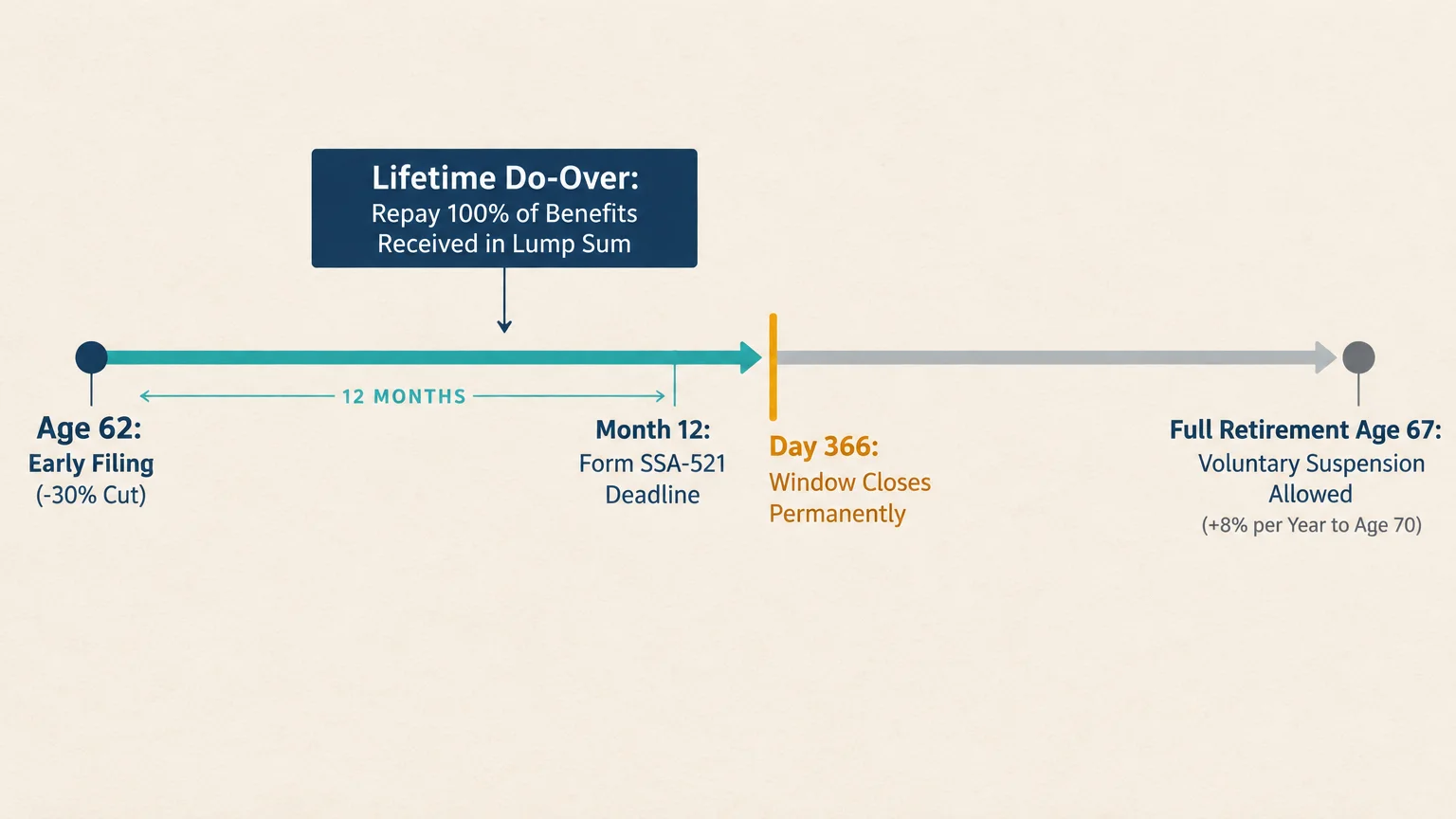
Claiming your retirement benefits at age 62 provides immediate income, but it comes at a steep price. For anyone born in 1960 or later, Full Retirement Age is 67.
Filing at the earliest age results in a permanent 30% reduction to your monthly check. Over a twenty-year retirement, that permanent cut can easily total tens of thousands of dollars in lost income.
Fortunately, the Social Security Administration provides a single lifetime opportunity to fix early filing regret. You can request a complete do-over by submitting Form SSA-521 to withdraw your application.
This withdrawal resets your record as though you never filed in the first place. You can then let your benefit grow larger and file again at an older age.
However, a rigid deadline governs this process. You have strictly 12 months from your original benefit approval date to file Form SSA-521.
If day 366 passes, your 30% reduction becomes one of those social security mistakes hard to fix. The lower monthly payment is permanently locked in for the rest of your life.
There is also a major financial hurdle to this do-over. You must repay 100% of all the benefits you and your family have received so far.
That total includes any spousal checks, dependent benefits, and funds withheld for Medicare Part B premiums or federal income taxes. You must return all of these funds in a single lump sum.
After the agency approves your withdrawal, you have 60 days to change your mind and reinstate the claim. This brief grace period protects you if your financial circumstances suddenly shift.
Remember that you can only utilize this application withdrawal once in your lifetime. Careful planning ensures you do not waste this valuable administrative lifeline.
If you missed the 12-month window, you must wait until you reach your Full Retirement Age of 67. At that point, you can voluntarily suspend your monthly payments.
Suspending your benefits allows you to earn delayed retirement credits of 8% per year until age 70. This suspension strategy helps you recover part of the income you lost by claiming early.
Keep a close eye on your calendar if you claimed early and now regret your decision. Taking decisive action before the first year expires safeguards your long-term retirement wealth.
Tip #2: Letting the Earnings Record Statute of Limitations Expire
The Social Security Administration determines your monthly check using an average of your highest 35 years of indexed earnings. A single missing year can drag down your baseline payment for life.
Employers occasionally make clerical errors, mistype Social Security numbers, or fail to report accurate wage data. When these reporting errors happen, your official earnings record reflects a lower income than you actually earned.
Many workers mistakenly assume they can correct these payroll discrepancies whenever they prepare to retire. Unfortunately, the law imposes a strict deadline on fixing past wage records.
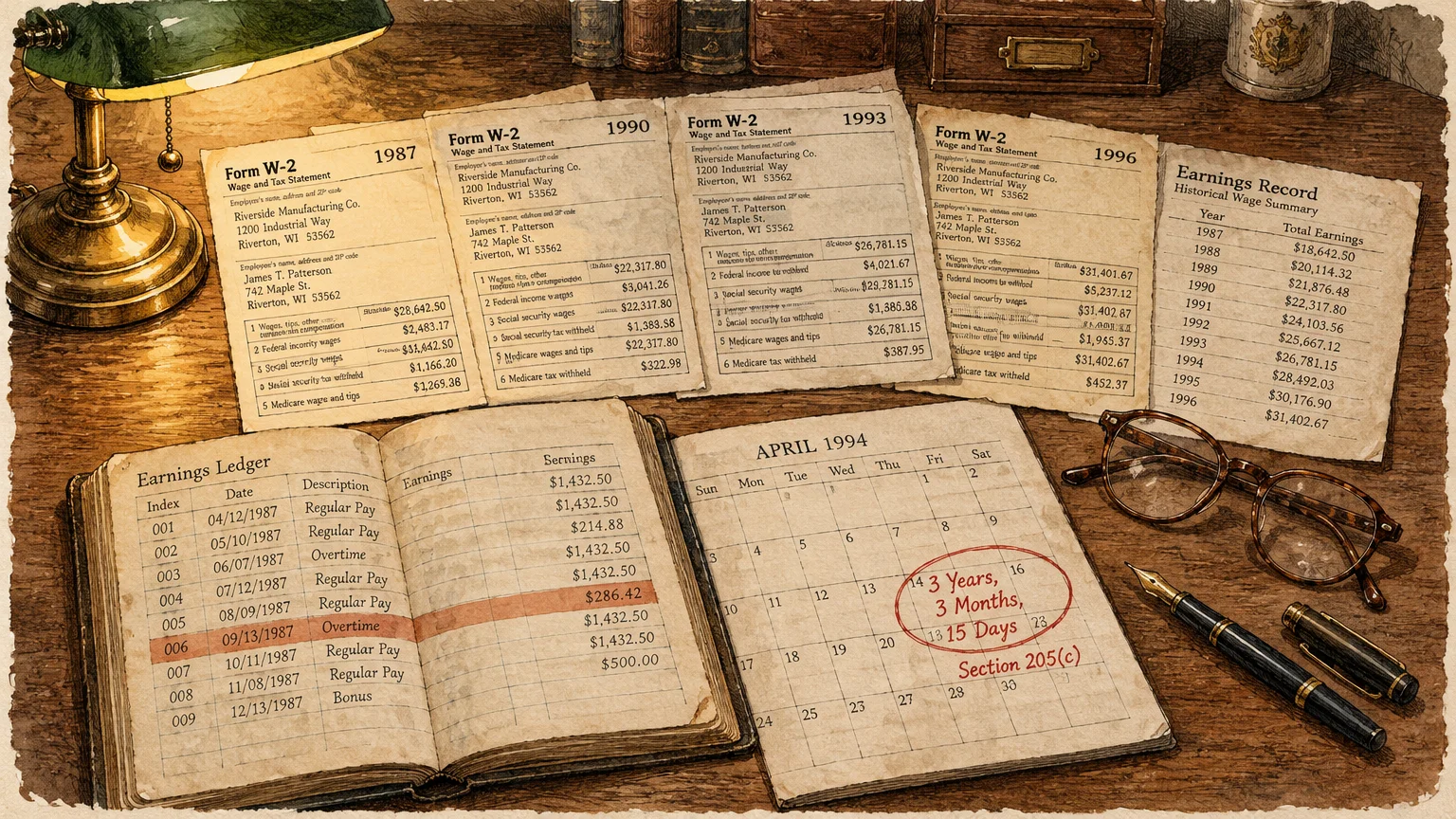
Under Section 205(c) of the Social Security Act, a definitive statute of limitations applies to your earnings history. You have exactly 3 years, 3 months, and 15 days to correct any reporting error.
That clock begins ticking right after the end of the taxable year in which you earned the wages. Once this statutory deadline expires, fixing your record becomes exceptionally difficult.
To challenge an inaccurate earnings statement, you must complete and submit Form SSA-7008. You must also supply credible documentation, such as wage stubs, tax forms, or union ledgers.
For self-employed individuals, this statutory deadline is virtually absolute. If you fail to report self-employment income within that precise window, the agency will almost never adjust your record.
Missing out on credit for your self-employed earnings permanently dampens your final retirement benefit calculation. It represents one of the most frustrating irreversible social security decisions for independent contractors.
Traditional W-2 employees enjoy slightly more flexibility after the deadline passes. However, you must present undeniable written proof, such as original W-2 forms or certified tax returns from that specific year.
Locating old tax paperwork from decades ago can prove nearly impossible for many households. Employers go out of business, banks purge archives, and personal records get misplaced during moves.
With the maximum taxable wage base at $184,500, every dollar of verified income matters for your future benefit calculation. In 2027, that taxable earnings ceiling rises further to $192,300.
You can easily protect your future benefits by logging into your personal online Social Security account every year. Check each annual entry against your filed tax returns to ensure total accuracy.
Spotting and resolving discrepancies promptly ensures that every ounce of your hard work translates into higher monthly retirement checks.
Tip #3: Delaying Spousal Benefits Beyond Full Retirement Age
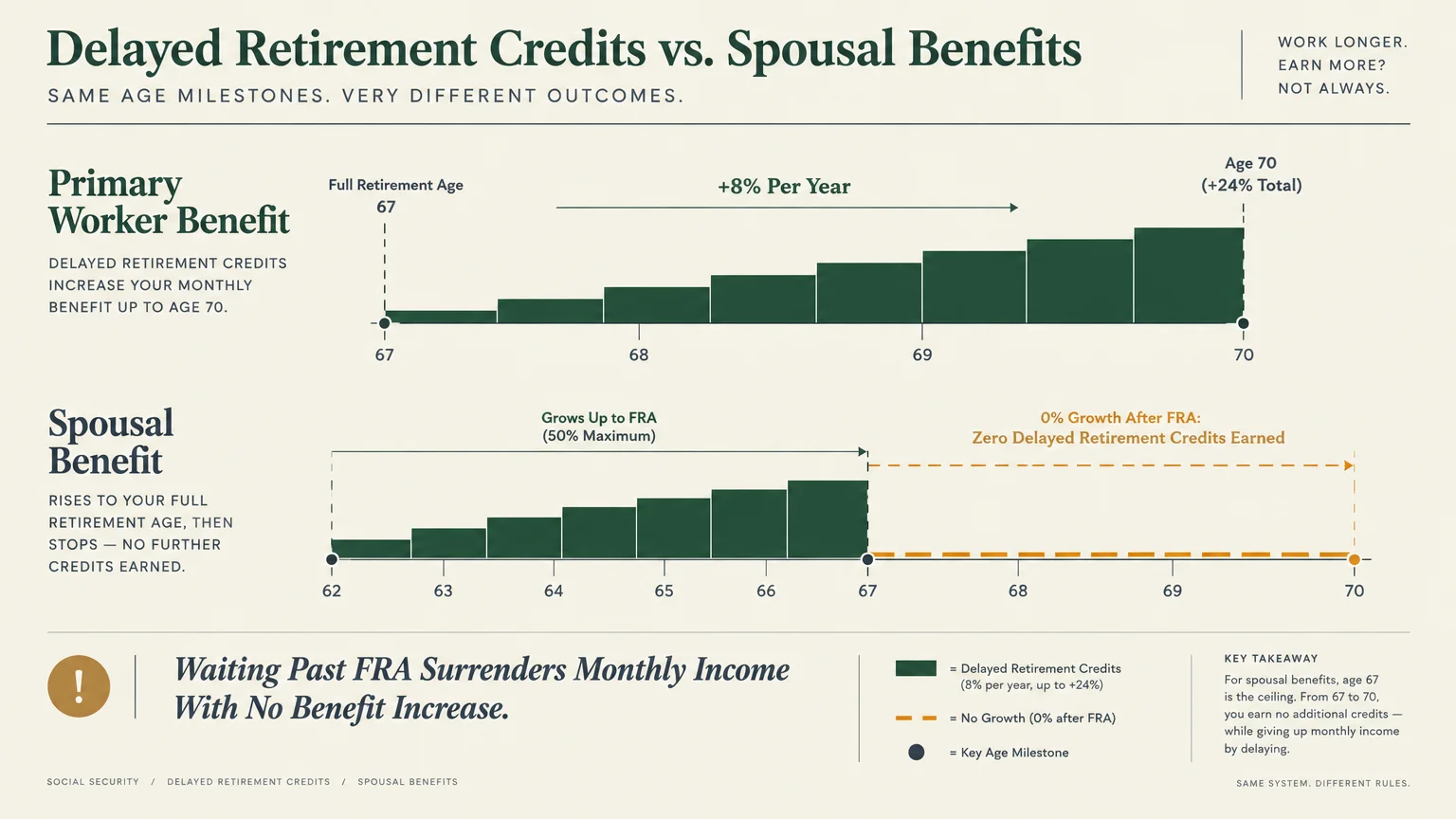
Delaying your personal retirement benefit past your Full Retirement Age is often excellent financial advice. For every year you wait past age 67, your personal check grows by an impressive 8%.
By waiting until age 70, you maximize your monthly income with guaranteed delayed retirement credits. This valuable growth tempts many seniors to apply the exact same delay strategy to their spousal benefits.
Treating spousal benefits like personal worker benefits is a costly misunderstanding. Unlike individual retirement checks, spousal benefits do not earn delayed retirement credits under federal law.
Your spousal benefit reaches its maximum possible payout the exact month you attain your Full Retirement Age. For individuals born in 1960 or later, that Full Retirement Age is 67.
If you wait until age 70 to claim on your spouse’s work record, your check will not increase by a single penny. You simply forfeit three full years of valuable monthly income.
Considering that the average retired worker benefit is $2,095 per month, spousal payments represent substantial household income. Letting years of those checks vanish creates an unnecessary financial loss.
The agency will not reimburse you with years of retroactive lump-sum payments when you finally apply at age 70. Those unclaimed monthly checks simply disappear forever into the federal trust fund.
Current regulations generally limit retroactive payments for retirement claims to a maximum of six months. Even that small retroactive window is only available if you file after reaching your Full Retirement Age.
Delaying spousal benefits beyond age 67 delivers zero financial reward and guarantees permanent monetary loss. It stands as one of the clearest examples of social security errors that cannot be undone.
Coordinate your claiming timeline carefully with your partner long before your 67th birthday arrives. Evaluate whether claiming your own benefit or a spousal benefit produces the stronger cash flow.
If your spousal payment exceeds your personal benefit, apply promptly during the month you reach Full Retirement Age. Doing so ensures you receive every single check you are legally entitled to collect.
Being proactive about claiming dates allows you to enjoy maximum retirement income without leaving money on the table.

Tip #4: Ignoring an Overpayment Notice Beyond the 30-Day Window
Receiving an unexpected notice of a social security overpayment is an unsettling experience for any retiree. Seeing an official letter asserting that you owe thousands of dollars can spark immediate worry.
While your first instinct might be to set the frightening notice aside, doing so creates immediate financial hardship. Inaction triggers automatic federal clawback mechanisms that quickly disrupt your retirement budget.
Effective April 25, 2025, the Social Security Administration instituted a default overpayment withholding rate of 50%. This policy applies directly to monthly Title II benefits, including retirement, survivor, and disability checks.
Under this rule, the agency automatically withholds half of your monthly payment until you repay the entire balance. For Supplemental Security Income recipients, the withholding rate remains at 10%.
You have an essential 30-day window from the date on the notice before withholding begins. Acting within these first 30 days is the most effective way to protect your monthly income.
If you believe the agency made an accounting error, submit Form SSA-561 to request a formal appeal. Submitting this appeal within 30 days legally halts all withholding until an examiner reviews your case.
If the overpayment amount is accurate but not your fault, you can file Form SSA-632 to request a waiver. This form asks the agency to forgive the debt because repayment would prevent you from meeting basic living expenses.
Submitting Form SSA-632 within the initial 30 days also immediately pauses all collection activities. That administrative pause ensures your regular monthly retirement check continues arriving uninterrupted while officials assess your hardship.
If you ignore the notice and let that 30-day window expire, half your monthly check will disappear automatically. Recovering those withheld funds after deductions start is an exhausting bureaucratic struggle.
Reversing an automatic withholding that has already begun requires extensive paperwork and months of waiting. In the meantime, you must navigate your retirement life with half of your expected income.
You can also negotiate a custom repayment plan if an immediate 50% reduction would strain your household finances. The agency often accepts lower monthly withholding amounts when you communicate proactively.
Never ignore official correspondence from the Social Security Administration. Quick, calm responses preserve your monthly cash flow and keep your retirement completely on track.

Tip #5: Remarrying Before Age 60 and Forfeiting Survivor Benefits
Finding deep companionship later in life is one of the greatest joys of your golden years. However, entering a new marriage without understanding Social Security rules can prove devastatingly expensive.
Survivor benefits provide critical security, allowing a widow or widower to receive up to 100% of a deceased spouse’s check. This monthly support often keeps surviving partners financially secure throughout their retirement years.
A strict age threshold determines whether you can keep this financial lifeline after walking down the aisle again. If you remarry before age 60, you immediately forfeit all eligibility for survivor benefits on your late spouse’s record.
For disabled surviving spouses, this restrictive cutoff applies to any remarriage occurring before age 50. Losing this monthly income can dramatically disrupt your household budget and long-term security.
This forfeiture remains in effect for as long as your new legal marriage lasts. The agency will not allow you to collect survivor payments while legally married to your new partner.
Only if your subsequent marriage ends through divorce, death, or annulment can your survivor benefit eligibility be restored. Relying on such painful events to restore your income is an unnecessary emotional burden.
In sharp contrast, remarrying at or after age 60 has zero negative impact on your survivor benefits. You continue receiving your full monthly survivor payments without any reduction whatsoever.
The difference of a single calendar day can permanently alter your financial trajectory in retirement. Holding your wedding ceremony just weeks before turning 60 ranks among the most heartbreaking irreversible social security decisions.
With the 2.8% Cost-of-Living Adjustment raising average checks, and a 3.6% adjustment boosting 2027 payments to $2,170, survivor checks are substantial. Forfeiting that growing monthly sum over decades can cost hundreds of thousands of dollars.
Couples often choose to celebrate their commitment through religious ceremonies or informal celebrations while postponing the legal paperwork. Waiting until your 60th birthday to sign the civil marriage certificate protects your earned benefits.
Open communication with your future spouse about finances builds a transparent and joyful partnership. Aligning your romantic milestones with federal guidelines ensures you both enjoy maximum security together.
Protecting your financial foundation allows you to focus on building wonderful new memories with complete peace of mind.
Tip #6: Finalizing a Divorce Just Shy of the 10-Year Mark
Navigating the end of a long-term marriage is an emotionally challenging and draining life transition. In the understandable rush to finalize divorce paperwork, vital Social Security benefits are frequently surrendered.
Federal law offers valuable divorced spousal benefits that can substantially boost your retirement income. You can claim up to 50% of your former partner’s full retirement check without reducing their payments at all.
Divorced benefits do not impact your ex-spouse’s monthly check, nor do they affect their current spouse’s payments. This extra income is funded entirely by the Social Security system based on their earnings record.
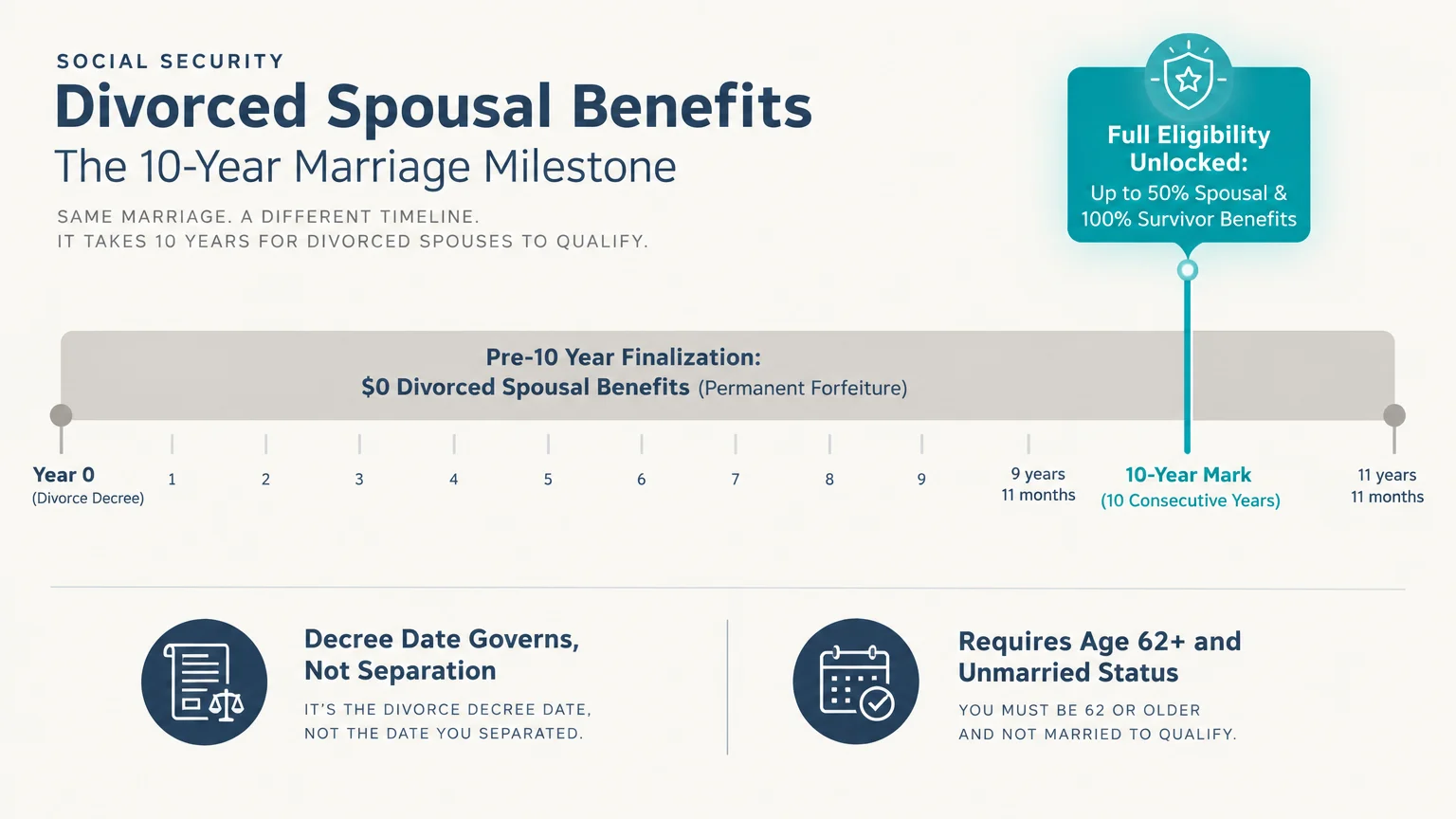
However, you must satisfy a strict requirement: your marriage must have lasted for at least 10 consecutive years. That 10-year period is measured precisely from your wedding date to the final divorce decree date.
If a judge signs your dissolution order at 9 years and 11 months, you permanently lose all eligibility. You cannot collect divorced spousal benefits or divorced survivor benefits on their record.
The Social Security Administration enforces this statutory threshold with zero administrative flexibility. Social Security caseworkers cannot round up your time or grant hardship exemptions for a marriage that fell short.
State family court judges also cannot alter federal rules by inserting special language into your divorce decree. Even if your divorce agreement explicitly awards you Social Security benefits, federal law completely overrides state court orders.
You must also remain unmarried to collect divorced spousal payments, though you can claim even if your ex remarries. If your former partner passes away, your benefit converts into a divorced survivor benefit paying up to 100%.
If you are approaching the 10-year milestone during separation proceedings, consider pausing legal finalization. Slowing down the proceedings by a few months can secure crucial lifelong financial protection.
This strategy requires no additional payments from your former spouse, making it an easy point of mutual negotiation. An experienced family law attorney can structure your timeline to ensure you clear the 10-year threshold.
Taking deliberate steps during a divorce safeguards your dignity, financial independence, and future retirement comfort.
Tip #7: Triggering Harsh Benefit Withholding by Misreporting Earned Income Before FRA
Many vibrant retirees choose to keep working part-time, start consulting businesses, or explore fresh professional passions. Staying engaged in meaningful work keeps your mind sharp and enriches your daily routine.
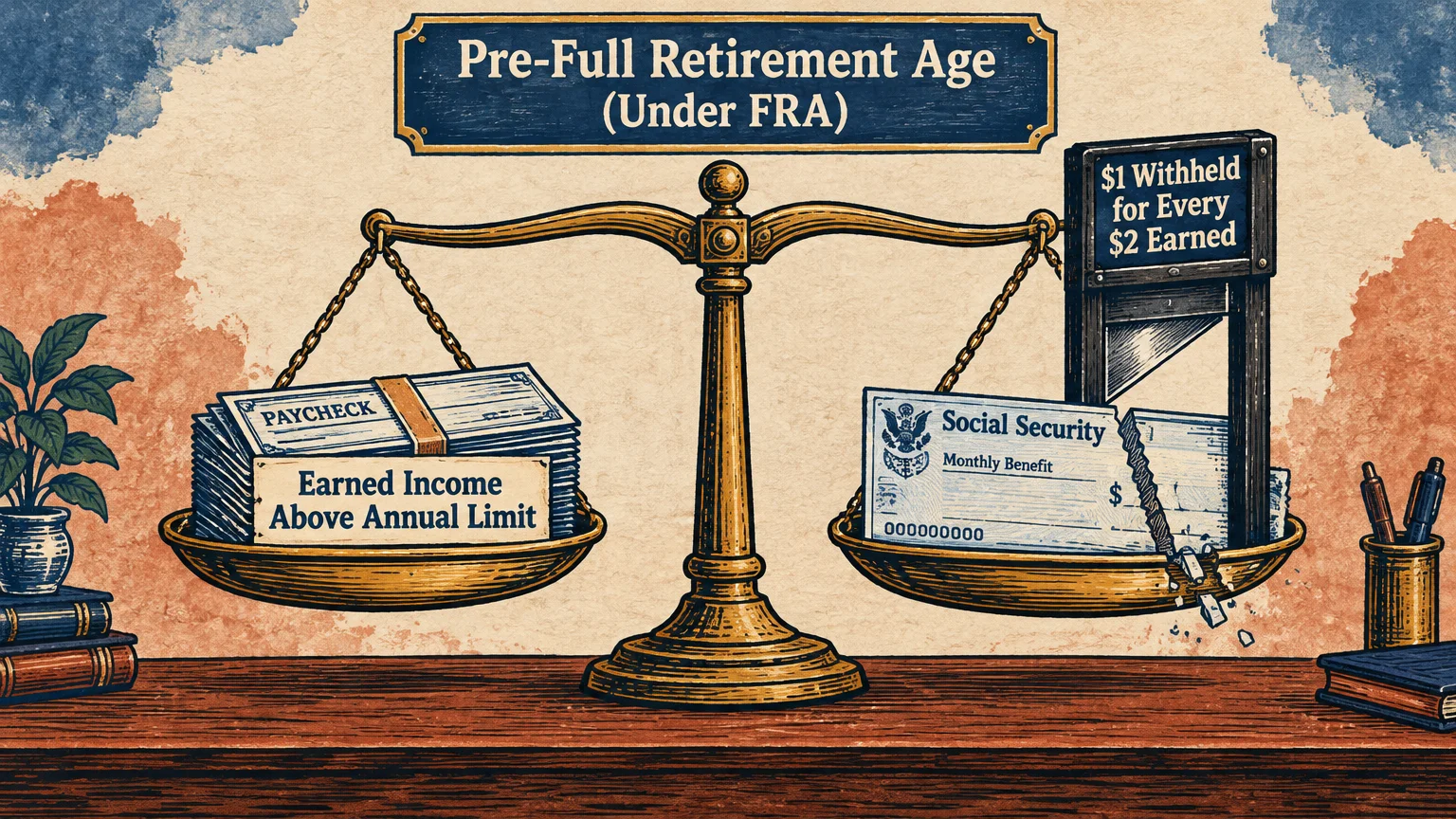
However, continuing to work while collecting Social Security benefits before reaching Full Retirement Age brings unexpected traps. The Retirement Earnings Test places strict caps on how much wage income you can earn.
For beneficiaries under Full Retirement Age for the entire year, the earnings limit is $24,480. In 2027, that annual earnings limit increases to $25,560.
If you earn more than that threshold, the agency withholds $1 of your benefits for every $2 earned above the cap. That withholding can rapidly wipe out multiple monthly checks.
A separate, more generous earnings limit applies during the calendar year you reach your Full Retirement Age. In the months prior to your birthday month, you can earn up to $65,160 ($67,920 in 2027).
Above this higher milestone, the SSA withholds $1 for every $3 you earn. Once you reach your actual Full Retirement Age birthday month, the earnings test disappears entirely.
The error occurs when beneficiaries fail to notify the Social Security Administration about their anticipated earnings. Many assume the agency tracks their paycheck data automatically in real time.
In reality, the SSA discovers your wage income months later when the IRS shares annual tax return data. When the agency finds that you exceeded the limits, they issue an immediate overpayment notice.
You could suddenly face demands to return thousands of dollars in benefits that the agency improperly paid you. Under the default 50% withholding rule, half of your future checks will vanish until the debt is resolved.
While withheld funds are eventually factored back into your benefit calculation at Full Retirement Age, the short-term shock can disrupt your budget. Experiencing sudden benefit cuts creates avoidable financial stress.
Prevent this issue by contacting the Social Security Administration as soon as your work plans change. Estimating your annual earnings accurately prevents clawback demands and protects your monthly budget.
Proactive communication ensures your transition into working retirement remains rewarding, joyful, and completely stress-free.

The Takeaway: Living a More Blissful Retirement
Your retirement represents the joyful culmination of decades of dedication, resilience, and personal commitment. You deserve to receive every single penny of the benefits you earned through your hard work.
While Social Security regulations can seem overwhelming, staying informed gives you unmatched control and confidence. Understanding the strict rules around deadlines protects your monthly income from permanent reductions.
Take time today to log into your personal online account and verify that your earnings history is accurate. Address any discrepancies well before the statutory limits expire to preserve your baseline check.
Coordinate your claiming strategy carefully with your spouse to maximize spousal and survivor protections. A thoughtful approach ensures your household receives maximum support throughout your golden years.
If you receive unexpected correspondence regarding an overpayment, respond calmly within the 30-day window. Taking prompt action keeps you in control of your financial security.
Empower yourself with accurate knowledge so you can make confident choices about your financial future. When you manage your benefits with clarity, you pave the way for a relaxed and fulfilling retirement.
Frequently Asked Questions
Can I withdraw my Social Security application after the 12-month window closes?
No, you cannot withdraw your application once the 12-month window has expired. After 12 months from your approval date, your benefit rate becomes permanently locked.
However, once you reach your Full Retirement Age of 67, you can voluntarily suspend your payments. Suspending your benefits allows you to earn delayed retirement credits of 8% per year until age 70.
What happens if I receive a Social Security overpayment letter?
The agency will demand repayment and, effective April 25, 2025, initiate a default withholding rate of 50% from your monthly check. You have at least 30 days from the letter date to take action.
Filing Form SSA-561 to appeal or Form SSA-632 to request a waiver within those 30 days pauses all withholding. Promptly submitting your paperwork protects your monthly payments while the agency reviews your situation.
Does delaying a spousal benefit past age 67 increase the monthly check?
No, spousal benefits do not earn delayed retirement credits under any circumstances. Unlike personal worker benefits, spousal payments reach their maximum value at your Full Retirement Age.
Waiting until age 70 to claim on your spouse’s record simply results in permanently lost checks. Claim your spousal benefit as soon as you reach age 67 to receive your full entitlement.
How long do I have to correct errors on my Social Security earnings record?
Under federal law, you have 3 years, 3 months, and 15 days from the end of the tax year to fix errors. You must file Form SSA-7008 along with proof of your actual earnings.
Once this deadline passes, self-employed workers generally cannot adjust their records. Traditional employees face rigorous documentation requirements, making annual reviews of your statement essential.
For a wide range of resources for older adults, visit AARP and the National Council on Aging (NCOA). Health information is available from the National Institute on Aging.
Disclaimer: This article is for informational and inspirational purposes only; it is not a substitute for professional medical, financial, or psychological advice. Please consult with a qualified expert for guidance tailored to your individual needs.