

Stepping away from a full-time career opens the door to retirement jobs that feel like play rather than a daily grind. You can turn favorite pastimes into steady paychecks while keeping complete control over your calendar.
According to Pew Research Center, 19 percent of adults age 65 and older stay employed, and 45 percent of working older adults still consider themselves retired. Many choose flexible roles that spark curiosity, build friendships, and pad monthly budgets.
Whether you love dogs, photography, gardening, or mentoring students, these ten creative options reward your passions with real cash. Pick one that fits your lifestyle and start earning on your terms.

Lifestyle Idea #1: Freelance Writing and Editing
If you enjoy reading, researching local history, or sharing well-told stories, freelance writing turns quiet mornings into lucrative work. You set your own deadlines and choose topics that genuinely excite you.
The U.S. Bureau of Labor Statistics (BLS) reports that writers and authors earned a median $76,910 per year, or $36.98 per hour, in May 2025. Editors earned a median $77,920 annually during the same period.
Roughly 11,900 openings appear each year as veteran journalists and corporate communicators step down. That turnover leaves plenty of room for sharp retirees to write blog posts, neighborhood profiles, or newsletters.
Start by listing three subjects you already know inside and out, such as classic cars, container gardening, or family travel. Write two crisp sample pieces of 600 words each to show prospective editors your voice.
Pitch local magazines, alumni bulletins, and small businesses that need clear website copy. Local chambers of commerce also hire part-time editors to polish event guides and member spotlights.
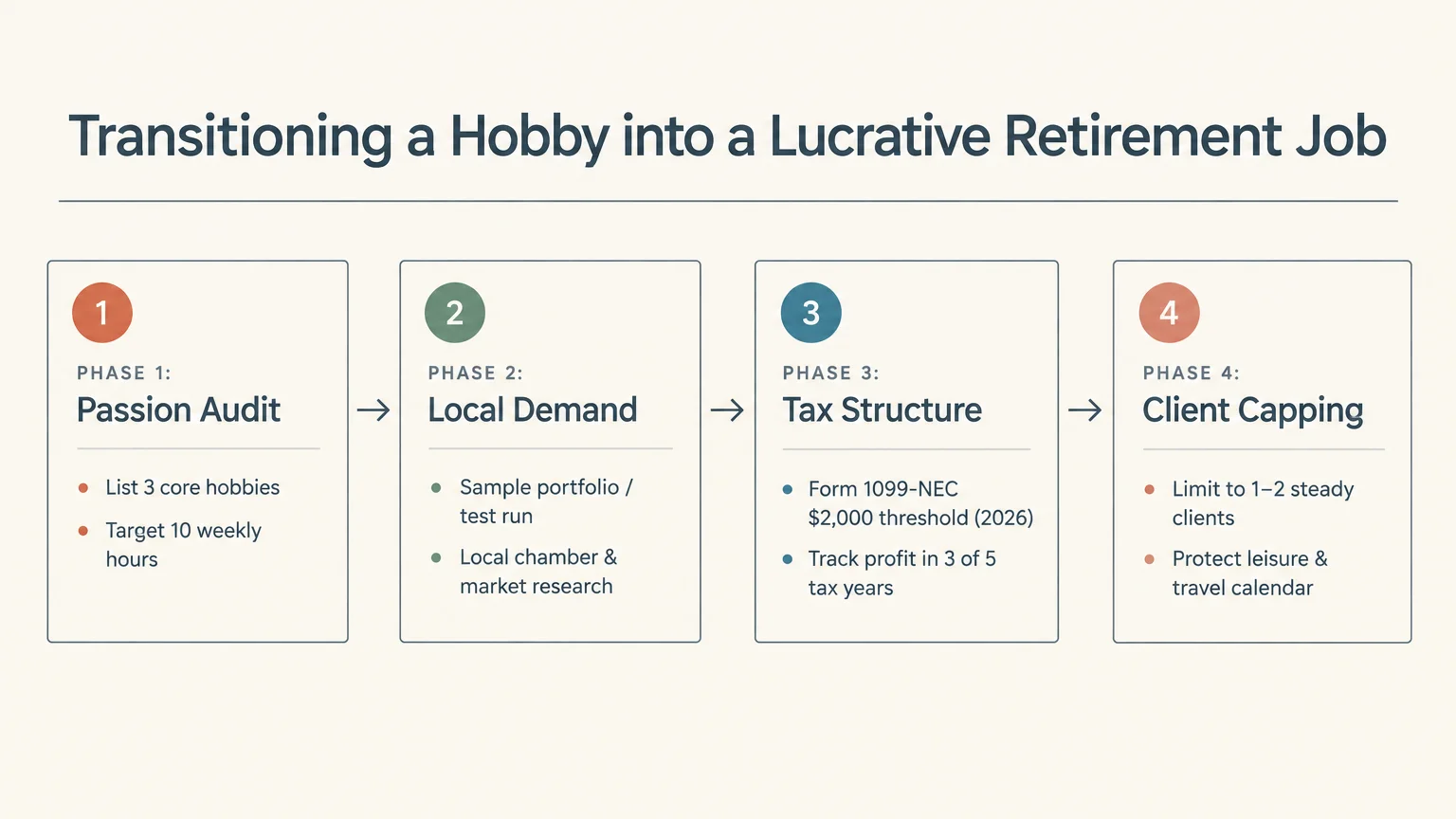
Keep clean records of every check or digital transfer you receive from clients. Under P.L. 119-21, clients only issue Form 1099-NEC starting in 2026 once payments reach $2,000 per payee, yet all freelance income remains taxable.
Protect your leisure time by limiting yourself to one or two regular clients at first. Working ten focused hours a week brings in meaningful cash without stealing time from grandchildren or travel.
Lifestyle Idea #2: Craft and Fine Art Creation
Turning a spare bedroom or garage workshop into a paid studio lets you make room on your shelves while funding top-tier supplies. Woodworking, pottery, watercolor painting, and quilting rank among the most rewarding hobby jobs available.
BLS data from May 2025 shows craft and fine artists earned a median $55,290 per year, or $26.58 per hour. Roughly 4,300 openings open annually through 2035 as older makers retire from studios and workshops.
Culinary makers can join the fun through home baking, jam making, or specialty spice blending under state cottage food rules. Washington caps home-kitchen sales at $35,000 per year with a $355 two-year permit, while Vermont exempts bakeries earning under $30,000 annually.
Minnesota currently caps registered home food producers at $78,000 per year, so check your state agriculture or health department before selling treats. Labeling rules and approved recipes vary widely across state lines.
Test demand at weekend farmers markets or neighborhood art walks before paying for a full e-commerce site. Natural-light photos on a clean tabletop help handmade pieces stand out instantly.
Price every item to cover raw materials, booth fees, and a fair hourly rate for your labor. Underpricing drains your enthusiasm and leaves little profit once supplies run low.
Treat your craft like a real venture if you want to deduct paint, lumber, or kiln costs. The IRS presumes an activity is for-profit when income exceeds deductions in three of five consecutive tax years, alongside nine operational factors; hobby expenses stay non-deductible.
Payment apps and online marketplaces now trigger federal Form 1099-K reporting only above $20,000 and 200 transactions, though individual states may enforce lower rules. Track every sale from day one so April never brings surprises.
Lifestyle Idea #3: Private Tutoring
Sharing patience and life experience with a student who suddenly grasps a tough concept delivers an unmatched rush. Private tutoring lets you skip grading stacks and faculty meetings while focusing purely on one-on-one growth.
BLS wage data from May 2025 shows tutors earned a median $23.32 per hour, with a mean hourly wage of $24.55 across 404,060 positions nationwide. Experienced specialists in test prep or advanced math often command even higher private rates.
Choose one subject you genuinely enjoy teaching, whether that means elementary reading, conversational Spanish, or college-essay coaching. Busy parents gladly pay for calm, reliable guidance from someone who refuses to rush.
Decide upfront whether you prefer meeting at a quiet neighborhood library or tutoring via video from your study. Online sessions eliminate commuting, while in-person lessons often keep younger learners engaged longer.
Post neat flyers on community bulletin boards, introduce yourself to local school counselors, or join an established tutoring agency. Agencies handle billing and marketing in exchange for a share of the hourly fee.
Schedule lessons between three and six in the afternoon so your mornings and weekends stay wide open. Even six tutoring sessions a week create dependable extra income for retirement hobbies or weekend getaways.

Lifestyle Idea #4: Fitness Coaching and Group Instruction
Leading a morning water aerobics session or neighborhood walking group turns your personal workout into paid social hour. You stay strong, lift your mood, and help peers feel confident in their own movement.
According to BLS figures from May 2025, exercise trainers and group fitness instructors earned a median $22.67 per hour, or $25.20 on average, across 322,930 roles. Morning and mid-day classes are especially eager for energetic instructors over 50.
Ask the fitness director at your local YMCA, recreation center, or active-adult clubhouse which certifications they prefer before spending money on courses. Many facilities welcome gentle yoga, tai chi, pickleball fundamentals, or low-impact strength classes.
Shadow an experienced teacher for a month and offer to fill in when regular staff travel. Covering substitute slots builds your stage confidence without locking you into a rigid weekly schedule.
Pick class formats that protect your joints over the long haul rather than high-impact routines that wear down knees. Teaching three classes weekly delivers fresh friendships and steady spending money without exhaustion.
Lifestyle Idea #5: Event and Lifestyle Photography
If friends already ask you to bring your camera to family reunions, photography offers one of the most natural jobs after retirement. Capturing milestones, pet portraits, and small-business headshots blends technical play with warm human connection.
Photographers earned a median $21.47 per hour in May 2025, according to the BLS. Local portrait sessions and holiday mini-shoots often pay far more per session once you build word-of-mouth referrals.
Volunteer to photograph one charity fun run or community theater dress rehearsal to assemble a crisp 15-image portfolio. Real action shots prove your skill far faster than generic landscape snapshots.
Keep your service menu simple by offering flat-rate packages that include edited digital downloads instead of complicated print shipping. Clients appreciate clear pricing with no hidden add-ons.
Build editing time into every quote before you shake hands on a booking. Two enjoyable hours behind the lens often require three quiet hours sorting, cropping, and color-correcting files at your computer.
Stick to daytime outdoor shoots or bright indoor venues so you avoid hauling heavy lighting stands. Golden-hour park sessions produce flattering photos and keep equipment light on your shoulders.

Lifestyle Idea #6: Short-Term Substitute Teaching
Stepping into a local classroom once or twice a week keeps your mind agile and connects you with neighborhood families. Short-term substitute teaching stands out among part time jobs for retirees because you choose every single workday.
BLS data from May 2025 reports short-term substitute teachers earned a median $20.03 per hour, with a mean of $22.32 across 524,770 positions nationwide. Districts facing teacher shortages often offer bonus stipends for frequent substitutes.
Check your county school board website for permit rules, fingerprinting schedules, and short orientation workshops. Many states accept any bachelor’s degree—or even specific associate credentials—for short-term classroom coverage.
Focus on grade levels or electives you genuinely enjoy, such as elementary art, middle school band, or high school woodshop. Teachers leave lesson plans ready, so your main job is guiding students safely through the day.
Pack a small tote bag with a spill-proof mug, reading glasses, and a few quick word games for unexpected free minutes. Leave neat notes on the teacher’s desk at dismissal so schools request you by name.
Log into the district scheduling app on Sunday evenings and claim only the shifts that fit your week. When grandchildren visit or spring flights drop in price, simply block out those dates with zero guilt.
Lifestyle Idea #7: Tour and Travel Guiding
History lovers, architecture buffs, and proud locals thrive as part-time tour guides who get paid to stroll scenic streets. Museums, botanical gardens, harbor cruises, and food-tour outfits prize charismatic storytellers with rich life experience.
BLS data shows tour and travel guides earned a median $18.33 per hour, or $38,120 annually, and a mean of $21.02 per hour in May 2025. Better yet, job growth is projected at 6 percent through 2035, outpacing average occupations.
Visit your city’s visitors bureau, historic district office, or nearby state park in late winter before spring tourist season ramps up. Prepare two lively three-minute stories about local landmarks rather than memorizing dry lists of dates.
Wear supportive walking shoes and test a full-length route on your own before accepting double shifts. If standing on brick sidewalks bothers your back, apply for trolley, riverboat, or museum docent-style narration instead.
Ask employers how tips are handled, because enthusiastic guests regularly tip guides who share great restaurant picks and warm humor. Two half-day weekend tours can easily cover your monthly dining-out budget.
Lifestyle Idea #8: Floral Design
Working with fresh stems, fragrant eucalyptus, and seasonal ribbons feels soothing, creative, and deeply satisfying. Part-time floral designers bring beauty to weddings, dinner parties, and everyday bouquets without taking on corporate stress.
Floral designers earned a median $37,360 per year in May 2025, per BLS figures, though overall shop employment is projected to slip 6 percent through 2035. Independent studios still rely heavily on flexible seasonal helpers during busy months.
Walk into three independent flower shops near your home and ask about morning prep shifts conditioning stems or wrapping bouquets. Hands-on shop hours teach wire work, color pairing, and flower care while paying you from day one.
Expect peak demand around Valentine’s Day, Mother’s Day, and autumn wedding weekends. Ask for four-hour morning shifts if standing on concrete floors or lifting heavy water buckets strains your wrists or lower back.
Once you master clean hand-tied bouquets, you can also offer seasonal porch planters or holiday wreath workshops at community centers. Neighbors love learning hands-on skills over coffee while taking home fresh decor.

Lifestyle Idea #9: Community Recreation and Leisure Work
Parks, community pools, municipal golf courses, and pickleball complexes run on friendly faces who keep guests smiling. Recreation roles surround you with upbeat neighbors enjoying their favorite downtime.
Recreation workers earned a median $36,560 per year in May 2025, according to the BLS, with 4 percent job growth projected through 2035. Many venues sweeten hourly wages with free golf rounds, gym memberships, or concert tickets.
Browse your city parks and recreation job portal early each spring for seasonal starter, park interpreter, or senior-center activity coordinator posts. Emphasize your dependability, calm problem-solving, and love for the venue itself.
Golfers often adore morning starter shifts that pair three hours of fresh air with afternoon tee times. Book lovers and gardeners frequently gravitate toward botanical garden gatehouses or municipal nature centers.
Review weekend expectations carefully before accepting a schedule, since leisure facilities hum loudest on sunny Saturdays. Trading one Saturday morning a week for Tuesday-through-Thursday freedom works wonderfully for many couples.
Lifestyle Idea #10: Pet Sitting and Dog Walking
Daily dog walks boost your step count, brighten rainy mornings, and deliver unconditional affection without lifelong vet bills. House-sitting for traveling neighbors lets you read in a cozy living room with a calm furry companion.
BLS data from May 2025 reports animal caretakers earned a median $35,360 per year while animal trainers earned $39,990 annually. Employment in this field is projected to surge 11 percent through 2035—far faster than average.
Build a detailed profile on Rover or hand out cards at neighborhood dog parks and veterinary clinics. Note that Rover deducts a 20 percent service fee in most states—or 25 percent in California—while charging pet owners an 11 percent booking fee capped at $50.
Start with gentle, well-mannered neighborhood dogs near your walking route so you spend time strolling rather than driving across town. Clear intake questions about leash habits, medications, and feeding schedules prevent stressful surprises.
Track every business mile carefully on a phone app or pocket notebook from your very first visit. The IRS set the 2026 standard mileage rate at 72.5 cents per mile starting January 1, then raised it to 76 cents per mile on July 1, 2026.
Report all tips honestly, because pet sitters and dog walkers enjoy a welcome tax break under P.L. 119-21. Eligible tipped workers can deduct up to $25,000 per year in qualified reported tips for tax years 2025 through 2028.
Putting It into Practice: Small Steps for Big Changes
You join millions of peers redefining life after career exit. BLS figures from October 2026 show 38.3 million Americans ages 55 and older working, and May 2025 data shows 38.3 percent of employed adults 65 and older choose part-time hours.
Money is not the only spark pulling people back into engaging routines. A May–June 2026 AARP Research survey of 2,065 adults ages 50 and older found 48 percent of returning retirees cited financial need, while 18 percent cited boredom or staying active.
Before accepting your first shift or client, check how extra earnings interact with your Social Security timing. For anyone born January 2, 1960 or later, Full Retirement Age is 67, after which you keep 100 percent of benefits regardless of earnings.
If you claim Social Security before Full Retirement Age, the SSA withholds $1 for every $2 earned above $24,480 in 2026, or $25,560 in 2027. In the calendar year you reach Full Retirement Age, withholding drops to $1 per $3 earned above $65,160 in 2026, rising to $67,920 in 2027.
Self-employed retirees claiming early benefits should also watch the SSA first-year monthly rule on substantial services. Working more than 45 hours per month—or 15 to 45 hours in highly skilled roles—can count against monthly retirement status.
Fortunately, withheld Social Security dollars never vanish permanently. Once you reach Full Retirement Age, the SSA recalculates your record and permanently increases monthly checks to credit withheld months.
Plan ahead for self-employment taxes and healthcare premiums when projecting your take-home pay. Independent contractors pay a 15.3 percent self-employment tax, covering 12.4 percent Social Security up to the $184,500 wage cap in 2026 and 2.9 percent Medicare.
Higher income can also affect Medicare costs two years down the road. The standard Medicare Part B premium sits at $202.90 per month in 2026, and earnings that push up Modified Adjusted Gross Income can trigger IRMAA surcharges in 2028.
To move from daydreaming to earning, pick just one idea from this list tonight. Spend two hours this week checking local openings, sketching a short profile, or speaking with a shop owner you admire.
Open a dedicated checking account for project deposits and receipts so taxes stay effortless. If an arrangement begins feeling heavy after ninety days, scale back your hours or pivot to another pastime that sparks joy.
Frequently Asked Questions
How can I start a hobby job without spending much money upfront?
Focus on service-focused retirement jobs—such as tutoring, substitute teaching, tour guiding, or dog walking—that require almost no gear. Test local demand using skills you already own before buying upgraded cameras, studio tools, or craft inventory.
What if I feel rusty or nervous about re-entering the workforce after retirement?
You are far from the only person testing the waters after stepping away earlier than expected. The Employee Benefit Research Institute and Greenwald Research report 46 percent of retirees leave work sooner than planned, at a median age of 62.
Begin with one low-stakes morning shift a week or a brief volunteer trial to rebuild confidence at your own pace. Friendly community roles value patience and warmth far more than frantic corporate speed.
Do I need to form an official company to earn extra income in retirement?
No, working part-time as a W-2 employee at a school, flower shop, or recreation center requires zero business registration. If you sell crafts or freelance independently, keep clean books and aim for profit in three of five years to preserve business deductions.
How do I stop a fun hobby job from turning into stressful full-time work?
Set a firm weekly hour ceiling before taking your first client and block out family travel dates on your calendar months ahead. Turning down rush requests protects the freedom you worked decades to earn.
For resources on retirement living, travel, and finance, visit AARP. Official information on Social Security is available at SSA.gov. For travel advisories, consult the U.S. Department of State.
Disclaimer: This article provides lifestyle suggestions for informational purposes. Financial, legal, or travel decisions should be made in consultation with qualified professionals.