

Building substantial wealth for your golden years gives you incredible freedom, but preserving that wealth requires deliberate financial strategy. Savvy retirees protect their nest egg by avoiding common missteps that silently erode even seven-figure accounts.
When you understand how hidden taxes, dynamic withdrawals, and healthcare rules work together, you can safeguard your lifestyle. True financial security comes from proactive choices rather than passive assumptions.
Discover the top habits wealthy retirees use to make savings last while maximizing their happiness and lifelong peace of mind.
Tip #1: Underestimating Out-of-Pocket Healthcare Costs
Many savers assume Medicare covers all medical bills once they leave the workforce. In reality, wealthy retirees recognize that medical care remains a major expense throughout retirement.
Research from Fidelity reveals that 54% of pre-retirees mistakenly believe Medicare will fund their entire healthcare journey. That costly assumption often derails an otherwise secure budget.
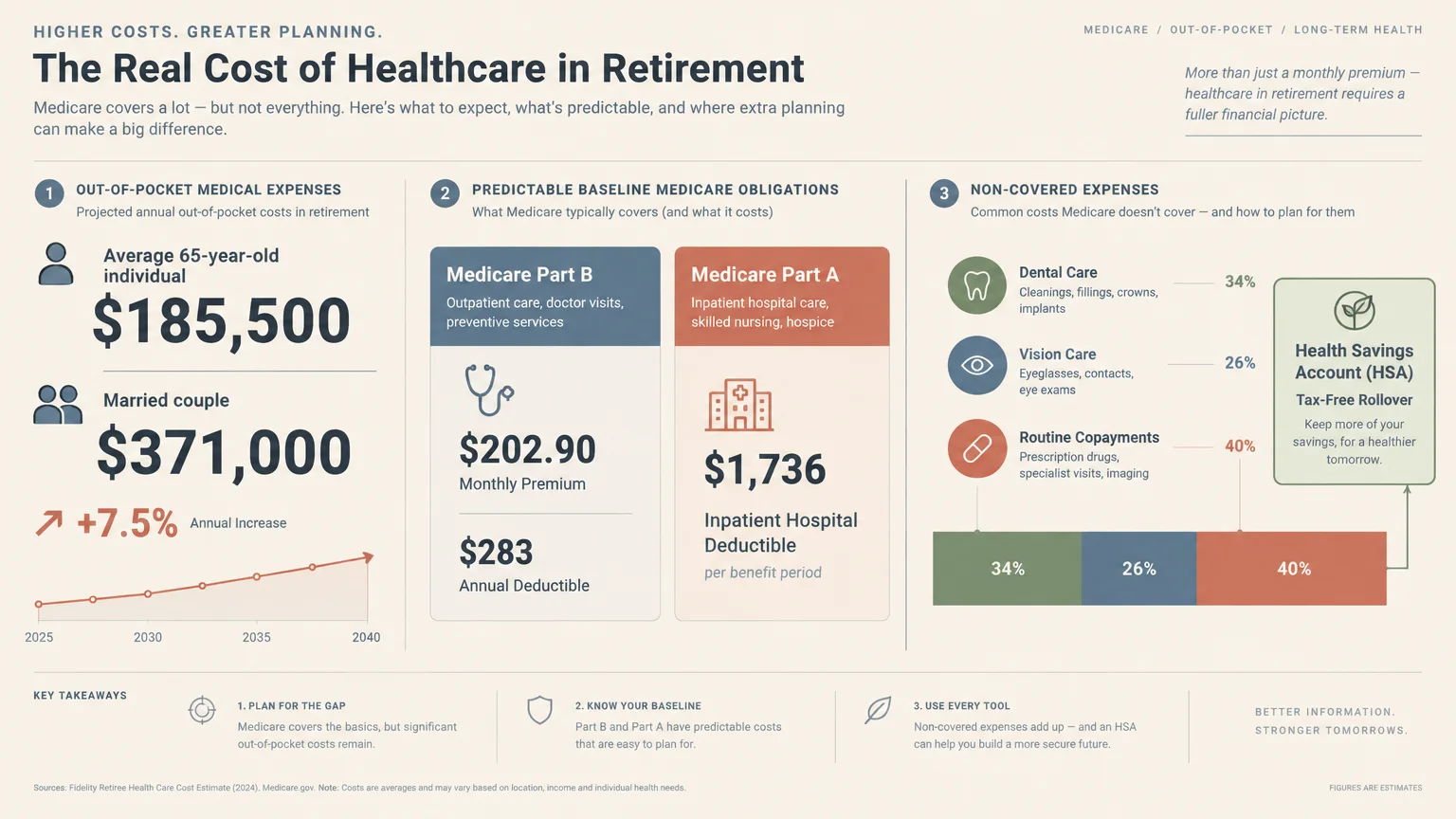
According to Fidelity’s 25th annual estimate, an average 65-year-old needs roughly $185,500 for out-of-pocket medical expenses. For a married couple, that projected obligation climbs to approximately $371,000.
This figure represents a 7.5% jump from the prior year and completely excludes long-term nursing assistance. Routine copayments, dental treatments, and vision care add up quickly over time.
You face predictable baseline expenses immediately upon enrollment. The standard Medicare Part B monthly premium is $202.90, paired with an annual deductible of $283.
Hospital visits introduce further expenses. The Medicare Part A inpatient hospital deductible requires $1,736 per benefit period before coverage takes effect.
Wealthy retirees avoid these financial surprises by establishing dedicated health reserves before they leave their careers. They treat healthcare as an essential, non-negotiable line item within their retirement planning.
If you have access to a Health Savings Account during your working years, maximize your contributions. Unused HSA balances roll over indefinitely, allowing you to pay qualified medical costs completely tax-free.
Evaluating supplemental policies like Medigap or Medicare Advantage plans also helps cap unexpected personal liability. Comparing your options each year ensures your coverage matches your changing health needs.
Accounting for real medical costs preserves your hard-earned assets against sudden shocks. You protect your lifestyle while receiving the quality care you deserve.
Tip #2: Claiming Social Security Early Without Running the Math
Rushing to collect Social Security early permanently reduces your guaranteed monthly income. Retirees with plenty of savings treat their benefits as valuable longevity insurance instead.
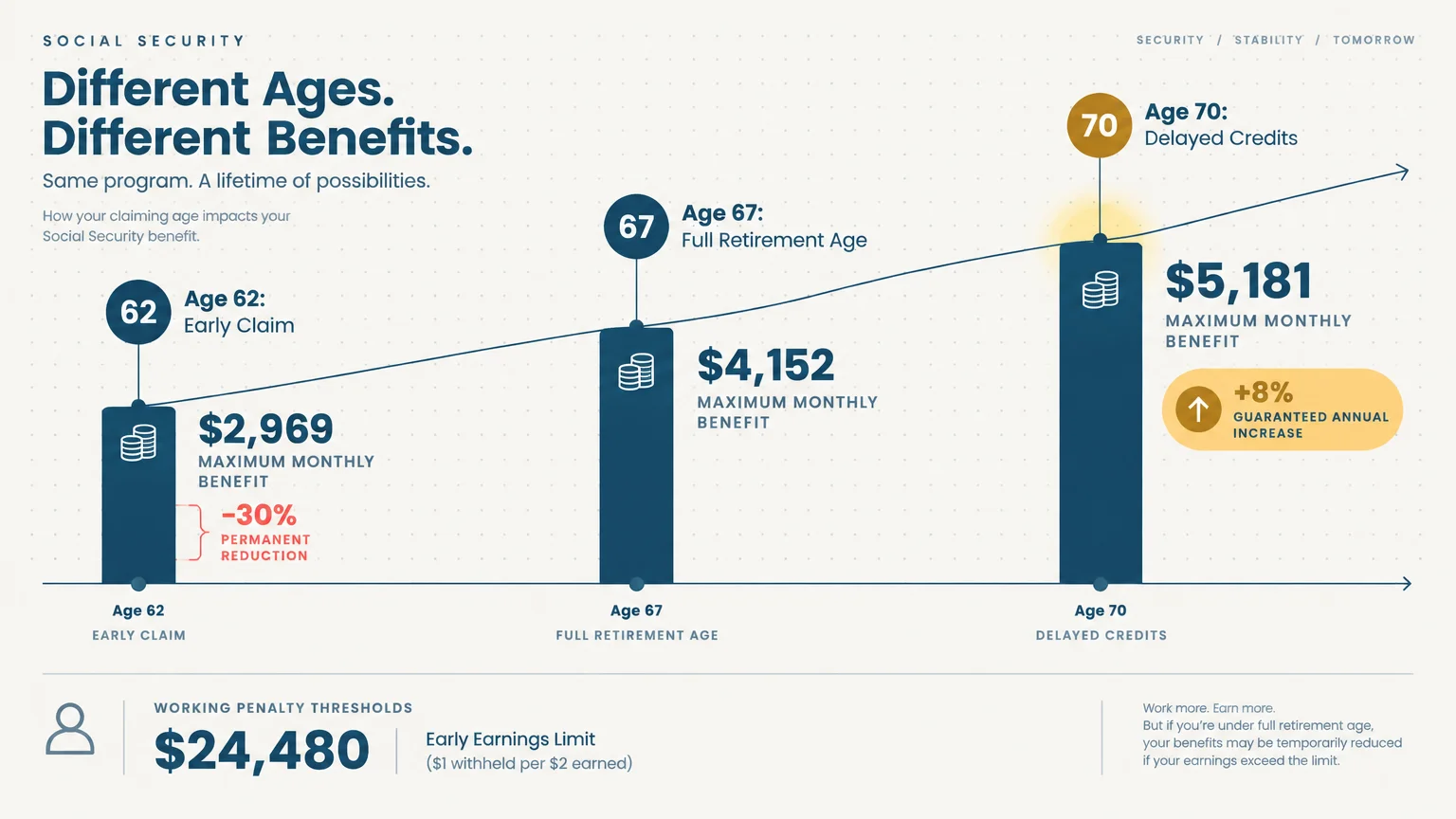
For anyone born in 1960 or later, Full Retirement Age is 67. Claiming benefits at age 62 locks in a permanent 30% reduction to your monthly payments.
Delaying your claim past Full Retirement Age increases your benefit by 8% per year until age 70. That guaranteed return outpaces almost any conservative investment on the market today.
Payout figures highlight the impact of waiting. The maximum possible monthly benefit is $2,969 at age 62, $4,152 at age 67, and $5,181 at age 70.
Meanwhile, the average retired worker collects approximately $2,071 per month following a 2.8% cost-of-living adjustment. Maximizing your monthly payout establishes a durable barrier against rising consumer prices.
Working while claiming benefits early introduces additional penalties. If you claim before reaching Full Retirement Age, the government withholds $1 in benefits for every $2 earned above $24,480.
In the calendar year you reach Full Retirement Age, the limit rises to $65,160. The government withholds $1 for every $3 earned above that limit until your birthday month.
Wealthy retirees rely on personal savings during early retirement years to bridge the income gap. Drawing down taxable portfolios first allows Social Security credits to accumulate at maximum rates.
This delay also protects your spouse. If you are the higher-earning partner, delaying benefits locks in the largest possible survivor benefit for your partner’s future.
Treating Social Security as a late-stage guaranteed annuity maximizes your long-term security. You lock in predictable, inflation-protected income that lasts as long as you live.

Tip #3: Triggering Unplanned Medicare IRMAA Surcharges
Withdrawing large lump sums from traditional retirement accounts can trigger unexpected healthcare surcharges. Astute retirees structure their income carefully to protect their baseline Medicare costs.
High-income retirees often encounter the Income-Related Monthly Adjustment Amount, known as IRMAA. This statutory surcharge adds substantial fees to your monthly Medicare Parts B and D premiums.
The government examines your Modified Adjusted Gross Income from two years prior to determine your rates. Surcharges begin once income exceeds $109,000 for single filers or $218,000 for married couples.
Crossing these thresholds increases your Part B premium dramatically. Your monthly payment can climb from the standard $202.90 to anywhere between $284.10 and $689.90 per person.
IRMAA surcharges apply to prescription drug plans as well. A sudden capital gain or unmanaged distribution can add thousands of dollars to an annual household budget.
Wealthy retirees prevent these spikes by monitoring income thresholds closely before realizing large capital gains. They avoid selling highly appreciated assets in a single tax calendar year.
You can also manage your bracket exposure by coordinating withdrawals across diverse accounts. Blending taxable brokerage accounts and Roth distributions keeps your reported gross income below IRMAA cliffs.
If a life-changing event occurs, such as marriage, divorce, or loss of income, you can appeal your surcharge. Filing Form SSA-44 alerts Medicare to reevaluate your current financial situation.
Thoughtful tax distribution strategies preserve your cash flow throughout retirement. You protect your wealth from unneeded government fees while maintaining your desired lifestyle.

Tip #4: Following Rigid Withdrawal Percentages Without Flexibility
Following an inflexible withdrawal percentage can damage your portfolio during market downturns. Wealthy retirees utilize flexible withdrawal strategies to protect capital and make savings last.
Morningstar’s State of Retirement Income research identifies 3.9% as the safe starting withdrawal rate for new retirees. This baseline assumes a fixed, inflation-adjusted spending strategy across 30 years.
A rigid spending schedule forces you to sell equities after market declines, compounding portfolio losses. This mechanical approach permanently impairs your principal balance during extended bear markets.
Morningstar discovered that adopting dynamic spending allows retirees to safely withdraw closer to 5% or 6%. You gain greater spending power by adjusting distributions to market realities.
Dynamic spending involves trimming discretionary expenses slightly during down years. When investment markets recover, you can comfortably increase your personal budget for travel and recreation.
Financial experts often call this technique the guardrails approach. Setting upper and lower spending boundaries keeps your withdrawals aligned with your portfolio’s real-time performance.
Pairing flexible withdrawals with a multi-year cash reserve prevents panic-selling. You draw cash reserves during bear markets and let your growth equities recover undisturbed.
This dynamic approach ensures you never lock in paper losses during temporary economic pullbacks. Your wealth remains invested in productive businesses that generate long-term compounding returns.
Dynamic distribution planning gives you higher income when markets surge and protects your portfolio when they stumble. Flexibility remains the ultimate defensive tool for your investments.
Tip #5: Neglecting Required Minimum Distributions and Tax Planning
Traditional retirement accounts cannot defer income taxes indefinitely. Retirees with substantial savings understand the strict calendar rules and penalties governing Required Minimum Distributions.
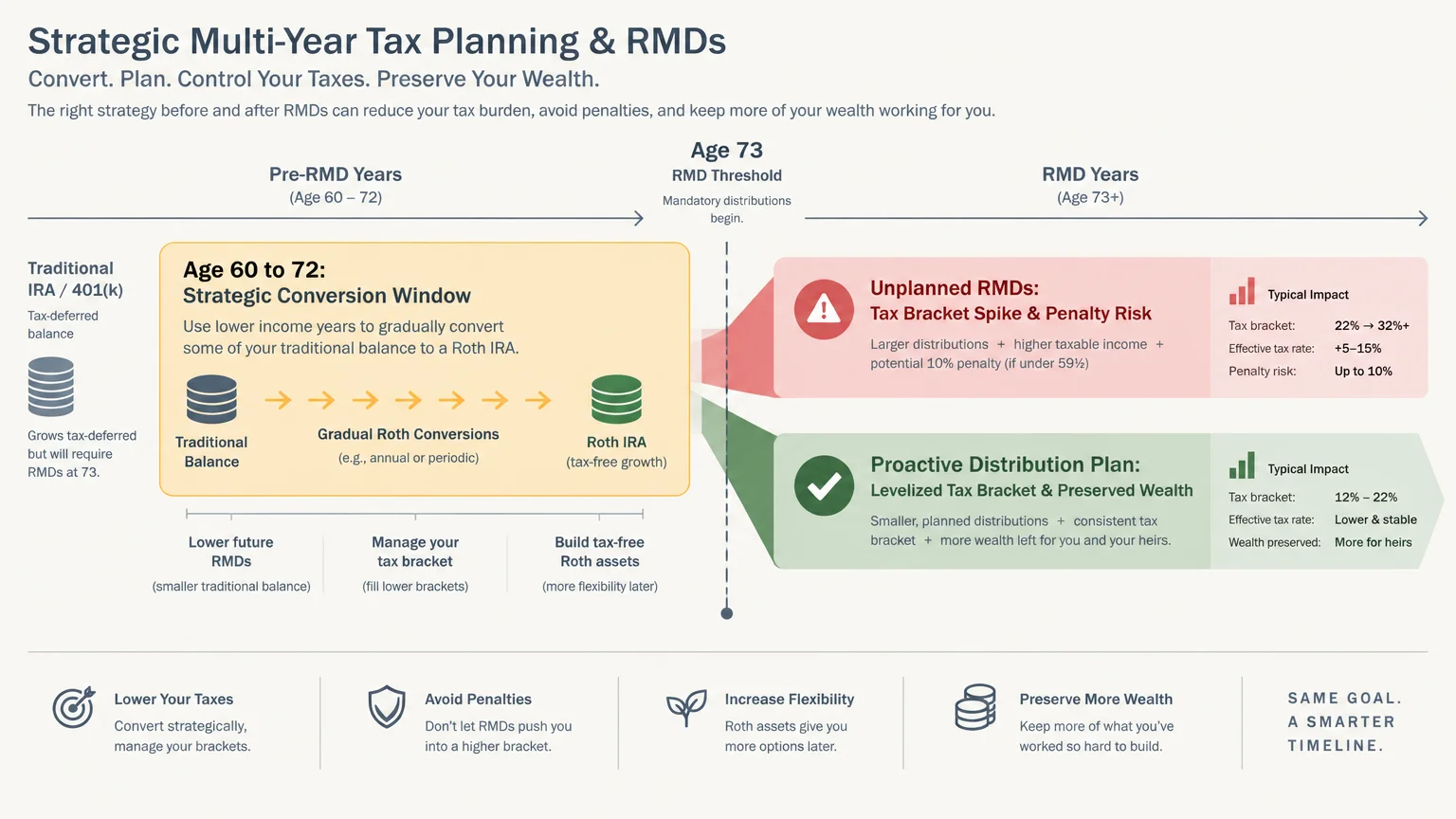
Under the SECURE 2.0 Act, you must begin taking distributions at age 73 if born between 1951 and 1959. That starting age shifts to 75 in 2033 for individuals born later.
Missing the annual December 31 withdrawal deadline invites an immediate 25% excise tax on the remaining balance. Timely corrections within two years can reduce that penalty to 10%.
Large mandatory withdrawals can also push you into significantly higher federal tax brackets. Proactive investors plan distributions years in advance to manage their taxable exposure.
If you are 70½ or older, you can utilize a Qualified Charitable Distribution to optimize your taxes. This provision allows you to transfer funds directly from an IRA to a qualified charity.
You can donate up to $111,000 per person annually through this tax-free charitable mechanism. The donated sum satisfies your distribution requirement without increasing your taxable gross income.
Bypassing adjusted gross income prevents your charitable gifts from triggering Medicare surcharges or higher Social Security taxation. It allows you to support meaningful causes while protecting your overall wealth.
You can also execute gradual Roth conversions during your early retirement years before mandatory distributions begin. Converting balances during lower-income windows shrinks future required withdrawals.
Mastering these distribution guidelines prevents punitive IRS fees from shrinking your nest egg. Strategic planning ensures your assets transfer efficiently according to your personal values.

Tip #6: Overlooking Pre-Retirement Catch-Up Opportunities
The final decade of your career offers an extraordinary window to accelerate your wealth accumulation. Successful savers exploit every available catch-up contribution before concluding their careers.
For workers aged 50 and older, workplace retirement plans permit substantial extra savings. The base contribution limit is $24,500, supplemented by an $8,000 catch-up allowance for a $32,500 total.
Workers aged 60 through 63 enjoy an even higher limit under SECURE 2.0 rules. A super catch-up provision of $11,250 allows you to defer up to $35,750 into workplace accounts.
Keep in mind the latest tax rules for high earners. If your prior-year FICA wages exceeded $150,000, regulations mandate directing all catch-up contributions into after-tax Roth accounts.
Roth contributions require paying taxes today, but they generate entirely tax-free growth and distributions. That tax-free growth creates an invaluable hedge against rising future tax rates.
Individual Retirement Accounts provide further savings capacity. You can contribute up to $7,500 annually, alongside an inflation-indexed $1,100 catch-up limit for savers 50 and older.
If you are married, your non-working spouse can also fund a spousal IRA using your household income. This simple step doubles your family’s annual tax-advantaged retirement contributions.
Directing peak career earnings into these accounts delivers powerful late-stage compounding benefits. You reduce your current taxable income or build substantial pools of tax-free future wealth.
Maximizing catch-up contributions during your final working years solidifies your financial foundation. You step into retirement with complete confidence and expansive financial independence.

Tip #7: Concentrating Assets in a Single Tax Category
Concentrating all your assets inside tax-deferred accounts creates severe tax friction later in life. Seasoned investors construct diversified tax portfolios to give themselves total control over their distributions.
When every dollar sits in a traditional IRA, every withdrawal triggers ordinary income taxes. That rigidity restricts your options and increases your vulnerability to future tax hikes.
Wealthy retirees manage their wealth using a three-bucket approach. This method diversifies savings across taxable brokerage accounts, traditional tax-deferred accounts, and tax-free Roth accounts.
Having access to Roth funds allows you to finance large discretionary goals without altering your reported income. You fund vacations, vehicles, or home renovations without jumping into a higher tax bracket.
Taxable brokerage accounts offer unique advantages through favorable capital gains tax rates. Harvesting capital gains strategically produces flexible cash flow while minimizing your net tax liability.
Taxable accounts also grant complete liquidity with no age restrictions or mandatory distribution mandates. You retain full autonomy over your funds regardless of changing legislative rules.
You can perform partial Roth conversions during lower-income bridge years before mandatory distribution age arrives. Moving assets into Roth vehicles shields future investment growth from federal taxes.
This balanced approach allows your financial planner to pull income from whichever account is most tax-efficient each year. You navigate economic shifts with minimal tax disruption.
Tax diversification provides you with the freedom to navigate any economic environment. You preserve more of your hard-earned wealth and maintain steady cash flow throughout your golden years.

Tip #8: Letting Family Financial Subsidies Erode Your Nest Egg
Providing ongoing financial support to family members can silently drain a lifetime of savings. Financially secure retirees establish loving but firm financial boundaries with adult relatives.
Many generous parents exhaust significant capital paying off adult children’s debts or financing speculative ventures. While well-intentioned, open-ended subsidies quickly turn into permanent liabilities.
Remember that retirees cannot apply for loans to fund their living expenses. If your personal reserves dry up, you have no way to replace that capital.
Wealthy retirees recognize that securing their own retirement is the greatest gift they can give their children. Staying self-sufficient ensures you never become an emotional or financial burden later in life.
If you wish to assist relatives, allocate a specific, fixed gifting budget each year. Make it clear that your assistance is limited and never compromises your core lifestyle expenses.
You can also fund educational 529 plans for grandchildren rather than handing out unrestricted cash. This structured gifting provides lasting generational value while keeping your money purposeful.
Offering non-monetary assistance, including financial mentoring, wisdom, or childcare help, provides immense family support. These acts of service foster meaningful family bonds without diminishing your investment portfolio.
Encouraging self-reliance empowers adult children to build their own financial resilience and confidence. You support their independence without sacrificing your personal hard-earned stability.
Healthy boundaries protect your financial security while encouraging financial independence in the next generation. You preserve your wealth and foster mutual respect within your family.

Tip #9: Holding Excessive Cash Reserves Out of Market Fear
Sheltering excessive sums of money in cash accounts feels safe during periods of market volatility. However, hoarding too much cash exposes your wealth to the persistent drag of inflation.
Inflation quietly erodes purchasing power year after year. Over a thirty-year retirement, holding excess cash guarantees a permanent loss in your real standard of living.
Knowledgeable retirees avoid this trap by holding a measured, deliberate cash reserve. Maintaining one to two years of living expenses in liquid funds provides adequate security without sacrificing growth.
This liquid cushion funds your daily needs during inevitable market downturns. You never feel compelled to liquidate depressed equities when prices drop temporarily.
The remaining balance of your portfolio stays invested in dividend-paying equities, bonds, and real estate. These productive assets generate compounding income that consistently outpaces consumer price inflation.
High-yield savings accounts, short-term Treasury bills, or money market funds offer attractive yields for your cash buffer. These safe vehicles generate steady interest without placing your capital at risk.
Rebalancing your portfolio annually ensures your cash bucket remains replenished from investment gains. When equities perform well, you harvest profits to top off your liquid emergency fund.
Holding just enough cash delivers tranquility while preventing the damage of cash drag. Your investment capital continues working on your behalf throughout every market cycle.
Striking the proper balance between liquidity and long-term investments sustains your lifestyle indefinitely. You enjoy immediate stability alongside durable capital appreciation.

Tip #10: Neglecting Comprehensive Estate and Beneficiary Updates
Accumulating a sizable nest egg is only half the battle; directing its legacy is equally critical. Wealthy retirees avoid outdated estate documents that could derail their intended wealth transfer.
Many savers mistakenly rely solely on a standard last will and testament. In reality, beneficiary designations on retirement accounts and insurance policies take legal precedence over your will.
Failing to update designations after marriages, divorces, or births can transfer assets to unintended beneficiaries. Reviewing your accounts periodically prevents expensive disputes and ensures your true wishes prevail.
Comprehensive planning also addresses potential incapacitation through medical directives and powers of attorney. These documents name trusted individuals to manage your finances and healthcare if you cannot.
Without these essential legal documents in place, families must navigate cumbersome and expensive probate proceedings. Proactive legal preparation shields your loved ones from stressful administrative obstacles.
Many affluent retirees establish revocable living trusts to streamline asset distribution. A well-crafted trust provides privacy, minimizes legal costs, and distributes your wealth according to your precise timeline.
Trusts also protect assets for minor grandchildren or family members who struggle with money management. You control how and when your wealth empowers future generations.
Regularly reviewing your estate documents with an attorney ensures alignment with current state and federal tax laws. Proactive updates protect your family from unnecessary transfer taxes and legal disputes.
Updating your estate documents guarantees that your legacy remains secure and organized. You provide your heirs with clarity, protection, and lasting financial stability.

The Takeaway: Living a More Blissful Retirement
Achieving true financial security in retirement is about more than watching your balance grow. It requires purposeful decision-making, tax awareness, and adaptable distribution strategies.
Wealthy retirees preserve their capital by avoiding common traps like rigid spending, early claims, and overlooked medical costs. They take thoughtful action to protect their wealth against taxes and inflation.
You do not need to live frugally to enjoy lasting financial peace. Implementing flexible withdrawal models and maintaining smart tax diversification keeps your portfolio resilient in any economic climate.
Take time today to examine your personal retirement planning strategy. Small adjustments made now will yield substantial rewards throughout your golden years.
Surrounding yourself with trusted financial and legal professionals ensures your plan adapts to changing laws. Collaborative guidance provides clarity and frees your time for the activities you cherish.
Your golden years offer an incredible opportunity to pursue your passions, spend time with loved ones, and embrace life. By mastering these habits, you ensure your savings support your happiness for decades to come.
Frequently Asked Questions
How much cash should you hold in retirement to avoid cash drag?
Keeping one to two years of basic living expenses in cash equivalents provides an ideal safety net. This buffer covers your immediate bills without exposing your entire portfolio to inflationary drag.
Keeping your remaining capital invested in dividend stocks and bonds ensures your wealth continues growing. You maintain short-term liquidity while outpacing inflation over the long haul.
Can a Qualified Charitable Distribution help lower taxable income?
Yes, individuals aged 70½ and older can transfer up to $111,000 annually directly from an IRA to a qualified charity. This transfer counts toward your required distributions without counting as taxable income.
By excluding the distribution from your adjusted gross income, you can prevent higher tax brackets and Medicare surcharges. It represents a powerful strategy for philanthropic retirees.
What happens if you work while taking Social Security before Full Retirement Age?
If you claim benefits before Full Retirement Age, the government withholds $1 in benefits for every $2 earned above $24,480. That threshold increases to $65,160 during the year you reach Full Retirement Age.
Once you reach your Full Retirement Age, all earnings limits disappear permanently. The government recalculates your monthly benefit upward to credit you for any previously withheld funds.
How does dynamic spending protect your portfolio compared to fixed withdrawals?
Fixed withdrawal strategies force you to withdraw the same inflation-adjusted dollar amount regardless of market performance. Selling equities during market downturns permanently impairs your portfolio balance.
Dynamic spending allows you to trim discretionary expenses slightly during poor market years and spend more during prosperous years. This flexibility allows retirees to safely withdraw 5% to 6% without depleting their wealth.
For a wide range of resources for older adults, visit AARP and the National Council on Aging (NCOA). Health information is available from the National Institute on Aging.
Disclaimer: This article is for informational and inspirational purposes only. It is not a substitute for professional medical, financial, or psychological advice. Please consult with a qualified expert for guidance tailored to your individual needs.