
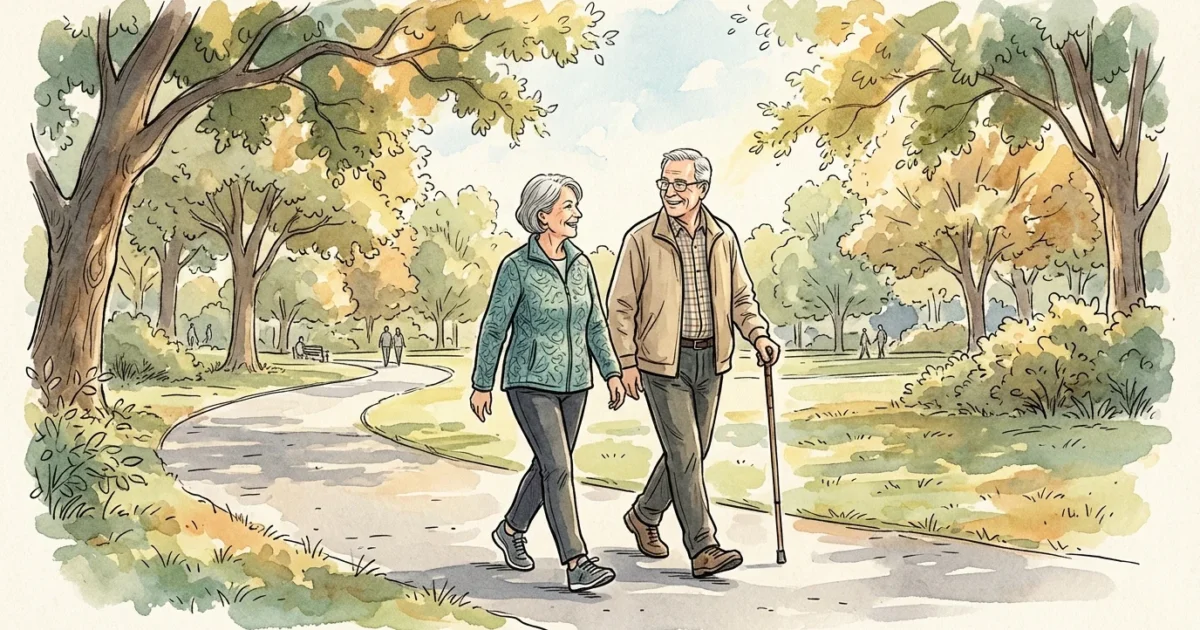
Maintaining vibrant physical independence allows you to fully enjoy every moment of your golden years, yet quiet shifts in your physical stability often go unnoticed until they disrupt your daily routine. Subtle balance changes to mention to a doctor can appear as minor inconveniences—like catching your foot on a rug, feeling lightheaded when stepping off a curb, or needing a touch on the hallway wall for extra support. Catching these early signs of balance problems empowers you to address underlying health factors, adjust medications, or start targeted exercises before a fall occurs. Partnering with your healthcare provider keeps you moving confidently toward a joyful, active, and fulfilling retirement.
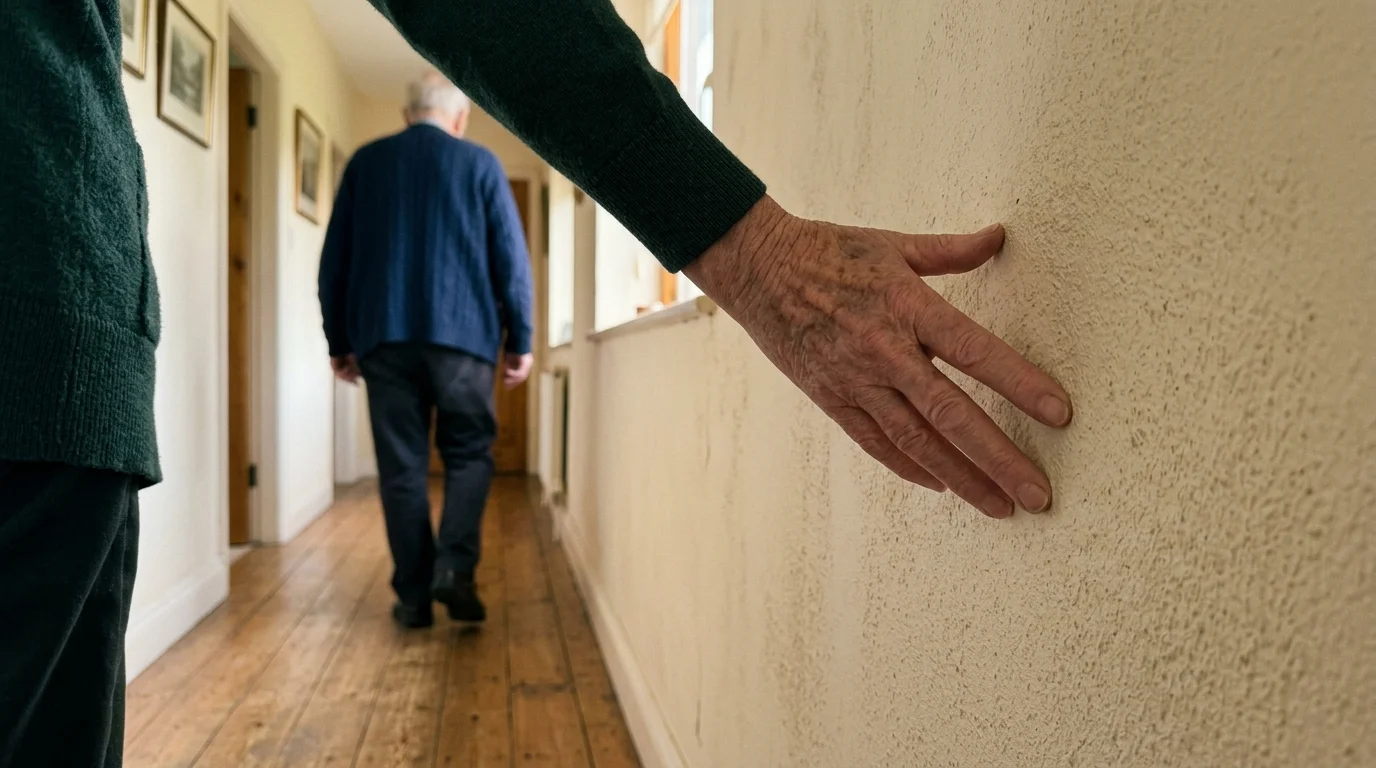
Tip #1: Reaching for Walls or Furniture While Walking
You might notice yourself trailing your fingers along the hallway wall or casually resting a hand on the back of the sofa as you cross your living room. Physical therapists refer to this habit as “furniture cruising.” While it feels like an automatic safety measure, it often develops as a silent reflex when your nervous system detects micro-instabilities in your gait.
Your body relies on three interconnected sensory systems to keep you upright: your eyes, your inner ear vestibular organs, and proprioceptors—tiny nerve sensors in your muscles and joints that tell your brain where your limbs sit in space. As you age, proprioceptive feedback from your ankles and feet can diminish slightly due to reduced nerve conduction velocity or mild joint stiffening. When these sensors send faint signals, your brain instinctively seeks external touch cues to anchor your movement.
Mentioning subtle balance changes to mention to a doctor during your next visit provides valuable diagnostic clues. Your physician can perform a simple sensory test on your feet or evaluate your joint position sense. In many cases, targeted ankle mobility exercises, custom shoe inserts, or simple balance training can recalibrate your body’s positional awareness. Addressing furniture cruising early prevents deeper muscle compensations, allowing you to walk freely through open spaces without needing extra support.

Tip #2: Hesitation or Unsteadiness When Stepping Off Curbs
Stepping down from a sidewalk curb or descending a flight of stairs requires seamless coordination between visual depth perception and lower-body muscle strength. If you find yourself pausing longer than usual at the edge of a sidewalk, or if your foot lands with an unexpected jarring force, your visual and motor integration may need attention.
Depth perception naturally changes as eye tissues mature; conditions like early-stage cataracts, age-related macular changes, or even updated progressive lenses can alter how you judge distances and vertical drop-offs. When visual input becomes slightly blurred or distorted, your brain hesitates to execute the downward step, creating a temporary loss of rhythmic momentum. Research from balance specialists shows that improper eyewear prescriptions account for a significant portion of missteps outdoors, making this one of the clearest early signs of balance problems.
When you discuss this hesitation with your primary care physician, bring up your recent eye exams alongside your physical symptoms. Your doctor can check for peripheral vision changes, review your corrective lens type, and test your quadriceps strength. Simple adjustments—such as switching to single-vision glasses for outdoor walks or practicing eccentric leg-strengthening exercises—can quickly restore your confidence when navigating neighborhood streets.
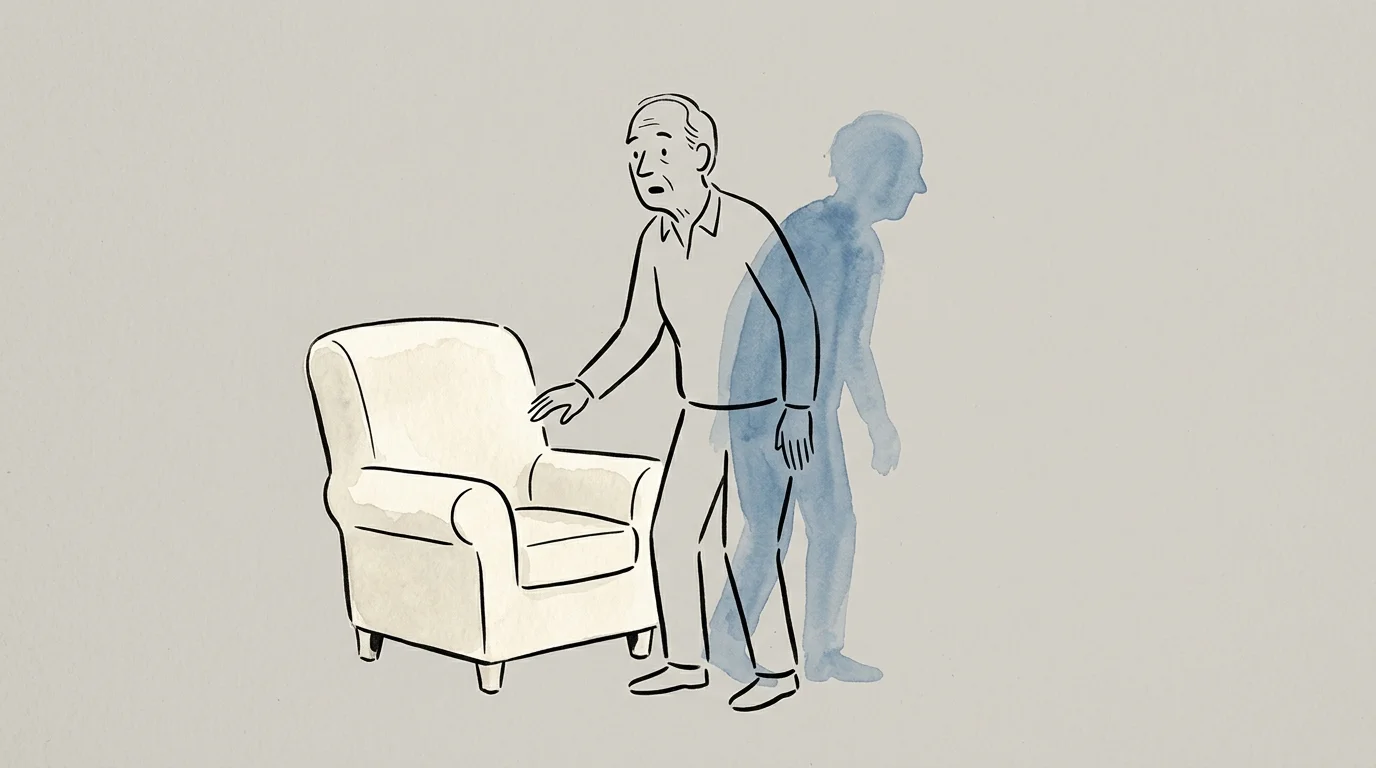
Tip #3: Brief Lightheadedness or Swaying Upon Standing Up
Feeling a fleeting moment of dizziness or instability when transitioning from a seated position to standing up is a common experience, but you should never ignore it. This sensation, known clinically as orthostatic hypotension, occurs when your cardiovascular system delays pushing enough blood back up to your brain as gravity shifts.
As time passes, blood vessels naturally become less elastic, and the autonomic baroreceptors responsible for regulating rapid pressure changes respond slightly more slowly. Additionally, common prescription medications—such as blood pressure treatments, diuretics, muscle relaxants, and certain heart drugs—frequently contribute to temporary pressure drops upon standing. Mild dehydration, which becomes more common as natural thirst signals diminish, further exacerbates this temporary imbalance.
Knowing when to see a doctor about balance concerns like standing lightheadedness helps you catch cardiovascular or medication-related shifts early. Your healthcare provider can take your blood pressure while you sit and again immediately after you stand to confirm the shift. Adjusting a medication dosage, changing the time of day you take your prescriptions, or simply increasing your daily fluid intake can often resolve the issue entirely, ensuring you rise smoothly and safely every single time.
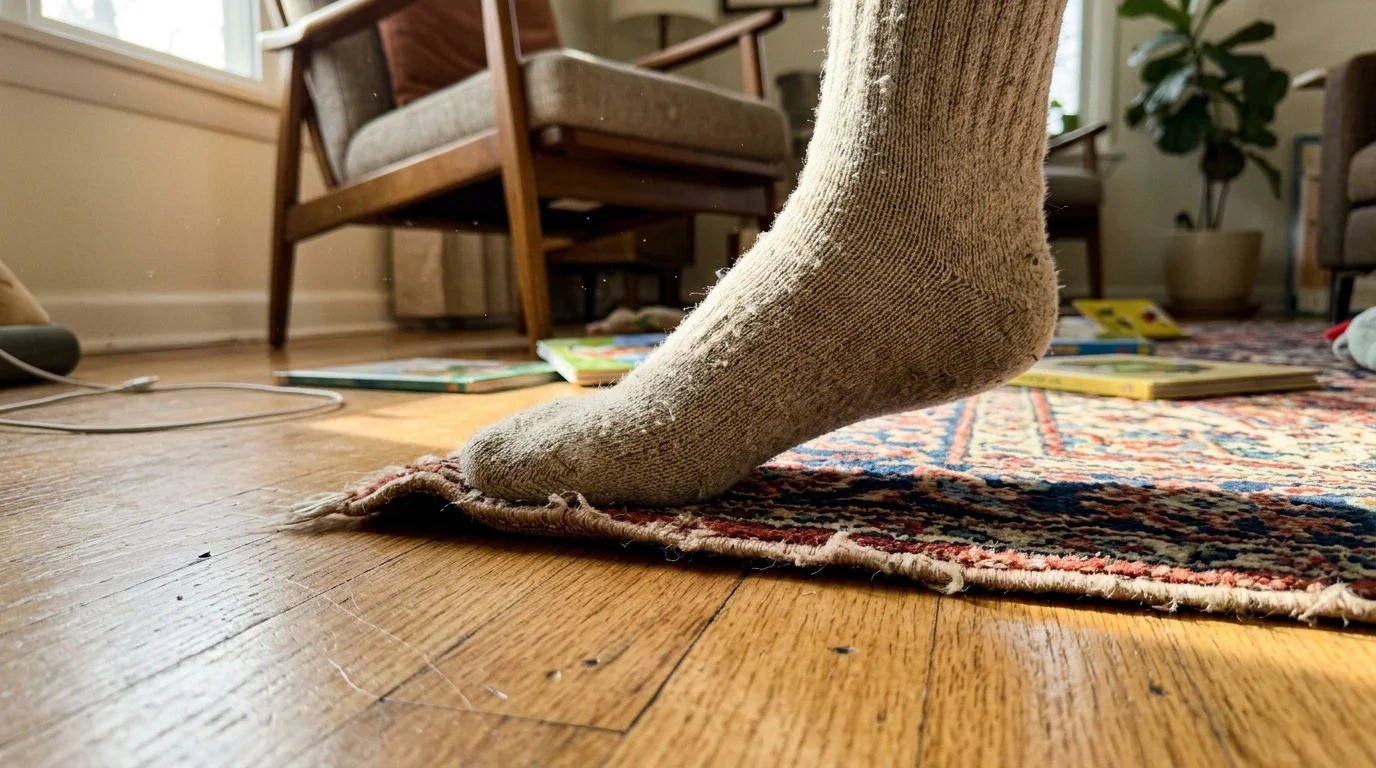
Tip #4: Catching Your Toes on Carpets or Thresholds
Do you occasionally catch the toe of your shoe on rug edges, doorway thresholds, or subtle uneven patches in the pavement? While it is easy to brush off these moments as mere clumsiness, recurring toe-catching often points to gradual balance decline symptoms involving lower-leg biomechanics and foot clearance.
Normal walking requires your brain to signal the muscles in your shin to pull your toes upward—a movement called dorsiflexion—so your foot clears the ground smoothly during the swing phase of your stride. Subtle nerve changes, mild lumbar spinal compression, or tightness in the calf muscles can reduce this clearance by just a few millimeters. According to data from the Centers for Disease Control and Prevention (CDC), minor trips account for a large percentage of preventable falls among older adults, making early detection vital.
Bringing this issue to your medical provider allows them to examine your gait mechanics, check your spinal alignment, and evaluate nerve conduction in your lower legs. Your doctor may recommend a targeted stretching routine for your calves, strengthening drills for your shin muscles, or a podiatry consultation to review your footwear. Correcting foot clearance early ensures every step you take remains crisp, clear, and grounded.
Tip #5: Increased Difficulty Navigating Dimly Lit Rooms
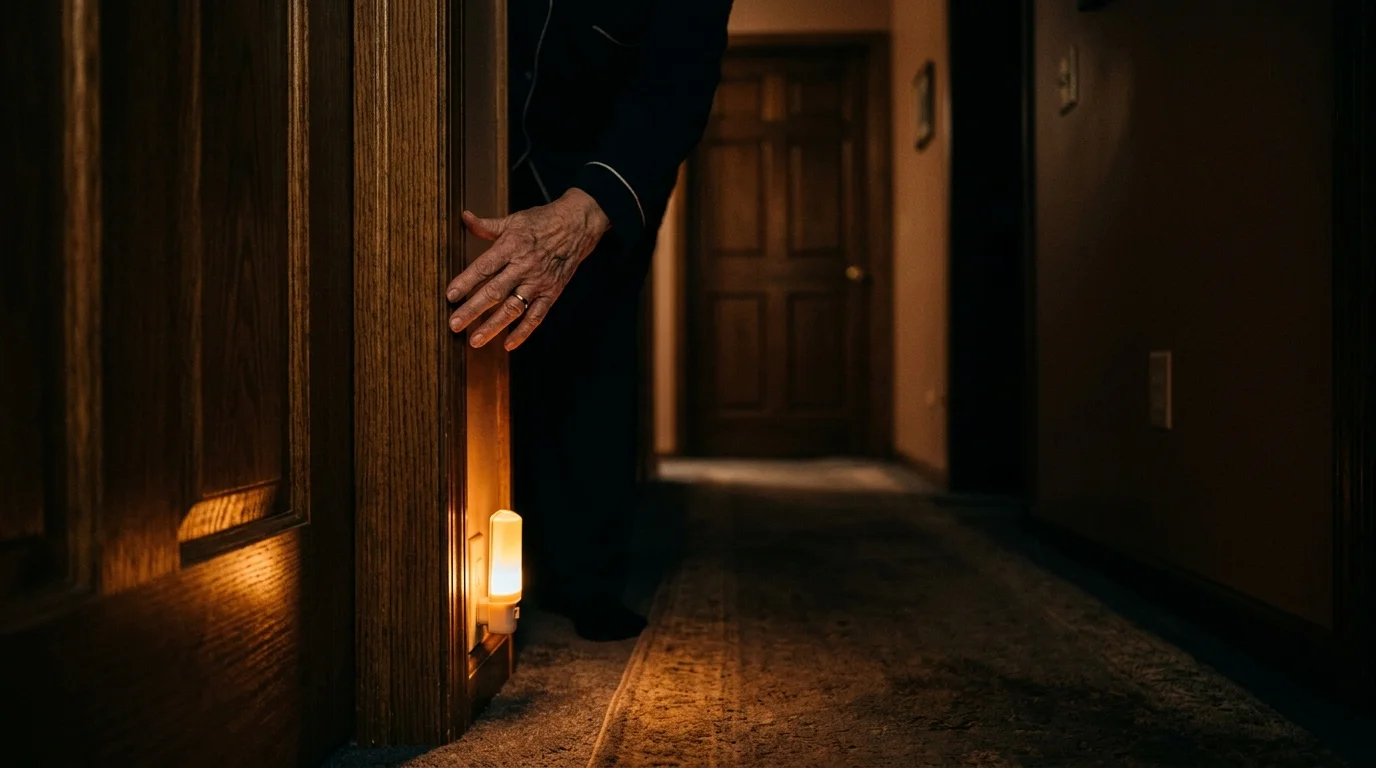
If walking down a dark hallway at night or navigating a dimly lit restaurant feels noticeably more challenging than walking in bright daylight, your balance reliance systems may be shifting. Humans balance through a combination of vision, inner ear signals, and body sensations; when light levels drop, your brain must rely almost entirely on the remaining two systems.
If your inner ear’s vestibular apparatus or the peripheral nerve endings in your feet have experienced subtle age-related changes, your brain relies heavily on visual cues to maintain upright stability. In bright light, your eyes compensate so effectively that you never notice any underlying balance deficit. However, when you step into dim lighting or darkness, that primary visual feedback vanishes, suddenly exposing balance issues worth monitoring.
Discussing dark-environment unsteadiness with your doctor gives them a clear signal to evaluate your vestibular health and sensory nerve performance. Your provider might recommend specialized vestibular rehabilitation exercises, which train your brain to process inner ear balance signals more efficiently. Installing motion-sensor nightlights along hallways and removing loose area rugs can also create a safer, far more comfortable living environment immediately.
Tip #6: Feeling Unsteady While Turning Your Head or Changing Directions
Notice what happens when you turn your head to greet a friend while walking, or when you quickly pivot around to answer the doorbell. If turning your head causes a brief wave of instability, or if you feel forced to stop walking entirely before changing directions, your inner ear balance center may be sending delayed signals.
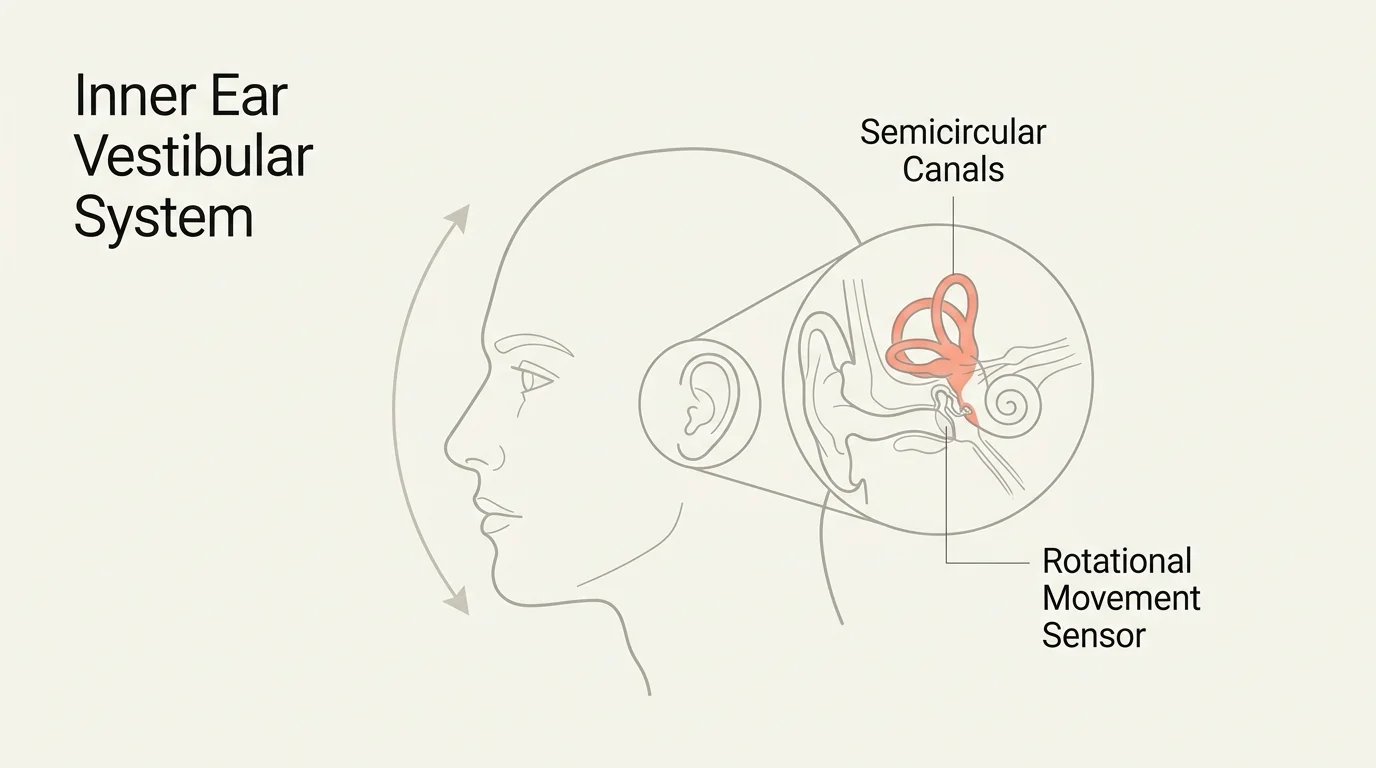
The vestibular system, located inside your inner ear, acts as an internal gyroscope; it continuously sends orientation signals to your eyes and neck muscles so your gaze remains steady while moving. Microscopic calcium crystals within the inner ear can sometimes dislodge, or the nerve pathways can become slightly less sensitive over time. When head movements produce mixed signals, your brain momentarily loses track of your body’s trajectory, causing you to veer slightly off course or feel momentarily unsettled.
Mentioning head-turn unsteadiness to your physician is extraordinarily helpful because many inner ear conditions respond exceptionally well to targeted treatment. Your doctor can perform simple in-office maneuvers, like the Dix-Hallpike test, to pinpoint the exact source of the issue. Often, simple physical therapy exercises—such as gaze stabilization drills—can retrain your inner ear mechanics and restore effortless movement in just a few short weeks.

Tip #7: Feeling Off-Balance When Talking or Carrying Items
Have you noticed that carrying a bag of groceries or having an animated conversation while walking requires much more concentration than it used to? When combining physical movement with a secondary cognitive or motor task feels unusually taxing, you are experiencing what neuroscientists call dual-task interference.
In your younger years, walking operates largely on an automatic subconscious pilot, leaving your conscious mind free to chat, ponder, or manage objects in your hands. As subtle changes occur in joint sensation, muscle reaction time, or brain processing speed, walking demands a greater share of your conscious cognitive attention. When you attempt to talk or carry items simultaneously, your brain must divide its resources, which can lead to sudden sway or momentary loss of balance.
When you share this observation with your healthcare provider, they can assess your cognitive-motor integration using dual-task gait tests. Understanding this dynamic allows your provider to recommend physical therapy programs that combine balance challenges with mental tasks—such as counting backward while stepping over soft obstacles. Practicing these dual-task exercises rebuilds your automatic gait pathways, keeping your physical mobility smooth and natural while you enjoy life’s daily activities.

The Takeaway: Living a More Blissful Retirement
Recognizing early signs of balance problems is not a cause for concern—it is an empowering opportunity to take proactive charge of your physical well-being. Your body continuously provides gentle feedback, and listening to these subtle balance changes allows you to address minor physiological adjustments long before they impact your lifestyle or independence. By maintaining open communication with your primary care doctor, reviewing medications regularly, and engaging in simple balance-enhancing exercises, you preserve the strength, freedom, and agility needed to savor every moment of your retirement.
Embracing a proactive mindset transforms healthcare from a reactive response into a rewarding strategy for long-term vitality. Whether you enjoy gardening, traveling, playing with grandchildren, or embarking on long evening walks, strong balance forms the firm foundation for all of life’s best adventures. Talk to your doctor during your next visit about any shifts you have observed, celebrate the positive steps you take each day, and continue living your golden years with unshakeable joy and confidence.
For a wide range of resources for older adults, visit AARP and the National Council on Aging (NCOA). Health information is available from the National Institute on Aging.
Frequently Asked Questions
How do I know when to see a doctor about balance issues versus normal aging?
You should consult your doctor whenever you notice a repeatable pattern of unsteadiness, no matter how subtle. While minor changes in reaction speed can accompany aging, persistent instability, lightheadedness, or furniture-cruising are not inevitable parts of growing older. Seeking early medical advice helps identify treatable underlying causes before they affect your daily freedom.
What tests will my primary care doctor perform to check my balance?
Your physician will typically conduct quick, non-invasive in-office evaluations. These often include testing nerve sensitivity in your feet, checking your blood pressure while sitting and standing, assessing your eye-tracking movements, and observing your gait through standard tests like the Timed Up and Go (TUG) evaluation.
Can physical therapy actually restore balance in older adults?
Yes, physical therapy is remarkably effective for restoring stability and confidence at any age. Targeted balance rehabilitation programs utilize neuroplasticity—your brain’s ability to form new neural connections—to improve core strength, enhance inner ear function, and retrain body positional awareness through progressive, safe exercises.
Could my current prescription medications be causing my gradual balance decline symptoms?
Prescription medications are one of the most common—and easily correctable—sources of balance disturbances. Drugs that treat high blood pressure, sleep disorders, anxiety, or nerve pain can affect your central nervous system or fluid balance. Bringing a full list of your medications and supplements to your doctor allows them to adjust dosages or switch medications safely.
Disclaimer: This article is for informational and inspirational purposes only. It is not a substitute for professional medical, financial, or psychological advice. Please consult with a qualified expert for guidance tailored to your individual needs.