Retirement gives you the precious freedom to expand your mind, build fresh skills, and protect your memory without draining your savings. Engaging in purposeful pastimes sharpens your focus and creates powerful new neural pathways every single day.
You do not need expensive subscriptions or costly equipment to enjoy robust cognitive benefits. In fact, some of the most effective pastimes for maintaining mental clarity cost next to nothing.
By choosing the right activities, you can safeguard your brain health while having wonderful daily fun. Here are six proven, low-cost pursuits that will keep your mind energized throughout your golden years.
Tip #1: Gardening and Botanical Propagation
Gardening offers far more than fresh vegetables and vibrant blooms. Digging in the soil provides rich sensory stimulation that directly nurtures your executive functioning skills.
A landmark 16-year study published in the Medical Journal of Australia tracked adults aged 60 and older. Researchers discovered that daily gardening correlated with a 36% lower risk of incident dementia.
The cognitive perks stem from a unique blend of physical movement, sensory feedback, and complex forward planning. You must calculate planting schedules, monitor changing weather patterns, and carefully prune tender stems.
Best of all, you can cultivate a thriving garden on a shoestring budget. You do not need expensive commercial nursery plants to get started.
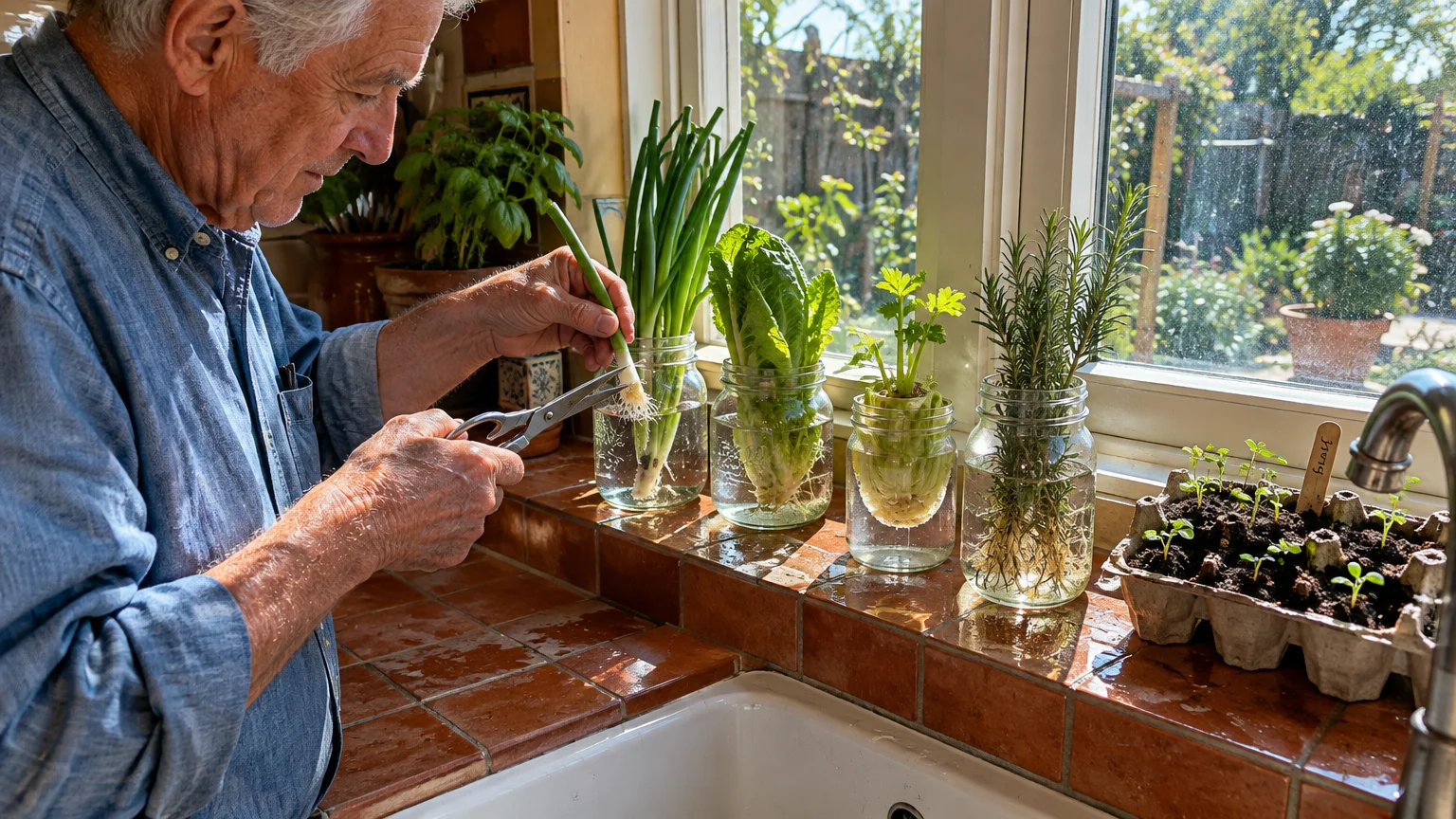
Instead, try botanical propagation by taking small cuttings from existing houseplants or trading clippings with friends. A single sprig of rosemary or pothos easily roots in a simple glass of tap water.
You can also sprout grocery store scraps like green onions, celery bases, and romaine lettuce hearts on a sunny windowsill. This simple experiment gives you rewarding feedback while exercising your problem-solving abilities.
As you tend your plants, your brain engages in tactile fine motor coordination. This sensory feedback activates cortex regions that often remain dormant during passive sedentary activities.
Maintaining a simple daily watering and care log sharpens your prospective memory. Prospective memory is the exact cognitive muscle that helps you remember everyday appointments and essential tasks.
If outdoor yard space is limited, try container gardening on a patio, porch, or balcony. Small pots filled with fragrant herbs provide the exact same cognitive and emotional revitalization.
Soil microbes also trigger serotonin production in your brain, boosting your mood naturally. A joyful mood reduces chronic stress, which directly shields your delicate brain tissue from premature wear.
Starting seeds in recycled egg cartons creates an enjoyable springtime routine that requires minimal investment. Watching those tiny seeds flourish under your care provides a profound sense of accomplishment.
Make gardening a social experience by exchanging extra seedlings and homegrown produce with your neighbors. That neighborly banter enriches your social network while keeping your botanical knowledge growing.
Tip #2: Fiber Arts and Creative Handiwork
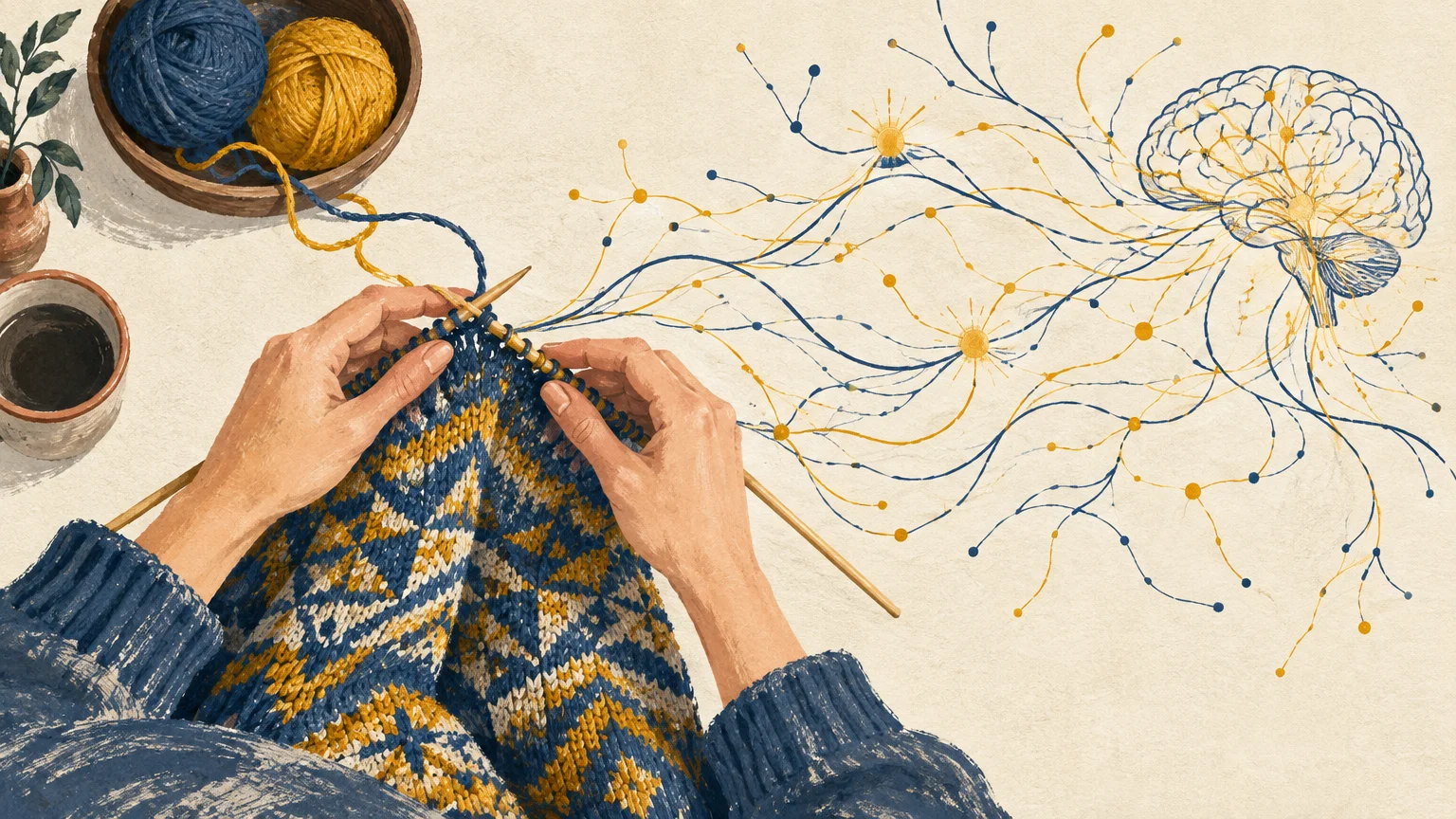
Engaging in hands-on fiber arts like knitting, crocheting, and quilting delivers extraordinary neurological rewards. These rhythmic crafts stimulate both hemispheres of your brain simultaneously.
Groundbreaking research from the Mayo Clinic Study of Aging revealed compelling evidence for creative handiwork. Seniors who regularly practiced crafting had a 30% to 50% lower likelihood of developing mild cognitive impairment.
As one of the premier cognitive health hobbies, knitting requires continuous spatial awareness and pattern recognition. Your brain calculates complex stitch counts and anticipates structural changes across every single row.
This coordinated, bilateral hand movement strengthens communication across your corpus callosum. That neural bridge connects your analytical left hemisphere with your creative right hemisphere.
Crafting also induces a calming state of flow, much like mindfulness meditation. The rhythmic repetition lowers cortisol levels and eases systemic inflammation throughout your body.
You can pursue these pastimes without spending significant amounts of money. Local thrift stores often stock bags of unused yarn, knitting needles, and fabric remnants for just a few dollars.
You can also unravel thrifted woolen sweaters to reclaim dozens of yards of premium material for fresh creations. This clever recycling tactic stretches your budget while challenging your manual dexterity.
Try donating completed scarves, newborn beanies, or lap blankets to local charity drives and hospitals. Philanthropic crafting infuses your daily routine with a deep sense of purpose and pride.
Free online video tutorials can teach you advanced stitches and intricate colorwork techniques at your own pace. Learning these complex new maneuvers forces your brain to build sturdy new neural pathways.
Hands-on crafting proves that affordable hobbies for seniors can be both relaxing and profoundly protective for your mind. Pick up a pair of needles and let your imagination flourish.
Working with vibrant colors and rich textures provides wonderful sensory grounding during quiet afternoons. This tactile immersion reduces mental fatigue and helps clear away daily distractions.
You can also gather with fellow crafters for weekly knitting circles at community centers or coffee shops. Sharing patterns and troubleshooting dropped stitches turns a solitary hobby into a vibrant social gathering.
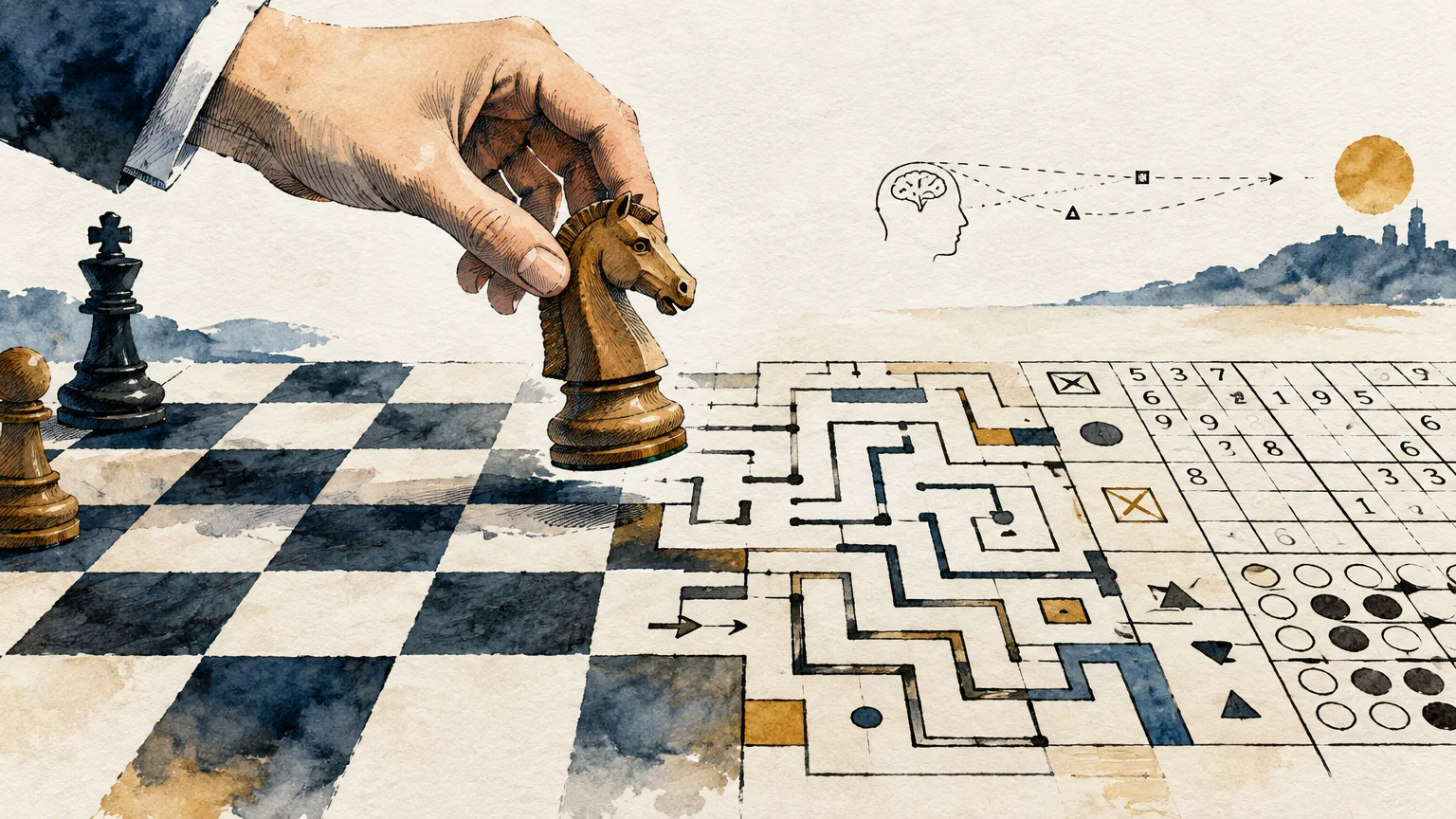
Tip #3: Strategic Board Games and Logic Puzzles
Logic games, chess, and complex puzzles provide a rigorous workout for your prefrontal cortex. That vital region governs logical reasoning, decision-making, and critical thinking.
A massive meta-analysis published in Neurology in 2022 synthesized data across 38 longitudinal studies with 2.1 million participants. Researchers discovered that mentally stimulating leisure activities lowered all-cause dementia risk by 23%.
Regular puzzle solving keeps your cognitive reserve resilient against age-related decline. When you anticipate your opponent’s moves or decipher cryptic crossword clues, your brain flexes its analytical muscle.
Traditional pastimes like Scrabble, bridge, Sudoku, and jigsaw puzzles are premier brain healthy hobbies. They demand working memory, spatial orientation, and rapid vocabulary recall.
You do not need to purchase expensive board games to experience these intellectual benefits. Community thrift shops regularly feature complete vintage puzzle sets and classic board games for pocket change.
Many local senior centers and community libraries host weekly board game circles and chess meetups. These casual gatherings provide mentally stimulating entertainment alongside vital social connection.
If you prefer digital play, countless free mobile applications and websites offer endless daily puzzles without subscription fees. You can solve daily crosswords or challenge global players to friendly turn-based chess matches.
Variety is crucial for maximizing your intellectual progress. When a specific puzzle format feels effortless, switch to a new game to surprise and challenge your brain.
Try timed challenges or cryptic crosswords to push your linguistic faculties beyond their usual boundaries. Embracing that slight cognitive discomfort signals that your brain is actively laying down fresh synapses.
Assembling complex jigsaw puzzles trains your visual-spatial processing and visual working memory. Scanning dozens of scattered pieces to identify subtle color gradients keeps your attention razor-sharp.
Incorporating daily strategy games into your morning routine ensures your mind remains agile and observant. These entertaining hobbies for mental sharpness make cognitive fitness an absolute joy.
Celebrate each completed puzzle or strategic victory as a meaningful personal triumph. Cultivating a playful, curious mindset keeps your brain feeling youthful and energized every single day.

Tip #4: Reading and Community Book Clubs
Immersing yourself in a captivating novel or an enlightening biography exercises your imagination and analytical skills. Deep reading strengthens connectivity between brain networks responsible for visual processing and language comprehension.
An updated report published in The Lancet in July 2024 identified 14 modifiable lifestyle factors for dementia. Addressing cognitive understimulation and late-life social isolation can prevent or delay up to 45% of global cases.
Reading serves as an exceptional defense against cognitive stagnation because it demands sustained attention and empathy. You must track evolving character arcs, intricate subplots, and historical contexts across hundreds of pages.
Accessing great books does not require spending money at commercial bookstores. Your local public library card costs exactly $0 and unlocks millions of physical books, audiobooks, and digital periodicals.
Free digital reading platforms like Libby and OverDrive connect directly to your public library card. You can borrow bestsellers on your tablet or smartphone from the comfort of your living room.
To maximize the cognitive impact of your reading habit, consider joining or founding a neighborhood book club. Discussing narrative themes with fellow book lovers challenges your memory and critical analysis.
Defending your interpretation of a literary plot forces you to organize your thoughts and articulate nuanced viewpoints. This lively social discourse effectively protects you against late-life isolation.
If reading small print tires your eyes, switch seamlessly to audiobooks during afternoon walks. Processing spoken narratives stimulates distinct auditory processing centers and enriches your listening comprehension.
You can also explore non-fiction topics like astronomy, world history, or culinary traditions. Exploring unfamiliar subjects expands your factual knowledge base and keeps your curiosity alive.
Try keeping a reading journal to record your personal reflections and memorable quotations from every title. Writing summaries by hand reinforces memory consolidation and enhances your expressive writing skills.
Reading remains one of the most accessible and enriching hobbies for retirees worldwide. Open a compelling book today and treat your intellect to an invigorating adventure.
You can also exchange paperbacks with friends by organizing a casual book swap on your front porch. Sharing stories builds lasting friendships and introduces you to fascinating new genres at zero cost.
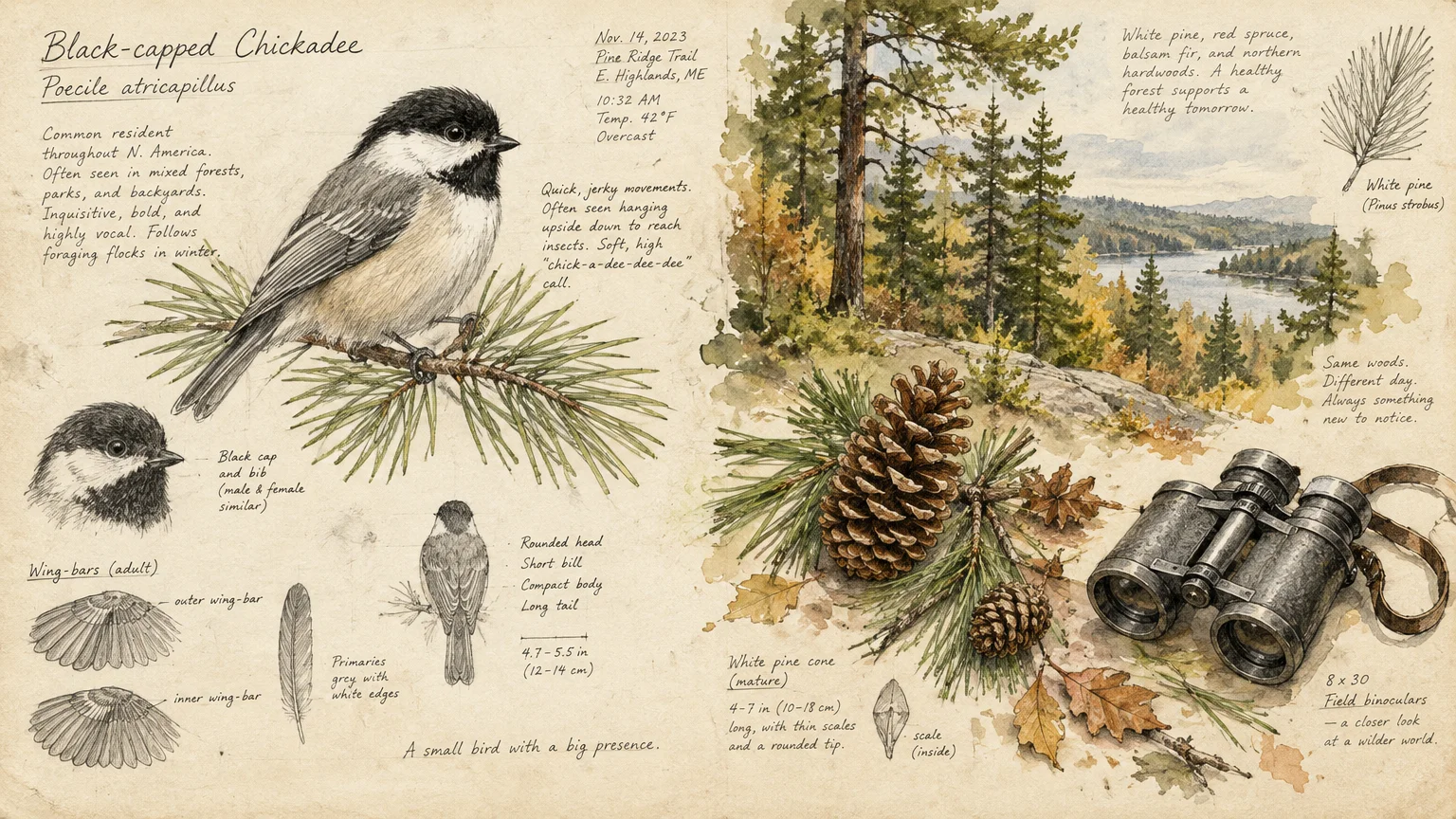
Tip #5: Birdwatching and Nature Journaling
Stepping into the natural world with binoculars and a notebook creates an exhilarating mental adventure. Birdwatching trains your visual perception, auditory discrimination, and spatial tracking in real-time environments.
When you spot a fleeting bird, your brain must rapidly process subtle physical markers. You evaluate plumage colors, beak shapes, flight patterns, and distinct vocal calls within seconds.
This multidimensional sensory processing stimulates your temporal lobes, which handle memory consolidation and auditory perception. It requires intense presence, banishing distracting worries and honing your powers of observation.
Pursuing this hobby outdoors also delivers gentle physical movement through walking on varied, natural terrain. Physical activity increases blood flow to your hippocampus, the brain center responsible for storing memories.
You can enjoy nature exploration for minimal cost thanks to valuable public programs. U.S. citizens aged 62 and older can secure an America the Beautiful Senior Pass from the National Park Service.
This pass costs just $20 annually or $80 for a lifetime pass. It grants you free entry to more than 2,000 federal recreation sites, wildlife refuges, and national parks.
You can also transform your backyard or balcony into a vibrant bird sanctuary. Hanging a simple seed feeder or birdbath attracts local avian species right to your window.
Download free mobile applications like the Merlin Bird ID app developed by the Cornell Lab of Ornithology. The app analyzes live bird songs and helps you identify elusive backyard visitors instantly.
Pair your birding walks with nature journaling by sketching local flora and noting weather conditions. Illustrating your observations deepens your memory retention and encourages creative visual expression.
Nature journaling requires no artistic background, only an inquisitive eye and a blank pad of paper. Recording the changing seasons sharpens your pattern recognition and anchors you in the present moment.
Birding and journaling are wonderful brain healthy hobbies that keep you active, curious, and grounded. Nature provides an ever-changing classroom where your mind can thrive.
Join a local Audubon chapter or nature walk group to share your exciting sightings with fellow birders. Friendly birding excursions foster deep social bonds while keeping your body in motion.
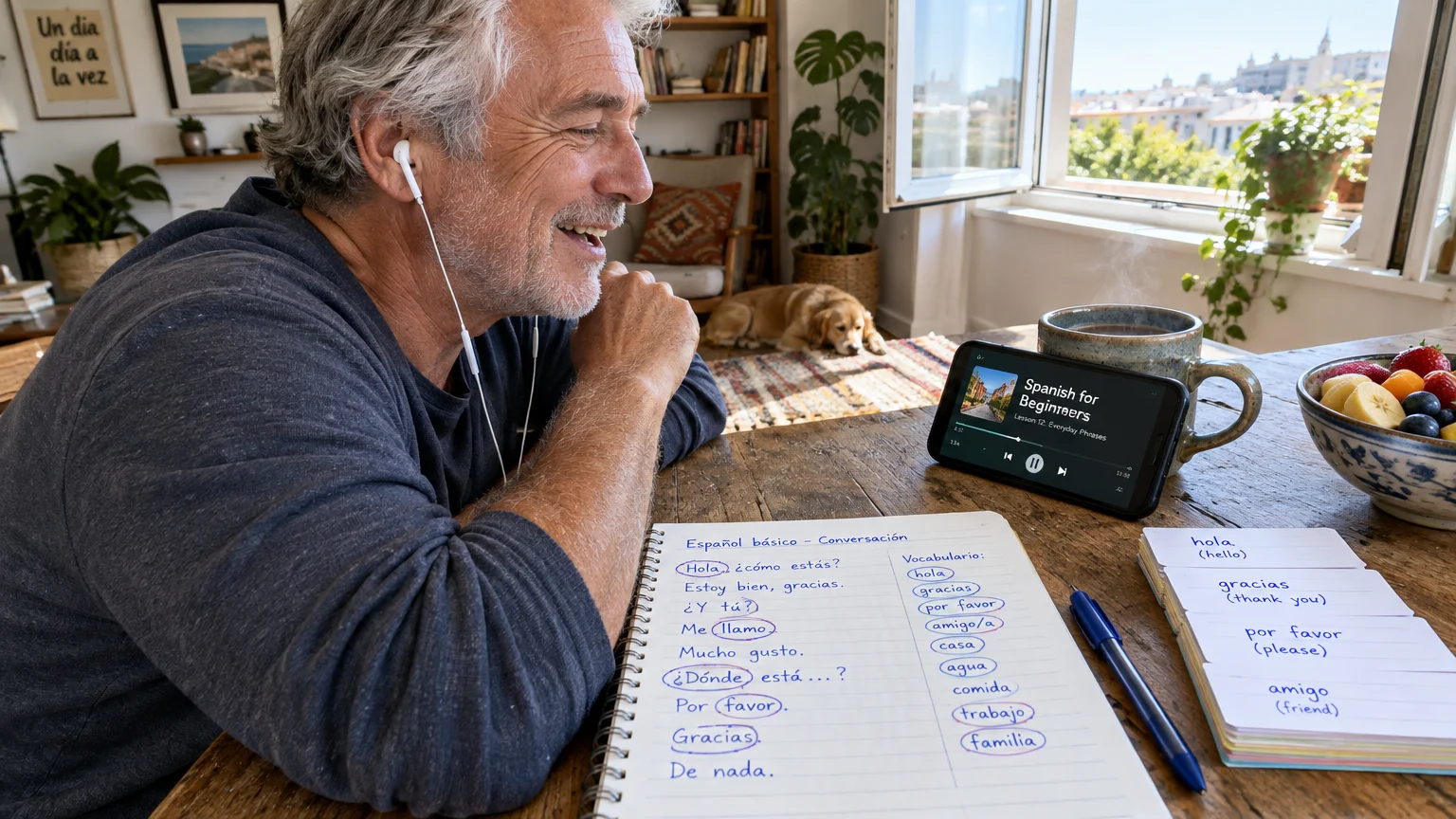
Tip #6: Conversational Language Learning and Audio Immersion
Studying a foreign language is widely recognized as one of the ultimate workouts for the human brain. Learning foreign vocabulary exercises your working memory, mental flexibility, and abstract reasoning skills.
Cognitive scientists note that bilingual individuals often demonstrate enhanced executive function throughout their senior years. Switching between different grammatical rules trains your brain to filter out irrelevant information and multitask efficiently.
You do not have to achieve complete conversational fluency to reap these substantial neurological gains. The simple act of wrestling with unfamiliar pronunciation and grammar stimulates robust neuroplasticity.
Modern technology makes language acquisition entirely accessible without expensive classroom tuition. Many public libraries provide free online access to premium language platforms like Mango Languages or Rosetta Stone.
All you need is your free library card to start interactive daily lessons on your home computer. You can practice Spanish, Italian, French, or Japanese in bite-sized ten-minute sessions.
Free smartphone applications like Duolingo turn language practice into a delightful, game-like experience. Earning points and completing daily streaks activates your brain’s reward centers, keeping you motivated.
Reinforce your lessons by listening to foreign music, streaming international radio stations, or watching foreign films with subtitles. This immersive audio training exercises your auditory cortex and fine-tunes your phonemic awareness.
Try labeling common household items with sticky notes written in your target language. Reading these labels as you brew morning coffee reinforces everyday vocabulary through repeated passive exposure.
Partner with a friend or grandchild who is learning the same language to practice simple dialogues. Conversing aloud sharpens your social agility and forces your memory to retrieve vocabulary on demand.
Language learning stands out among low-cost hobbies for mental sharpness as a truly transformative pursuit. Each new word you learn represents a meaningful investment in your long-term cognitive vitality.
Singing along to folk songs or traditional ballads in your new language improves pronunciation and rhythm. Musical patterns help lock unfamiliar vocabulary into long-term memory structures effortlessly.
Take pride in every small conversational milestone, from ordering coffee to greeting a neighbor in their native tongue. These small victories keep your learning journey joyful, rewarding, and deeply satisfying.

The Takeaway: Living a More Blissful Retirement
Protecting your cognitive health does not demand expensive gadgets, costly classes, or rigid mental drills. Joyful, engaging pastimes offer far superior protection by combining intellectual challenge with genuine personal happiness.
Research consistently demonstrates that our brains remain remarkably adaptable throughout our golden years. You possess the incredible capacity to build fresh neural connections at any stage of life.
The secret lies in consistent, novel engagement. When an activity begins to feel automatic, introduce a playful twist or try an entirely new challenge.
Pair these mentally engaging hobbies with regular physical movement, nutritious meals, and restorative sleep. This holistic lifestyle foundation protects your brain while maximizing your daily enthusiasm.
Invite your friends, neighbors, or grandchildren to join in your creative pursuits. Sharing laughter and collaborative problem-solving adds a warm layer of social connection to your mental workouts.
Start small by dedicating just fifteen to thirty minutes each day to your chosen hobby. Consistent daily practice produces compound neurological dividends that will serve you for decades to come.
Track your personal growth in a notebook to celebrate your expanding talents and newfound knowledge. Seeing tangible progress boosts your self-confidence and motivates you to keep exploring.
Your retirement represents an open canvas filled with boundless opportunities for self-discovery and growth. Embrace these affordable hobbies, nurture your curiosity, and enjoy a vibrant, mentally sharp future.
Frequently Asked Questions
How many hours a week should I spend on cognitive hobbies?
Aim for roughly thirty minutes of mentally stimulating activity per day, totaling three to four hours weekly. Consistency matters much more than marathon weekend sessions.
Frequent, moderate intellectual workouts provide steady stimulation that encourages long-term synaptic growth. Choose activities that bring you genuine joy so your daily practice feels effortless.
Can digital brain-training games replace traditional hobbies?
Digital brain-training apps can be entertaining, but they rarely match the multidimensional benefits of real-world hobbies. Most specialized apps only train you to become better at that specific digital game.
Real-world hobbies like gardening, crafting, and birdwatching combine tactile feedback, physical movement, and real-life problem solving. That rich sensory combination creates far broader cognitive protection.
What if I find a new hobby frustrating at first?
Feeling mild frustration is actually an encouraging sign that your brain is working hard. That cognitive friction signals that you are building brand-new neural pathways.
Break complex skills into smaller, manageable steps so you avoid becoming overwhelmed. Be patient with yourself, celebrate tiny milestones, and remember that playful learning is the primary goal.
Are social hobbies better for brain health than solitary pursuits?
Both social and solitary pursuits offer distinct, complementary benefits for your cognitive reserve. Solitary hobbies like reading and logic puzzles enhance deep focus and working memory.
Meanwhile, social hobbies like book clubs and game nights stimulate language centers and banish isolation. Balancing both styles of hobbies provides the most comprehensive protection for your mind.
Try combining solitary practice with group participation for the ultimate cognitive boost. For example, read a chapter alone at home and then discuss it with your book club.
For a wide range of resources for older adults, visit AARP and the National Council on Aging (NCOA). Health information is available from the National Institute on Aging.
Disclaimer: This article is for informational and inspirational purposes only. It is not a substitute for professional medical, financial, or psychological advice. Please consult with a qualified expert for guidance tailored to your individual needs.