

Understanding how proposed Social Security adjustments affect your taxes can preserve your retirement savings and bring total peace of mind. A new flat-rate cost-of-living adjustment could significantly alter what you owe Uncle Sam each year.
Lawmakers are actively debating this reform to extend program solvency while changing how annual benefit increases function. Knowing these potential tax implications today lets you plan effectively for a stable financial future.
Here is what a flat COLA plan means for your tax bracket, your benefits, and your overall retirement bliss.
Tip #1: Master the Mechanics of the Flat Social Security COLA Plan
Under current law enacted in 1973, your annual benefit increase depends on percentage changes in inflation. The government measures third-quarter data from the Consumer Price Index for Urban Wage Earners and Clerical Workers to establish your raise.
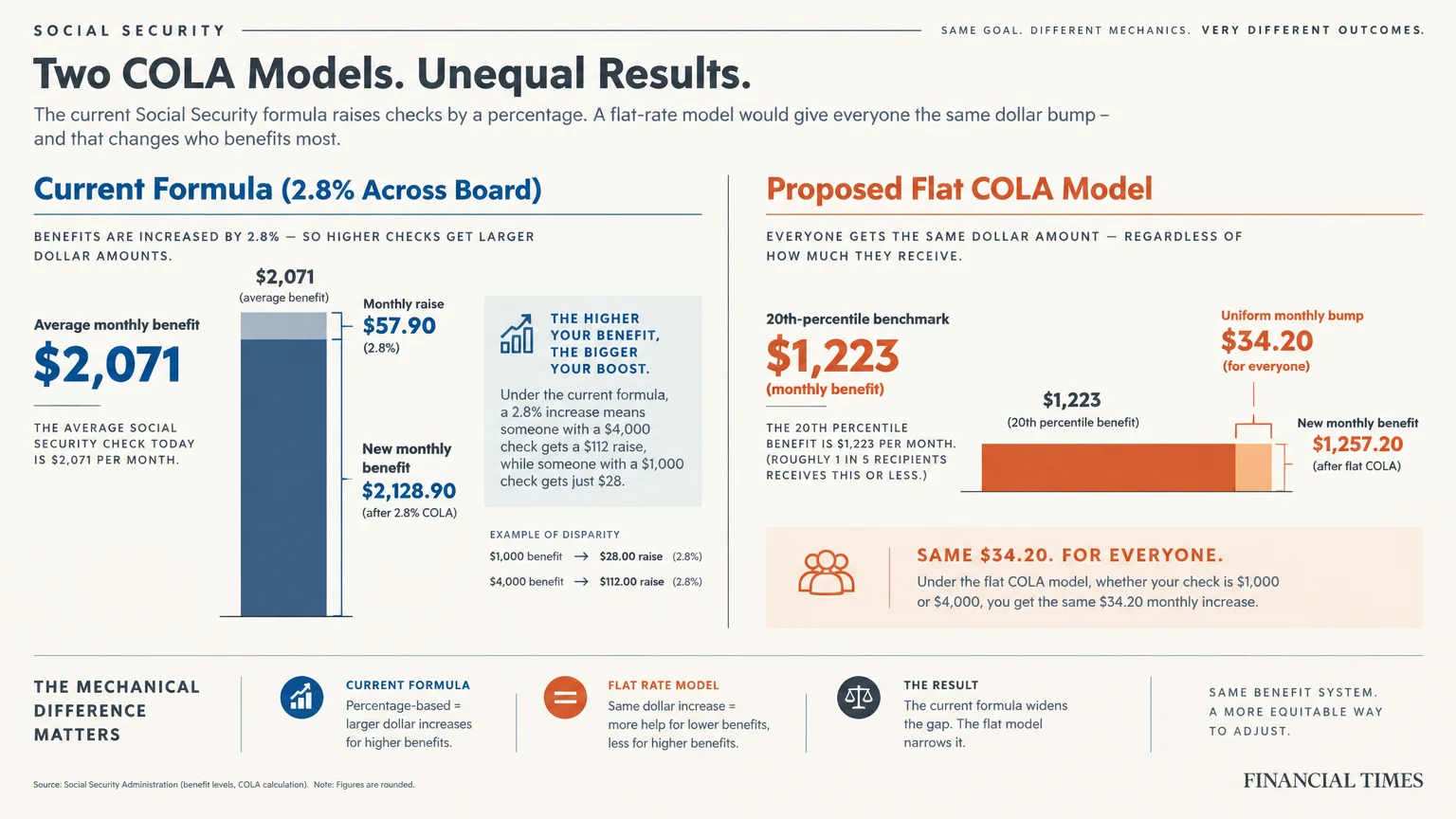
For example, the cost-of-living adjustment for 2026 was set at 2.8% across the board. This percentage formula means that retirees with higher monthly checks receive substantially larger dollar increases each January.
A flat Social Security COLA plan would replace this percentage increase with an identical dollar amount for all participants. Policy groups, including the Committee for a Responsible Federal Budget, have analyzed this proposal to improve program finances.
This concept actually originated from a 1987 legislative proposal designed to modernize entitlement spending. Under modern versions of this framework, lawmakers calculate the flat dollar bump using the 20th-percentile retirement benefit.
Entering 2026, that 20th-percentile benchmark was approximately $1,223 per month. Applying an inflation rate of 2.8% to that baseline produces a uniform raise of $34.20 monthly for every single recipient.
Every retiree receives this identical amount regardless of their career earnings or past payroll contributions. Whether your monthly check is $1,000 or $4,000, your raise remains fixed at $34.20 per month.
Under the traditional percentage formula, an average retiree receiving $2,071 per month received an increase of $57.90 monthly. That contrast demonstrates how dramatically your cash flow could change under a uniform distribution system.
With this COLA reform explained, you can see how the flat-rate structure fundamentally shifts benefit distribution. Recognizing these baseline mechanics allows you to prepare your personal budget with confidence and clarity.
Tip #2: Calculate Your Combined Income Under New Rules
To understand the Social Security tax impact 2026 and beyond, you must first calculate your provisional income. The Internal Revenue Service relies on a specific metric called combined income to evaluate your tax liability.
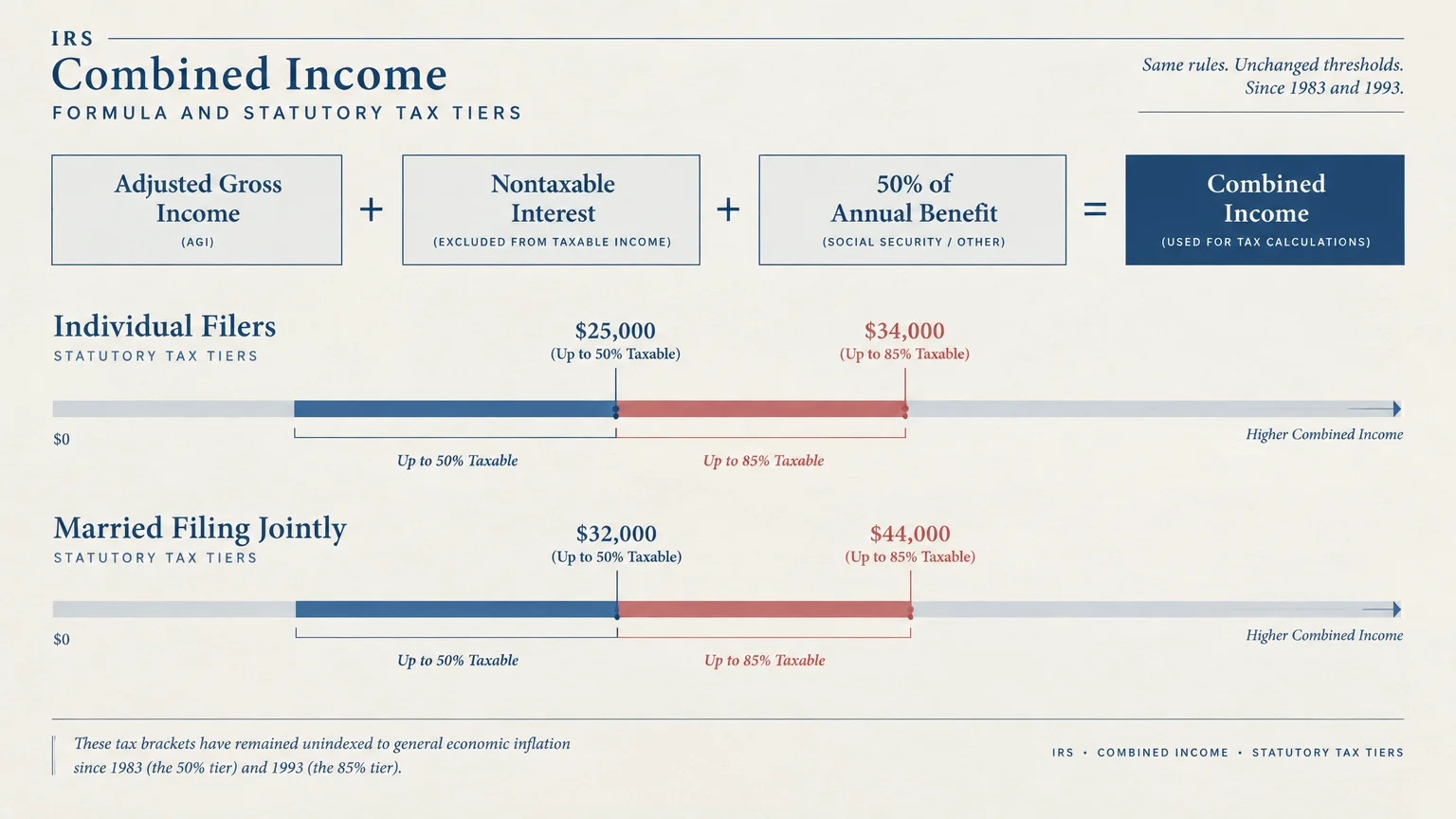
Your combined income equals your adjusted gross income, plus any nontaxable interest, plus exactly half of your annual benefit. Keeping this calculation in mind helps you forecast your total obligations each tax season.
Congress established the statutory tax tiers in 1983 and expanded them in 1993. Unfortunately, lawmakers never indexed these thresholds to general economic inflation, which creates persistent tax exposure for modern retirees.
If you file taxes as an individual, combined income between $25,000 and $34,000 makes up to 50% of your benefits taxable. Any amount exceeding $34,000 exposes up to 85% of your benefits to federal income taxes.
For married couples filing jointly, combined income between $32,000 and $44,000 subjects up to 50% of benefits to taxation. When joint income surpasses $44,000, up to 85% becomes subject to taxation.
Tens of thousands of retirees unexpectedly cross these thresholds every single year simply because their cost-of-living adjustments increase. A flat-rate bump alters the speed at which your income climbs toward these static figures.
Evaluating your current tier position helps you prevent unpleasant surprises when filing your annual return. Staying informed about these formulas empowers you to manage your retirement assets proactively.
You can adjust your annual distribution strategies to keep your taxable benefits well within comfortable boundaries. Being proactive with your numbers ensures that you stay firmly in control of your financial destiny.
Tip #3: Understand the Slowdown of Social Security Bracket Creep
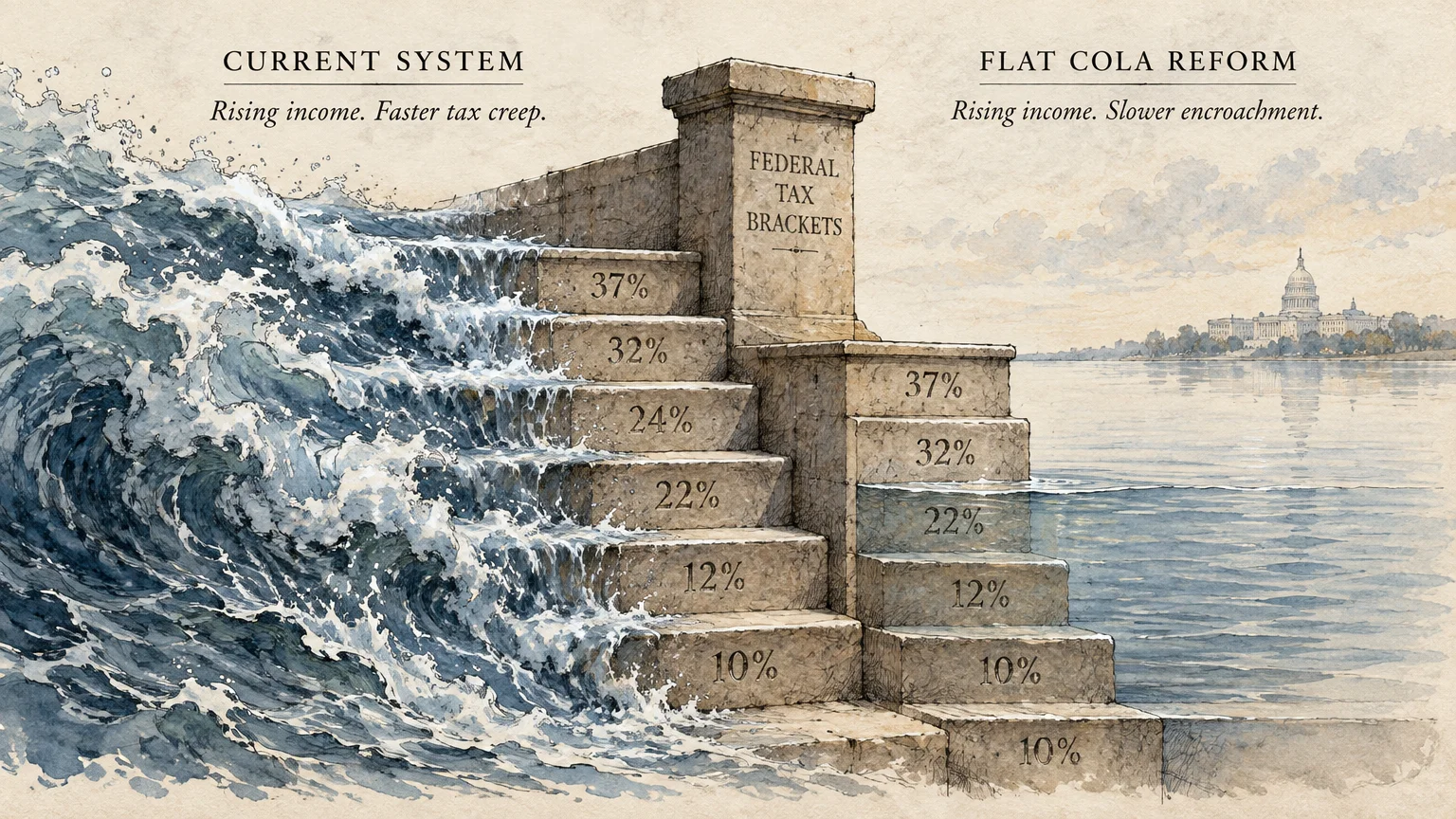
Standard percentage raises often trigger bracket creep because federal tax thresholds never adjust for inflation. When your gross benefit rises rapidly, your combined income surges forward into higher tax brackets.
Financial planners frequently call this phenomenon the tax torpedo. It occurs when additional benefit dollars push your marginal income into tiers where more benefits become taxable.
A flat-rate adjustment generates smaller gross dollar increases for middle and higher earners than the traditional formula does. For example, receiving $34.20 per month instead of $57.90 slows the annual growth of your total income.
This smaller dollar boost means your combined income advances toward statutory thresholds at a much slower rate. Consequently, you experience a reduced incremental tax burden compared to standard percentage bumps.
Retirees who hover right near the $25,000 single or $32,000 joint limits might avoid crossing into taxable territory entirely. That dynamic offers a temporary shield against immediate tax bracket escalation.
In addition, slowing your provisional income growth can help keep your Medicare Part B and Part D premiums lower. Premium surcharges often kick in when your modified adjusted gross income exceeds specific limits.
Analyzing how a flat COLA affects retirees reveals this unexpected silver lining in tax administration. Your annual tax liability rises far more gently when gross benefit expansion slows down.
Understanding this mathematical relationship allows you to plan your withdrawals with greater precision. You can enjoy your golden years knowing exactly how your annual adjustment shapes your tax bill.

Tip #4: Recognize Why Lower Taxes Do Not Mean Higher Income
While paying less in taxes feels gratifying, you must examine the broader reality of your net household income. A smaller tax liability under this proposal does not represent an authentic tax cut or financial gain.
The reduction in your gross benefit payments far exceeds the modest tax savings you achieve. You receive fewer gross dollars overall, which directly diminishes your net spendable cash.
An extensive analysis by the AARP Public Policy Institute highlights this exact concern for seniors. Their researchers discovered that a flat adjustment would reduce annual adjustments for roughly 80% of all beneficiaries.
In the first year alone, affected retirees would experience an average loss of $285 in overall purchasing power. That compounding shortfall gradually erodes your ability to handle rising healthcare and housing costs.
Consider a retiree whose monthly raise drops from $58 to $34 under the proposed formula. Saving five dollars on federal taxes cannot compensate for losing twenty-four dollars in monthly benefit income.
Over a decade, that purchasing power gap widens significantly due to the compounding nature of inflation adjustments. What appears to be tax relief on paper translates into a noticeable reduction in real living standards.
Understanding these Social Security tax changes protects you from misunderstanding political soundbites. You can evaluate policy proposals based on their authentic impact on your personal bottom line.
Keeping a clear view of your net purchasing power ensures your golden years stay truly vibrant. You can make realistic financial choices that keep your retirement comfortable, joyful, and resilient.
Tip #5: Evaluate State-Level Tax Implications on Your Benefits
Federal taxes represent only one part of your overall retirement equation. You must also consider how state tax codes treat your annual Social Security benefits.
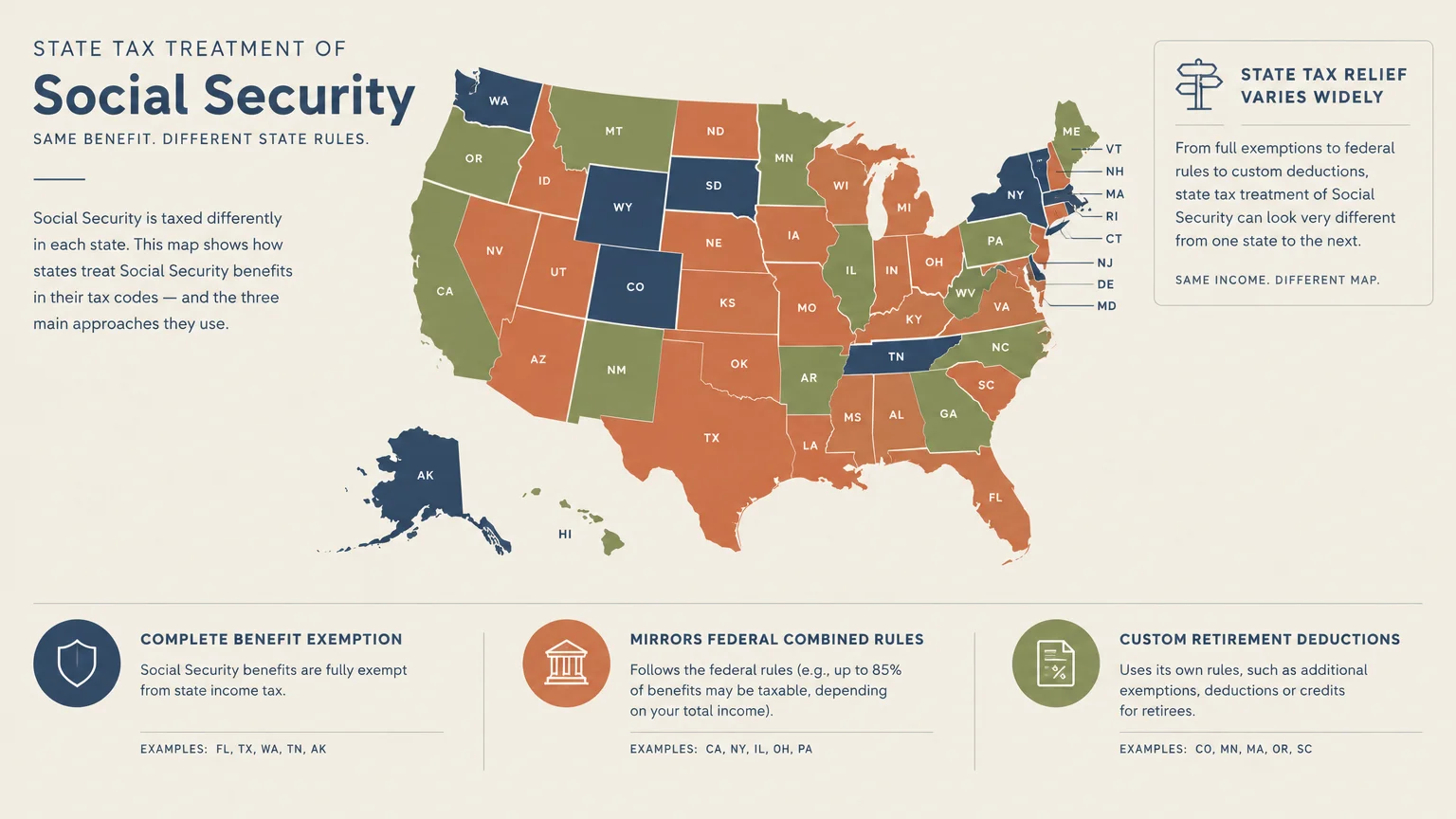
Most states exempt Social Security benefits entirely from individual state income taxes. If you reside in one of these retiree-friendly states, a flat COLA will not alter your state tax bill.
However, several states still tax a portion of benefits, often tying their calculations to federal adjusted gross income. In those jurisdictions, smaller benefit increases produce smaller bumps in your state taxable income.
If your state uses federal taxable benefits as a starting point, lower federal inclusions directly reduce your state liability. That double slowdown can provide modest relief on both your federal and state tax returns.
Nonetheless, the fundamental math remains unchanged regardless of where you make your home. The decrease in gross benefit income still outpaces any state and federal tax savings combined.
Checking your local state tax rules helps you gain complete clarity over your annual obligations. You can optimize your relocation plans or residency status to maximize your total after-tax wealth.
Being mindful of state tax policies empowers you to make informed decisions for your household. You can preserve more of your money to spend on hobbies, wellness, and family gatherings.

Tip #6: Protect Your Nest Egg Against the Solvency Timeline
Why are policymakers actively considering such significant structural changes right now? Projections from the Social Security Trustees indicate that the Old-Age and Survivors Insurance Trust Fund faces depletion by 2032 or 2033.
Without legislative intervention, incoming tax revenues will only cover approximately 79% to 83% of scheduled benefit payments. This looming deadline creates intense pressure on lawmakers to implement lasting financial reforms.
A flat-rate COLA represents an effort to trim overall program expenditures while protecting vulnerable seniors. Beneficiaries at or below the 20th percentile would maintain full inflation protection under this model.
Because lower-income retirees generally maintain combined incomes well below statutory thresholds, their benefits remain 100% tax-free. They receive essential cost-of-living help without triggering any federal tax liability.
However, middle-class retirees would bear the primary burden of bridging this solvency deficit. Knowing this schedule gives you nearly a decade to fortify your personal financial reserves.
Viewing this transition through an optimistic lens empowers you to take ownership of your retirement future. Preparedness turns potential policy uncertainty into an opportunity for structured, purposeful growth.
You have the ability to adapt your savings and investment strategies long before any automatic benefit reductions occur. Taking control today guarantees that your peaceful retirement lifestyle remains intact.

Tip #7: Deploy Proactive Tax Strategies for a Secure Future
You do not have to wait passively for congressional reform to protect your hard-earned retirement dollars. Taking proactive steps today can dramatically reduce the federal taxes you owe on your benefits.
One powerful strategy involves executing gradual Roth IRA conversions before you claim Social Security benefits. Qualified distributions from Roth accounts do not count toward your provisional combined income calculation.
By lowering your traditional retirement account balances, you also reduce your future required minimum distributions. Smaller mandatory withdrawals keep your combined income safely below taxable benefit thresholds.
If you are age 70 and a half or older, consider utilizing qualified charitable distributions from your traditional IRA. These gifts transfer directly to charities without ever appearing on your adjusted gross income.
You can also manage the timing of taxable capital gains and dividend distributions in your brokerage accounts. Offsetting gains with tax-loss harvesting keeps your adjusted gross income under critical tier limits.
Tax-bracket management provides a wonderful pathway toward sustaining your desired lifestyle. When you structure your income streams strategically, you shield your monthly benefits from excessive federal taxation.
Cultivating financial resilience gives you the freedom to focus on what truly matters in retirement. You can spend your time exploring passions, traveling, and sharing joyous moments with loved ones.
Consulting with an experienced fee-only financial planner can help tailor these exact maneuvers to your unique goals. Smart planning today produces endless peace of mind for all your tomorrows.

The Takeaway: Living a More Blissful Retirement
Retirement is your time to thrive, celebrate your accomplishments, and enjoy every single day to the fullest. While economic headlines and policy debates can sound complex, knowledge is always your greatest asset.
A flat-rate COLA proposal highlights the critical intersection between your annual benefit increases and your federal tax liabilities. Understanding these connections ensures that you remain firmly in control of your financial destiny.
Even if future benefit increases deliver smaller gross dollar adjustments, your proactive planning can offset any potential losses. Implementing smart tax strategies protects your assets and keeps your nest egg thriving.
Embrace this chapter of life with boundless confidence and optimism. When you manage your resources with clarity, you unlock the freedom to design a retirement overflowing with health, purpose, and joy.
Every step you take to understand your taxes is an investment in your ongoing happiness and security. Celebrate your golden years knowing that your careful preparation creates a bright and prosperous future.
Frequently Asked Questions
How does a flat-rate COLA differ from the current adjustment system?
The current system provides an across-the-board percentage raise based on third-quarter CPI-W inflation metrics. That approach gives larger dollar increases to retirees with higher baseline benefits.
A flat-rate proposal distributes an identical dollar bump to every recipient, based on the 20th-percentile benefit benchmark. This structure provides smaller raises to roughly 80% of current beneficiaries.
Why wouldn’t a smaller tax bill make up for a smaller COLA?
A smaller tax bill simply reflects a reduction in your gross benefit income rather than genuine tax savings. The money you lose in monthly benefits far outweighs the minor federal tax reduction.
For example, losing twenty-four dollars in gross monthly income to save five dollars in taxes still leaves you nineteen dollars behind. Your net spendable purchasing power declines overall.
Can my Social Security benefits ever be completely tax-free?
Yes, your benefits remain completely free from federal income tax if your combined income stays below statutory thresholds. Single filers earning under $25,000 and joint filers under $32,000 pay zero tax on benefits.
Carefully coordinating withdrawals from taxable, tax-deferred, and tax-free accounts can help you maintain your combined income below these limits. Proper distribution planning protects your benefits from Uncle Sam.
When could Congress implement a flat COLA proposal?
Congress has not yet passed any legislation converting Social Security to a flat-rate adjustment model. However, lawmakers face growing urgency as the trust fund reserves approach projected depletion around 2032 or 2033.
Any potential changes would likely involve debate and gradual implementation over several years. Staying informed now ensures that you can adjust your long-term retirement strategies well in advance.
For a wide range of resources for older adults, visit AARP and the National Council on Aging (NCOA). Health information is available from the National Institute on Aging.
Disclaimer: This article is for informational and inspirational purposes only; it is not a substitute for professional medical, financial, or psychological advice. Please consult with a qualified expert for guidance tailored to your individual needs.