Moving to the villages florida as a single adult can give you an instant social calendar, walkable town squares, and sunny independence. Knowing the true numbers—from shared household fees to singles clubs—helps you decide if this lifestyle fits your budget and personality.
Many people picture active adult neighborhoods as places built strictly for couples. In reality, solo retirement living thrives across central Florida when you know which neighborhoods, rentals, and community rules work in your favor.
These ten practical insights show you what daily life, housing costs, healthcare, and social groups look like before you pack a single box.
Lifestyle Idea #1: Look Beyond the Couples Reputation—Thousands Live Solo Here
Walk past any lively restaurant patio and you might assume everyone arrived with a spouse. U.S. Census Bureau data paints a much more welcoming picture for single retirees looking to build new friendships.
Within The Villages Census-Designated Place, the population reached 83,498 in 2024, while the broader Wildwood–The Villages metro area grew to 157,772 residents by July 2025. That rapid 21.60% growth since 2020 brings fresh faces into neighborhoods every week.
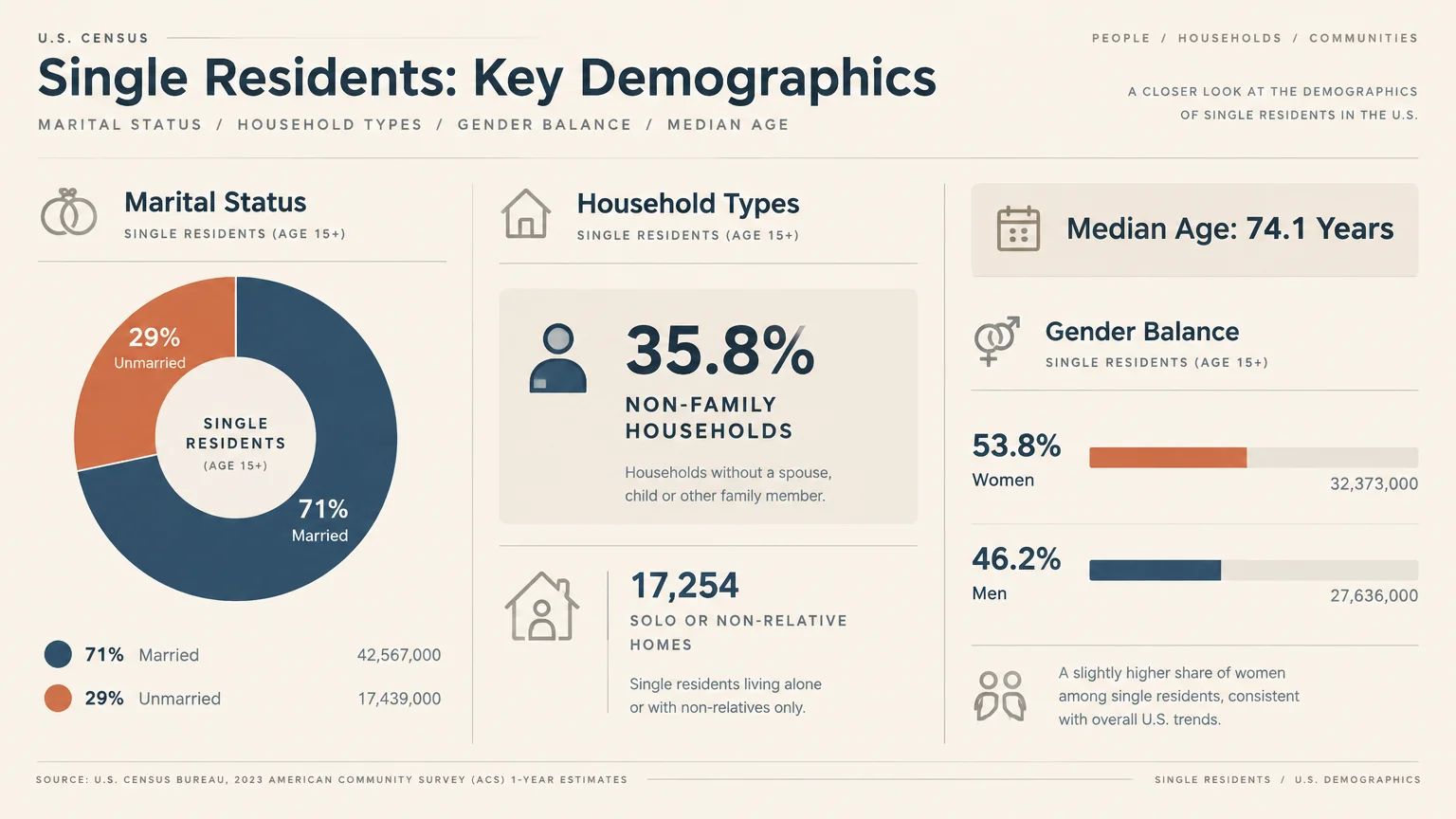
About 71% of adult residents are married, leaving roughly 29% unmarried across widowed, divorced, and never-married groups according to Census Reporter data. Among women, 15% are widowed, 9% are divorced, and 9% have never married.
Among men, 10% are widowed, 9% are divorced, and 4% have never married. Even more telling for retiring alone, Point2Homes census figures show that 35.8% of the community’s 48,242 households—or 17,254 homes—are non-family households living alone or with non-relatives.
That non-family share climbed 6.5% year-over-year, and in ZIP code 32162 alone, 32.1% of households consist of one person. Women make up 53.8% of residents and men account for 46.2%, with a local median age of 74.1 years.
From January through March, seasonal visitors swell the active population by roughly 30%. That winter surge introduces thousands of temporary snowbirds, many of them single travelers eager to join golf outings, pickleball games, and dinner groups.
How to Use This Insight
Skip the worry that you will feel out of place at neighborhood block parties or recreation centers. Ask local real estate agents which streets have active single neighbors and thriving social calendars before narrowing down your home search.
Lifestyle Idea #2: Test the Waters with a Lifestyle Preview Stay Before Buying
Buying a home sight unseen—or after one quick afternoon drive—creates unnecessary stress when you manage every decision yourself. Instead, treat your first visit like an extended test drive of the villages retirement community.
The developer offers an official Lifestyle Preview Plan designed specifically for prospective movers. You can book a 4-to-7-day stay in a furnished two-bedroom, two-bath home with a golf cart and full amenity access included.
Official 2026 preview rates run between $129 and $229 per day depending on season, availability, and home selection, based on up to two guests. Use that week to ride the trails, eat alone at a town square, and test morning recreation schedules.
If four days feel too short, consider leasing a place for several months before committing to a purchase. Across local ZIP codes, typical area rent hovered near $2,120 per month as of November 2026, according to Zillow Observed Rent Index figures.
Apartment living offers another low-maintenance path for solo retirement living without yard work or home repairs. At The Lofts at Brownwood, a 265-unit 55-plus apartment community, a 1-bedroom, 1-bath layout of 850 square feet listed at $1,855 base rent in November 2026.
With fees included on an 18-month lease, the total leasing price reached $2,065 per month alongside a $2,000 security deposit. Because waitlists cover most floor plans, join the leasing portal early if apartment convenience appeals to you.
Know Seasonal Lease Rules
Minimum lease lengths vary sharply depending on where a rental home sits. Rules require 30-day minimums on the Historic Side, 30 to 90 days north of CR-466, 90 to 180 days south of CR-466 and 466A, and 180 days south of SR-44 and Eastport.
Lifestyle Idea #3: Budget for Single-Occupant Housing and Shared-Rate Fees
Managing a retirement budget on one income—whether from Social Security, pensions, or savings—means every recurring monthly fee deserves scrutiny. While Florida charges zero state income tax, local ownership costs carry unique line items you must calculate early.
Over the twelve months through November 2026, Momentum Realty reported a median sold home price of $362,000, or roughly $213 per square foot. With 20% down at a 7.18% mortgage rate, estimated monthly ownership costs reached $2,541.
That sample budget includes roughly $5,194 per year in Lake County property taxes after a $50,000 homestead exemption and $1,756 annually at Citizens’ average Lake County insurance rate. Paying cash eliminates the mortgage portion, yet two community-specific charges remain for every homeowner.
First comes the monthly amenity fee, published at a 2026 planning rate of $204 per month for homebuyers and $189 per month for Lofts at Brownwood residents. Crucially, this fee is billed per household rather than per person.
A single homeowner pays the exact same monthly amenity rate as a married couple sharing a deed. Tied to the Consumer Price Index under each home’s deed covenant, that fee covers pools, recreation centers, Community Watch, Public Safety, and executive golf green fees.
Second, instead of a traditional homeowners association, properties fall under 17 Community Development Districts formed under Florida Statute Chapter 190 across Lake, Sumter, and Marion counties. Homeowners pay perpetual annual maintenance assessments typically ranging from $355 to over $1,200 per year.
Many homes also carry an annual infrastructure bond payment ranging from roughly $800 to over $4,000 per year until paid off. Older northern neighborhoods built in the 1980s and early 1990s frequently have paid-off bonds, while newer southern areas carry the highest balances.
Smart Steps for Solo Buyers
Ask your agent for a property’s exact deeded amenity cap, annual maintenance assessment, and remaining bond payoff before making an offer. Comparing an older northern villa with a paid-off bond against new southern construction can save you thousands every year.

Lifestyle Idea #4: Plug Into Over 3,000 Clubs and Dedicated Singles Gatherings
One major fear of retiring alone is sitting home on a quiet Tuesday evening wondering how to meet people. Here, your biggest challenge may actually be narrowing down your weekly calendar without overbooking yourself.
Official community guides list more than 3,000 resident-led social clubs and lifestyle groups across every imaginable interest. Whether you enjoy pickleball, woodworking, theater, kayaking, genealogy, or book discussions, an existing circle is already waiting for your name tag.
You can also join groups tailored specifically for unattached residents looking for camaraderie, dining partners, or romance. The Villages Singles Club welcomes residents holding an official resident ID card for $25 in annual dues.
Short-term renters and visitors with temporary IDs can attend as guests for a $10 fee. The club meets on the first and third Monday of each month at La Hacienda Recreation Center, with doors opening at 5:15 PM.
Check the dress code before heading out, because evenings call for dressy casual attire—meaning no shorts, jeans, or T-shirts. Outside regular meetings, members organize group dinners and casual golf scrambles that make first introductions effortless.
Walking executive golf courses costs residents nothing in green fees, while adding a golf cart trail pass runs around $143 per year. Joining a neighborhood nine-hole scramble lets you pair up with three strangers and leave with three dinner companions.
Build a Balanced Social Habit
Choose three clubs during your first month—one physical activity, one creative hobby, and one social mixer—so you meet varied circles. Volunteering for check-in tables or event setup helps you learn names faster than sitting quietly in the back row.
Lifestyle Idea #5: Make the Five Town Squares Your Evening Social Routine
Evening isolation fades fast when live music, dancing, and friendly conversation happen outdoors seven nights a week. Across the villages florida, five distinct town squares anchor neighborhood nightlife without requiring expensive tickets or formal reservations.
The three classic squares—Spanish Springs, Lake Sumter Landing, and Brownwood Paddock Square—feature free outdoor live entertainment most evenings from 5:00 to 9:00 PM. Residents roll up in golf carts, unfold portable chairs, and chat with neighbors before the first song starts.
Beyond those original hubs, Sawgrass Grove offers another town square for gatherings. To the south, Eastport opened in 2025 around the scenic 250-acre Central Lake, giving newer neighborhoods their own waterfront social core.
Eastport expanded quickly with the Olympia Recreation Center opening in August 2025, the Bellaire Executive Golf Course in November 2025, and the Eastport Hotel in January 2026. Visiting each square during your preview stay reveals which crowd and musical vibe feels most like home.
Spanish Springs carries historic charm, Lake Sumter Landing feels lively beside the water, and Brownwood leans into rustic western architecture. Eastport draws many recent arrivals who are equally eager to exchange numbers and form brand-new friend groups.
How to Enjoy a Square Solo
Arrive thirty minutes early, grab a seat near regular dancers or fellow solo chairs, and bring a light snack to share. Sitting at a restaurant bar counter for happy hour is another easy way to spark natural conversation with locals.
Lifestyle Idea #6: Navigate Golf Carts and Low-Speed Vehicles Like a Local
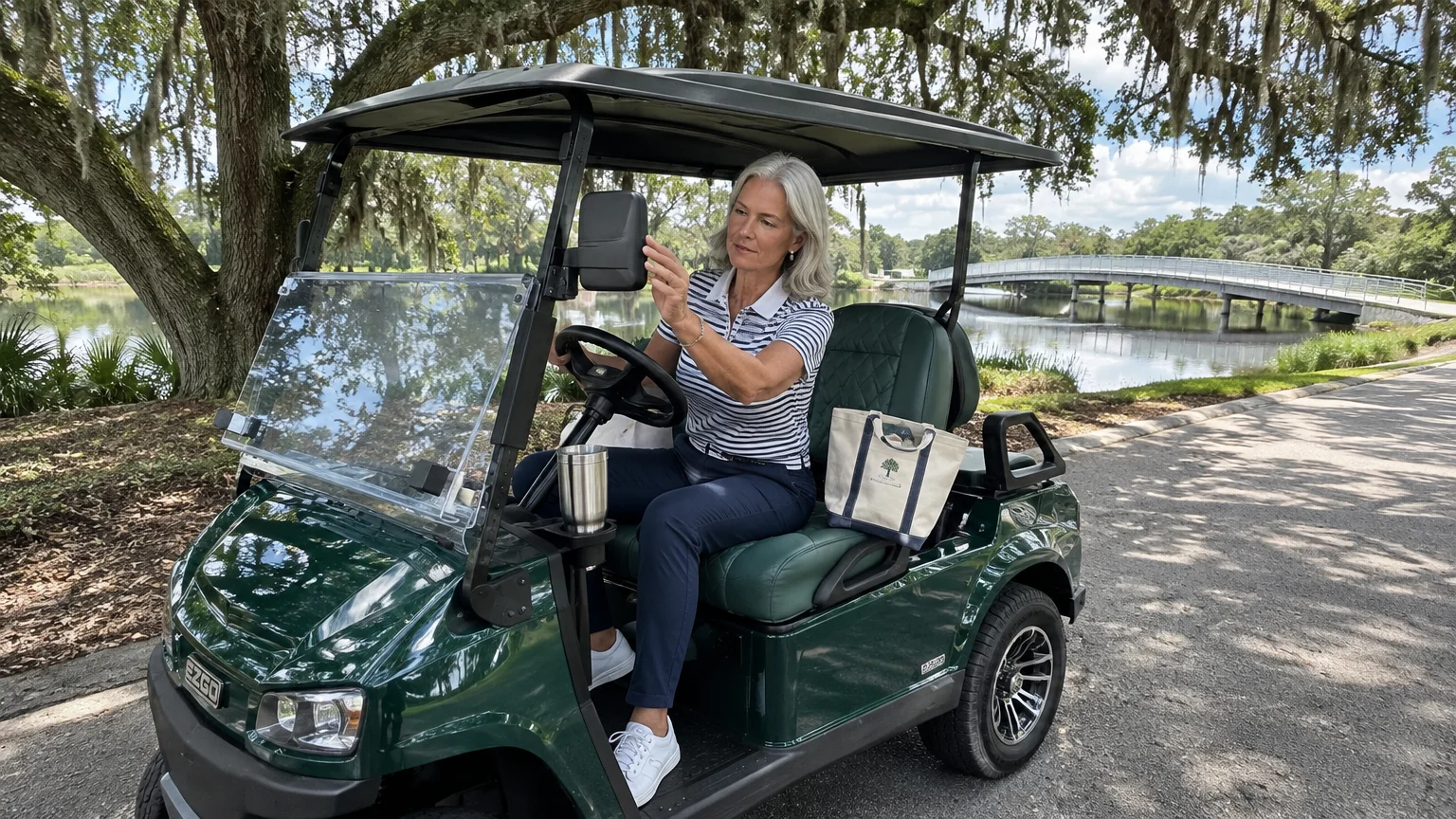
Driving a highway alone at night makes many retirees hesitant to accept late dinner invitations. Across the villages retirement community, an interconnected network of bridges, tunnels, and multi-modal trails lets over 70,000 golf carts handle daily errands instead.
You can cruise from your driveway to 56 golf courses, grocery stores, medical offices, and nightly concerts without merging onto fast highways. Still, knowing Florida traffic laws protects both your safety and your wallet before you buy a cart.
Under Florida Statutes sections 316.212 and 320.01—and updated 2025 guidance from FDOT Safe Mobility for Life—any golf cart driver aged 18 or older must carry a valid government-issued photo ID. Younger drivers must be at least 15 with a learner’s permit or 16 with a license.
Standard golf carts top out at 20 mph and are prohibited on roads posted at 35 mph or higher. Local district rules also ban standard carts from entering vehicular roundabouts and strictly enforce Florida’s open alcoholic container laws.
If you want higher speed or broader street access, consider a street-legal Low-Speed Vehicle, which travels between 20 and 25 mph. According to FLHSMV rules, LSVs require a valid driver’s license, state title, registration, windshield, and seat belts.
They also require Florida auto insurance carrying at least $10,000 in personal injury protection and $10,000 in property damage liability. With that equipment, an LSV may legally drive on streets posted at 35 mph or less.
Test Your Cart Comfort
Practice navigating tunnels, steep bridge ramps, and busy town square parking lots during quiet morning hours first. Add bright LED headlights, turn signals, and side mirrors if you plan to drive home solo after sunset concerts.
Lifestyle Idea #7: Understand the 55+ Occupancy, Visitor, and Deed Rules Before Hosting Family
Living solo does not mean cutting ties with adult children, siblings, or grandchildren who love visiting Florida. Before buying into the villages retirement community, review how age restrictions and deed covenants govern guests, home upgrades, and parking.
Federal Housing for Older Persons Act standards require at least 80% of occupied units to include one resident aged 55 or older. However, local FAQs and recorded declarations—including Unit 70 and Southern Oaks Unit 277 recorded February 6, 2026—set an even stricter baseline.
Those rules require at least one resident aged 55 or older in every occupied home, allowing developer hardship exceptions for ages 19 to 55 only while the 80% threshold holds. Note that property title ownership stays separate from who may legally reside inside the home.
If grandchildren visit for school breaks, remember that no permanent resident under age 19 is allowed. Temporary stays by anyone under 19 are capped at 30 days total per calendar year under recorded declarations.
Every visitor aged 1 year or older needs an official Guest ID card to swim in neighborhood pools or use District recreation amenities. Plan ahead during holiday weeks so family passes are ready before everyone arrives.
Exterior changes—from painting your front door to adding landscaping or screen enclosures—require Architectural Review Committee approval beforehand. Additionally, community rules prohibit overnight street parking, which matters when multiple adult kids visit with rental cars at once.
Plan Smooth Family Visits
Measure your driveway and garage space carefully if hosting out-of-town relatives sits high on your priority list. Booking guests into nearby accommodations like the Eastport Hotel or Brownwood keeps visits relaxed without crowding your spare bedroom.
Lifestyle Idea #8: Evaluate Local Healthcare Options and Recent Hospital Shifts
When you live alone, convenient clinics and reliable hospital care become non-negotiable parts of long-term peace of mind. You will coordinate your own prescriptions, rides, and follow-up visits, so understanding recent local medical shifts is vital.
UF Health Spanish Plaines Hospital serves the community with 307 staffed beds and strong clinical safety marks. In May 2026, the facility earned a 4-star rating from the U.S. Centers for Medicare and Medicaid Services.
The hospital also holds an A Hospital Safety Grade from The Leapfrog Group and a 2026 Healthgrades Patient Safety Excellence Award placing it among the top 10% nationwide for patient safety. At the same time, look closely at patient satisfaction feedback.
State FloridaHealthFinder records covering October 2024 through September 2025 showed a 64% overall patient experience rating on HCAHPS surveys. That score trailed Florida’s 68% average and the 72% national benchmark.
Primary care locally also underwent major restructuring during 2025 and 2026. According to Health News Florida and WUSF reporting, The Villages Health filed for Chapter 11 bankruptcy in 2025 amid Medicare Advantage upcoding allegations and reached a $541 million settlement in September 2026.
Encouragingly for long-term capacity, AdventHealth announced plans in July 2026 to construct a new 80-bed acute-care hospital in the region, expected to open in 2030. That added competition should expand specialist access as the metro area keeps growing.
Protect Your Care Continuity
Before moving, verify that your Medicare Advantage or Medigap plan remains in-network with local primary care clinics and specialists. Also exchange emergency contact numbers with two trusted neighbors or singles club friends so someone nearby can check on you after outpatient procedures.
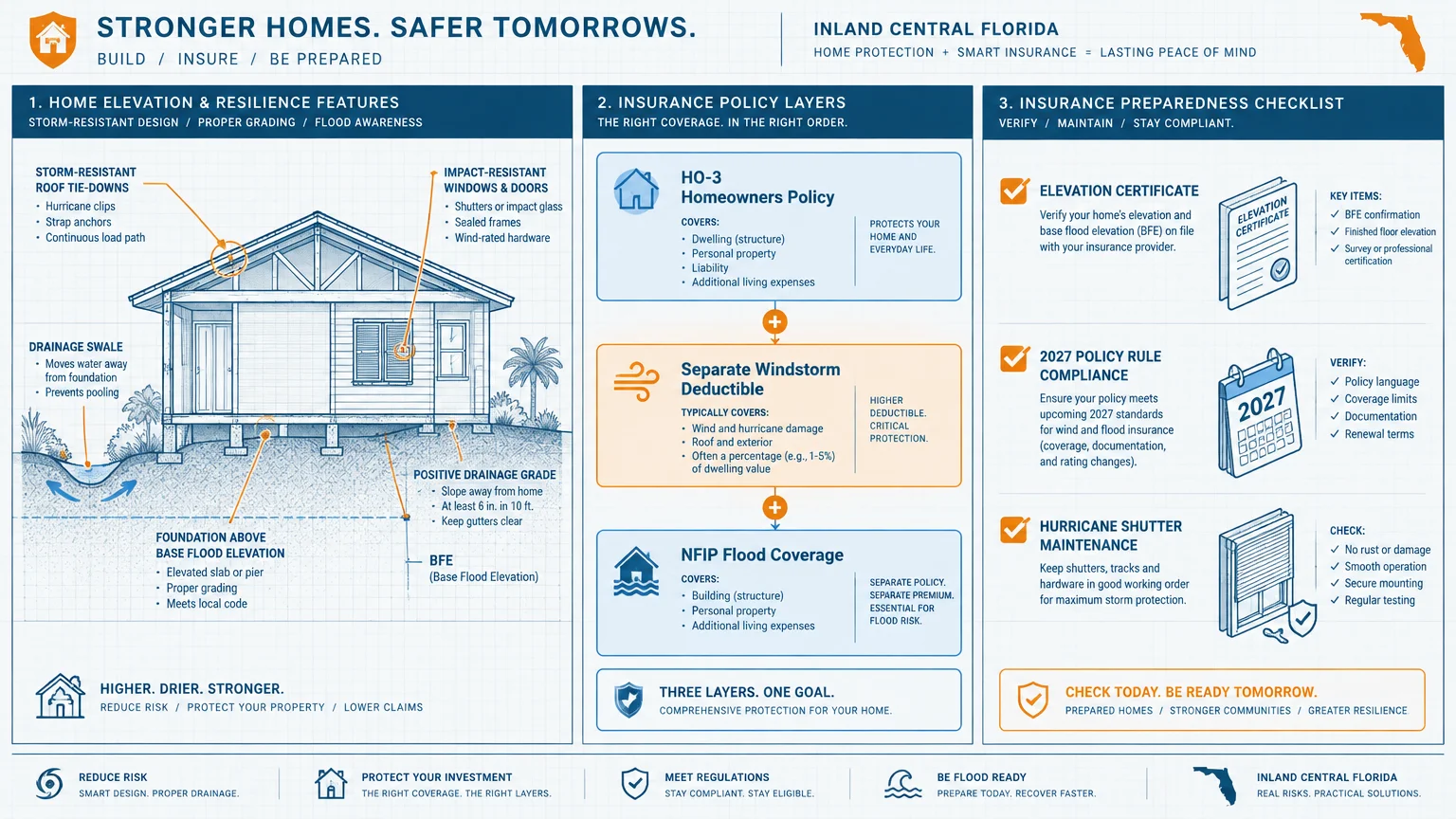
Lifestyle Idea #9: Plan for Inland Weather, Flood Insurance, and New 2027 Coverage Rules
Moving inland away from Florida’s beaches protects you from ocean storm surge, yet heavy hurricane rainfall still demands smart insurance planning. The community spans Sumter, Lake, and Marion counties, where intense tropical systems can trigger localized drainage flooding.
During Hurricane Milton in October 2024, Sumter County issued voluntary evacuations along the Withlacoochee River due to rising water. Even outside coastal zones, NerdWallet reported in May 2026 that roughly 1 in 4—or 29% over ten years—of federal flood claims occur outside high-risk zones.
Florida’s average National Flood Insurance Program policy costs about $938 per year, and standard policies carry a 30-day waiting period unless purchased at mortgage closing. Two major regulatory dates also reshape flood coverage for 2026 and 2027 homebuyers.
First, FEMA notes that December 11, 2026 marks the current Congressional authorization deadline for the federal National Flood Insurance Program. Unless Congress extends authorization, new policies and renewals pause temporarily during any lapse.
Second, starting January 1, 2027, Citizens Property Insurance policies with wind coverage will require separate flood insurance regardless of flood zone. Even homes sitting safely inside low-risk Zone X must carry flood coverage if insured through Citizens on or after that date.
Finally, Florida Statute section 689.302 requires home sellers to disclose prior flood insurance claims or federal flood disaster aid to prospective buyers. Reviewing that paperwork closely protects single buyers from unexpected water-damage surprises.
Verify Elevation and Insurance Early
Request insurance quotes—including wind and optional flood coverage—during your home inspection window rather than waiting until closing week. Checking lot drainage after an afternoon summer downpour also tells you how quickly a yard clears heavy rain.
Lifestyle Idea #10: Choose Your Neighborhood Vibe—Historic North vs. Brand-New South
Sprawling across three counties, the villages florida is far too large to treat as one uniform neighborhood. Choosing between historic northern streets and brand-new southern developments shapes your daily commute, annual budget, and social momentum.
Northern neighborhoods near Spanish Springs and Lake Sumter Landing date back to the 1980s and 1990s. They feature mature oak trees, established clubs, 30-to-90-day rental flexibility, and lower or paid-off CDD bonds that trim annual expenses.
Because residents there have known one another for years, breaking into tight-knit circles can take slightly more initiative. On the flip side, established volunteer groups and nearby medical offices keep everything familiar and close by.
Heading south toward Fenney, Sawgrass Grove, and Eastport brings modern floor plans, wider trails, and gleaming new recreation hubs around Central Lake. Many single movers gravitate south because virtually every neighbor is newly arrived and actively building friendships from scratch.
That fresh energy comes with trade-offs you should weigh carefully against your fixed income. Southern homes carry higher CDD bond balances—sometimes reaching $4,000 or more annually—alongside 180-day rental minimums and longer golf cart rides back to older town squares.
Think about how you truly spend your mornings before falling in love with a model home’s kitchen countertops. Proximity to your favorite swimming pool, walking trail, or square matters far more every day than extra guest square footage.
Map Your Ideal Radius
Draw a 15-minute golf cart circle around the two town squares, recreation centers, and grocery stores you used most during your preview trip. Touring both northern resale villas and southern new builds inside your target budget keeps your final choice grounded.
Putting It into Practice: Small Steps for Big Changes
Big retirement transitions feel far less overwhelming when you break research into manageable weekend steps. Start by listing your comfortable monthly housing budget—including the $204 amenity fee, CDD maintenance, any remaining bond, and property insurance—before browsing real estate listings.
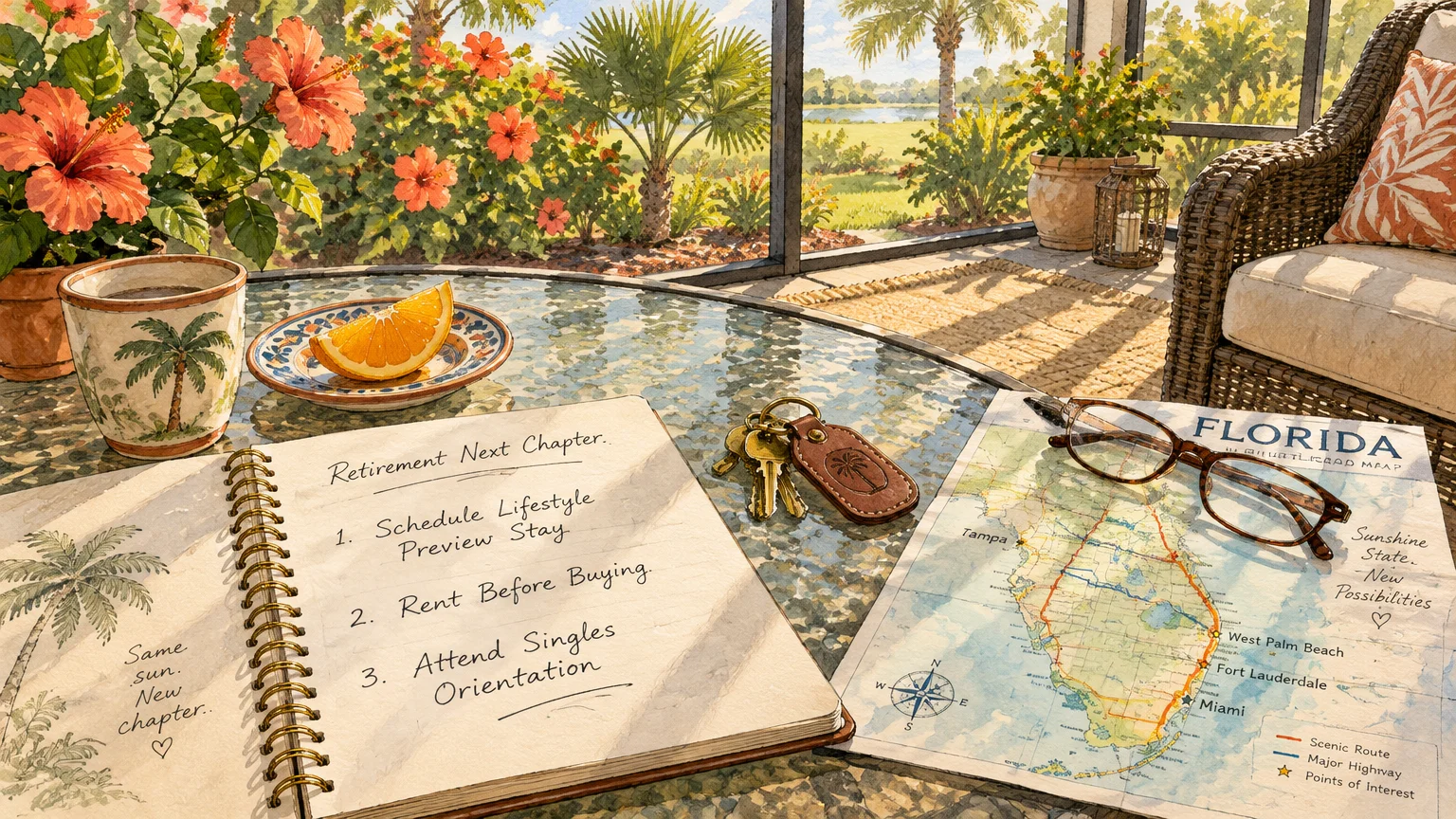
Next, schedule a 4-to-7-day Lifestyle Preview Plan trip or book a one-month off-season rental to experience real daily routines. Pack comfortable walking shoes, attend one town square concert alone, and sit in on a club interest meeting to test your comfort level.
Check out online maps of northern and southern villages to compare distances to healthcare clinics, grocery stores, and dog parks or golf courses. Talking openly with single residents you meet over coffee will give you honest perspective no sales brochure can match.
Take your time, ask sharp financial questions, and trust your instincts about which neighborhood sparks genuine excitement. Solo retirement living works best when your home supports the friendships, hobbies, and independence you value most.
Frequently Asked Questions
Can I afford retiring alone in The Villages on a modest fixed budget?
Yes, if you target lower-cost housing options and watch recurring assessments carefully. Buying an older courtyard villa or manufactured home in a northern neighborhood with a paid-off CDD bond keeps monthly costs far lower than purchasing new southern construction.
Because the $204 monthly amenity fee applies per household rather than per person, build that fixed charge into your baseline budget early. Comparing insurance quotes and CDD balances before making an offer prevents financial surprises later.
What if I feel shy or anxious about showing up to clubs by myself?
Nearly everyone remembers their first nervous week after moving, so residents tend to welcome newcomers warmly. Start with structured activities—like beginner pickleball lessons, card games, or volunteer shifts—where the activity itself drives conversation without awkward small talk.
Attending The Villages Singles Club meetings on the first and third Mondays also puts you in a room full of neighbors in the exact same boat. Give yourself three visits to any group before deciding whether it fits your personality.
Is it better to rent for a year before buying a home as a single retiree?
Renting for six to twelve months is often one of the smartest moves for single retirees testing a brand-new region. You learn which town square you visit most, whether you prefer quiet northern streets or lively southern hubs, and how summer heat feels.
Just verify rental minimums beforehand—ranging from 30 days on the Historic Side up to 180 days south of SR-44—and reserve early if targeting winter months or 55-plus apartments like The Lofts at Brownwood.
How do single residents handle home maintenance and medical emergencies?
Choosing a villa, patio home, or apartment with exterior lawn care included removes heavy weekend chores from your plate. Many solo neighbors also join neighborhood watch groups, hire vetted local handymen, and share spare keys with one trusted friend nearby.
Setting up medical alert contacts, confirming in-network physicians ahead of time, and staying active in clubs ensures people notice and support you right away if you ever need a helping hand.
For resources on retirement living, travel, and finance, visit AARP. Official information on Social Security is available at SSA.gov. For travel advisories, consult the U.S. Department of State.
Disclaimer: This article provides lifestyle suggestions for informational purposes. Financial, legal, or travel decisions should be made in consultation with qualified professionals.